‘Durham’s other cathedral’: mining union hall reopens after £14m restoration
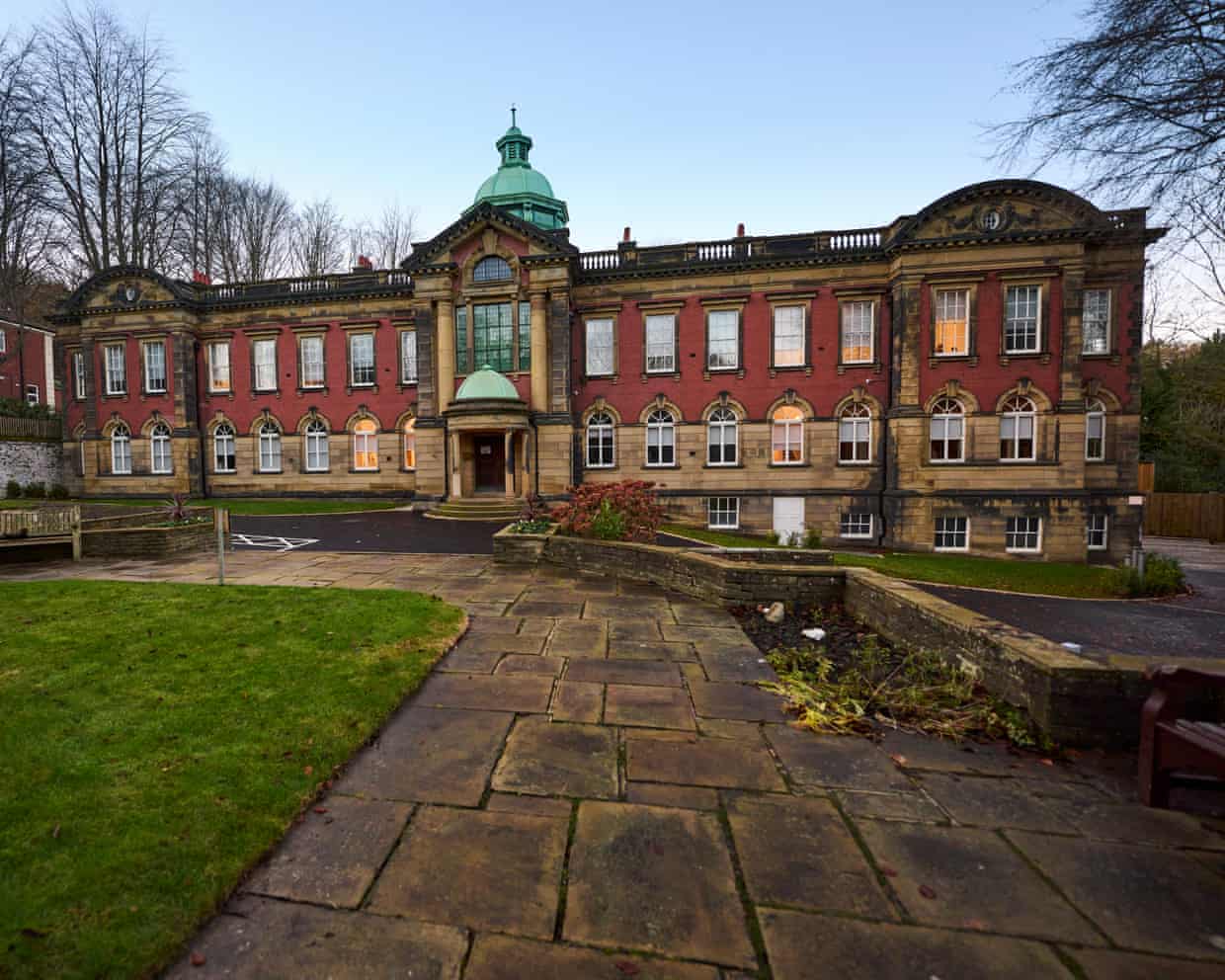
Outside the impressively grand, Edwardian baroque building in Durham are two wooden benches, each dedicated to men who died too young.They were, the inscription reads, both “sacked and victimised” during the 1984-85 miners’ strike.Yet they’re in grounds that look as if they might have been owned by rich, exploitative mine owners.The building is Redhills, the headquarters since 1915 of the Durham Miners’ Association, which has reopened after a £14m restoration with a hugely ambitious purpose that aligns with the original aims of the site.Redhills is considered one of the world’s finest trade union buildings.
Famed for its “pitmen’s parliament” and regarded as “Durham’s other cathedral”, it was once named as one of the 10 buildings that helped change Britain,Andrew McIntyre, the interim CEO of Redhills, said it was far more than just a building,“You’re kind of standing on the spot where the welfare state was first imagined,” he said,“It has always had an aura … a magic,”The building has been slowly, quietly reopening since the restoration was completed this year.
It decided against a grand reopening event in favour of a softer relaunch but it has not gone unnoticed.“We’re barely open and all of our guided tours are sold out into next year,” said McIntyre.Bill Moir, who will be leading tours, took the Guardian around what is few people’s idea of what a miners’ hall should look like.“It was designed like this so that the men of the coalfields, when they came to represent their pits, would enter an entrance hall equally as glorious as the entrance hall of the owners of coalmines,” said Moir.“It was built on this grand scale to equal anything built by the aristocracy.
”The restoration has been long and painstaking but much needed.The Austrian oak chamber where the “pitmen’s parliament” convened looks magnificent today, “but if you had come here three, four years ago, not only would the smell of mould nearly knocked you out, but the floor was starting to deteriorate, it was just rotten”.It was built, said Moir, in the style of a Methodist chapel in the expectation there would be “collaboration and cooperation” rather than combative discussions.It was here that miners discussed ideas of a welfare state, long before this was created in Britain, as well as community infrastructure, models of universal healthcare and levels of fair compensationThat history drives the new Redhills, said McIntyre.The restoration was part-funded by the national lottery but before the bid, Redhills consulted communities.
“We asked people what they wanted the future to be and they were absolutely adamant that it wasn’t a museum and it shouldn’t be a heritage centre.They didn’t want us to build a memorial or a mausoleum to the past.“They were arguing that it’s the beating heart of a living culture, not just the brass bands and the banners.”There will be weddings, funerals, conferences and concerts at Redhills but the bigger idea is that it becomes a kind of mothership of cooperative endeavour.“People are enormously proud of where they’re from, of their heritage, of their family history, of their mining heritage and culture, but what they lack is hope,” said McIntyre.
The new Redhills wants to replicate what the Durham Miners’ Association was doing 100 years ago when it was creating a kind of working-class commonwealth and building parks, sports grounds, houses for aged mining families and more.The first project is centred around the once prosperous village of Horden in east Durham, a place that already has Ensemble 84, a theatre company led by the acclaimed theatre director Mark Dornford-May and which, earlier this year, staged a new Lee Hall version of Bertolt Brecht’s Mother Courage.McIntrye says there are opportunities for homes to get cheap heat from mine water, to have the community take control of housing stock and then after that, why not social care?“The council is paying out millions of pounds but they’re paying it to private companies who are skimming off a huge percentage of the budget and just taking that as profit and that’s being shipped out of Durham straight away,” said McIntyre.Since the pits closed 40 years ago, people in Durham have waited and waited for governments to come and do things, he said.“How many elections have we had since the pits started closing? Not many of them seem to have changed much.
” This article was amended on 6 January 2026 to revise the image selection,

Nvidia CEO reveals new ‘reasoning’ AI tech for self-driving cars
The billionaire boss of the chipmaker Nvidia, Jensen Huang, has unveiled new AI technology that he says will help self-driving cars think like humans to navigate more complex situations.The world’s most valuable company is to roll out the new technology, Alpamayo, which is designed to help self-driving cars handle tricky situations such as sudden roadworks or unusual driver behaviour on the road, rather than just reacting to previous patterns.Nvidia claims Alpamayo will bring chain-of-thought reasoning to self-driving vehicles, combining what the car sees with language-like reasoning.In a speech at the annual Consumer Electronics Show in Las Vegas, the Nvidia founder and chief executive said: “The ChatGPT moment for physical AI is here, when machines begin to understand, reason and act in the real world. Robotaxis are among the first to benefit

Leading AI expert delays timeline for its possible destruction of humanity
A leading artificial intelligence expert has rolled back his timeline for AI doom, saying it will take longer than he initially predicted for AI systems to be able to code autonomously and thus speed their own development toward superintelligence.Daniel Kokotajlo, a former employee of OpenAI, sparked an energetic debate in April by releasing AI 2027, a scenario that envisions unchecked AI development leading to the creation of a superintelligence, which – after outfoxing world leaders – destroys humanity.The scenario rapidly won admirers and detractors. The US vice-president, JD Vance, appeared to reference AI 2027 in an interview last May when discussing the US’s artificial intelligence arms race with China. Gary Marcus, an emeritus professor of neuroscience at New York University, called the piece a “work of fiction” and various of its conclusions “pure science fiction mumbo jumbo”

AI images of Maduro capture reap millions of views on social media
Minutes after Donald Trump announced a “large-scale strike” against Venezuela early on Saturday morning, false and misleading AI-generated images began flooding social media. There were fake photos of Nicolás Maduro being escorted off a plane by US law enforcement agents, images of jubilant Venezuelans pouring into the streets of Caracas and videos of missiles raining down on the city – all fake.The fabricated content intermixed with real videos and photos of US aircraft flying over the Venezuelan capital and explosions lighting up the dark sky. A lack of verified information about the raid coupled with AI tools’ rapidly advancing capabilities made discerning fact from fiction about the incursion on Caracas difficult.By the time Trump posted a verified photo of Maduro blindfolded, handcuffed and dressed in grey sweatpants aboard the USS Iwo Jima warship, the fake images with the US Drug Enforcement Administration (DEA) agents had already gone viral

Grok AI still being used to digitally undress women and children despite suspension pledge
Degrading images of children and women with their clothes digitally removed by Grok AI continue to be shared on Elon Musk’s X, despite the platform’s commitment to suspend users who generate them.After days of concern over use of the chatbot to alter photographs to create sexualised pictures of real women and children stripped to their underwear without their consent, the UK’s communication’s watchdog, Ofcom, said on Monday that it had made “urgent contact with X and xAI to understand what steps they have taken to comply with their legal duties to protect users in the UK”. Ofcom added that it would assess whether an investigation is necessary based on the company’s response.Meanwhile, politicians and women’s rights campaigners accused the UK government of “dragging its heels” by failing to enact legislation that was passed six months ago making the creation of such intimate images illegal.The trend, which went viral over the new year period, also prompted the European Commission to say on Monday that it was “very seriously” looking into complaints that Grok was being used to generate and disseminate sexually explicit childlike images

Mother of one of Elon Musk’s sons ‘horrified’ at use of Grok to create fake sexualised images of her
The mother of one of Elon Musk’s sons has said she felt “horrified and violated” after fans of the billionaire used his AI tool, Grok, to create fake sexualised images of her by manipulating real pictures.The writer and political strategist Ashley St Clair, who became estranged from Musk after the birth of their child in 2024, told the Guardian that supporters of the X owner were using the tool to create a form of revenge porn, and had even undressed a picture of her as a child.Grok has come under fire from lawmakers and regulators worldwide after it emerged it had been used to virtually undress images of women and children, and show them in compromising sexualised positions. The widespread sexual abuse consists of X users asking Grok to manipulate pictures of fully clothed women to put them in bikinis, on their knees, and cover them in what looks like semen.“I felt horrified, I felt violated, especially seeing my toddler’s backpack in the back of it,” St Clair said of an image in which she has been put into a bikini, turned around and bent over

World ‘may not have time’ to prepare for AI safety risks, says leading researcher
The world “may not have time” to prepare for the safety risks posed by cutting-edge AI systems, according to a leading figure at the UK government’s scientific research agency.David Dalrymple, a programme director and AI safety expert at the Aria agency, told the Guardian people should be concerned about the growing capability of the technology.“I think we should be concerned about systems that can perform all of the functions that humans perform to get things done in the world, but better,” he said. “Because we will be outcompeted in all of the domains that we need to be dominant in, in order to maintain control of our civilisation, society and planet.”Dalrymple said there was a gap in understanding between the public sector and AI companies about the power of looming breakthroughs in the technology

The corporate greed that has ravaged the US has wrecked Britain too | Letters

Labour to protect existing MPs above winning more seats at next election, deputy leader says

Starmer prepares for parliamentary battles over imminent EU ‘reset’ bill
‘We have a new role’: mayors across the world increasingly taking on society’s biggest challenges

No 10 suggests UK would not vote for UN security council resolution condemning US arrest of Maduro – as it happened

Let me explain why we can’t stand Keir Starmer | Letters