Nvidia CEO reveals new ‘reasoning’ AI tech for self-driving cars

The billionaire boss of the chipmaker Nvidia, Jensen Huang, has unveiled new AI technology that he says will help self-driving cars think like humans to navigate more complex situations,The world’s most valuable company is to roll out the new technology, Alpamayo, which is designed to help self-driving cars handle tricky situations such as sudden roadworks or unusual driver behaviour on the road, rather than just reacting to previous patterns,Nvidia claims Alpamayo will bring chain-of-thought reasoning to self-driving vehicles, combining what the car sees with language-like reasoning,In a speech at the annual Consumer Electronics Show in Las Vegas, the Nvidia founder and chief executive said: “The ChatGPT moment for physical AI is here, when machines begin to understand, reason and act in the real world,Robotaxis are among the first to benefit.
“Alpamayo brings reasoning to autonomous vehicles, allowing them to think through rare scenarios, drive safely in complex environments and explain their driving decision.It’s the foundation for safe, scalable autonomy.”Nvidia has started producing a driverless car powered by its technology, the Mercedes-Benz CLA, in partnership with the German carmaker.It will be launched in the US in the coming months, followed by Europe and Asia.Huang showed a video of the car driving through San Francisco with a passenger sitting behind the steering wheel, their hands in their lap.
“It drives so naturally because it learned directly from human demonstrators,” Huang said, “but in every single scenario … it tells you what it’s going to do, and it reasons about what it’s about to do.”Huang also said the company’s next generation of chips was in full production, and they could deliver five times the computing power of the company’s previous products when serving up chatbots and other AI apps.He revealed new details about the chips, which will arrive later this year as Nvidia faces increasing competition from rivals as well as its own customers.The Vera Rubin platform, made up of six separate Nvidia chips, is expected to debut later this year.The flagship server will contain 72 of the company’s graphics units and 36 of its new central processors.
Huang showed how they could be strung together into “pods” with more than 1,000 Rubin chips and said they could improve the efficiency of generating what are known as “tokens” – the fundamental unit of AI systems – by 10 times.To get the new performance results, Huang said the Rubin chips used a proprietary kind of data that the company hopes the wider industry will adopt.While Nvidia still dominates the market for training AI models, it faces far more competition – from traditional rivals such as Advanced Micro Devices as well as customers such as Alphabet’s Google – in delivering the fruits of those products to hundreds of millions of users of chatbots and other technologies.

‘I wanted that Raiders of the Lost Ark excitement – you could die any minute’: how we made hit video game Prince of Persia
Programming was very open back in the 1980s. You had to teach yourself, either from magazines, or by swapping tips. When you wrote a video game, you submitted it on a floppy disk to a publisher, like a book manuscript. In my freshman year at Yale university, I sent Deathbounce, an Asteroids-esque game for the Apple II computer, to Broderbund, my favourite games company. They rejected it, but took my next effort, Karateka, a side-scrolling beat-’em-up

The Guide #224: Bondage Bronte, to more comeback tours – what will be 2026’s big cultural hitters ?
Welcome to 2026! I hope you are enjoying the final dribblings of the festive break, before reality bites on Monday. As is now tradition (well, we did it once before), this first newsletter of the new year looks at some of the big questions we hope will be answered in the next 12 months, across film, TV, music and games. Hopefully it will double up as a decent primer for the year ahead too, though for a more exhaustive rundown check the Guardian’s 2026 previews for film, music, TV, gaming, stage and art. Right, let’s get on with it:A storyline likely to rumble on through the year is the proposed purchase of Warner Bros by Netflix, which will require government approval (certainly not a given), not to mention all manner of contractual fine-tuning, before that big red N gets stamped on Warners’ famous water tower. Just enough time then for Hollywood’s greatest wrangler of spectacle, and newly installed head of the Director’s Guild, Christopher Nolan to demonstrate the value to Netflix of putting mass-market movies on the biggest screens possible
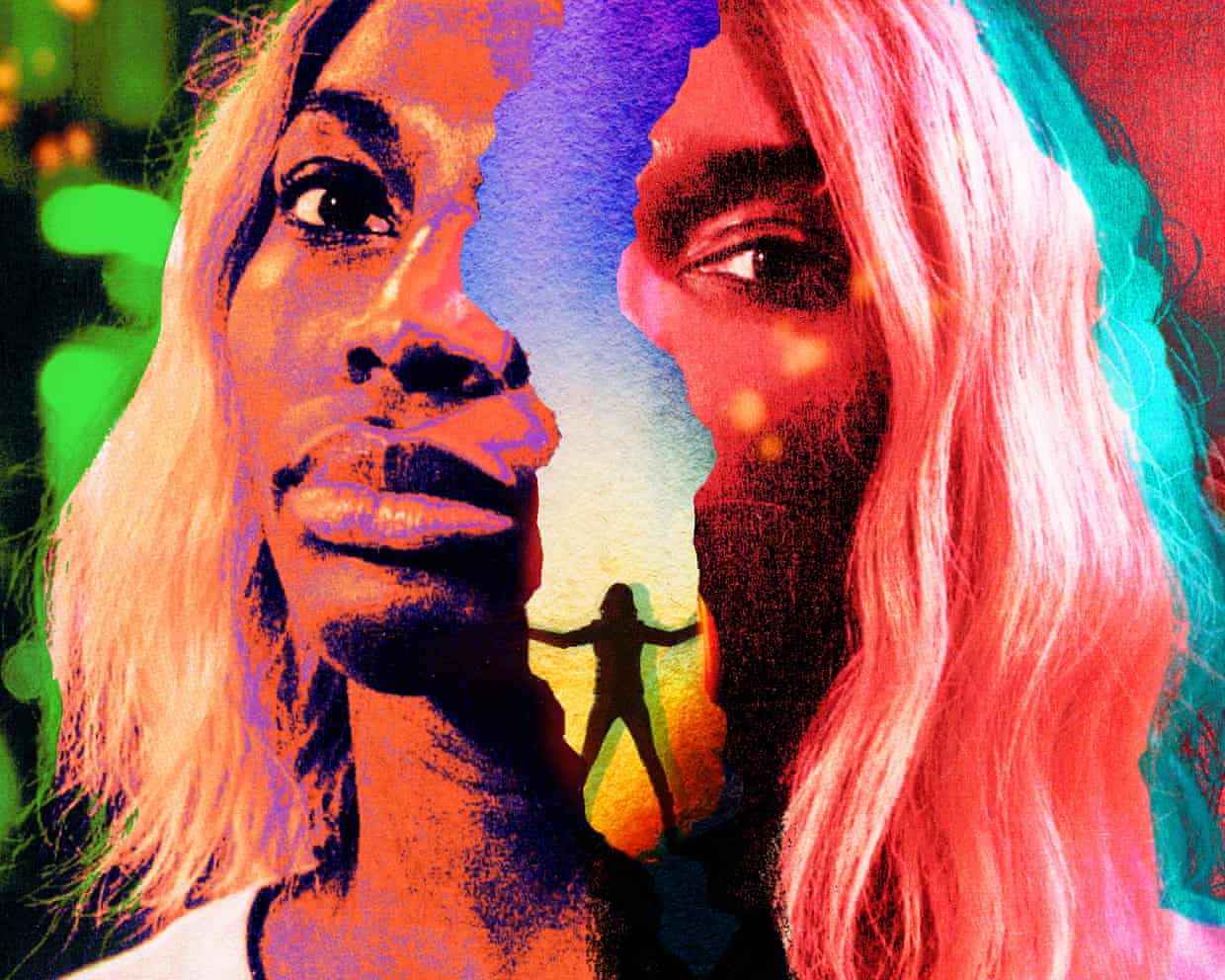
My cultural awakening: I May Destroy You helped me confront being spiked
When I May Destroy You aired in the summer of 2020, I hadn’t yet been spiked. Michaela Coel’s comedy-drama, based on her own experience of sexual assault, follows Arabella (Coel) as she realises she was drugged and raped on a night out. With one in four women in Britain having experienced sexual violence, the 12-part series was a difficult watch for many. If not relatable, then confronting and familiar; something that had happened to others, but close enough to know that it could happen to you. Three months later, it did happen to me

The Traitors to Dry Cleaning: the week in rave reviews
Claudia Winkleman returns with the regular version of the hit gameshow, while the left-field indie quartet spread their wings. Here’s the pick of the week’s culture, taken from the Guardian’s best-rated reviewsBBC iPlayer; next episode SaturdaySummed up in a sentence Series four of the “civilian” Traitors introduces an audacious new wrinkle to keep its players – and its viewers – on their toes.What our reviewer said “Having grown the series’ following with The Celebrity Traitors, the BBC could easily have rolled out another civilian season using past templates and felt sure of a record-breaking audience. Instead, they’ve upped the ante and made the format even twistier.” Elle HuntRead the full reviewFurther reading New Traitors contestants include detective, crime writer and psychologistBBC iPlayerSummed up in a sentence David Attenborough brings his lifelong sense of wonder to the city’s wildlife, from foxes to peregrine falcons, in this exquisite special

From Song Sung Blue to Theatre Picasso: your complete entertainment guide to the week ahead
Song Sung BlueOut now In 2008, an inspirational documentary about Neil Diamond tribute band Lightning & Thunder warmed hearts with its unconventional love story about Mike and Claire Sardina. Now it’s been adapted into this drama, with all Neil Diamond songs present and correct, and Kate Hudson and Hugh Jackman in the lead roles.Peter Hujar’s DayOut nowBen Whishaw stars as the photographer and artist-activist of New York’s gay liberation movement, who photographed figures such as Susan Sontag, Fran Lebowitz and John Waters. Set over the course of one day in 1974, this is an adaptation of the book by Linda Rosenkrantz, played here by Rebecca Hall.Menus-Plaisirs: Les TroisgrosOut nowFrederick Wiseman, the godfather of durational documentary, is back with a four-hour epic, observing a Michelin-starred family restaurant in rural France

Forget Keanu: Ulster Scots translation of Beckett classic takes on spate of celebrity Godots
Beneath a stark steel tree in a bleak upland bog, a literary masterpiece is set to assume a different linguistic mantle.Samuel Beckett’s enigmatic tragicomedy Waiting for Godot will make its world premiere in Ulster Scots, a moment described as a “coming of age” for the minority language, and the antithesis of the trend for celebrity Godots.On Good Friday, after an uphill trek of about 3km, the audience will arrive at a spot in the vast volcanic Antrim Plateau in Northern Ireland, if not footsore then certainly empathic to the physical discomfort of Estragon struggling to remove his ill-fitting boots.The “existential landscape of heath, moss and bog” in County Antrim lends itself to a script “peppered with exterior references”, said Seán Doran, of festival organiser Arts over Borders, which is staging the production as part of a major new arts festival, the Samuel Beckett Biennale.But while there have been previous outdoor productions, it will be the “forceful pronunciation and sound” of delivering it in Ulster Scots, or Ullans, for the first time and in a region where the language is spoken, that will “bring a whole new total register” and change the whole performative aspect of the play, said Doran

Trump says he plans crackdown on defense firms over executive pay and stock buybacks

Starmer vows to review franchise legislation in response to Vodafone case

Commons women and equalities committee to stop using X amid AI-altered images row

Grok’s deepfake images which ‘digitally undress’ women investigated by Australia’s online safety watchdog

Australia v England: fifth Ashes Test, day five – live

Simon Yates announces surprise retirement with ‘deep pride and sense of peace’