Countries that do not embrace AI could be left behind, says OpenAI’s George Osborne
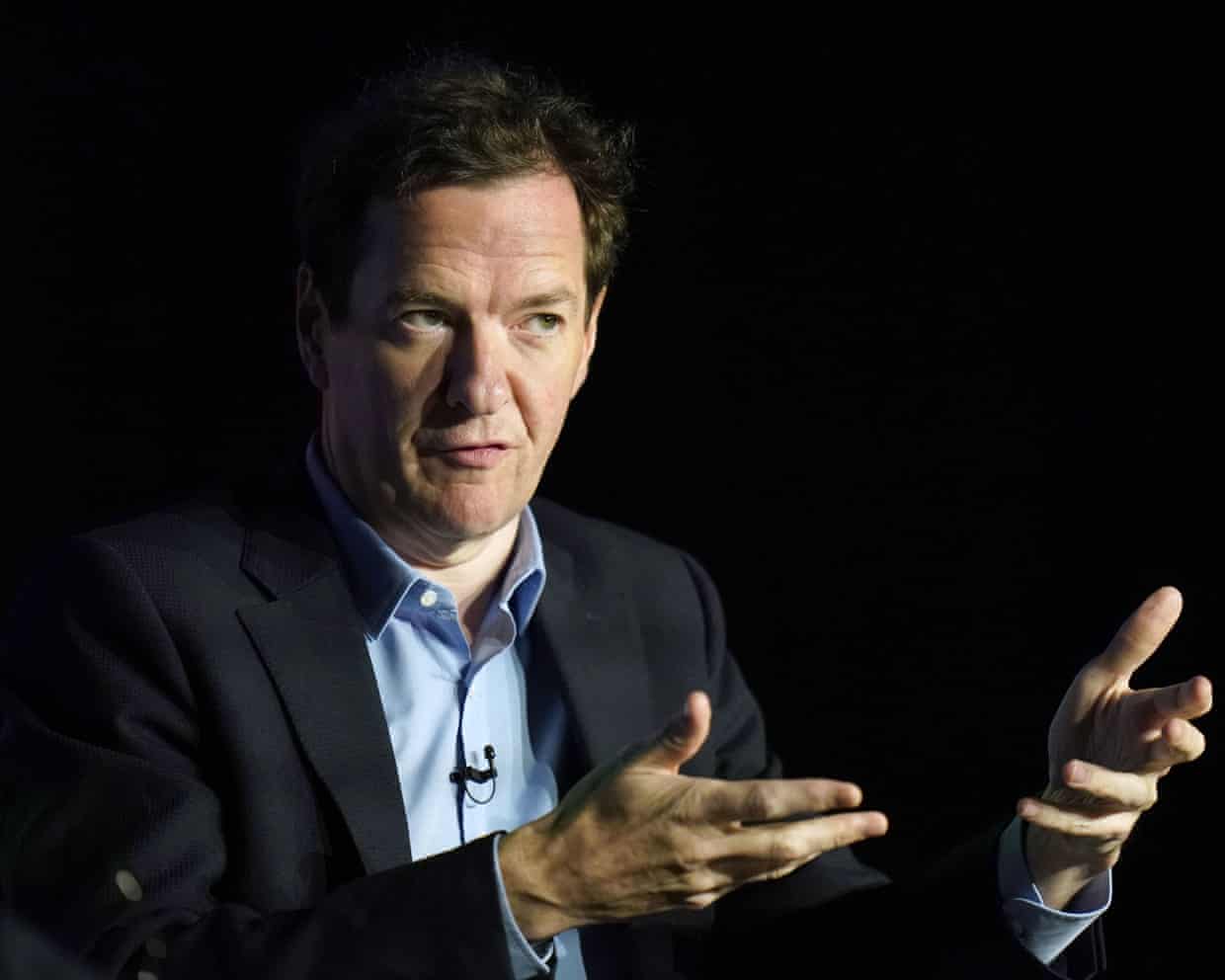
The former chancellor George Osborne has said countries that do not embrace the kind of powerful AI systems made by his new employer, OpenAI, risk “Fomo” and could be left weaker and poorer.Osborne, who is two months into a job as head of the $500bn San Francisco AI company’s “for countries” programme, told leaders gathered for the AI Impact summit in Delhi: “Don’t be left behind.” He said that without AI rollouts they could end up with a workforce “less willing to stay put” because they might want to seek AI-enabled fortunes elsewhere.Osborne framed the choice facing countries as one between adopting AI systems produced either in the US – such as Open AI’s – or China.The two superpowers have so far developed the most powerful AI systems.
The fourth intergovernmental AI summit, hosted by India’s prime minister, Narendra Modi, follows editions in the UK, Korea and France and is focusing on harnessing AI to the benefit of countries in the global south, for example by embracing more regional languages and applying AI to improving agriculture and public health,It is also aiming to improve safety standards, which some experts fear are falling short of addressing the potential catastrophic risks being posed by the most advanced AIs amid White House opposition to red tape,“A lot of countries who aren’t the United States of America and who aren’t the People’s Republic of China essentially face two kind of slightly contradictory feelings at the same time,” Osborne said,“The first is a Fomo: are we missing out on this huge technological revolution? How to be part of it? How do we make sure that our companies feel the benefits of it? How do we make sure our societies feel the benefits of it?”At the same time, he said, these countries wanted to safeguard their national sovereignty while relying on powerful AIs controlled in the US and China,Osborne said: “There’s another kind of sovereignty, which is: don’t be left behind, because then you will be a weaker nation, a poorer nation, a nation whose workforce will be less willing to stay put.
”His comments came as the White House’s senior AI adviser, Sriram Krishnan, emphasised the Trump administration’s desire for AI supremacy, telling the summit: “We want to make sure the world uses our AI model.”He also took a fresh swipe at the EU’s attempts to regulate AI, saying he would continue to “rant” against them.“The EU AI Act is not really very conducive to an entrepreneur who wants to build innovative technology,” he said.But other technologists, and AI leaders in Africa, said the case for reliance on the two AI superpowers was not so clearcut.“The idea that countries other than China and the US won’t be able to build big things – and we [hear] that a lot – is actually a false premise,” Mark Surman, the head of Mozilla, said.
“It benefits the companies within those two countries.”“For us, it’s not a US or China thing,” said Kevin Degila, in charge of of AI and data at the Benin government’s digital agency.“We are Africans and our job is to collaborate [with each other] to build our own AI.”He said 64 languages were spoken in his country of 15 million people and the government agency was building AIs for the public that fuse both American and Chinese AI technologies and their own large language datasets.“Anthropic and OpenAI don’t reach the farmers,” he said.
Paula Ingabire, Rwanda’s minister of ICT and innovation, said her country was looking at partnerships with AI companies “that are going to be progressively less necessary”, with Rwanda not wishing to be “locked into very dependent partnerships”.Also speaking at the summit was Rishi Sunak, the former UK prime minister, who now advises one of OpenAI’s main rivals, Anthropic, and Microsoft.He urged political leaders to take bolder steps to lead the rollout of AI, saying: “If you are a prime minister you can only do a few things that you drive personally, and this has to be one of them.”“One of my concerns is that I think some political leaders think that AI is going to be tomorrow’s issue, where I think they need to recognise that it’s an ‘action this day’ issue,” Sunak said.“AI needs to go to a centralised responsibility so we can realise the benefits.
”
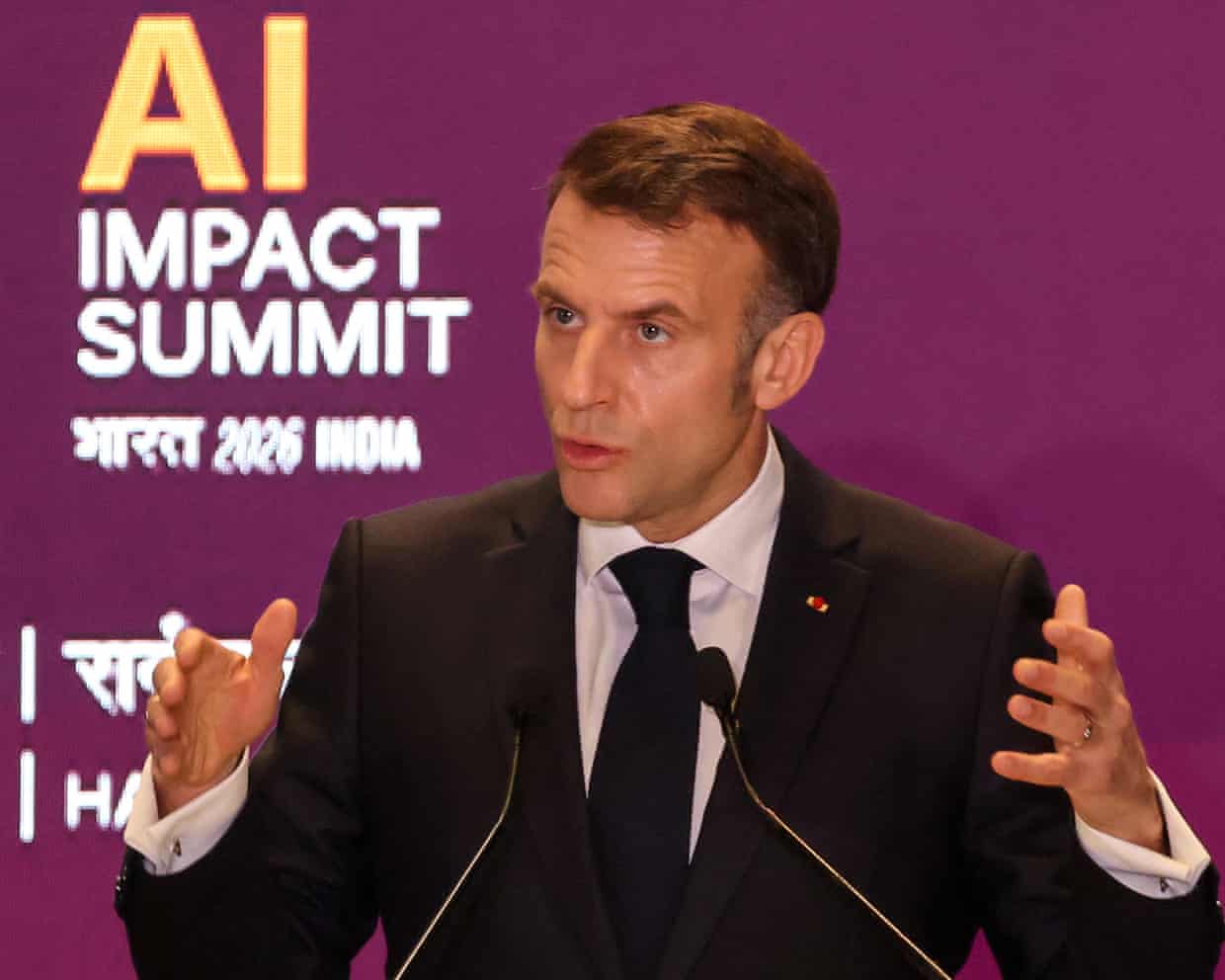
Macron defends EU AI rules and vows crackdown on child ‘digital abuse’
Emmanuel Macron has hit back at US criticism of Europe’s efforts to regulate AI, vowing to protect children from “digital abuse” during France’s presidency of the G7.Speaking at the AI Impact summit in Delhi, the French president called for tougher safeguards after global outrage over Elon Musk’s Grok chatbot being used to generate tens of thousands of sexualised images of children, and amid mounting concern about the concentration of AI power in a handful of companies.His remarks were echoed by António Guterres, the UN secretary general, who told delegates – including several US tech billionaires – that “no child should be a test subject for unregulated AI”.“The future of AI cannot be decided by a few countries or left to the whims of a few billionaires,” Guterres said. “AI must belong to everyone”

TV set is most popular way to watch YouTube in UK, study finds
The television has replaced laptops, tablets and smartphones as the most common device for UK viewers to watch YouTube at home, according to data confirming the platform’s place as a living room mainstay.More than half of all YouTube viewing through a domestic wifi connection is now done through the traditional TV, making it the top-ranking YouTube device across all age groups.The findings, from a Barb Audiences review, found that YouTube viewing is still skewed towards children, with whom the platform has been popular for some time. It has led to some concerns about the platform’s dominance in children’s TV, as well as the kinds of shows its algorithm serves up.However, TV sets became the first-choice device for YouTube viewing for over-55s in October 2023, for those between 35 and 54 in April 2024 – and finally for 16- to 34-year-olds in December 2024
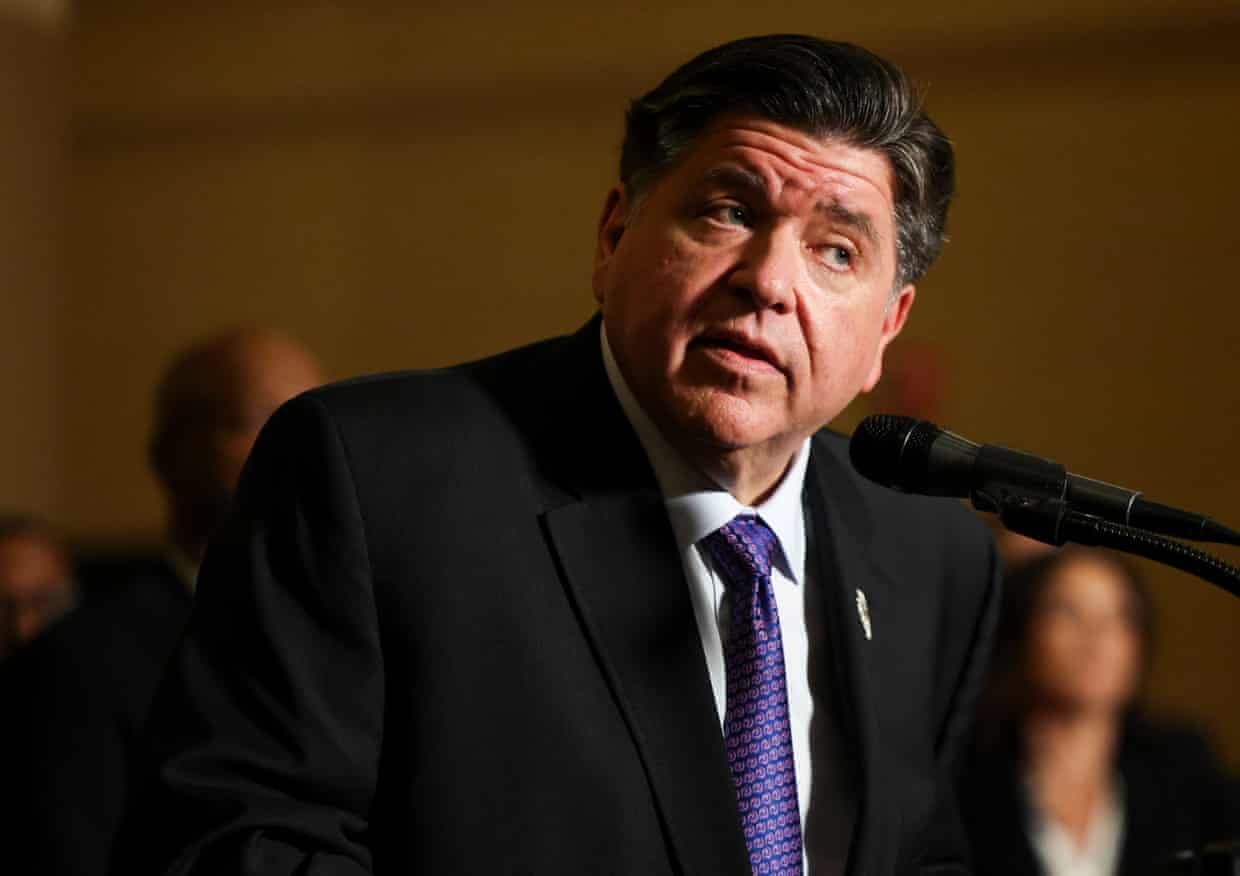
Illinois governor proposes cancelling tax breaks for datacenters
The Illinois governor JB Pritzker proposed a two-year break from offering tax incentives for datacenters, a reflection of increasing public pushback against the massive, resource-hungry facilities used to power the modern AI boom.Pritzker made the proposal, which will need the backing of state lawmakers, during his annual state of the state address, which covers Illinois budget and policy plans. The plan was first reported by NBC News.“In the face of rising demand and surging prices, I’m proposing a two-year pause on authorization of new datacenter tax credits,” Pritzker said. “With the shifting energy landscape, it is imperative that our growth does not undermine affordability and stability for our families

Tesla avoids California sales ban by removing ‘autopilot’ from marketing
Tesla will avoid a 30-day suspension of its dealer and manufacturer licenses in California, its biggest market, after the US electric vehicle maker stopped using the term “autopilot” in the marketing of its vehicles in the state.Tesla now uses the term “supervised” in references to its full self-driving technology and has stopped using “autopilot” entirely in its marketing in the state.State regulators said Tuesday that Tesla had stopped misleading drivers about the safety of its cars, and so the state will not suspend its state sales license for 30 days, as had been threatened.The decision by the California department of motor vehicles comes after CEO Elon Musk’s electric vehicle company was found by an administrative law judge last year to have misled drivers about the ability of Tesla cars to drive themselves in its use of the terms “autopilot” and “full self-driving”. In 2022, the DMV had accused Tesla of misleading consumers by using “autopilot” and “full self-driving” for its advanced driver-assistance features
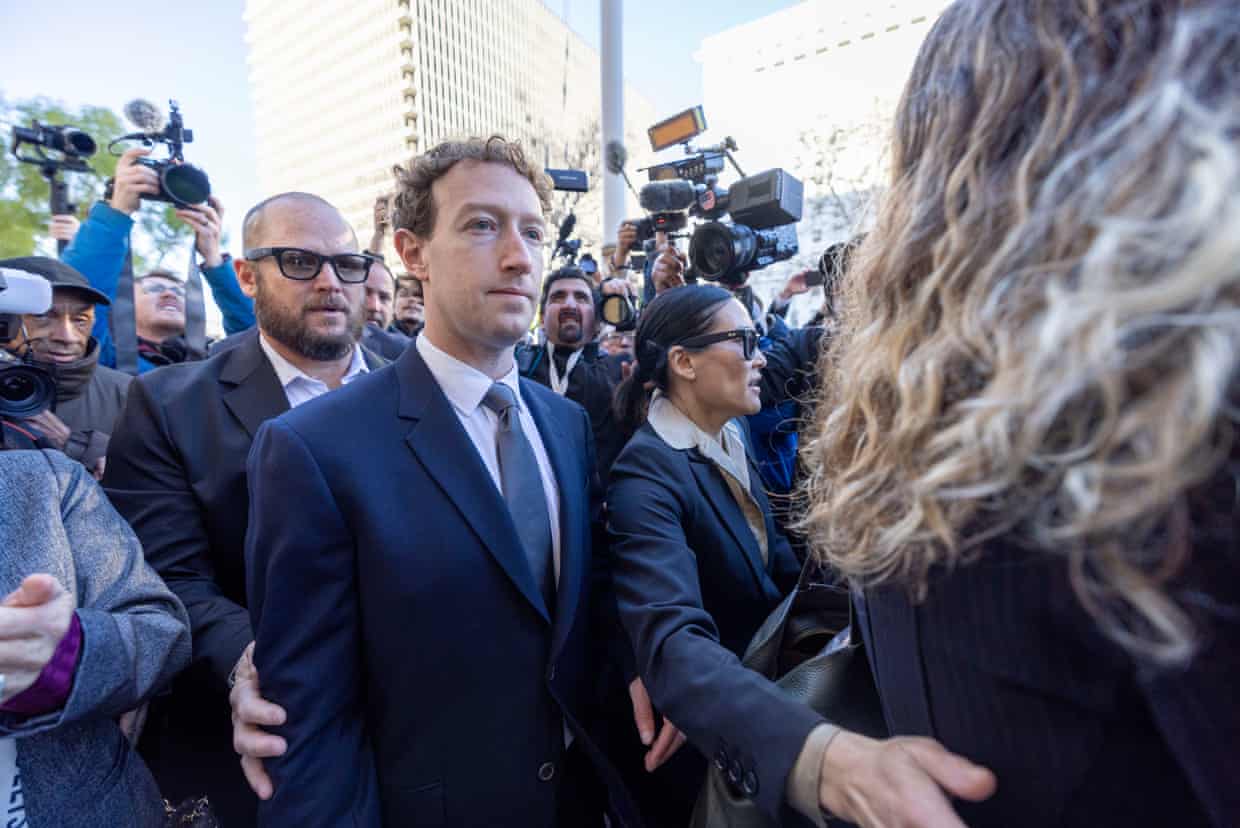
Zuckerberg grilled in landmark social media trial over teen mental health
The Meta CEO, Mark Zuckerberg, testified at a landmark trial of social media companies on Wednesday. Plaintiffs’ lawyers grilled Zuckerberg about internal complaints that not enough was being done to verify whether children under 13 were using the platform.Zuckerberg claimed Meta had improved in identifying underage users but also said: “I always wish that we could have gotten there sooner.”Zuckerberg also said some users lie about their age when joining Instagram and that the company removes those it identifies as underage. The plaintiffs’ lawyers hit back at those claims: “You expect a nine-year-old to read all of the fine print? That’s your basis for swearing under oath that children under 13 are not allowed?” After repeated questioning about age verification, Zuckerberg said: “I don’t see why this is so complicated

Stone, parchment or laser-written glass? Scientists find new way to preserve data
Some cultures used stone, others used parchment. Some even, for a time, used floppy disks. Now scientists have come up with a new way to keep archived data safe that, they say, could endure for millennia: laser-writing in glass.The Guardian’s journalism is independent. We will earn a commission if you buy something through an affiliate link

In a taste-test battle of supermarket mite-y bites, which will win? (Spoiler: it isn’t Vegemite)

The secret to perfect roast chicken | Kitchen aide

Cabbagecore: why are fashionable people going wild for the green vegetable?

Rukmini Iyer’s quick and easy reccipe for crispy baked gnocchi puttanesca | Quick and easy

Rukmini Iyer’s quick and easy recipe for ginger sesame meatballs with rice and greens | Quick and easy

How to make the perfect chicken massaman – recipe | Felicity Cloake's How to make the perfect …