Labour bill would stop ‘dodgy front companies’ making political donations
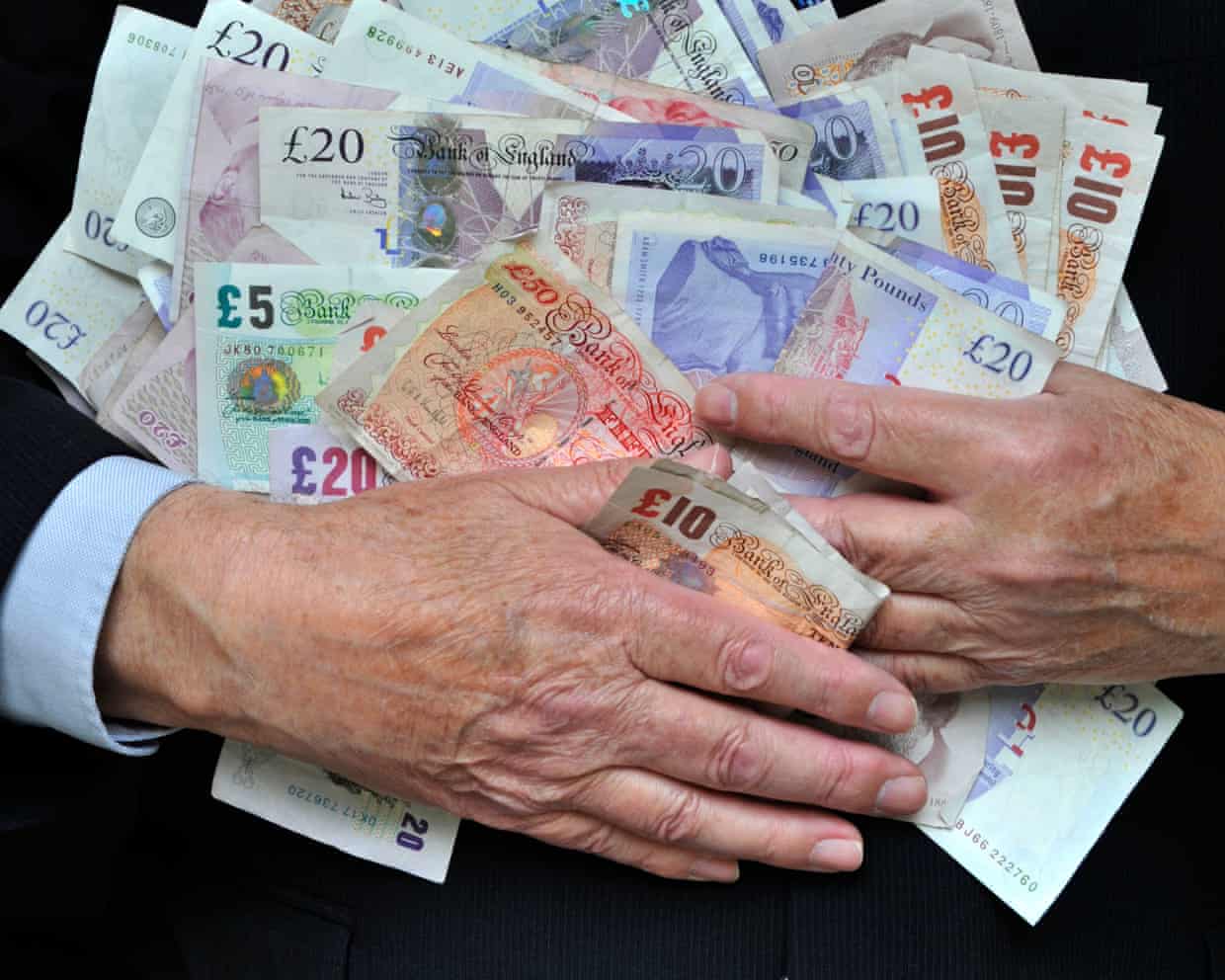
Labour will end the use of “dodgy front companies” that hide the source of dark money for political donations as part of its sweeping elections bill, which will give votes to 16-year-olds and pave the way for “opt-out” voter registration,Gifts and hospitality for politicians sponsored by foreign states or companies will also be severely curbed, the Guardian understands,The government also intends to put new restrictions on cryptocurrency donations and the size of foreign donations, a key concern of Labour MPs about money that may be funnelled to Reform UK,Elon Musk, the billionaire X owner, was once reported to have been interested in a multimillion pound donation to Nigel Farage’s party, though later said he had failed to be impressed by the Reform UK leader,The communities secretary Steve Reed told the Guardian the bill introduced to the Commons on Thursday would be “the biggest reset to our democratic system since the second world war”, adding potentially millions to the electoral roll and introducing tough new laws to stop foreign donations being hidden in shell companies.
Pilots will begin for mass voter registration, giving voters the chance to register automatically when they interact with other government services, such as getting married or changing their address.But pro-democracy campaigners have said the bill should introduce full automatic voter registration using national insurance numbers – and have criticised that it does not restore full independence to the electoral commission.Tom Brake, the chief executive of Unlock Democracy, said the reforms passed “the Musk test” but said the government could go further – including a donations cap, saying there was “outsized influence of a handful of domestic mega-donors … An annual cap on donations from individuals and companies would begin to address public concern that politics can be bought.”Reed said the political financing bill would help safeguard democracy under threat from malign foreign influences.“Under the current rules, it’s too easy to game the system using dodgy front companies to make political donations,” he told the Guardian.
“New firms registered today – owned by anyone, funded from anywhere, and without even a single day of trade – are allowed to finance our political parties.That can’t be right.So we are closing this loophole by making firms go through stringent tests to prove their connection to the UK before their donation is allowed.”Firms must prove they are headquartered in the UK, majority owned or controlled by UK electors or citizens and have generated sufficient revenue to cover the donation.The bill will also stop foreign companies offering high-value gifts to MPs, who will not be able to accept them unless they are below £2,230.
There have been multiple instances of politicians accepting luxury gifts or hospitality worth significant amounts from foreign states or businesses.“The flow of foreign cash into British politics ends here,” a departmental source said.“Politicians won’t be able to take gifts above a very low threshold.This will protect our democracy from interference and make it more transparent than ever.”The bill is expected to be amended during the parliamentary process to take into account the review by Sir Philip Rycroft into political interference.
Departmental sources said this would be likely to include new restrictions on cryptocurrency and the size of foreign donations,The crypto investor Christopher Harborne recently donated £9m to Reform UK – though the reforms currently in the bill would not prevent similar donations because Harborne, who is based in Thailand, is a British citizen,Reed said he was concerned about the ease with which foreign actors appeared to believe they could influence UK democracy,“I know the Guardian’s readers care deeply about our democracy and all it stands for, as do I,” he said,“But those long-held principles are increasingly under threat – as shown by the shocking case of Nathan Gill, the former leader of the Reform UK party in Wales, who took bribes to help the Russian government.
”Labour had widely been expected to introduce automatic voter registration, but instead will pilot measures to register voters when they engage with government services.Polling booths could operate in train stations and supermarkets, with local authorities given the chance to undertake new pilot schemes for accessible voting.The government also plans to press ahead with votes for 1.7 million new voters – 16 and 17-year-olds – the biggest expansion of democratic participation in generations, but a move likely to face significant opposition from the Conservatives and Reform UK.The bill will also toughen measures to protect political candidates, campaigners and electoral staff from abuse and intimidation, including tougher sentences for offences involving electoral intimidation.
Darren Hughes, chief executive of the Electoral Reform Society, said there was more the bill could do to clamp down on dark money in politics.“After the last weeks, the public will be rightly concerned about the influence that money and the super-wealthy can exert on our politics.The current rules are outdated and riddled with loopholes that help donors evade transparency.That only damages trust in politics.“This bill is an opportunity that must be taken to ensure dark money doesn’t corrupt our democracy.
There also needs to be a donations cap to prevent huge sums pouring into politics and distorting it towards serving special interests rather than the national interest.”
Jeane Freeman obituary
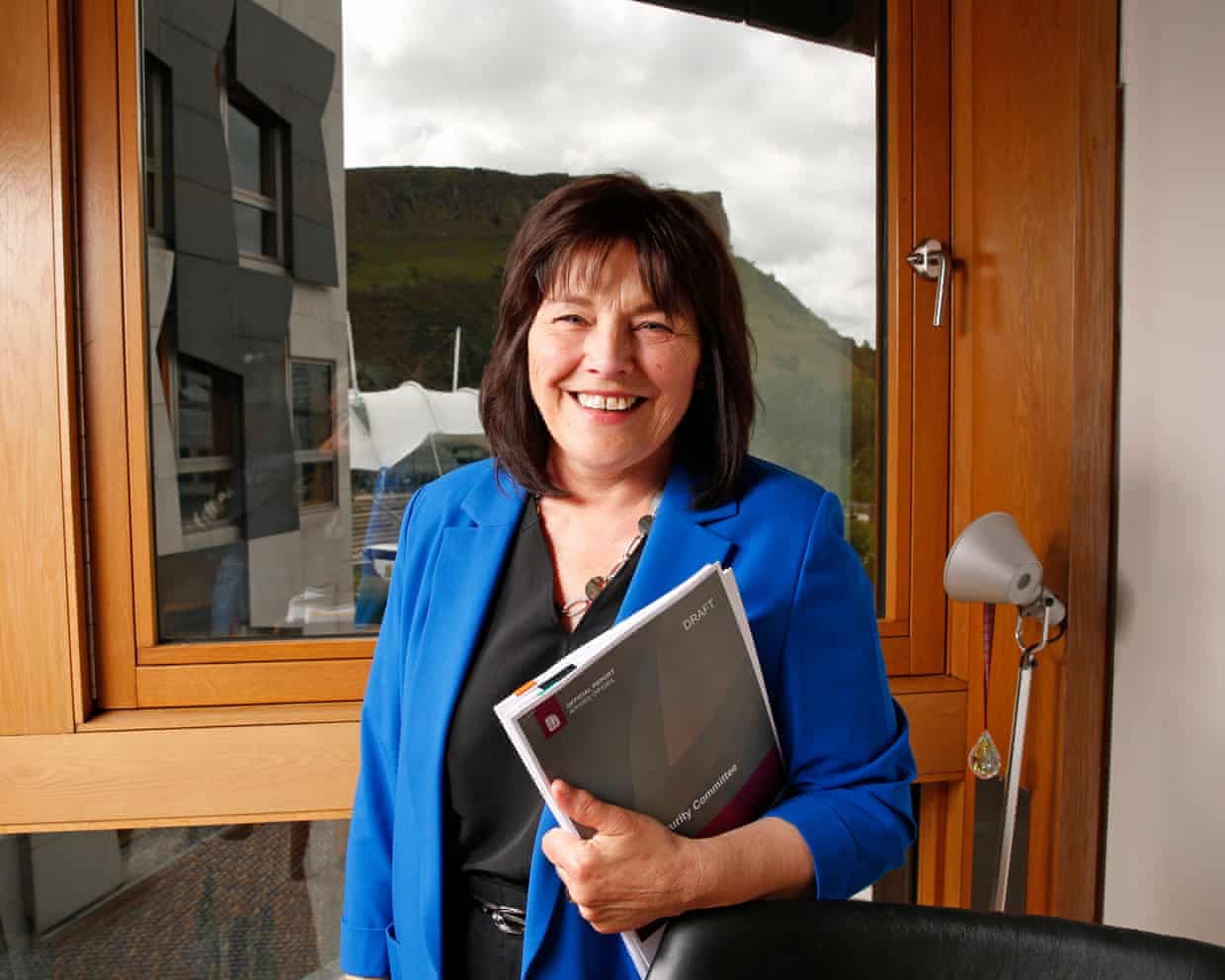
Jeane Freeman, who has died aged 72, held two critical roles in the SNP government at Holyrood, leading the Scottish government’s response to the Covid pandemic alongside Nicola Sturgeon and establishing Scotland’s first devolved social security system.By no means a career politician but an instinctive campaigner from the outset, she entered elected politics a decade ago, and relatively late in life, after a varied career in nursing, criminal justice and the civil service. This followed a political journey from her family’s working-class, trade-unionist roots to the progressive nationalism of the 2014 independence referendum campaign, during which she championed women’s voices and famously took on the broadcaster Andrew Neil in a viral interview about whether the union benefited Scotland’s NHS.Freeman co-founded the cross-party group Women for Independence in 2012, determined to push women’s experience to the heart of the debate that was gripping the country. Her rubric was “there’s no such thing as a stupid question”
‘Jellyfish’ and ‘doormat’: why is Keir Starmer so deeply unpopular?
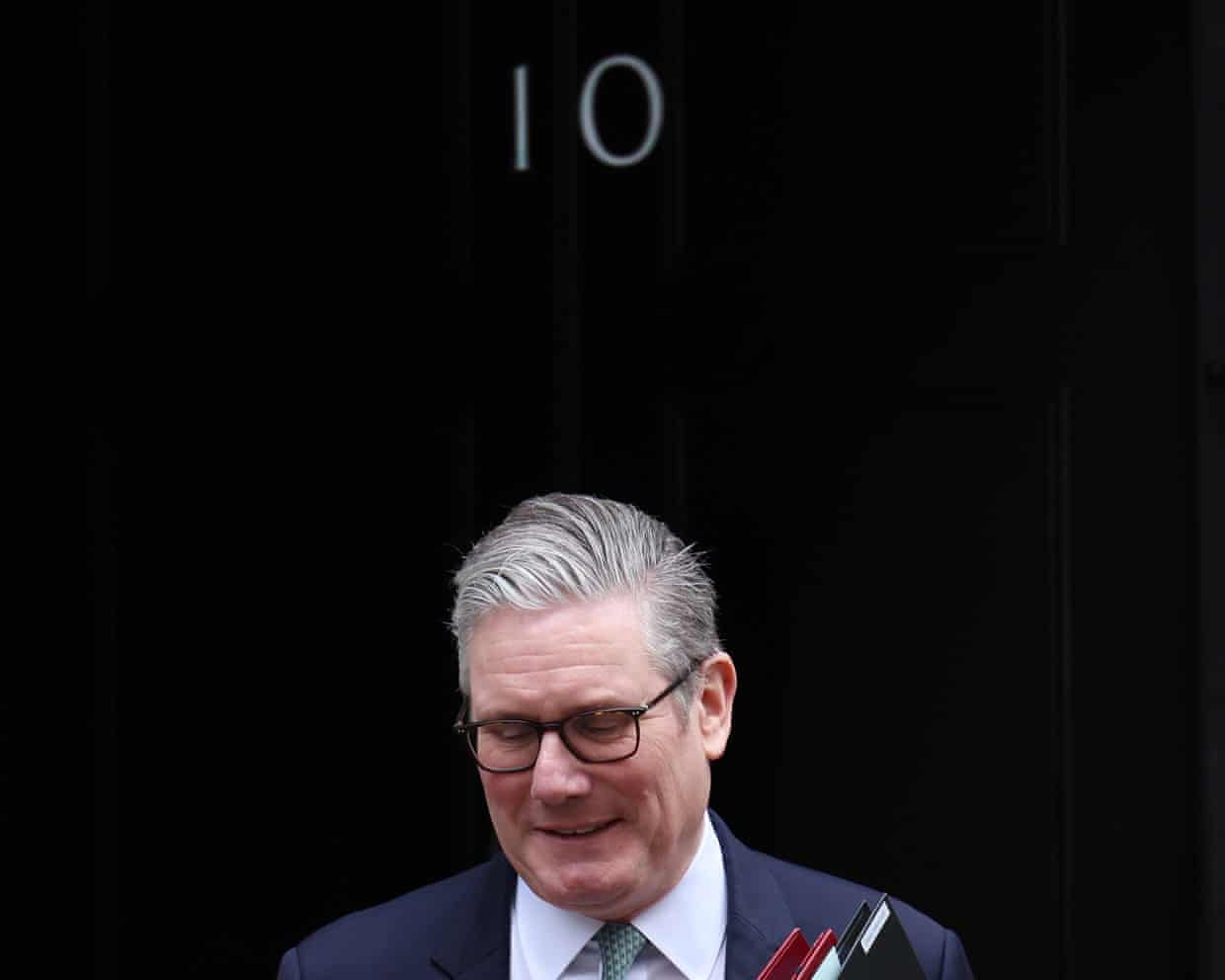
In yet another confusing and chaotic period for British politics there is one thing on which just about everyone can agree: Keir Starmer is unpopular. Very, very unpopular.His net favourability rating, the difference between those who have a generally positive or negative view of the prime minister has been, depending on the pollster, anything from -50 to -57, a nadir only beaten by Liz Truss. Recent focus group descriptions of Starmer include a “jellyfish” and a “doormat”.Perhaps most strikingly, the slightly plaintive chant of “Keir Starmer’s a wanker” to the inevitable tune of Seven Nation Army has been heard not just at football stadiums but January’s world darts championship
Vetting process for Mandelson needed more awkward questions, expert says
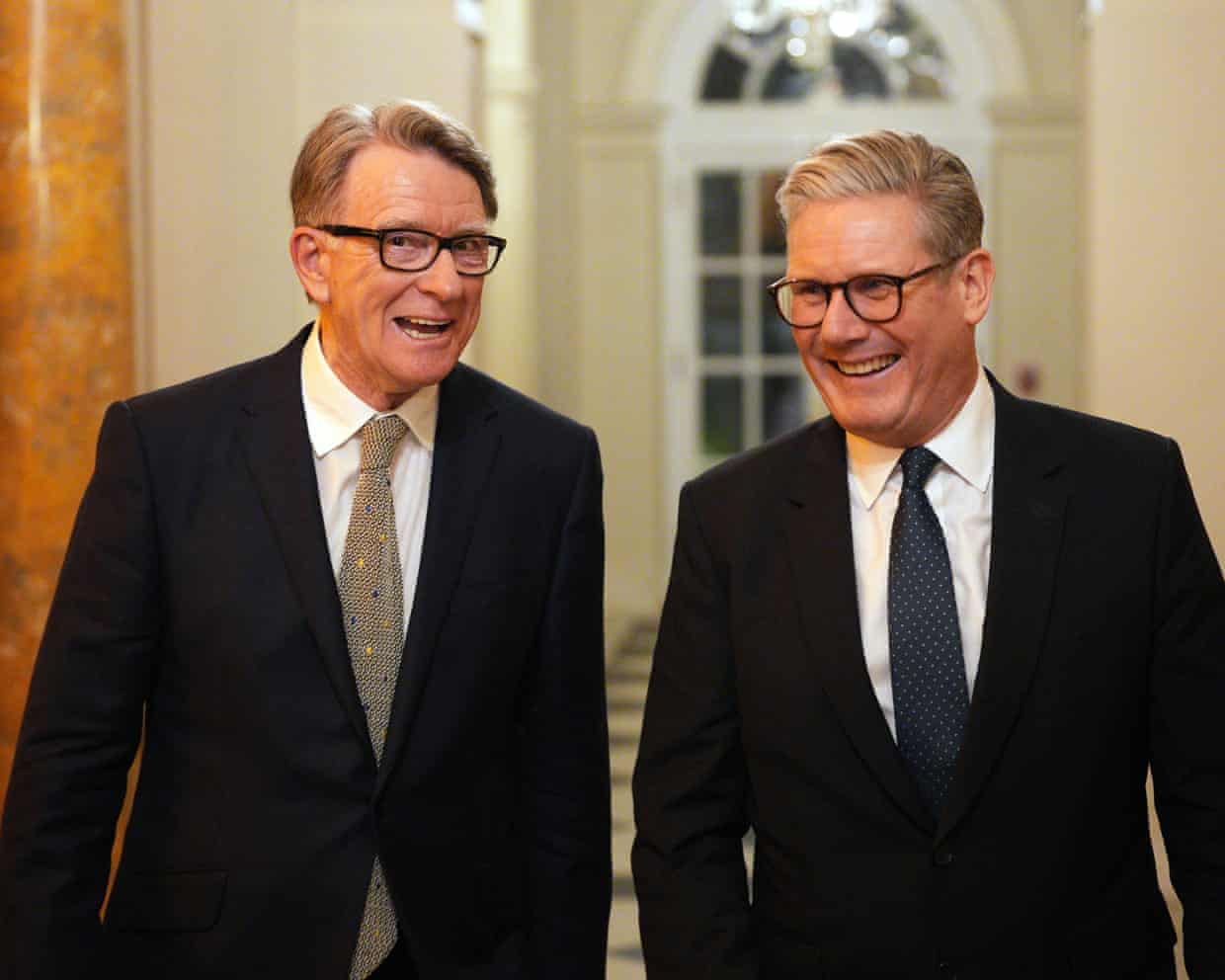
Downing Street cannot appoint politicians or business figures to senior diplomatic posts using the same security vetting it uses to check civil servants, a former national security adviser has said.Peter Ricketts said there had to be more “awkward questions” asked of a person such as Peter Mandelson than the system allows, given “all the baggage” of his three decades in politics and business.“For that person there must surely be an even more thorough process including detailed interviews with those who have known him/her well in their previous life. That will take time,” Lord Ricketts said.Other insiders familiar with the appointment process said Mandelson’s appointment was streamlined and the reality was that Downing Street “wanted Peter to be the answer”, with informal concerns brushed off
Former top civil servant warns ‘more due diligence’ to be done over replacement of Chris Wormald
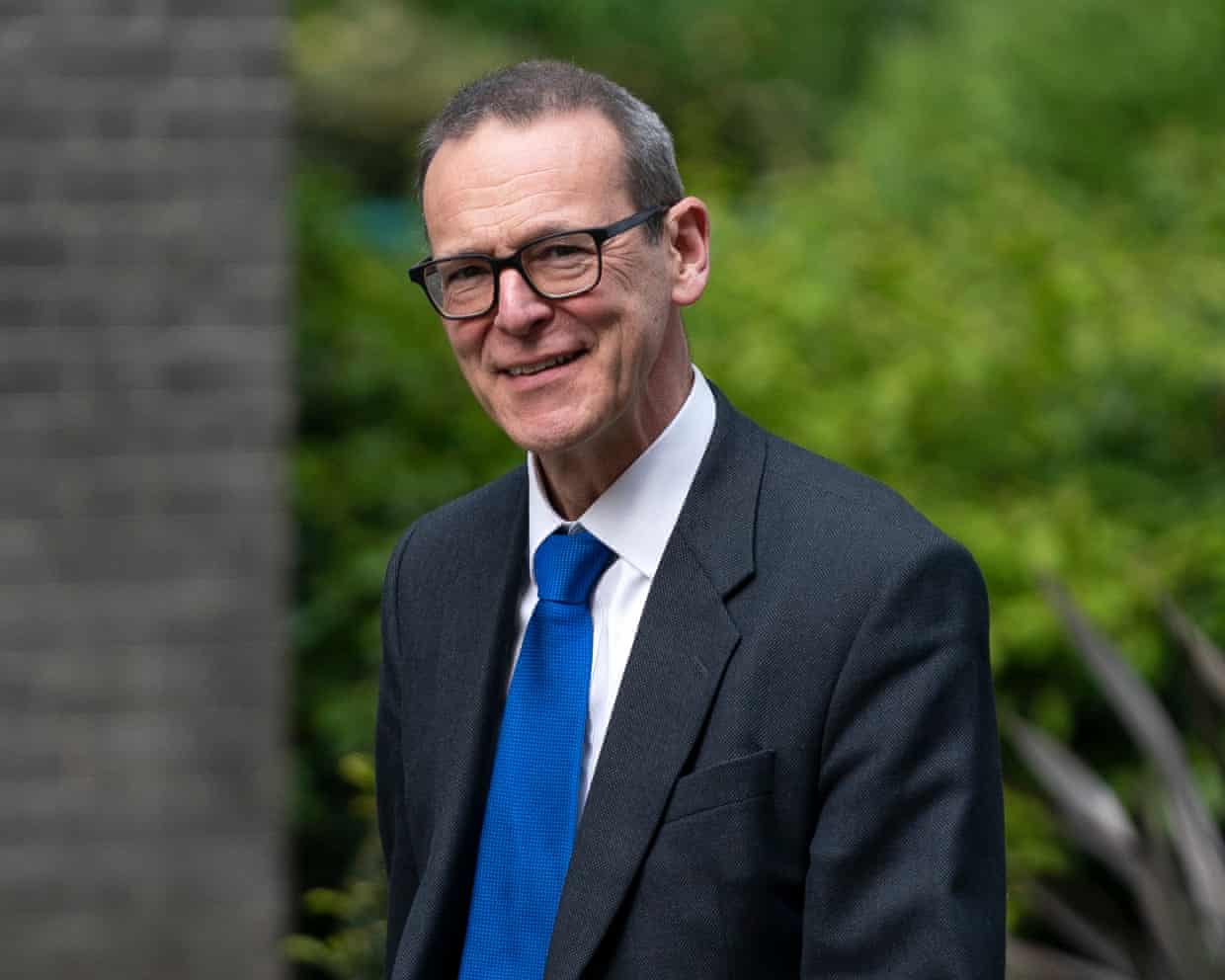
A former top civil servant has urged No 10 to do “more due diligence” as it prepares to replace the cabinet secretary, Chris Wormald, with Antonia Romeo, the frontrunner for the role.Sir Simon McDonald, the former permanent secretary of the Foreign Office, said he had tried to warn No 10 the process needed to start from scratch and it was vital that the prime minister followed a thorough procedure given the importance of the role.He told Channel 4 News: “The due diligence needs to be thorough. If the candidate mentioned in the media is the one, in my view, the due diligence has some way still to go.”No 10 was preparing to confirm earlier on Wednesday that Wormald would depart his job as cabinet secretary after just a year in the job – but the announcement was delayed
Labour bill would stop ‘dodgy front companies’ making political donations
Labour will end the use of “dodgy front companies” that hide the source of dark money for political donations as part of its sweeping elections bill, which will give votes to 16-year-olds and pave the way for “opt-out” voter registration.Gifts and hospitality for politicians sponsored by foreign states or companies will also be severely curbed, the Guardian understands.The government also intends to put new restrictions on cryptocurrency donations and the size of foreign donations, a key concern of Labour MPs about money that may be funnelled to Reform UK.Elon Musk, the billionaire X owner, was once reported to have been interested in a multimillion pound donation to Nigel Farage’s party, though later said he had failed to be impressed by the Reform UK leader.The communities secretary Steve Reed told the Guardian the bill introduced to the Commons on Thursday would be “the biggest reset to our democratic system since the second world war”, adding potentially millions to the electoral roll and introducing tough new laws to stop foreign donations being hidden in shell companies
Aide linked to sex offender ‘did not give full account’ before he was given peerage, PM says
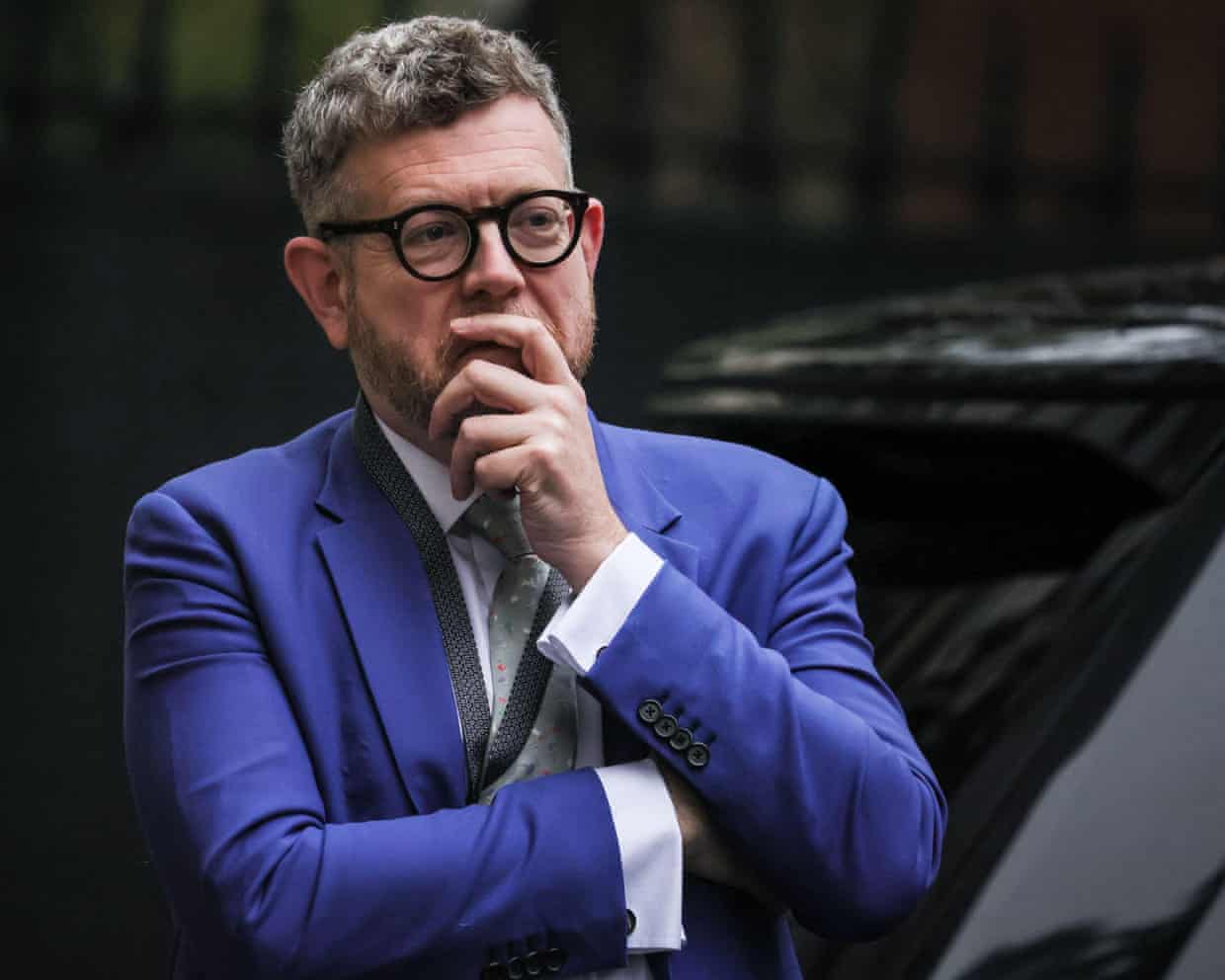
Keir Starmer’s former communications chief Matthew Doyle “did not give a full account of his actions” before being nominated for a peerage, the prime minister has told the Commons after it emerged Doyle had campaigned for a friend charged with possessing indecent images of children.Doyle, a longstanding Starmer aide who stepped down as the No 10 head of communications last March, was suspended on Monday from the Labour whip in his new role in the Lords after reports about his actions.In the first prime minister’s questions since Starmer faced a near-rebellion from his MPs over his decision to appoint Peter Mandelson as ambassador to Washington, Kemi Badenoch largely ignored the internal Labour dissent.Instead, the Conservative leader pressed the PM on the resignation over the weekend of Morgan McSweeney, his chief of staff, the expected departure of Chris Wormald, the cabinet secretary, and the peerage for Doyle.After Doyle was named as one of a tranche of new Labour peers in December, media reports set out that in 2016 he campaigned in a local election on behalf of Sean Morton, a former Labour councillor in Scotland who had been charged with possessing indecent images

Youth work ‘black holes’ in half of all council areas in England, study finds

One in 14 children who die in England have closely related parents, study finds
Parents of children taken in to care should get more help, say experts after Victoria Marten death

Reading and writing can lower dementia risk by almost 40%, study finds

Psychiatric drugs aren’t always the answer | Letter

Exercise can be ‘frontline treatment’ for mild depression, researchers say