Streeting wrote off his re-election chances in WhatsApp exchanges with Mandelson
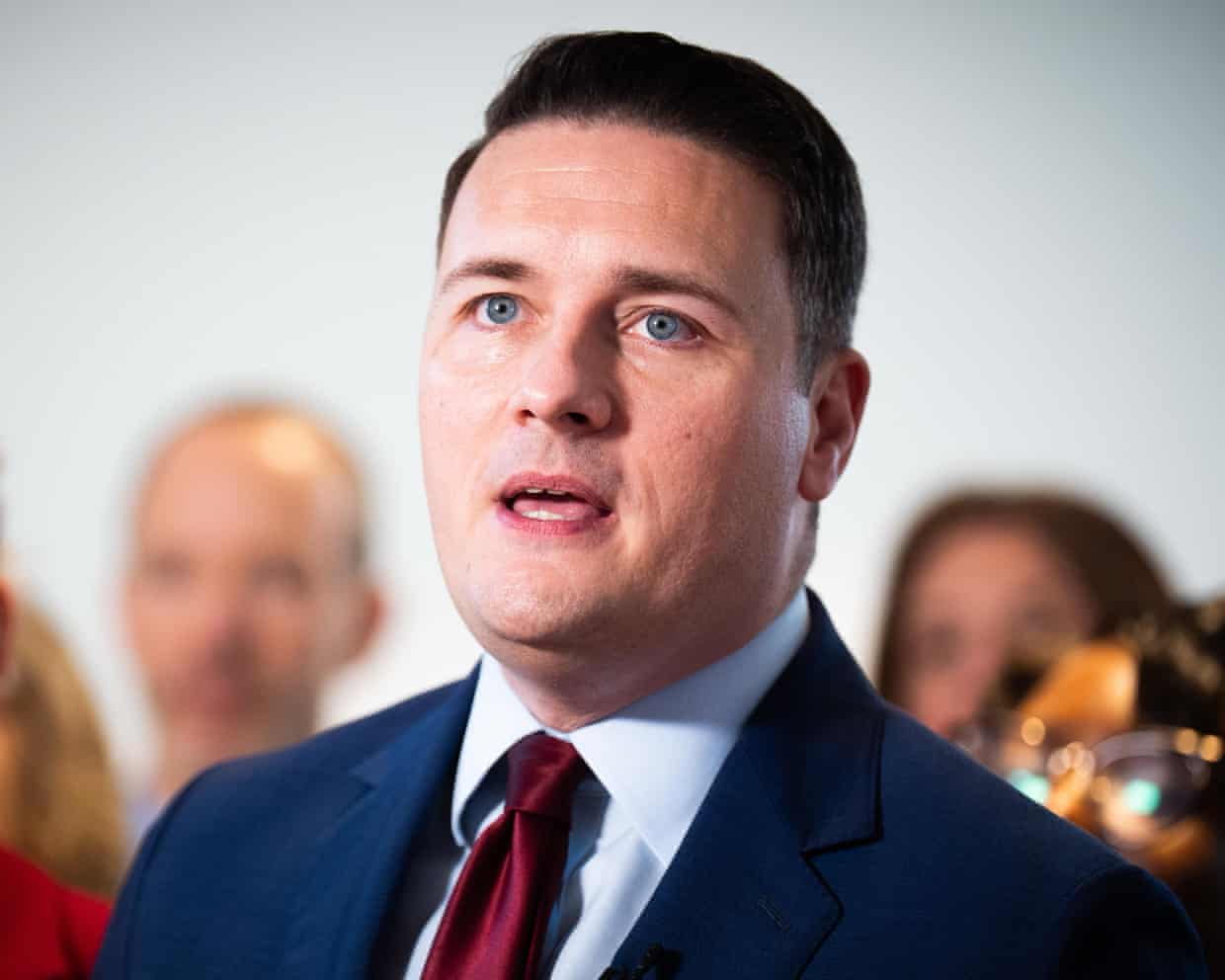
Wes Streeting predicted he would be “toast” at the next general election, according to private WhatsApp messages exchanged with Peter Mandelson and published by the health secretary in an effort to draw a line under his relationship with the disgraced peer.In the messages, Streeting said the government lacked a growth strategy and questioned No 10’s communications operation – remarks that appeared to form part of an effort to position himself for a potential leadership contest.The prime minister’s grip on power was pushed to the brink on Monday after Anas Sarwar, Labour’s leader in Scotland, called for him to stand down before the May Scottish parliamentary elections, citing “too many mistakes” by the UK government.Streeting, regarded as a potential leadership contender should Starmer go, had a close friendship with Mandelson that, after the scandal that erupted last week, threatened to be a significant liability to his ambitions.Allies of the health secretary said the WhatsApp messages, sent between August 2024 and October last year, showed he had “nothing to hide” about their relationship.
The scandal has already led to the departure of Morgan McSweeney, Starmer’s chief of staff, who advised the prime minister to proceed with Mandelson’s appointment.Streeting publicly backed the embattled prime minister on Monday, joining the rest of the cabinet in an effort to dampen speculation over Starmer’s precarious position.But he acknowledged the damage of recent days, saying: “It has not been the best week for the government and that’s not just Keir Starmer; that’s all of us because we’re a team … I want him to come through it and I want him to set out the plan that people can get behind.”The dozens of WhatsApp messages released by Streeting depict a familiar relationship, close enough for some messages to be suffixed with a kiss and for him to praise the “lovely photos” of Mandelson in a newspaper profile.Perhaps the most revealing exchanges date from late March last year, after Matthew Doyle quit as Starmer’s communications director in No 10.
In one, Streeting agreed with Mandelson’s view that “the government problems do not stem from comms”.This led to Streeting saying he feared being “toast at the next election” in his Ilford North seat, adding: “There isn’t a clear answer to the question: why Labour?” After Mandelson complained about a lack of economic philosophy, Streeting replied: “No growth strategy at all.”The longest exchange came last July, when Streeting asked for Mandelson’s views on formally recognising the state of Palestine, saying it would be politically impossible for him to vote against such a move in parliament.Streeting held his seat in 2024 by just 528 votes against a pro-Gaza independent.“Morally and politically”, Streeting said, the UK needed to join France in going for recognition, writing: “Morally, because Israel is committing war crimes before our eyes ….
Politically, a Commons vote will be engineered in September on recognition and we will lose it if we’re not ahead of it,”Days later, he messaged again to say he was worried about a “summer of angst” over recognition and ministerial resignations,In September, Streeting was among those to whom Mandelson sent his statement announcing the end of his ambassadorship,The health secretary did not respond,After publishing the messages, Streeting confirmed he would stand again in Ilford North at the next election, saying that a year on from his messages he was receiving “a lot of support” from constituents who either abstained or backed other main parties last time.
He also suggested that he had been “proved wrong” on the economy, and that since the exchanges the country had experienced some growth, falls in interest rates, and the government on course to hit its inflation targets.In an article for the Guardian, Streeting said that contrary to reports, “I was not a ‘close friend’ of Peter Mandelson, but I am not going to wash my hands of my actual association with him either”, adding that this was why he had decided to publish the messages.“We saw each other for dinner on average once a year with others.He offered advice.My partner worked for him 25 years ago and I therefore got to know Mandelson better than some of that generation in politics,” he wrote.
Saying he had no influence over the decision to appoint Mandelson as ambassador to Washington, Streeting said that, like many people in Westminster, “I filtered the news of it entirely through the lens of whether it seemed a sensible way to help our relationship with a critical ally at a crucial moment”.He added: “We need to be honest about the fact that if women like Jess Phillips had been in that room when the decision was taken, Peter Mandelson would never have been sent to Washington.”

UK borrowing costs rise, then dip, as pressure grows on Starmer; Japan’s Nikkei hits record high after Takaichi’s election win – as it happened
UK borrowing costs are pushing higher, as pressure continues to mount on Keir Starmer.The yield, or interest rate, on 10-year government bonds is now up 7 basis points (0.07 percentage points) to 4.59%, as gilt prices continue to drop.That’s close to the two and a half-month high touched last week

NatWest to buy wealth manager Evelyn Partners for £2.7bn
NatWest has agreed a £2.7bn deal to buy Evelyn Partners, one of the UK’s biggest wealth managers, in the bank’s largest acquisition since it was bailed out by taxpayers in 2008.The move signals an attempt to bolster the wealth management business for the banking group, which returned to full private ownership last year, and already owns the private bank Coutts.It makes NatWest the latest among the big four banks to push more forcefully into wealth management. Rivals including HSBC, Lloyds Banking Group and Barclays have been working to lure more fee-paying affluent customers, ensuring lenders are less reliant on income from everyday loans that are linked to the rise and fall of interest rates

‘It felt hypocritical’: child internet safety campaign accused of censoring teenagers’ speeches
An internet safety campaign backed by US tech companies has been accused of censoring two teenagers they invited to speak out about the biggest issues facing children online.Childnet, a UK charity part-funded by companies including Snap, Roblox and Meta, edited out warnings from Lewis Swire and Saamya Ghai that social media addiction was an “imminent threat to our future” and obsessive scrolling was making people “sick”, according to a record of edits seen by the Guardian.Swire, then 17, from Edinburgh, and Ghai, then 14, from Buckinghamshire, had been asked to speak at an event to mark Safer Internet Day in 2024 in London in front of representatives from government, charities and tech companies.The tech-backed charity also edited out references to children feeling unable to stop using TikTok and Snap, social media exacerbating a “devastating epidemic” of isolation, and a passage questioning why people would want to spend years of their lives “scrolling TikTok and binge-watching Netflix”, the edits show.The 2026 iteration of the Childnet-run event takes place on Tuesday with more than 2,800 schools and colleges listed as supporters
‘I fell into it’: ex-criminal hackers urge Manchester pupils to use web skills for good
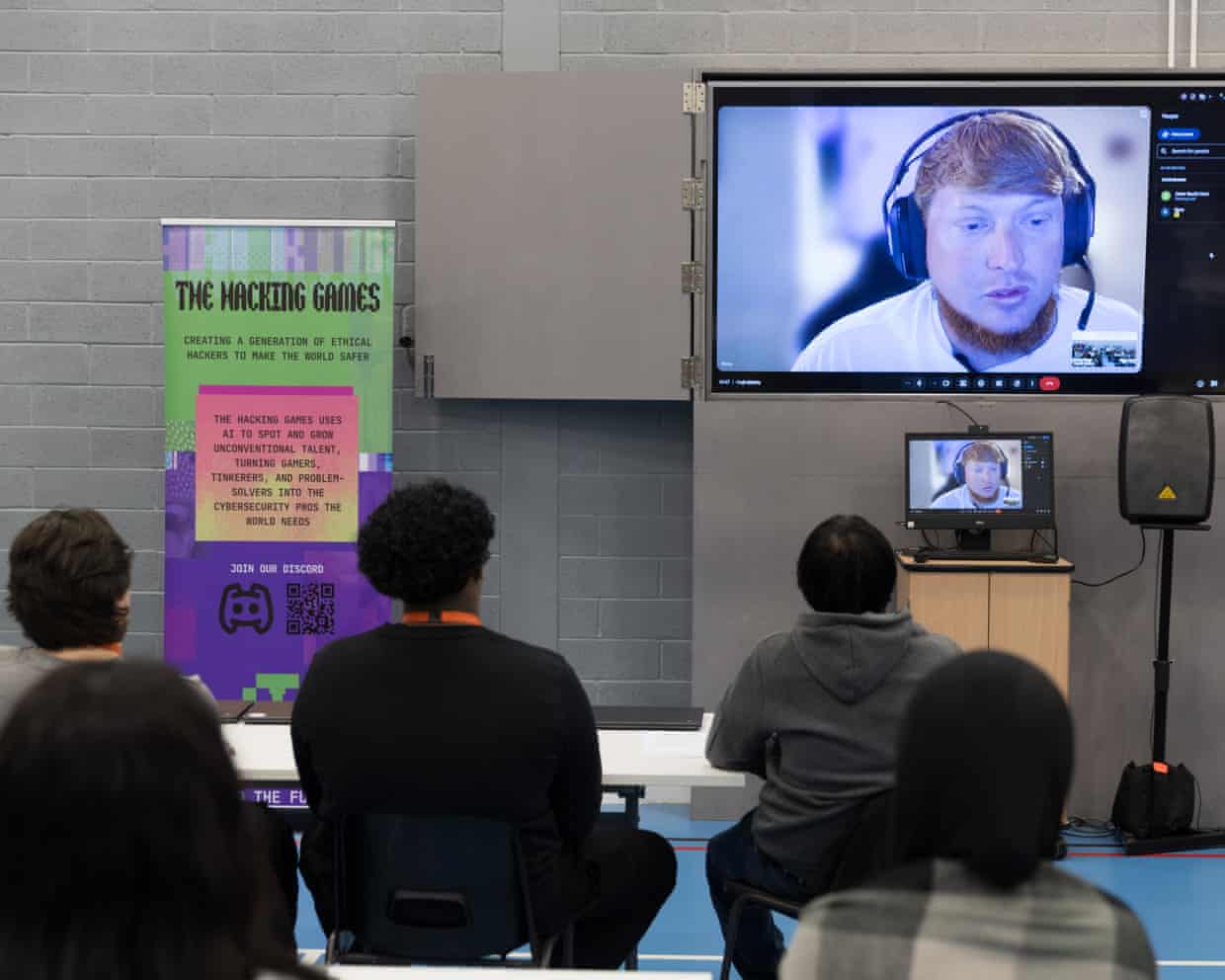
Cybercriminals, the shadowy online figures often depicted in Hollywood movies as hooded villains capable of wiping millions of pounds off the value of businesses at a keystroke, are not usually known for their candour.But in a sixth-form college in Manchester this week, two former hackers gave the young people gathered an honest appraisal of what living a life of internet crime really looks like.The teenagers in the room are listening intently, but the day-to-day internecine disputes they hear about is not the stuff of screenplays.“It’s just people getting into these online dramas and they’re swatting and doxing each other and getting people to throw bricks through their windows,” one of the hackers says.If the language sounds unfamiliar, it should – “swatting” and “doxing” involve people outing each other online by posting their genuine identities – but their message is clear: though cybercrime may seem alluring, the reality is anything but

Trying times for Welsh rugby | Letters
Re your editorial (The Guardian view on Welsh rugby: enduring an existential crisis with cultural roots, 4 February), what’s surprising is that it’s taken this long. In the amateur era, Wales, with a much smaller population than that of England, had more wins than losses against most of the home nations. Welsh clubs were among the very best in the world and Cardiff, Swansea, Newport and Llanelli all beat the All Blacks.The game and its culture had great resonance in southern Wales, where relatively slightly built men, fleet of foot and with flair (many from south-west Wales and Welsh speakers) ran with the ball won by forwards often hardened by work in heavy industry. Schoolmasters were dedicated to encouraging talent and participation in team games

Winter Olympic officials to investigate why medals keep breaking
They are among the most prized possessions in sport, yet embarrassingly for Olympic officials the medals in Milano Cortina keep breaking.On Monday organisers promised to launch an investigation into why it was happening after Winter Olympic medallists, including the American downhill skiing champion Breezy Johnson, reported chipped, cracked and damaged medals.Johnson’s medal broke shortly after the podium ceremony on Saturday when she was celebrating. “I was jumping up and down in excitement, then it just fell off,” she told reporters, before showing her cracked and chipped medal in one hand as the separated ribbon hung around her neck.The Sweden cross‑country skier Ebba Andersson reported that her medal “fell in the snow and broke in two”, before adding: “Now I hope the organisers have a ‘plan B’ for broken medals
Synthetic opioids may have caused hundreds more UK deaths than thought

The troubling rise of longevity fixation syndrome: ‘I was crushed by the pressure I put on myself’

The sneeze secret: how much should you worry about this explosive reflex?
‘16 years later, I’m not unhappy’: the rise of Britain’s multigenerational flatmates

UK’s ‘unsung army’ of full-time unpaid carers needs more support, report says
Menstrual blood test could offer alternative to cervical screening for cancer