Robbins v Starmer: the key points they disagree on over Mandelson vetting

In the last 24 hours, the two men at the heart of the Peter Mandelson vetting scandal have given their version of events: Keir Starmer, the prime minister, and Olly Robbins, the man he sacked as the head civil servant at the Foreign Office.Robbins’ testimony to the foreign affairs select committee on Tuesday completes much of the picture as to why Mandelson was given security clearance against the advice of vetting officials.But there are several points on which Starmer and Robbins disagree.Here are some of them.Robbins detailed at length on Tuesday the pressure he and his predecessor, Philip Barton, came under to appoint Mandelson quickly, saying it helped to explain why he felt he needed to overrule vetting officials’ recommendation to deny the Labour peer security clearance.
“The focus was on getting Mandelson out to Washington quickly,” Robbins said, adding: “Throughout January, honestly, my office [and] the foreign secretary’s office were under constant pressure.There was an atmosphere of constant chasing.”Starmer did not deny on Monday that pressure had been applied to the Foreign Office to confirm the appointment, but he said this should not have changed Robbins’ decision or whether he told No 10 about the UK Security Vetting (UKSV) recommendations.The prime minister told MPs: “I reject the idea that any pressure is a good reason not to disclose to the prime minister that UKSV recommended against clearance for a very senior, sensitive appointment.I simply do not accept that that is an adequate reason, whatever the pressure.
”Whatever the pressure Robbins says he was under, he insisted on Tuesday that the decision to give Mandelson security clearance had been the right one.“There is quite a lot about this situation over the last year and a half I regret,” he said.“[But] I have no regrets about the work of my brilliant team and the judgment that we came to.”This is the diametric opposite of what the prime minister believes.Starmer said on Monday: “If I had known before Peter Mandelson took up his post that the UKSV recommendation was that developed vetting clearance should be denied, I would not have gone ahead with the appointment.
”Robbins made clear that one of his biggest regrets about the Mandelson appointment was that the prime minister announced it in December 2024, before the Foreign Office had completed its vetting processes.He told the committee: “I regret that this process was not done before [the] announcement,” but said it would not have changed his decision if it had been.The prime minister holds the opposite view, telling MPs on Monday: “For a direct ministerial appointment, it was usual for security vetting to happen after the appointment but before the individual starting in post.That was the process in place at the time.”Even now, Robbins believes it was right to withhold UKSV’s recommendation from the prime minister.
He told the committee: “You are not supposed to share the findings and reports of UKSV other than in exceptional circumstances,”Asked whether Mandelson’s appointment should have counted as an exceptional circumstance, he replied: “No,What I was told was absolutely within the normal parameters of a set of findings from UKSV,”Starmer and No 10 continue to reject this, saying there is nothing to stop officials telling the prime minister about the recommendations made by security officials if not involving them in the decision itself,The prime minister said on Monday: “The recommendation in the Peter Mandelson case could and should have been shared with me before he took up his post.
”Robbins made clear on Tuesday he felt mistreated over the past few days and did not believe he should have been sacked.He told the committee: “One scapegoat for this is enough.”Starmer insists he was right to take action against the former civil servant.He said on Monday: “Sir Olly Robbins has had a distinguished career, and I have worked with him over a number of years.“Nonetheless, he could and should have shared this crucially relevant information with me before Peter Mandelson took up his post, and he should have done at various points after that.
“It was because of that that I lost confidence in him.”
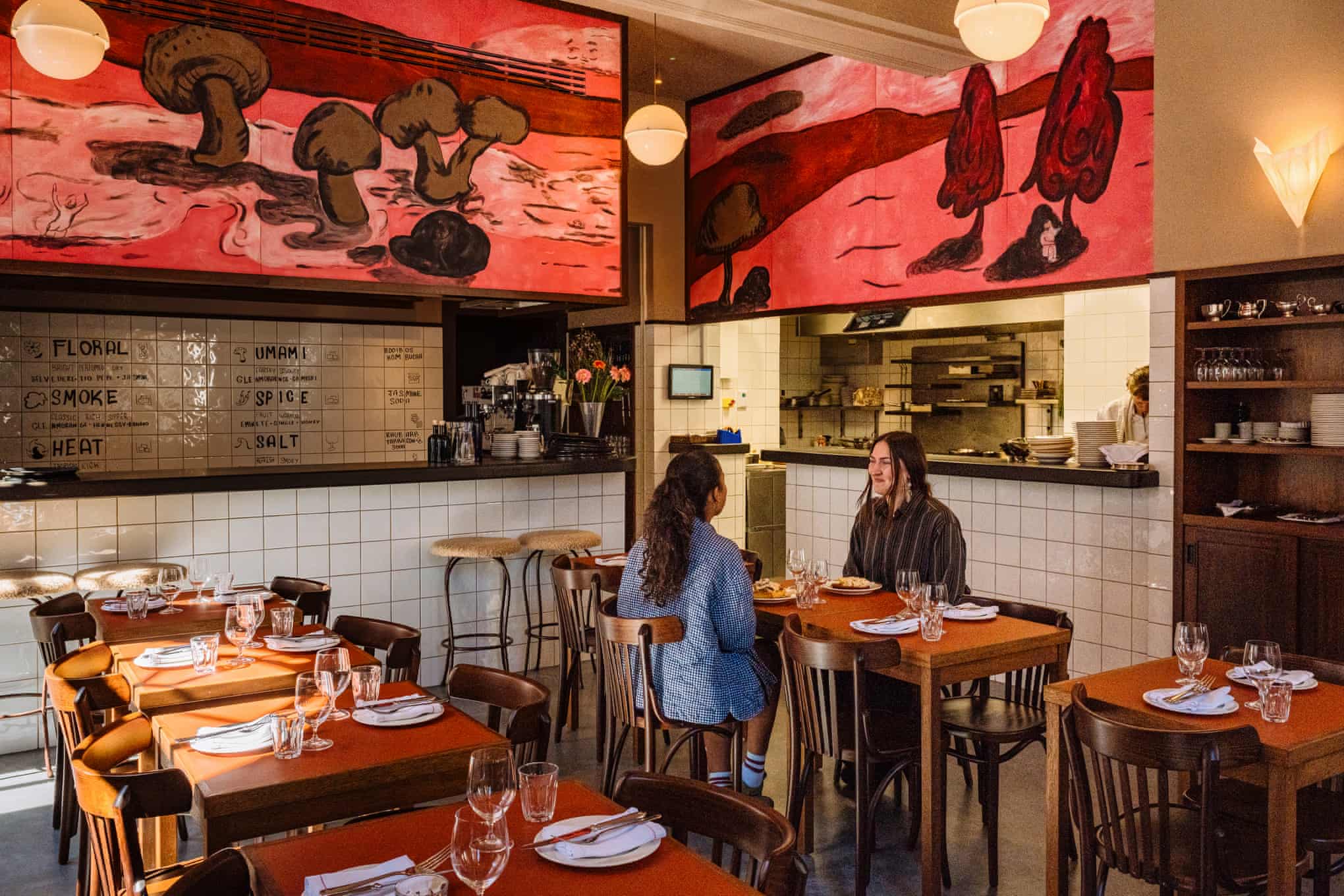
Holy Carrot, London E1: ‘As good as plant-based dining gets’ – restaurant review | Grace Dent on restaurants
This place is about so much more than just a portobello mushroom in a white bap masquerading as dinnerHoly Carrot has, cough, taken root in Spitalfields, east London. It’s the second sprouting from this plant-based restaurant with a name that’s especially hard to sell to meat-loving friends. “Please come with me to a vegan restaurant,” one might say. “It’s not one of those pious places, honest! Oh, um, the name? Holy Carrot.” In fairness, though, it’s generally tricky to cajole meaty people to venture anywhere vegan or even vegetarian, because there’s always a sense that your steak addict acquaintance is enduring their meal “as an experiment”, and despite quite charitably being “willing to be convinced”
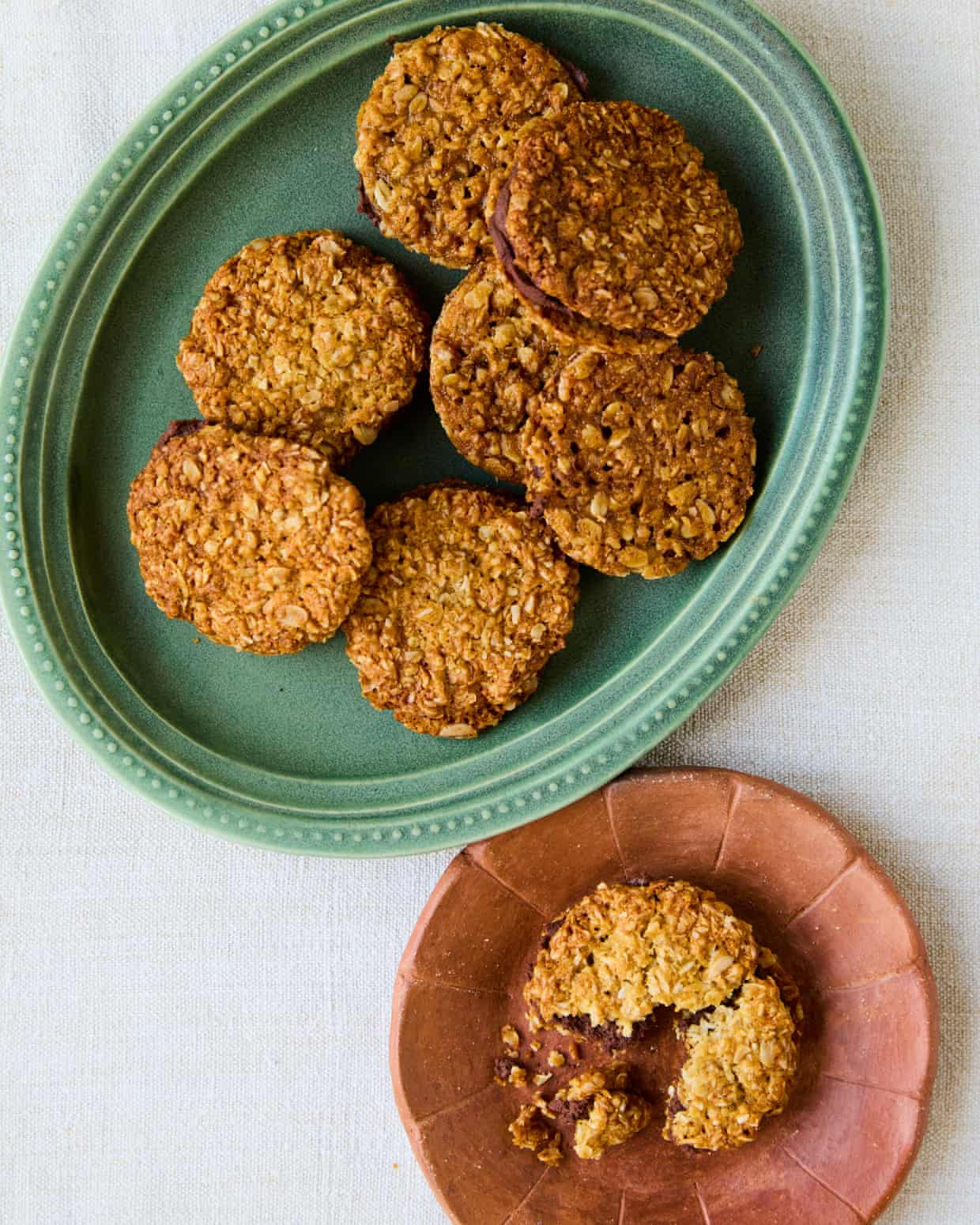
Helen Goh’s recipe for Anzac sandwich biscuits with dark chocolate filling | The sweet spot
Anzac biscuits are closely associated with Anzac Day on 25 April, which commemorates the members of the Australian and New Zealand Army Corps who served in the first world war. Made with oats, coconut and golden syrup, the biscuits are said to have been popular because they travelled well and kept for long periods, making them suitable for sending to forces overseas. My version here, a slightly less austere take on the classic, sandwiches two small biscuits with a lightly salted, olive oil-enriched dark chocolate ganache. The result is crisp at the edges, soft within and not too sweet.Prep 5 min Cook 35 min, plus cooling Makes 12 sFor the biscuits 90g rolled oats 45g plain flour 40g light brown sugar 30g caster sugar 40g desiccated coconut 80g unsalted butter 40g golden syrup ½ tsp bicarbonate of soda ¼ tsp fine sea saltFor the ganache110g dark chocolate (60-70% cocoa solids), chopped60ml single cream 2 tsp olive oil ¼ tsp flaky sea saltPut the oats, flour, sugars and coconut in a medium bowl and whisk to combine

Just the tonic: why it’s more than a mixer
If a tonic is something that “makes you feel stronger and happier”, my tonics come in the form of good wine, bad chocolate and an ageing whippet called Ernie. Recently, though, I’ve found myself craving the OG tonic – tonic water – which started life as a malaria treatment in the age of the British empire.The Guardian’s journalism is independent. We will earn a commission if you buy something through an affiliate link. Learn more

Move over matcha: how ube cocktails and coffees are hitting the UK’s sweet spot
Bright purple coffees and cocktails made with a root vegetable called ube have hit the high street in the UK after the yam’s striking hue caused a sensation on social media. Many are calling ube the “new matcha”, and it has a nutty, creamy, sweet taste, like a mix between coconut and vanilla.Ube coloured and flavoured drinks became popular in the US last year, after an earlier boom in Australia. Farmers in the Philippines, where the root vegetable is often sourced, have been struggling to meet demand.Now, the purple drinks have crossed the pond: Starbucks and Costa both launched ube drinks in their UK stores last month
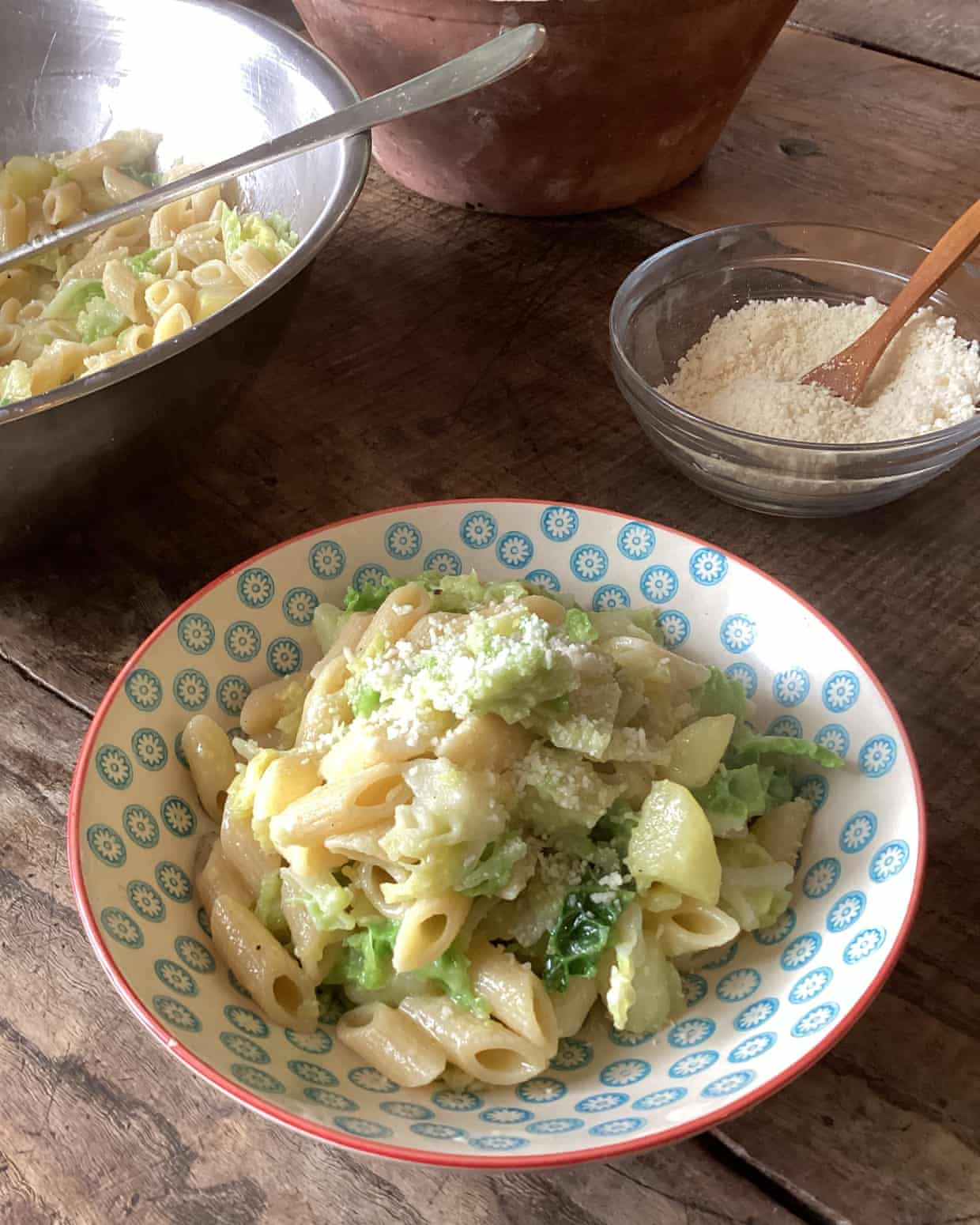
Rachel Roddy’s ‘high-ranking’ penne with potatoes, cabbage, butter and cheese – recipe
In December 2023, the magazine La Cucina Italiana ranked Italians’ favourite pasta shapes, according to data gathered by Unione Italiana Food (“the leading association in Italy for the direct representation of food product categories”). I love this sort of thing. According to the UIF, by processing NielsenIQ data (comprehensive market research, consumer intelligence and retail measurement), they identified the five most popular shapes from over 500, and examined how preferences vary in different regions.In first place was spaghetti, while penne came in second, with these two shapes – which also takes in thinner spaghettini, chunkier spaghettoni and both ridged and smooth penne – accounting for 78% of all pasta sold in Italy in 2023. The regional variations of three, four and five are as follows: in the north-west and north-east, fusilli, short pasta and mixed pasta for broth or minestra; in central Italy, short pasta, fusilli and rigatoni; in the south, mixed pasta for broth or minestra, short pasta and tortiglioni
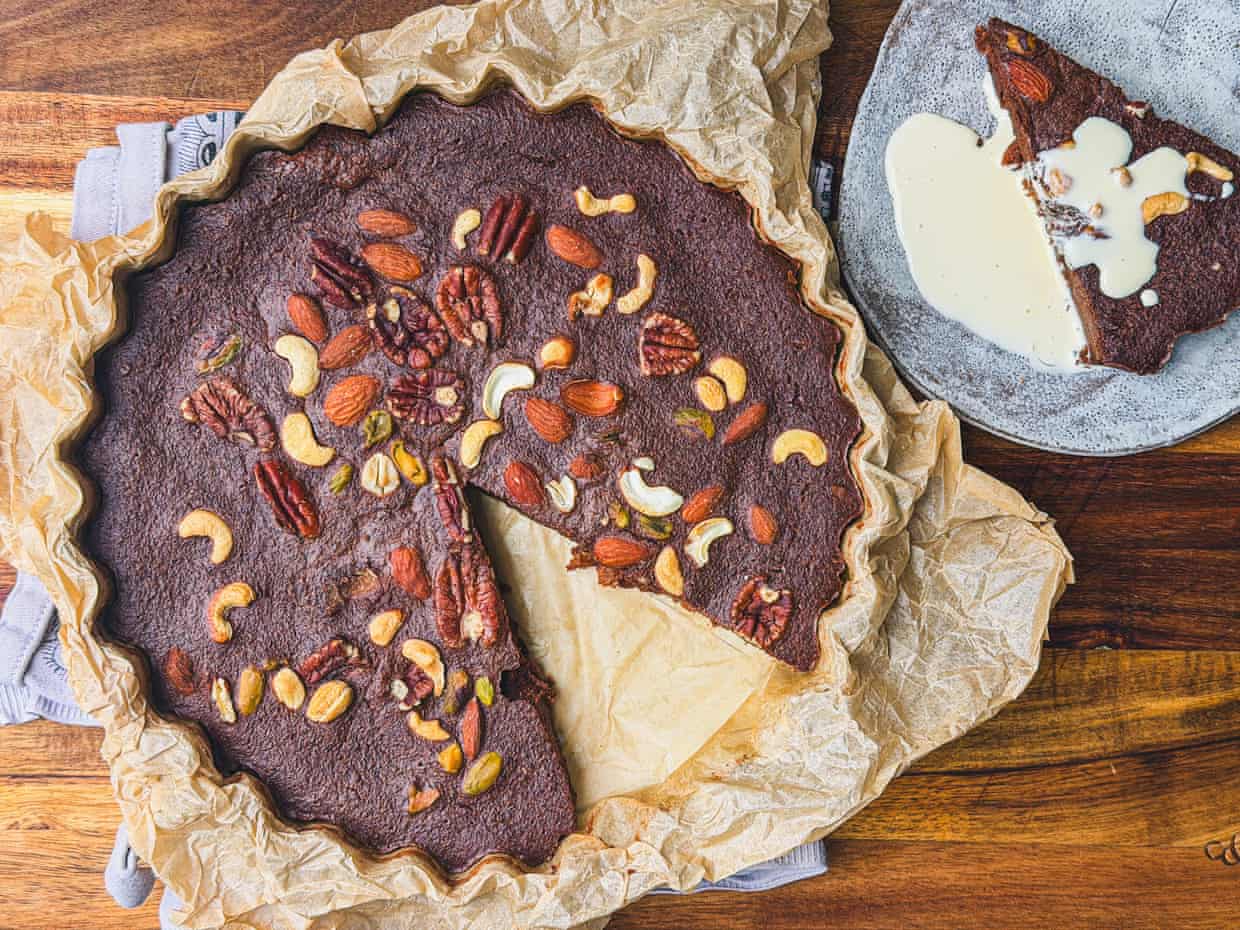
How to turn old bread into a brilliant Italian cake – recipe | Waste not
Old sourdough is my secret ingredient. To stop it going mouldy, I take it out of any plastic packaging and keep it in the bread bin with plenty of airflow around it – that way, it will dry out slowly, rather than turning mouldy. Any odds and ends, meanwhile, I store in a cloth bag to use in various dishes, from pangrattato (or poor man’s parmesan) to strata, a savoury bread-and-butter pudding.My new favourite recipe discovery for using up stale bread is today’s torta paesana, or village cake, from Lombardy. The best way I can come up with to describe it is that it’s a bit like a firm baked custard

V&A East Storehouse and Norwich Castle among finalists for museum of the year

Letter: Sir Neil Cossons obituary

‘Women want to experience pleasure’: how the female gaze caught the attention of film, TV and fiction

Yann Martel: ‘I hate the rich people of this world – of which I’m one, because of Life of Pi’

The Guide #239: Two successful seasons in, The Pitt has resuscitated the medical drama

Winners and judges out of pocket as £20,000 writing awards appear to have closed