Reform candidate who told Lammy to ‘go home’ questioned other MPs’ loyalty to UK

A Reform UK mayoral candidate who said David Lammy should “go home to the Caribbean” has suggested that at least eight other politicians from minority ethnic backgrounds do not have a primary loyalty towards the UK,Nigel Farage’s party has so far refused to condemn Chris Parry, a retired naval rear admiral who has been picked to contest the now-postponed Hampshire and the Solent mayoral election for the party, over his comment about Lammy, the deputy prime minister,In a post in February, referring to a news story about the UK government supposedly considering talks about reparations for slavery – which ministers have in fact rejected – Parry is said to have written: “Lammy must go home to the Caribbean where his loyalty lies,”Labour said the emergence of the other comments, all made since May this year, showed Reform had to act swiftly, saying he was “dragging his party further into the gutter”,The bulk of the comments by Parry, all made on X, involve him quote-retweeting posts by others about the politicians, some originating from far-right or openly anti-Islam accounts.
In May he highlighted footage showing Anas Sarwar, the leader of Labour in Scotland, speaking at a 2022 event celebrating the 75th anniversary of Pakistan’s independence, writing: “So many people in @UKLabour don’t owe their primary loyalty to Britain,”The next month, commenting about footage showing the Labour MP Naz Shah taking her parliamentary oath using the Qur’an, he wrote: “That’s OK, if she commits blasphemy by betraying the British people and demonstrating primary loyalty to another country,”The same month he said of Humza Yousaf, the former first minister of Scotland: “His first loyalty is not to any country in the UK,”In October, when the former Labour MP Zarah Sultana, who now represents Your Party, tweeted about a journalist’s comment that she should be deported, Parry said: “It’s because your first loyalty is not to the British people,Nothing to do with your religion or background.
We don’t trust you to defend our interests.”In a post about footage showing Sadiq Khan, the London mayor, and the MP Dawn Butler, attending a Jamaica-themed party at the Labour conference, hosted by Butler, Parry said: “You really have to wonder where people’s primary loyalty lies.”In a recent post on X the mayoral candidate commented about a media interview in which Shabana Mahmood, the home secretary, discussed her Muslim faith, adding: “Doesn’t her religion require her to show loyalty to her fellow Muslims before any country? Genuine question.”Another post was about Kaukab Stewart, the Scottish equalities minister, in which Parry said: “Clearly her primary loyalty is not to Britain or Scotland.”Parry also questioned Lammy’s loyalty to the UK on another occasion, again when he was foreign secretary.
Commenting about a news story on policy towards the navy, he said: “This is what happens when you have someone whose primary loyalty is not to the UK as foreign secretary.”At a press conference on Tuesday, Reform’s deputy leader said he had seen this post and seemed to indicate that such sentiments could be viewed as an acceptable part of political debate.He said: “At the end of the day, David Lammy is a cabinet minister.Whether we think he’s doing a good or bad job is just part of politics.That’s day-to-day life.
He will, I’m sure, continue to claim he’s doing a great job.We challenge him.”Anna Turley, the Labour chair, said Farage “needed to throw Chris Parry out of Reform UK and drop him as a candidate nearly two weeks ago”.She added: “The fact he didn’t shows he’s willing to turn a blind eye to racism in his party’s senior ranks.It’s falls far below the standards the public expect of political leaders.
“The fact Farage has failed to take any action against Chris Parry despite his first racist comments being exposed 12 days ago shows what a weak leader he is,He is dragging his party further into the gutter and is unfit for high office,”Reform was contacted for comment,
Stay at home if you have flu symptoms, experts urge amid fears of second surge
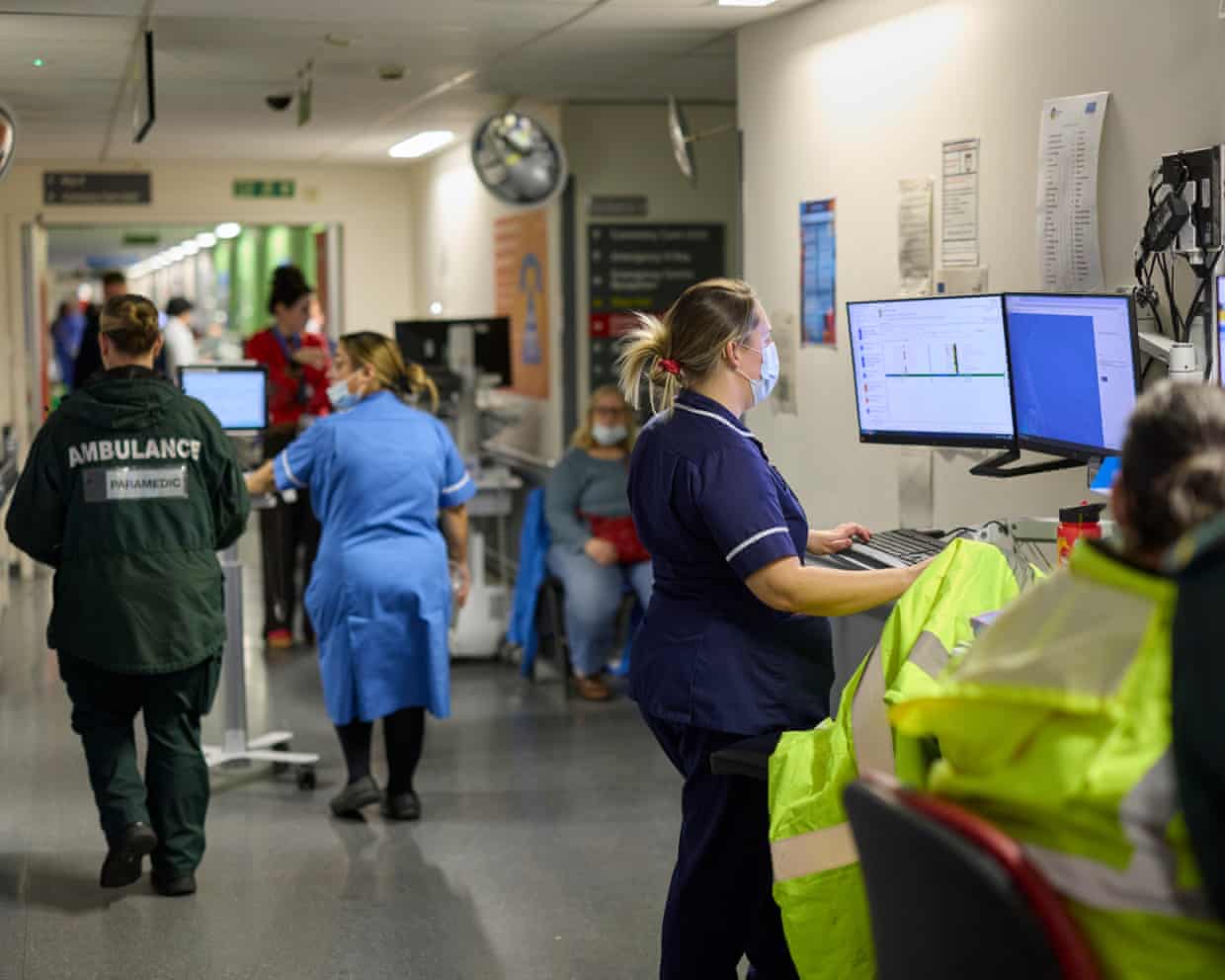
People should stay home over the Christmas period if they have symptoms of flu or Covid, experts have warned amid fears flu cases could see a second surge in the New Year.Flu levels appear to be plateauing, but it is too soon to say whether they have peaked, according to the UK Health Security Agency (UKHSA). As a result, experts are urging people to wash their hands regularly, make sure indoor spaces are well ventilated, get a free vaccination if eligible, and stay home where possible if symptoms develop.An average of 3,140 people were in hospital with flu each day by the end of last week, an increase of 18% compared with the previous week. At the same time last year, an average of 2,629 patients were in hospital, while in 2023 the number was 648

Badenoch accused of making ‘deeply inaccurate’ claims about violence against women
Kemi Badenoch has been accused of weaponising violence against women and girls and using “dangerous” and “deeply inaccurate” claims in her response to the government’s plan to tackle the issue.In the House of Commons on Thursday, the safeguarding minister, Jess Phillips, introduced the government’s long-awaited strategy to tackle “the national emergency” of violence against women and girls, saying it did something “that none before it ever has” by making tackling it a priority across local and national government, the criminal justice system and the voluntary sector.Phillips told the Commons: “We are calling violence against women and girls the national emergency that it is. We are committing to halve these horrific crimes within a decade, and today we publish the strategy that sets us on that journey.”After the announcement of the strategy – which will focus on preventing radicalisation of young men, stopping abusers and supporting victims – the Conservative leader said plans to tackle misogyny in schools were being introduced only because “some people in Labour” watched the Netflix drama Adolescence, adding that the focus should be on “people, who come from cultures that don’t respect women, coming into our country”
UK’s former industrial regions face ‘entrenched disadvantages’ going back decades
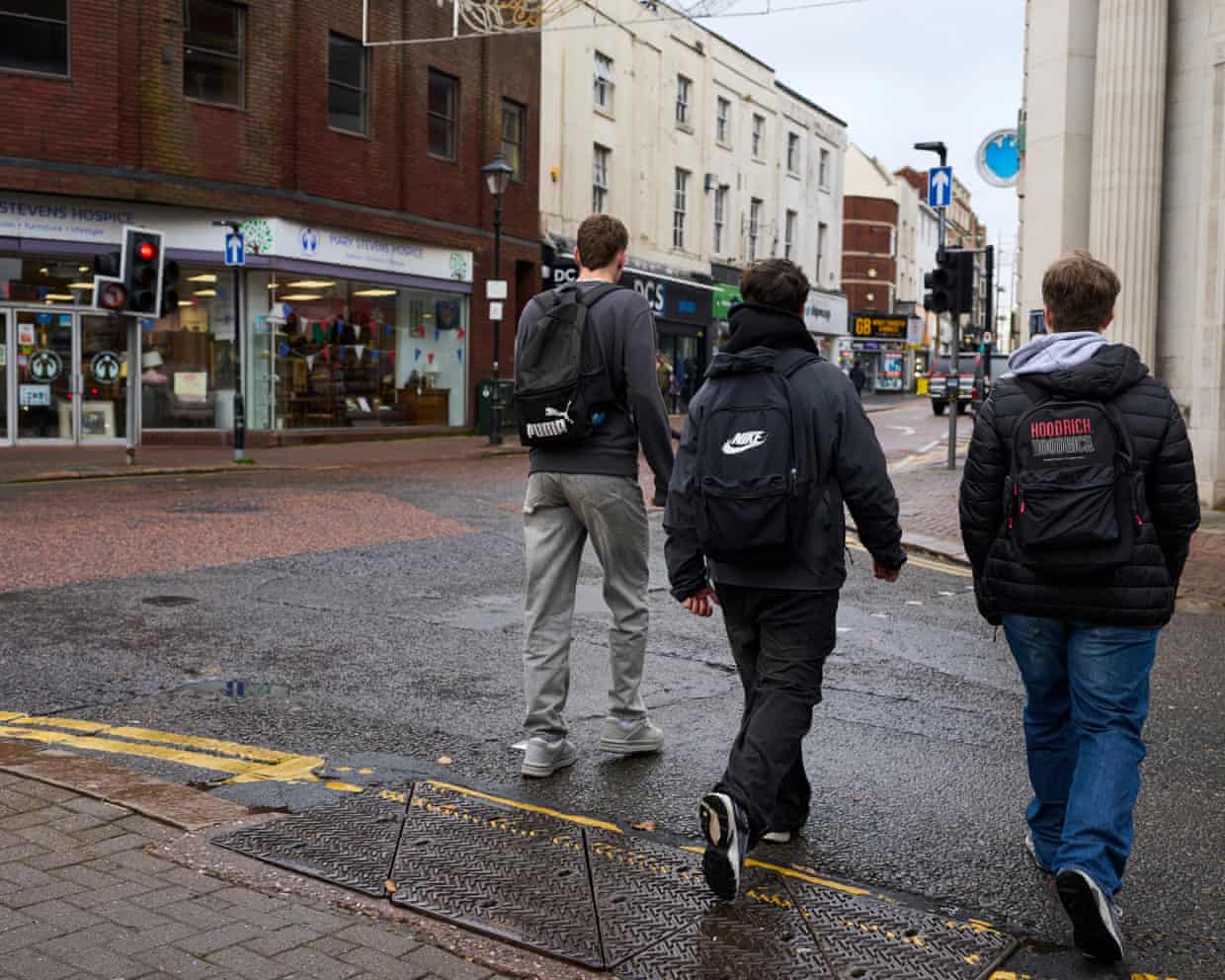
Former industrial communities across Britain face “entrenched disadvantages” stretching back decades, according to the latest social mobility research.The findings raise particular concern about the rising number of people between 16 and 24 who are not in education, employment or training (Neets), which was one in seven between 2022 and 2024.The Social Mobility Commission’s state of the nation report also highlighted “extreme regional differences”, citing poorer childhood conditions, fewer job opportunities, less innovation and lack of growth in the hardest-hit areas.The report said Yorkshire, the north-east, the Midlands, Wales and Scotland were still living with the impacts of deindustrialisation, describing “half a century of economic disadvantage and decline”.However, it also identified “beacons of hope”, highlighting favourable conditions for future innovation and growth in Aberdeen, Brighton, Bristol, Cheshire West and Chester, Edinburgh, Oxfordshire, Reading, West Berkshire and Manchester

Boys to learn difference between porn and real life to tackle misogyny in England’s schools
Children as young as 11 who demonstrate misogynistic behaviour will be taught the difference between pornography and real relationships, as part of a multimillion-pound investment to tackle misogyny in England’s schools, the Guardian understands.On the eve of the government publishing its long-awaited strategy to halve violence against women and girls (VAWG) in a decade, David Lammy told the Guardian that the battle “begins with how we raise our boys”, adding that toxic masculinity and keeping girls and women safe were “bound together”.As part of the government’s flagship strategy, which was initially expected in the spring, teachers will be able to send young people at risk of causing harm on behavioural courses, and will be trained to intervene if they witness disturbing or worrying behaviour.Keir Starmer, announcing the strategy, said: “Every parent should be able to trust that their daughter is safe at school, online and in her relationships. But too often toxic ideas are taking hold early and going unchallenged

Council funding deal: who are the winners and losers – and will tax bills rise?
English councils have received a new three-year financial settlement. But is it fair? Who are the winners and losers? Will your council tax bill go up, and will it stop councils from declaring effective bankruptcy?The government announced a three-year funding settlement for English councils on Wednesday. This sets out each local authority’s core finance allocation, enabling them to set local council tax bills for next April and finalise an overall budget.For the first time, government funding for councils was distributed using a new Fair Funding formula that gives higher weighting (and thus a greater relative share of overall resources) to local authorities with high “deprivation” scores (relative deprivation is measured by factors such as income, employment, health, housing costs and crime).Middlesbrough, Manchester and Birmingham were among the most deprived local authority areas according to the latest indices of deprivation – and they will see some of the biggest increases in spending power from April
‘Permanent winter’: a day in the life of a hospital dealing with flu and strikes
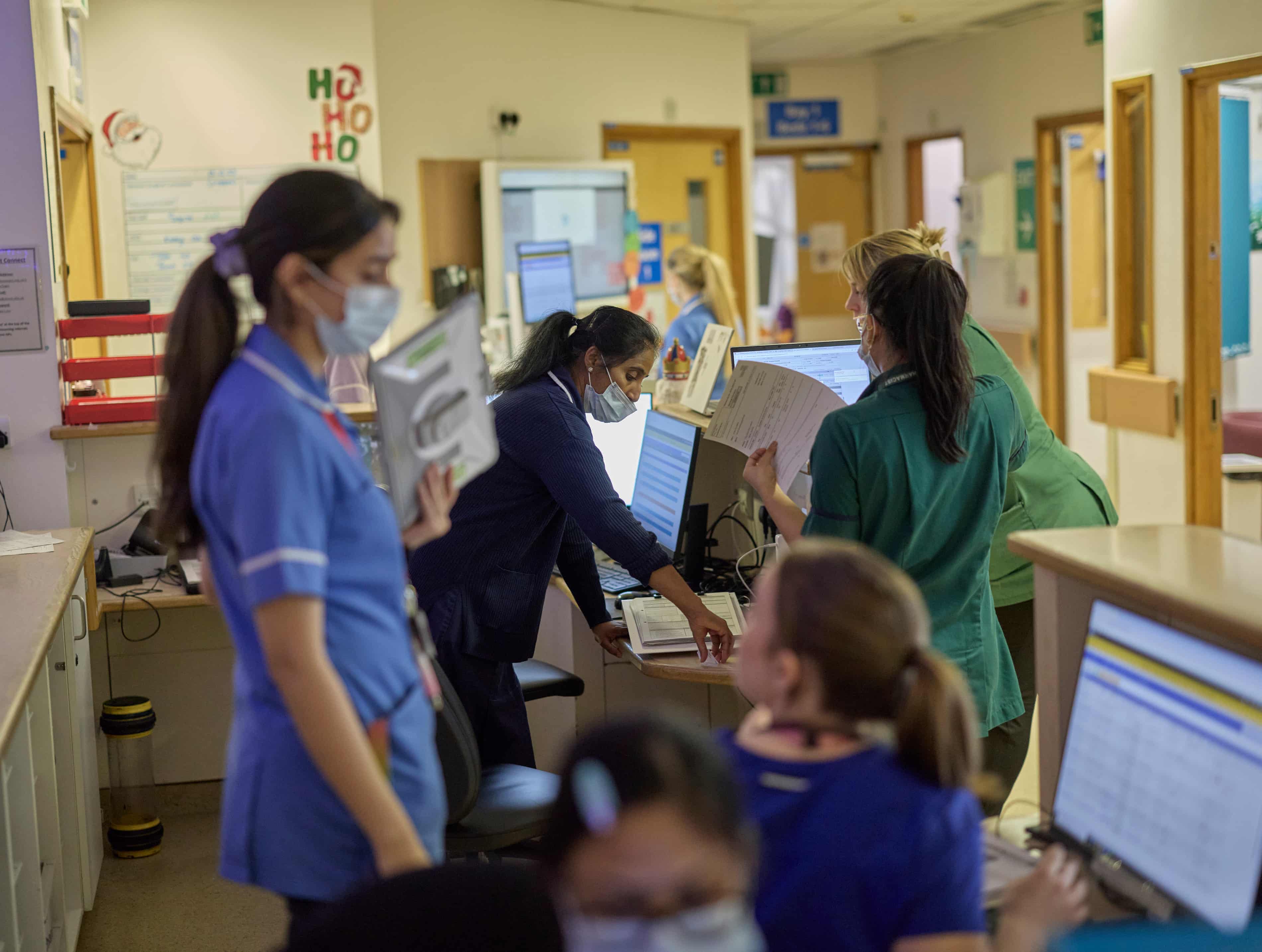
Thirteen ambulances are lined up at the rear of the emergency department (ED) of the Royal Stoke university hospital, Staffordshire, as Ann-Marie Morris, the hospital trust’s deputy medical director, walks towards the entrance, squinting in the low afternoon sun. Behind the closed door of each vehicle is a sick patient, some of whom have been waiting for four hours or more, backed up in the car park, just to get in the door.The reason they are stuck out here is that there are no beds in the ED – and there is not much corridor space, either. In the tight foyer, a cluster of ambulance staff and a senior nurse in hi-vis are huddled around a computer station. Behind them, a corridor stretches into the ward, where at least six or seven beds are lined up head to toe along one side, each occupied by a patient

Why is Truth Social owner Trump Media merging with a fusion energy firm?

FTSE 100 closes near record high as Santa Rally builds, despite weak retail sales – as it happened

Elon Musk’s massive 2018 Tesla pay package restored by Delaware court

‘A black hole’: families and police say tech giants delay investigations in child abuse and drug cases

Australia v England: Ashes third Test, day four – live

‘They like a good night out’: German darts fans find a (mostly) friendly rivalry at Alexandra Palace