‘They like a good night out’: German darts fans find a (mostly) friendly rivalry at Alexandra Palace

They walk among us, sit among us, sing among us,They speak perfect English, hunt in packs, down industrial quantities of Amstel just like everyone else,And yet to the trained eye, to the seasoned Ally Pally veteran, there is just something different to them,A comportment and a vibe,Perhaps the fact they speak perfect English.
You can even spot a subtle distinction in the choice of fancy dress; fewer jockeys and 118 118 runners, more woodland animals and flag suits, less postmodern ironic and more Euro-kitsch.They come, mostly, in love and peace.Even so, the divide is real.Enmity? Perhaps a bit strong.Either way: don’t tell them your name, Pike.
Slowly and by degrees, the Germans are coming.At first in small scattered groups and landing parties, then larger expeditions, and then finally the full-scale mass incursion.A battery of tour buses spills the latest recruits up the steps and into the Palace.Package excursions sell out months in advance.Around a quarter of all tickets for this year’s world championship have been sold in Germany, rising to as many as a third for some sessions.
Why are they here? What do they want? And how did a country that has never produced a world-class player of its own get so thoroughly hooked on the darts?“I think the German public is quite similar to the British public, in terms of what entertains them,” says Philip Brzezinski, a commentator who doubles up as the master of ceremonies for the Professional Darts Corporation’s European Tour.“They like good sport.They like a good night out.The audience used to be very working-class, very male, but it’s now much more universal.”His Sport1 colleague Katharina Kleinfeldt adds: “There’s kind of a niche in between Christmas and New Year.
In the UK you have the Boxing Day football, but in Germany there’s not that much going on.The Bundesliga isn’t on.That’s a reason why the audience is getting bigger and bigger.” Three million viewers watched the 2025 world championship final between Michael van Gerwen and Luke Littler, around the same as watched it in the UK on Sky Sports.According to figures from the German Olympic Sports Confederation, darts is the country’s fastest-growing sport.
Your browser doesn't support HTML5 video,Here is a link to the video instead,Above all, the German darts revolution is a triumph of vision and incremental investment, a case study in how sporting cultures nurtured carefully over decades can explode in the space of just a few years,Until the 1970s darts barely registered in the country, beyond a smattering of expat interest driven largely by the British military presence in the country,Not until 2005 did Germany have its first entrant for the world championship.
But at a lower level, something had been stirring for a while.The inception of the European Tour in 2012 was a recognition by the PDC of the need to break new frontiers, but also of the way darts had begun to take hold as a social sport in the pubs and social clubs of the old industrial west.The same year, the World Cup of Darts was relocated from Sunderland to Hamburg, and later to Frankfurt.The Premier League added Berlin to its roster in 2018.The Euro Tour now comprises 14 events, and Germany hosts seven of them.
However much darts you throw at Germany, they still come back clamouring for more.What makes this all the more remarkable is that, for all its rich grassroots talent, Germany has never really managed to produce the sort of player who can genuinely challenge for the big pots.Gabriel Clemens’s run to the world championship semi-finals in 2023 looks in hindsight like a bit of a fluke.Ricardo Pietreczko, Niko Springer and Martin Schindler have won on the Euro Tour but struggled to reproduce that form on the big stages.And frankly, this should not surprise anyone.
For any promising German player, however talented, one hurdle above all stands in their way: the English crowd.Go back to the very first match of this tournament and the entrance of the unknown debutant Arno Merk was greeted by a chorus of jeers.“For a couple of years now, every time there’s a walk-on I get booed,” says Schindler.Pietreczko endured a nightmarish debut at the 2023 Grand Slam of Darts when he reacted to crowd goading during his game against Beau Greaves, losing his rag and, not long after, the match.That same year, on his way to the world championship semi-finals, Scott Williams toasted a win over Schindler by declaring that “we’ve won two world wars and one World Cup”, a comment for which he was forced to apologise.
But more than any other nationality – even the Scots – Germans seem to get a uniquely hostile reaction from English crowds, part cartoon rivalry and part genuine attempt to secure a competitive edge,Because, of course, this cuts both ways,In recent years prominent English darts players have reported getting very similar treatment from German crowds, most notably during this year’s World Cup,Playing Schindler and Pietreczko in front of a partisan Frankfurt crowd, Littler and Luke Humphries were mercilessly booed during their second-round game, rattled beyond recognition in an 8-4 defeat,Littler was so miffed after being barracked at a tournament in Munich that he boycotted German events for several months.
“Germany’s good when you’re not playing a German,” says Callan Rydz, the world No 40.“I’ve played there a few times against Germans and it can be so hostile.” And this really does make a difference: in his short career Littler has won 27 PDC titles in eight countries, from Belgium to Bahrain, Austria to New Zealand.He’s never won a thing in Germany.Not a Pro Tour, not a Euro Tour, not even a Premier League night.
Should he win the World Masters in Milton Keynes next month only two majors will be missing from his CV – the European Championship and the World Cup,By no coincidence, these are the only two played in Germany,Throw in a little minor beef with Pietreczko last year (over showboat finishes) and Schindler this (over an innocuous comment in a post-match interview), and it’s worth asking: does Littler have a Germany problem? “Yeah, I mean, whatever,I don’t know,” he said when the question was put to him,“The crowds were good in Dortmund.
Not really any booing going on.So maybe I might try a Euro Tour, and if they start booing me then, I won’t go.”Brzezinski plays down the idea of a full-blown rivalry, pointing out that players such as Stephen Bunting and Phil Taylor have always been very warmly received by German crowds.And perhaps there is a more performative dimension to the booing than is often appreciated, two very similar darting cultures separated by a common language.Secretly, they love us.
Secretly, we need them.And sometimes the only way you can really express this symbiotic relationship is through second world war tropes and pantomime jeering.It sounds a lot like hatred.But really, it feels a lot like love.

Creme brulee and chocolate bundt cake: Nicola Lamb’s Christmas crowdpleasers – recipes
Even though our to-do lists are longer and our homes busier than ever, there’s something about Christmas that gives us the extra chutzpah to bake. And not just any baking, but baking for a crowd. So, with this in mind, here are two crowdpleasing recipes – a rich hazelnut “Nutcracker” creme brulee and a resplendent chocolate fondant bundt cake – with a few make-ahead and shortcut secrets to give you a head start.Serve this rich, decadent dessert warm from the oven in the centre of the table, piled with ice-cream (and perhaps pouring cream, too – why not? It’s Christmas!). The batter can be made and kept in the fridge for up to 24 hours, then baked from chilled; add an extra 10 minutes to the cooking time if you do so, though

How to turn excess yoghurt into a silky-smooth dessert – recipe | Waste not
A delicious, gelatine-free panna cotta that saves yoghurt from the waste binI was really shocked to learn from environmental action NGO Wrap that, of the 51,000 tonnes of yoghurt that’s wasted in the UK every year, half of it is in unopened pots! The reason is our old arch enemy, date labels, which can cause confusion and trick us into thinking that perfectly safe yoghurt is not OK to eat. That’s one reason many supermarkets have scrapped use-by dates on the likes of yoghurt, but they still use best-before dates. Remember, if a product doesn’t have a use-by date, always do the sniff test before throwing it away.Today’s recipe is a light, gelatine-free version of panna cotta that’s instead set with agar agar (a type of seaweed), which gives it a soft-set texture. It’s refreshing, deliciously sour and simple to make

Benjamina Ebuehi’s pistachio and cherry meringue cake recipe | The sweet spot
I’m switching up my usual Christmas pavlova this year for a slightly different but equally delicious meringue-based dessert. Discs of pistachio meringue are baked until crisp, then layered with pistachio cream and cherry compote. The meringue softens a little under the cream as it sits, giving it a pleasingly chewy, cake-like texture. A very good option if you’re after a Christmas dessert without chocolate, alcohol or dried fruit.Thanks to the viral Dubai chocolate bar, pistachio creme is quite easy to come by in most supermarkets these days; it’s already sweetened and brings a lovely, soft green colour

Australian supermarket canned peaches taste test: the winner has an ‘absurdly low price’
In a blind taste test, Nicholas Jordan tastes 14 peaches in cans and plastic jars, in juice and syrup – but only one brand is worthy of decorating a pavlovaIf you value our independent journalism, we hope you’ll consider supporting us todayGet our weekend culture and lifestyle emailBefore this taste test, it had probably been 20 years since I last ate a canned peach. But unlike most things that happened 20 years ago, I have a strong memory of the experience. Canned, tinned or any packaged peaches weren’t a staple of my childhood (neither were fresh peaches – I was too fussy to like much except plain carbs, sausages, apples and ice-cream). But somehow I remember not only eating tinned peaches but loving them, soft like panna cotta and as syrupy as a gulab jamun. Not quite the same as a fresh peach but delicious in a different way
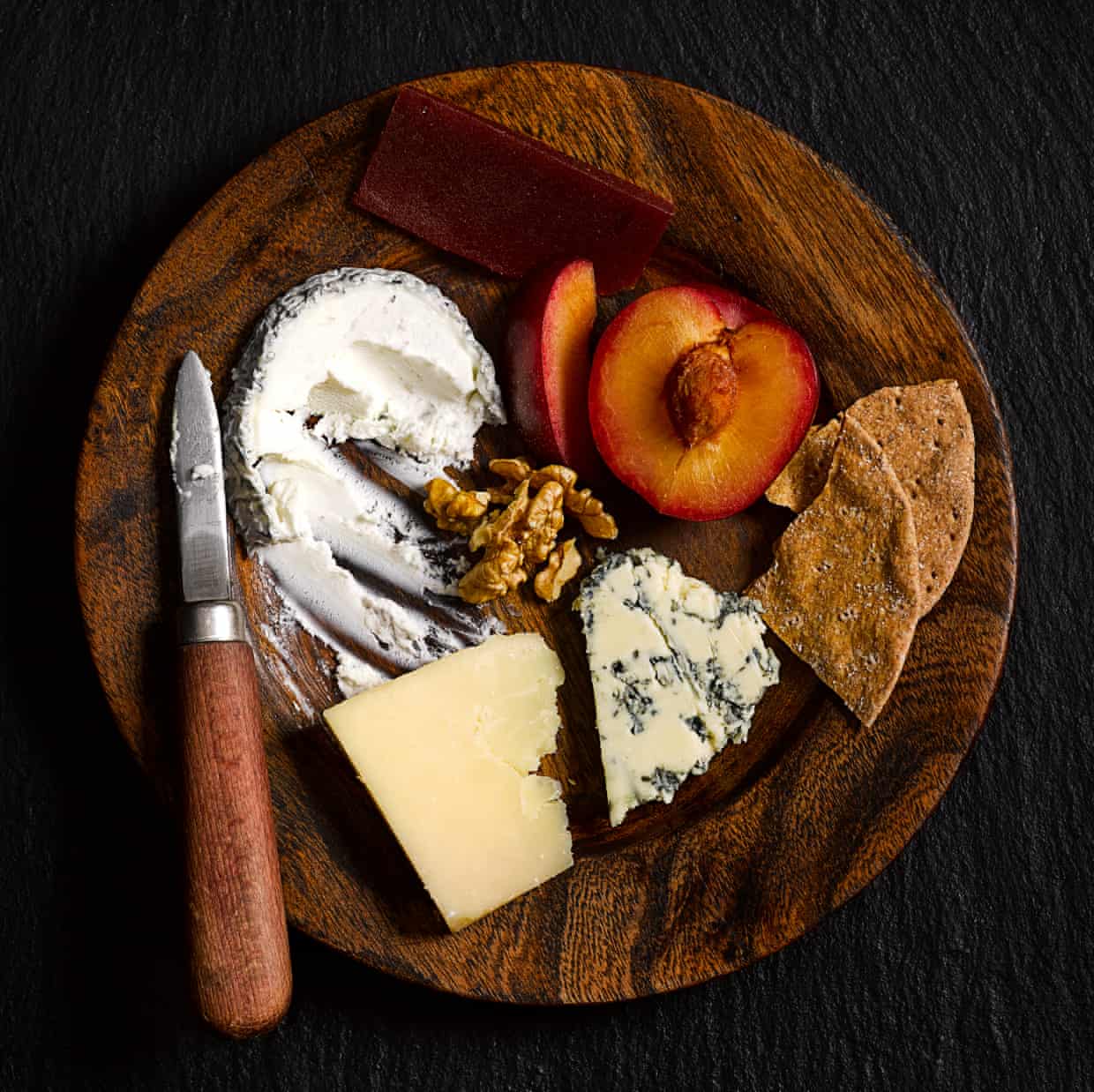
All about the baby cheeses: how to curate a festive cheeseboard to remember
What should I serve on my Christmas cheeseboard?David, via emailIt will come as no surprise that Mathew Carver, founder of Pick & Cheese, The Cheese Barge and Rind, eats a lot of cheese, so in an effort to keep his festive selection interesting, he usually focuses on a specific area or region: “Last year, for instance, I spent Christmas in Scotland and served only local cheese.” Wales is up later this month. “I’m a creature of habit and tend always to go back to the cheeses I love, so this strategy makes me try new ones,” he explains – plus there’s nothing to stop you slipping in a classic such as comté in there too, because, well, Christmas.Unless you’re going for “the baller move” of just serving one glorious cheese, Bronwen Percival, technical director of Neal’s Yard Dairy, would punt for three or four “handsome wedges, rather than slivers of too many options”. After all, few have “the time or attention for a board that needs a lot of explaining”
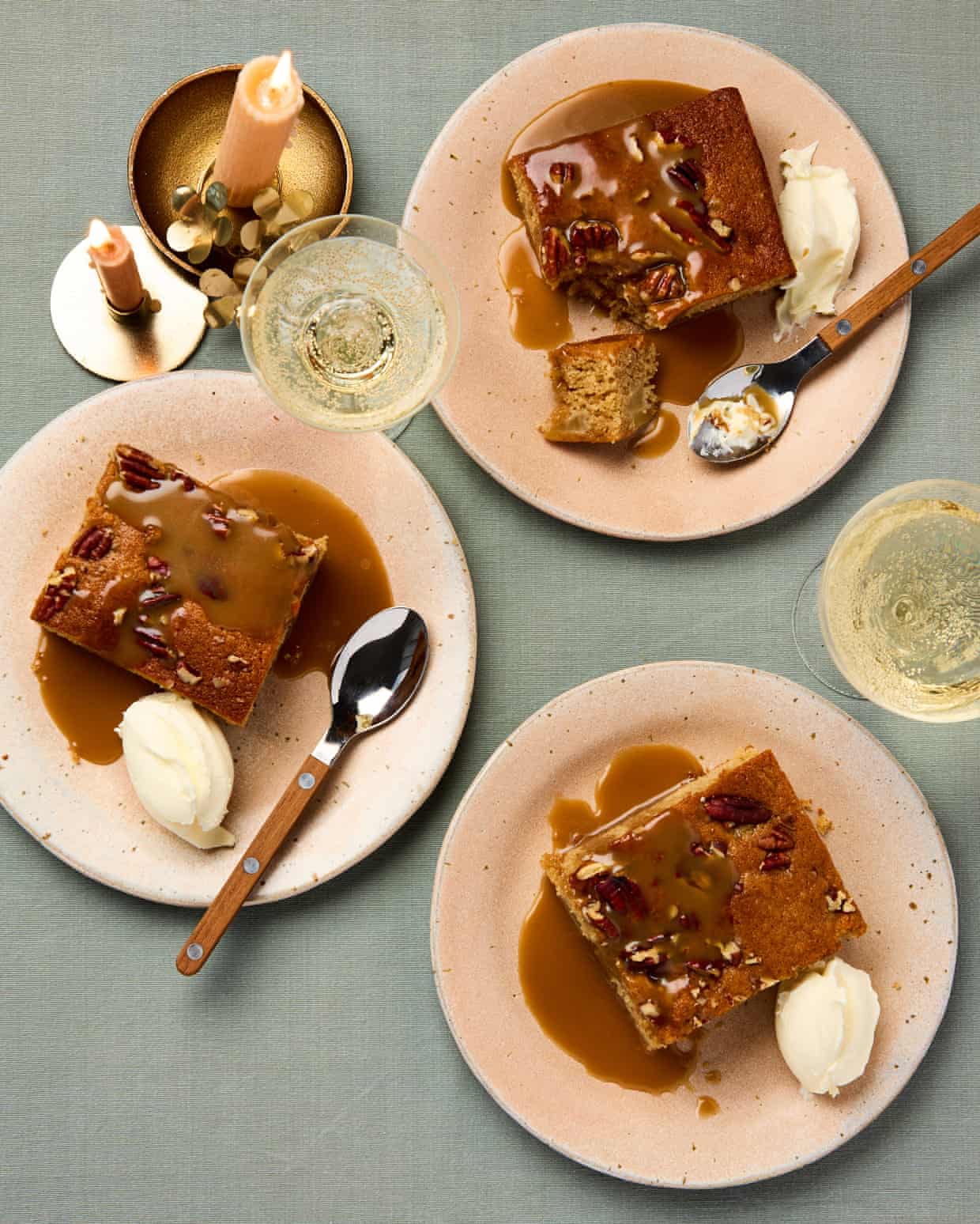
Georgina Hayden’s recipe for pear, sticky ginger and pecan pudding
While our Christmas Day dinner doesn’t deviate too much from tradition, I do experiment with the dessert. My family, bar one sweet-toothed aunt, avoids dried fruit-based offerings, so classic Christmas cakes and puddings are a hard no. Over the years, I have tried variations on yule logs, pavlovas and sherry trifles, but the biggest crowdpleaser is easily sticky toffee pudding (or something along those lines). This year, I’m making this warming, simple but decadent pear, sticky ginger and pecan pudding, which feels festive and fancy, and can happily make an appearance whenever.This can be made the day before and reheated before serving

Tom Jordan brings a smorgasbord of skills to Bristol’s Big Game at Harlequins

NFL playoff race: sepia-toned Bears v Packers rivalry takes center stage

‘A great night for golf’: McIlroy hails Spoty success after individual and team awards

BBC outbid by TNT Sports for 2026 Glasgow Commonwealth Games

Travis Head tees up Bazball’s last rites in Adelaide but fatal blow was in Perth | Geoff Lemon
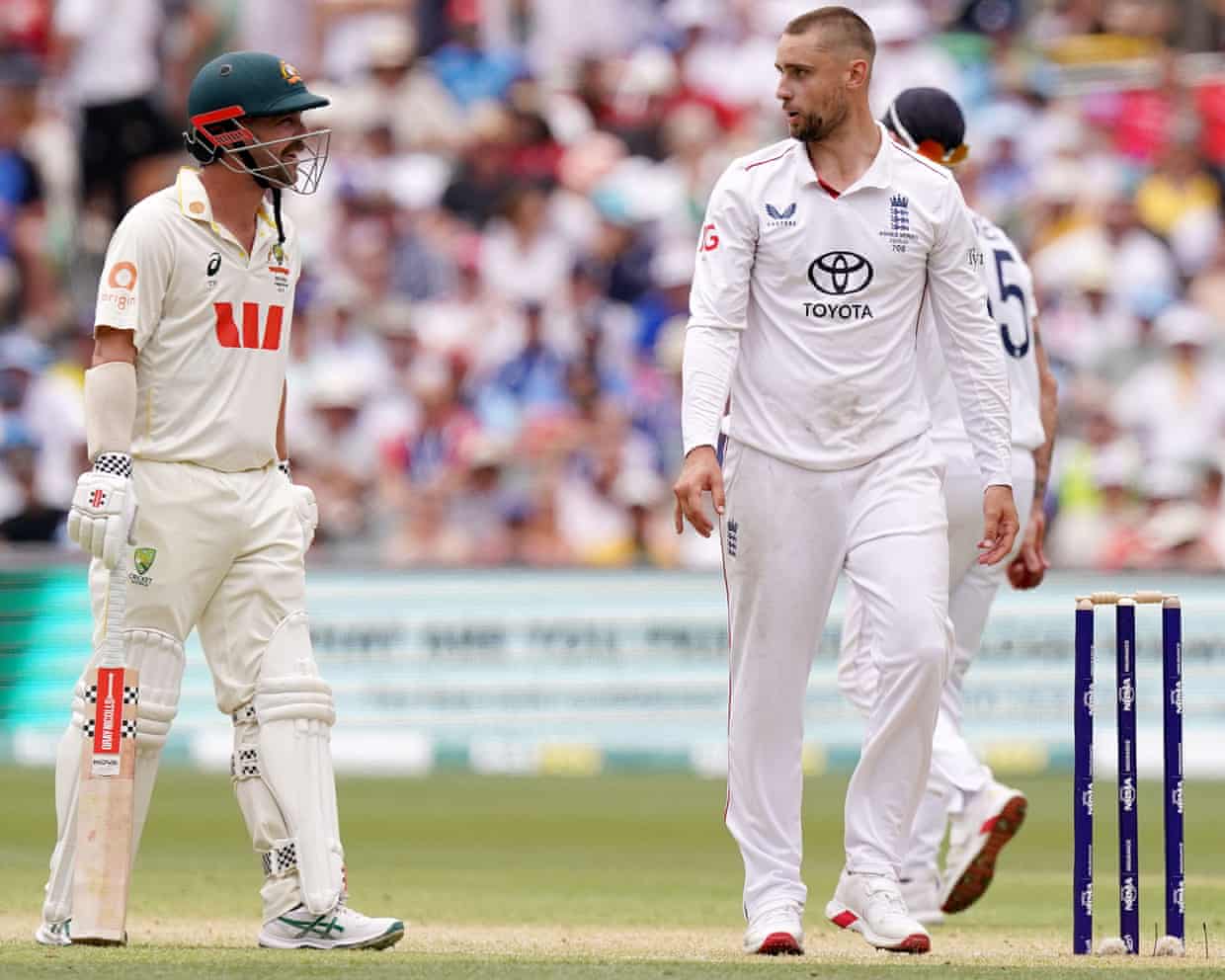
Waste of Jacks’ talent speaks volumes for England’s bodged Ashes planning | Barney Ronay