Rich plums and ripe tomatoes: Australia’s best-value fruit and veg for February
Tomatoes ripe for cooking, cheap watermelon and cucumbers for $2 a piece – but it’s the final call for apricots, cherries and mangoesGet our weekend culture and lifestyle emailJuicy watermelon, deep-purple plums and ripe roma tomatoes are some of the vibrant fruit and veg highlights this month, says Graham Gee, senior buyer at the Happy Apple in Melbourne.“Tomatoes are plentiful, in particular the saucing varieties,” he says.“Roma varieties are sold nice and ripe, ready to make passata.” Cooking tomatoes are roughly $2 a kilo at the Happy Apple, with Australian field tomatoes going for about $5 a kilo in supermarkets.Watermelon is “very cheap”, says Michael Hsu, operational manager at Sydney’s Panetta Mercato.
He’s selling it for $1 to $2 a kilo.Combine both red fruits in Rukmini Iyer’s quick and easy watermelon and tomato gazpacho or in her spiced watermelon, tomato and cucumber salad.Sami Tamimi uses watermelon in this salty side dish with fried halloumi and za’atar, or blitz it with sugar, ginger and mint in Benjamina Ebuehi’s granita.“Right now is a good time for rockmelon too,” Hsu says.Whole rockmelon is $3.
50 in supermarkets, and $2 to $3 each at Panetta in Sydney’s inner west,Stone fruits of all kinds are still good value, Hsu says,Peaches and nectarines are roughly $2 to $3 a kilo, or $6 a kilo for bigger fruits, he says,But the stone fruit he’s most excited about this month is the rich purple queen garnet plums, grown in Victoria,“Everybody raves about them because of their antioxidants,” Hsu says.
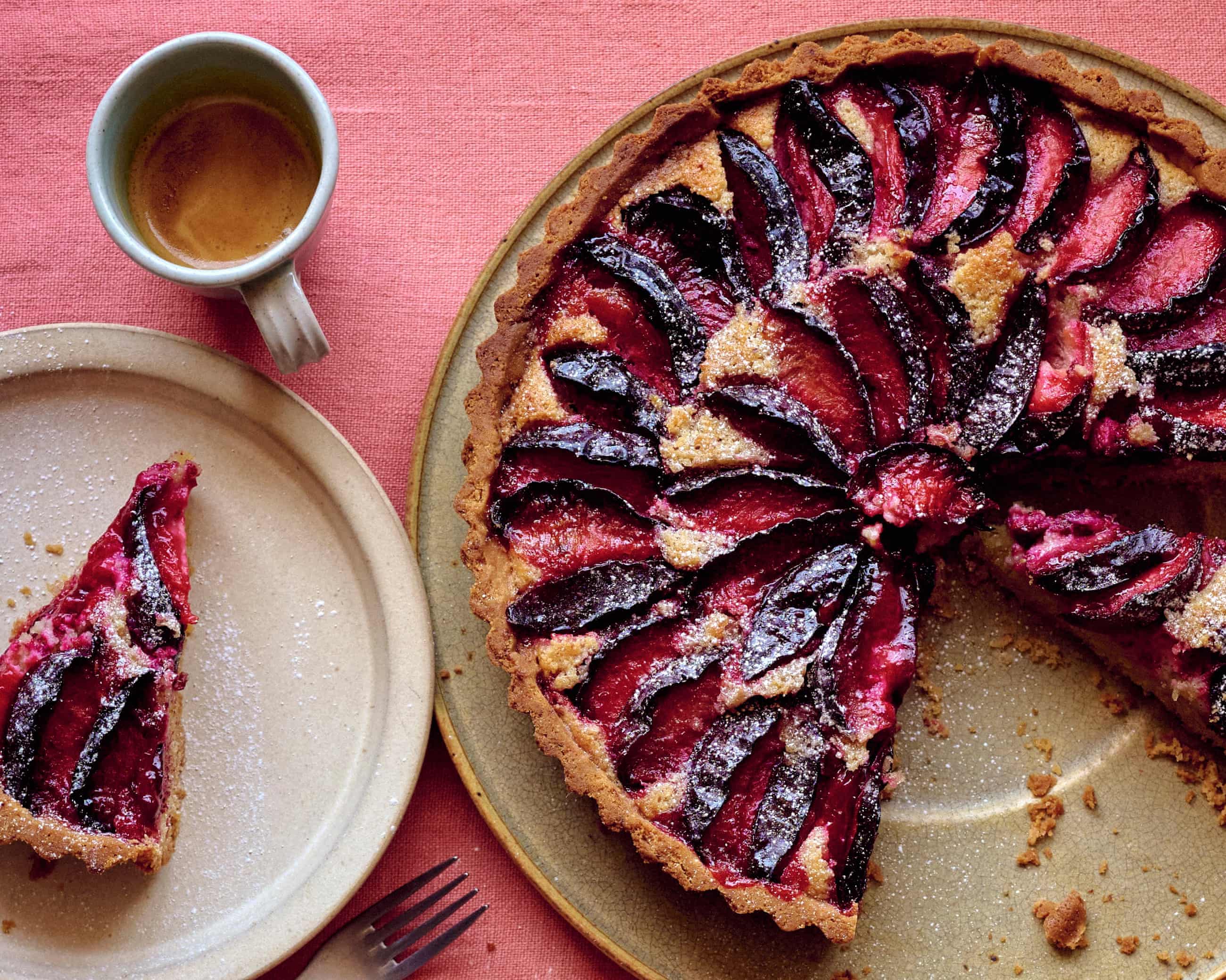
“They’re sweet and have a purple-black juice.”Queen garnets are $8 to $10 a kilo, or supermarkets are selling them for roughly 70c each.Their season is short, Hsu says, “so pick them up while you can”.Make the most of their vivid colour with Helen Goh’s plum and star anise frangipane tart.More commonly available red-skinned plums are cheaper still, around $6 a kilo.
Red capsicum prices have “dropped dramatically”, Hsu says,At their scarcest, around Christmas time, they were selling for $14 a kilo, significantly more than green and yellow caps,They’re now below the $10 mark, but Gee says to watch the price depending on where they’re grown,“A lot of them are grown in South Australia, which gets really hot,” Gee says, and the extreme weather can affect their price,Queensland capsicums are $3 to $4 a kilo, according to Hsu, or $2 each (controversially) in supermarkets.
Alice Zaslavsky uses crimson-red capsicum in her garlic peppers with creamy white bean dip, topped with fetta and mopped up with soft bread; while Rukmini Iyer’s recipe turns roasted red capsicums into a smooth pasta sauce,Cucumbers are very good value this month, Hsu says,Lebanese cucumbers, grown in New South Wales, have “come back in price to $2 to $3 a kilo”,Continental cucumbers are about $2 each, says Gee,Spice them up with Felicity Cloake’s crunchy Sichuan salad.
Dutch carrots are about $5 a bunch in supermarkets, which Hsu says will drop to around $2 a bunch.Eggplants are around $2 to $3 each, and zucchini is $1 to $2 each, or $3.90 per kilo in supermarkets.Caulilini, also known as fioretto – which looks like a cross between a cauliflower and broccolini – is another highlight.“You’re looking at about $5 a kilo,” Hsu says.
“So they’ve halved in price,”Reed avocados are coming to market, Gee says,Larger, rounder and often creamier than hass, they can be “tricky” because “you don’t think they’re ripe and then suddenly they are,” he says,Hass avocados are $2 each in supermarkets, but reed avocados will come in towards the end of the month,“Mangoes are on their last legs,” Hsu says, but late-season varieties like keitt, which are greener than kensington prides, or palmer and honey gold, are still good to eat.
“Super-ripe mangoes are great for smoothies,” Gee says.Keitt and palmer mangoes are selling for $2.90 each in supermarkets, with honey gold at $3 to $3.50 each.It’s also the end of the season for apricots and cherries, so they’re pricier than usual or harder to find.
Soft leaf vegetables have suffered in summer’s extreme heat and floods, Hsu says.English spinach and coriander are “sort of wiped out”, he says, or very expensive.Parsley, basil and other herbs may be affected too, says Gee, but we’ll know more in around six weeks.“With the weather, strawberries are taking a knock at the moment,” Gee says.“But that will change pretty quickly.
” Passionfruit is “on the more expensive side”, too.“We haven’t had the croppings we normally have with those,” he says.Buy:Avocado Caulilini (fioretto) Cucumbers Dutch carrots Eggplant Grapes Green beans Nectarines Peaches Plums Red capsicum – prices have dropped Rockmelon Tomatoes WatermelonWatch:Apricots Asparagus Cherries Mangoes StrawberriesAvoid:Coriander English spinach Passionfruit

Amazon reveals plans to spend $200bn in one year the day after Bezos guts Washington Post
Amazon announced plans to spend $200bn on artificial intelligence and robotics this year, the latest tech giant to vow fresh enormous investments in the artificial intelligence arms race.The news of the investment comes one day after the Washington Post, owned by Amazon founder Jeff Bezos, announced it was cutting approximately a third of employees.Amazon also reported $213bn in revenue on Thursday. The fourth-quarter earnings of the e-commerce and cloud-computing giant came in slightly below Wall Street estimates even as sales and growth surged.Amazon will increase capital spending to $200bn this year from $125bn, CEO Andy Jassy said in a press release

Bitcoin loses half its value in three months amid crypto crunch
Bitcoin’s price sank to $63,000 on Thursday, its lowest level in more than a year, and half its all-time peak of $126,000, reached in October 2025. A months-long dip in cryptocurrency prices has tanked shares of companies that have increasingly invested in bitcoin, exacerbating broader stock market jitters.Bitcoin rode a high during Donald Trump’s ascent to the presidency in 2024 and throughout 2025; its price steadily increased as the president made one industry-friendly move after another. Crypto’s largest currency hit $100,000 for the first time in December 2024 and even rose to a record high of $126,210.50 on 6 October, according to Coinbase

‘Orwellian’: Sainsbury’s staff using facial recognition tech eject innocent shopper
A man was ordered to leave a supermarket in London after staff misidentified him using controversial new facial recognition technology.Warren Rajah was told to abandon his shopping and leave the local store he has been using for a number of years after an “Orwellian” error in a Sainsbury’s in Elephant and Castle, London.He said supermarket staff were unable to explain why he was being told to leave, and would only direct him to a QR code leading to the website of the firm Facewatch, which the retailer has hired to run facial recognition in some of its stores. He said when he contacted Facewatch, he was told to send in a picture of himself and a photograph of his passport before the firm confirmed it had no record of him on its database.“One of the reasons I was angry was because I shouldn’t have to prove I am innocent,” Rajah said
How cryptocurrency’s second largest coin missed out on the industry’s boom
US crypto developer Danny Ryan submitted a proposal in November 2024 to Vitalik Buterin, the founder and symbolic leader of Ethereum, a prominent blockchain powering the world’s second-largest cryptocurrency. Ryan, who had worked for seven years at the Ethereum Foundation (EF), Ethereum’s de facto governing body, suggested that Ethereum could be on the cusp of an era-defining shift.Since its founding in 2014, the foundation had prioritized technical upgrades and had avoided centralizing power while its user base was growing, but Ethereum had now grown up, and the cryptocurrency world around it had grown up, too. The EF could now “exercise a stronger voice” without compromising its ethos of decentralization, Ryan said – and he was open to leading that charge if appointed as the foundation’s new executive director.Ryan told the Guardian that he could see how political tides were changing “overnight”, which informed his proposal

What does the disappearance of a $100bn deal mean for the AI economy?
Did the circular AI economy just wobble? Last week it was reported that a much-discussed $100bn deal – announced last September – between Nvidia and OpenAI might not be happening at all.This was a circular arrangement through which the chipmaker would supply the ChatGPT developer with huge sums of money that would largely go towards the purchase of its own chips.It is this type of deal that has alarmed some market watchers, who detect a whiff of the 1999-2000 dotcom bubble in these transactions.Now it seems that Nvidia was not as solid on this investment as had been widely believed, according to the Wall Street Journal. Negotiations had not progressed, with Jensen Huang, Nvidia’s chief executive, privately emphasising that the deal was “non-binding” and “not finalised”

Google Pixel Buds 2a review: great Bluetooth earbuds at a good price
Google’s latest budget Pixel earbuds are smaller, lighter, more comfortable and have noise cancelling, plus a case that allows you to replace the battery at home.The Guardian’s journalism is independent. We will earn a commission if you buy something through an affiliate link. Learn more.The Pixel Buds 2a uses the design of the excellent Pixel Buds Pro 2 with a few high-end features at a more palatable £109 (€129/$129/A$239) price, undercutting rivals in the process

Violence is part and parcel of how prisons function | Letter

Blanket rule on trans women in men’s prisons would deny their identity, says Scottish government

Does getting cold increase your chances of catching flu?

Autistic girls much less likely to be diagnosed, study says

Wes Streeting to offer resident doctors bigger pay rise to end dispute
Mediterranean diet can reduce risk of stroke by up to 25%, long-term study suggests