What does the disappearance of a $100bn deal mean for the AI economy?

Did the circular AI economy just wobble? Last week it was reported that a much-discussed $100bn deal – announced last September – between Nvidia and OpenAI might not be happening at all.This was a circular arrangement through which the chipmaker would supply the ChatGPT developer with huge sums of money that would largely go towards the purchase of its own chips.It is this type of deal that has alarmed some market watchers, who detect a whiff of the 1999-2000 dotcom bubble in these transactions.Now it seems that Nvidia was not as solid on this investment as had been widely believed, according to the Wall Street Journal.Negotiations had not progressed, with Jensen Huang, Nvidia’s chief executive, privately emphasising that the deal was “non-binding” and “not finalised”.
Huang appeared to confirm this in Taipei on Saturday, telling reporters that Nvidia would make a “huge” investment into OpenAI’s next funding round, but “nothing like” $100bn,A report from Reuters soon suggested that the feeling was mutual: OpenAI was “unsatisfied” with Nvidia’s advanced AI chips, it said, and seeking alternatives,Nvidia’s stock has taken a 10% hit so far this week, a flurry of headlines have ensued and both companies have stepped into damage control,“We love working with Nvidia and they make the best AI chips in the world,” wrote Sam Altman, OpenAI’s CEO, on X,“We hope to be a gigantic customer for a very long time.
”Even Oracle appears to be shaken: the software company, which is counting on a $300bn cloud computing deal with OpenAI, said it still expects the startup to be good for its commitment even if it does not receive the full amount from Nvidia,In total, OpenAI has committed to compute deals – the infrastructure for building and powering its AI tools – worth more than $1tn,“The Nvidia-OpenAI deal has zero impact on our financial relationship with OpenAI,” Oracle posted on X,“We remain highly confident in OpenAI’s ability to raise funds and meet its commitments,”That a $100bn deal between two of the most crucial players in AI appears to have evaporated over a weekend is unsettling.
But there are solid business reasons behind the apparent shake-up, said Alvin Nguyen, analyst at research firm Forrester,OpenAI’s ambitious growth trajectory means it will be difficult for the company to stick with a single vendor, especially as it plans new, computationally demanding AI models, he said,“They need chips,They need as many as possible,”As for Nvidia, its commitment to the $100bn may have been loose in the first place, even as it was widely reported.
“They will not discourage people from overhyping,Why say something and immediately sucker punch your own share price?”For a giant startup like OpenAI, manoeuvring in and out of deals – for example, with chipmakers – may just be business as usual, said Nguyen: “You know [Altman’s] background as a startup person, and you know the manoeuvres he’s doing make sense from a startup perspective,”For Nvidia, meanwhile, AI hype is part of selling chips,“You don’t know what’s going to happen,” said Nguyen,“And so you let other people put numbers out there for you and let that drive the hype.
”The issue is, of course, that investors and other companies like Oracle may have taken widely reported $100bn commitments seriously,In response to a query from the Guardian, an OpenAI spokesperson referred to Altman’s X post, and to remarks Huang made to CNBC on Tuesday, including: “There is no drama,”The spokesperson added: “Our teams are actively working through details of our partnership,Nvidia technology has underpinned our breakthroughs from the start, powers our systems today, and will remain central as we scale what comes next,”Nvidia and Oracle did not respond to requests for comment.
This is all taking place against the backdrop of a changing investment landscape for AI, where hype is giving way to realities about what aspects of the technology are actually going to earn money.While investors ponder whether OpenAI is going to be able to pay for a $1.4tn compute deal, reality is biting further down the AI food chain.This week has seen a massive sell-off in certain software stocks, prompted in part by the launch of a new Anthropic AI tool that can carry out a number of professional services, which has led to fears that business models exposed to competition from AI products will be disrupted.This is the flip-side of “jagged AI”, which is the term for advanced AI tools having uneven talents, such as being good at sifting through documents but less good at solving complex maths problems.
If advanced systems are good at automating legal work, then legacy companies in service industries will suffer,The losers are beginning to emerge and are being picked up by investors,At the top of the AI pyramid the competitive effects are also biting,OpenAI’s chatbot, ChatGPT, is losing ground to competitors,Data released on Tuesday show its market share has eroded from 69% to 45% owing to the rise of Google’s Gemini, xAI’s Grok and Anthropic’s Claude.
OpenAI appears to have retreated from soaring talk of super-intelligence in the past months, focusing instead on profitable mundanities such as adverts and adult content,The apparent evaporation of a $100bn deal may be of a piece with last year’s sci-fi rhetoric meeting this year’s practicalities,The question is, who might be left holding the bill?“I think there will be knock-on effects,” said Nguyen,“I mean, it’s that statement: the markets can stay irrational longer than you can stay solvent,”
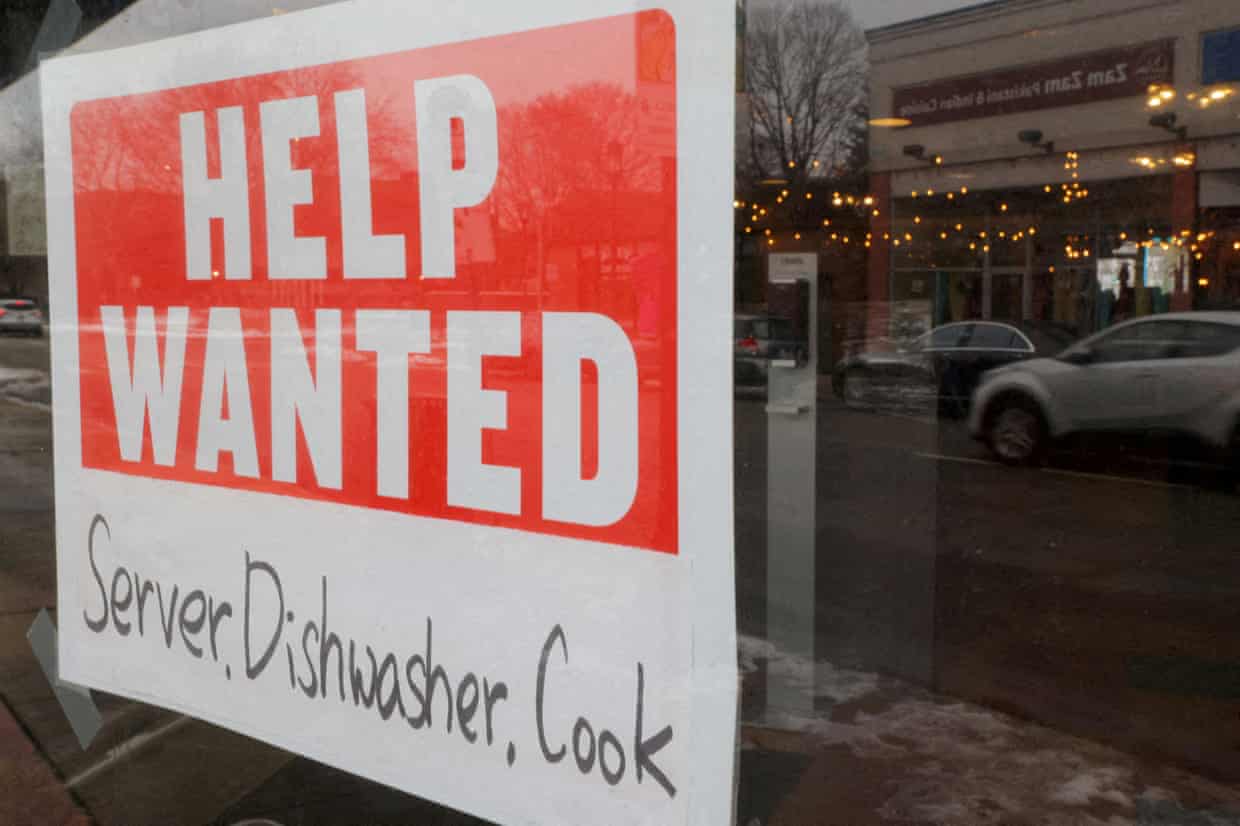
US job openings dropped to a five-year low in December 2025, report shows
US job openings dropped to the lowest level in more than five years in December and data for the prior month was revised lower amid a softening in labor market conditions at the end of 2025.Job openings, a measure of labor demand, decreased by 386,000 to 6.542m by the last day of December, the lowest level since September 2020, the labor department’s Bureau of Labor Statistics said in its Job Openings and Labor Turnover Survey, or Jolts report, on Thursday.Data for November was revised down to show 6.928m job openings instead of the previously reported 7
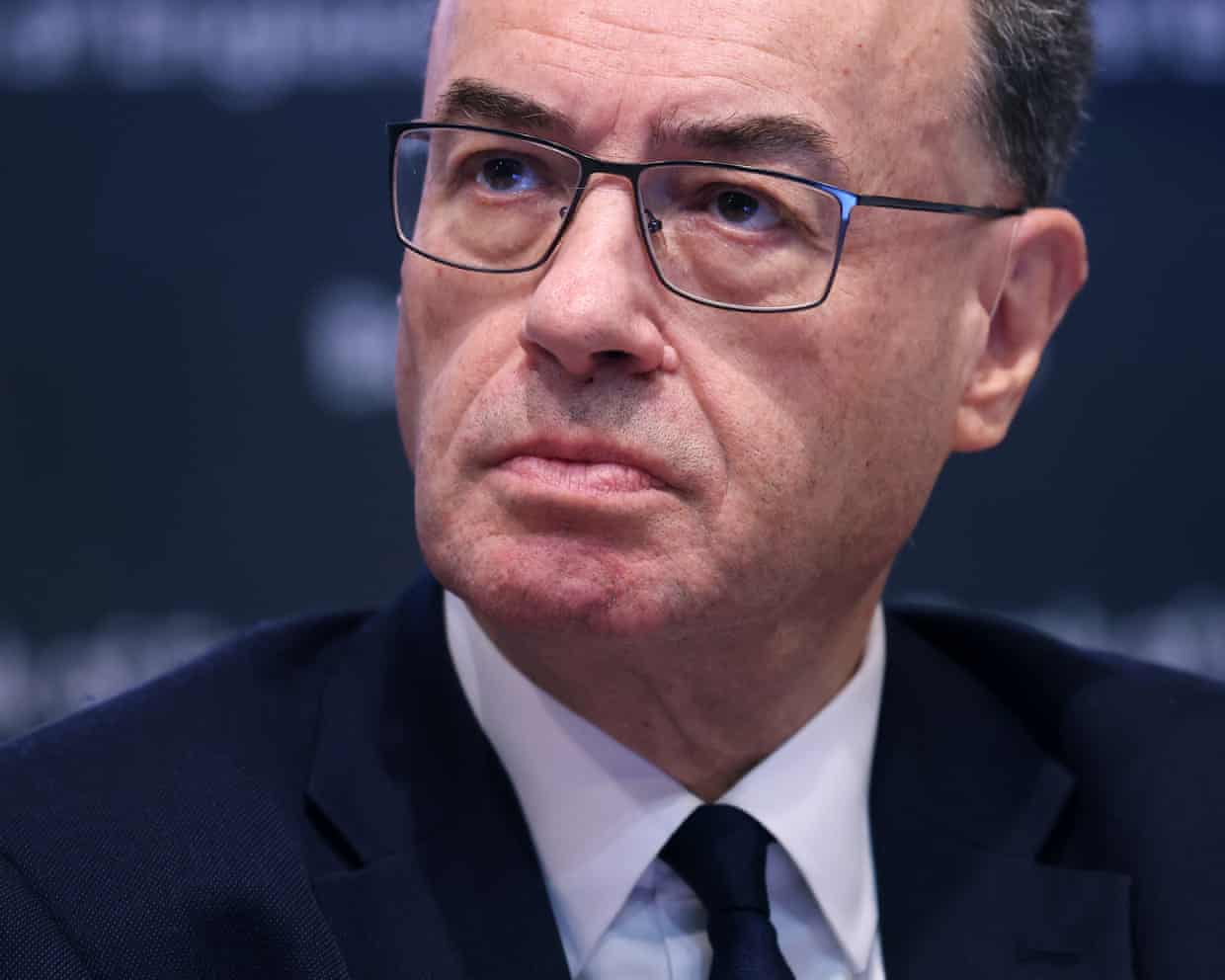
Bank of England holds interest rates and ‘shocked’ over Mandelson; Rio-Glencore merger talks collapse – as it happened
Bank of England governor Andrew Bailey has added his voice to those condemning Peter Mandelson for leaking market-sensitive information at the time of the global financial crisis, our economics editor Heather Stewart writes.“I am shocked by what we are hearing,” Bailey said (see earlier post), when asked about the revelations at a Bank press conference.We do learn from that that there are times when … lobbying happens which has ethics attached to it which I do find shocking, frankly.Asked again about his personal feelings, Bailey, who worked with the Treasury on the response to the 2008 financial crisis, appeared to become emotional as he compared the actions of Mandelson to those of the late chancellor, Alistair Darling.Bailey reminds journalists at the Bank that he and his colleagues at the press conference, Clare Lombardelli and Dave Ramsden, all knew Darling (who died in 2023)
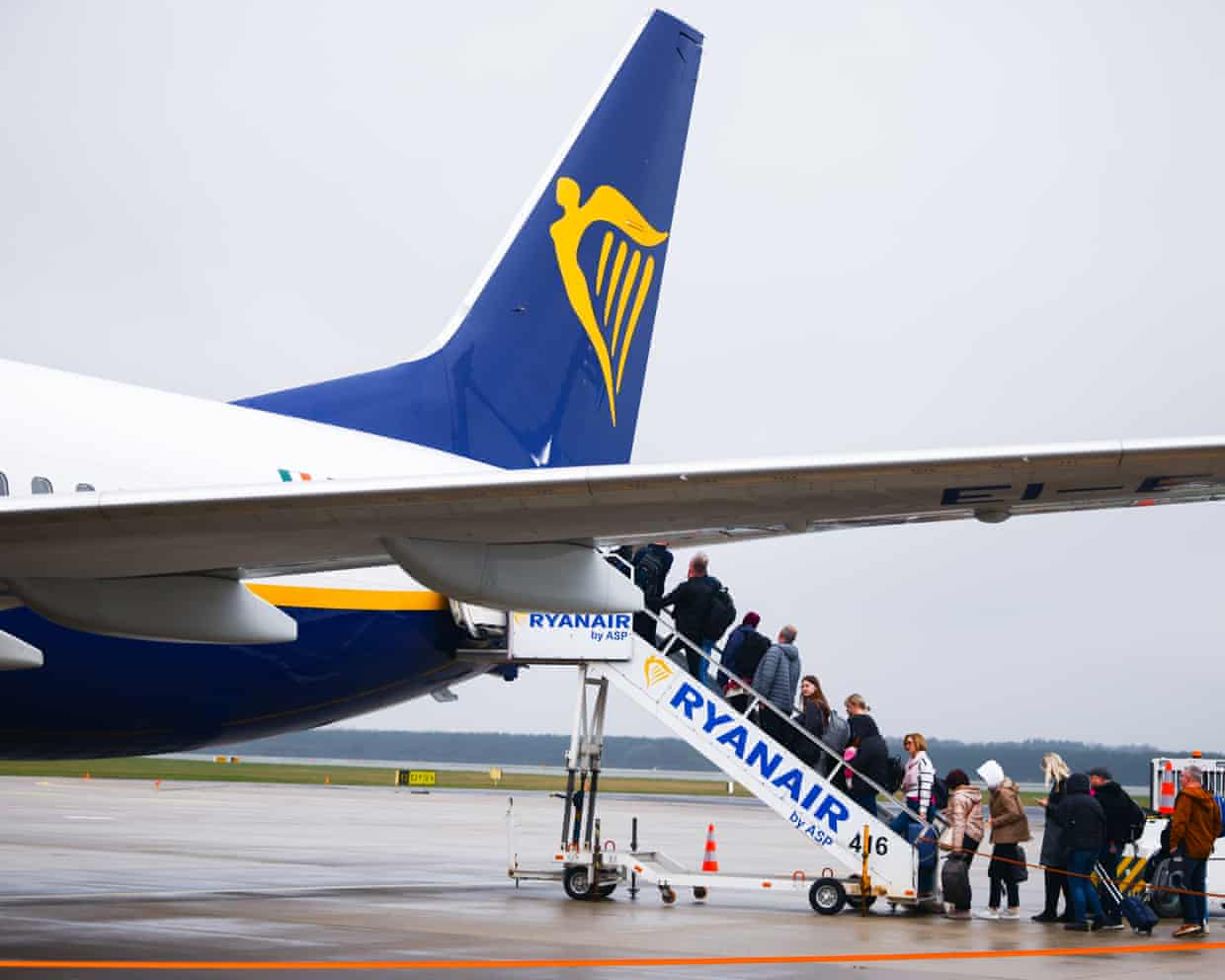
Airlines should tell UK customers the carbon impact of flights, watchdog says
Airlines and booking firms should give UK customers information about the environmental impact of their flights, the regulator has said.The Civil Aviation Authority urged booking sites to enable passengers to make “more informed travel decisions” by setting out estimates for carbon emissions for flights landing or taking off from British airports.New guidance published by the CAA aims to standardise the kind of data already published by some airlines and websites and to make it available at the time of booking so passengers can make comparisons.The regulator said it would start monitoring and possibly enforcing the new rules after April 2027.It said the carbon emission data should reflect factors such as aircraft type and fuel use, and take into account the type of seat occupied

Bank of England keeps interest rates at 3.75% as inflation concerns persist
Bank of England policymakers have left interest rates unchanged at 3.75%, but indicated that lower inflation as a result of cost-of-living measures in Rachel Reeves’s budget should pave the way for cuts in the months ahead.The nine-member monetary policy committee (MPC) voted to leave borrowing costs on hold, despite forecasting weaker growth and lower inflation than at its last quarterly forecast in November.But the narrower than expected 5-4 split in the MPC’s voting suggested further reductions in borrowing costs were to come. The committee has cut rates six times since mid-2024

Cornish tin mine could reopen with Trump administration investment
Donald Trump has aggressively pursued investment into hi-tech industries in recent months, but the US administration has now set its sights on a more traditional sector: tin mining in Cornwall.The South Crofty mine, near the village of Pool, could start up again after nearly three decades aided by a potential $225m (£166m) investment from across the Atlantic, creating 300 jobs.The site dates back to the 1600s but closed in 1998; there have since been repeated attempts to reopen it.Cornish Metals, its owner, said on Thursday it had received a letter of funding interest from the official export credit agency of the US to develop the site. Any investment would depend on the mine supplying tin to the US, which considers the metal to be a critical mineral
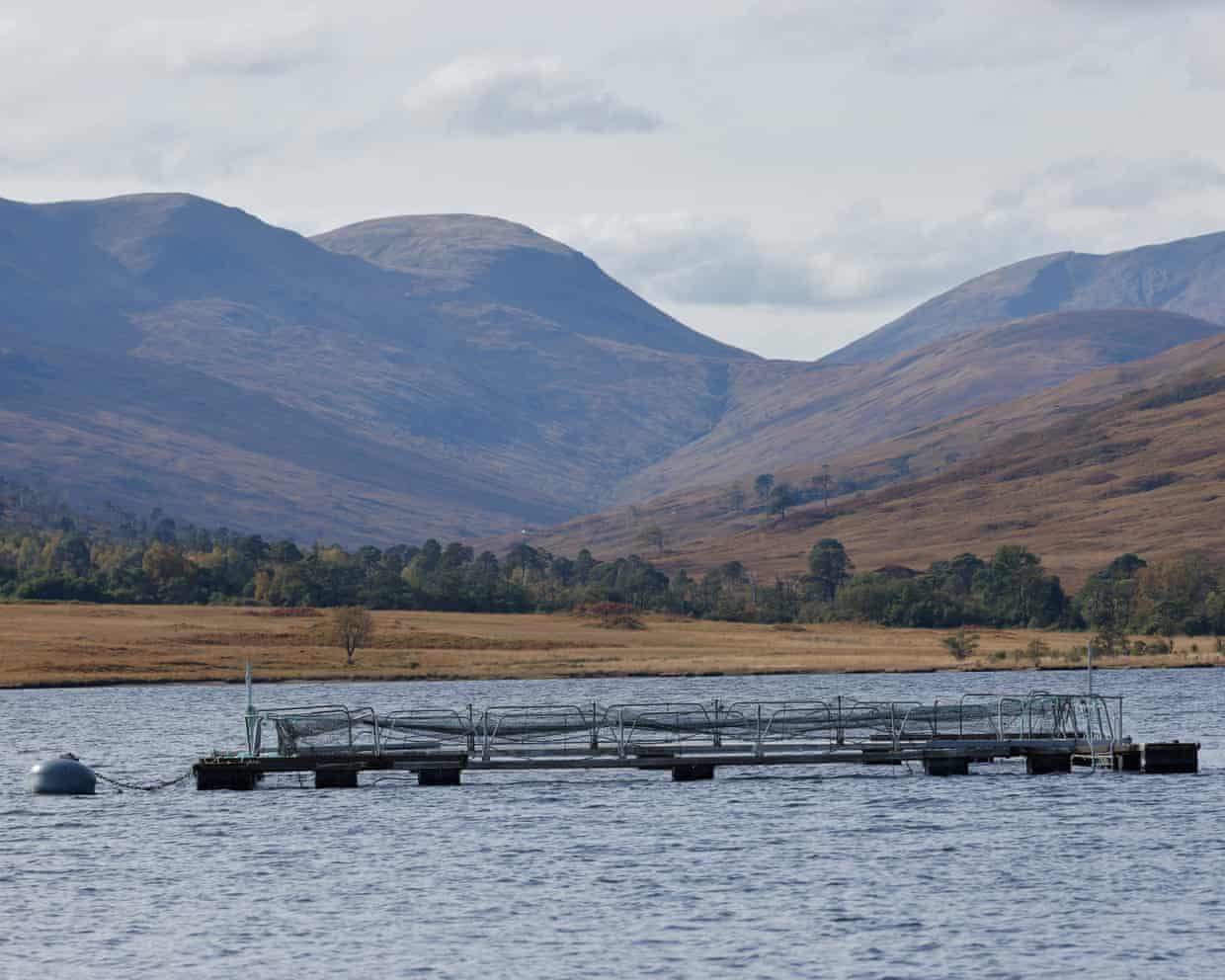
Anger over Scottish salmon farm inspections amid 35m unexpected fish deaths
Scottish salmon farmers recorded more than 35m unexpected salmon deaths in just under three years but there were only two unannounced inspections of facilities over the same period.In December, the Scottish government’s secretary for rural affairs, Mairi Gougeon, said that there was “a really robust regulatory regime when it comes to fin-fish aquaculture” but animal welfare campaigners say the figures call that claim into question.According to a freedom of information request by Animal Equality UK, the Animal and Plant Health Agency (APHA), which is responsible for enforcing welfare legislation, inspected just 21 of Scotland’s 213 active salmon farms, between January 2023 and October 2025. None of the 20 worst-performing sites, which together accounted for more than 10m deaths, were inspected.Additionally, the Scottish government’s website says that unannounced inspections are a “statutory requirement” but only two were carried out between January 2023 and September 2025, both of which were in 2024

Shell will consider fossil fuel investment in Venezuela, says chief executive
Rio Tinto and Glencore abandon revived $260bn merger plan

‘Orwellian’: Sainsbury’s staff using facial recognition tech eject innocent shopper
How cryptocurrency’s second largest coin missed out on the industry’s boom

Team GB chief predicts ‘most potent’ Winter Games ever with sights set on eight medals

Feyi-Waboso hands England Six Nations injury scare 48 hours before Wales opener