In the 60s and 70s, Black students demanded a voice on radio. A new project ensures that history isn’t lost

A picture


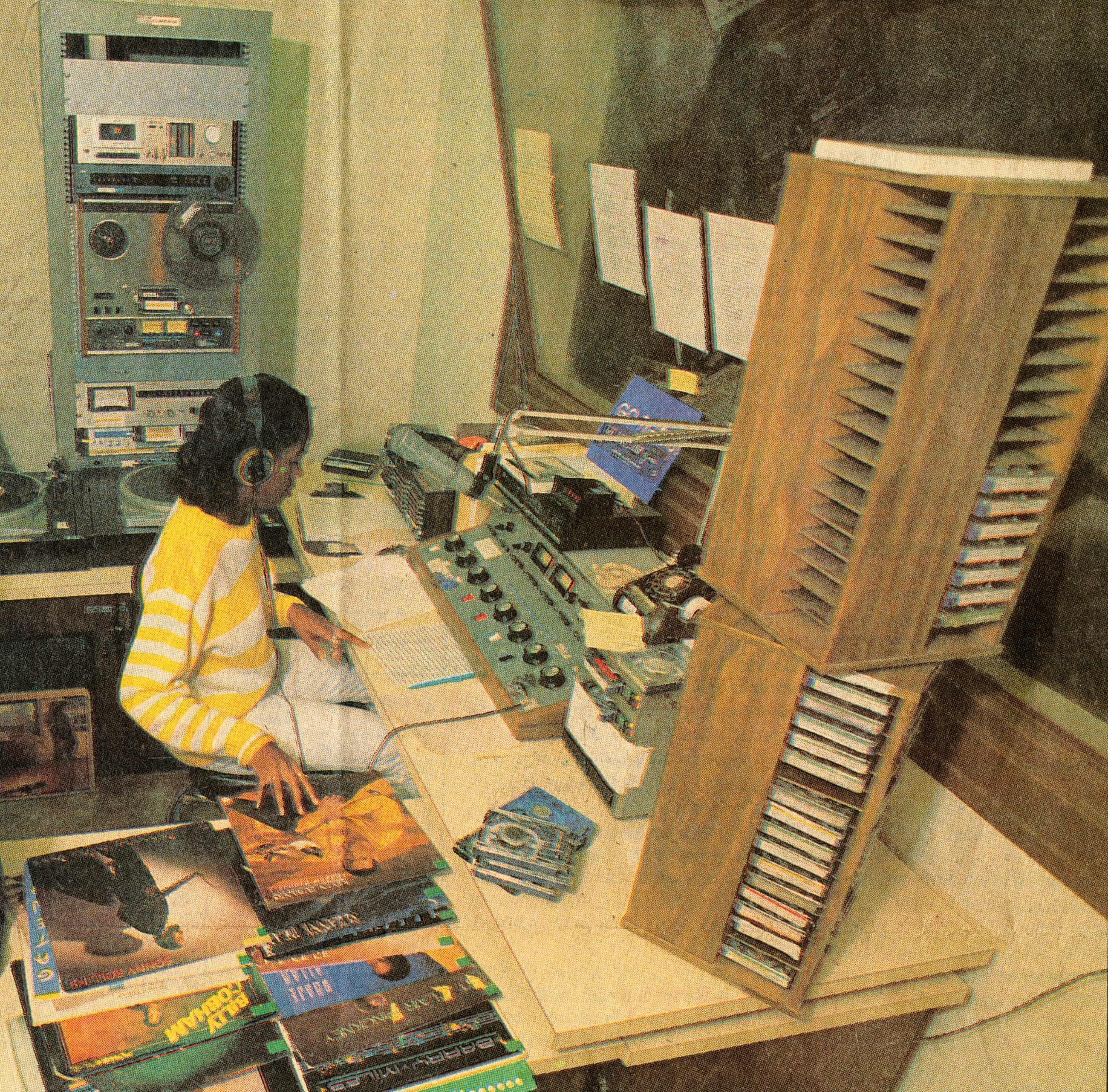
The HBCU Radio Preservation Project celebrates stations that were an outgrowth of the civil rights movement, to help people understand their importanceAfter Shaw University’s WSHA radio station went on air in 1968, several other historically Black colleges and universities (HBCUs) followed the North Carolina school’s lead, launching a wave of their own.For decades, the students who worked on these channels used them to inform listeners about happenings on campus, while also playing musical selections and offering cultural programming.In doing so, the radio stations at HBCUs became pivotal resources for both the campus and the surrounding community.But the landscape of university-based media is changing.Today, of the more than 100 HBCUs across the country, about 30 have radio stations.

Some schools and students are pivoting to podcasts, for example, while others are shoring up their TikTok and short-form video bonafides.Stations have been shuttered, including WSHA in 2018, while others work to cultivate new audiences.What happens, then, to the decades’ worth of archival material made by previous generations as stations move on?The HBCU Radio Preservation Project is working to ensure that the irreplaceable archives at these institutions are saved and accessible.As a result of the project’s efforts, WSHA’s archives are available through the American Archive of Public Broadcasting.Several other universities, including Fisk University in Nashville, Tennessee, have had their radio archive preserved for future generations.

While working to preserve the archival collection of WYSO, a public radio station in Yellow Springs, Ohio, Jocelyn Robinson began wondering what collections at HBCU radio stations might include.She created a project that surveyed the radio stations to find out.“I’ve developed profiles of all of the radio stations, so I knew when they were founded and what their format was, what their broadcast footprint was,” said Robinson, a member of the African American and civil rights radio caucus of the radio preservation taskforce at the Library of Congress.“At the end of the grant, I wrote a report and had a series of recommendations around how I thought radio stations in the campuses could be better served by support for preservation, including the institutional archives at the campuses.”She founded the HBCU Radio Preservation Project, which provides training to the radio stations and the college’s archives on audio-visual preservation.

The project hosts the HBCU Radio Preservation archival fellowship, for which recent graduates are eligible, where fellows get early-career archival training and experience while also supporting the radio stations and institutional archives on the campuses.The HBCU Radio Preservation Project team reformats and works with institutions to help provide people for inventorying, packing and archival digitisation.The project helps each institution care for and identify the care for its own materials.Then, American Archive of Public Broadcasting (AAPB), a service for public media, gives the institutions the options to make some of their materials accessible.So far, the project has digitised more than 1,125 hours of archival audio and visited nearly two dozen HBCU campuses.

The team has interviewed more than 90 people, recording more than 140 hours of oral histories.There is an oral history project component to the team’s efforts, which is “where the storytelling becomes even more important and more apparent in the work”, Robinson said.One of the very first oral history captures they did was with David Linton, a program director at WCOK at Clark Atlanta University, in Atlanta, Georgia, whose career started at WSHA at Shaw.“David went from there as a student, learned his craft, and was instrumental in getting WRVS, the radio station at Elizabeth City State University in North Carolina, on the air in the mid-1980s,” Robinson said.“You’re looking at a decades-long legacy.

”“It’s really fascinating to hear narrators speak to the emergence of these stations in the 60s and 70s [and to] hear how Black radio on HBCU campuses is an outgrowth of civil rights and Black power movements,” said Will Tchakirides, assistant director of public programming and history for the HBCU Radio Preservation Project, who works with the station personnel to help develop oral histories,“That was Black college students themselves actively demanding a voice on radio, and some of the narrators we’ve spoken to were actually those students who were part of communication departments or filling other roles where they had an opportunity to speak to their fellow students, to share music, to express culture,”The project has completed more than 90 oral histories so far, with more scheduled,Those histories are accessible to a wide audience through the project’s partnership with the Margaret Walker Center at Jackson State University, an HBCU in Jackson, Mississippi, which has its own radio station at WJSU 88,5.

Celebrating the stations’ histories helps different groups – from current students who might not be active listeners to family members of previous radio employees – understand the importance of the channels,After digitising the archives, the HBCU Radio Preservation Project returns the materials to the institutions,The radio station’s hard drive is presented in a stylized black box that is decorated to look like a historic radio,The box includes the station’s call letters and its radio frequency,The institution’s library and radio station receive a plaque acknowledging and celebrating their investment in the preservation of the station’s legacy and history.

Shaw’s return included 46 digitized episodes of Traces of Faces and Places, a weekly talk show the school had.“Not only are we preserving this radio sound, this institutional history, this cultural history, we’re also, in some ways, providing families with the sound of someone’s voice that may or may not be with us anymore,” said Phyllis Jeffers-Coly, assistant director for administration and outreach.The late Margaret Rose Murray, for instance, who hosted Traces of Faces and Places was integral in social justice and civil rights work in the city.“This woman’s family has 46 hours to listen to of their mom being the voice and being a conduit for social justice, social change and community engagement in Raleigh, North Carolina,” Jeffers-Coly said.When the radio stations were in their heyday, they hosted discussions about civil rights, youth activism and protests.

The history that students made and preserved then is now an invaluable resource.“In this moment,” Jeffers-Coly said, “where cultural institutions, including museums, including universities, including radio stations, are losing funding, we needed to show up and show out and celebrate in a way that was public.”
politicsSee all
A picture

Labour loses control of Birmingham city council after 14 years of leadership

The Labour party’s 14-year leadership in Birmingham has come to an end after Reform, Greens and pro-Gaza independents made significant gains in the UK’s second-largest city.No party has yet won an overall majority at Birmingham city council, one of Europe’s largest local authorities, with the results reflecting wider political fragmentation across England.Labour lost hundreds of council seats in England, many to Nigel Farage’s Reform UK, which made big gains across the Midlands and the north as well as taking seats from the Tories in the south.Labour was expected to take significant losses in the all-out elections in Birmingham, where 101 seats were up for grabs. The council has been plagued by a series of problems in recent years, from the declaration of bankruptcy in 2023, subsequent cuts to local services and the ongoing bin strike – images of rubbish piled on the city’s streets have made headlines across the world

A picture

Cracks showing for Labour close to backyards of Starmer’s top team

Keir Starmer hates to lose. Unsurprisingly, he refused to walk away and end his premiership as Labour’s local election losses began to trickle in on Friday morning. Upon entering Downing Street in July 2024 after leading Labour to a historic general election victory, Starmer promised the public that his government would “fight every day until you believe again”.Now, Starmer is faced with the uncomfortable truth that the frustrated yet united coalition that brought him into No 10 hoping for change is completely fractured and its discontent cannot be dismissed as early midterm blues.The cracks are showing very close to the political backyards of Starmer and his top team

A picture

Plaid Cymru wins Welsh Senedd elections, ending 100 years of Labour control

Plaid Cymru has won the Welsh Senedd elections, ending 100 years of Labour dominance in Wales and blocking the momentum of Nigel Farage’s Reform UK.The leader of the centre-left Welsh nationalist party, Rhun ap Iorwerth, said he stood ready to become first minister and form the next Welsh government, taking over from Welsh Labour, who have governed in Wales since devolution began in 1999.The Plaid win makes a Welsh independence referendum a future possibility, and means all three of the UK’s Celtic nations will now be controlled by separatist parties.Reform UK came second, pushing Labour into a distant third place. Plaid won 43 seats, Reform 34, Labour nine, the Conservatives seven, Greens two and Liberal Democrats one

A picture

Badenoch claims Tories ‘coming back’ despite widespread losses in local elections

Kemi Badenoch has claimed that the Conservatives are “coming back” after winning back Westminster council from Labour in London, despite her party suffering significant losses throughout England in Thursday’s elections.The party also saw off a threat from Reform UK in Bexley. But the Tories suffered a series of losses in Essex, where Badenoch herself is an MP, losing 41 seats while Reform gained 52. They held on to Harlow, securing all 11 district council seats available.In Havering, where the Conservatives had 14 councillors before the election, the party was wiped out

A picture

Zack Polanski calls two-party politics dead after mayoral and council wins

Zack Polanski has declared Britain’s two-party politics “dead and buried” as his Green party won its first two mayoral elections and gained councillors across England, winning four councils outright.As Labour losses piled up across the country and the Conservatives endured another disappointing set of results, Polanski sought to present his party as emerging from the results as the most viable option for opponents of Reform.“It is very clear that the new politics is the Green party versus Reform,” he said.Speaking at the Hackney count centre in east London, the scene of the first mayoral success, he added: “I said that the Green party were going to replace Labour. That’s exactly what we did in Gorton and Denton, it’s what we’ve done in Hackney, and we’re seeing that right across the country

A picture

Lord Beecham obituary

Jeremy Beecham, who has died aged 81, was an outstanding figure in local government as the Labour leader of Newcastle city council from 1977 to 1994.He built on the work of his immediate predecessors in restoring faith in the integrity of the council following the corruption of the T Dan Smith era, and guided it through the unfamiliar territory of collaboration with the new Tyne and Wear county council.He and his team focused on the basic local government responsibilities of council housing, education and social services – the latter his special interest. Initially these priorities led him to allow council staffing levels to run out of control. As a reporter for the Newcastle Chronicle throughout his leadership, I noted in 1978 that the council was employing more than 18,000 people: in the very different circumstances of 2025, the number of full-time equivalent posts was below 7,000