Lord Beecham obituary

Jeremy Beecham, who has died aged 81, was an outstanding figure in local government as the Labour leader of Newcastle city council from 1977 to 1994.He built on the work of his immediate predecessors in restoring faith in the integrity of the council following the corruption of the T Dan Smith era, and guided it through the unfamiliar territory of collaboration with the new Tyne and Wear county council.He and his team focused on the basic local government responsibilities of council housing, education and social services – the latter his special interest.Initially these priorities led him to allow council staffing levels to run out of control.As a reporter for the Newcastle Chronicle throughout his leadership, I noted in 1978 that the council was employing more than 18,000 people: in the very different circumstances of 2025, the number of full-time equivalent posts was below 7,000.
However, Beecham maintained a cool head and a legal budget at a time when leaders elsewhere such as Ted Knight in Lambeth and Derek Hatton in Liverpool were making firebrand reputations for themselves by openly defying Margaret Thatcher’s Conservative government.He held his position as council leader not through the backing of a powerful faction within the Labour group, but by his formidable intellect and amicable, if somewhat aloof, personality, which always enabled him to avoid giving offence.A talented debater, he put down the opposition in the council chamber with wit, but never unkindly.He was never part of the drinking culture that affected parts of the council, as so many other parts of society at the time.He did not depend on gladhanding for his control of his colleagues, but commanded respect as much as popularity.
Often he could be seen walking briskly through the city centre, a small, dapper figure with umbrella in hand, between the Civic Centre and the offices of his law firm, and was happy to be greeted with shouts of “Y’alreet, Jeremy?”.The council under Beecham designated Newcastle’s most impoverished wards along the north bank of the Tyne, from Scotswood to Walker, as priority areas, and poured millions of pounds into their improvement, regeneration and public services.These were his people, in spite of their very different backgrounds, and they voted for him time and again.Thousands of old terrace slum houses from the Victorian era were modernised instead of being cleared and replaced by new slums.Where there was an exception, as in the case of the now Grade II-listed Byker Wall – Ralph Erskine’s estate built in the 1970s to provide 1,800 homes – it was carried through in close consultation with local people.
During the extensive redevelopment of the 1970s, much of the city centre was a building site.Part of the neo-classical Eldon Square was demolished to make way for a shopping centre.A motorway was being driven through the centre, and tunnels and underground stations were being created below to create the Tyne and Wear Metro, Britain’s first urban light rail transit system.Its original network was completed in 1984.There was little that the city council leader could do about the motorway and the Metro, since in 1974 responsibility had passed to the new Tyne and Wear authority.
In the 80s and 90s, Beecham supported its Quayside development, to a plan by the architect Terry Farrell to revitalise the banks of the River Tyne – Newcastle on the north and Gateshead on the south – with arts and leisure amenities filling the gaps left by run-down docks and industries.The city emerged from Beecham’s leadership as a regional capital with professional jobs at two universities – Newcastle and Northumbria – and a range of thriving professional services.There was a limit to what his administration could accomplish at a time when unemployment was rising as the region’s mining, shipbuilding and engineering industries were in decline: as he acknowledged, there is much left to do when inequality remains high in the 53rd (out of 326) most deprived local authority area in the country.Born in Leicester, Jeremy was the son of Dot (Florence, nee Fishkin) and Laurence Beecham.When he was two, the family, including his elder brother, Mervyn, moved to Newcastle, where Laurence ran a furniture shop in Wallsend, and Jeremy went to the Royal grammar school.
At University College, Oxford, he gained a first-class degree in law (1965), and he went on to qualify as a solicitor.Once back in Newcastle he was elected to the council at the age of 22 for the Benwell ward (later Benwell and Scotswood), one of the city’s most deprived.He remained its representative for more than half a century, even after being appointed to the House of Lords in 2010.There he served as a shadow minister for communities and local government and for justice, retiring in 2021 due to ill health.He stood down from the city council in 2022, and at the end of his life suffered from Alzheimer’s.
His one attempt to enter the Commons came in the 1970 general election, when he could not overturn what was then the safe Conservative seat of Tynemouth.Beecham chaired the city council’s social services committee from 1973 to 1977, and in 1991 became chair of the Association of Metropolitan Authorities (AMA).He was knighted for services to local government in 1994, at the end of his leadership of the council.When the Local Government Association was formed from the merger of the AMA and other organisations in 1997, he was its first chair.In the Labour party, he joined the national executive committee in 1998 and was its chair in 2005-06.
In 1968 he married Brenda Woolf, and they were both active in the Jewish community.She died in 2010, and he is survived by their children, Sara and Richard.Jeremy Hugh Beecham, solicitor and local government politician, born 14 November 1944; died 9 April 2026

Great Western Railway to be nationalised in December
Great Western Railway will be nationalised in December, the government has announced.The train service, which has been in private hands for 30 years, mainly run by First Group, will be the 11th train operator on the national railway brought back into public ownership.When the Labour government was elected in 2024, legislation was immediately passed to renationalise all passenger trains when contractually allowed, a process that is expected to conclude by the end of 2027.The date for GWR train services to be nationalised has now been set for 13 December, the Department for Transport (DfT) said, when new timetables around the country are set to take effect.GWR has worked closely with the DfT in recent years in upgrading the mainline and introducing a new fleet of intercity trains
US added 115,000 jobs in April in surprise gain amid Iran war uncertainty
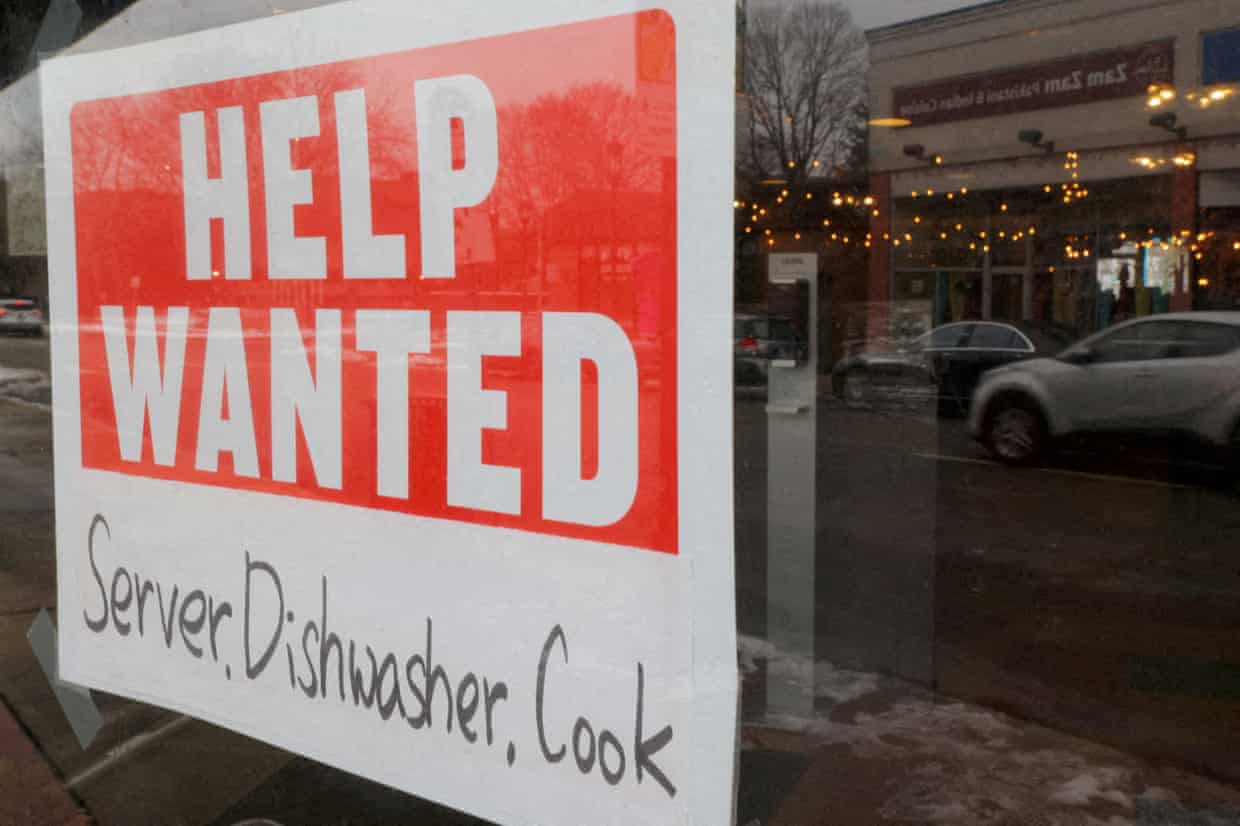
US employers added 115,000 jobs in April and the unemployment rate remained steady at 4.3%, a surprisingly robust gain to the labor market as the US-Israel war with Iran continued to drive up economic uncertainty.Economists projected about 55,000 new jobs and a 4.3% unemployment rate. A day earlier, the labor department announced 200,000 people filed for weekly unemployment benefits, a slight increase from the week before

UK schools should remove pupils’ online photos as AI blackmail threat grows, say experts
UK schools should remove pictures of pupils’ faces from their websites and social media accounts because blackmailers are using them to create sexually explicit images, experts have said.Child safety experts and the UK’s National Crime Agency (NCA) warn that criminals are using AI to manipulate photos of children and then demand cash not to publish them.They are recommending educational institutions remove identifiable pictures of children from their websites and social media accounts – or consider not using them at all.The Internet Watch Foundation (IWF) said an unnamed UK secondary school had recently been subjected to a blackmail attempt after criminals used the institution’s website or social media accounts to take photos of schoolchildren and then, using AI tools, turned them into child sexual abuse material (CSAM). The blackmailers sent the images to the school and threatened to publish them online if they did not receive money

Meta sues Ofcom over fines regime for breaches of Online Safety Act
Meta has launched a legal challenge against the UK’s media regulator over the fees and fines regime it is enforcing under landmark digital safety legislation.The Facebook and Instagram owner is claiming that Ofcom’s methodology for calculating the charges is flawed and should not be based on a company’s global revenue. Breaches of the Online Safety Act can be punished by fines of up to 10% of qualifying worldwide revenue (QWR) or £18m – whichever is higher.In the case of Meta, which reported revenues of $201bn last year, Ofcom could in theory impose a fine of $20bn for breaches. Under regulations introduced in September, Ofcom’s fees will also be based on a proportion of an organisation’s QWR and apply to businesses that made more than £250m of this revenue a year

Slimline Stokes makes impression with pair of wickets on red-ball return
To little fanfare, Ben Stokes has slipped out of the shorter formats. His last one-day international was at the 2023 World Cup, his last Twenty20 international helped England win its equivalent a year earlier. His most recent white-ball match of any description came during the Hundred in 2024, a tournament he has since shouldered arms to.Red-ball cricket is the thing that gets the England captain’s juices flowing these days and had he not fractured his cheekbone in the nets back in February, the plan was to be available for Durham from the start of the season. Fair play, given the additional money he could earn by diversifying in his final years

A Piece Of Heaven returns Chester to even keel after ground chaos
A Piece Of Heaven’s 7-1 success in the Chester Cup, the most popular and historic race of the year at the world’s oldest racecourse, was a fine way to round off the track’s May festival meeting on Friday, not least after a day when, for around an hour or so in early afternoon, the event had teetered on the edge of an expensive, embarrassing disaster.The odds that the middle day of Chester’s showpiece event would be abandoned, with around 15,000 spectators at the track for Ladies’ Day, seemed to be shortening at 2.30pm on Thursday, as a delegation of jockeys and trainers inspected the turf on the home turn.Several riders had reported slipping in the opening race, prompting emergency remedial work by Chester’s ground staff. A few minutes earlier, Maureen Haggas, assistant to her husband, William, at one of Newmarket’s biggest stables, had scratched Morshdi, the second-favourite, from the Dee Stakes, the day’s big Derby trial

Iran war costs Toyota £3bn as prices of materials soar and sales fall

British Airways fares to rise in attempt to offset £1.7bn fuel cost hit

GameStop CEO opens eBay storefront to pay for potential eBay acquisition

Gas-fired power still looks a safe bet for Centrica in the renewables era

Senate Democrats press top media regulator Brendan Carr to back off ABC

Financial stability risks are rising as AI fuels cyber-attacks, IMF warns; oil below $100 on Iran peace hopes – as it happened