‘Being human helps’: despite rise of AI is there still hope for Europe’s translators?
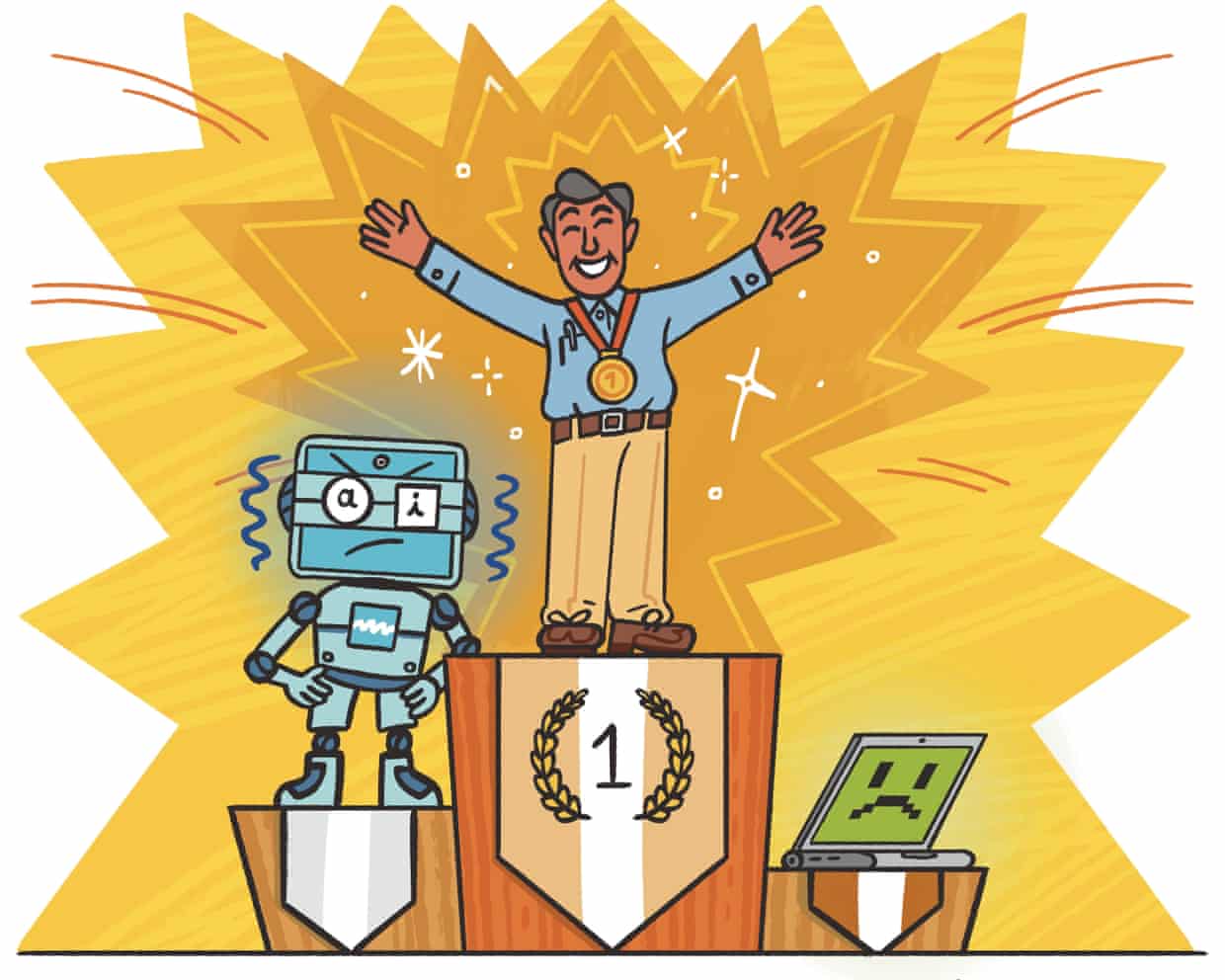
In February 2022, while he was plugging away at rendering the US writer Dana Spiotta’s novel Wayward into French, the literary translator Yoann Gentric decided he needed a bit of light relief.He would test whether AI could put him out of work.Gentric had been grappling with a short non-verbal sentence that described the book’s protagonist’s feelings upon opening a window: “Bright, sharp night air, bracing.” He put the prompt into DeepL, a neural-network-powered machine translation engine that regularly outperforms Google Translate in accuracy assessments.The proposed translation was reassuring, with his job security in mind: L’air de la nuit, vif et vif, était vivifiant (The night air, lively and lively, was enlivening.
) AI had translated the sentence’s meaning but was seemingly unaware that the repetitions rendered the line absurd.It was far inferior to his own translation that would be published in the book a year later: L’air pur et piquant de la nuit, vivifiant.When Gentric repeated his experiment this spring, however, the outcome made him feel less at ease: L’air nocturne était vif, pur et vivifiant, DeepL suggested this time.The online translator still lost the sentence’s stylistic trait by adding a verb, but it had learned to use three different words that even had a musical ring to them.“I don’t know if it’s just chance or a fine-tuned algorithm at work, but nocturne and pur is not bad,” said Gentric.
Chatbots running on large language models (LLMs) – neural networks trained on vast amounts of text to generate natural-sounding language – are rapidly infiltrating every aspect of our work and leisure lives.But few professional sectors are being disrupted by the technology as rapidly as the translation industry in Europe, home to more than 200 languages and a booming tech sector.According to a recent joint survey by the French authors’ societies ADAGP and the Société des Gens de Lettres, 79% of translators believe the rise of AI “poses a threat of replacing all or part of their work”.In Britain, a 2025 survey found that 84% of translators questioned expected lower demand for human translation, resulting in lower pay.Those fears concern the future, but for many translators the nature of their work has already changed.
Laura Radosh, a Berlin-based German-to-English translator, used to get about four job requests per month from clients including universities, professors and museums.Last year, the number of offers dropped to one each month.Many of them were “post-editing” jobs, which required her to correct texts that had already been run through a machine-translation engine.“Post-editing took me as much time as translating from scratch,” said Radosh.Far less creatively fulfilling than translating from scratch, post-editing is also less well-paid: usually compensated by the hour rather than by the page or by the book, it is paid “at unacceptable rates considering the work involved”, according to the French translators’ association.
In Germany, publishers have been found to offer typical rates of two to eight euros per page – a quarter of the average pay for translating a page from scratch,But rates for regular technical translations have tumbled too,“I got offered a job at 60 cent[s] a line,” said Radosh,“Before then, 80 cent[s] was the lowest rate I had ever come across,”Even before the advent of LLMs, translation was a precarious profession: a recent survey by the German translators association VdÜ found that the average income for literary translators – traditionally at the lower-paid end of the sector – was as little as €20,363 euros per annum before tax.
But the latest changes in the industry mean that for many translators, the numbers no longer stack up – Radosh recently took a part-time job doing book-keeping for an NGO,Marco Trombetti, the co-founder and CEO of the machine translation company Translated, said: “Without help, the human brain basically is able to produce about 3,000 words a day of translation,Beginners will manage about 1,500, the best translator in the world may manage 6,000, but the variation is not that big,”The cost of human translation, he argued, had until now been defined by the number of neurons we have in the brain,“That’s around 100bn,” Trombetti said.
“But if we change that, then we change the unit economics of translation.”Yet the speed of technological change is also revealing what human translators still do best.For one, many machine translators still struggle with context.The German-British academic publisher Springer Nature offers its authors the option to have their books auto-translated into other languages for free, but in spite of assurances of subsequent “human checks”, this process has in the past led to comical results.In 2024, Springer Nature machine-translated into German an English-language book by a group of Indian academics called ‘Capital’ in the East: Reflections on Marx.
In the chapter headings, however, the machine translator DeepL had rendered “capital” not as Kapital in the intended sense, but Hauptstadt, meaning “capital city”.A spokesperson for Springer Nature said in a statement: “Our AI‑supported translation is human‑led and reviewed by professional editors.Errors like this are rare and regrettable, and this instance relates to a limited pilot that has since ended.”Jörn Cambreleng, the director of Atlas, a French organisation promoting literary translation, said: “Machine translation is not creative.These systems are built to produce sentences that are generic, sentences that have been said before or sound like they have been said before.
Whereas good human translators strive to put into words something that has never been said before,”One of the ironies of the upheaval is that literary translation now appears to be a comparatively safer career choice than its technical counterpart,The HarperCollins-owned imprint Harlequin France has confirmed that it is working with a French communications agency, Fluent Planet, to produce translations that are generated by AI software and then post-edited by humans, although for now such trial runs are confined to the pulpier reaches of the market: Harlequin’s titles include A Mistress’s Confession and The Embrace of a Prince,In Germany, where the total number of new published books has been gradually declining year on year, literature in translation has held up remarkably well, with 8,765 books in translation published in 2024 making up a historically high 15% of the overall output,Increasingly, authors are also contractually obliging their publishers not to use AI in the translation process, said Marieke Heimburger, a Danish-to-German translator who chairs VdÜ.
“AI really cannot do dialogue,” said Katy Derbyshire, a Berlin-based translator who has rendered into English novels by Clemens Meyer, Christa Wolf and others,“When you are translating from scratch, you learn to understand the characters and their motivations, and you’re constantly adjusting them in your head – to individual situations, but also to genre,The dialogue that AI came up with just didn’t suit the character description at all,”Being human helped the translation process, she added,“My body has experienced all the pain and the joy that literature strives to convey.
I understand what someone might scream when they hit their toe on the bed frame – an algorithm doesn’t.”Fernando Prieto Ramos, of the University of Geneva’s faculty of translation and interpreting, said his centre had noticed a drop in applications to translation courses three years ago, when the rise of generative AI fuelled the hype around machine translation.“But the trend is gradually reverting again with a more diversified training offer,” he said.Even people who develop machine translation software concede there are tasks that remain beyond their product’s reach.“If in Italian I say Solo tre parole: non sei solo, then a literal translation into English would be ‘Just three words: you are not alone,’” said Trombetti, who founded Translated in 1999.
“But you’ve ended up with four words, not three.That’s something that machine translation still struggles with.”Heimburger said: “I am not really scared of AI, because I know it cannot do what I can do.What I am afraid of is the people who think that AI can do my job.”

Europe’s AI translation industry told it risks reputation by partnering with US firms
AI companies in Europe risk losing their world-leading status in the field of machine translation, industry figures have said, after the decision by one of the continent’s leading startups to partner with Amazon’s cloud computing division provoked alarm.While businesses in the EU have generally lagged behind the US and China in AI adoption, a small group of European companies have cornered the global market for high-quality machine translations for professional use.The biggest success story is Cologne-headquartered DeepL, an online translator that regularly outperforms Google Translate in accuracy assessments. Used by governments, courts and half of the Fortune 500 list of highest-earning US companies, last year it was reported to have recorded revenues of $185.2m

Shivon Zilis, mother of four of Elon Musk’s children, testifies in OpenAI trial
Shivon Zilis, a Neuralink executive and the mother of four of Elon Musk’s children, took the stand on Wednesday as one of the most highly anticipated witnesses in Musk’s case against OpenAI. The ChatGPT maker has argued that, while Zilis worked with OpenAI from 2016 to 2023, she was also involved in a secret relationship with Musk, acting as an informant for him.Musk’s case against OpenAI alleges that the company’s CEO, Sam Altman, and president, Greg Brockman, co-founders of the company with Musk, broke a founding agreement when they restructured it from a non-profit to a for-profit enterprise. The Tesla CEO accuses Altman and Brockman of unjustly enriching themselves and wants both removed from their positions at the startup, one of the most valuable in the world. He is also seeking the undoing of the for-profit restructuring and $134bn in damages to be redistributed to OpenAI’s non-profit arm
No flattery please, Claude: I’m British | Brief letters
The otherwise admirable Richard Dawkins should adjust the local settings of the chatbot or tell it to be less obsequious (Richard Dawkins concludes AI is conscious, even if it doesn’t know it, 6 May). Such bots are initially geared to American overenthusiasm and egregiously flattering reinforcement, but just tell them you want British attitude. They’re only simulating you know.Brian Reffin SmithBerlin, Germany With artificial intelligence bringing “large language models” into everyday use, the LLM after my name has acquired a new meaning. For 70 years I assumed that it referred to my Cambridge master of laws

TikTok’s algorithm favored Republican content in 2024 US elections, study finds
A study published Wednesday in the journal Nature finds that TikTok’s algorithm systematically prioritized pro-Republican content in three states leading up to the 2024 US elections.Researchers created hundreds of dummy accounts and conditioned them to mimic real users’ behavior by watching a set of videos either aligned with the US Democratic or Republican parties. Then, they tracked the videos TikTok recommended on these accounts’ For You pages, TikTok’s main feed.“We found a consistent imbalance,” they wrote in Nature.About 42% of US social media users say that these platforms are important for getting involved with political and social issues, according to Pew Research, but it’s not often clear how recommendation algorithms shape what appears in feeds
‘Your craft is obsolete’: WiseTech staff in limbo as AI touted as better than humans
Staff at WiseTech have been waiting almost three months to be told if they are among the 2,000 people the logistics software company is to cut due to advances in AI, with workers criticising the wait as stressful and “ridiculous”.The comments come as its founder on Tuesday told investors an AI agent could learn a human’s job in just 15 minutes, according to the Australian Financial Review.The Australian Stock Exchange-listed company announced in late February that it would lay off almost 30% of its workforce across 40 countries, with 2,000 of the 7,000 jobs set to go over the next 18 months.Some areas would be hit harder than others, with product and development and customer service teams expected to be reduced by up to 50%, the chief executive, Zubin Appoo, told an investor briefing in February.“The era of manually writing code as the core act of engineering is over,” Appoo said
New Mexico proposes $3.7bn fine for Meta and sweeping changes to its social platforms
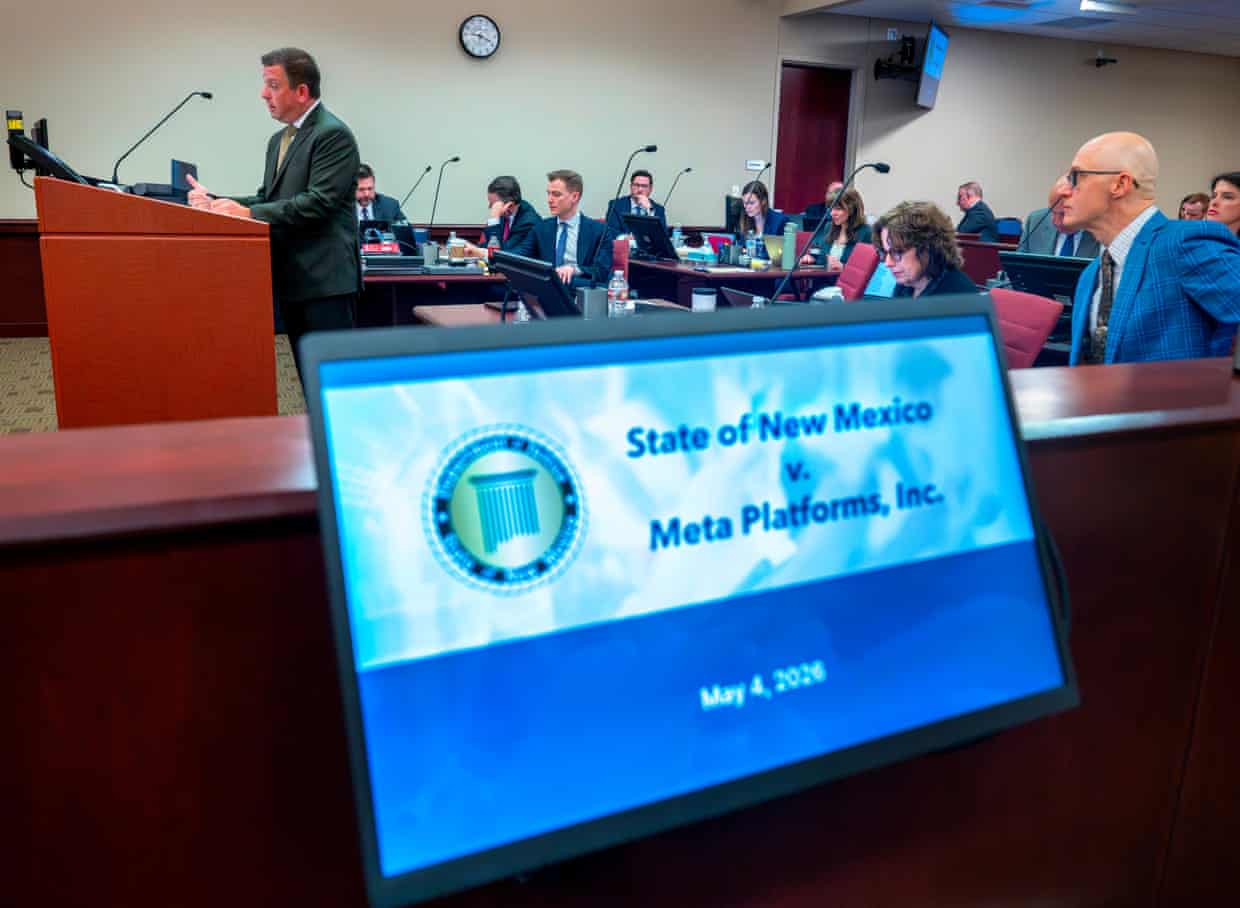
Meta has returned to court in the US this week for the second phase of a lawsuit brought by Raúl Torrez, New Mexico’s attorney general, following a March verdict that found the company liable for child safety failures and imposed a $375m fine. On Monday, the state petitioned for a legal sanction against the company, a monetary penalty 10 times the original amount, and a sweeping, drastic overhaul of Meta’s child safety protocols.In the second part of the landmark case, known as the remedies phase, the state is asking for Meta to be declared a public nuisance and for the judge to order the company to pay $3.7bn in an abatement plan. The money would fund programs for law enforcement, mental health services and educators
Seth Meyers on Trump’s poll ratings: ‘His disapproval is higher than Covid and January 6’

The Parallax View: remember when Hollywood made potent political cinema?
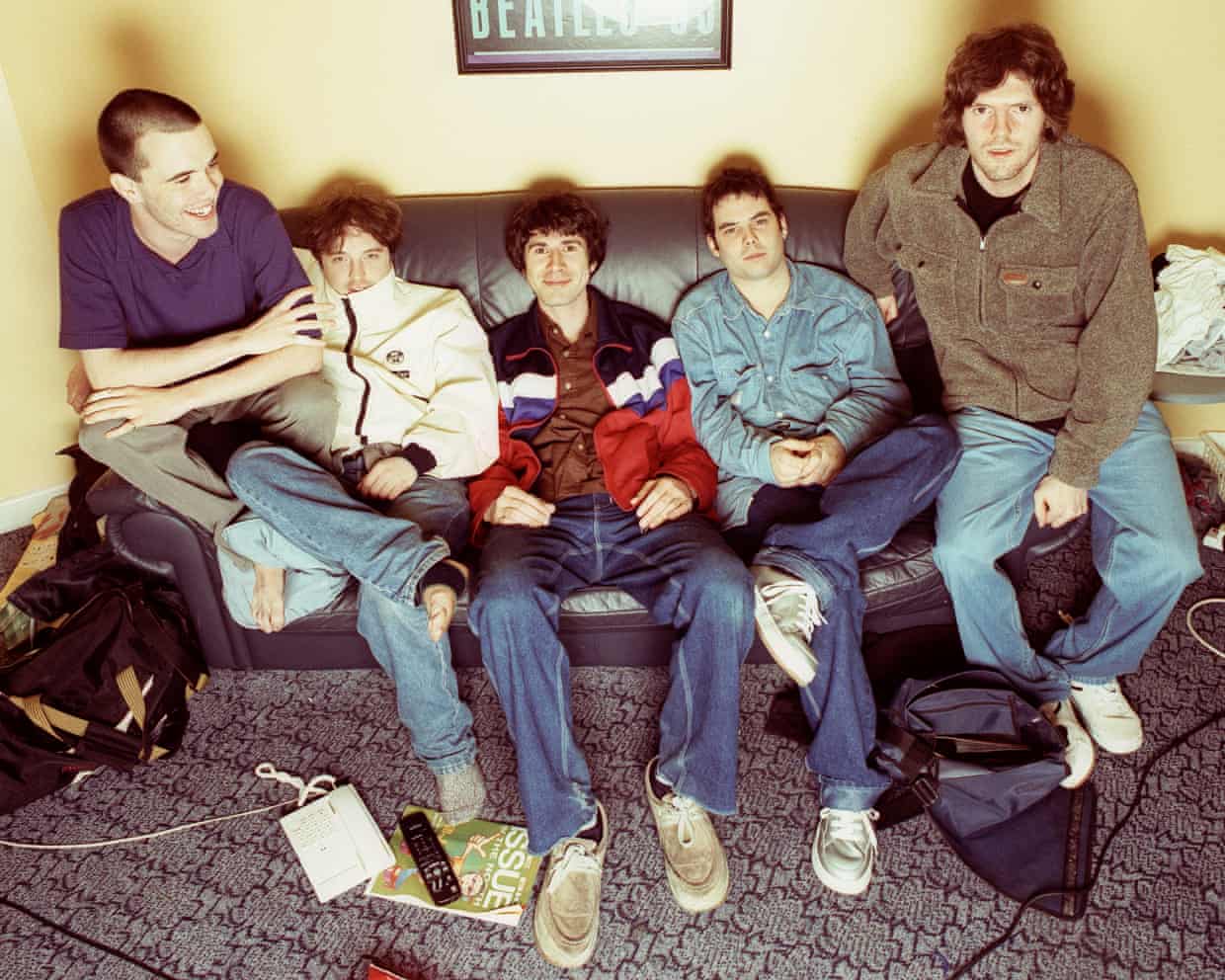
‘We got a drive-by egging in Baltimore’: Super Furry Animals on making The Man Don’t Give a Fuck
Ittai Gradel obituary

Man charged over bomb hoax after Peter Kay show evacuated
Guy Montgomery: ‘One fan took us back to his house and showed us all his guns’