Yes, retail investment needs a boost – but the squirrel looks too tame | Nils Pratley

Red squirrel characters have a history in the public information game.Older UK readers may recall Tufty, who taught children about road safety in the 1970s.His chum, Willy Weasel, regularly got knocked down by passing cars but clever Tufty always remembered to look both ways.Now comes Savvy Squirrel, who, with backing from the chancellor and a multi-year lump of advertising spend from the financial services industry, will try “to drive a step-change in how investing is understood, discussed and adopted”, as the blurb puts it.In translation: don’t squirrel everything away in a boring cash Isa but try taking an investment risk or two if you value your long-term financial health.
As with preventing road traffic accidents, the cause is noble.Every study on long-term financial returns reaches the same conclusion: inflation is the investor’s enemy and there is a cost to holding cash for long periods.One statistical bible is the Equity Gilt Study published by Barclays, and a few numbers demonstrate the point.From 2004 to 2024, cash generated a return of minus 40.5% in real terms (meaning after inflation and including interest paid).
By contrast, a conventional diversified portfolio comprising 60% UK equities and 40% gilts increased by 21.6% in real terms.A missed opportunity of 62.1 percentage points is enormousRachel Reeves’s interest in promoting the virtues of investment lies not only in helping savers but in greasing the wheels of the capital markets.Fair enough: a healthy economy needs a healthy stock market, including one that makes it easy for retail investors to participate.
It is slightly ridiculous that the colossal sum of £610bn is estimated to be sitting in cash savings in the UK; it can’t all be rainy-day money or cash parked awaiting a house purchase.Many Americans famously follow the stock markets closely and discuss their 401(k) pensions savings plans but, even by European standards, the UK’s retail investment culture lags.Sweden has popularised investment with tax-breaks and other changes.Even supposedly cautious Germans are less inhibited.So, yes, one can applaud the ambition behind the campaign.
But here’s the doubt: it all feels terribly tame,One can imagine an alternative launch in which Reeves tried to create a buzz by cutting stamp duty on share purchases,There are good reasons to adopt that policy anyway, as argued here many times, but a cut now would grab attention,True, rules for banks and investment firms on giving “targeted guidance” are being loosened to allow more useful advice alongside the “capital at risk” warnings,Yet the current news flow in Isa-land is about HMRC’s pernickety interpretation of the tax treatment of cash held within stocks and shares account.
That just creates bad vibes in the wings,Meanwhile, the campaign’s goals read as wishy-washy,It’s all about “helping people build confidence over time”, apparently,Well, OK, that’s what the market research suggests, but “creating more opportunities for everyday conversations” is limp when, in the outside world, teenagers are trading crypto on their phones and the world is awash with smart apps,The intended audience can surely handle more directness.
As for the squirrel, it may get lost in the forest of meerkats and other CGI creatures deployed by financial services firms.For a campaign that is supposed to be doing something distinctly different, why go with a character which, on first glance, looks generic?Back in the pre-smartphone 1970s, there was a certain shock value for the average five-year-old in seeing Willie Weasel lying injured in the road.At least the message about bad consequences was clear and memorable.One wishes the Savvy campaign well, but one fears a conversational squirrel may struggle to be heard.

Sainsbury’s says impact of Iran war may lead to drop in profits this year
Sainsbury’s has warned that profits could fall this year as the conflict in the Middle East squeezes customers’ budgets and pushes up business costs.The supermarket group said the conflict “will impact both our customers and our business” and it was unclear how large the effect would be.The company reported a 1.1% increase in annual profits for the year to 28 February – just as the US-Israeli attacks on Iran began – at £1.03bn, helped by ending losses from its financial services arm

Paracetamol costs have jumped up to 30% due to Iran war, pharmacies warn
The war in Iran has pushed up the price of widely used medicines in England, including painkillers and hay fever medication, leading pharmacists have warned.Community chemists are charging customers 20-30% more for paracetamol than they did in February, according to the National Pharmacy Association (NPA), and many have run out of certain strengths of aspirin and co-codamol.Over-the-counter prices for cetirizine tablets, a common hay fever medication, are also estimated to have risen 20-30% in the same period.The jump in petrol and diesel prices since the war began nearly eight weeks ago has increased manufacturing and transport costs for medicine suppliers. These have fed through to pharmacies, which are paying 40-50% more to order in stock

‘Get back to work’: Amazon faces fresh scrutiny over workplace safety record
Amazon, one of the world’s largest employers, has for years faced scrutiny over its safety record. When Billy Foister, a 48-year-old worker, died after a heart attack inside one of the tech giant’s warehouses in September 2019, managers were accused of telling staff to “get back to work”.When another worker died this month at a distribution center in Troutdale, Oregon, an Amazon spokesperson claimed they had collapsed from an “existing medical issue”. They denied a report that a nearby employee was told: “Please get back to work.”As Donald Trump’s administration continues to overhaul federal government oversight of workplace safety, workers inside Amazon and labor advocates say the company’s injury rates, and how it treats injured workers, remain a problem
Anthropic investigates report of rogue access to hack-enabling Mythos AI
The AI developer Anthropic has confirmed it is investigating a report that unauthorised users have gained access to its Mythos model, which it has warned poses risks to cybersecurity.The US startup made the statement after Bloomberg reported on Wednesday that a small group of people had accessed the model, which has not been released to the public because of its ability to enable cyber-attacks.“We’re investigating a report claiming unauthorised access to Claude Mythos Preview through one of our third-party vendor environments,” said Anthropic.Bloomberg said a “handful” of users in a private online forum gained access to Mythos on the same day Anthropic said it was being released to a small number of companies including Apple and Goldman Sachs for testing purposes.It reported that the unnamed users got to Mythos through access that one of them had as a worker at a third-party contractor for Anthropic and by deploying methods used by cybersecurity researchers
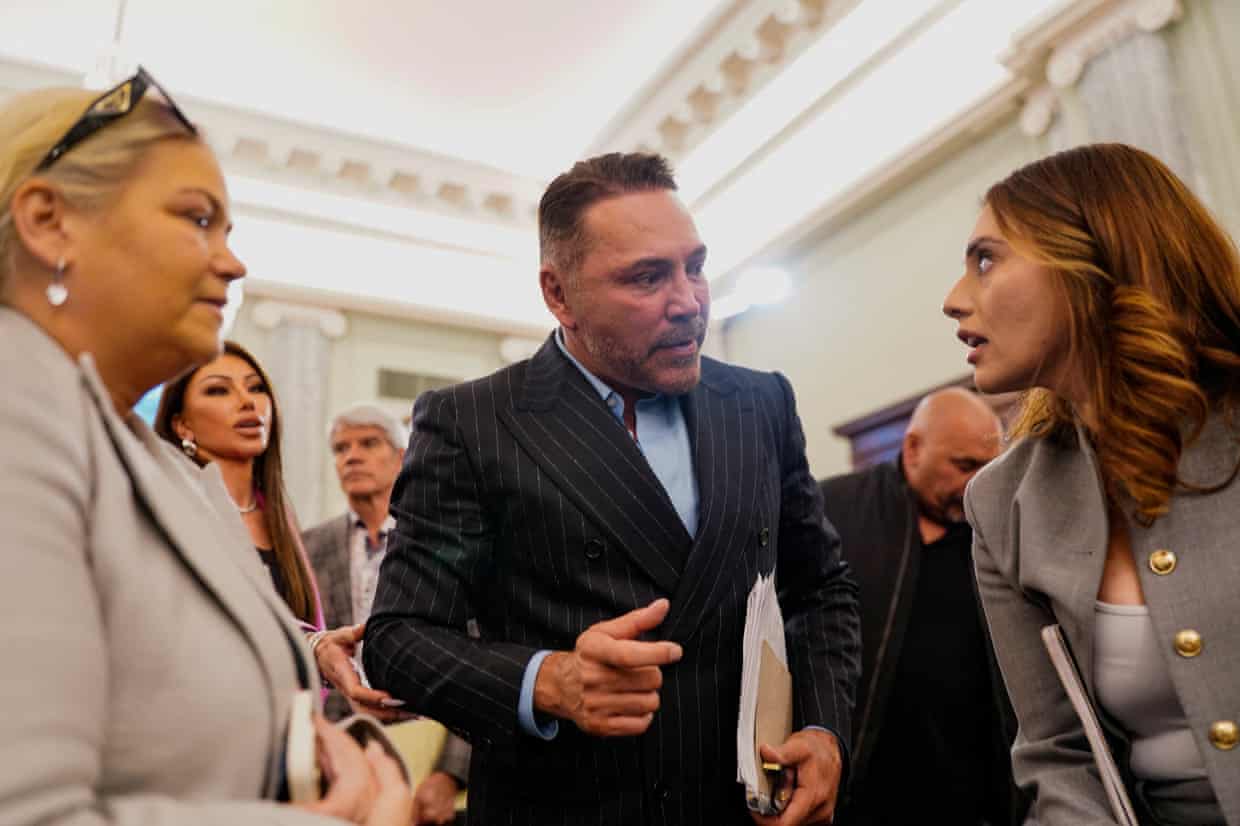
‘For billionaires, not boxers’: De La Hoya warns over Ali Act overhaul in Senate hearing
A US Senate hearing on the future of boxing laid bare a sharp divide over the sport’s direction on Wednesday, as longtime boxing figures including Oscar De La Hoya warned of proposed changes that could erode fighters’ rights while executives aligned with an Ultimate Fighting Championship-backed push for a centralized model argued they would bring structure and investment.“When one system controls access, choice becomes theoretical, not real,” professional boxer Nico Ali Walsh told lawmakers, framing the stakes of a debate that could dramatically reshape boxing’s economic model. “When that happens, you fight who you’re told to fight or you don’t fight at all.”At issue is a House-passed overhaul of the Muhammad Ali Boxing Reform Act that would allow the creation of centralized “Unified Boxing Organizations” (UBOs) operating alongside the current fragmented system. Supporters say the approach would simplify matchmaking and attract investment

Lando Norris backs Max Verstappen to stay in F1 after drivers win rule changes
Lando Norris has said he believes Max Verstappen will continue to race in Formula One but that it would be “a miss” for the sport if the four-time world champion did decide to leave owing to his dissatisfaction with the way this season’s new regulations have affected how drivers race.Verstappen has been outspoken in his dislike of the new regulations and their focus on electrical energy management that now makes up almost 50% of the car’s power output. He has intimated he might leave the sport but, with the rules having been adjusted by the FIA in an effort to address concerns of all drivers this week, Norris felt the Dutchman would remain in F1.“Hopefully things get better and I just saw that he said he wants to win the fifth world championship at the minute, so I’m sure he’ll stay longer than people say,” Norris said.The McLaren driver, who is the defending world champion, noted, however, that it would very much be F1’s loss if Verstappen left because he was disenchanted

How do I get texture and that umami hit without meat? | Kitchen aide

Georgina Hayden’s quick and easy recipe for smoky prawn, new potato and spinach stew | Quick and easy

How to make creme caramel – recipe | Felicity Cloake's Masterclass

Making a splash: demand for raw and ‘brewed’ milk growing in UK

Holy Carrot, London E1: ‘As good as plant-based dining gets’ – restaurant review | Grace Dent on restaurants

Helen Goh’s recipe for Anzac sandwich biscuits with dark chocolate filling | The sweet spot