‘For billionaires, not boxers’: De La Hoya warns over Ali Act overhaul in Senate hearing
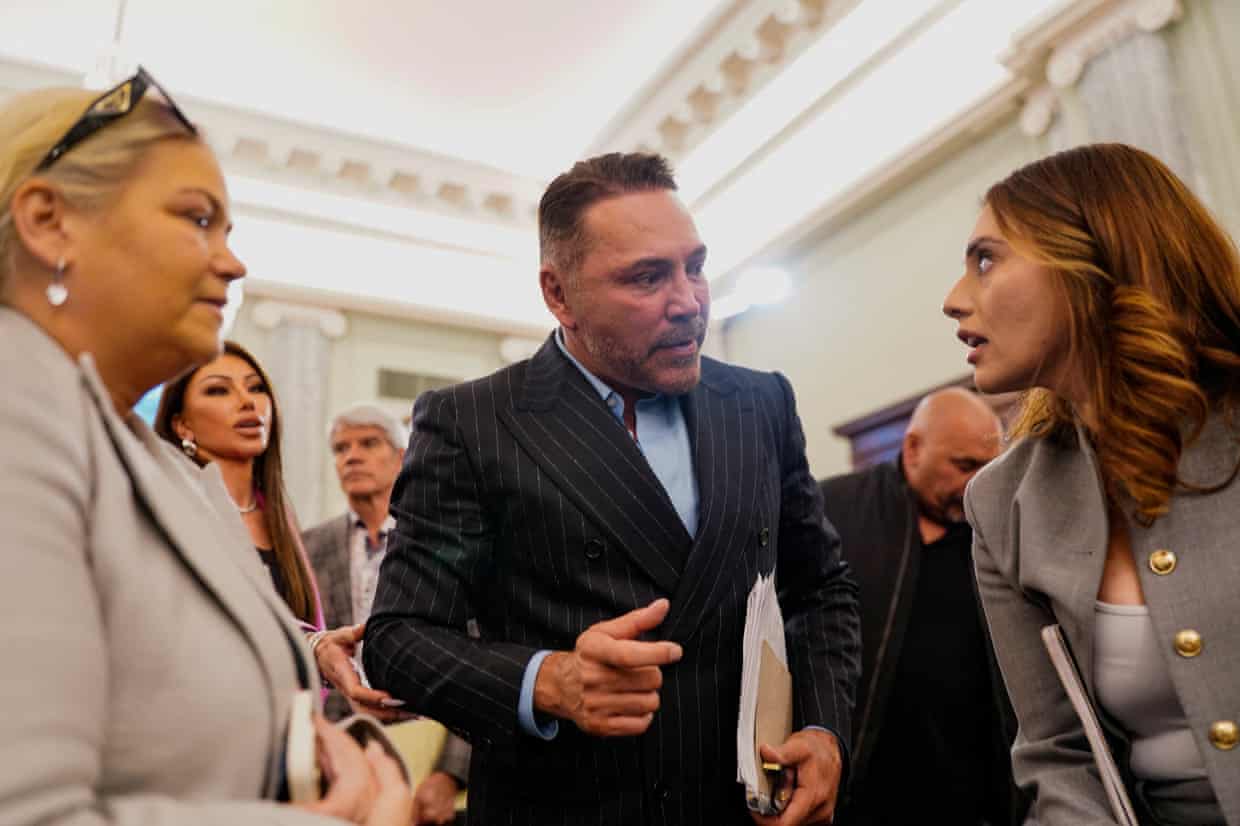
A US Senate hearing on the future of boxing laid bare a sharp divide over the sport’s direction on Wednesday, as longtime boxing figures including Oscar De La Hoya warned of proposed changes that could erode fighters’ rights while executives aligned with an Ultimate Fighting Championship-backed push for a centralized model argued they would bring structure and investment.“When one system controls access, choice becomes theoretical, not real,” professional boxer Nico Ali Walsh told lawmakers, framing the stakes of a debate that could dramatically reshape boxing’s economic model.“When that happens, you fight who you’re told to fight or you don’t fight at all.”At issue is a House-passed overhaul of the Muhammad Ali Boxing Reform Act that would allow the creation of centralized “Unified Boxing Organizations” (UBOs) operating alongside the current fragmented system.Supporters say the approach would simplify matchmaking and attract investment.
Critics counter it would concentrate power and weaken fighter protections enshrined in federal law.The hearing, convened by Texas senator Ted Cruz, who chairs the commerce, science and transportation committee, comes as the bill moves to the Senate, where lawmakers are weighing whether the current framework has kept pace with an evolving combat sports landscape.“This is a fundamental shift in power that … would put corporate profits first, fighters second,” said De La Hoya, the former world champion turned promoter and a vocal critic of the proposal.Decorum prevailed throughout Wednesday’s hearing, but the clash of perspectives was sharply drawn.“The current state of the sport [is] difficult to witness,” said Nick Khan, a board member of TKO Group Holdings, the parent company of the UFC and World Wrestling Entertainment (WWE), which is backing the new Zuffa Boxing venture expected to operate under the proposed framework.
Khan pointed to a system in which multiple fighters can claim to be champion in the same division,“There is no middleweight champion … there are at least four different people who say they are,” he said,“It would be like if Major League Baseball went to the Dodgers after they beat the Blue Jays and said, ‘No, we’re going to take this title away from you because you didn’t pay us money,’”Walsh, the grandson of Muhammad Ali and a fighter with 15 professional bouts, rejected the premise that boxing is fundamentally flawed,“Boxing is not broken,” he said.
“If it were, UFC champions … would not be actively targeting boxing fights because of the fair pay.”Underpinning the debate is a deeper structural question: whether boxing should remain a decentralized marketplace or move toward a single, top-down system backed by major investors.The bill would sit alongside the existing law rather than replace it, allowing fighters to choose between competing under the traditional framework or within a unified system.But critics argue that distinction may prove more theoretical than real if the new model consolidates power.Under the proposal, UBOs could act as both promoter and governing body, breaking from the Ali Act’s fundamental firewall between those roles and aligning more closely with the structure used in mixed martial arts.
In practice, that would give a single entity significant influence over rankings, title shots and matchmaking, shaping both who fights and the terms of those fights.That shift is widely seen as paving the way for ventures such as Zuffa Boxing, a joint enterprise backed by TKO Group Holdings and Saudi Arabia’s Public Investment Fund.The effort reflects a broader push by Saudi-backed entities to expand their influence over boxing, following heavy investment across sports that has often prioritized scale and visibility over short-term profitability.The effort is being led in part by Dana White, the UFC president and longtime Donald Trump ally who has been tasked with building the new promotion and has promoted a league-style model in which “the best fight the best”.TKO has sought to expand into boxing through Zuffa Boxing and a partnership with Turki al-Sheikh, the figure behind Saudi Arabia’s General Entertainment Authority and a close confidant of Crown Prince Mohammed bin Salman.
As previously reported by the Guardian, proposed changes to the law would allow exclusive, long-term contracts and reduce financial disclosure requirements, potentially limiting fighters’ ability to negotiate freely and understand the revenues generated by their bouts.The proposal also includes standards for fighter pay, medical coverage and drug testing, measures supporters say would bring greater consistency and safety to the sport.Documents reviewed by the Guardian show some proposed agreements granting promoters broad control over a fighter’s career, including the ability to assign opponents and restrict participation in outside competitions.In some cases, contracts would allow promoters to count a bout as fulfilled even if a fighter withdraws due to injury, without paying the full purse.Fighters who choose to leave a unified system could forfeit their standing within it, including rankings or title status, diminishing their leverage in negotiations elsewhere.
The debate is unfolding against the backdrop of scrutiny over similar business models in combat sports.In 2024, the UFC agreed to a $375m settlement with several hundred fighters to resolve an antitrust lawsuit alleging the promotion used its market power to suppress wages and limit competition.The company denied wrongdoing and related claims remain at issue in a separate, ongoing case.Critics say the proposed boxing model mirrors key elements of that system, including unilateral control over matchmaking and long-term, exclusive contracts.The legislation would allow such structures to operate legally in boxing, where current federal law was specifically designed to prevent them.
For critics, that history bypasses the original spirit of the Ali Act.The law was intended to curb the influence of powerful promoters and sanctioning bodies, mandating financial transparency and separating business roles to protect fighters from coercive contracts and conflicts of interest.At the heart of Wednesday’s hearing was whether that model would expand opportunity or restrict it.“Give boxers the freedom to choose a better system,” Khan said, describing the proposal as an additional pathway rather than a replacement.But Walsh warned that such choice could prove illusory.
“They say we have a choice,” he said.“But once they control everything, we won’t have a choice.”De La Hoya echoed that concern, arguing that fighters’ bargaining power would erode over time.“If this bill passes, fighters will have fewer choices, less leverage and less control over their careers,” he said.“Fighters deserve real protection and real opportunity, not have to fight the system as well.
”The divide was particularly pronounced on questions of pay and transparency.Walsh said UFC fighters typically receive “under 20% of the revenue” compared with as much as 80% in boxing, warning that the proposed changes could push boxing toward a similar model.“This proposed act is made for billionaires, not boxers,” he said.“It will certainly give more money to the shareholders, not the fighters.”De La Hoya, who has accused backers of “begging for these changes” in order to gain greater control over fighters and the sport’s structure, also cast the proposal in geopolitical terms, describing it as part of a broader Saudi-backed push to reshape boxing through deep-pocketed investment.
Pointing to the Saudi-funded LIV Golf breakaway league, now imperiled after funding cutbacks, he cast it as a cautionary tale for boxing.“Zuffa Boxing is fully funded by the Saudis,” De La Hoya said.“We’ve already seen how that kind of investment reshaped another sport through LIV Golf.We should be honest about what is happening here.That was sportswashing – a clear effort to use sport to reshape reputation.
It should serve as a warning.”Backers of the legislation, including executives tied to TKO Group Holdings’ Zuffa Boxing venture, say such investment is necessary to modernize boxing and compete with other global sports properties.Supporters also argued the current system has already driven fans and broadcasters away, citing long delays in making major fights.“How many fans were lost in those six years?” Khan said, referring to the protracted negotiations for the 2015 super-fight between Floyd Mayweather and Manny Pacquiao.Lawmakers appeared to be considering whether to preserve a fragmented system built on competition between promoters or open the door to a more unified structure modeled on other major sports leagues.
Summing up the case in blunt terms, Cruz framed the proposal as part of a broader push toward consolidation in sports, where centralized organization is seen as a pathway to generate more revenue.Drawing a parallel to ongoing debates over college sports, where lawmakers have explored allowing conferences to collectively negotiate media rights, he said the logic was similar.“That is the argument,” he said.“A crap ton more money.”
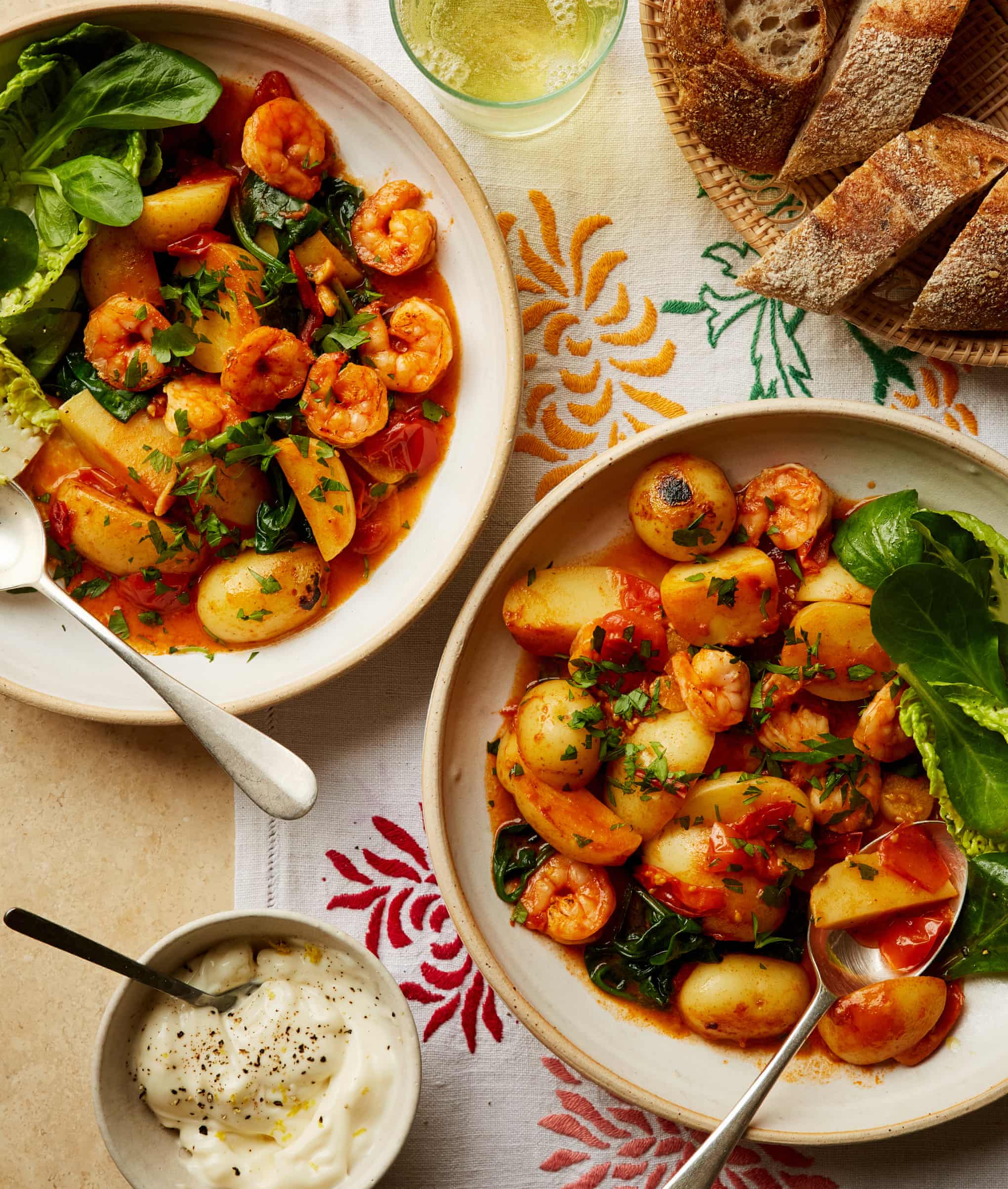
Georgina Hayden’s quick and easy recipe for smoky prawn, new potato and spinach stew | Quick and easy
This Spanish-style stew is a superb midweek dinner – it’s effortless but looks specialThis Spanish-inspired stew is a great weeknight dinner, particularly if you are having a few friends over, because it feels a bit special while actually being effortless and easy. If you want to take that effortlessness to the next level, make the potato base in advance, then finish off with the spinach and prawns just before serving (I like to do as little cooking as possible in front of guests, leaving me free to chat and pour drinks). Serve with a peppery, lemon-dressed salad on the side and hunks of crusty bread to mop up the juices.Prep 5 min Cook 35 min Serves 44 tbsp olive oil, plus extra for drizzling 5 garlic cloves, peeled, 4 finely sliced, 1 left whole½ tsp sweet smoked paprika ¼ tsp mild chilli powder 1 tbsp tomato puree 250g ripe tomatoes, choppedSea salt and black pepper 300ml fish stock 600g new potatoes, halved (or quartered if very large)1 lemon 150g baby spinach 350g peeled king prawns, deveined, if you like6 tbsp mayonnaise ½ bunch flat-leaf parsley, finely choppedPut a large, deep, ovenproof frying pan on a medium-low heat and drizzle in the olive oil. Add the sliced garlic, fry for a minute, then stir in the paprika, chilli powder and tomato puree

How to make creme caramel – recipe | Felicity Cloake's Masterclass
I don’t know why this classic French dessert isn’t more popular online, given how pleasant it is to watch a softly set custard jiggling seductively on screen, or to admire the way the light bounces off its glossy, caramel top. Worse still, it’s also increasingly hard to find on menus, too. Well, you know what they say: if you want something done well, do it yourself.Prep 15 min Cook 50 minCool 4 hr+ Makes 6For the custardSoft butter, or neutral oil (eg, sunflower, vegetable or groundnut), for greasing500ml whole milk (see step 2)1 vanilla pod, or 1 tsp vanilla extract 2 whole eggs 100g caster sugar 4 egg yolksFor the caramel60g caster sugar 40g soft dark brown sugar (see step 3)1 pinch saltLightly grease six dariole moulds, small pudding bowls or smooth-sided ramekins.Arrange these on a baking tray or shallow tin, preferably one just large enough to hold them all without too much room around the edge, and put it within easy reach of the hob

Making a splash: demand for raw and ‘brewed’ milk growing in UK
Farmers and delivery firms launch new options for those seeking alternative to traditionally pasteurised productRaw milk has long been popular, as well as controversial, in the US. While health authorities warn it can carry harmful bacteria, supporters argue it is more natural, and it has also become tied to anti-government and “natural living” movements.In the UK, it is now gaining popularity, particularly among younger consumers, farmers say, as a less processed option, with new products launching to meet demand.Raw milk comes straight from the cow (or sheep or goat) and has not been pasteurised, the process of heating liquids to eliminate harmful pathogens and make them safe to drink.Because it does not undergo this heat treatment, the Food Standards Agency warns that raw milk can cause food poisoning, posing particular risks to pregnant women, young children and people with weakened immune systems

Holy Carrot, London E1: ‘As good as plant-based dining gets’ – restaurant review | Grace Dent on restaurants
This place is about so much more than just a portobello mushroom in a white bap masquerading as dinnerHoly Carrot has, cough, taken root in Spitalfields, east London. It’s the second sprouting from this plant-based restaurant with a name that’s especially hard to sell to meat-loving friends. “Please come with me to a vegan restaurant,” one might say. “It’s not one of those pious places, honest! Oh, um, the name? Holy Carrot.” In fairness, though, it’s generally tricky to cajole meaty people to venture anywhere vegan or even vegetarian, because there’s always a sense that your steak addict acquaintance is enduring their meal “as an experiment”, and despite quite charitably being “willing to be convinced”

Helen Goh’s recipe for Anzac sandwich biscuits with dark chocolate filling | The sweet spot
Anzac biscuits are closely associated with Anzac Day on 25 April, which commemorates the members of the Australian and New Zealand Army Corps who served in the first world war. Made with oats, coconut and golden syrup, the biscuits are said to have been popular because they travelled well and kept for long periods, making them suitable for sending to forces overseas. My version here, a slightly less austere take on the classic, sandwiches two small biscuits with a lightly salted, olive oil-enriched dark chocolate ganache. The result is crisp at the edges, soft within and not too sweet.Prep 5 min Cook 35 min, plus cooling Makes 12 sFor the biscuits 90g rolled oats 45g plain flour 40g light brown sugar 30g caster sugar 40g desiccated coconut 80g unsalted butter 40g golden syrup ½ tsp bicarbonate of soda ¼ tsp fine sea saltFor the ganache110g dark chocolate (60-70% cocoa solids), chopped60ml single cream 2 tsp olive oil ¼ tsp flaky sea saltPut the oats, flour, sugars and coconut in a medium bowl and whisk to combine

Just the tonic: why it’s more than a mixer
If a tonic is something that “makes you feel stronger and happier”, my tonics come in the form of good wine, bad chocolate and an ageing whippet called Ernie. Recently, though, I’ve found myself craving the OG tonic – tonic water – which started life as a malaria treatment in the age of the British empire.The Guardian’s journalism is independent. We will earn a commission if you buy something through an affiliate link. Learn more

Middle East war ‘could wipe out 75% of chancellor’s budget headroom’; UK inflation climbs to 3.3% – as it happened

Ryanair to close check-in 20 minutes earlier amid concern over Europe border queues

‘Get back to work’: Amazon faces fresh scrutiny over workplace safety record

Anthropic investigates report of rogue access to hack-enabling Mythos AI
‘For billionaires, not boxers’: De La Hoya warns over Ali Act overhaul in Senate hearing

Lando Norris backs Max Verstappen to stay in F1 after drivers win rule changes