UK 30-year borrowing costs hit highest since 1998 amid oil price surge and political uncertainty – as it happened
Time to wrap up…The UK government’s long-term borrowing costs have hit their highest level since 1998, amid rising fuel prices and concerns about political stability.The yield – effectively the interest rate – on 30-year UK government bonds (gilts) hit 5.77% at lunchtime on Tuesday, up 0.13 percentage points – exceeding the 27-year high reached last September.Yields have been rising across leading economies amid renewed fears over rising inflation, after US efforts to escort ships through the strait of Hormuz prompted Iranian reprisals.
But the UK has been hit particularly hard by higher borrowing costs since the onset of the conflict – with some investors blaming uncertainty about the outlook for Keir Starmer’s government.Higher government borrowing costs will eat away at the headroom the chancellor, Rachel Reeves, has built up against her fiscal rules, in the Office for Budget Responsibility’s forecasts for tax and spending.HSBC has reported a $400m “fraud-related, secondary, securitisation exposure” in the UK, related to its investment banking division.The loss helped to pull down HSBC’s profits, which was also hit by a jump in the potential losses it could see on soured loans to $1.3bn.
UK car sales have jumped, but the country is still on track to miss its targets for electric car take-up.Rachel Reeves had a barney with her US counterpart, Scott Bessent, over the Iran war last month, it has emerged.The chancellor and the US treasury secretary argued in person during the spring meetings of the International Monetary Fund, according to people briefed on the exchange, confirming a story first reported by the Financial Times.The prospect of a period of political upheaval is taking its toll on UK bonds today, says AJ Bell head of financial analysis Danni Hewson.She explains:double quotation markThe yield on 30-year gilts has shot up, closing at the highest level since May 1998 as investors weigh up how fiscal policy might be impacted if a massive Labour drubbing in this week’s local elections results in a vote of no confidence for Keir Starmer.
“A new PM would likely mean a new chancellor, and one who might be more inclined to turn on the spending taps at a time when the country is faced with stagnant growth and another cost of living crisis.“Although this risk premium is a symptom of nerves about rising inflation as the situation in the Middle East remains highly uncertain, it is being felt more acutely in the UK as the country has proven more susceptible to energy price shocks.“Far from just being numbers on a spreadsheet, it makes doing stuff more expensive for the government and increases the interest paid on the huge debt pile run up during recent economic struggles.This limits what could be done by any keen new broom sweeping through Downing Street, especially if the current crisis delivers on the worst-case scenario set out by the Bank of England last weekTime to wrap up…The UK government’s long-term borrowing costs have hit their highest level since 1998, amid rising fuel prices and concerns about political stability.The yield – effectively the interest rate – on 30-year UK government bonds (gilts) hit 5.
77% at lunchtime on Tuesday, up 0.13 percentage points – exceeding the 27-year high reached last September.Yields have been rising across leading economies amid renewed fears over rising inflation, after US efforts to escort ships through the strait of Hormuz prompted Iranian reprisals.But the UK has been hit particularly hard by higher borrowing costs since the onset of the conflict – with some investors blaming uncertainty about the outlook for Keir Starmer’s government.Higher government borrowing costs will eat away at the headroom the chancellor, Rachel Reeves, has built up against her fiscal rules, in the Office for Budget Responsibility’s forecasts for tax and spending.
HSBC has reported a $400m “fraud-related, secondary, securitisation exposure” in the UK, related to its investment banking division.The loss helped to pull down HSBC’s profits, which was also hit by a jump in the potential losses it could see on soured loans to $1.3bn.UK car sales have jumped, but the country is still on track to miss its targets for electric car take-up.Rachel Reeves had a barney with her US counterpart, Scott Bessent, over the Iran war last month, it has emerged.
The chancellor and the US treasury secretary argued in person during the spring meetings of the International Monetary Fund, according to people briefed on the exchange, confirming a story first reported by the Financial Times.UK long-term borrowing costs have ended the day at what looks to be a 28-year closing high.After hitting their highest level since 1998 today, UK 30-year bond yields have closed at 5.74% tonight.The UK stock market has closed in the red, with the FTSE 100 index ending the day down 145 points or 1.
4% at 10,219 points.That’s its lowest close in almost a week, after hitting an intraday one-month low this afternoon.Gambling group Entain (-6.4%) finished as the top faller, followed by HSBC (-5.8%) and Marks & Spencer (-4.
75%).Concern that the Middle East conflict is continuing without a resolution has pushed UK borrowing costs higher today, says Pooja Kumra, rates strategist at TD Securities.Kumra explains (via the Financial Times):double quotation mark“There is just no sign of this war ending anytime soon.Gilts certainly get hit not just on inflation worries, but also brewing political risks ahead of local elections.”Britain’s stock market has hit its lowest level in over a month.
The FTSE 100 share index is now down 167 points at 10,196 points, a drop of 1.6%, and its lowest level since 1 April.HSBC continues to lead the fallers, now down 6.7%, after reporting a drop in profits this morning.The US jobs market appears to have shrugged off the early economic turmoil caused by the Iran war.
The number of job openings at US companies dipped slightly in March, to 6,866m, new data shows, down from 6,922m in February,The latest JOLTS report also shows that the job openings rate dipped, from 4,2% to 4.
1%.The number of job openings decreased in professional and business services (-318,000) but increased in finance and insurance (+98,000), the US Bureau of Labor Statistics reported.Stocks have opened a little higher on Wall Street, as investors noted that oil prices have dipped back today.The Dow Jones Industrial Average gained 95.2 points, or 0.
19%, at the open to 49,037.12.The S&P 500 rose by almost 0.5%, while the tech-focused Nasdaq gained 0.76%.
Pizza chain Franco Manca has won approval from creditors for a restructure under which 16 of its 70 restaurants will close with the likely loss of about 225 jobs.The sites to go include an outlet in Brixton, the south London suburb which the chain refers to as its “spiritual home” where it first opened as a market stall.Others to go include Bishops Stortford, Cheltenham, Didsbury in Manchester, Glasgow, Hove, Lincoln, Plymouth and London outlets including New Oxford Street, Tottenham Court Road, Bromley, Broadway Market in Hackney, Stoke Newington and Kilburn.The restructure comes after the company said “external cost pressures” including increases in the legal minimum wage, business rates and employers’ national insurance contributions, meant a number of its restaurants were “no longer sustainable.” The casual dining chain, is part of Fulham Shore, which also owns The Real Greek chain, and is owned by Toridoll, the Japanese operator of Wok to Walk and Marugame Udon, and restaurant sector investment fund Capdesia.
The Real Greek is closing all but 19 of its 28 outlets after being bought out of pre-pack administration by Karali Group, the owner of the Côte restaurant chain, according to the Propel industry newsletter.Pret a Manger opened its first ever drive-thru on Tuesday in its latest bid to find fresh locations to trade.The outlet in Warrington’s Oakwood Gate service station on the M6 near Warrington, will operate in partnership with service station specialist Motor Fuel Group, which already operates 35 of Pret’s 500 UK outlets.It will have seating for 48 people and EV charging points as well as a drive-thru service.Ross Warnes, the president of Pret A Manger’s UK & Irish business, said:double quotation mark“Travel hubs and roadside locations present a huge growth opportunity for Pret, making the launch of our first drive-thru a natural next step in our expansion.
It’s all part of our strategy of meeting customers where they are.”UK 30-year bond yields continued to rise after hitting their 28-year high his lunchtime, trading as high as 5.778%.But they’ve now slipped back a little, to 5.75%.
That follows a drop in the oil price today, after Monday’s 5.8% jump, with Brent crude now down 2.6% at $111.40 a barrel.[Reminder: The UK bond market is catching up with yesterday’s moves, after the bank holiday break yesterday].
Political uncertainty, rising energy prices and fiscal tensions are all pushing up UK borrowing costs, explains Lale Akoner, global market analyst at eToro:double quotation mark“Gilt yields are rising because markets are starting to price in a more fragile UK outlook than headline data suggests.The combination of political uncertainty, energy sensitivity and fiscal pressure is forcing investors to reassess how much risk they are willing to carry and that adjustment is happening quickly ahead of local elections.“Investors are responding by demanding a higher premium to hold UK debt, particularly at the long end, where sensitivity to political and economic risks is greatest.At the same time, demand dynamics have become less stable, amplifying moves in yields.“If uncertainty persists, upward pressure on yields is likely to remain, with broader implications for borrowing costs and financial conditions across the economy.
”UK borrowing costs are rising across the board today, for short-dated as well as longer-dated bonds.Two-year gilt yields are up 11 basis points (0.11 of a percentage point) to 4.533%, while give-year gilt yields are up 12bps to 4.6%.
These moves also reflect expectations that the Bank of England will raise rates two or three times to counter the threat of inflation created by the Iran war.The money markets are currently fully pricing in two interest rate rises this year, with a third expected by February 2027.Who calls the shots on the bin collections in Sunderland, potholes in Hackney, or schools in Cardiff is not normally of interest to City traders in the multitrillion-pound sovereign bond market.But for those dealing in UK government debt, Thursday’s local and devolved government elections are significantly more important than usual, amid speculation that a dire showing for Keir Starmer’s Labour party could topple him as prime minister.“Usually local elections should not be a market relevant event, but this has indeed become one,” said Sanjay Raja, the chief UK economist at Deutsche Bank.
double quotation mark“Mainly as the repercussions, not just from a leadership challenge, but also any changes to fiscal policy and any pressure on fiscal rules the chancellor had signed up to.That is what the market is really signed up to.”Here’s the full story:A change in UK prime minister – or just the prospect of a new PM – could add to the risks facing the UK economy, a key factor why borrowing costs are rising ahead of Thursday’s local elections.Thomas Pugh, chief economist at audit, tax and consulting firm RSM UK, explains why the markets could react badly if Labour have a bad election (as appears likely):double quotation markFirstly, in the near-term, speculation over when Sir Keir Starmer will be replaced would be enough to raise uncertainty and dampen activity by itself.Second, a messy leadership contest that opens Pandora’s box of potential tax hikes would raise uncertainty even further, potentially prompting firms to cut back on investment, and households to ramp up savings.
Indeed, speculation at the last two budgets about tax increases dampened growth in the second half of both the last two years,In H1 2024 and H1 2025, growth averaged 0,7% and 0,4% respectively, before slowing sharply to 0,3% and 0.
1% in H2.“Secondly, whoever replaces Sir Keir is likely to want to spend more.The front runners are currently Angela Rayner and Andy Burnham, both of whom have indicated that they would favour a more interventionist approach to the economy, and would like to see government spending rise further.This has raised red flags among gilt investors and is one reason gilt yields – the cost of government borrowing – have risen above 5% for the first time since 2008.Even if Starmer stays on as PM, Pugh adds, the government will face greater pressure to support households and businesses with energy bills – that would add to spending levels, pushing up bond yields.
The yield on 10-year UK government bonds – seen as the benchmark for borrowing costs – is rising too.10-year bond yields are up 12 basis points (0.12 of a percentage point) at 5.09%, its highest level since late March (when they were the highest since July 2023).That reflects concerns that the Iran war could push up UK inflation, putting pressure on the British economy
Dame Shirley Porter obituary
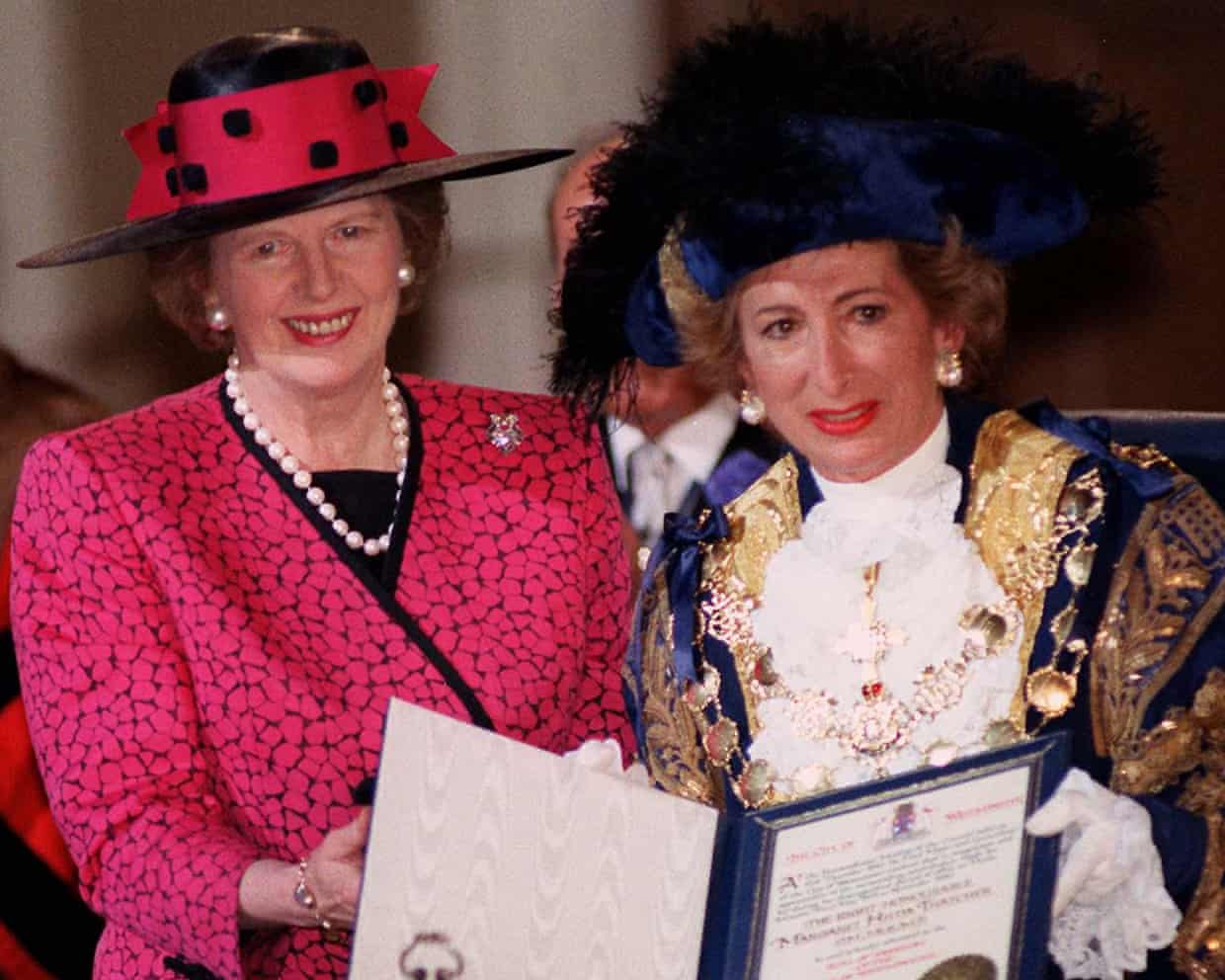
There was a time in the late 1980s when Shirley Porter was the second most famous and powerful female politician in Britain: “the Iron Lady of the town halls”. Like her heroine, Margaret Thatcher, she was a grocer’s daughter, though the family business, Tesco, was somewhat bigger than the prime minister’s corner shop. Porter’s eventual fall from grace was devastating both for her personal reputation and for Thatcherism’s perceived way of doing things. She was, simply, the most corrupt politician of her time.Porter, who has died aged 95, was pursued by the district auditor from her power base at Westminster city council, where she was leader for eight years, 1983-91, and eventually found to have acted illegally in selling council houses with the aim of increasing Conservative votes, in what became known as the “homes for votes” scandal
‘Group is a lifesaver’: strangers buy Wetherspoon’s meals for homeless people through app
Carl used to own pubs – several of them – and a string of hotels. Then two years ago, rising costs forced him into bankruptcy. Now he sleeps on the beach in summer, and in winter sits in an all-night McDonald’s nursing a single cup of coffee.Carl’s daughters are in a different part of the country with his ex-wife. To maintain the illusion that he lives a normal life, Carl is careful only to video-call them from the local Wetherspoon’s with a meal and a drink carefully positioned in shot

Man produces sperm from testicular tissue frozen as a child in breakthrough trial
In a groundbreaking fertility trial, a man whose testicular tissue was frozen before he underwent chemotherapy as a child to be re-transplanted 16 years later has been able to produce sperm.It is the first time a transplant of cryopreserved prepubertal testicular tissue has been demonstrated to restore sperm production in an adult patient. The 27-year-old man had the sample frozen when he was 10, before undergoing potent chemotherapy as part of treatment for sickle cell disease.“This is a huge finding,” said Prof Ellen Goossens, of the Vrije Universiteit Brussel, who led the trial. “Many more people will have hope that they can have biological children

Coalition accused of secretly giving big tobacco lobbyists private platform in parliament
Anti-smoking campaigners have accused the Coalition of secretly giving tobacco giants access to a parliamentary inquiry, a move they say undermines more than 15 years of precedent to protect public health.On Monday, representatives from tobacco company Philip Morris appeared before a Senate committee considering the illegal tobacco trade in Australia.Chaired by South Australian Liberal senator Leah Blyth, the committee also heard from anti-smoking campaigners, health groups and Australian Border Force, but Labor, the Greens and the Australian Council on Smoking and Health raised concerns that executives from cigarette manufacturers were allowed to give evidence in a closed session in Canberra.The committee published a full program for Monday’s hearings, but did not list evidence from Philip Morris or any other “in camera” – or private – session.Labor senator Jana Stewart and Greens senator Jordon Steele-John objected to the in-camera evidence by representatives of Philip Morris on Monday afternoon
Thousands of cancer patients in England to benefit from new immunotherapy jab
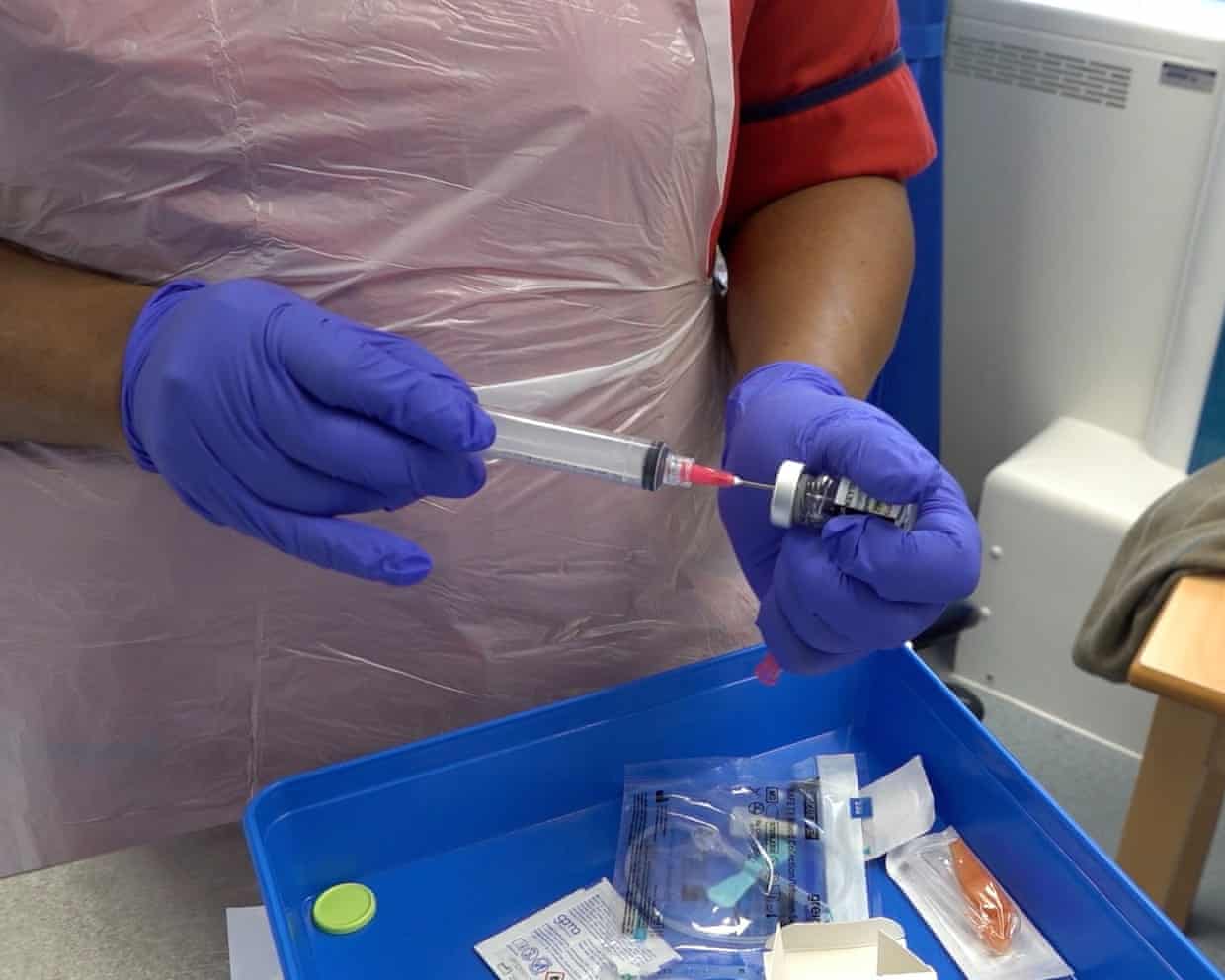
Thousands of patients across England each year will benefit from a new immunotherapy treatment that can be used for several types of cancer, the NHS has announced.The injectable form of pembrolizumab, which can be administered in under two minutes, kills cancer cells by blocking a protein called PD-1, which acts as a brake on immune responses, allowing the immune system to recognise and attack cancer cells.This new form of immunotherapy will replace pembrolizumab, which is administered via an intravenous drip in a specialist clean room. Preparing and administering it can be time-consuming and expensive for NHS staff to maintain, taking about two hours per session for patient.Most of the 14,000 patients already taking pembrolizumab are expected to benefit from the new injectable version

‘We can’t live behind walls’: Muslim-Jewish networks will not give up after Golders Green attack
‘I feel punch drunk,” says Laura Marks, the co-founder of Nisa-Nashim, a Jewish-Muslim women’s network, referring to the alleged attempted murder of two Jewish men in north London this week: “Every day it feels like there is something else. It’s relentless.”Nisa-Nashim was set up as a charity eight years ago to bring Jewish and Muslim women together through social events. The idea was to nurture relationships in UK communities that could help overcome the distrust, division and religious stereotyping exacerbated by Israel-Palestine tensions in the Middle East.The violence in Golders Green, the latest in a wave attacks targeting the Jewish community in the UK amid the deepening Middle East conflict, can feel like a demoralising rebuke to voluntary projects such as Nisa-Nashim that for years have been working relentlessly for community cohesion

Totally grounded? How the jet fuel crisis could change our summer holidays – and world history
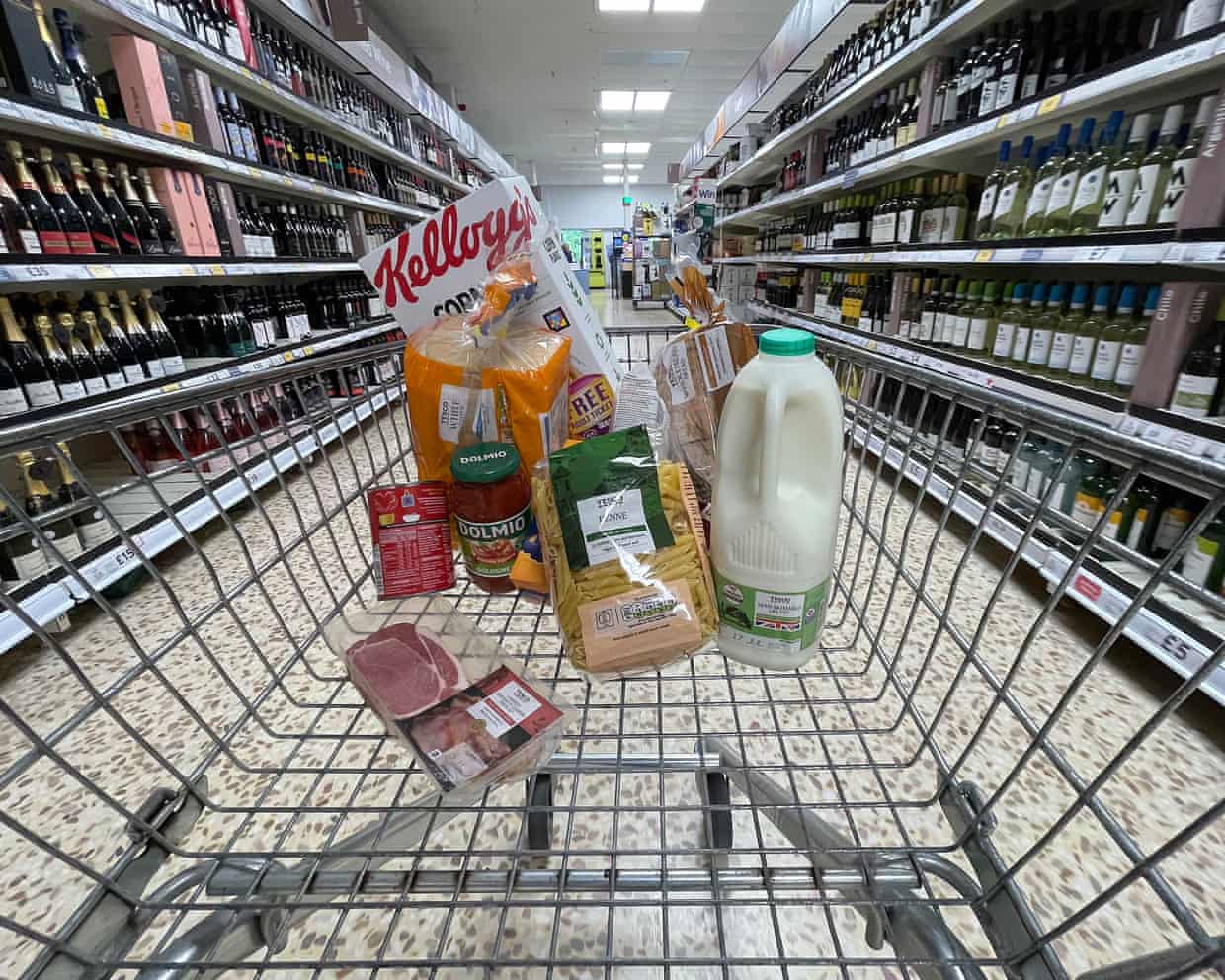
Four in five Britons worried Iran war will make food more expensive, poll finds
US and tech firms strike deal to review AI models for national security before public release
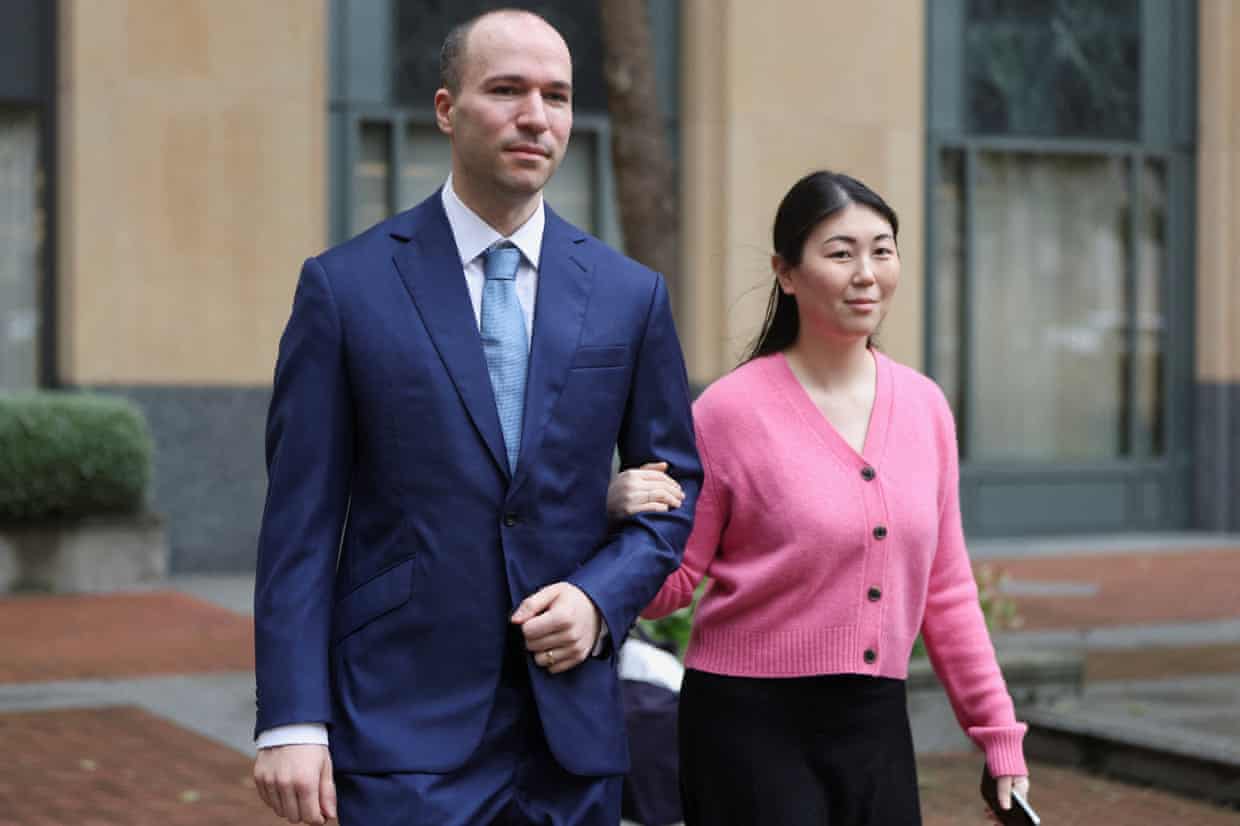
OpenAI president’s ‘deeply personal’ diary becomes focus in Musk’s case against Altman

Timberwolves accuse Wembanyama of goaltending after Spurs star sets NBA playoff block record

Emma Raducanu suddenly withdraws from Italian Open after press conference