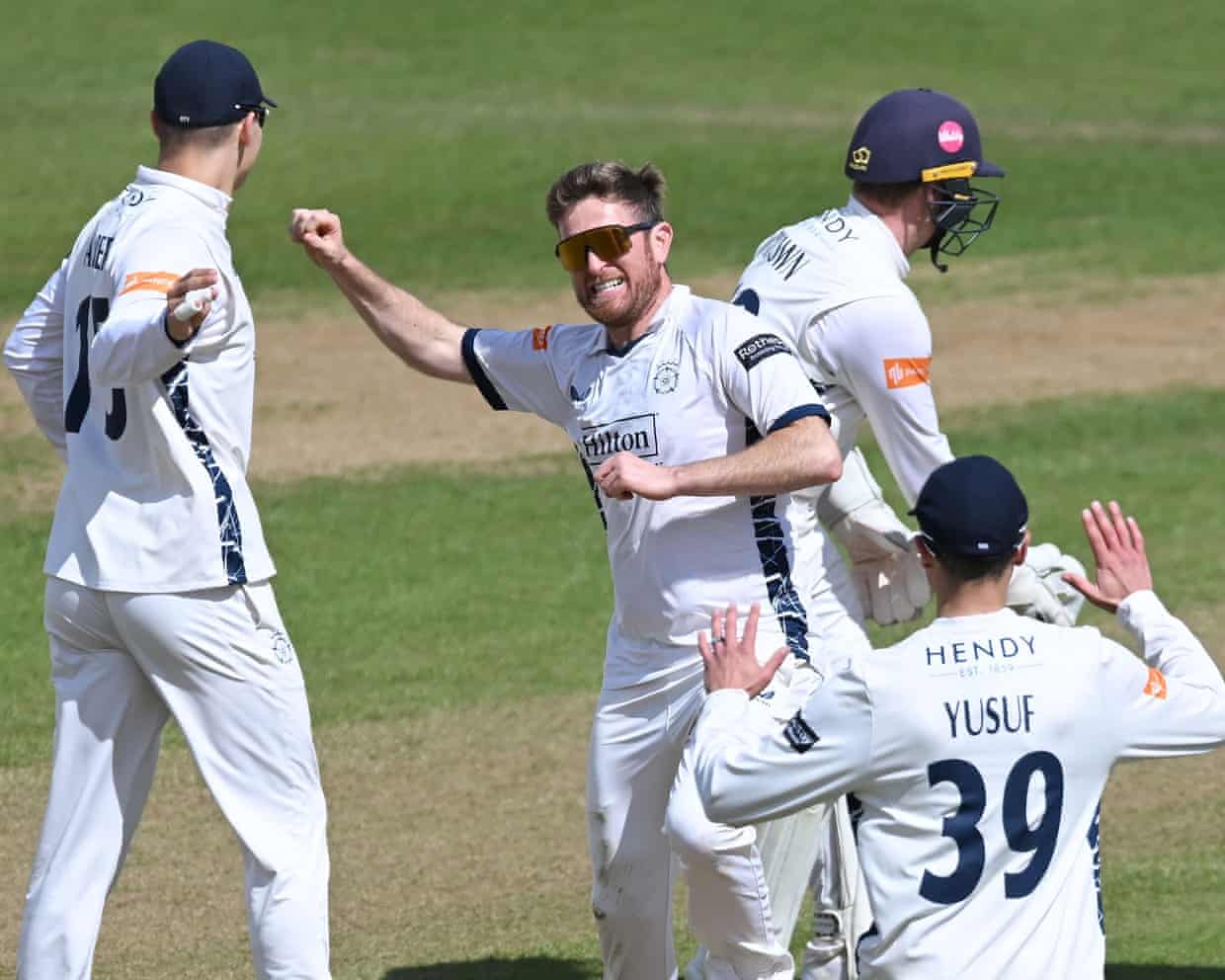
Hampshire v Somerset, Warwickshire v Essex, and more: county cricket – as it happened
Hampshire were frustrated by Somerset’s wagging tail, but wiped out the deficit before bad light stopped play at Southampton. There was no century for James Rew, caught uncharacteristically skewing a half-volley for 86, one of three wickets for Codi Yusuf.Tom Abell made 49, Lewis Gregory was out to Kyle Abbot for the ninth time in 13 matches, but it was 22-year-old Alfie Ogborne who caused Hampshire the most pain, whooping three sixes in an enterprising last-wicket stand. Hampshire lost Toby Albert to a leg injury early on, but Nick Gubbins’ undefeated 70 helped them to a 96-run lead.After play, Somerset’s head coach, Jason Kerr, was asked about Rew’s chances of playing for England: “He is a good enough player to play international cricket … he’s an incredible talent and one that should get international recognition
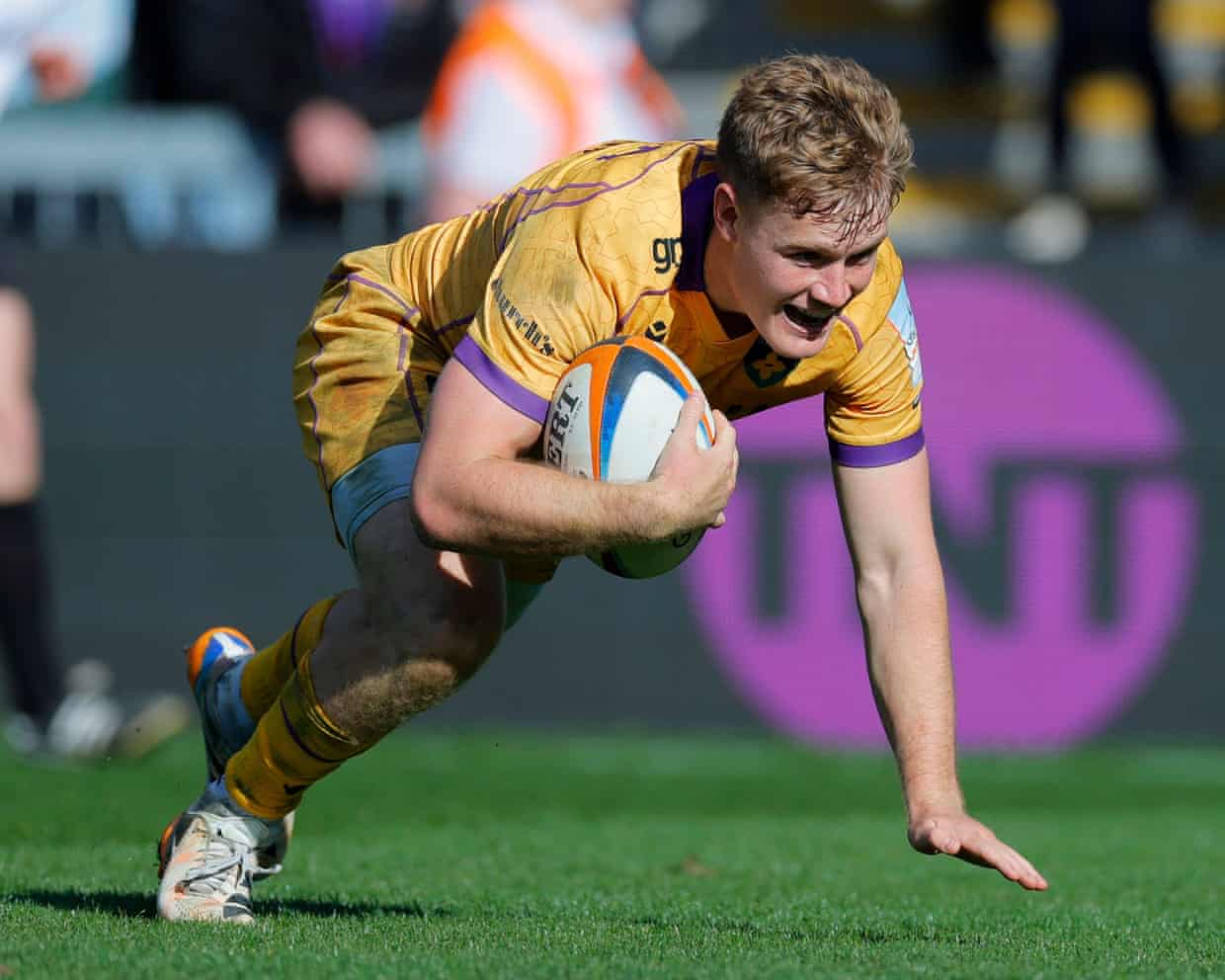
Fin Smith’s last-gasp try breaks Exeter hearts and wins thriller for Northampton
Spring is here, the pitches are firming up and the playoff race is intensifying. As dramatic finishes go this was right up there, with both Northampton and Exeter sensing they had the game won at different moments. In the end the decisive thrust came from the Saints via a last-minute try from their England fly-half Fin Smith which kept the league leaders on track for a home semi-final.It had briefly seemed that a 77th-minute try from the Chiefs replacement Paul Brown-Bampoe, magnificently converted from wide out by Henry Slade, would ensure three points for both teams. Instead Smith came scampering past a couple of tired would-be Chiefs tacklers and had both the pace and nerve to skip away for a hugely valuable score
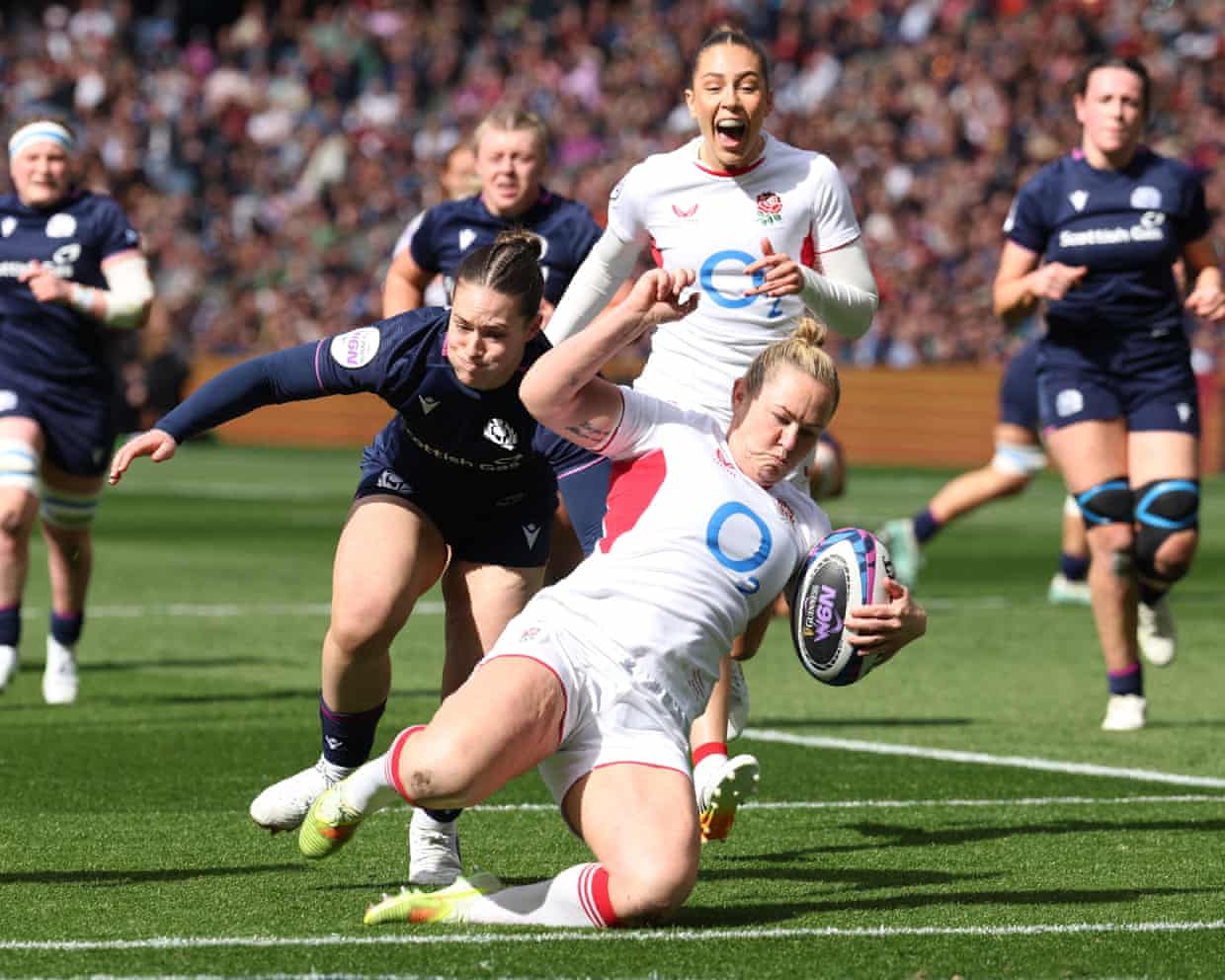
Scotland 7-84 England: Women’s Six Nations rugby union – as it happened
Sarah Rendell has filed her report in a flash! Just like a speeding Kildunne down the left wing.Murrayfield’s foundations were ‘rocked” as Sarah put it. Fair play. That felt like a seismic shellacking.Thanks for keeping me company
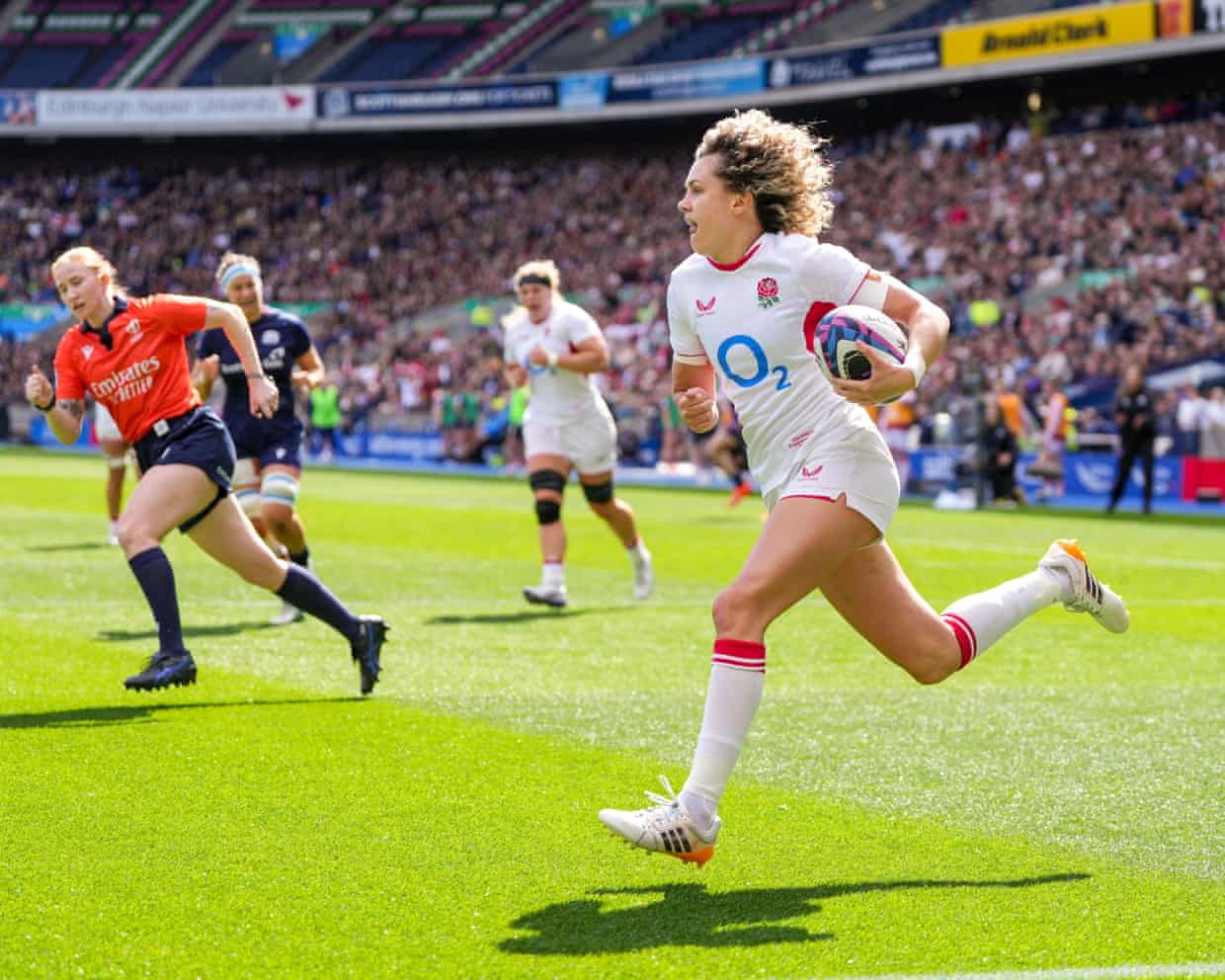
England run in 12 tries as Kildunne sparks demolition of Scotland in Women’s Six Nations
The fortress walls of Murrayfield were finally at Scotland women’s disposal for their first standalone game but England rocked its foundations with a statement performance where fans were left questioning if the world champions had injury problems at all.The 30,498 crowd was a record attendance for a women’s solo sporting event in Scotland but they were shocked into silence after the hosts failed to live up to the occasion. Scotland were poor, particularly in defence, as England ran riot, with 12 tries and scoring the most points they have against their old rivals since their 89-0 result back in 2011. If Scotland turn up in Italy next week in the same form, Fabio Roselli’s team will be licking their lips.Scotland were their own worst enemy with 13 handling errors and a tackle completion rate of just 59%, meaning the hosts missed 52 tackles
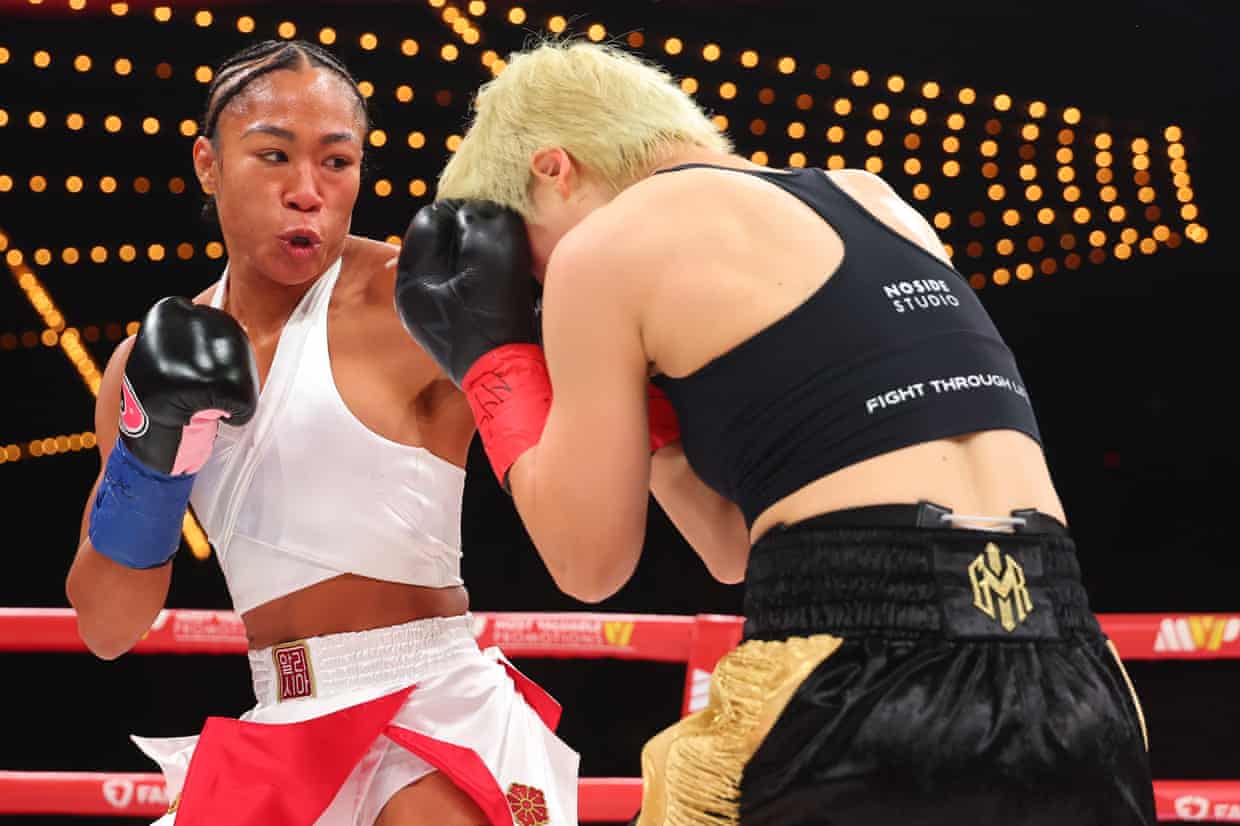
Baumgardner shines after New Zealand’s Daniels seizes unified crown in jarring upset
On a night when Alycia Baumgardner showed why she’s considered one of boxing’s hottest properties, it was a longshot from New Zealand in the co-main event who threatened to steal the show.Baumgardner retained her WBO, IBF and WBA junior lightweight titles early Saturday morning at the Theater at Madison Square Garden with a commanding 10-round unanimous decision over South Korea’s Bo Mi Re Shin in the headline bout of the first US card staged by Most Valuable Promotions Women, the nascent women’s boxing platform launched by boxer-influencer Jake Paul. The venture last month struck a three-year media rights deal with ESPN designed to give women’s fighters a regular, high-visibility platform on linear television.The 31-year-old Ohio native, fighting out of Dallas under the decorated trainer Derrick James, dominated Shin for the first half of the fight before turning back a furious rally to win a wide verdict by scores of 98-92, 98-92 and 99-91. (The Guardian had it 98-92
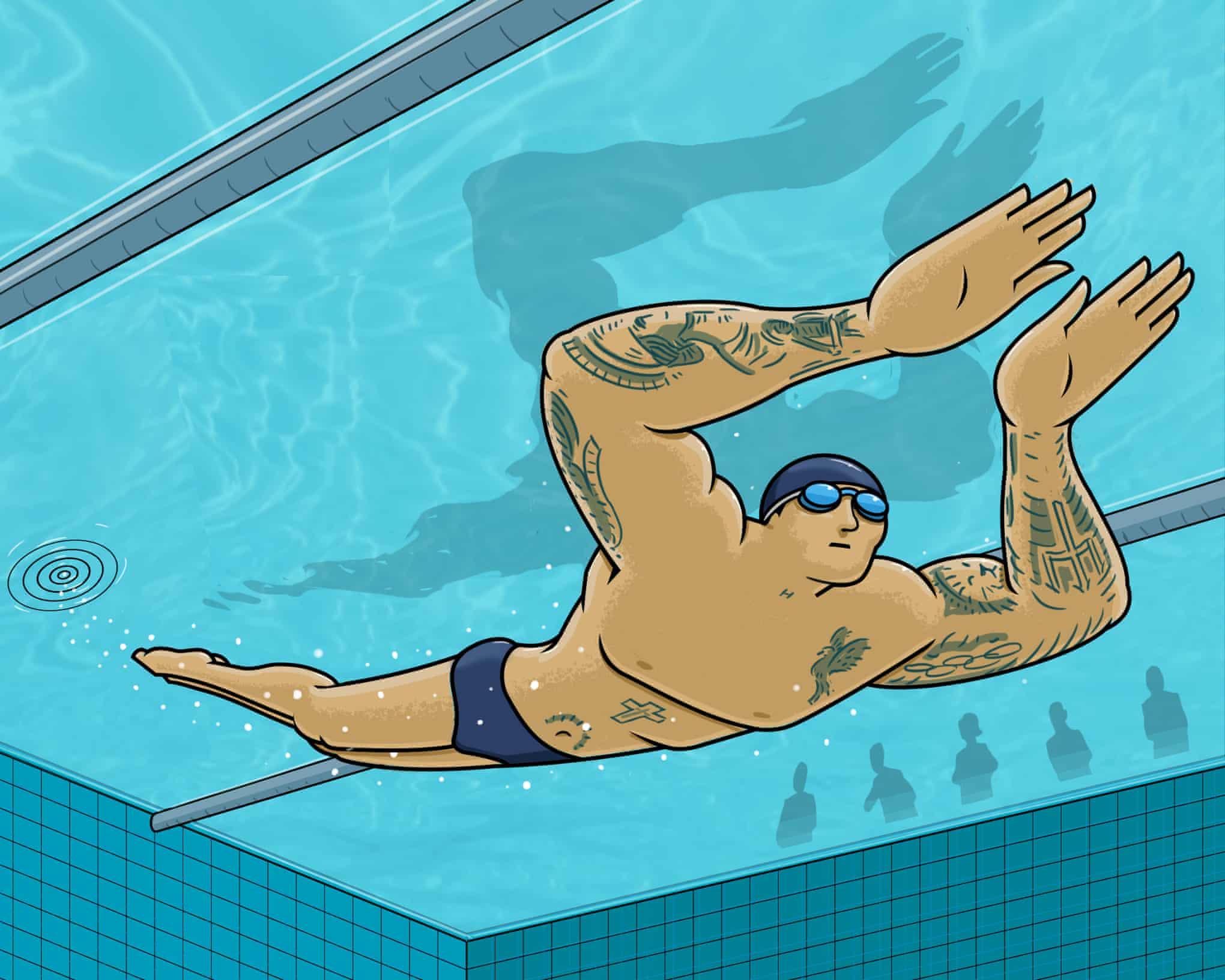
Supercharged GOAT-level swim‑genius Adam Ramsay-Peaty is the Messi of breaststroke | Barney Ronay
The Austrian philosopher and novelist Robert Musil once wrote a lengthy meditation on human capacity based around seeing the phrase “a racehorse of genius” in a newspaper sports section. Musil was disturbed by this idea. His basic question was: can a horse really be a genius?If we are to ascribe the label of genius to a horse, based on its ability to run fast and successfully eat oats, where does this leave the unmapped capacities of the actual human genius? What is consciousness? What is a human? Should the question in fact be: will there ever be a human of sufficient genius they are able to actually perceive the genius of a horse?As a small contribution to this discourse, I would suggest that if there really is such a genius among us they are unlikely, from my own lived experience, to be a sports writer. Also, horses are nice.The reason for mentioning this here is that I don’t think you really appreciate how good Adam Ramsay‑Peaty is at the breaststroke

‘It’s a twilight zone’: Iran war casts deep shadows over IMF gathering in Washington

Monday’s Mandelson showdown could be Starmer’s last stand | John Crace

Starmer was left in dark about Mandelson’s vetting by two other top civil servants

Peter Mandelson’s vetting and where the blame lies | Letter

What happens during security vetting and why did Peter Mandelson fail his?

Olly Robbins and Mandelson’s vetting: what did he do, why – and who knew?