Digital blackface flourishes under Trump and AI: ‘The state is bending reality’
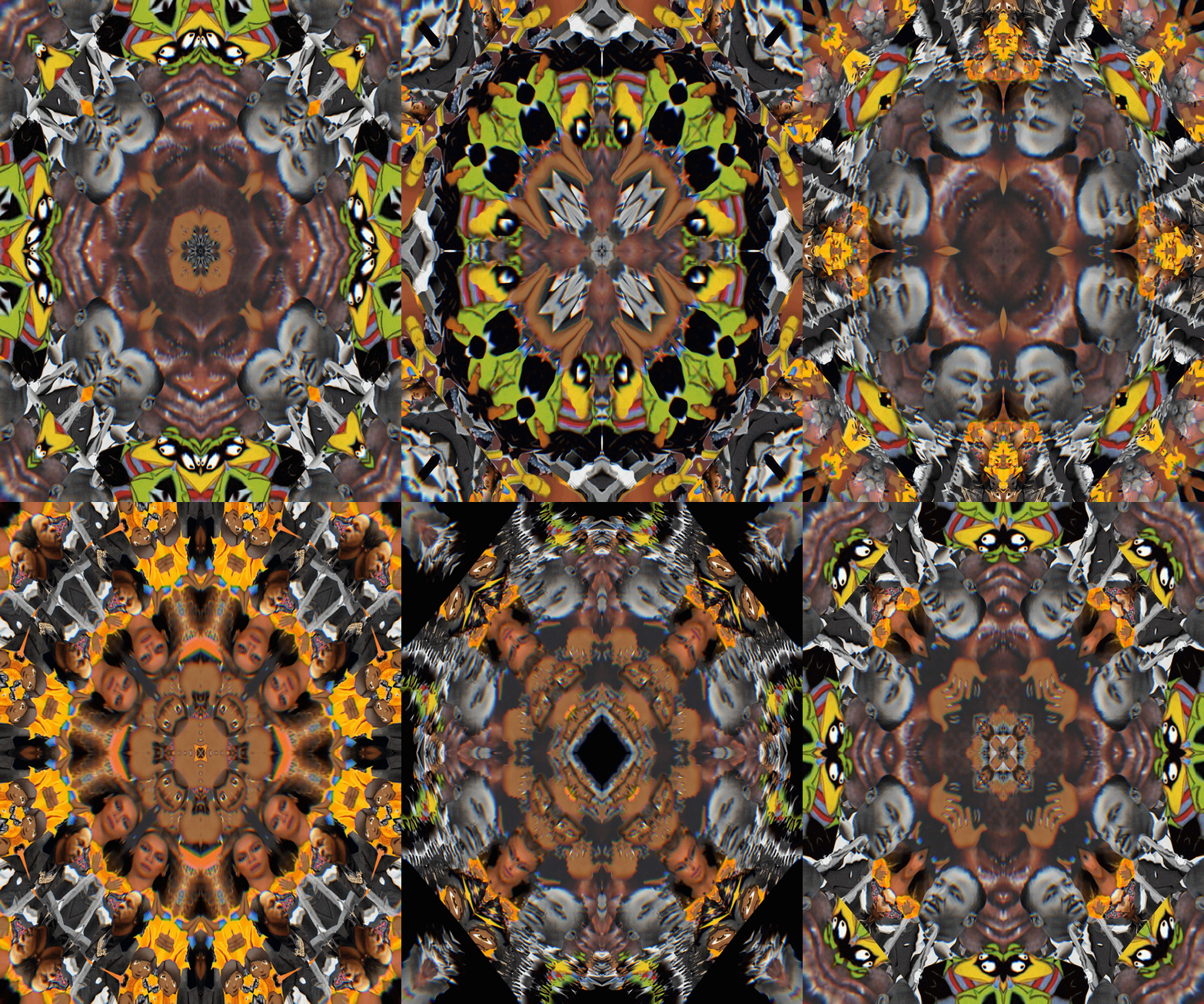
Late last year, as a US government shutdown cut off the Snap benefits that low-income families rely on for groceries, videos on social media cast the fallout in frantic scenes.“Imma keep it real with you,” a Black woman said in a viral TikTok post, “I get over $2,500 a month in stamps.I sell ’em, $2,000 worth, for about $1,200-$1,500 cash.” Another Black woman ranted about taxpayers’ responsibility to her seven children with seven men, and yet another melted down after her food stamps were rejected at a corn-dog counter.Visible watermarks stamped some videos as AI-generated – apparently, too faintly for the racist commentators and hustlers more than happy to believe the frenzy was real.
“You got people treating it like a side hustle, selling the stamps, abusing the system,” the conservative commentator Amir Odom whinged.Fox News reported on the Snap deepfakes as if they were authentic, before issuing a correction.Newsmax anchor Rob Schmitt claimed people were using Snap “to get their nails done, to get their weaves and hair”.(Lost in the outrage was a basic fact: white Americans make up 37% of Snap’s 42 million beneficiaries.)The fake videos are mere shards in the widening mosaic of digital blackface, a pattern that’s spiked in the past two years as generative AI video tools have become widely accessible.
“There’s been a massive acceleration,” says Safiya Umoja Noble, a UCLA gender studies professor and author of Algorithms of Oppression, which focuses on digital biases against Black women in particular,“The digital blackface videos are really pulling from the same racist and sexist stereotypes and tropes that have been used for centuries,” The net effect is a patina of Blackness stripped of cultural obligation or stewardship – minstrelsy in a nutshell,Coined in a 2006 academic paper, the term digital blackface describes a form of Black cultural commodification repurposed for non-Black expression online,Examples run the gamut: posts in African American Vernacular English, the use of darker-skinned emojis, reaction memes featuring Beyoncé, Katt Williams and other exemplars of Black cool.
“The early research that was done on digital blackface started with white gamers using bitmojis of a different race and changing their vernacular to represent themselves,” says Mia Moody, a Baylor University journalism professor whose forthcoming book, Blackface Memes, links the role of Black users in starting and spreading online trends to subsequent digital blackface.“That’s part of the cultural appropriation, gaining the cultural capital.Maybe you’re a nerdy white guy, but if you use this cool avatar of a Black guy with dreadlocks, people will give you respect.You’re interesting all of a sudden.”During memeology’s expansion into short-form video, Black expression has increasingly been divorced from authorship, context or consequence.
Internet culture scholars say some non-white online creators use AI-generated avatars modeled on familiar Black faces – the beauty influencer, the culture podcaster, the man-on-the-street interviewer; they slip into feeds alongside real Black content creators.Large language models scour digital spaces that gained cachet from Black speech and humor, absorbing their tone and slang.Hume AI is one of many firms that offer synthetic voices for podcasts and audiobooks such as “Black woman with subtle Louisiana accent”, or “middle-aged African American man with a tone of hard-earned wisdom”.In most cases, creators whose speech is scraped from YouTube, podcasts and social media receive no compensation, much less even know their personalities shaped these models.The Snap reaction clips, however, were a notable escalation in the mainstreaming of digital blackface – less blending in, more weapons-grade stereotyping.
Many of those videos were created with OpenAI’s text-to-video app Sora,As Sora’s popularity surged in 2025, users exploited its hyperrealism to sully Martin Luther King Jr’s image, sparking ethical debate around “synthetic resurrection”,Deepfakes showed him shoplifting, wrestling Malcolm X, and swearing through his I Have a Dream speech,Conservative influencers swamped feeds with AI-generated embraces between King and Charlie Kirk, conflating their clashing legacies and cultural martyrdom,Bernice King, MLK’s daughter and the director of his Atlanta-based non-profit, criticized the slopaganda as “foolishness”.
Inevitably the Trump White House has gotten into the act.In January the official White House X account posted a doctored photo of Minnesota activist Nekima Levy Armstrong, darkened and weeping, in the wake of her arrest at a non-violent anti-ICE demonstration.Earlier this month an image portraying the Obamas as apes was circulated via Trump’s own Truth Social account.Blackface abides at the underbelly of American mass media even as it evolves at breakneck pace.Its roots trace to the minstrel revues of the early 19th century; white performers smeared grease paint made from charred corks on their faces and plastered on oversized white lips to caricature Black features, and performed exaggerated routines of Black laziness, buffoonery and hypersexuality.
Thomas D Rice, a Manhattan playwright, shot to fame in the 1830s playing a loping trickster named Jim Crow – a name that quickly became shorthand for the forced racial segregation policies in the American south that endured until the 1964 Civil Rights Act.In their heyday, minstrel shows were the dominant form of American entertainment – reflected in newspaper cartoons and the enormously popular Amos ‘n’ Andy radio shows.After the civil war, Black performers were largely forced into adopting minstrel elements, at the expense of their personhood once more, just to gain any footing on stage.“The objectives were, first, to make money to help educate our younger ones, and second, to try to break down the ill feeling that existed toward the colored people,” explained Tom Fletcher, a vaudeville minstrel and actor for almost 70 years who died in 1954.Even as minstrelsy faded from the spotlight by the early 20th century, its toxic residue lingered in American culture – from the shuffling crows of Disney’s Dumbo, to Ted Danson’s infamous 1993 blackface roast of Whoopi Goldberg, to the annual parade of white Halloween revelers in racial masquerade.
A decade ago, when the internet was still a black box of sorts, researchers such as Noble and MIT’s Joy Buolamwini were sounding the alarm about the inherent racial biases in the coding of algorithms related to medical treatment, loan applications, hiring decisions and facial recognition.Now it’s out in the open, smearing wider and deeper than any burnt cork routine ever could.Tech firms have made some effort to stem the tide of digital blackface.Bowing to public backlash, the King family, and more prominent estates, OpenAI, Google and the AI image generator Midjourney disallowed deepfakes of King and other American icons.In January 2025, Meta deleted two of its own AI blackface characters – a retiree called Grandpa Brian and Liv, described as a “proud Black queer momma” and “truth-teller” – after allegations of their non-diverse development team fueled a tempest of criticism.
Instagram and TikTok and more have made some attempts to scrub viral digital blackface videos, to tepid results.Last summer, efforts to replicate Bigfoot Baddie – the AI avatar of a Black woman as a human-yeti hybrid in pink wigs, acrylic nails and hair bonnets, created by Google’s Veo AI – erupted into a full-blown social media craze, with some users even hustling how-to courses.The avatar is still on socials.Black in AI and the Distributed AI Research Institute (Dair) are among the handful of affinity groups that have pushed for diversity and community input in AI model-building to address programming bias.The AI Now Institute and Partnership on AI have highlighted the risks of AI systems learning from marginalized communities’ data and noted that tech companies could provide mechanisms such as data opt-outs to help limit harmful or exploitative uses.
But widespread adoption has been glacial.“YouTube alone has something like 400 hours of content per minute being uploaded,” Noble says.“With AI generation, these tech firms cannot manage what’s coming through their systems.So they don’t.Or they do what’s absolutely imperative to the US government.
But if you have an authoritarian regime in power, they can use your systems to facilitate propaganda.”Although the precise impact of AI-generated digital blackface is difficult to quantify, its use by the Trump administration highlights its potential as a powerful tool of official disinformation.The Obama Truth Social entry revived a slur that has festered for years in darker online corners, and one that rhymes with Trump’s sustained efforts to denigrate the former first family.(Trump disclaimed direct responsibility and refused to apologize for that post, which was taken down.) Meanwhile, the White House’s doctored image of Armstrong, altered from an actual photo taken by the Department of Homeland Security and published on their official Twitter account, scanned as a psyop by a government working closely with tech firms to track activists and other perceived enemies of the state.
Beyond laundering bigotry as news, digital blackface exposes Black users to a level of personalized abuse and harassment that harkens to a minstrelsy heyday when racists were fully empowered to express their bigotry unbidden.And then just as now, it seems there is little that can be done to curb the vitriol.“We are living in a United States with an open, no-holds-barred, anti civil rights, anti-immigrant, anti-Black, anti-LGBTQ, anti-poor policy agenda,” Noble says.“Finding the material to support this position is just a matter of the state bending reality to fit its imperatives.And that’s easily done when every tech company lines up behind the White House.
”Even so, Moody remains hopeful that the current fascination with digital blackface will soon be as outdated and uninviting as the analog variant,She’s seen this play before, after all,“Right now people are just experimenting with AI technology and having a ball seeing what they can get away with,” she says,“Once we get beyond that, then we’re going to see less of it,They’ll move on to something else.
Or they’ll be up for a job, and it’ll be embarrassing.Just look at the history.”

Ministers must end ‘barking mad’ restraints on civil service pay, union leader warns
Ministers must end “barking mad” restraints on civil service pay or risk being unable to recruit the technical and digital specialists it needs to keep pace, a union leader has warned.Mike Clancy, the Prospect general secretary, said the government should end the “rightwing trope” that restrained the pay of highly skilled civil servants and left government unable to compete with the private sector. He said it should be realistic for senior specialists in competitive fields to be paid more than the prime minister.His intervention comes after the prime minister’s chief secretary, Darren Jones, said he wanted more risk-takers and delivery experts to create a civil service that “moves fast and fixes things”, saying hiring criteria would be changed to “promote the doers, not just the talkers”.Clancy said the civil service had significant issues retaining technical experts because of the low pay and lack of progression
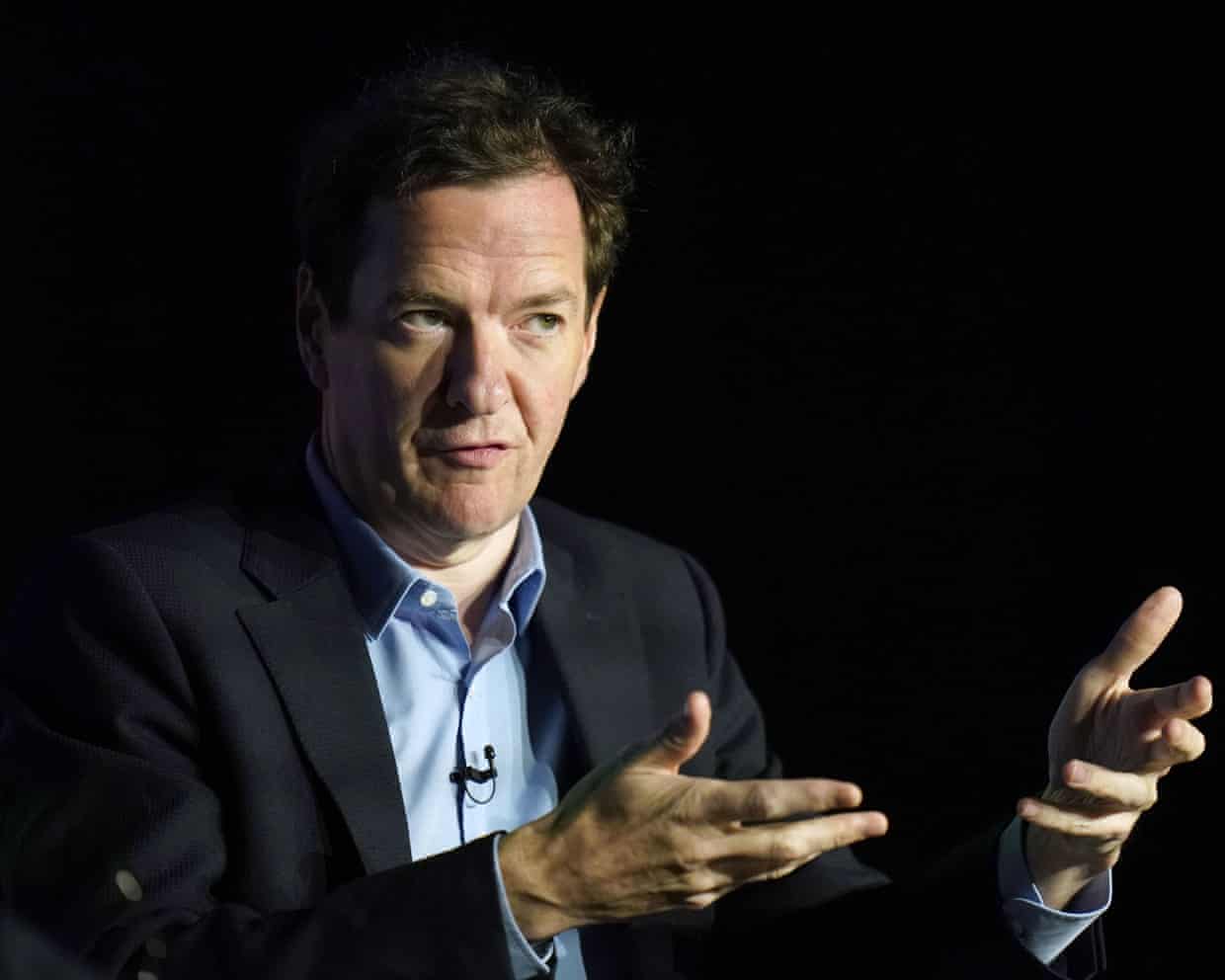
Countries that do not embrace AI could be left behind, says OpenAI’s George Osborne
The former chancellor George Osborne has said countries that do not embrace the kind of powerful AI systems made by his new employer, OpenAI, risk “Fomo” and could be left weaker and poorer.Osborne, who is two months into a job as head of the $500bn San Francisco AI company’s “for countries” programme, told leaders gathered for the AI Impact summit in Delhi: “Don’t be left behind.” He said that without AI rollouts they could end up with a workforce “less willing to stay put” because they might want to seek AI-enabled fortunes elsewhere.Osborne framed the choice facing countries as one between adopting AI systems produced either in the US – such as Open AI’s – or China. The two superpowers have so far developed the most powerful AI systems

When dual nationality leads to double trouble | Letters
The new border controls being introduced for dual nationals create anomalies that will surprise no one who has followed recent Home Office policy changes (Dual nationals to be denied entry to UK from 25 February unless they have British passport, 13 February). At worst they are cruel; at best they are exploitative money-making exercises, unthought out, or the bureaucratic consequence of the introduction of digitisation.I, a Belgian citizen, have worked in the UK for 32 years. My “settled status” now allows me to travel freely between the UK and Belgium using my EU passport. A few years ago, I applied for British citizenship because I was uncertain whether my “entitlement” to live and work in the UK would be maintained after Brexit, and because I wanted to vote in the UK

Why dispute ruling on Palestine Action, but accept legal challenge on elections? | Brief letters
Faced with adverse legal advice, the government has reinstated local elections and will pay £100,000 for Reform UK’s legal costs (Report, 17 February). But last Friday, faced with a unanimous unlawful verdict from three judges on the proscription of Palestine Action, the government intends to appeal. Why is it that the law, both in the UK and internationally, can always be ignored when it comes to Palestine?Phil TateChester One of the finest songs inspired by a book (From Brontë to Ballard, Orwell to Okri: the best songs inspired by literature – ranked!, 12 February) is Woody Guthrie’s Tom Joad, based on John Steinbeck’s novel The Grapes of Wrath. In 17 verses, Guthrie distilled the essence of Steinbeck’s harrowing chronicle of the Joad family’s enforced migration from Oklahoma to California in the Great Depression. Mike PenderCardiff You say (Pass notes, 16 February) cabbage is “having a moment”
UK politics: Starmer says Reform’s pledge to restore two-child benefit cap in full is ‘shameful’ – as it happened
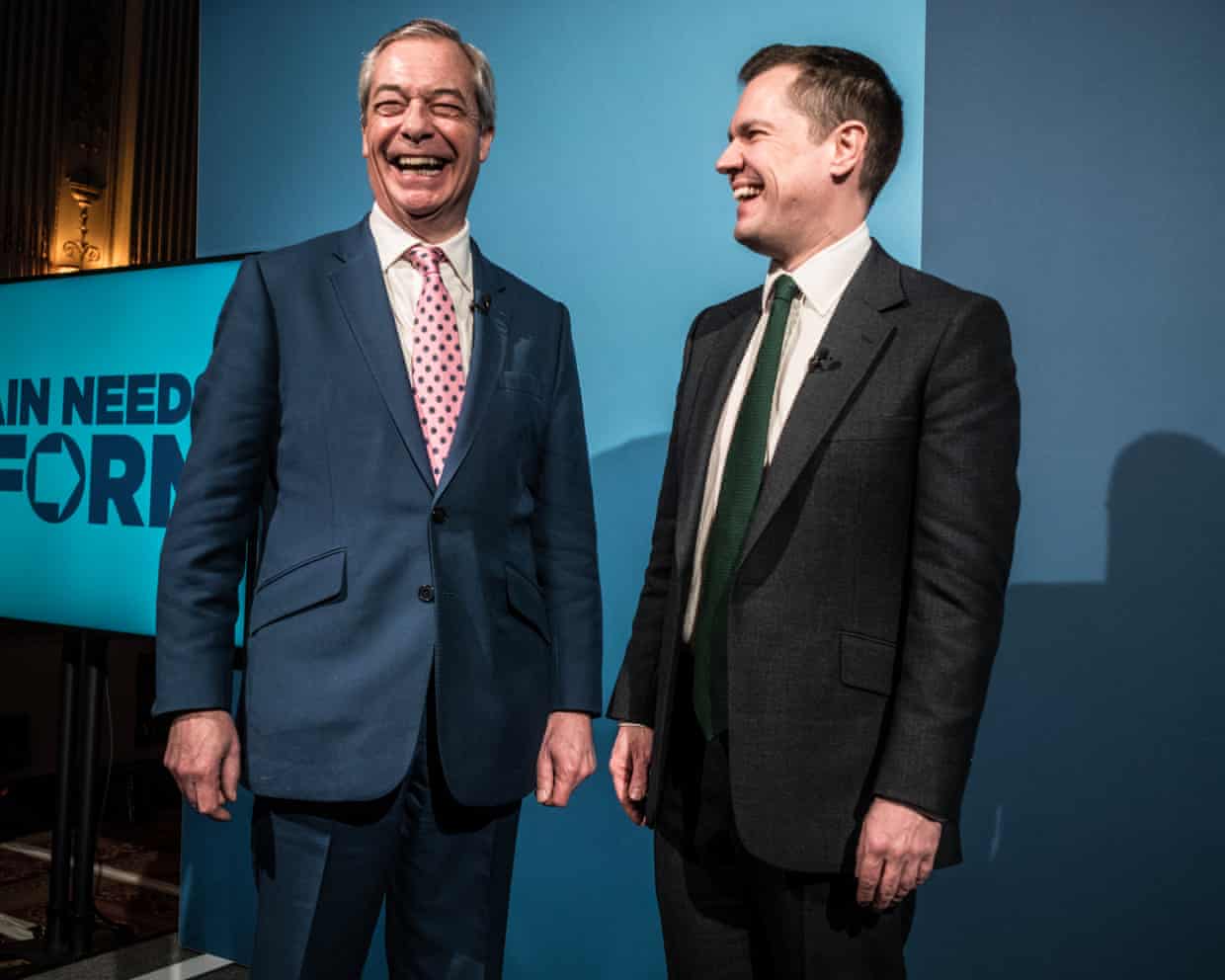
Keir Starmer has responded to the Robert Jenrick speech. Referring to Jenrick’s commitment to bringing back the two-child benefit cap in full (see 11.45am), Starmer said in a post on social media:double quotation markShameful.I’m incredibly proud that this government has scrapped the cruel two child limit.Reform wants to push hundreds of thousands of children into poverty
Labour insiders fear ‘annihilation’ in Lancashire local elections after U-turn
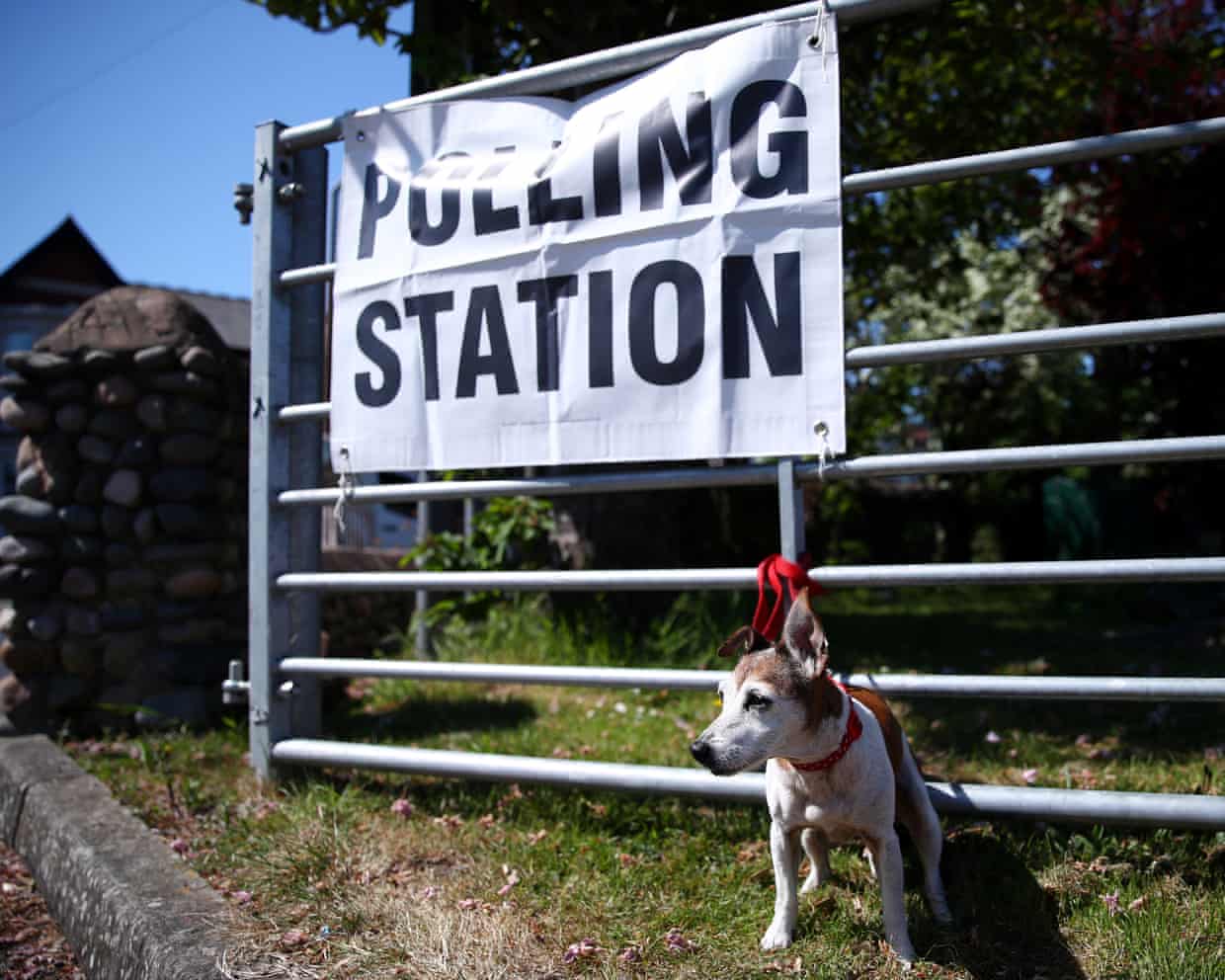
Labour figures in the county with the highest number of reinstated council elections, following the government’s recent U-turn, have said they fear the party will be “annihilated” when voters go to the polls in May.The polls had expected to be postponed pending a reorganisation of local government in the county and a move to unitary authorities, but earlier this week the local government secretary, Steve Reed, scrapped plans to delay the elections, after Reform UK threatened a legal challenge.Two councils, Blackburn with Darwen and Blackpool, are already unitary authorities, while the other 12 districts are two-tier and sit under Lancashire county council.With the government’s U-turn, seven councils will now have elections in May they had not expected; Burnley, Blackburn, Hyndburn, Pendle, Chorley, West Lancashire and Preston – an area with nearly 790,000 people – meaning the county will have more unexpected elections than any other. A total of 30 local authorities will now hold elections in May when they had not expected to, with almost a quarter of those in Lancashire
British manufacturing continues to face low orders and upward price pressure, says CBI
Oil prices rise amid fears of US strikes on Iran – as it happened
Digital blackface flourishes under Trump and AI: ‘The state is bending reality’
The rise of AI is making the future of work look bleak – but it could be an opportunity

Winter Olympics 2026: speed skating, curling, ice hockey and more – live

Townsend calls for Kinghorn and Van der Merwe to show ‘huge determination’ against Wales