Death tax? Property tax? Four ideas that could offset inheritance inequality in Australia

The $5,4tn intergenerational wealth transfer predicted to occur within the next two decades is a major challenge for Australian governments,Economists have warned it could entrench and exacerbate inequality, and make the economy less productive,So what can be done about it?“In the end, that comes down to tax,” says the former deputy reserve bank governor Guy Debelle,“Taxation is how you redistribute.
Basically, that’s it,So what’s the tax?”The Australian taxation system has traditionally been progressive and oriented towards income tax but, as more people hold greater volumes of wealth or get income from assets rather than labour, says Debelle: “We have to think about what’s the sort of spending we want the government to be doing and then how are we going to fund that?“How do you want to think about that?”Economists and academics speaking to Guardian Australia offered different interventions that might do for wealth what income tax does, in some ways, for income: try to limit the worst excesses of inequality,Prof Daniel Halliday, political philosopher, University of Melbourne: “A simple approach is for inherited wealth to be included in the taxable income of the recipient,So, how much inheritance tax you pay depends on how much money you’re earning already, subject to whatever rules we already have in the tax code for adjusting one’s taxable income,“Inheritance means that wealth inequalities get more easily replicated from one generation to the next.
Inheritance allows wealthy families to keep their wealth so that it just keeps growing.If an inheritance tax could be accompanied by a reduction in income tax, higher education debt, or other taxes paid by poorer people, then we might see the most reduction in wealth inequality.“The taxing of inheritance needn’t be seen as an exclusively leftwing idea.Unlike the income tax and GST, inheritance tax would not attach to a market exchange.Whereas taxing income and consumption puts a brake on economic exchange, inheritance tax doesn’t, because inheritance happens outside markets.
So an inheritance tax should appeal also to people who think taxes are a problem when they restrict market freedoms, as well as people who value equality.”Prof Peter Siminski, applied microeconomist, University of Technology Sydney: “I think consideration of death taxes is always worthwhile.”Associate Prof Bruce Bradbury, Social Policy Research Centre, University of New South Wales: “In many other rich countries, government-provided age pensions are more generous.“If you’re a middle-class person in a northern European country, you can expect quite a generous pension in retirement based on your lifetime contributions.But that’s not something you can pass on to your children, and so it doesn’t count in wealth statistics.
“Our superannuation system has some advantages – such as incentives for people to work and save – but it does have the big disadvantage that people just end up with this lump of wealth in retirement, much of which just ends up being passed on to middle-aged children.“One possible solution would be to try to move towards a pension-type system.For example, put more effort into developing annuity systems that people could buy some security in old age.Also perhaps reforming the provision of nursing and home care in old age, so the people can be certain that they’ll get the services they need in old age without having to put money aside that they might not need.”Dr Ken Henry, former secretary of the federal Treasury: “Today it’s simply laughable to claim that superannuation is all about retirement incomes.
“We have to address the way that the superannuation system operates.We do.There is going to have to be a legislative cap on superannuation account balances that qualify for generous tax treatment.Whether that’s the right cap or not is a question for debate, but I don’t think we can argue that we should allow any amount of money to be accumulated in a tax preferred savings vehicle just because it’s a superannuation account.”Siminski: “We almost pretend that we have a progressive taxation system while we exempt things such as superannuation wealth to very high levels from being taxed fairly.
”Henry: “We are going to have to do something about the way in which property is taxed,Whether it’s dealing specifically with negative gearing, dealing with the size of the capital gains tax discount or more broadly redesigning the way that property is taxed to remove stamp duty and replace it with an annual property tax (such as the New South Wales government tried to do some time ago, which the ACT government is doing),All those elements of property taxation should be on the table,We’ve got to think this through,”Siminksi: “During the productivity roundtable last year, myself and Roger Wilkins put out a piece saying that if you want bold ideas, then let’s consider taxing the family home.
The amount of hate mail and pushback that we got on that was incredible.“Everyone knows that this is one of the biggest sources of this whole issue of inequality and mobility.It’s the [family] house that is completely untaxed in any way, well, except for stamp duty and local government taxes, but that is comparatively trivial.So it’s one of the reasons I think why … that it has become urgent is that everyone’s too scared to go there.“We just need to at least acknowledge that housing should be at least considered to be on the table.
“This is the irony, isn’t it? This protection of housing from [tax by] the government actually makes it unaffordable for some people to get in.So it becomes a welfare state for those who already have housing.”
MPs in call to halt Drax’s £2m-a-day subsidy over sustainability doubts
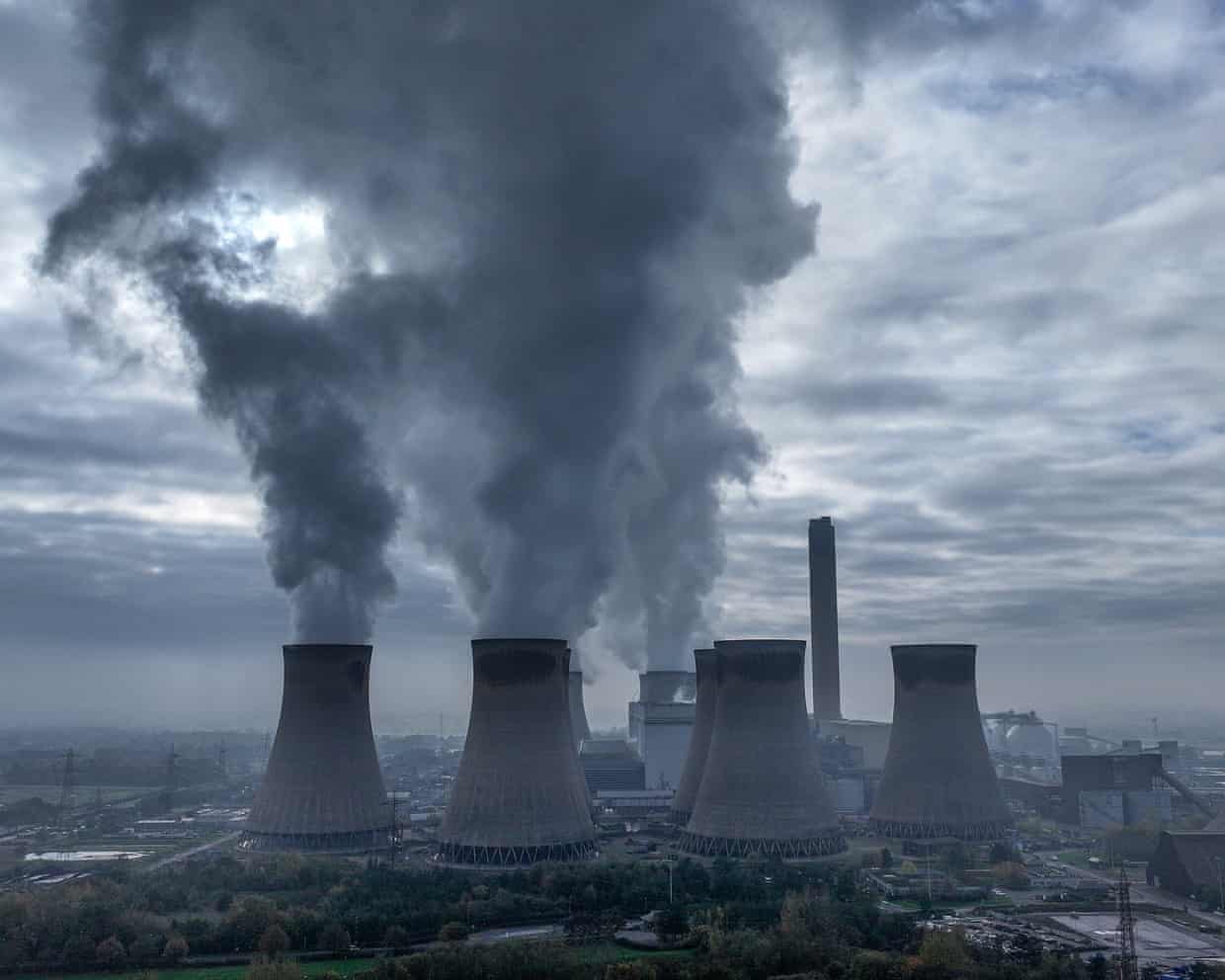
Ed Miliband is under pressure from MPs to suspend subsidies worth £2m a day paid to the owner of the Drax power plant in North Yorkshire after court documents cast doubt on the company’s sustainability claims.A cross-party group of 14 MPs and peers have called on the energy minister to halt the subsidies for Britain’s biggest power plant while the financial watchdog investigates the company’s claims about how it sources the millions of tonnes of wood pellets burned to generate electricity.In a letter, seen by the Guardian, the politicians said they were “deeply concerned” that Drax may have been given “substantial billpayer subsidy” while the company “may have knowingly and consistently concealed information” about the green credentials of its wood sources.The FTSE 250 owner of the Drax power plant gets about £2m a day in renewable energy subsidies, paid by consumers, on the condition it generates electricity from biomass pellets made from waste or low-value wood from sustainable forests.Drax, Britain’s single biggest source of carbon emissions, imports millions of tonnes of wood pellets from across the Atlantic every year and is projected to receive £11bn in subsidies by the end of 2027
British Gas owner pauses share buyback as profits plummet
The owner of British Gas has seen a sharp fall in profits as warmer than normal weather allowed households to turn down their thermostats and more customers switched to cheaper fixed price deals.British Gas reported lower profits for 2025 despite modest growth in its customer base after milder than expected weather meant households used less gas and electricity.Meanwhile, more of its customers are taking advantage of cheaper fixed rate tariffs to buy their energy leading to lower revenues for the supplier. About a third of its customers are now on fixed rate deals, up from a quarter at the end of 2024, the supplier said.As a result its adjusted profits fell to £309m for the year, from £364m the year before, even as the number of household customers grew by 1% to almost 8m accounts

Retailers in UK plan to cut staff hours and jobs amid rising employment costs
UK retailers are planning to cut staff hours and jobs amid rising employment costs and pessimism about the economy.More than half (52%) of finance bosses at retail companies said they planned to reduce working hours or cut overtime, according to the latest survey from the British Retail Consortium (BRC), the trade body that represents most big retailers. Almost half (48%) said they would cut head office jobs and 32% said they would reduce jobs in stores.The potential job cuts are likely to add to pressure for political action on work for young people who are particularly affected by the lower availability of entry-level jobs in retail and hospitality.The retail sector has shed 74,000 jobs in the past year partly owing to new technology, from AI marketing and stock management tools to automated tills
Coles’ shameless ‘Down Down’ promotions have been exposed. So why aren’t they even trying to rebuild trust? | John Quiggin
Like millions of Australians, I shop at Coles. I’m not as careful as I should be, but I try to buy things advertised as being discounted, or on special. But after following a recent case before the federal court, I’ll be checking my old receipts before accepting such claims. In particular, I’ll be avoiding “Down Down” promotions. On the evidence before the court, such promotions are routinely used as a way of implementing price increases

Trump’s immigration siege is rattling hospitality industry, workers say
Donald Trump’s immigration policies are having a chilling effect on the hospitality industry, where nearly a third of workers are immigrants, according to the largest hospitality union in the US.The number of employed hospitality workers dropped by 98,000 from December 2024 to December 2025, according to a report from Unite Here, which represents 300,000 workers across the hospitality, food and tourism industries in the US and Canada.Union leaders say the Trump administration’s brutal immigration crackdown has not only scared workers but has also discouraged international tourism. The US saw a decline of $1.2bn, or a 5

‘By the end of the day we’re just knackered’: business booms for UK’s south Asian jewellers as gold prices soar
“With everything that’s going on in the economy and Donald Trump banging his chest against the world, we’re finding there’s no trust in the banks because we don’t know what’s going to happen,” Sandeep Kanda says.Kanda is the owner of Sunny Jewellers, situated along a stretch of Leicester known as the Golden Mile, and is a beneficiary of consumers seeking alternative investments amid the uncertainty.The business is among a dozen or so south Asian jewellers in the area that have been facing relentless demand for gold since the precious metal began soaring in value at the end of last year.“By the end of the day we’re just knackered,” Kanda says. “We are seeing a lot of people buying and selling

Ministers must end ‘barking mad’ restraints on civil service pay, union leader warns
Countries that do not embrace AI could be left behind, says OpenAI’s George Osborne

When dual nationality leads to double trouble | Letters

Why dispute ruling on Palestine Action, but accept legal challenge on elections? | Brief letters

UK politics: Starmer says Reform’s pledge to restore two-child benefit cap in full is ‘shameful’ – as it happened
Labour insiders fear ‘annihilation’ in Lancashire local elections after U-turn