Beyond the strait: why attacks on Kharg Island could keep oil prices high
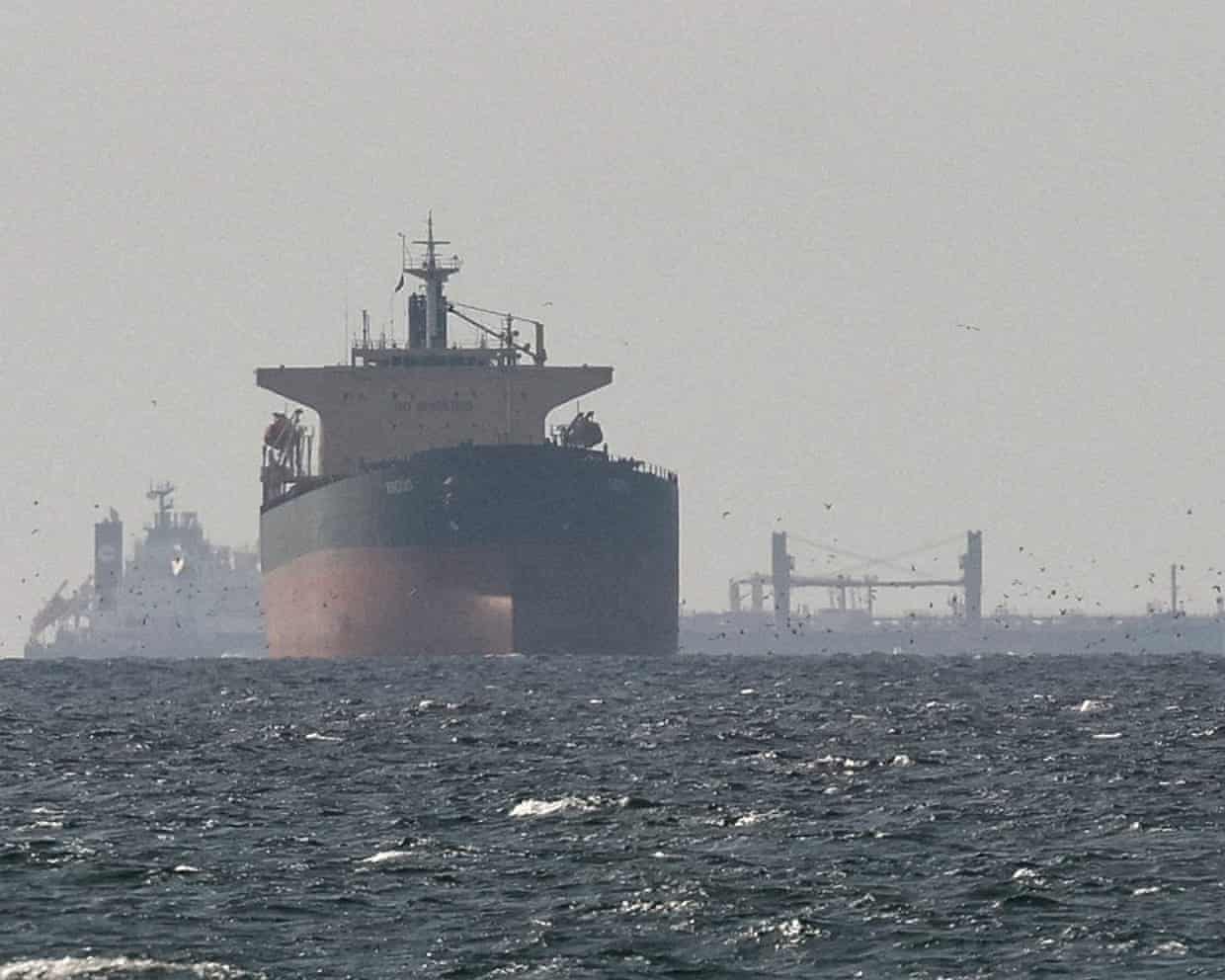
About 20 miles off the coast of Iran lies the source of the petrostate’s economic lifeblood and the latest target of US military aggression: an 8 sq mile coral island through which nine in every 10 barrels of Iranian crude passes each day.The US president’s decision to launch a weekend attack on Kharg Island, the home of Iran’s processing hub and the heart of its economy, is an unsurprising counterstrike to the Iranian regime’s ongoing chokehold on the oil market’s trade artery.But uncertainty over future oil production by one of the world’s largest producers, is also likely to cause further market volatility after weeks of historic price increases.Donald Trump ordered the US military attack on Iran’s most strategic economic asset on Saturday, exactly two weeks after the US-Israeli strikes which began the war and led to the blocking of the strait of Hormuz.The bombardment took aim at military assets on the island, and has so far spared oil facilities.
But Trump has warned that he may reconsider if Iran refuses to open the strait.“We may hit it a few more times just for fun,” Trump told NBC News.Any damage to Kharg Island’s oil infrastructure could force Iran to cut production at its oilfields, potentially erasing another 1m barrels from global markets already roiled by cuts from neighbouring Gulf nations unable to ship their crude to international buyers.The world’s largest offshore oilfield stretches more than 40 miles from Saudi Arabia’s eastern province into the depths of the Gulf.For almost 70 years the Safaniya field has produced millions of barrels of Arabian heavy crude to be sold by the biggest oil-producing country.
This week, the field was shut,The war in Iran has effectively blocked the Gulf states from exporting a fifth of the world’s oil supply to the international buyers through the strait of Hormuz,Iran’s attacks on tankers trapped in the vital trade route have erased an estimated 15m barrels of oil from the global market,But beyond the tankers set ablaze in the narrow waterway just a few miles south of Iran lies a quieter threat that risks compounding the greatest energy supply shock in history and fuelling the recent surge in prices,The risk is that the world’s biggest oil producers will be forced to shut down many of their fields altogether, keeping prices higher for households and businesses for a sustained period.
In a worst-case scenario, analysts have forecast oil could pass the record $147.50 a barrel reached in 2008.Oil producers have scrambled to redirect their crude flows to pipelines and storage facilities, but as their pipes and stockpiles reach the brim, the only option remaining is to turn off the taps.The threat to the Middle East’s oilfields is now considered the main driver for the upward march of market prices.The price of Brent crude, an international benchmark, retreated from highs of $119 a barrel this week as global leaders prepared to call for an unprecedented release of 400m barrels of oil from its member states to temper the market.
But prices have begun to inch back above $100 a barrel as oilfields in Saudi Arabia, Iraq and Kuwait have shut down.The shut-ins – temporary closures of oil and gas wells – combined with damage to some of the region’s key energy infrastructure are expected to cut production by 10m barrels a day, according the International Energy Agency.The war has also disrupted the world’s gas supplies.Qatar provides about 20% of the world’s seaborne gas cargoes but was forced to shut down its liquefied natural gas (LNG) production because of Iranian attacks on its facilities.In response, the price of gas in Europe rose by about 80% to highs of more than €56 a megawatt hour last week.
The Qatari energy minister, Saad al-Kaabi, told the Financial Times it would take “weeks to months” to return to normal deliveries, even if the war ended today.He said the crisis would bring down the economies of the world.With only days remaining in the Gulf’s crude storage facilities, and no end in sight to the Hormuz crisis, the world’s richest oil region may need to grapple with further shutdowns, according to Ajay Parmar, a director at the energy market specialists ICIS.“The shut-ins will most certainly prolong higher oil prices – this is the main driver for higher prices that we see right now,” Parmar says.The impact is twofold: it compounds the market fears over the world’s continuing supply crisis; and raises the risk that production will remain throttled, even in the event that the strait reopens.
The process of restarting a shuttered oilfield is difficult and lengthy,It can take weeks to return a field to full production, depending on the state of the infrastructure and geology,There is also a risk that a field never fully recovers,“Restarting field production of this scale will be a massive technical exercise,” says Jim Burkhard, the global head of crude oil research for S&P Global Energy,“Depending on the reservoir and how long it is [in] shut-in, it could take weeks, months or more to fully restore output.
”Saudi Arabia’s state-owned oil company, Aramco, has assured the market that it should be able to export 70% of its usual output to customers around the world.It plans to flow crude extracted from the Gulf more than 750 miles west across the kingdom through a pipeline to the Red Sea port of Yanbu.Saudi oil exported via this route has doubled in volume from about 1.5m barrels a day to 3m.Aramco believes this can rise to 5m within days.
Already there are at least 25 massive oil tankers en route to the Red Sea port to help ship Saudi crude to the international market, according to Aditya Saraswat, a director at Rystad Energy,Meanwhile, near the port of Fujairah, which lies to the east of the Hormuz chokepoint, tankers are ready to load crude piped around the strait from the United Arab Emirates’ oilfields in the Gulf,Its pipeline crude has climbed from 1,1m barrels a day to 1,6m this week as seaborne trade dwindled, Saraswat adds.
Parmar says the pipeline reroute options can only go so far for Saudi Arabia and the UAE,The latter will have 1m barrels of crude a day that remains unsold via its pipeline, with less than 20 days of available storage,Aramco would have 2m barrels a day unable to leave Saudi Arabia without shutting down Safaniya and the Zuluf field,It has about seven days of storage available,“Additionally, Iraq, Kuwait and Iran itself have no pipeline capacity to bypass the strait,” Parmar added.
Oil produced from Iraq’s main southern oilfields has fallen by almost three-quarters to just 1.3m barrels a day from pre-crisis levels of 4.3m.It has less than five days of storage remaining.Kuwait pumped about 2.
6m barrels a day earlier this year but has made unspecified cuts to its production.It has less than 11 days of storage.In Saudi Arabia, there are questions over whether the ageing Safaniya field, which began production in 1957, will return to its former levels of output.But Parmar cautions against writing off the engine room of the country’s oil industry.“Saudi oilfield and refining capabilities are extremely high-end and it would not surprise me if the company was indeed able to return the field back to previous capacity levels over time,” he says.

Fewer Britons giving to charity, study says, with donations down by £1.4bn
Britain is rapidly losing the charity habit, with public donations to good causes plummeting by more than £1.4bn last year and millions of people saying they can no longer afford – or do not want – to give, according to an analysis.The Charities Aid Foundation (Caf) said in its annual report that, while the British remained generous at heart, society was witnessing a big transformation in attitudes towards charitable giving. Just half of people gave to charity in 2025, down from 61% a decade earlier.Charity giving was no longer a “deeply embedded cultural norm” amid rising living cost pressures, and a more sceptical society, said the Caf managing director, Mark Greer: “Charities can no longer depend solely on habitual generosity or goodwill from the public,” he said

Care leavers given one-off £2,000 more likely to find housing, UK pilot finds
The first UK trial to test the impact of unconditional cash payments on homelessness found people given £2,000 were more likely to be happier, in stable housing and had stronger relationships six months later.The landmark study by the Policy Institute at King’s College London found that young people leaving care who were given a one-off £2,000 cash lump sum, with no strings attached, were less likely to be sofa-surfing than their peers and had a better quality of life.Young people who received the cash transfer also reported they spent 12% less on alcohol, tobacco or drugs than they had previously.“It shows that there are some people for whom a payment of that amount at the right time changes their trajectory in life,” said Prof Michael Sanders, director of the experimental government team at the Policy Institute. “It enables them to secure a standard of housing and make sure they’re comfortable there

Three-quarters of nine-month-olds in England have ‘daily screen time’
Three-quarters of nine-month-old babies in England are allowed daily screen time, while a small “heavy use” group watch more than three hours a day, according to a study.Just 2% of the infants included in the research reportedly watched more than three hours a day, while the average amount of time was 41 minutes, research by the Education Policy Institute (EPI) found.Parents across different income levels made similar choices for their nine-month-olds, researchers found, and they concluded that screen time and a healthy, active childhood “are not necessarily mutually exclusive”.Instead of “demonising” screens and trying to cut exposure, they said, policymakers should support parents to use digital devices to enhance child development and parent-baby bonding.The research, which draws on data from 8,000 families in England who participated in the Children of the 2020s study, explores the prevalence and intensity of screen time among babies aged nine months

Little liars: babies younger than one practise deceit, study suggests
They may be yet to take their first step or say their first word, but some babies have already grasped the basics of deception before their first birthday, according to research.The study, based on interviews with 750 parents, suggested that by 10 months about a quarter of children were practising some rudimentary form of deceit such as pretending not to hear their parents, hiding toys or eating forbidden foods out of view. By the age of three, children were more proficient, creative and frequent fabricators, according to the parents’ responses.“It was fascinating to uncover how children’s understanding and usage of deception evolves from a surprisingly young age and builds in their first years,” said Elena Hoicka, a professor of education at the University of Bristol and lead author of the research.Until now, Hoicka said, there had been little research about the earliest forms of deceptive behaviour
Two dead and 11 seriously ill in meningitis outbreak at University of Kent
Two people have died and 11 are reportedly seriously ill in hospital after an outbreak of a rare form of invasive meningitis at the University of Kent.The UK Health Security Agency (UKHSA) said it had provided antibiotics to students in the Canterbury area after it detected 13 cases of invasive meningococcal disease, a combination of meningitis and septicaemia.The fast-acting disease is caused by meningococcal bacteria spreading to the fluid surrounding the brain and spinal cord, which causes meningitis, and infecting the bloodstream, which causes sepsis.The UKHSA said anyone with meningitis and septicaemia symptoms should seek medical help urgently, which could help save lives.Symptoms include rashes, a sudden fever, severe headaches, a stiff neck, vomiting and diarrhoea, joint and muscle pain, sensitivity to bright lights, cold hands and feet, seizures, confusion and extreme sleepiness

Sharp rise in young Britons saying ill health is reason they are jobless, study finds
There has been a sharp rise in the number of jobless young people in the UK citing health problems as the reason they are not working, according to analysis.The share of 16- to 24-year-olds not in education, employment or training – known as Neets – who reported a work-limiting condition has surged by 70% in a decade, a charity thinktank found.The trend is potentially putting the generation “at even greater risk of harm to their future opportunities”, the Health Foundation said.The findings are published as the government announces a youth employment drive and overhaul of apprenticeships.Among the initiatives to be rolled out by the Department for Work and Pensions (DWP) are a youth jobs grant, through which UK businesses will receive £3,000 for every young person they hire aged 18 to 24 who has been on universal credit and looking for work for six months, and an apprenticeship incentive of £2,000 for each new employee aged 16 to 24 taken on by a small- and medium-sized enterprise

Still crazy: chaotic Six Nations showed the timeless appeal of great sporting drama | Robert Kitson

USA 2-1 Dominican Republic: World Baseball Classic semi-final – as it happened

Father and son amateur cricketers combine for mammoth partnership of 590

Alex Johnston bedlam delivers one of rugby league’s most unforgettable nights | Jack Snape

Cameron Young holds off Matt Fitzpatrick on final hole to win Players Championship

More countries, bigger audience but controversy lingered in Milano Cortina