New City & Guilds owners tripled bosses’ pay amid £22m cost-cutting drive

The new owners of the vocational training body City & Guilds appear to have more than tripled the pay of its top six executives right at the moment the company is cutting £22m of costs and shrinking its UK workforce.The large increases to salary and bonuses have emerged during a scandal over the sale of the qualification awards business by its former owner, the UK charity City & Guilds London Institute (CGLI), to the international certification company PeopleCert.Last week, Kirstie Donnelly and Abid Ismail, respectively the chief executive and finance director of City & Guilds (C&G), were put on leave as PeopleCert launched an investigation into how it came to acquire the training and awards business from CGLI.The sale had already triggered a statutory inquiry by the Charity Commission, after the Guardian revealed that Donnelly and Ismail were handed million-pound bonuses after the privatisation.The Guardian now understands that, since C&G became a private business, the cumulative pay of the qualification body’s top six executives has risen by about 240% in the current financial year to about £6.
2m, up from the £1.8m reported in its latest results to 31 August 2024.The increase is believed to include one-off bonuses of more than £4m to those six executives – including the £1.7m award for Donnelly and £1.2m for Ismail – as well as a cumulative increase of about 13% on salary and payments from an annual bonus scheme, which now appear to total more than £2m for the group of six.
Overall, the Guardian understands that total one-off bonuses paid to C&G executives at the newly privatised company total about £4.5m.Asked about the sharp increase in the remuneration bill, a PeopleCert spokeperson said: “The business doesn’t have any further comment at this stage.”The jump in bosses’ pay has emerged after the Guardian reported that since its sale last October C&G has embarked on a £22m cost-cutting drive and is reducing the size of its UK workforce by hundreds of roles.In a presentation published by PeopleCert last month, the company said £13m of the savings were “personnel cost synergies” that would largely be achieved by failing to replace staff leaving the institute with UK hires.
The document implied that C&G, which has more than 1,600 staff members and 1,800 “associates” on short-term contracts, has a “churn” rate equivalent to about 300 people leaving a year and outlined how PeopleCert plans to relocate a third of those jobs to Greece “at a cost [of] up to 50% lower”,The same quantity of roles “are due to not be replaced due to overlapping functions”, the presentation added, while the remainder of leavers will be replaced with hires in the UK,The presentation appears to have been removed from the PeopleCert website after the Guardian published its report last month,The pay awards coinciding with an extensive cost-cutting programme has proved an embarrassment to the privatised company and its former charity owner,C&G has previously said: “Trustees were not involved in any pre- or post-deal conversations regarding remuneration matters for CGL executives that would apply after the sale.
This is a matter for the new City & Guilds Ltd owners.”However, the Guardian understands that discussions were taking place among the charity’s trustees in 2024 and they voted on the bonuses in May 2025, when bonuses of four times salary were considered.While CGLI said that trustees subsequently voted not to pay bonuses relating to the sale, the figures discussed appear similar to those eventually awarded to executives by the private company.PeopleCert did not explain the apparent coincidence when asked about it by the Guardian.CGLI said it is cooperating with the Charity Commission inquiry and that it is “confident that all actions taken by the trustees have been proper, transparent, and in line with our charitable purpose”.
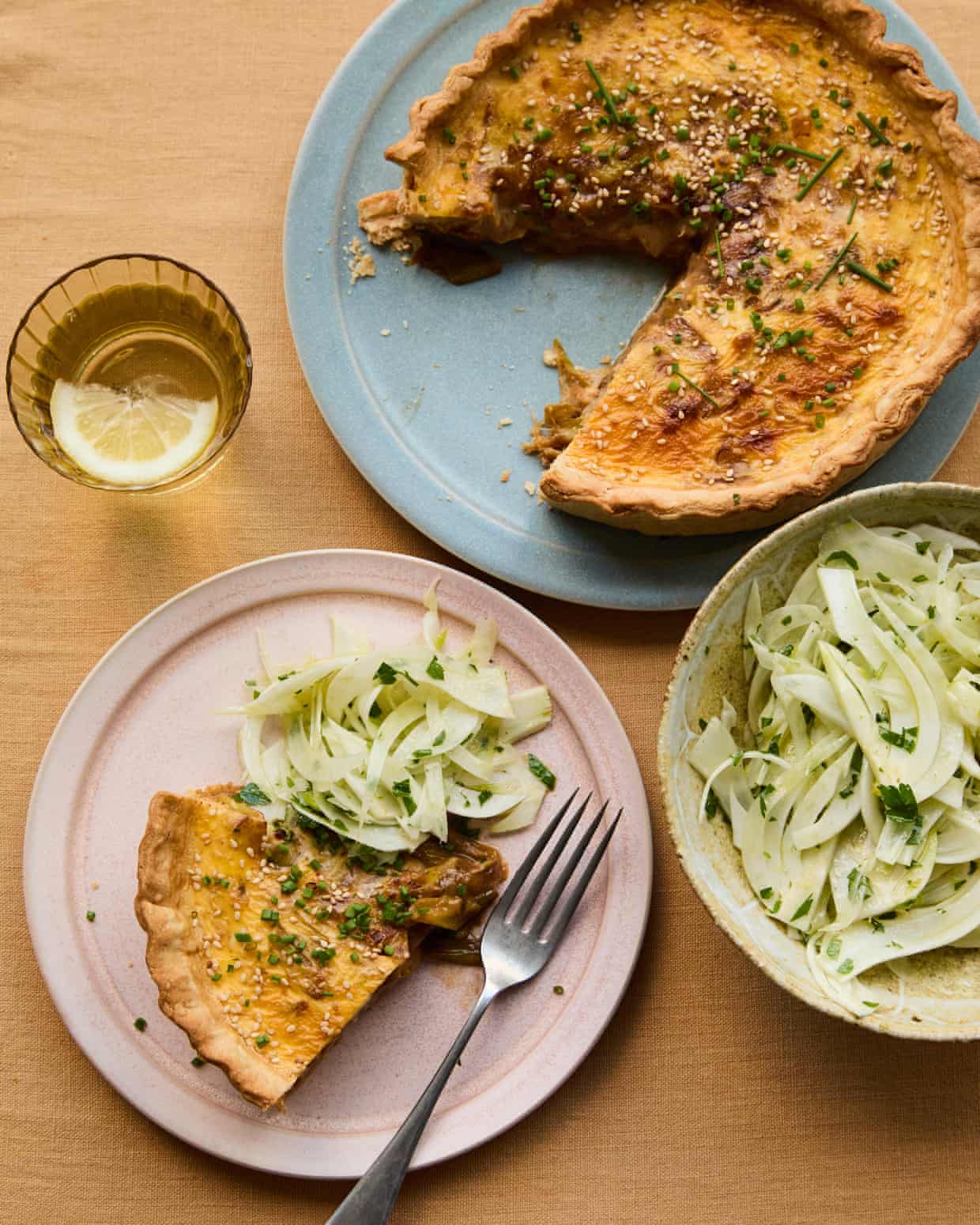
Kenji Morimoto’s recipe for miso leek custard tart with fennel slaw
This savoury custard tart celebrates some of my favourite flavours (and dishes): jammy miso leeks, savoury-sweet chawanmushi (a Japanese steamed custard flavoured with dashi) and toasty sesame seeds, all enveloped in flaky pastry. It feels decadent, so it’s best served with a simple fennel salad, zingy with apple cider vinegar and mustard. It’s excellent eaten while still warm from the oven (be patient!), but even better as leftovers, because I have a soft spot for cold eggy tarts.Shop-bought pastry can, of course, be used, but making it from scratch is what makes this dish that much more special.Prep 30 min Chill 1 hr 15 min+Cook 45 min Serves 6-8For the pastry185g plain flour, plus extra for dusting 1 tsp salt 100g cold unsalted butter, cubedFor the leeks2 tbsp vegetable oil 350g leeks, trimmed, halved lengthways and cut into 3cm segments Salt 2 tbsp red miso 2 tbsp honeyFor the egg mixture 5 eggs 150ml whole milk 1 tbsp dashi granules 1 tbsp sesame seeds Chives, thinly sliced, to garnishChilli oil, for servingFor the slaw300g fennel, trimmed and thinly sliced or cut using a mandoline 2 sprigs fresh flat-leaf parsley, tender stems and leaves chopped 2 tbsp apple cider vinegar 1 tsp dijon mustardFirst make the pastry: in a food processor, blitz the flour, salt and butter into a breadcrumb-like consistency

How to make mapo tofu – recipe | Felicity Cloake's Masterclass
Mapo tofu is a Chengdu favourite typical of the “spicy generosity” of Sichuan food, Fuchsia Dunlop explains, though it’s perhaps better not translated as “pock-marked old woman’s tofu”. It may even convert you to the joys of tofu itself, should you still be on the fence about the stuff, because its creamy softness is the perfect foil for the intensely savoury, tingly seasoning involved here. It’s also ready in mere minutes.Prep 10 min Cook 7 min Serves 22 garlic cloves 1 small knob fresh root ginger 4 spring onions Salt 250g plain tofu (I like a soft one, but see step 3)2 tsp cornflour, or potato or tapioca starch 1 tbsp Sichuan peppercorns 2 tbsp neutral oil 40g pork mince, or beef mince, or a plant-based alternative1 heaped tbsp Sichuan chilli bean paste (also called spicy doubanjiang or toban djan, see step 8)½ tbsp fermented black beans, drained1 tsp chilli flakes, drained if in oil (drizzle this on top, if you prefer)85ml waterIf serving this with rice, which is how it’s generally eaten (though you could have it with noodles instead), put that on to cook. It’s also nice with some steamed green vegetables or a cucumber salad on the side

Not keen on feeble nolo wine? Try these instead
Are you a lover of oaky rioja, or maybe zingy Kiwi sauvignon blanc, and looking to find a non-alcoholic lookalike? To put it bluntly, I’m afraid you’re out of luck. Alcohol does much more than make you tipsy; it is the magic ingredient that gives so much of wine’s wondrous complexity, character and charm. Not only does it carry volatile compounds that make up wine’s endlessly fascinating combinations of scents and tastes, along with a sensation of warmth, it also creates that viscous body and texture – what’s rather grossly known in the trade as “mouthfeel” – of the liquid in your mouth, and the overall balance of all these factors in the wine.The Guardian’s journalism is independent. We will earn a commission if you buy something through an affiliate link
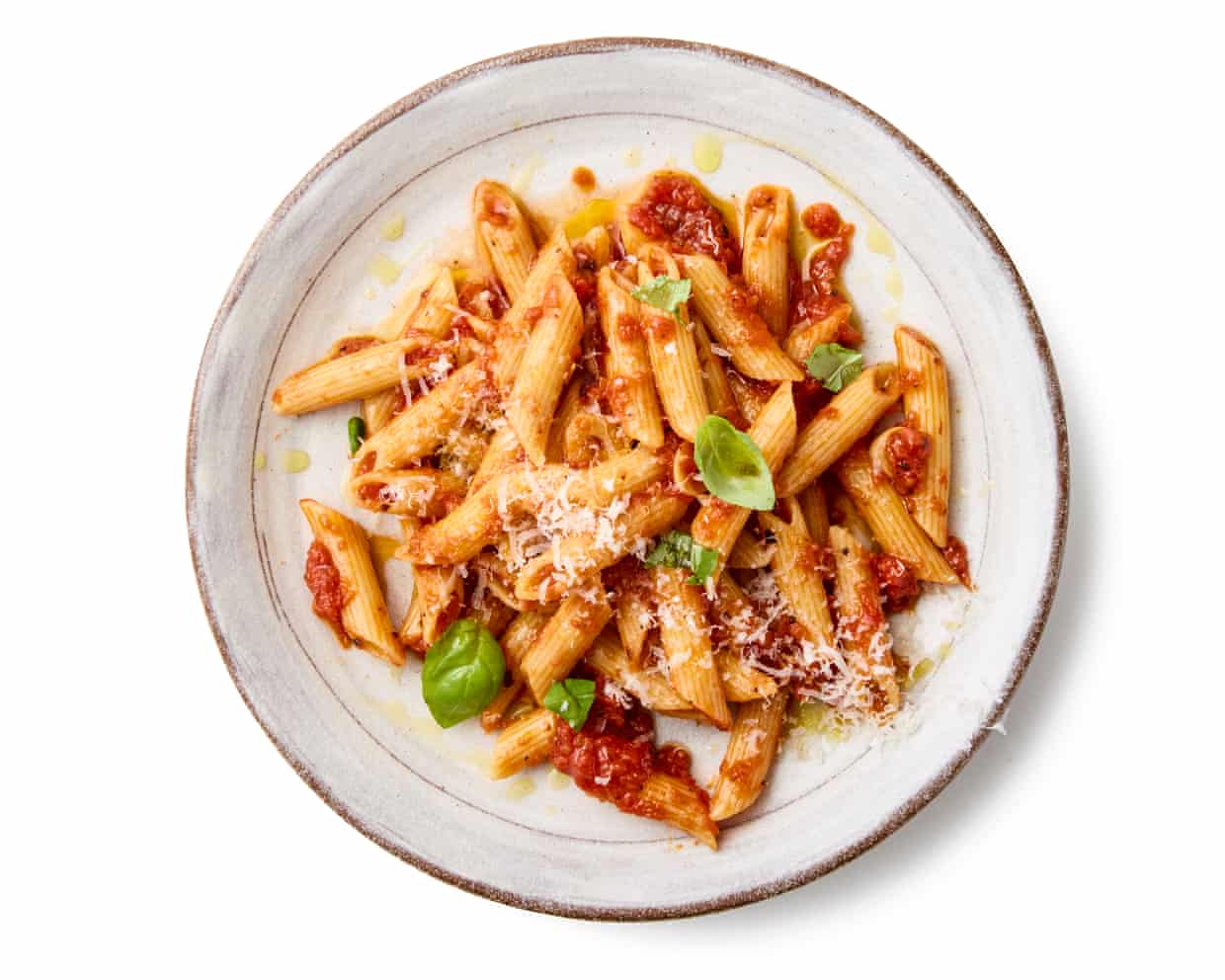
How to make penne all’arrabbiata – recipe | Felicity Cloake's Masterclass
Pasta all’arrabbiata is the perfect dish for January. Not only is it quick, vegan and made from ingredients you might conceivably have in the cupboard already, but the name, which means angry, could be said to suit my mood now that the last of the Christmas festivities are over. Happily, a big plate of rich, tomatoey pasta can always be relied upon to lift the spirits.Prep 5 min Cook 25 min Serves 22 tbsp extra-virgin olive oil, plus a little more to finish1 tsp chilli flakes 2 garlic cloves 400g good tinned tomatoes, or passata 200g penne (see step 1)Salt and black pepper ¼ tsp red-wine vinegar 1 handful basil leaves, or flat-leaf parsleyThis dish is traditionally made with penne, but any shape that traps chunky pieces of sauce will give maximum enjoyment. Caz Hildebrand and Jacob Kenedy’s book The Geometry of Pasta suggests no fewer than 14 alternatives, including farfalle, pappardelle and tagliatelle, while I’d recommend rigatoni, fusilli, conchiglie or, indeed, anything that looks vaguely like them
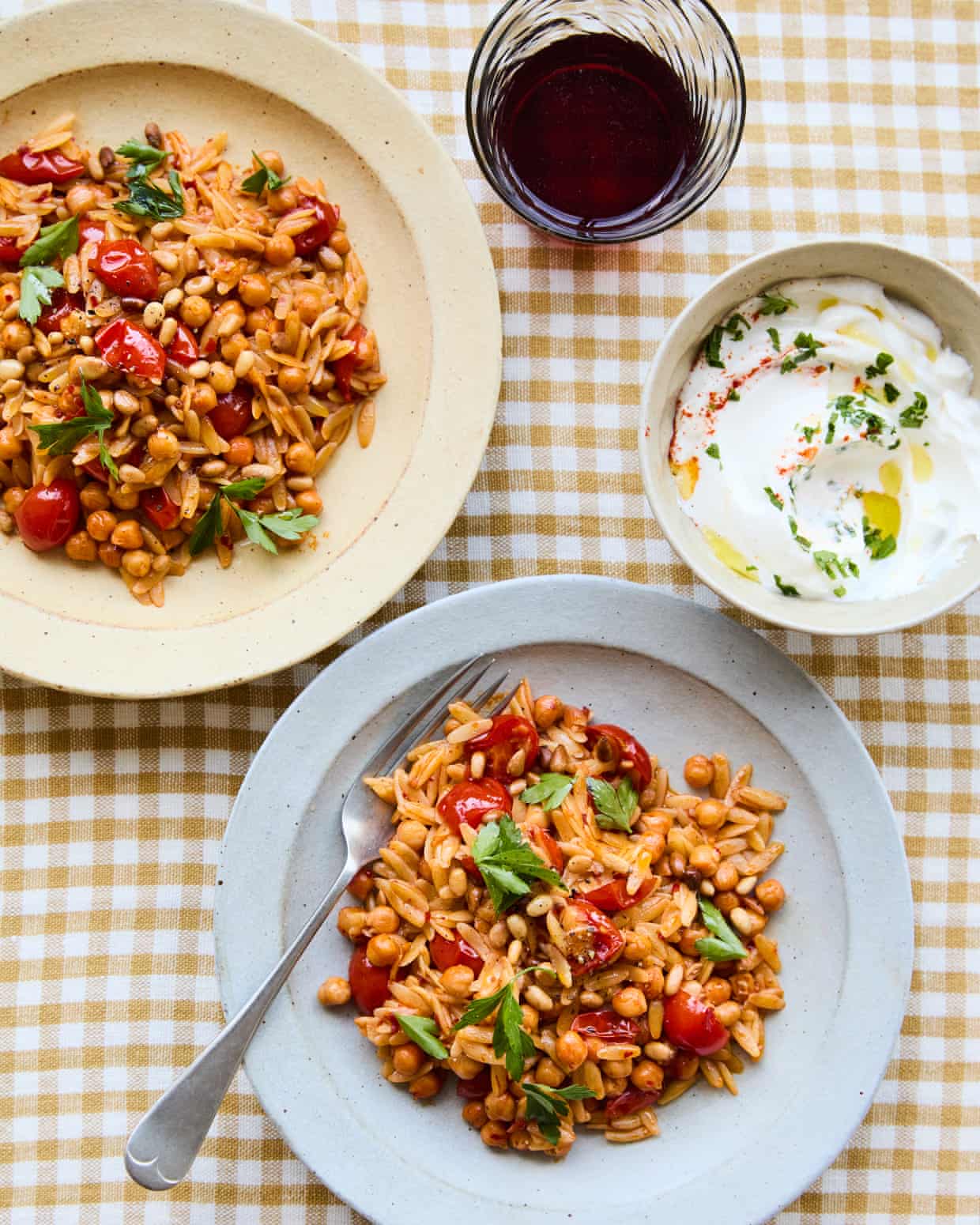
Rukmini Iyer’s quick and easy recipe for harissa-spiked orzo with chickpeas and pine nuts | Quick and easy
This is my favourite store-cupboard dinner when faced with the pre-shop complaints that “there’s nothing in the fridge”. The cherry tomatoes provide a welcome fresh note, but otherwise it’s a happy cupboard raid. An old Nigel Slater recipe first put me on to the idea of using yoghurt to finish a pasta dish, and it works brilliantly here to balance the harissa. Excellent for a work-from-home lunch, too.Prep 10 min Cook 15 min Serves 230g pine nutsFlaky sea salt 200g orzo 1 tbsp olive oil 2 garlic cloves, peeled and finely grated200g cherry tomatoes, halved400g tin chickpeas, drained and rinsed (see my review for the best brands)2 heaped tbsp jarred rose harissa paste (I like Belazu)Juice of ½ lemon2 heaped tbsp Greek yoghurt, to serveFresh flat-leaf parsley, chopped to finish (optional)Put a large frying pan on a medium heat, then add the pine nuts, turn down the heat and toast, stirring and watching constantly, for three to four minutes, until evenly golden brown all over – do not leave the pan unattended, because they will burn
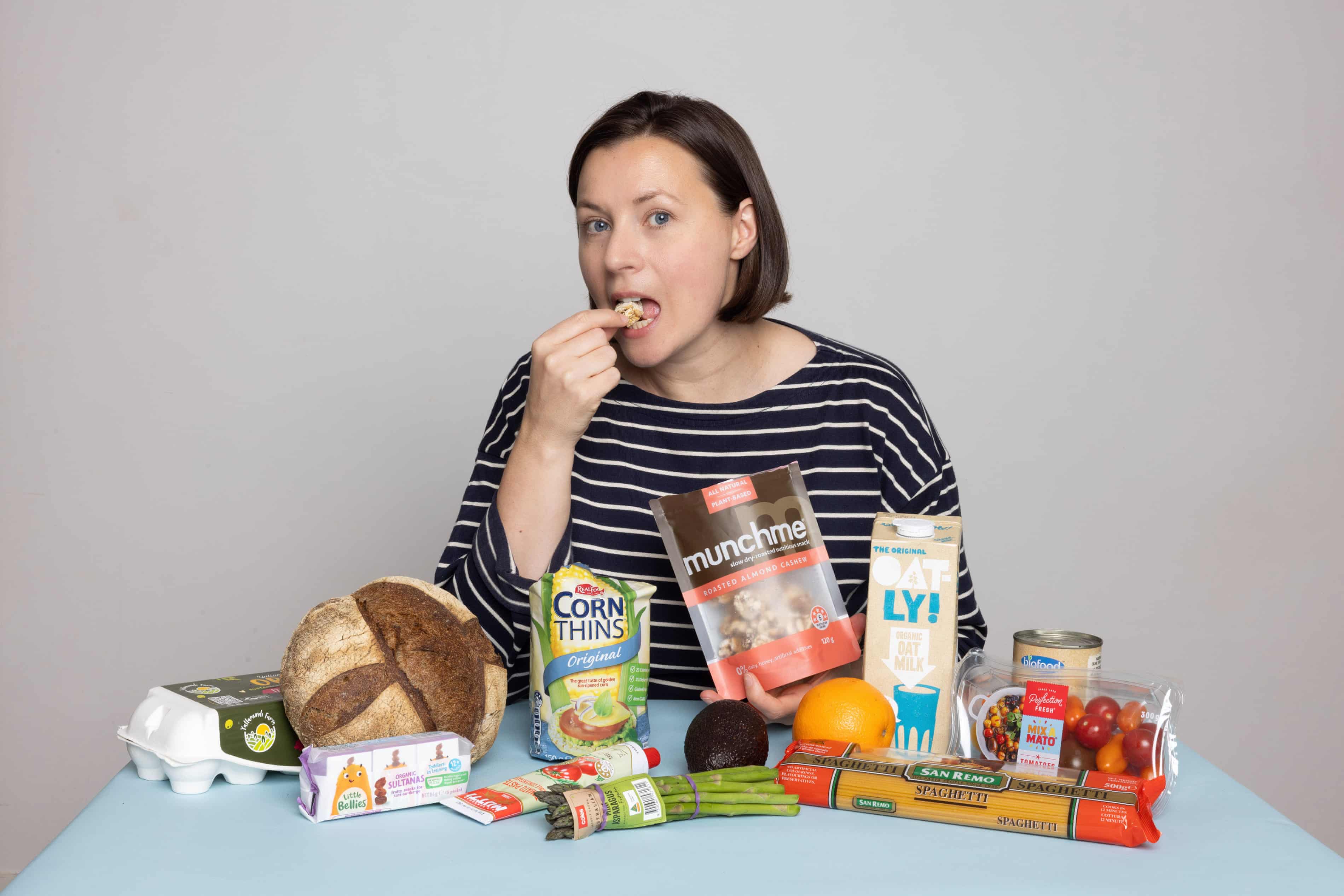
My week avoiding ultra-processed foods: ‘Why is it this hard?’
I’ve been eating ultra-processed foods (UPFs) all my life. Breakfast as a child was often Coco Pops, Rice Bubbles or white toast slathered in spreadable butter. Dinners usually involved processed sauces, such as Chicken Tonight or Dolmio, and my lunchboxes always contained flavoured chippies or plasticky cheese.I don’t blame my parents for this. Now I’m a parent too, I have cartons of juice and flavoured yoghurt as part of my parenting arsenal

‘Still here!’: X’s Grok AI tool accessible in Malaysia and Indonesia despite ban

He called himself an ‘untouchable hacker god’. But who was behind the biggest crime Finland has ever known?

Amazon workers at Coventry warehouse tested for tuberculosis after outbreak

Prominent PR firm accused of commissioning favourable changes to Wikipedia pages

Grok AI: what do limits on tool mean for X, its users and UK media watchdog?

California attorney general investigates Musk’s Grok AI over lewd fake images