‘Doubling down on meat’: is the UK’s love affair with vegetarian food over?
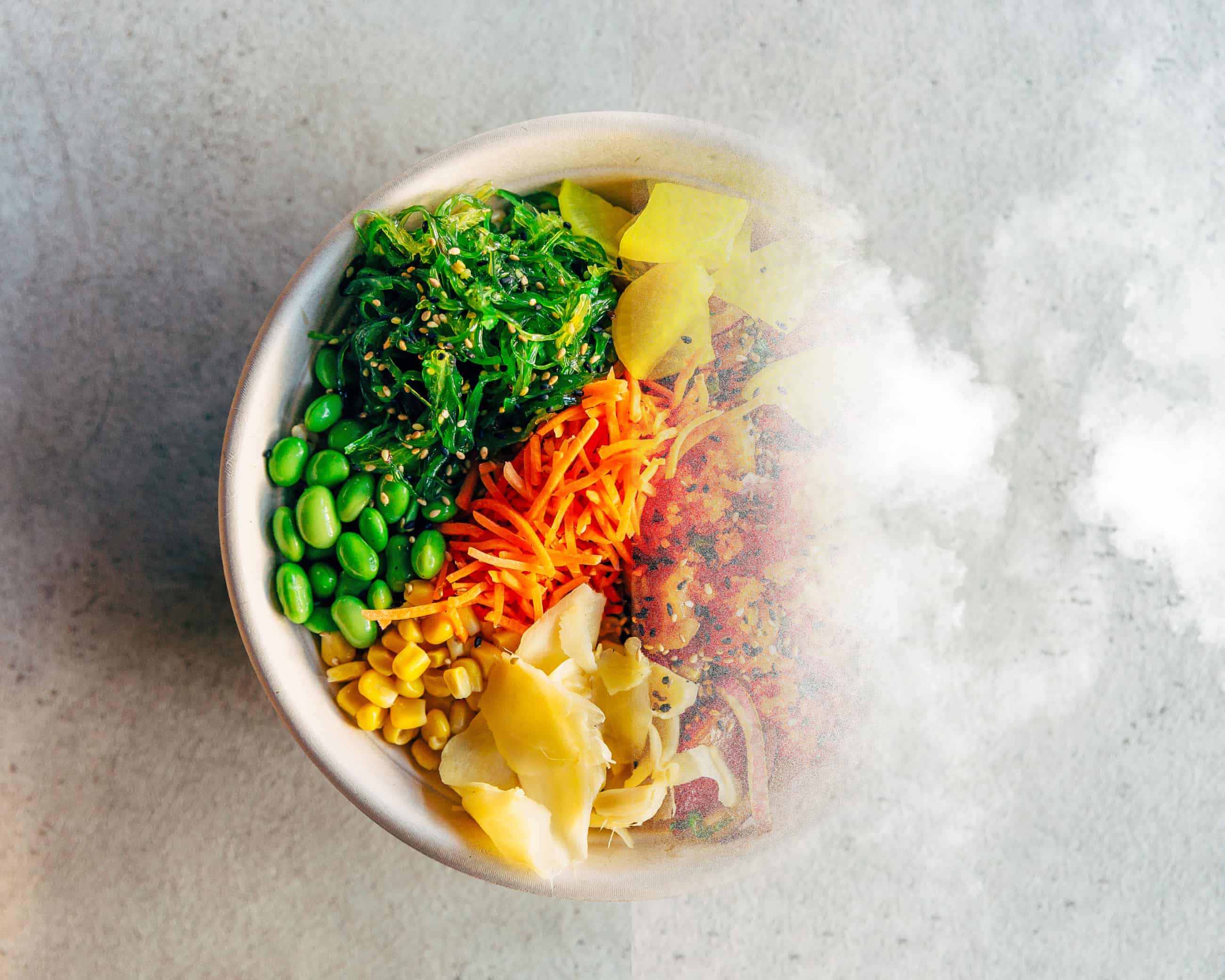
McDonald’s, Wagamama and others scale back plant-based choices in the UK in favour of ‘high-margin’ meat-led dishesIn 2021, vegetarianism and veganism were booming and menus reflected it.Restaurants and fast-food chains rapidly expanded their meat-free offerings, racing to meet growing demand from diners.McDonald’s launched its first plant-based burger, joining a wave of operators embracing non-meat options.Fast forward to 2026 and the landscape looks markedly different.Last month, the fast food chain announced it was axing most of its vegetarian range – sparing only its McPlant burger – owing to weak sales.
Wagamama has removed some vegan dishes from its menu, while Domino’s has also scaled back its plant-based options.The final Veggie Pret, a standalone concept store from the high street sandwich chain that started in 2016, closed in February 2024.Some industry observers say the shift reflects growing consumer scepticism around ultra-processed foods, with certain vegetarian meat alternatives criticised for being overly processed.In their place, data shows whole sources of protein are regaining ground, particularly chicken.Others argue the change is less dramatic: rather than retreat, the sector is stabilising after a rapid boom.
Data from Lumina’s Menu Tracker shows that in the first three months of 2025, pubs and bars served two fewer dishes compared with the same period the previous year.Vegetarian options were described as “explicitly shrinking”, as average main course listings remained high at 54 items but menus leaned more towards meat-led dishes.Liv Warren, an insight manager at Lumina, said pubs were “stripping back lower-volume categories, with vegetarian dishes shrinking, while doubling down on high-margin core meat dishes”.A similar pattern has emerged in restaurants.Traditional meat mains grew in prominence, with pizzas and burgers recording an uptick.
“Vegetable dishes were present but declining marginally,” Warren said.High-protein chicken dishes were a key driver, increasing by 4.2 percentage points of mains share over the period analysed.Looking across the first half of 2025, Warren said that while menus were expanding in some channels, growth was firmly meat-led.“Pubs are explicitly reducing vegetarian dishes,” she noted, with expansion driven by “chicken and protein”.
She added: “Vegetable dishes are present but not leading growth … indulgence and protein are outperforming plant-based innovation,”Operators were reallocating menu space towards higher-margin meat dishes, particularly chicken, she said,The shift reflects ongoing cost pressures, a normalisation of demand after the plant-based boom and a change in health messaging from “meat-free” to “high-protein”,Bia Bezamat, the cultural insights director at the market research firm Kantar, said: “A lot of people won’t realise how algorithm-driven food trends can be, too,TikTok is full of micro-trends like high protein, which often lean heavily towards meat, and gut health which is behind the rise of fermented foods like kefir and pickles.
“The rise of GLP-1 medicines also means there’s a trend towards smaller and more nutrient-dense meals.So, restaurants are ultimately responding to all of these different trends.”Kara Buffrey, the founding partner of restaurant agency Chomp, believes the changes amount to adjustment rather than reversal.“The scaling back of veggie options at McDonald’s and Domino’s, along with the closure of concepts like Veggie Pret and other fully vegan restaurants, feels more like a market correction than a cultural reversal,” she said.“Veganism arguably went through a hype phase and brands were bold in responding to that momentum.
But fast food operates on very tight margins and is entirely demand-led.If people aren’t ordering veggie takeaways in high enough numbers, those products won’t survive.”She added that the pressures of rising menu prices may also be influencing consumer choices.“I don’t think vegetarianism itself is necessarily declining, rather, with eating out becoming more expensive, consumers may feel they get more value from meat options.This looks like brands responding pragmatically to purchasing behaviour rather than making a broader ideological shift.
”Inflation, higher wages, increases to national insurance and business rates are all squeezing margins – and with nearly 38% of diners now eating out less than they did a year ago, citing rising costs and the need to save money, businesses are making difficult decisions about which dishes to cut.Laura Hellwig, managing director at the vegan charity Viva!, agreed that wider economic factors could not be ignored.“Hospitality is dealing with higher wages, inflation and rising costs … Across the sector, operators are cutting lower-performing items from menus.”According to Hellwig, consumer interest in plant-based lifestyles is still strong – and actually growing.She cited the Good Food Institute, which released research in May last year stating that 31% of people in the UK were actively reducing their meat intake while 9% said they followed meatless diets.
Veganuary 2026 was record-breaking, with about 30 million participants worldwide, up from 25.8 million the previous year.For these reasons, she rejected the idea of a plant-based collapse.She also emphasised that Wagamama still offered an extensive vegan range and argued the sector was entering a period of consolidation.“It’s normal.
That level of rapid growth wasn’t sustainable long term.Many brands jumped on the plant-based bandwagon and launched large numbers of products; it’s inevitable that some of those would fall away.”Importantly, Hellwig said, strong performers were still in place.“The McPlant remains very popular.The products that work are sticking.
” Affordable high street options, such as the McPlant and the Greggs vegan sausage roll, continue to sell strongly.Helllwig added that “minimally processed, whole-food and naturally high-protein options such as tofu, tempeh, seitan and falafel are growing, as are functional foods with additional health benefits”.

Singing the praises of political plurality | Brief letters
Polly Toynbee says Angela Rayner, in her local government white paper, “boasted that it will mean ‘fewer [local] politicians’” (Opinion, 18 February), as if they are a bacillus to be wiped out. I am represented by a Conservative councillor on Ilkley town council. On Bradford city council I rejoice in a Green councillor. And in my county of West Yorkshire I have the benefit of a Labour mayor. Such a plurality is the lifeblood of democracy
UK migrant families face giving up vital in-work benefits to avoid being ‘punished’
Families claiming in-work benefits face giving them up and enduring hardship to avoid being “punished” under a planned government migration crackdown, experts have said.More than 200,000 people living legally in the UK are on the 10-year route to settled status, which requires legal migrants to renew 30-month visas four times – at a cost of £3,908.50 including healthcare costs per renewal – before they can apply for indefinite leave to remain (ILR).Under proposals by the home secretary, Shabana Mahmood, if people have used public funds, even in work, the wait would double to 20 years.The migration charity Ramfel has spoken to families who would be affected by the change and say they would have “no choice” but to stop using public funds – such as child benefit, universal credit, tax credits and disability benefits – if the government proposals go ahead

Tech firms must remove ‘revenge porn’ in 48 hours or risk being blocked, says Starmer
Deepfake nudes and “revenge porn” must be removed from the internet within 48 hours or technology firms risk being blocked in the UK, Keir Starmer has said, calling it a “national emergency” that the government must confront.Companies could be fined millions or even blocked altogether if they allow the images to spread or be reposted after victims give notice.Amendments will be made to the crime and policing bill to also regulate AI chatbots such as X’s Grok, which generated nonconsensual images of women in bikinis or in compromising positions until the government threatened action against Elon Musk’s company.Writing for the Guardian, Starmer said: “The burden of tackling abuse must no longer fall on victims. It must fall on perpetrators and on the companies that enable harm
NHS to spend more to settle lawsuits over negligence during childbirth after court ruling
The NHS will have to spend more money settling lawsuits involving negligence during childbirth after a supreme court ruling that lawyers said puts right a “historic injustice”.The court ruled on Wednesday that children in England who suffer catastrophic injuries while they are being born can claim damages for future earnings they would otherwise have had.The ruling on “lost years damages” means that children whose life expectancy is shortened can recover compensation for being unable to work.It comes amid mounting concern at the rising cost of medical negligence to the NHS in England – its liabilities have hit £60bn – much of which is due to errors made during childbirth.“The supreme court today has put right an historic injustice which set injured children’s rights in negligence cases at a lesser level than those of an adult,” said James Drydale, the lawyer for a girl known only as CCC
Death tax? Property tax? Four ideas that could offset inheritance inequality in Australia
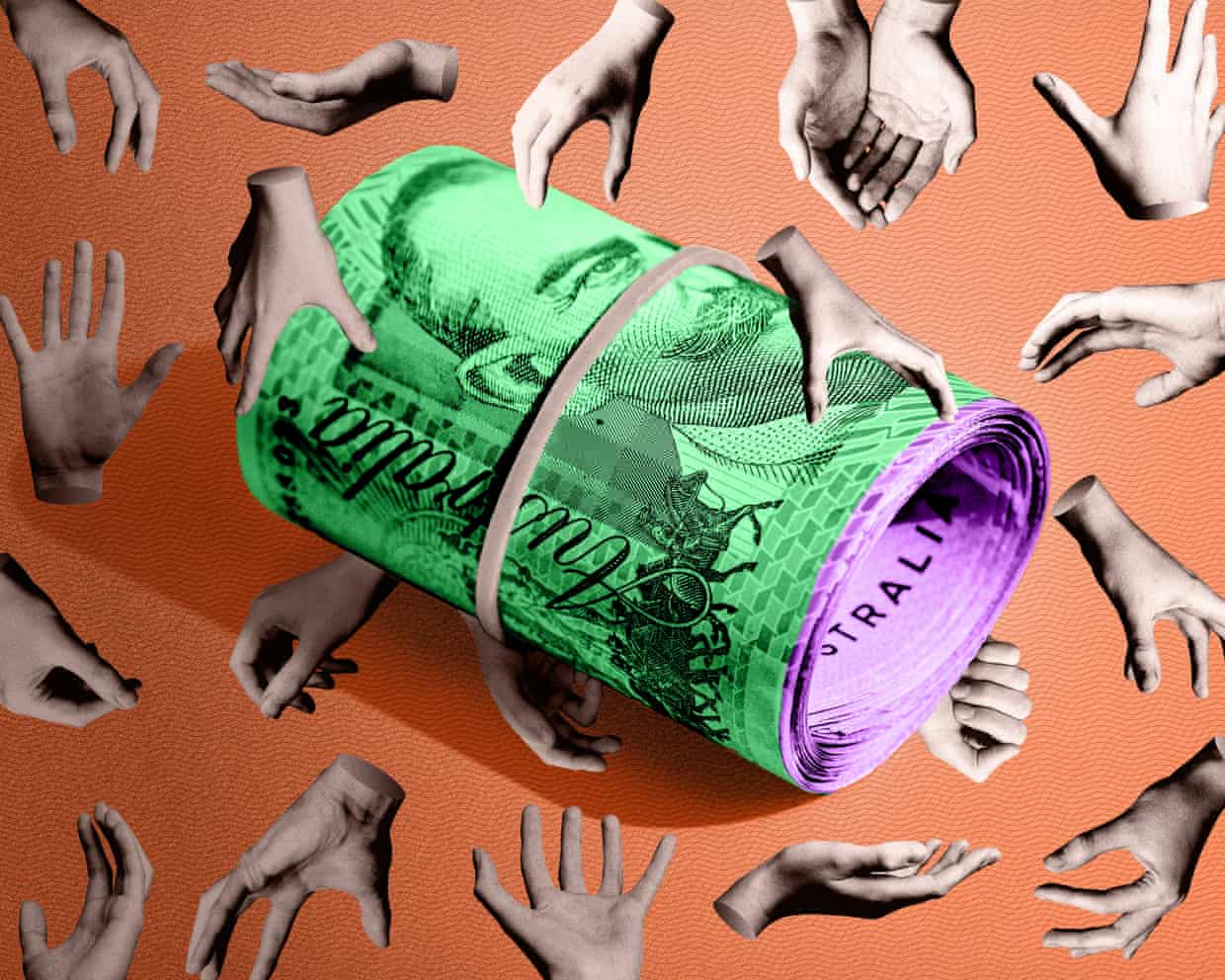
The $5.4tn intergenerational wealth transfer predicted to occur within the next two decades is a major challenge for Australian governments. Economists have warned it could entrench and exacerbate inequality, and make the economy less productive. So what can be done about it?“In the end, that comes down to tax,” says the former deputy reserve bank governor Guy Debelle. “Taxation is how you redistribute

The disturbing rise of Clavicular: how a looksmaxxer turned his ‘horror story’ into fame
His gonzo argot of ‘mogging’ and ‘jestermaxxing’ masks a malign chauvinist philosophy, and his audience keeps growingHow’s your “jestermaxxing” game? Have you been “brutally frame-mogged” lately? If you’ve been finding this kind of online discourse even more impenetrable than usual, a 20-year-old content creator calling himself Clavicular is probably to blame.Born Braden Peters, Clavicular is a manosphere-adjacent influencer who has recently broken containment for a string of high-profile controversies, including livestreaming himself apparently running over a pedestrian with his Tesla Cybertruck and being filmed chanting the lyrics to Kanye West’s Heil Hitler in a nightclub with the self-styled “misogynist influencer” Andrew Tate and the white nationalist commentator Nick Fuentes.Before taking up with what some feel are among the worst men alive, Clavicular was known only as a “looksmaxxer”, a young man intent on optimising his physical attractiveness by frequently extreme measures (such as steroids, surgery and, er, taking a hammer to his jaw).Yet Clavicular’s gonzo live streams and absurd lingo have seen him escape his subcultural silo, landing him a modelling gig at New York fashion week and a profile in the New York Times.So where has he come from? And what does his rise mean for humanity?Peters came to prominence last year on the streaming platform Kick (like Twitch, but more laissez-faire with content moderation), where he now has nearly 180,000 followers

Nvidia reportedly plans to invest $30bn in OpenAI’s next funding round

Mind launches inquiry into AI and mental health after Guardian investigation

West Virginia sues Apple over child sex abuse material stored and shared on iCloud

Skiers stranded by California avalanche used iPhone SOS feature to seek help

US builds website that will allow Europeans to view blocked content
Accenture ‘links staff promotions to use of AI tools’