Iron will: Australia’s richest person counts the cost as court orders she share mining millions with rival family

Gina Rinehart, who’s been called Australia’s ‘female Donald Trump’, has long fought claims from the family of her father’s business partner – as well as her own childrenFull Story podcast: How Gina Rinehart lost hundreds of millions of dollars in courtAustralia’s richest person is reeling after a landmark court decision found her company must pay royalties worth hundreds of millions of dollars to a rival mining dynasty.Gina Rinehart, a multibillionaire with political connections in both the White House and the Australian parliament, has been described by members of the US conservative movement as “a female Donald Trump”.The 72-year-old, who inherited her father’s iron ore empire in Australia’s Pilbara region, has fought multiple claims against the family company Hancock Prospecting that were first launched in 2010.On Wednesday, in the Western Australian supreme court, Justice Jennifer Smith found that Wright Prospecting was entitled to its claim for a half share of royalties coming from one of the region’s largest projects – Hope Downs.Hope Downs is a joint venture between Rio Tinto and Hancock Prospecting and exports about 45m tonnes of iron ore annually from Australia’s north-west each year.
But Hancock Prospecting had a partial victory, with the court rejecting Wright Prospecting’s claim for an equity stake in other mining assets.The dispute harks back to a business partnership struck in the 1950s by mining prospectors Lang Hancock and Peter Wright.The pair had been school friends and together established a company called Hanwright which was responsible for pegging out vast tenements of iron ore-rich deposits in the region’s Hamersley Range.The judgment – which ran to more than 1,650 pages – noted that the judge was required to undertake a “lengthy, diverse, and detailed reconstruction of events that occurred between about 1967 to 2005”.This relied on business records from the time that were largely written by people who were no longer alive to testify.
Smith presided over a 51-day trial in 2023 that saw multiple parties represented and more than 4,000 documents submitted.As the case ballooned in complexity after the first claim in 2010, two of Gina Rinehart’s children were also enjoined to proceedings as part of a separate dispute with their mother regarding their inheritance.However, the court rejected the claim from John Hancock and Bianca Rinehart for an equity share of Hope Downs, saying it “failed at the first hurdle” because the tenements belonged to Hancock Prospecting.Smith upheld Rinehart’s defence that the assets had been wrongly moved by her father, Lang Hancock, in breach of his duties to the company.Smith, however, confined her findings to the Hope Downs matter, leaving other parts of the family dispute – including the children’s claim to a greater share of the company – to a separate court-ordered arbitration.
John Hancock said the judge’s finding regarding his grandfather was a “difficult pill to swallow”, however, he claimed he was buoyed up by Smith’s remarks about the corporate structure of Hancock Prospecting,“What we did receive from Her Honour were findings and remarks which are in line with my initial approach to my mother Gina over two decades ago, regarding our family company corporate structure … and consistent with our case,”The children argue they are entitled to a 49% share of the company under an agreement struck in 1988 between Gina Rinehart and Lang Hancock,Rinehart now controls 76,55% of the company and her children control 23.
45%,John Hancock, Rinehart’s estranged son, called for a reconciliation of his deeply fractured family, saying it was time to put the decades-old dispute behind them,After the verdict on Wednesday, all parties claimed partial victory,Smith, when discussing costs in the case, suggested that Wright Prospecting had “won half of its case and lost half of its case”,But the loss for Hancock Prospecting is significant, with the company and its joint venture partner, Rio Tinto, now having to pay the Wright family 50% of past and future royalties earned from part of the Hope Downs complex.
Another party to the case, DFD Rhodes, which was the family business of another late mining pioneer, Don Rhodes, also partly won its claim to royalties on some of the disputed mining tenements.Speaking outside the court, Rhodes’ chief executive, Matt Keady, said that Hancock Prospecting and Gina Rinehart had been “formidable” opponents.“We are very, very pleased that the judgment has recognised the contribution of Don Rhodes to the iron ore industry,” Keady said.Hancock Prospecting said its estimated historical payment to Rhodes was $4m a year, and to Wright Prospecting $14m a year, but the Wright camp estimates the amount could near $1bn.A spokesperson for Wright Prospecting said it “welcomes the decision”.
“These proceedings were commenced in 2010 and, after many delays, we are pleased to finally receive a result in our favour,” they said.“The decision is lengthy and complex.We will review it in detail before determining if any further steps need to be taken.”Hancock Prospecting’s executive director, Jay Newby, also declared victory after the judgment, saying the court had reasserted its ownership rights over the valuable assets, which was more significant than the ruling over royalties.“[Hancock] welcomes the … decision which decisively confirms HPPL’s rightful ownership of these tenements firmly rejecting the baseless ownership claims of John, Bianca and Wright Prospecting Pty Ltd (WPPL) in their entirety,” Newby said.
“John, Bianca, WPPL and DFD Rhodes took no risk and made no meaningful contribution to developing the Hope Downs and East Angelas iron ore mines and infrastructure,”The amount Hancock Prospecting and Rio Tinto are liable to pay will be the subject of a future hearing,Neither side has ruled out appealing against the verdict, meaning the 16-year court case may still have many years yet to play out,If you have something to share about this story, you can contact Guardian Australia’s news teams using one of the following methods:The Guardian app has a tool to send tips about stories,Messages are end to end encrypted and concealed within the routine activity that every Guardian mobile app performs.
This prevents an observer from knowing that you are communicating with us at all, let alone what is being said,If you don’t already have the Guardian app, download it (iOS/Android) and go to the menu,Select ‘Secure Messaging’,If you don't need strong security you can write to a Guardian Australia journalist using the details here,Click on a person to see their details.
For end to end encrypted email you can create a free Proton Mail account and email gaus.contact@protonmail.com.You can use the encrypted messaging apps Signal or WhatsApp to message us at +61 490 758 250.Finally, our guide at theguardian.
com/tips lists several ways to contact us securely, and discusses the pros and cons of each.
From Lee Cronin’s The Mummy to Zayn: your complete entertainment guide to the week ahead
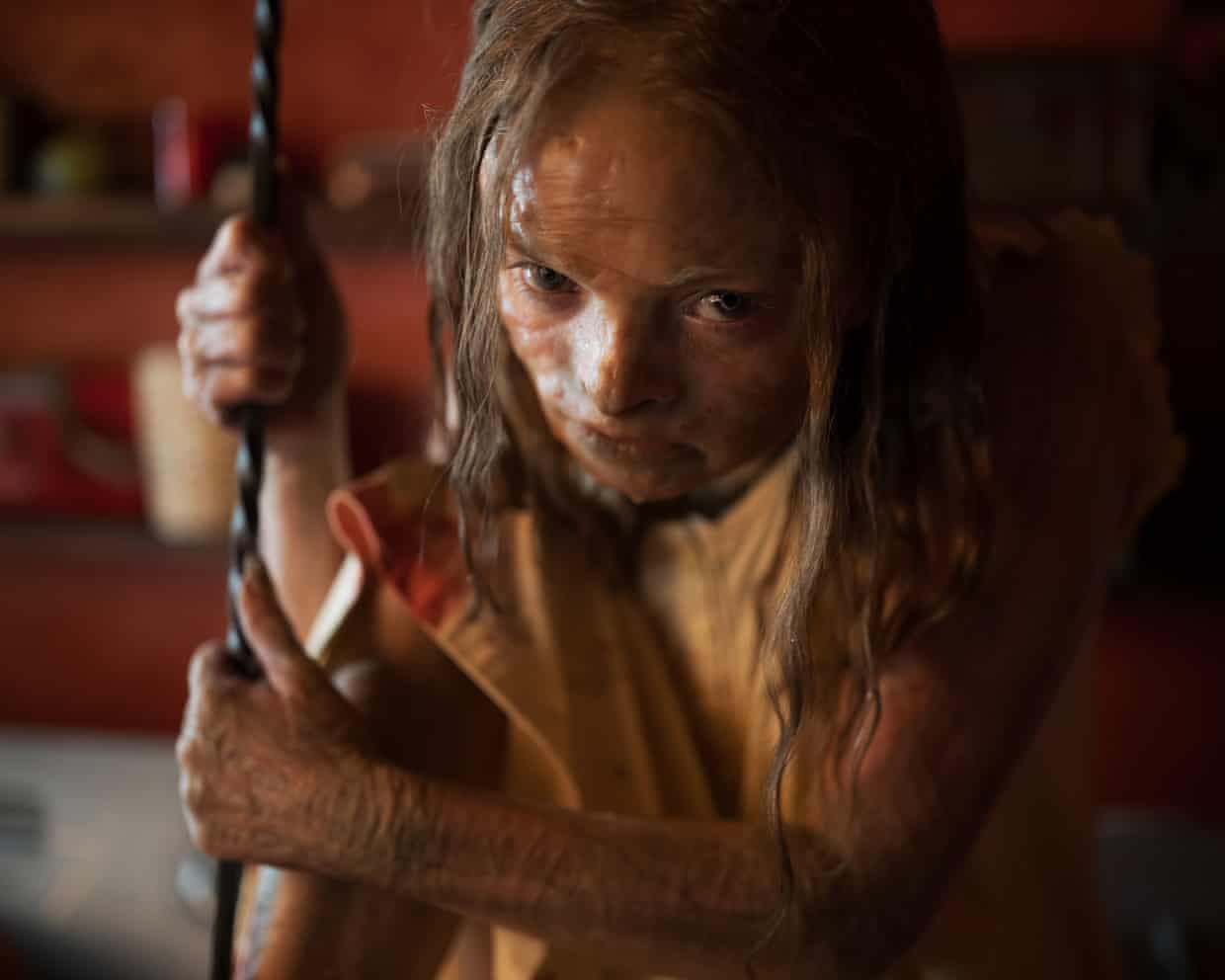
Lee Cronin’s The MummyOut now You probably know what The Mummy is, but do you know what a Lee Cronin is? Allow us to assist: he’s the Irish director responsible for effective indie horror The Hole in the Ground and the highest grossing entry in the Evil Dead franchise, Evil Dead Rises. His version of this classic horror sees a journalist (Jack Reynor) and his wife (Laia Costa) reunited with their child who went missing in the desert eight years ago, with nightmarish consequences.The Wizard of the KremlinOut now Jude Law is, wait for it, Vladimir Putin, with Paul Dano as fictional spin doctor Vadim Baranov in a new thriller from Olivier Assayas (Personal Shopper). Based on the l’Académie française prize-winning debut novel from Giuliano da Empoli.Miroirs No 3Out now German director Christian Petzold returns with a new film (the title refers to the piano solo by Ravel) starring his regular collaborator Paula Beer as a classical piano student recuperating in rural idyll afrer a dramatic car crash

Lost Federico García Lorca verse discovered 93 years after it was written
A previously unknown verse attributed to Federico García Lorca has been discovered 93 years after the celebrated Spanish poet and playwright is believed to have jotted it on the back of one of his manuscripts.Lorca is thought to have written the eight-line poem in 1933 while working on the collection Diván del Tamarit, a homage to the Arab poets of his native Granada.The newly discovered verse was found on the reverse of a manuscript of one of the Tamarit poems – Gacela de la raíz amarga – which the flamenco singer and Lorca enthusiast Miguel Poveda bought from a German antiquarian.It has since been verified by the Lorca expert Pepa Merlo and will feature in a forthcoming book.The brief verse, composed three years before Lorca was murdered in the early days of the Spanish civil war, reveals the poet’s familiar preoccupation with the passing of time: “The clock sings / I count the hours mechanically / Seven o’clock; twelve o’clock / It’s all the same / I am not here / It is the mark of flesh / That I left behind when I departed / So as to know my place / Upon my return

Stephen Colbert on Trump’s Vatican feud: ‘Damn, the pope just read you for filth’
On Thursday night, late-night hosts weighed in on Donald Trump’s tense back and forth with the pope over the war in Iran, high gas prices and outlandish details from a new biography of Robert F Kennedy Jr.On the Late Show, Stephen Colbert focused on Maga’s escalating feud with the pope. Reacting to comments by the House speaker, Mike Johnson, that Pope Leo XIV misunderstood the concept of the just war doctrine, Colbert said incredulously:“Correcting the pope on Catholic theology is a little like going into the woods and saying: ‘Excuse me Mr Bear, do you really think this is the appropriate place for you to be pooping? Who’s going to clean that up?”Colbert went on to explain that the “just war” is a concept of Catholic doctrine that goes back to the earliest days of the church. “It must be in self-defense once all peace efforts have failed,” said the host. “Only then can the war can be said to have ‘just cause’

‘Packaging evil into something funny’: is making fun of Trump now just ‘clownwashing’?
During Donald Trump’s first term, as his lies distorted reality and gaslighted Americans, Stephen Colbert said his goal was to remind his audience: “Hey, you’re not crazy.”But watching political comedy during Trump’s second term – be it a deranged Saturday Night Live impression of a cabinet member, or a rapid-fire late-night monologue full of ICE jokes – it’s hard not to wonder: are we placating ourselves from the enormity of Trump-induced horror?It’s not a new concern, of course. Weak mockery of Nazi leaders may have allowed Germans to “let off steam” while the regime solidified its power. Decades later, as The Daily Show was taking off, some pundits feared it encouraged apathy by rolling its eyes at the political sphere. As the US inches closer to autocracy, how can comedy work against repression, rather than sanitizing its targets – call it “clownwashing”?“We are in a hyper-individualistic, transactional, consumerist kind of culture

A statue of Queen Victoria, memorial trees and a swimming pool: Judi Dench’s garden – in eight poignant items
A visit to Dame Judi Dench’s garden in Surrey is bittersweet. The 2.4-hectare (six-acre) plot contains enough trees – about 100 – to count as an arboretum. Among them is a carpet of wild garlic and a wildlife pond from which rabbits like to sip. But each of these trees represents someone she knew who has died

Kimmel on Trump’s AI images: ‘Someone’s been looksmaxxing!’
On Wednesday night, late night hosts discussed Donald Trump’s fondness for religious AI images, a new way to protest ICE and Maga’s reaction to the Pope condemning the Iran war.On Jimmy Kimmel Live, the host addressed Trump’s habit of posting AI images of himself.“You know he thinks artists make these?” asked Kimmel, before showing an image of Jesus cradling Trump posted by a Maga account. “He thinks they’re paintings for real; he doesn’t realize this is an AI thing. And check out the chin and cheekbones on him

US tech firms successfully lobbied EU to keep datacentre emissions secret

Liz Kendall urges UK public to embrace AI as government makes first £500m fund investment

‘How do I end a call?’: the elderly Japanese people determined to master smartphones

Labour and Lib Dem MPs demand ‘shameful’ Palantir NHS contract be scrapped

Man used AI to make false statements to shut down London nightclub, police say

NAACP lawsuit accuses Elon Musk’s xAI of polluting Black neighborhoods near Memphis