Claim sooner rather than later, experts urge, after £7.5bn car loan compensation scheme launched
Complain now to be at the front of the queue.That is the message from the City regulator and the consumer champion Martin Lewis as a scheme gets under way to pay out about £7.5bn in total to millions of motorists mis-sold car loans.More information emerged this week about how much money the different categories of people might get and how it will all work after Monday’s announcement that an industry-wide compensation scheme for victims of the UK’s car finance scandal is definitely going ahead.Here are five main takeaways: Technically it’s two schemes.
The plan was always for a single compensation scheme, but this week it emerged that the Financial Conduct Authority (FCA), has set up two.Scheme 1 covers older motor finance agreements, those taken out between 6 April 2007 and 31 March 2014; scheme 2 is for more recent ones, those taken out between 1 April 2014 and 1 November 2024.As they are broadly similar, the FCA is generally referring to them collectively as “the scheme”.A very brief recap of the story so far: millions of people were treated unfairly when they took out motor finance to buy a new or secondhand vehicle and ended up paying more than they should have done.It is lenders (typically banks) who are on the hook for the compensation.
The scheme, which will be free to use, covers motor finance taken out over a 17-year period during which commission was paid by the lender to whoever sold the loan – usually the dealer,You will only get a payout if important information was not properly disclosed to you,The vast majority of new cars and an increasing number of used vehicles are bought with motor finance – typically either a personal contract purchase (PCP) plan or a hire purchase agreement,The average payout has gone up,The FCA said in October last year it expected eligible consumers to receive an average of £695 an agreement.
But tweaks mean this has increased to £829.Most people will receive the average of the estimated financial disadvantage and the commission paid, plus interest.The formula for calculating loss depends on which scheme you are in.In scheme 1, the average for each agreement is £734; in scheme 2, it is £881.How much those getting a payout will receive also depends on which type of case theirs is – there are three.
By far the biggest category is deals that included a “discretionary commission arrangement” (DCA) – a now-banned type of finance which allowed the dealer or broker to adjust (ie, increase) the interest rate the customer would pay to get a higher commission.There are two other main types of case.One is where there was an arrangement that gave a lender exclusivity or ‘first dibs’ when it came to providing the credit to the individual (these are known as “contractual tie” cases).The other involves unfairly high commission (where it was at least 39% of the total cost of the credit and 10% of the amount borrowed).FCA documents suggest that for the DCA people, the average payout will be £810.
For the second category named above, it’s £807.For the third category, involving an unfairly high commission, it’s quite a bit higher: £1,203.Interest will be paid on compensation, based on the annual average Bank of England base rate per year plus 1%.The minimum interest people will receive is 3% in any year.The FCA says consumers should not be put into a better position financially than they would have been in had they been treated fairly.
This means that in about one in three cases, compensation will be capped (details of the formula being used are available online),Fewer people will get compensation,The FCA previously estimated 14,2m loan agreements would be considered unfair, but on Monday it cut this to 12,1m.
“We have tightened eligibility so only those treated unfairly receive compensation,” says the regulator.For example, agreements involving “minimal” commission (less than £150 or less than £120 depending on the date) will be excluded from redress.Also, where a lender can prove there were visible links between the finance and the car manufacturer/dealer, a contractual tie alone will not trigger compensation.In other words (this is a made-up example), if you used a Volkswagen dealer and the car loan you signed up for was branded something like “Volkswagen Finance”.Payouts could begin immediately.
In theory, at least.Nikhil Rathi, the chief executive of the FCA has said : “There’s nothing stopping lenders moving tomorrow now they’ve seen the rules.”Technically, the scheme has launched, but there will now be a short “implementation period” so lenders can get their ducks in a row.This will be up to 30 June this year for loans taken out after 1 April 2014, and up to 31 August this year for the older agreements.The FCA says millions of people will receive compensation this year, but the complexities of the scheme mean it is hard to say exactly how many will get their cash this year and how many will have to wait until next year or the very start of 2028.
Get your complaint in now.Lenders will have three months from the end of the relevant implementation period to let people who have complained know whether they are owed compensation and how much.The FCA says: “People who have already complained, or who complain before the end of the relevant implementation period, will be compensated sooner.”Lewis says: “The only way to know if you were mis-sold is to complain.To know if you’ve got a complaint, you have to complain.
”The FCA says there is no need to use a claims management company (CMC) or law firm as people can complain now for free using a template letter on its website.Lewis’s MoneySavingExpert website also has a free complaint tool and template letter.“You just put your details in, it formulates an email for you and tells you where to send it.You check it and you press send,” he says.If you are unsure about who your car finance provider was, the FCA website includes details of a few ways that you can check.
Meanwhile, while the credit reference agency Equifax’s myEquifax app includes a free car finance checker tool to help track down and access past loan records.Lenders will only contact people who have not complained if they are likely to be owed money.They have six months from the end of the relevant period to do so.Anyone not contacted has until 31 August 2027 to make a claim.

‘Italy has the best benefits’: Milan takes on Dubai as home for the super-rich
Just over a month ago, Dubai was the obvious destination for wealthy Britons in search of a new home. Few cities allow you to earn vast sums tax-free and spend them across any number of luxury hotels, restaurants and shops.But as the United Arab Emirates comes under Iranian fire, Dubai’s reputation – in part created by emigrant influencers – as a haven for the global elite is eroding. Super-rich UK nationals are now looking for a route back to Europe; and Milan, the financial centre of Italy, is climbing to the top of the list.“Italy has the best benefits: a flat tax and good quality of life,” says Armand Arton, a consultant who helps multimillionaire and billionaire families to relocate through investment citizenship schemes

Waitrose under pressure to reinstate worker sacked after stopping shoplifter
Waitrose is under growing pressure to reinstate an employee of 17 years who was sacked after tackling a shoplifter who was trying to steal Lindt Gold Bunny Easter eggs.The retailer has faced public outcry over its treatment of Walker Smith, who was fired two days after he stopped the shoplifter taking items from the Easter egg display.After Smith told the Guardian he had lost his job after the incident, a fundraiser was launched on his behalf and has since raised more than £4,000, with the organiser claiming he had “simply tried to do the right and noble thing”.On Sunday, Smith explained that a customer alerted him to someone filling a bag with Lindt chocolate eggs.The 54-year-old, who worked in the Clapham Junction branch in south London, said the shoplifter was a repeat offender

Jamie Dimon says US should strengthen allies economically, in veiled criticism of Trump
The head of the US’s largest bank has pressed the White House to strengthen Washington’s allies economically in order to “avoid truly adverse consequences”, in the latest intervention in an increasingly testy relationship with the Trump administration.As the Middle East conflict sparked by US and Israeli attacks on Iran enters its sixth week, Jamie Dimon, the chair and chief executive of JP Morgan Chase, said in his annual letter to shareholders that good US foreign policy should put America first “though not alone”.His remarks appear certain to be viewed as critical of Donald Trump, who in January announced he was suing the banker and the Wall Street institution for at least $5bn (£3.8bn) after accusing them of debanking him.The comments also come five days after Trump told governments to “go get your own oil” by force from the Gulf, as transatlantic relations further soured over soaring energy prices as a result of the war

Dozens of firms risk losing B Corp status after standards overhaul
Dozens of companies may be at risk of losing their coveted B Corp ethical status after the organisation behind the corporate kite-marking system raised the standards required to qualify.B Lab, which oversees B Corp certification, launched the biggest overhaul in its 19-year history earlier this month, scrapping a system under which companies must gather enough points across multiple categories to qualify.Previously, businesses that performed poorly in one of five areas, such as their environmental record, could make up for it by scoring highly in another category, such as corporate governance or their treatment of staff.The criteria required for B Corp status came under the spotlight in 2022, when the Scottish brewer BrewDog lost its certification after high-profile allegations about a “toxic” workplace culture.The organisation has also faced criticism for certifying the coffee company Nespresso, in an open letter from the Oregon-based non-profit Fair World Project, sent the same year
Thousands of small UK firms’ energy bills set to more than double due to Iran war
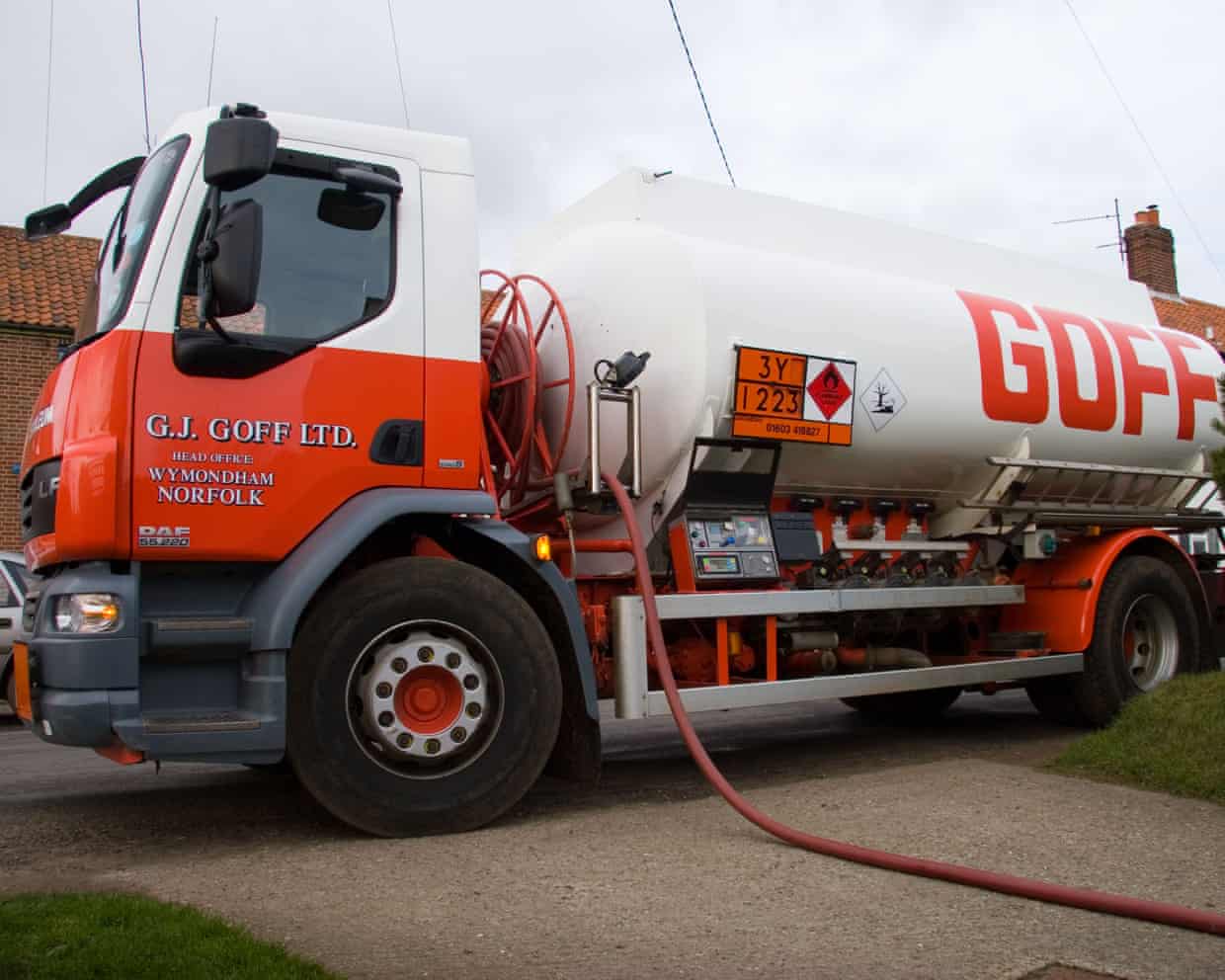
Thousands of independent businesses across the UK are braced for their energy bills to more than double owing to the sharp rise in heating oil costs as the war in Iran pushed Europe’s fuel market prices to fresh record highs.About 7% of all small and medium-sized companies warm their properties and provide hot water using heating oil, which in some cases has more than doubled in recent weeks.Companies in rural areas are often not connected to the gas grid, meaning they have an even greater reliance on heating oil, which is a form of kerosene linked to the cost of jet fuel. It is used by about 17% of rural small and medium-sized enterprises (SMEs), according to the Federation of Small Businesses (FSB).The trade association has heard from members who have already begun rationing their fuel use to cope with the sharp rise in prices over recent weeks

Iran strikes Kuwait’s oil infrastructure before Opec+ supply talks
Iranian drones have struck Kuwait’s oil infrastructure, causing “severe material damage” that threatens to further disrupt oil supplies already hit by the US-Israel war on Iran.The drone strikes on Sunday came hours before members of the Opec+ group of major global oil suppliers gathered to discuss how to bolster output despite Iran’s effective closure of the strait of Hormuz shipping route.Iran’s Islamic Revolutionary Guard Corps said it had attacked petrochemical plants in Kuwait, as well as the United Arab Emirates and Bahrain. The Kuwait Petroleum Corporation reported damage and fires at its subsidiaries. The company said fires had earlier broken out at its Shuwaikh oil sector complex, which houses the oil ministry and KPC headquarters, after a separate drone attack

Oats, sardines and crisps: emergency foods to stockpile – and why you should share them

Reese’s chocolate heir accuses Hershey of altering recipes: ‘It wasn’t real peanut butter’

Put away the Aperol and raise a glass to Hugo spritz, the drink of the summer

Helen Goh’s recipe for ricotta, rum and raisin cake | The sweet spot

Cocoa-crazy: chocolate-infused liqueurs deserve their own moment

Baked cheesy smoked haddock and lemon icebox pudding: Henry Harris’ alternative Easter lunch