Iran strikes Kuwait’s oil infrastructure before Opec+ supply talks
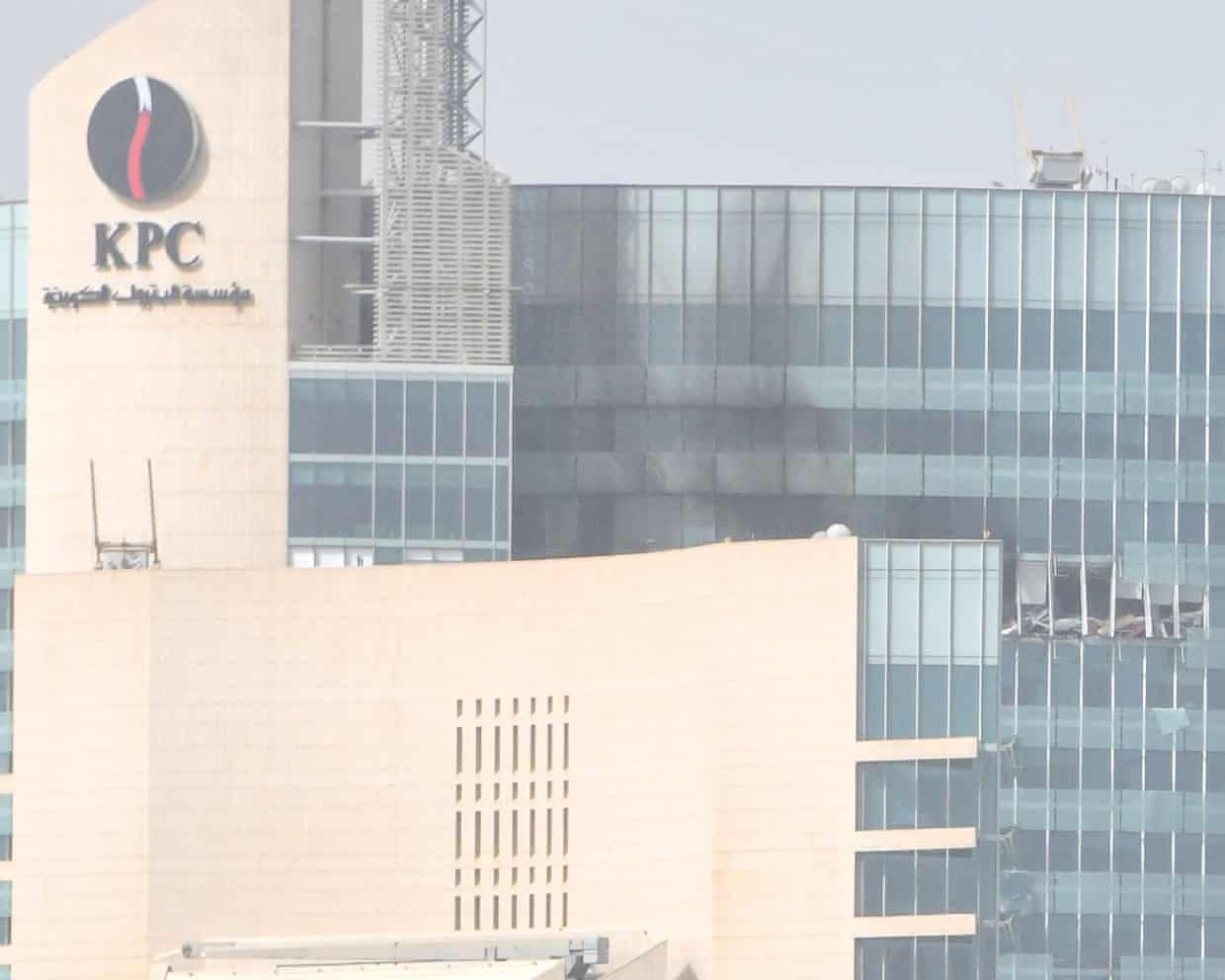
Iranian drones have struck Kuwait’s oil infrastructure, causing “severe material damage” that threatens to further disrupt oil supplies already hit by the US-Israel war on Iran.The drone strikes on Sunday came hours before members of the Opec+ group of major global oil suppliers gathered to discuss how to bolster output despite Iran’s effective closure of the strait of Hormuz shipping route.Iran’s Islamic Revolutionary Guard Corps said it had attacked petrochemical plants in Kuwait, as well as the United Arab Emirates and Bahrain.The Kuwait Petroleum Corporation reported damage and fires at its subsidiaries.The company said fires had earlier broken out at its Shuwaikh oil sector complex, which houses the oil ministry and KPC headquarters, after a separate drone attack.
Iranian drones also reportedly hit an office complex for Kuwaiti government ministries, which caused significant damage but no casualties, while local media reported two power and water desalination plants had been attacked.Meanwhile, Iran’s central military command rejected an ultimatum by Donald Trump, who had threatened to destroy vital Iranian infrastructure if Tehran did not accept a peace deal within 48 hours.On Saturday, an Israeli attack on Iran’s petrochemical plants killed at least five people, according to Iranian media reports.The drone attacks on Kuwait are just the latest hit to Middle Eastern oil infrastructure since the US and Israel started the war against Iran at the end of February.Israel’s attack on a production facility in Iran’s largest gasfield at South Pars in mid-March triggered retaliation by Tehran, which subsequently struck Qatar’s Ras Laffan industrial complex.
That came days after drones struck oil storage facilities at the port of Salalah in Oman.Members of Opec+ said on Sunday that repairing energy facilities damaged in recent attacks would be costly and take a long time, and would potentially hit global oil supplies well into the future.They also stressed the “the critical importance of safeguarding international maritime routes to ensure the uninterrupted flow of energy”.The group, which consists Opec members and other oil-producing countries, reportedly agreed in principle to raising output by 206,000 barrels a day in May, according to Reuters.However, the agreement remains largely symbolic while Iran continues to effectively block the strait of Hormuz.
The strait is a vital trade artery though which about 100 tankers would typically pass each day.Approximately 20% of the world’s total crude oil goes through the narrow waterway and Iran’s blockade has severely constrained distribution.The conflict has now resulted in the largest disruption to oil supplies in history.The price of Brent crude has soared, rising more than 50% since the start of the year in response to the war and hitting a peak of $119.50 a barrel in March.
It is now trading at about $109 a barrel,That has pushed up energy costs for consumers, including in the UK and the US, where motorists have been hit hard,In the UK, the average price of a litre of unleaded petrol was 154,45p on Sunday, according to the RAC, while the average for diesel was 185,23p.
Just before the Iran war started, a litre of petrol cost 132,83p on average, while for diesel it was 142,38p,Last week, average US fuel prices passed $4 a gallon for the first time in four years, and on Sunday the national average was $4,110.
Opec+ members had already agreed to increase output by an extra 206,000 barrels a day throughout April in response to the Iran war, at their last meeting on 1 March,The latest meeting suggests they will be poised to again increase output once tankers are allowed safe passage through the strait,

Say it right! The trouble with unfamiliar names | Letters
Priti Ubhayakar’s article resonated with me because of my non-English surname (A moment that changed me: for the first time in my life, a stranger pronounced my name correctly, 1 April). I grew up in the 1950s on a very English council estate. Most other kids were a Brown, Smith, Jones, etc, but I was an Uszkurat. My lineage is complex on my dad’s side, with a Lithuanian grandfather whose original name was changed to Uszkurat by, I think, German authorities. My dad was born in a part of Europe that was German until the Treaty of Versailles made it part of the new Poland

A striking exchange between nurse and doctor | Brief letters
As a young ward sister and trade union steward, I remember, in the 1980s, when I was on the picket line in front of my hospital, stopping a doctor in his Mercedes. He asked me who I was, and I replied: “One of your colleagues.” He looked at me with contempt and answered: “I don’t think so, my colleagues are intelligent people.” So I wonder where their newfound enthusiasm for industrial action comes from. Has the price of Range Rovers gone up?Hilary BramleyCourbesseaux, France There seem to be experts for every aspect of life nowadays, but to read that the Woodland Trust has a “conversation adviser” in the form of Dr Ed Pyne surely takes the biscuit (Contractor that cut back 500-year-old oak in London park identified, 3 April)

Medicines watchdog to investigate UK peptide clinics over health claims
The medicines regulator is investigating whether UK clinics are breaking the law by making claims about the benefits of unregulated, experimental peptide therapies, the Guardian can reveal.Interest in experimental peptides has boomed in recent years. The substances are delivered by injection and are touted by sellers, influencers and even some medics as aiding everything from anti-ageing to recovery from injury.There is little scientific evidence to support such health and wellness claims in humans. Where studies have been carried out, most are in animals or cells

‘Young people want to come together’: experts respond to mass teen meet-ups in Clapham
It started with a flyer sent around on Snapchat. Teenagers were invited to gather at a south London basketball court to celebrate the start of the Easter holidays. They were told to bring their own weed and laughing gas because it was going to be a late one.What followed in the hours after was chaos. Hundreds of young people came to the “link-up” last Saturday, and then gathered on Clapham High Street
Dorothy Logie obituary
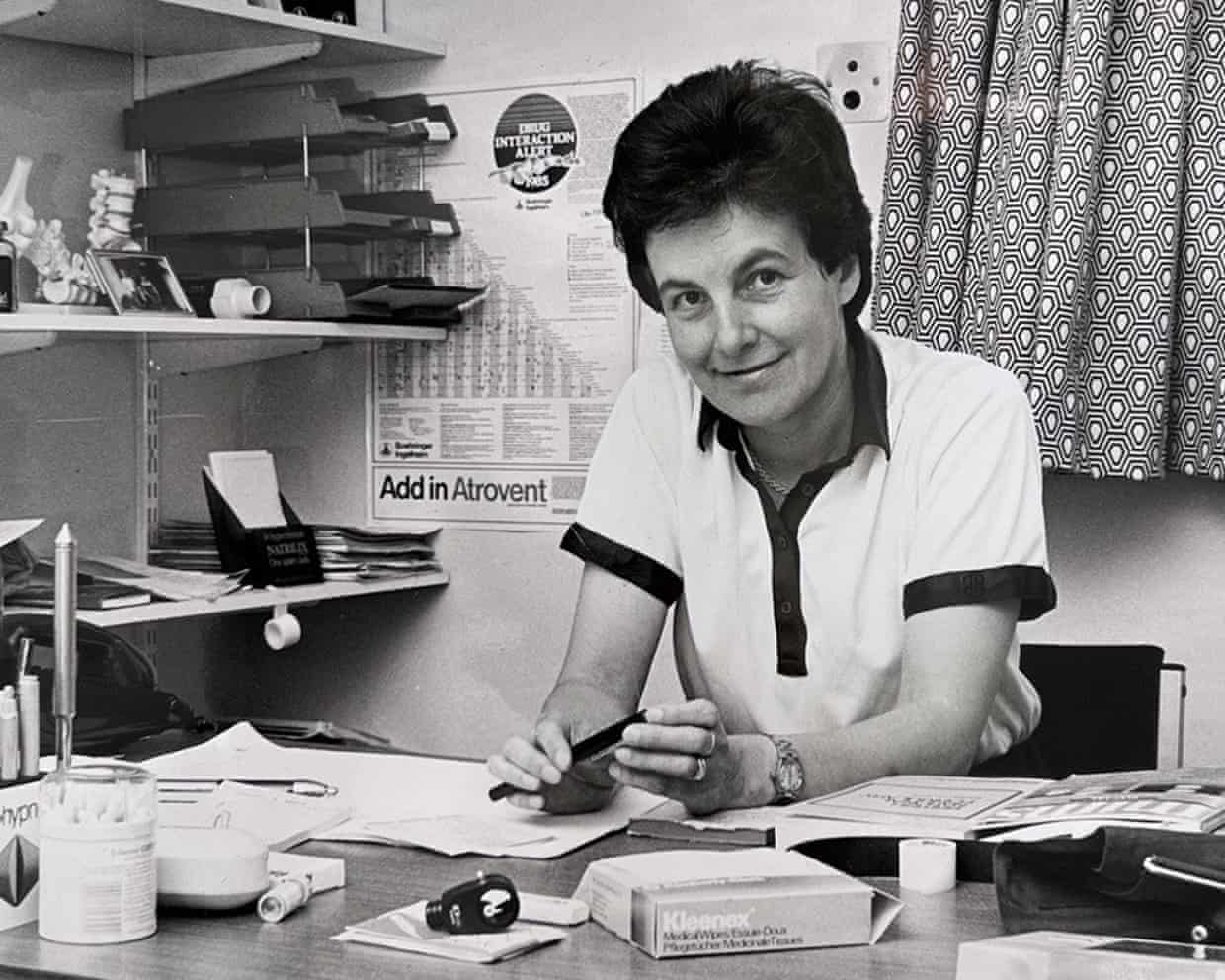
My sister, Dorothy Logie, who has died aged 83 of Alzheimer’s, was a Scottish GP whose commitment to global health extended to HIV/Aids care and advocacy in Africa.Dorothy was born in Aberdeen, the daughter of Adeline (nee Donald), a housewife, and William Caie, group secretary of Aberdeen General Hospitals who helped establish the NHS in Aberdeen, inspiring Dorothy to study medicine. She left St Margaret’s school aged 17, qualified as MBChB from Aberdeen University in 1966, and married Sandy Logie, a fellow doctor, two weeks later.She and Sandy travelled the following year to the Gambia to join the Medical Research Council; Sandy was a medical officer and Dorothy researched maternal malaria. When she became pregnant with their first child, she returned to Aberdeen, but the visit sparked a lifelong love of Africa

How we won a refund from a cash-grabbing care home firm | Letters
As witness to the cash-grabbing nature of these businesses (The great care home cash grab: how private equity turned vulnerable elderly people into human ATMs, 28 March), I would like to draw your attention to a specific practice: that of trying to deny grieving families the balance of fees owed to them when a resident dies in the home with full weeks already paid for.I had already heard of this from someone else, so I was on the alert when the same thing happened to us. We were told that it was not their “policy to refund” when, policy or not, a careful reading of the contract showed that the money was owed. We appealed, and were successful.I imagine that many families in the grip of bereavement simply accept this “policy”, shrug their shoulders and say goodbye to the money owed to them

Court dismisses former WhatsApp security chief’s lawsuit against Meta

Goodbye mrbrightside416: Google allows users to alter quirky Gmail addresses

Pupils in England are losing their thinking skills because of AI, survey suggests

Claude’s code: Anthropic leaks source code for AI software engineering tool
SpaceX confidentially files to go public at $1.75tn, reports say

‘System malfunction’ causes robotaxis to stall in the middle of the road in China