Elon Musk, AI and the antichrist: the biggest tech stories of 2025

Hello, and welcome to TechScape.I’m your host, Blake Montgomery, wishing you a happy and healthy end of the year.I myself have a cold.Today, we are looking back at the biggest stories in tech of 2025 – Elon Musk’s political rise, burst and fall; artificial intelligence’s subsumption of the global economy, all other technology, and even the Earth’s topography; Australia’s remarkable social media ban; the tech industry’s new Trumpian politics; and, as a treat, a glimpse of the apocalypse offered by one of Silicon Valley’s savviest and strangest billionaires.At the close of 2024, I wrote that Elon Musk’s support of Donald Trump had made him the world’s most powerful unelected man.
In 2025, his reign turned out to be short-lived,He rose fast and haphazardly, like a whizzing firework, only to explode spectacularly in June when he claimed in a post on X that the president of the United States was named in the government’s files on the convicted sex offender Jeffrey Epstein,Even in that short period of less than six months, Musk made a tremendous impact,He tore up wide swaths of the US government – tens of thousands of jobs, the security of extremely sensitive data, and entire agencies like USAid – that may never be stitched back together,After Doge imploded, Musk promised to turn back to his business empire, which saw great success and great failures alike in 2025.
His rocket company SpaceX saw continued growth and is poised to conduct an initial public offering next year, perhaps as the most valuable private company in the world.Electric carmaker Tesla, by contrast, faced violent backlash and major competition from its Chinese counterparts, which produced cheaper and more advanced vehicles while Tesla’s innovation and inventory stagnated.These headwinds caused a global sales slump for Musk’s carmaker.Look back at our reporting on Doge, Tesla, SpaceX, Musk himself:The ‘department of government efficiency’How an obscure US government office has become a target of Elon MuskHow Elon Musk’s billionaire Doge lieutenant took over the US’s biggest MDMA company | Technology | The GuardianThe chaos Elon Musk and Doge are leaving behind in WashingtonTesla faces backlash over Musk’s politicsEggings, swastikas and dog poop: Tesla bears brunt of people’s ire against Musk‘I’m selling the Nazi mobile’: Tesla owners offload cars after Musk’s fascist-style salutesLook ahead: SpaceX expands in preparation for 2026 IPOInside Elon Musk’s plan to rain SpaceX’s rocket debris over Hawaii’s pristine watersElon Musk’s SpaceX ‘preparing for flotation that could value it at over $1tn’Artificial intelligence has gone from a niche within tech to the industry’s most prominent focus.The Magnificent Seven – Apple, Amazon, Google, Microsoft, Meta, Nvidia and Tesla – are investing hundreds of billions of dollars into new software that they hope will do the bulk of humanity’s work before too long.
The investment is driving the bulk of the growth of the US’s economy, giving rise to fears of a financial bubble and its popping,The US and China are locked in a cold war-esque race against each other, with startups in each country vying for cutting-edge breakthroughs, as governments around the world are forced to decide how they will regulate a new technological force,Before AI can arrive at that future, though, it needs brains a la the Tin Man of The Wizard of Oz,Those brains come in the form of datacenters,These massive buildings, which house the millions and millions of semiconductor chips booming AI development, have cropped up around the world, met with enthusiasm from leaders eager for tax revenue and deep concern from environmental advocates and, increasingly, local community members.
The investment in and construction of datacenters wrought huge change in the physical landscape of the Earth in 2025 as tens of billions of dollars chased any available land, electricity, water and semiconductor chips,More from our reporting in the last year:DatacentersThe AI boom is heralding a new gold rush in the American westRevealed: Big tech’s new datacentres will take water from the world’s driest areasThe future of AIWhat will your life look like in 2035?‘It’s going much too fast’: the inside story of the race to create the ultimate AIMultitrillion-dollar valuationsIs AI a bubble that’s about to pop? – podcastWhat is new in UK-US tech deal and what will it mean for the British economy?But does it work?Meet the AI workers who tell their friends and family to stay away from AIElon Musk made a full-throated and whole-hearted embrace of Donald Trump in 2024 and 2025,He was not alone,Many of his fellows in Silicon Valley did the same, sitting beside the Trump family at the president’s inauguration after donating millions to his inaugural committee,The tech giants continued their embrace of Trump and his policies by scuttling their diversity, equity and inclusion programs, which they championed during Barack Obama’s presidency, and by cooperating with US Immigration and Customs Enforcement (ICE) in Trump’s harsh immigration crackdown.
What the industry gave, it reaped tenfold in deregulation, friends high up in Washington like JD Vance and David Sacks, and a Trump order for states not to regulate AI signed just weeks ago.More from our reporting this year:Donations and Trump’s inaugurationElon Musk appears to give fascist-style salute after Trump inauguration – videoTrump inauguration: Zuckerberg, Bezos and Musk seated in front of cabinet picks‘The reign of terror is over’: my weird weekend partying with the triumphant tech rightDEI scuttledZuckerberg’s swerve: how diversity went from being a Meta priority to getting cancelledImmigrants surveilledDocuments offer rare insight on ICE’s close relationship with PalantirICE is using smartwatches to track pregnant women, even during labor: ‘She was so afraid they would take her baby’This year saw Australia take the extraordinary measure of banning children under 16 from social media.The remarkable measure went into effect just weeks ago after a slew of legal challenges and protests from tech companies.Read some of our comprehensive reporting on the ban:Millions of children and teens lose access to accounts as Australia’s world-first social media ban beginsThe Guardian view on Australia’s social media ban: dragging tech companies into action | EditorialAustralia’s social media ban launched with barely a hitch – but the real test is still to comeIn the weirdest news of 2025, the billionaire venture capitalist and conservative svengali Peter Thiel gave a series of fevered, incoherent lectures about the antichrist and the coming of the end times.We obtained leaked audio of the talks.
You can read for yourself the gibberish he uses to bend the ears of serious academics and San Francisco startup CEOs alike or, if you’d prefer not to give your attention directly to him, engage with a sharp critical interpretation by a professor hailing from the same university as Thiel’s mentor,Our stories on the gospel according to Peter:Inside tech billionaire Peter Thiel’s off-the-record lectures about the antichristPeter Thiel’s off-the-record antichrist lectures reveal more about him than Armageddon | Adrian Daub
People in poorest areas of England ‘more likely to need emergency care for lung conditions’
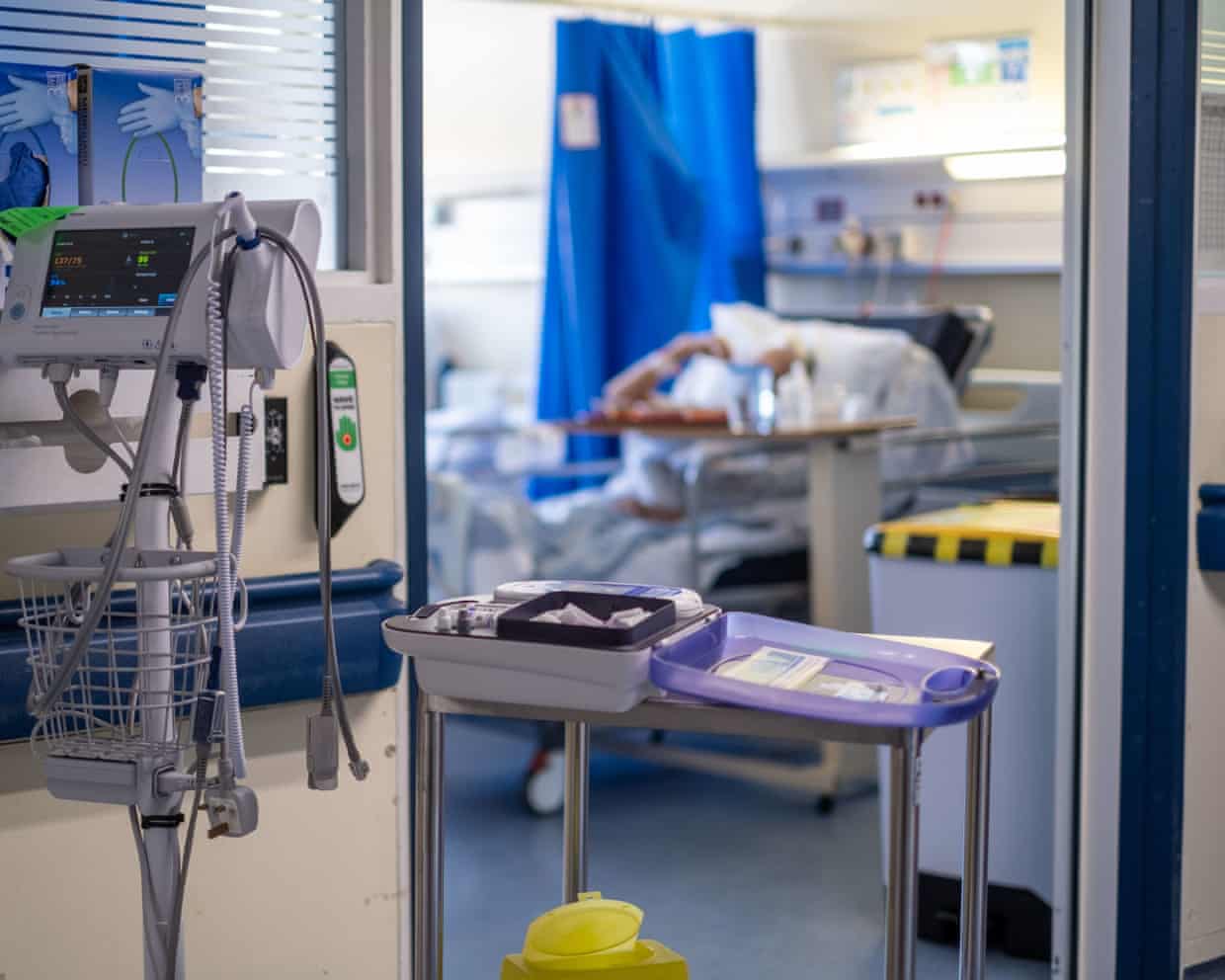
People from the poorest backgrounds in England with serious lung conditions are more likely to be admitted to hospital for emergency care than their more affluent counterparts, according to research.Analysis of NHS admissions data for November by Asthma + Lung UK found people from the most deprived backgrounds in England were 56% more likely to be admitted for emergency care, while 62% were more likely to be readmitted within 39 days of an emergency admission, which is linked with an increased chance of dying.The research also found that people in deprived areas were almost twice as likely to be admitted to hospital for a respiratory condition.One expert said the findings should act as a wake-up call to end the “postcode lottery”.The highest rates of chronic obstructive pulmonary disease (COPD) admissions per population are in deprived areas including Blackpool, Manchester, Hastings and Burnley

Young care leavers in England to get free prescriptions, dental and eye services
Young people leaving care in England will receive free prescriptions, and dental and eye services up to their 25th birthday, the government has said.A pilot to trial paid internships for care leavers in the NHS and a guaranteed interview scheme for NHS roles also forms part of a package of measures announced by the Department of Health and Social Care.A separate three-year pilot aims to improve access to mental health support for children in care, the DHSC said.There were about 53,230 care leavers aged 17 to 21 in 2025 and a further 44,430 care leavers aged 22 to 25, although this may be an underestimate, the DHSC said.The health and social care secretary, Wes Streeting, said: “Those in care face the toughest start in life and as a result suffer from a barrage of health inequalities, hampering their chances of going on to lead a happy, successful and fulfilling life

‘For the first time, she could tell people who she was’: Ireland’s gender recognition decade
Soon after Ireland passed its Gender Recognition Act in 2015, Kevin Humphreys, a Labour politician, visited a residential home for senior citizens – where an older woman thanked him for the new law.It was Humphreys who, as the minister of state for social protection 10 years ago, guided through the legislation that has meant transgender people in Ireland can apply to have their lived gender legally recognised by the state through a simple self-certification process.“She was around 80,” Humphreys recalls, “and for the first time she was able to tell her friends and family she was transgender. She told me the relief she felt to be accepted by her own community, and by the state, in the last few years of her life.”“We were very fortunate in Ireland that we were able to do the legislation in an era of openness and progressive discussion,” he says

Prosecutions for strangulation in England and Wales increase sixfold in three years
The number of suspects charged for strangulation and suffocation in England and Wales has increased almost sixfold in the three years since the offence was first introduced, Crown Prosecution Service data has revealed.Brought in under the Domestic Abuse Act, which came into force in 2022, the legislation closed a gap in the existing law, giving courts much greater sentencing powers.Kate Brown, the CPS’s lead prosecutor for domestic abuse, said that previously there had been “a lot of cases for which it didn’t seem like we had the right offence”, and the new legislation marked “a significant shift in recognising the serious nature of the offence”.“There were some thoughts that it might not be necessary and that the act of strangulation or suffocation could be covered by other offences,” she said, but added that the options previously open to prosecutors “didn’t really hit the mark in terms of the seriousness, because strangulation is a really serious offence”.Suffocation and strangulation carries a maximum sentence of five years’ imprisonment, whereas previously, except for the most serious cases which could be charged as grievous bodily harm or attempted murder, prosecutors were having to charge offenders with common assault, which carries a much lesser maximum sentence of six months
Resident doctors say they will resume talks to avoid further strikes with ‘can-do spirit’
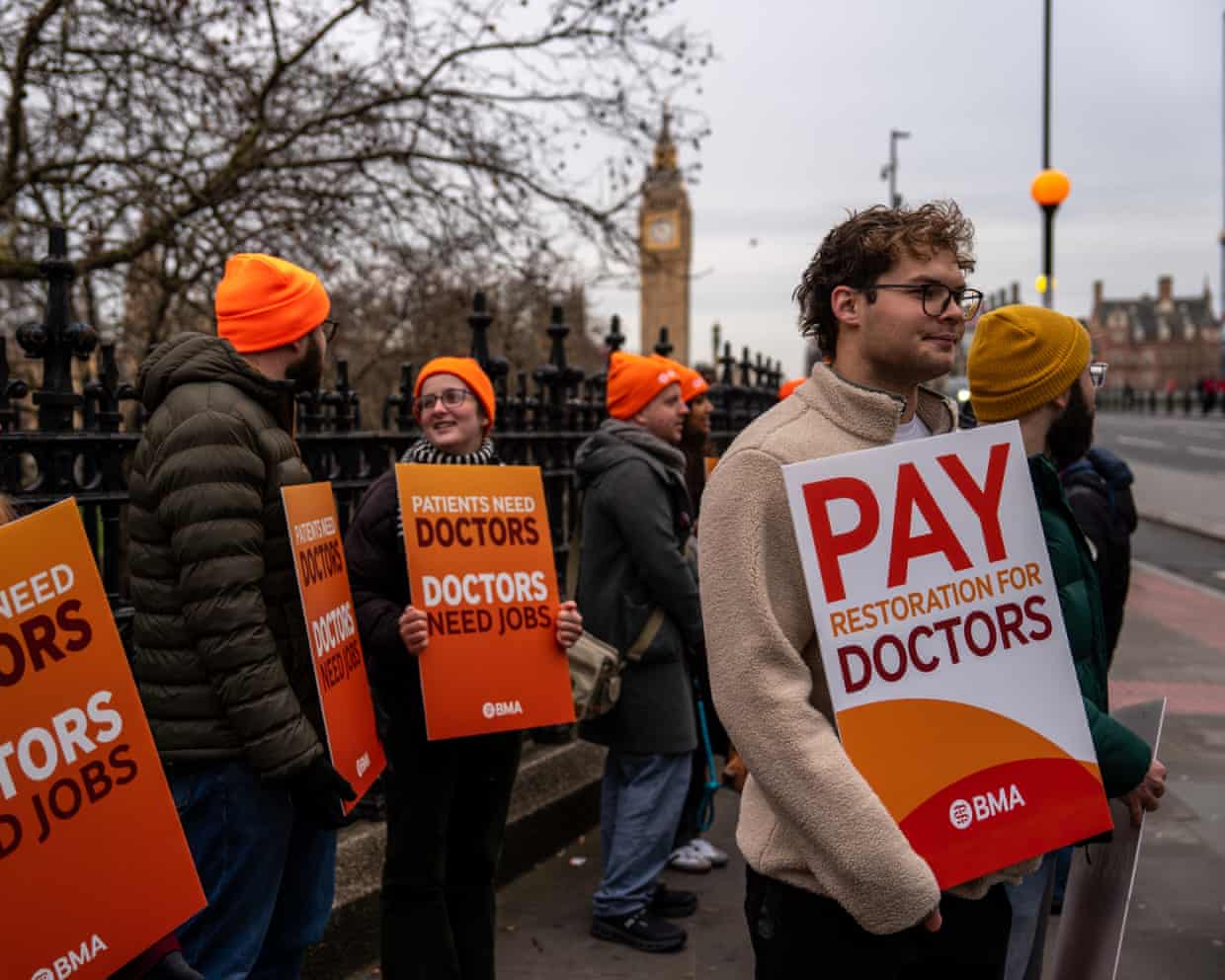
Resident doctors have said they will approach talks with Wes Streeting with a “can-do spirit” to avoid further strikes in the new year, as their five-day action ended on Monday morning.The British Medical Association called on the health secretary to come to the table with the same “constructive” attitude, saying the tone of 11th-hour talks before their stoppage had been encouraging but too late to avoid the strike in England.Streeting also signalled his determination to get back to the talks, saying he did “not want to see a single day of industrial action in the NHS in 2026”, and that he would “be doing everything I can to make this a reality”.“My door remains open, as it always has done, and I’m determined to resume discussions with the BMA in the new year to put an end to these damaging cycles of disruption,” he said.Streeting and Keir Starmer have taken a tough line towards the strike, with the prime minister saying it was “beyond belief” that it should go ahead when the flu-hit NHS was facing its worst crisis since Covid

One in eight of 14- to 17-year-olds in Great Britain say they have used nicotine pouches
One in eight teenagers aged 14 to 17 have used nicotine pouches, a survey has found, adding to health experts’ concern about their growing popularity.Users hold the small sachets, which look like mini-teabags and are often flavoured, in their mouths to enjoy the release of the nicotine they contain. They are also known as “snus”.Unlike smoking the pouches do not raise the risk of cancer, but they have caused alarm because of the fear that users could become addicted to nicotine and suffer mouth and dental problems.A survey of 500 teenagers aged 14 to 17 in England, Scotland and Wales found that 13% have used a nicotine pouch, of whom 30% said they did so at least once a week

Stokes calls for ‘empathy’ for England players and pledges support for Duckett

Five big Boxing Day Ashes Tests: Botham, Pietersen and Warne
Trump loomed over sport like never before in 2025. Next year he will take even more

Alex Samara: how a 30-year-old Englishman became an WNBA head coach

Scott Boland reveals uncomfortable truth about standing up to England during Ashes

Wounded England must salvage more than pride in MCG Boxing Day Ashes Test