Oil price tops $100 again as Iran strikes economic targets across Middle East
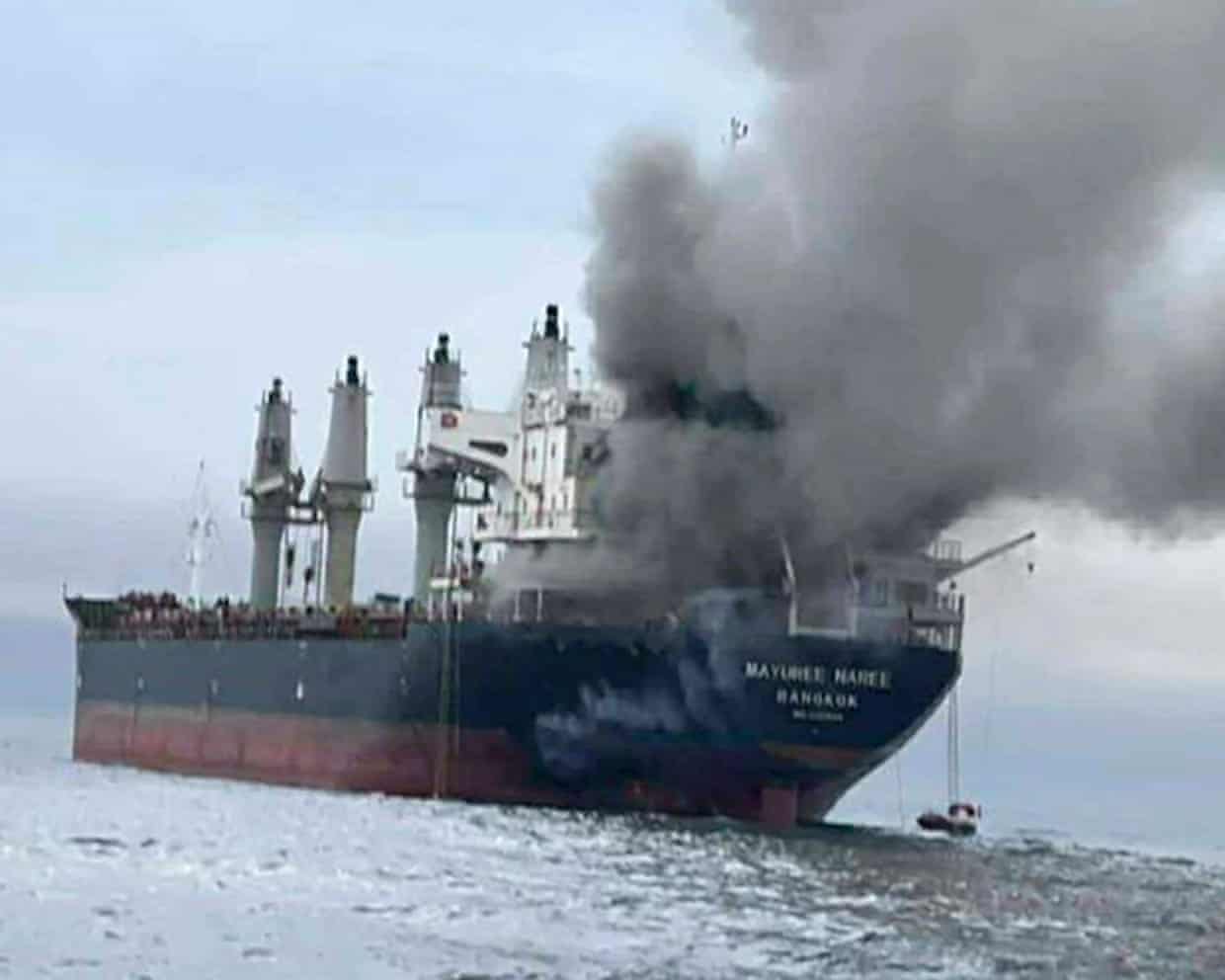
Oil prices again topped $100 a barrel on Thursday as widespread Iranian attacks on Middle Eastern energy facilities overshadowed a vast release of government reserves.As Donald Trump vowed to “finish the job” and press ahead with the US-Israel war on Iran, the country’s regime stepped up retaliatory strikes on economic targets across the region.Several merchant ships were struck in and around the strait of Hormuz, one of the most important arteries in global trade.Three crew members aboard one of the ships – the Thai-registered Mayuree Naree – were “believed to be trapped”, the vessel’s owner said.Meanwhile, Iraq halted all operations at its oil ports after an attack on two nearby oil tankers.
Bahrain told residents to stay at home after an Iranian attack on fuel tanks in the Muharraq Governorate.Oman shifted all vessels out of its main oil export terminal at Mina Al Fahal – one of the few remaining ports from which crude can be shipped from the Middle East to the world – after drone strikes at another of its ports, Bloomberg reported, citing sources who received a notice from a port agent.The price of Brent crude, the international benchmark, rallied by 9% to $100.29 a barrel on Thursday despite efforts by governments across the world to allay fears of a sustained supply crunch.It later slipped back to $98 a barrel, up by about 6%.
It broke into three figures for the first time in four years on Monday, when it soared as much as 29% to hit a peak of $119 a barrel, before falling back sharply after Donald Trump described the war as “very complete” in a series of conflicting remarks.The oil price had been about $60 a barrel at the start of the year.In an attempt to calm concerns over oil supplies, the International Energy Agency ordered the largest release of government reserves in its history on Wednesday, when its 32 members unanimously agreed to release 400m barrels of emergency crude.This record release was swiftly eclipsed, however, as fresh violence across the Middle East – and signs that Tehran was deliberately targeting sites – heightened apprehension around the disruption in global energy markets.As prices resumed their rise, Iran’s military command goaded the US.
“Get ready for oil to be $200 a barrel, because the oil price depends on regional security, which you have destabilised,” a spokesperson said,The West Texas Intermediate price of US crude also climbed back towards $100 early on Thursday, rising 8,6% to $94,75 a barrel,Leading stock markets in Asia came under pressure, with the Nikkei 225 dropping 1.
6% in Japan, while the Kospi fell 1.2% in South Korea.The strait of Hormuz, through which about a fifth of global oil and seaborne gas tankers typically pass, has been in effect closed since the conflict began on 28 February.Aramco, Saudi Arabia’s state oil company, has warned of “catastrophic consequences” for the world’s oil markets if the strait remains blocked.As part of the IEA’s move to calm the oil price shock sparked by the war in Iran, the US announced plans to release 172m barrels of oil from its strategic petroleum reserve.
The US energy secretary, Chris Wright, said the release will begin next week, and take approximately 120 days to deliver.In his statement, Wright accused Iran of having “manipulated and threatened the energy security of America and its allies”.Trump had said earlier on Wednesday that he planned to tap the petroleum reserve.On Thursday, Goldman Sachs raised its forecast for Brent in the fourth quarter of 2026 to $71 a barrel, up from $66 a barrel.Jim Reid, a market strategist at Deutsche Bank, said investors were facing the risk of a “broader stagflationary shock”.
He said: “From a market perspective, the problem is that investors are increasingly pricing in a more protracted conflict that causes extensive economic damage.After all, with no concrete signs of de-escalation yet, that’s keeping oil prices elevated, and raising the risk of a broader stagflationary shock.”Reuters contributed reporting
Billionaire Zara founder Amancio Ortega to receive €3.23bn dividend
The billionaire founder of Zara is to receive a company record €3.23bn (£2.8bn) dividend this year from the world’s biggest fashion retailer.Amancio Ortega, who still controls 59% of Spain’s Inditex and whose daughter Marta Ortega Pérez is now chair, will receive half his dividend in May and half in November – as will other shareholders.Inditex, which owns a raft of high street chains including Bershka, Massimo Dutti, Pull&Bear, Stradivarius and Oysho, said on Wednesday it would increase its dividend by 4% after a “robust operating performance” in 2025
Sir Ronnie Hampel obituary
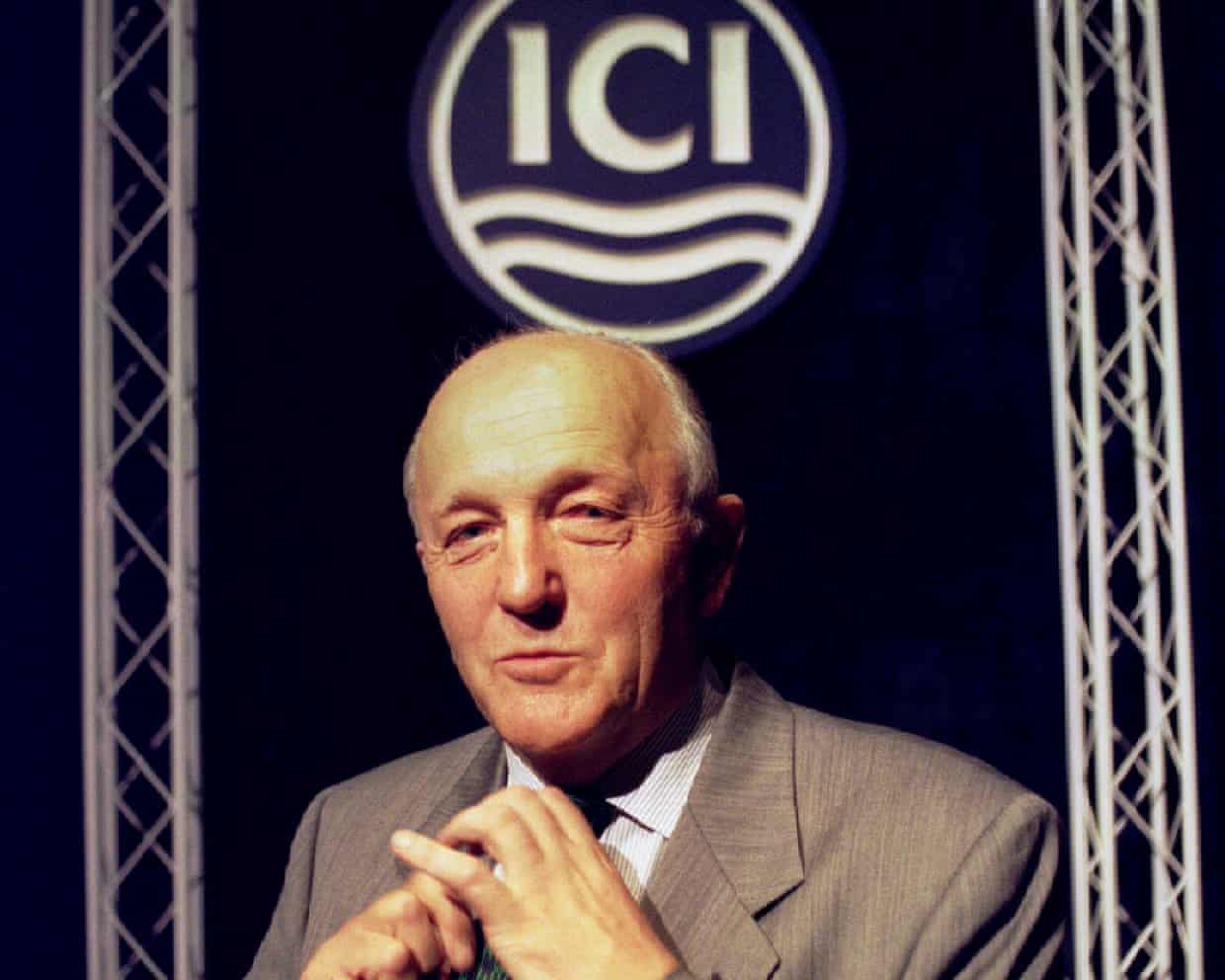
Ronnie Hampel was a businessman’s businessman, a major force in the reshaping of ICI, Britain’s largest manufacturing company, in the 1990s and in the birth of the pharmaceutical company Zeneca (now part of AstraZeneca), as well as a powerful influence on other company boards.He was exceptionally well-connected. His place at the heart of the UK business establishment as chairman of ICI – from 1995 to 1999 – was highlighted by his regular golfing four which included the then cabinet secretary, the chairman of BP and the permanent secretary of the Treasury.Hampel, who has died aged 93, joined ICI in 1955 – in those days the company was known as “the bellwether of British industry”. He learned fast in a range of posts in its sprawling divisions
Will releasing millions of barrels of oil stockpiles really bring down fuel costs?
When the global economy was still in the grip of the devastating 1970s oil crises, exposing the chokehold exerted by a few important oil states, the International Energy Agency (IEA) was created, in the hope of limiting future shocks.Almost half a century on, the IEA’s 32 members have drawn up plans to hit the emergency button, for only the fifth time in its history.On Wednesday, the IEA said 400m barrels of emergency crude, a third of the group’s total government stockpiles, would be released to help calm the oil price shock triggered by the US-Israel war on Iran. It is the biggest release of oil reserves in its history.The cost of a barrel of crude oil quadrupled between October 1973 and January 1974, after members of the Opec cartel cut production; then fell back, before nearly trebling again in 1979, after the Iranian revolution
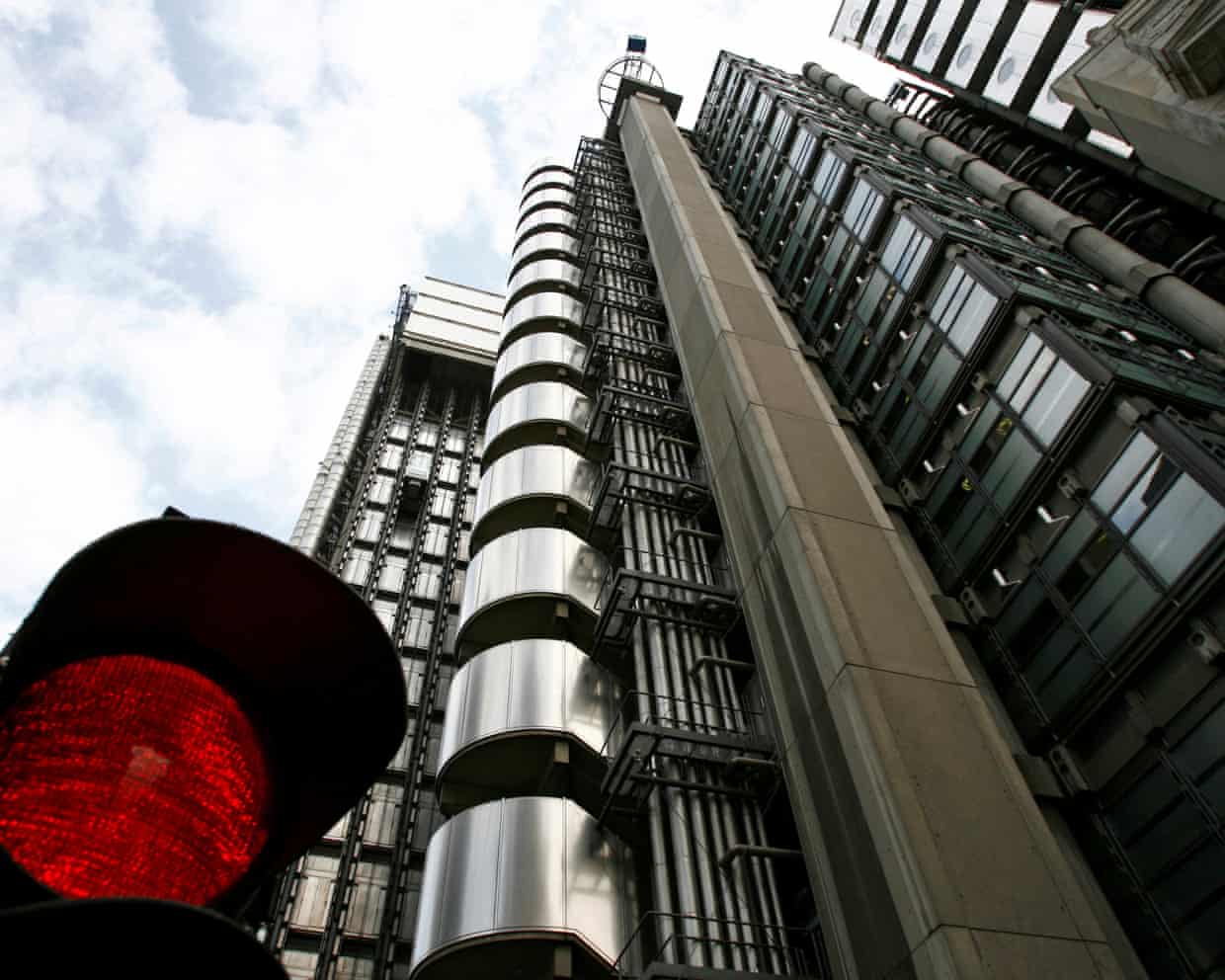
Lloyd’s of London stresses it is still insuring shipping in strait of Hormuz
There is a price for everything: even the cost of insuring a ship travelling through the strait of Hormuz.Donald Trump’s proposals for the US to provide political risk insurance for seaborne trade in the Gulf may have given the impression a lack of cover was the reason why traffic through the key waterway has almost halted.However, Lloyd’s of London, the heart of maritime insurance globally, emphasises it has not stopped providing contracts to those who ask – although at the right tariff.Fending off criticism over cancelled policies and sharp price rises, Lloyd’s said it still provided insurance cover for hull and cargo for vessels in the Persian Gulf and the Gulf of Oman, including in the strait of Hormuz. However, last week it extended the restricted areas where clients needed to notify insurers to agree an appropriate premium in terms of the risk

British fintech Revolut gets full banking licence
Revolut can finally launch as a fully fledged UK bank after a five-year wait for regulatory approval.The fintech said it had received the all-clear from the Prudential Regulation Authority (PRA) for a full banking licence, allowing it to offer accounts for retail and business customers.It will start introducing current accounts to a small number of new customers within days, the group said.The move follows Revolut being granted a UK banking licence – with “restrictions” – in 2024, having first lodged its application in 2021.Revolut bosses were said to have grown frustrated with UK regulators, who had been slow to grant a full licence allowing it to hold customer deposits and branch out into more lucrative products such as loans and mortgages
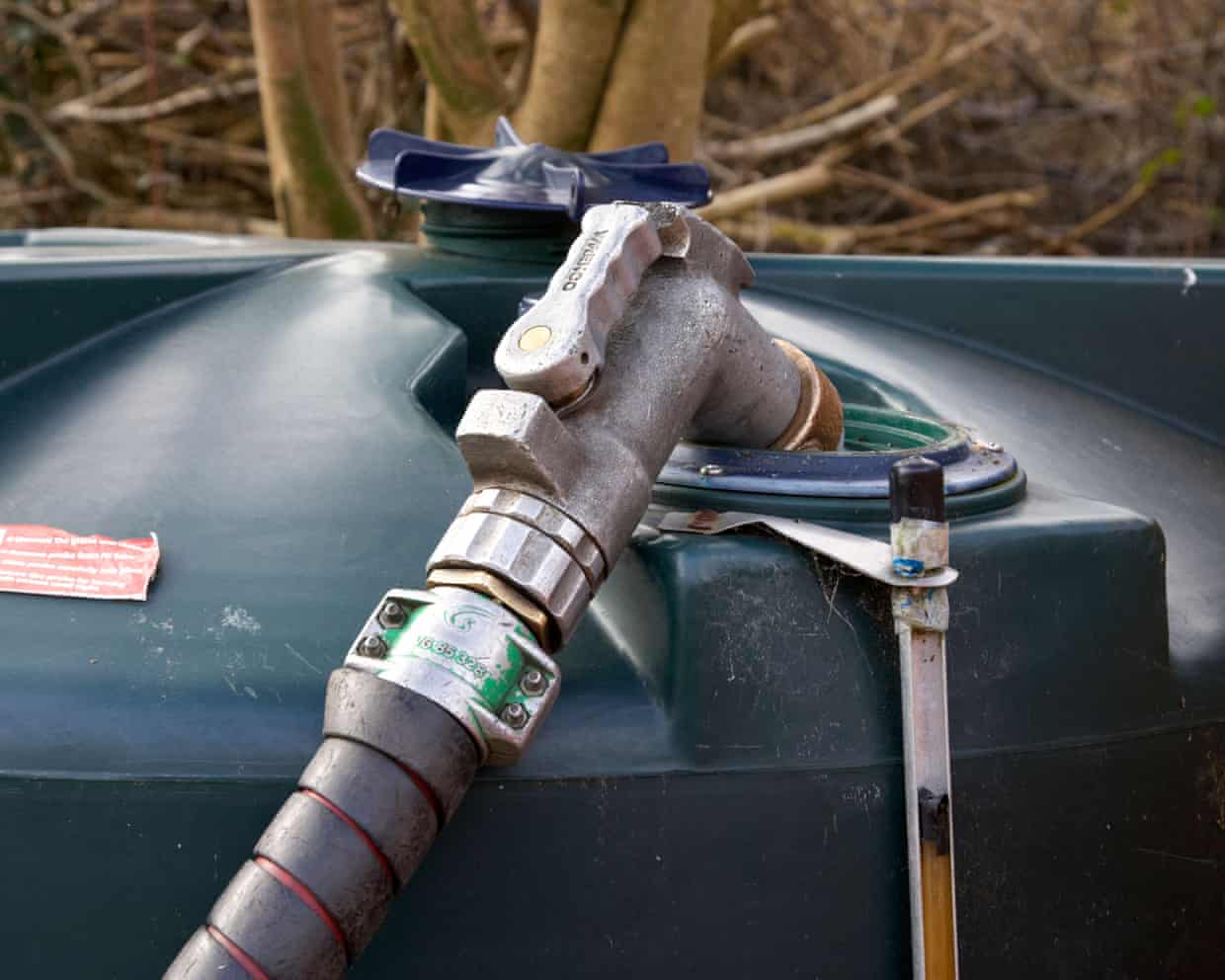
CMA to investigate heating oil suppliers over ‘blatant profiteering’ from Iran war
Heating oil suppliers are to be investigated by the competition watchdog after accusations that firms are “blatantly profiteering” from the conflict in the Middle East by doubling the prices they charge to households.The Competition and Markets Authority (CMA) said it had received “a number of concerning reports” in recent days from consumers reliant on heating oil about suppliers’ behaviour at a time of rising wholesale costs.About 1.7m households in the UK, mostly in rural areas that are not connected to the mains gas network, rely on heating oil to warm their homes, cook food and provide hot water.The CMA will look into consumer complaints about existing orders being cancelled, with customers then offered new quotes at significantly higher prices, and price increases for automated deliveries to customers that are triggered when the fuel in an oil tank drops to a certain level
Oil price tops $100 again as Iran strikes economic targets across Middle East
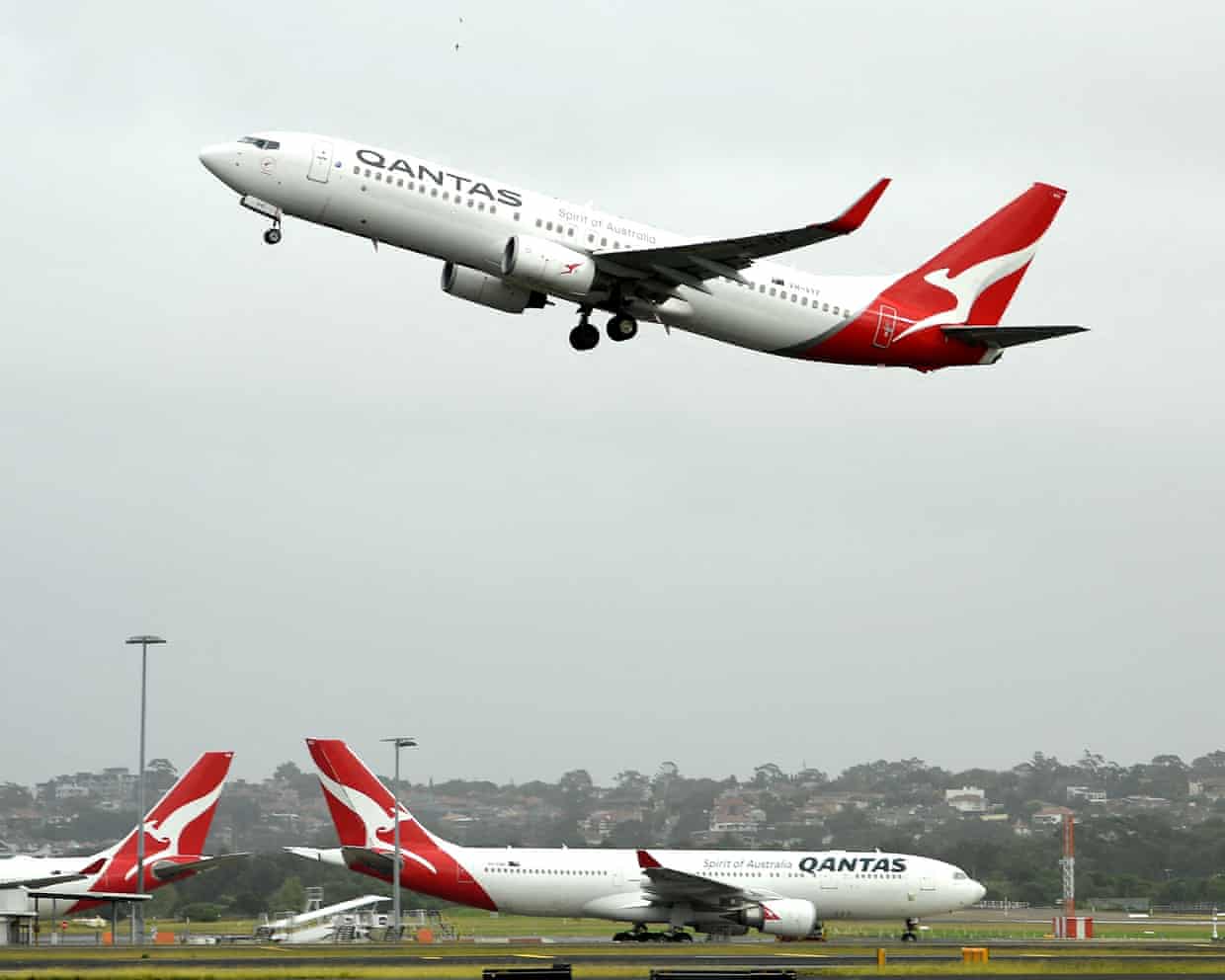
How will Australians’ flights to Europe be affected, and at what cost, as the Iran war rages on?
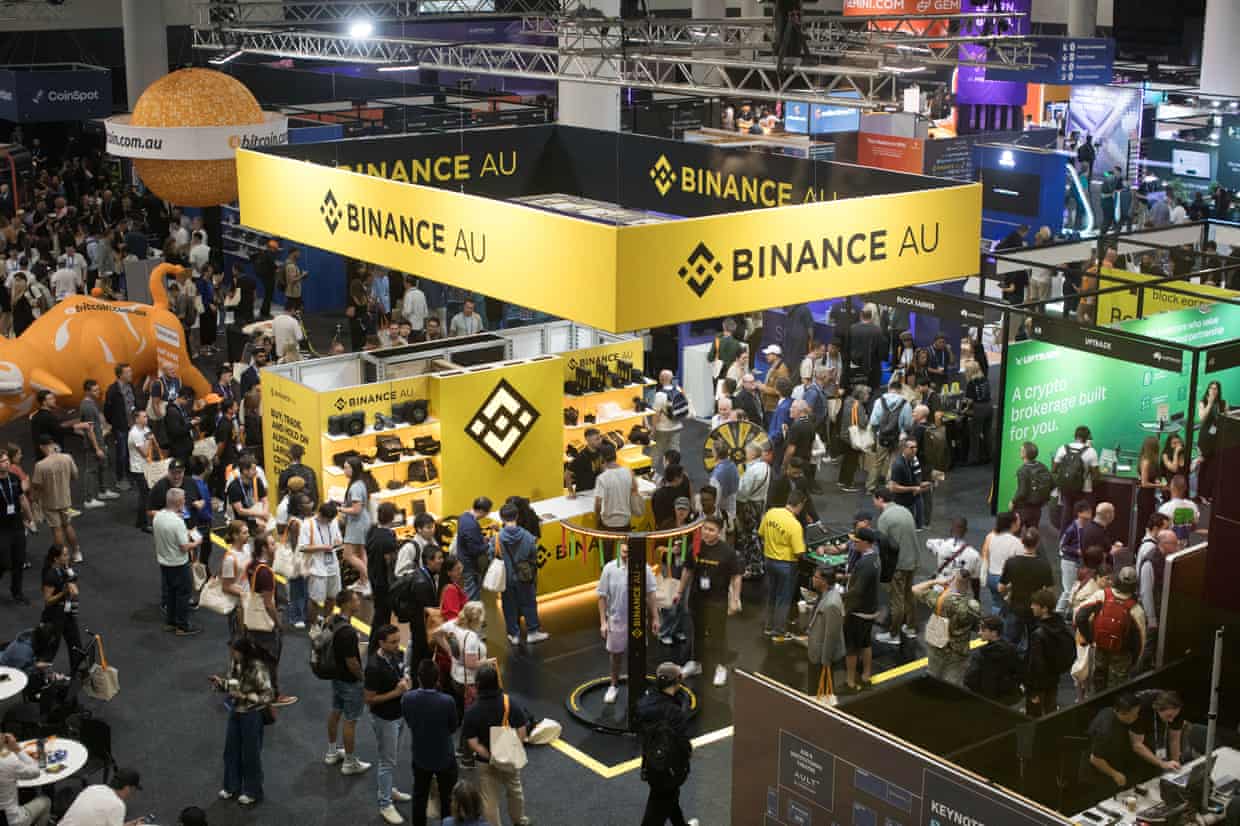
Binance sues Wall Street Journal over reporting on Iranian sanctions
Meta disables more than 150,000 accounts in crackdown on south-east Asian scam networks

Trust at 100km/h: how Bluetooth bond helps skier Neil Simpson see his way to glory

Kit clash farce looms as France set to wear special pale blue shirt against England