Starmer’s ‘corrosive complacency’ on defence has put UK in peril, says ex-Nato chief
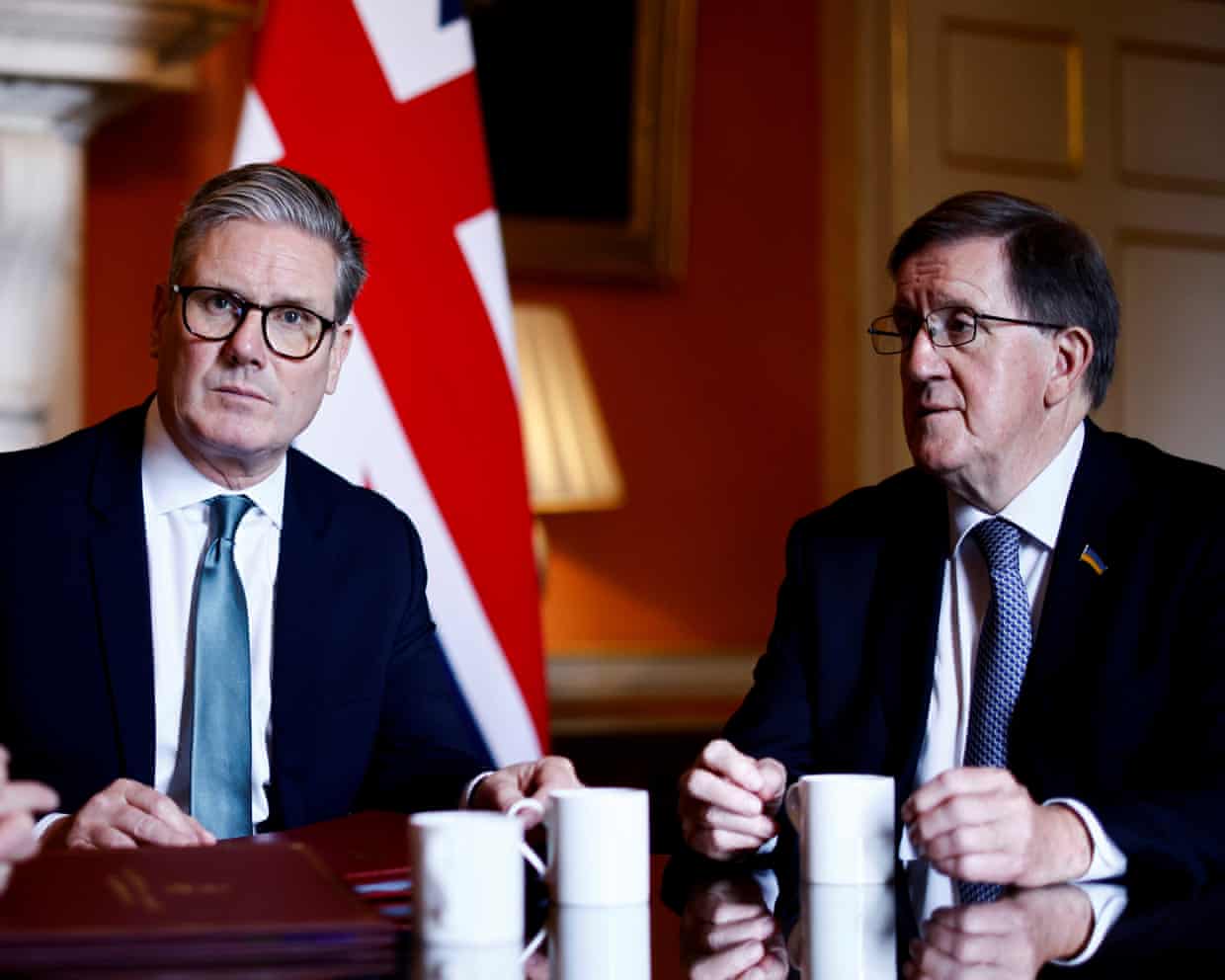
The government has shown a “corrosive complacency towards defence” and put the UK in peril, according to a government adviser, in fierce criticism of Keir Starmer’s military policy.George Robertson, the former Nato secretary general and author of the government’s strategic defence review, believes Starmer is “not willing to make the necessary investment”, the Financial Times reported.In addition, Lord Robertson will warn in a lecture in Salisbury on Tuesday that the Iran war “has to be a rude wake-up call”.The former general Richard Barrons, who co-authored the defence review with Robertson, echoed his concerns.“It is a mark of how serious it is that someone who has been a Labour party activist for more than 60 years and was a Nato secretary general has now had to say it in these terms today,” Barrons told BBC Radio 4’s Today programme.
Robertson, a former defence secretary who led Nato from 1999 to 2003, will also accuse “non-military experts in the Treasury” of “vandalism”.“We cannot defend Britain with an ever-expanding welfare budget,” he said in an interview with the Financial Times.He will say in his speech: “We are underprepared.We are underinsured.We are under attack.
We are not safe … Britain’s national security and safety is in peril.”Barrons said: “There’s an enormous gap between where we have to be to keep the country safe in the world we now live in, and where we actually are.”Asked how he responded to Pete Hegseth, the US defence secretary, mocking the Royal Navy last week, Barrons said: “I hung my head in sorrow, but I couldn’t argue with him because although the Royal Navy and the Royal Air Force and the army are, in their bones, outstanding institutions, they are simply too small and too undernourished to deal with the world that we now live in.And the review says this.”The government’s proposals to fund the strategic defence review recommendations, including a 10-year defence investment plan due by last autumn, have been repeatedly postponed amid warnings that the military faces a £28bn funding gap over the next four years.
Barrons said: “The choice on the prime minister’s desk is they either find some more money to implement a new de minimis review at the speed we agreed last year, or he is going to announce £28bn worth of cuts.And how would that fit with the world that we find ourselves in today?”The Ministry of Defence, the Treasury and Downing Street have not reached an agreement about how to proceed, according to sources.Robertson believes spending cuts in other departments may be required to boost defence funding.In his speech, he will say the chancellor, Rachel Reeves, “used a mere 40 words on defence in over an hour” in her budget speech last year, and last month “in the spring statement she used none”.He will add: “There is a corrosive complacency today in Britain’s political leadership.
Lip service is paid to the risks, the threats, the bright red signals of danger – but even a promised national conversation about defence can’t be started.”In February Luke Pollard, the minister for defence readiness and industry, told the Guardian that the investment plan was “a bigger task than many people outside defence realise”.It would mean “fundamentally changing the shape of our armed forces, so pivoting, in particular, towards more autonomy”, he said, while also stressing the need to refill military stockpiles sent to Ukraine in recent years.“It is not a simple matter of just replacing tank A with tank B.”Robertson said he would cite the country’s inability to deploy more than one Royal Navy warship to the Mediterranean within the first fortnight of the Iran war to illustrate the UK’s complacency on defence.
In the speech, he will warn that the UK faces not just shortages of military kit but “crises in logistics, engineering, cyber, ammunition, training and medical resources”.Last week the defence secretary, John Healey, exposed a covert Russian submarine operation targeting critical undersea infrastructure around UK waters.A government spokesperson said: “We are delivering on the strategic defence review to meet the threats we face.It is backed by the largest sustained increase in defence spending since the cold war, with a total of over £270bn being invested across this parliament.”They said the government was finalising the defence investment plan and would publish it as soon as possible.
Iran war leads to biggest jump in global energy inflation in at least 25 years – business live
The Iran war has led to the biggest rise in global energy inflation in at least 25 years, new data suggests.Swiss bank UBS has analysed the latest inflation reports from advanced and emerging economies, and found that energy prices rose by 5.5% on average in March. That exceeds the surge seen after the onset of the Russia–Ukraine conflict in March 2022.UBS tracks inflation across roughly 45 major advanced and emerging economies; 27 have reported March data so far
BP hails ‘exceptional’ trading as oil prices soar in Iran war
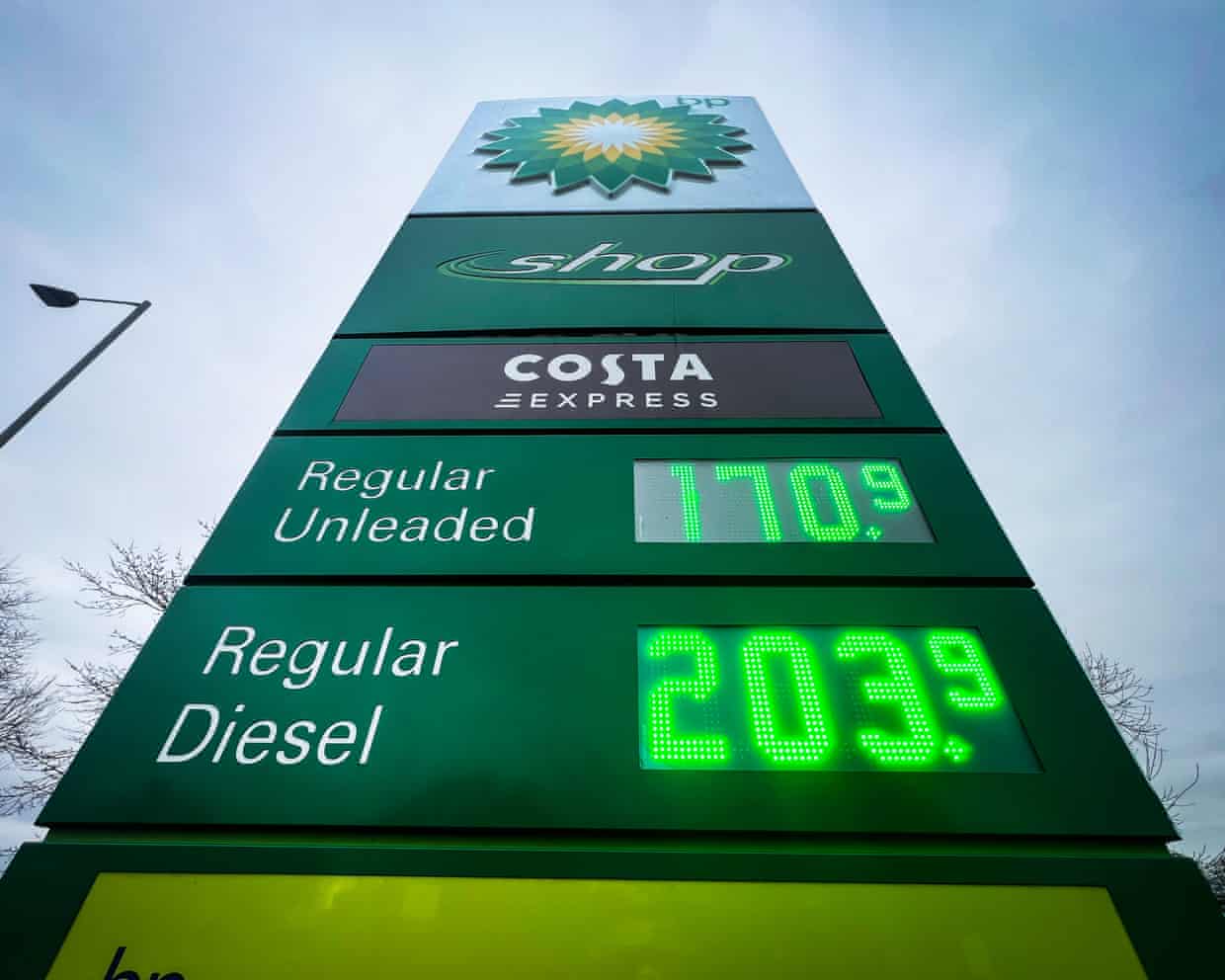
BP expects to post “exceptional” earnings from its oil trading desk, reaping a windfall from choppy energy markets triggered by the US-Israeli war on Iran.Energy traders are navigating significant market volatility after Tehran’s effective closure of the key strait of Hormuz shipping route.BP said on Tuesday that its refining margins had strengthened and that the “oil trading result is expected to be exceptional” in the first quarter of its financial year.Last week, its UK rival Shell said it anticipated “significantly higher” oil trading profits for the quarter.Analysts have been upgrading their profit forecasts, with the US bank Citi raising its estimate for BP by 20% to $2

Don’t make Marshal Foch’s mistake on AI | Letters
Emma Brockes’ article struck a chord (It’s finally happened: I’m now worried about AI. And consulting ChatGPT did nothing to allay my fears, 8 April). I am reading Marc Bloch’s Strange Defeat, in which the eminent French historian and soon-to-be-executed resistance worker gives a first-hand account of the collapse of the French army in 1940. He attributes the debacle at least in part to a failure of imagination on the part of the French general staff, who were incapable of grasping that technology, and war, had fundamentally changed since 1918.Brockes’ article suggests that we, and our leaders, are suffering from the same inability to understand that a technology which is currently amusingly alarming will develop in less amusing ways – the future Marshal Ferdinand Foch had, according to Bloch, earlier dismissed aircraft as being a toy for hobbyists and not of any military interest
Meta creating AI version of Mark Zuckerberg so staff can talk to the boss
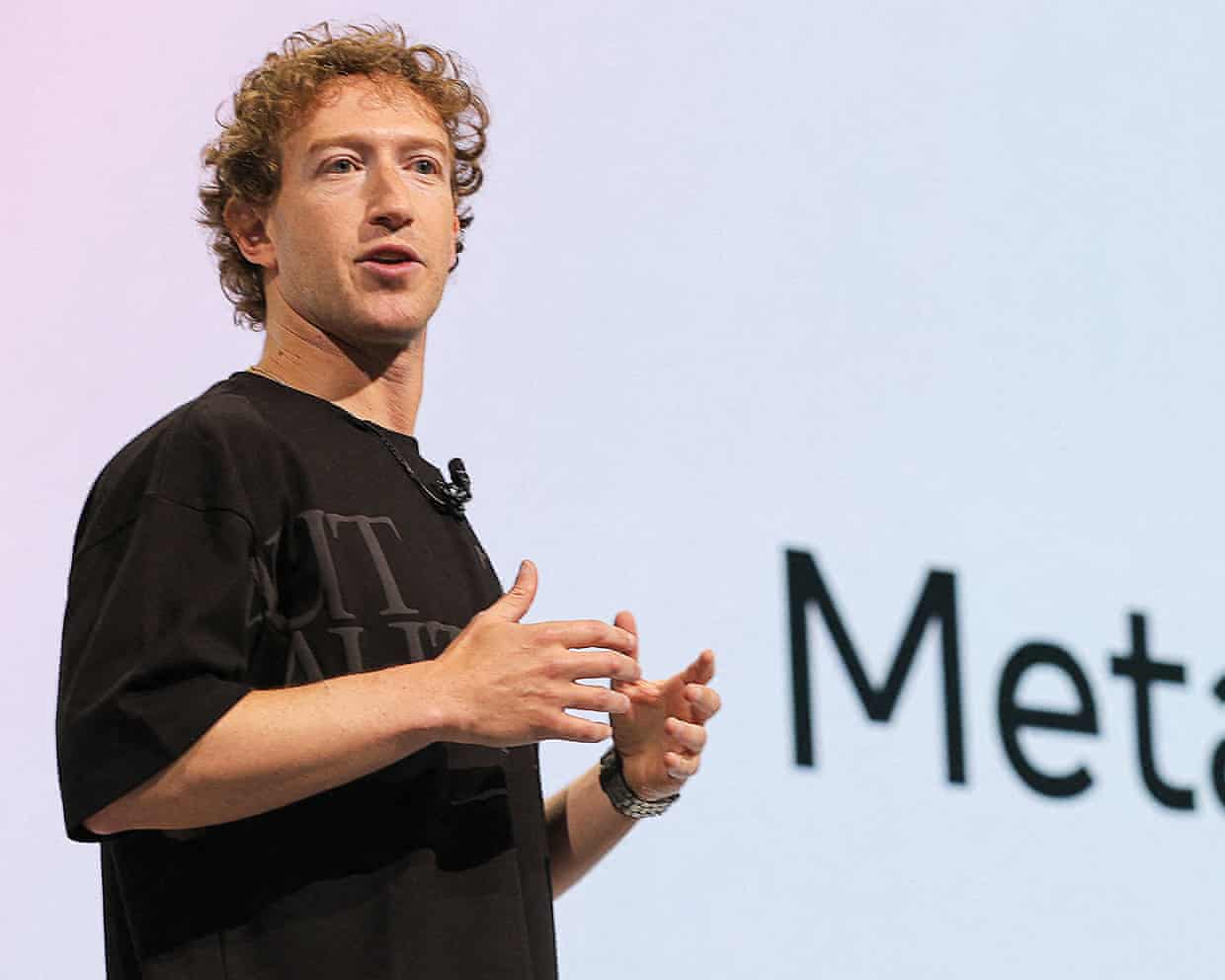
If you are one of Meta’s almost 79,000 employees and cannot get hold of the boss, do not worry. The owner of Facebook and Instagram is reportedly working on an AI version of Mark Zuckerberg who can answer all your queries.The AI clone of Zuckerberg, Meta’s founder and chief executive, is being trained on his mannerisms and tone as well as his public statements and thoughts on company strategy.The rationale behind the project, according to the Financial Times, is that employees could feel more connected to one of the most powerful people in Silicon Valley.The Meta chief has a history of creating and experimenting with digitalised versions of himself
Welcome to The Hotspot, our new newsletter on sport’s relationship with the climate crisis
We delve into the best stories on how sport is changing around the climate crisis, and what can be done to navigate a way forwardNelson Mandela said: “Sport can create hope where once there was only despair.” Too optimistic? In 2026, almost certainly. Sport is still a common language, uniting unlikely groups like an all-powerful Esperanto, but it is in trouble.The pitches we play on, rivers we swim, seas we surf, mountains we climb, parks we run in, air we breathe – all are being degraded by the burning of fossil fuels as the climate crisis turns the sporting landscape upside down.Which is why The Hotspot, the Guardian’s new fortnightly newsletter on sport and the climate crisis, is here

The Breakdown | Will Bath or anyone else stop the Bordeaux Bègles juggernaut in Europe?
Last week Northampton’s director of rugby, Phil Dowson, made an interesting comparison between boxing and rugby. He suggested there was a decent chance his side’s Champions Cup quarter-final against Bath would prove good viewing because of the clubs’ contrasting philosophies around how best to play the game. “Styles make fights” is a familiar ring mantra and the same is increasingly true in top-level rugby.On the one hand you had Northampton, all razor-sharp angles and dextrous hands. On the other was Bath, renowned for their knack of wearing their rivals down and then picking them off in the closing stages

Celebrity on celebrity: are we losing the art of the big star interview?

The Guide #238: The overlooked underdogs of British quizshows that are still worth a stream

From You, Me & Tuscany to Euphoria: your complete entertainment guide to the week ahead

‘I got everything I dreamed of – when I had no ability to handle it’: Lena Dunham on toxic fame, broken friendships and her ‘lost decade’

Kimmel on Trump: ‘He talks about war like he’s bragging about women with Billy Bush’

Jimmy Kimmel on US ceasefire negotiators: ‘We’d be better off with Alvin and the Chipmunks’