Why is the FBI buying people’s location data and how is it using the information?
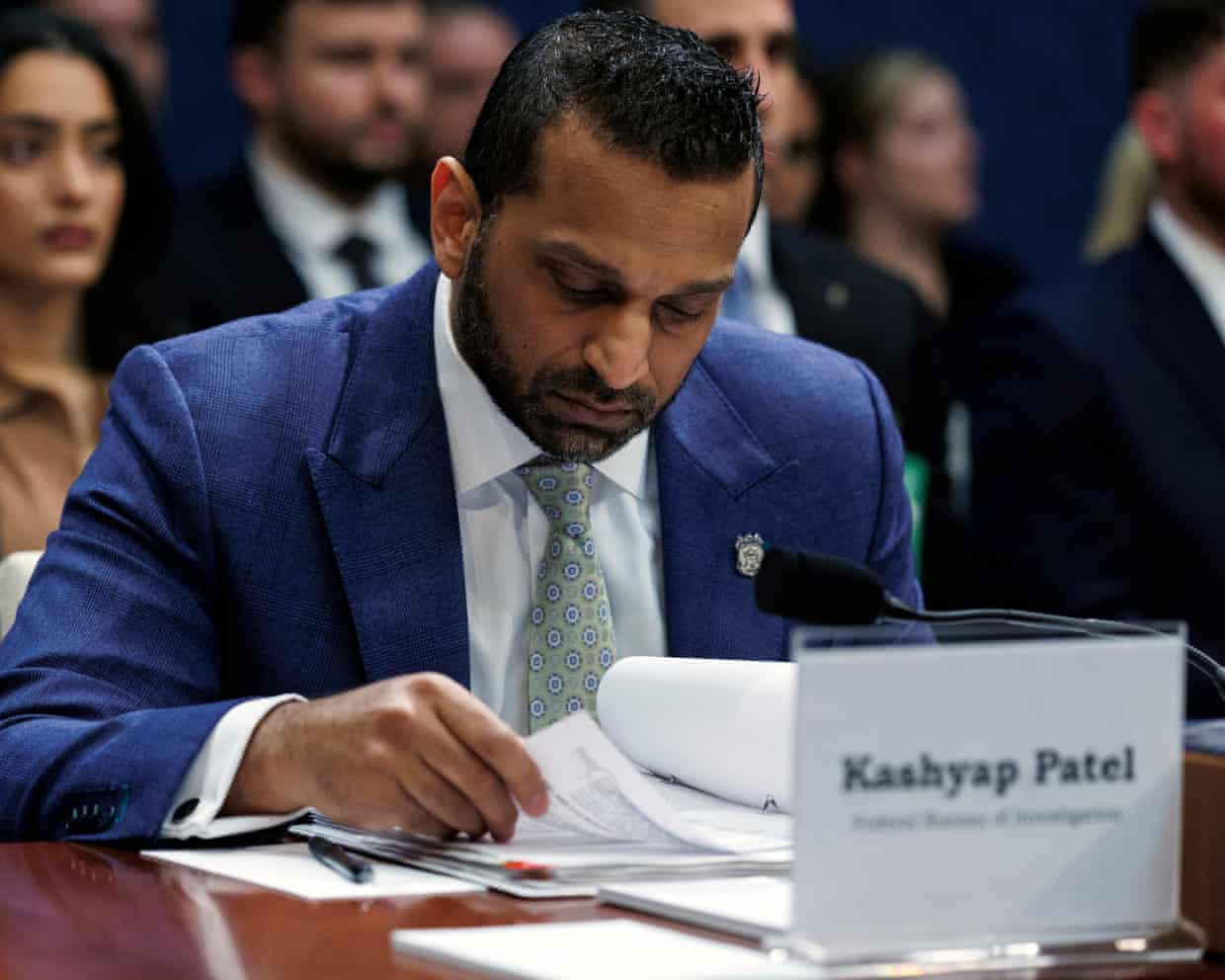
Kash Patel’s disclosure Wednesday that the FBI has resumed buying location data on Americans has many people, including members of Congress, wondering: how does private information get into the hands of the US government in the first place – and how can federal law enforcement use that information to track peoples’ whereabouts?Federal law enforcement agencies generally must obtain a warrant, which requires establishing probable cause in the eyes of a judge, to gather historical or real-time cell phone location data.The US supreme court has ruled that the fourth amendment to the US constitution, which protects against “unreasonable search and seizure”, prohibits the warrantless collection of individuals’ location histories.Buying such information, usually en masse, can circumvent this requirement, leading many privacy advocates to label the practice unconstitutional.The FBI director’s admission came in response to a question from Ron Wyden, a Democratic senator of Oregon and a longtime opponent of the warrantless surveillance of Americans.Wyden told Patel that his predecessor, Christopher Wray, testified in 2023 that the FBI did not at that time purchase location data derived from internet advertising, although he acknowledged that it had done so in the past.
“Is that the case still?” Wyden asked.“And if so, can you commit this morning to not buying Americans’ location data?”“We do purchase commercially available information that’s consistent with the constitution and the laws under the Electronic Communications Privacy Act, and it has led to some valuable intelligence for us,” Patel responded.“So you’re saying that the agency will buy Americans’ location data,” Wyden said.“I believe that that’s what you’ve said in kind of intelligence lingo.And I just want to say as we start this debate, doing that without a warrant is an outrageous end run around the fourth amendment.
It’s particularly dangerous given the use of artificial intelligence to comb through massive amounts of private information.”It starts, in most cases, with our phones.Mobile applications can track our movement precisely and often to make services like mapping apps useful.There’s a hidden cost, though, to using what otherwise may seem like an innocuous way to check the weather or plan a journey.“This is one way that apps that appear to be free or low cost to us are actually making money off of us – by making our very detailed location history the product,” said Nathan Freed Wessler, deputy director with ACLU’s Speech, Privacy, and Technology Project.
Government agencies, companies and even nefarious actors can buy and use location data to learn intimate details about you.“It’s incredibly revealing knowing where your phone goes over time,” Wessler said.“This level of detail shows your patterns of life.” This could be everything from where you go after work, where you sleep – as well as who you do those things with.Since it’s possible to track what phones are near each other, that can shed light on who you’re spending time with – even who you’re sleeping with – and what kind of gatherings you attend, whether it’s a psychiatrists’ appointment or a political rally,” Wessler said.
Data brokers, which are companies that buy, collect and sell a vast array of data points on Americans with almost no oversight, have been able to cash in on large volumes of granular location data about people’s phones,These companies collect location data, often buying large amounts of it from app developers, and sometimes information about name, gender, health, political preferences and home ownership,It’s become a lucrative industry, worth billions of dollars,“When you give an app permission to see your location, you’re also giving the other companies whose software is embedded in that app access to your location as well,” said Lena Cohen, staff technologist at the Electronic Frontier Foundation (EFF),Privacy experts note that once companies have your location, it’s hard to know – let alone control – what they do with it.
It’s even difficult to figure out which particular apps sell users’ location data, although a few examples have been reported on.For example, one data broker bought location data from Muslim prayer and dating apps before that information ended up with the US military, according to Vice.EFF explains in a June 2022 blog post that data brokers can incentivize app developers to sell user data by paying per user for direct access to their device, which can allow the data broker to obtain location data when the app is open, or, in other cases, whenever the phone is on, even if the app is closed.Targeted advertising can also be a source of location data.Real-time bidding allows websites and apps to auction off ad space.
EFF explains that all participants get data about people who would see their ad.“As a result, anyone posing as an ad buyer can access a stream of sensitive data about billions of individuals a day,” EFF notes in a blog post.“Data brokers have taken advantage of this vulnerability to harvest data at a staggering scale.”Data brokers also often maintain portals that allow government agencies to run queries about which phones were in an area at any given time, Wessler says.Federal agencies, including the FBI and the Department of Homeland Security, previously purchased location data for investigations.
The Wall Street Journal reported in 2020 that the DHS used the information to find “undocumented immigrants and others who may be entering the US unlawfully” and “look for cellphone activity in unusual places, such as remote stretches of desert that straddle the Mexican border”.404 Media reported earlier this month that an internal US Customs and Border Protection document showed the agency used location data from the online advertising industry to track phone locations.Congressional democrats called, on 3 March, for an investigation of warrantless purchases of Americans’ location data by ICE and the DHS.They cited a 2023 report from the DHS inspector general that found ICE’s data purchases were illegal, which had caused the program to shut down in 2023.Many privacy advocates argue that funnelling of information from data brokers to government agencies is already illegal.
They say it violates the fourth amendment by allowing the government to bypass requirements that it obtain a court warrant if it wants specific location data about a specific person.Some lawmakers are trying to close what they see as a loophole.Leading the pack in Congress is Wyden, who introduced a sweeping surveillance reform bill that includes a measure to stop the federal government from buying location information from data brokers without a warrant.In the absence of strong federal privacy laws, people still have some agency.EFF details steps people can take in a 5 March blog post.
They can disable location ID and review the apps they have granted location permissions to,“If you can’t disable location access completely for an app, limit it to only when you have the app open or only approximate location instead of precise location,” EFF notes,EFF also suggests disable mobile advertising ID, noting that this identifier helps location data brokers “stitch together the information they collect about you from different apps”,Still, Americans are worried about how much of their data is already exposed,Some may not know or encounter these tips.
“Not everyone’s going to have the savvy to do that,” says Wessler.“So the real answer is that Congress needs to step in.”

JP Morgan Chase to use computer estimates to monitor hours worked by junior bankers
JP Morgan Chase has started to compare the hours junior investment bankers claim to have worked against logs on its IT system.The US bank said it would begin issuing reports to junior bankers that compare computer-generated estimates of their work weeks against their self-reported time sheets as part of a pilot scheme.The company said it planned to roll out the programme more widely across its investment bank, with IT estimates based on employees’ weekly digital activities including video calls, desktop keystrokes and scheduled meetings.“Much like the weekly screen time summaries on a smartphone, this tool is about awareness, not enforcement,” JP Morgan said in a statement. “It’s designed to support transparency, wellbeing, and encourage open conversations about workload

Marmite maker Unilever in talks to merge food business with US-based McCormick
Unilever, the owner of Marmite, Dove and Hellmann’s mayonnaise, is in talks to combine its food business with the US-based spice and seasoning maker McCormick.The Anglo-Dutch food company – which last year spun off its ice-cream division, the home to Ben & Jerry’s, Magnum and Wall’s – has entered discussions over the future of the “highly attractive” business.Unilever is valued at almost £100bn, and its food unit, which includes brands such as Knorr, could be worth tens of billions of pounds.McCormick, which owns brands including French’s yellow mustard, Old Bay seasoning and Cholula hot sauce, is valued at about $15bn (£11bn).“Unilever confirms that it has received an inbound offer for its foods business and is in discussions with McCormick & Company,” the Marmite maker said in a statement
Meta AI agent’s instruction causes large sensitive data leak to employees
An AI agent instructed an engineer to take actions that exposed a large amount of Meta’s sensitive data to some of its employees, in the latest example of AI causing upheaval in a large tech company.The leak, which Meta confirmed, happened when an employee asked for guidance on an engineering problem on an internal forum. An AI agent responded with a solution, which the employee implemented – causing a large amount of sensitive user and company data to be exposed to its engineers for two hours.“No user data was mishandled,” a Meta spokesperson said, and they emphasised that a human could also give erroneous advice. The incident, first reported by The Information, triggered a major internal security alert inside Meta, which the company has said is an indication of how seriously it takes data protection
Why is the FBI buying people’s location data and how is it using the information?
Kash Patel’s disclosure Wednesday that the FBI has resumed buying location data on Americans has many people, including members of Congress, wondering: how does private information get into the hands of the US government in the first place – and how can federal law enforcement use that information to track peoples’ whereabouts?Federal law enforcement agencies generally must obtain a warrant, which requires establishing probable cause in the eyes of a judge, to gather historical or real-time cell phone location data. The US supreme court has ruled that the fourth amendment to the US constitution, which protects against “unreasonable search and seizure”, prohibits the warrantless collection of individuals’ location histories. Buying such information, usually en masse, can circumvent this requirement, leading many privacy advocates to label the practice unconstitutional.The FBI director’s admission came in response to a question from Ron Wyden, a Democratic senator of Oregon and a longtime opponent of the warrantless surveillance of Americans. Wyden told Patel that his predecessor, Christopher Wray, testified in 2023 that the FBI did not at that time purchase location data derived from internet advertising, although he acknowledged that it had done so in the past

Sixteen international games and a franchise overseas: is the NFL’s global ambition good or greed?
“Pigs get fat, hogs get slaughtered. And they’re getting hoggy.” When Mark Cuban, then owner of the NBA’s Dallas Mavericks, fired that line at the NFL in 2014, he was partly goading and partly gloating.It felt directionally true. The NFL looked bloated, arrogant and vulnerable

Chess: Scotland’s Freddy Waldhausen Gordon, 15, routs the English in British Rapidplay
Freddy Waldhausen Gordon, a 15-year-old from George Heriot’s school, Edinburgh, came through with a stunning burst to capture the annual British Rapidplay championship in Peterborough with a score of 9.5/11, defeating the top-seeded GM, Gawain Maroroa Jones, in the final round in a must-win game by a checkmating attack where White’s queen and both rooks all invaded Black’s rear rank.Maroroa Jones was in trouble early in the decisive game, soon had to concede rook for knight, and a second loss of the exchange followed at move 32. At the end, 39 Rxg7+ and 40 Qg8 mate could only be delayed by Black giving up his queen.It was the 37th staging of the British Rapidplay, whose fast time limit of all the moves in 15 minutes for each player, plus a 10 seconds increment per move, makes it possible to hold an entire 11-round tournament in a single weekend

Tens of thousands of prisoners in England and Wales at risk of cell fires

Meningitis vaccine eligibility expanded after Kent outbreak rises to 27

Lollipop people: share your experiences of the job
People aged under 25: are you still looking for a job after a year of unemployment?

NHS was ‘on brink of collapse’ during pandemic, Covid inquiry finds

‘She didn’t want that pain’: Paola Marra’s brother despairs of Lords block on assisted dying bill