At Davos, tech CEOs laid out their vision for AI’s world domination
Hello, and welcome to TechScape,This week’s edition is a team effort: my colleague Heather Stewart reports on the plans for AI’s world domination at Davos; I examine how huge investments have followed AI companies with little to their names but drama and dreams; and Nick Robins-Early spotlights how lax regulation of autonomous driving in Texas allowed Tesla to thrive,When they weren’t discussing Donald Trump, delegates at the World Economic Forum last week were being dazzled by the prospects for artificial intelligence,Up and down the main street of the Swiss Alps town, almost every shopfront was temporarily emblazoned with the neon slogan of a tech firm – or a consultancy promising to tell executives how to incorporate AI into their business,Cloudflare’s wood-panelled HQ urged delegates to “connect, protect and build together”, and Wipro’s shouted: “Dream Solve Prove Repeat.
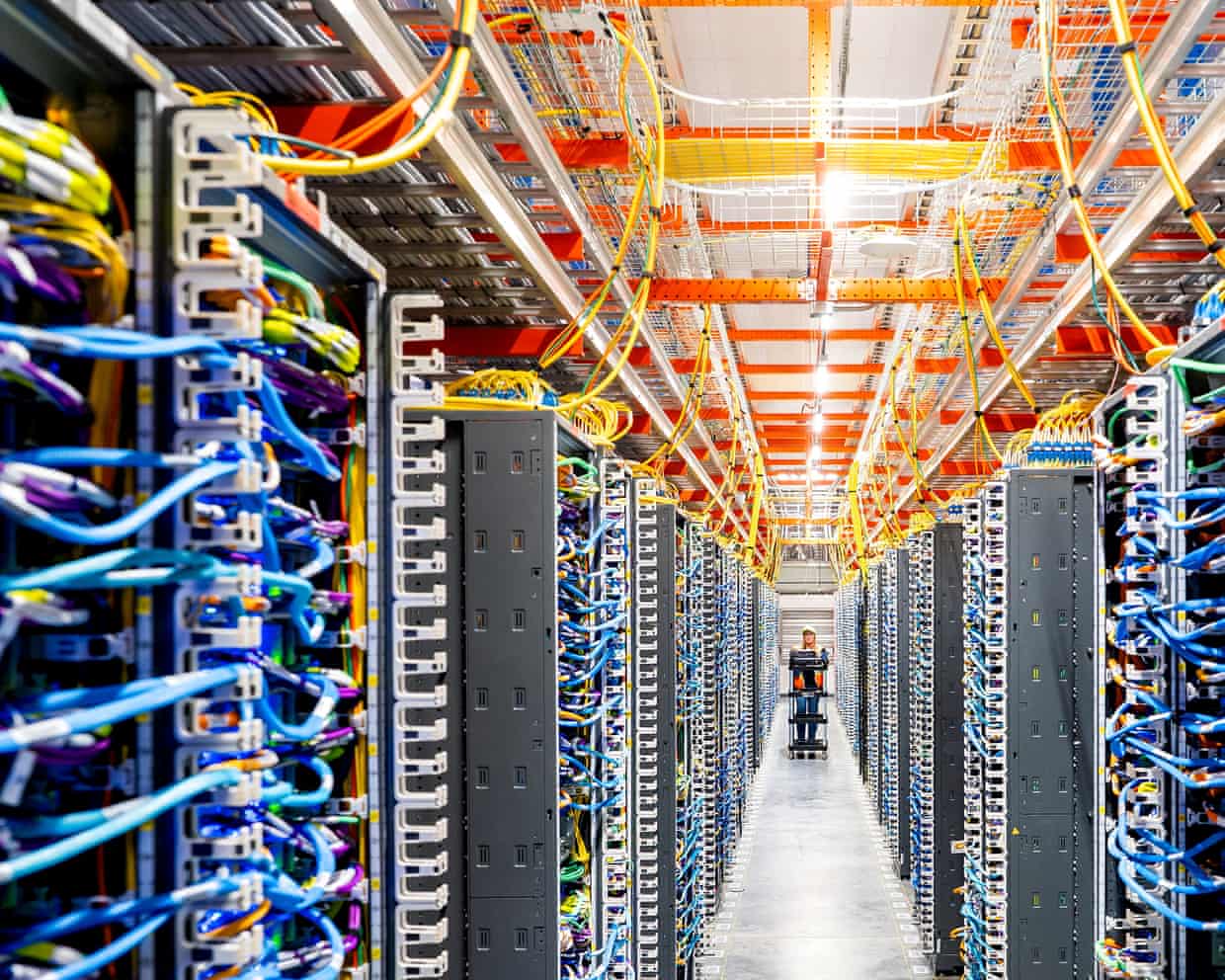
”At the conference, tech CEOs laid out their hopes for how the physical manifestations of AI will blanket the world in the coming years.Microsoft chief executive Satya Nadella told a rapt audience about how “token factories”, as he calls datacenters, will have to be distributed across the world, to diffuse the benefits of AI globally.“To me, a long term, scalable solution is to have all of these token factories part of the real economy connected to the grid, connected to the telco network – and that’s what will drive that scale, whether it’s in the global south, or in the developed world,” Nadella said.Meanwhile Google was showing off the latest iteration of its Google Glasses to excited delegates; and there were endless sessions in the Davos congress centre about the technology’s potential benefits – including a breathless chat with late addition to the schedule Elon Musk, though with the SpaceX IPO apparently looming, he was keenest to talk about going to Mars.Away from the glitzy shopfronts, though, there was significant concern being expressed that all this proves to be an epic bubble.
In an interview with the Financial Times, DeepMind chief Demis Hassabis warned that some aspects of AI investment do look, “bubble-like”, but insisted that, “if the bubble bursts, we [ie Google, not society at large] will be fine”.Nadella offered one test for how we would know if it is a bubble – which I didn’t find reassuring.“A tell-tale sign of this as a bubble, is if all we’re talking about are the tech firms,” he said.Much of Silicon Valley has been captivated over the past week by a “very human drama”, as the Wall Street Journal put it.Thinking Machines Lab, a startup founded by former OpenAI chief technology officer Mira Murati, fired her own chief technology officer, Barret Zoph, over a relationship with a colleague and a recent lack of productivity, per the Journal.
Within hours, her ex-employee – along with one of her co-founders and a third employee – had reportedly signed offers with OpenAI, which they left just last year to join her startup.The three had told her they disagreed with the direction of the company in the meeting that ended with Zoph’s firing, according to the Journal.For his part, Zoph told the Journal that Murati had fired him simply for telling her he was considering another job.As dishy as the drama might be, the stakes of Murati’s mess differ from a juicy celebrity entanglement that might be chronicled in TMZ or Page Six, two of my favorite publications.The stakes in San Francisco are billions of real dollars and more than $10bn potential ones.
Murati’s company has raised $2bn in venture capital since its founding in February 2025.It is valued at $12bn.The talent involved in these California productions – not movies but rather AI tools used by hundreds of millions of people – takes on superstar significance.Thinking Machines has released one product, Tinker, in October 2025, meant to streamline the customization of large language models, a rather niche concern in comparison with ChatGPT’s ambitions to replace Google search or Claude’s coding aptitude.The massive investment and resulting valuation are chasing little in terms of real offerings from the company.
A new company profiled in the New York Times last week, Humans&, has naught but a dream, an ugly website – and several hundred million dollars.Researchers from Google, Anthropic, and Elon Musk’s xAI, including one who helped develop the notorious Grok AI tool, founded the company just three months ago.They aim to facilitate collaboration between humans and machines rather than separation – “innovations in long-horizon and multi-agent reinforcement learning, memory, and user understanding”, per the site.If that sounds gauzy, it is because the company has not launched a product.Humans& has raised $480m from Nvidia, Jeff Bezos, and Google, per the New York Times.
It is valued at $4,48bn,It has – say it with me one more time – not launched a product,Whatever fears of an AI bubble may be circulating, the money is still flowing, chasing after the future with an enormous but uncertain bet in the present,Elon Musk announced last week that Tesla had removed human safety monitors from its Robotaxis in Austin, Texas, as the company moves to expand its autonomous vehicle business.
As with most things Musk, the reality was a bit more complicated – Tesla’s vice-president of software later clarified on X that the company had deployed “a few unsupervised vehicles mixed in with the broader robotaxi fleet with safety monitors”.What Tesla’s test-run of fully driverless vehicles did highlight, however, was the difference between how much leeway Texas gives autonomous vehicles compared with California, the birthplace of autonomous driving in the US and the home of the highest number of self-driving cars in the country.The Texas department of motor vehicles does not have regulatory authority over autonomous vehicles in the state, instead autonomous vehicles are governed by the state’s transportation code.Although a new government authorization system for autonomous vehicles is set to be implemented in the coming months, there’s currently no application process required for autonomous vehicle operators in the state.“Autonomous vehicles on Texas roads are subject to all traffic laws and can be cited for safety violations, but do not yet require specific authorization to operate,” the Texas DMV said.
Also surprising is the state’s lack of regulations on operating an autonomous vehicle if it’s for personal, non-commercial use,As long as it complies with some stipulations, such as traffic laws and safety standards, an autonomous vehicle can drive around Texas without anyone in the car,“Any motor vehicle equipped with an automated driving system may operate in this state,” the Texas transportation code states,“An automated motor vehicle may operate in this state with the automated driving system engaged, regardless of whether a human driver is physically present in the automated motor vehicle,”Meanwhile in California, the state’s department of motor vehicles requires three stages of testing and permitting for commercial autonomous vehicles.
Regulators are also in the process of considering new rules that could add even more requirements on vehicle operators.Tesla caused confusion last October when Musk announced a ride-hailing service in the Bay Area, only for regulators to say that the company did not have authorization to operate paid or unpaid autonomous rides to the public.On the Robotaxi section of Tesla’s website, it only mentions Texas.
Treasury announces business rate support package worth more than £80m a year – as it happened
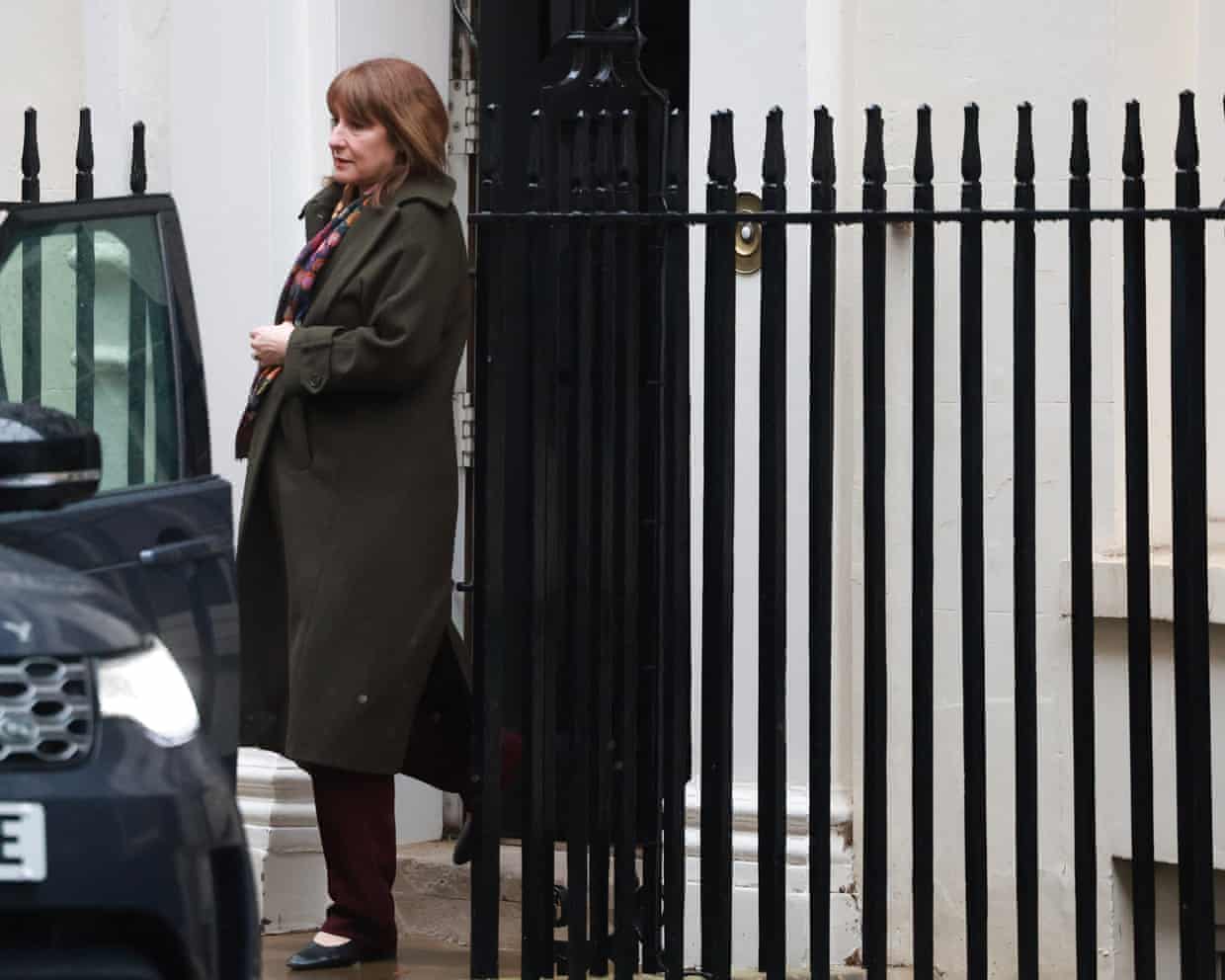
The Treasury has unveiled a support package worth more than £80m a year for pubs and live music venues in England and Wales, in a climbdown that follows a fierce backlash against plans to overhaul business rates.Trade bodies had warned that Rachel Reeves’s changes to business rates, announced at the chancellor’s November budget, would trigger widespread closures and job losses in the hospitality sector, particularly in pubs.On Tuesday, the government announced financial support to mitigate the effect of the rates shake-up, after officials admitted that they had not foreseen its total financial impact.The package, final details of which were still being hammered out on Monday night, is expected to be worth more than £80m a year, over three years, for pubs and gig venues.Dan Tomlinson, the exchequer secretary to the Treasury, said every pub in England and Wales would get 15% off its new business rates bill from 1 April, worth an average of £1,650 for each

Pubs and live music venues to get support after business rates backlash
The Treasury has unveiled a support package worth tens of millions of pounds for pubs and live music venues in England and Wales, in a climbdown that follows a fierce backlash against plans to overhaul business rates.Trade bodies had warned that Rachel Reeves’s changes to business rates, announced at the chancellor’s November budget, would trigger widespread closures and job losses in the hospitality sector, particularly in pubs.On Tuesday, the government announced financial support to mitigate the effect of the rates shake-up, after officials admitted that they had not foreseen its total financial impact.The package, final details of which were still being hammered out on Monday night, is expected to be worth nearly £100m for pubs and gig venues.Dan Tomlinson, the exchequer secretary to the Treasury, said every pub in England and Wales would get 15% off its new business rates bill from 1 April, worth an average of £1,650 for each
How ICE is using facial recognition in Minnesota
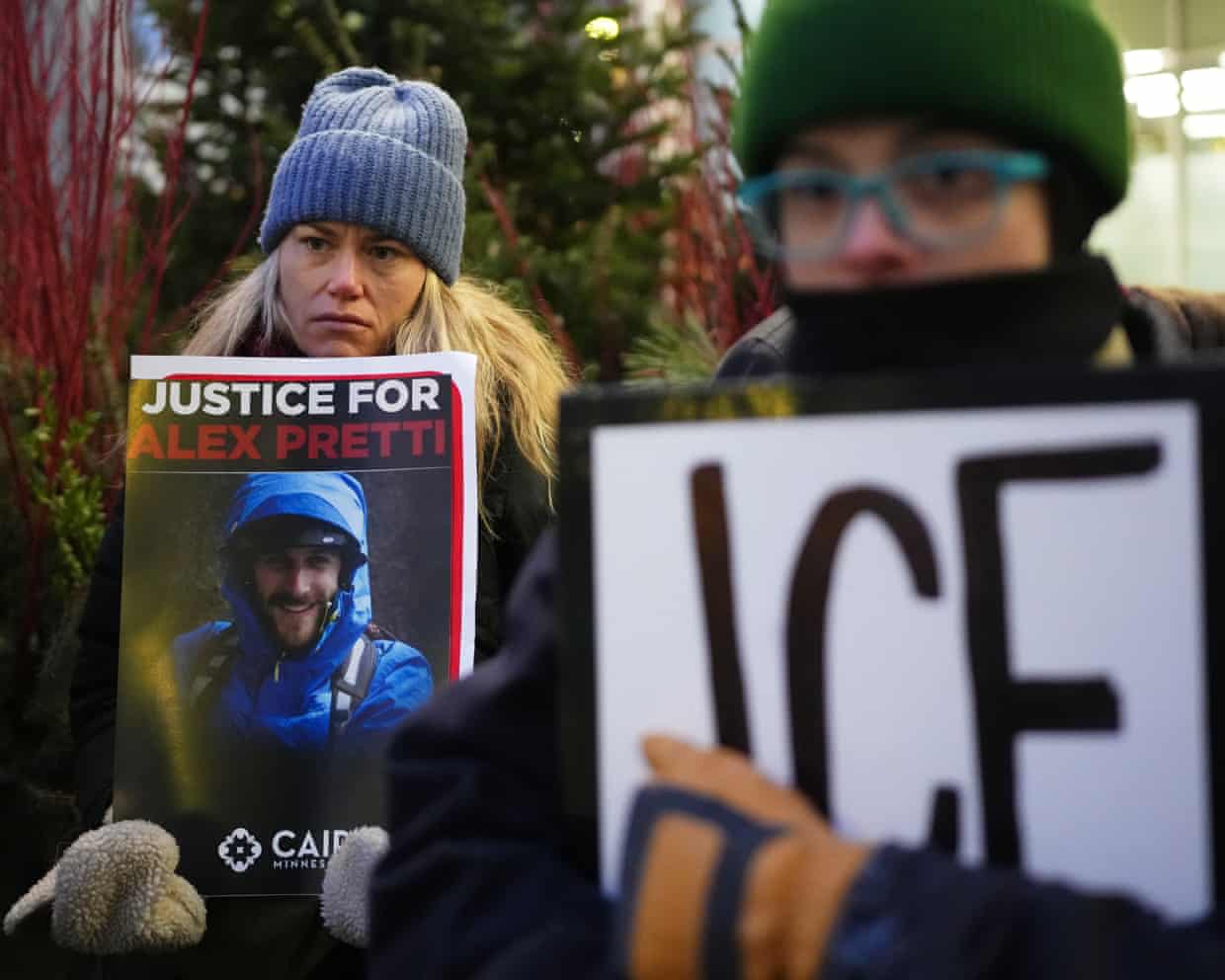
Immigration enforcement agents across the US are increasingly relying on a new smartphone app with facial recognition technology.The app is named Mobile Fortify. Simply pointing a phone’s camera at their intended target and scanning the person’s face allows Mobile Fortify to pull data on an individual from multiple federal and state databases, some of which federal courts have deemed too inaccurate for arrest warrants.The US Department of Homeland Security has used Mobile Fortify to scan faces and fingerprints in the field more than 100,000 times, according to a lawsuit brought by Illinois and Chicago against the federal agency, earlier this month. That’s a drastic shift from immigration enforcement’s earlier use of facial recognition technology, which was otherwise limited largely to investigations and ports of entry and exit, legal experts say
UK ministers accept $1m from Meta amid social media ban consultation
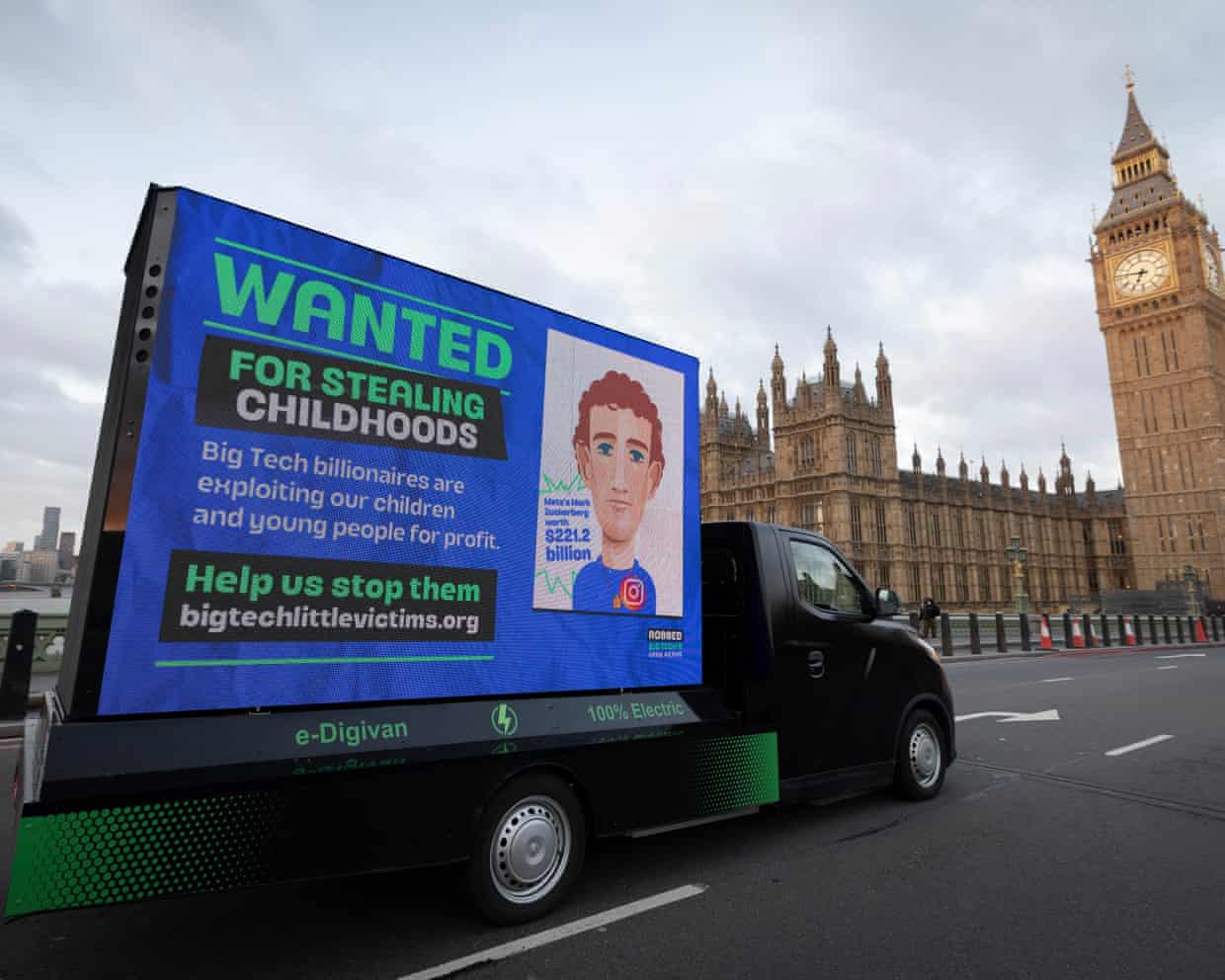
Ministers have accepted $1m (£728,000) from Meta, the US tech and social media company, to build AI systems for defence, national security and transport, sparking warnings about the UK government’s “alarmingly close relationship with Trump-supporting US tech giants”.The money from Mark Zuckerberg’s company will be used to pay experts to “develop cutting-edge AI solutions … to support national security and defence teams”, the Department for Science, Innovation and Technology (DSIT) announced on Tuesday.The money will pay for four British AI experts, coordinated by the government-funded Alan Turing Institute, to “play a pivotal role in rewiring our healthcare, police, transport systems and more”, said Ian Murray, the minister for data and digital government.The move comes after Meta executives had 50 meetings with ministers in the last two years for which data was available, one of the highest levels of direct access of any technology company, a Guardian investigation found.The government is consulting on a ban on social media use by under-16s, which would have a major effect on Meta’s Instagram platform

Sri Lanka v England: third men’s cricket one-day international – live
Gone! Rashid lures Hasaranga into a chip which just isn’t timed. Duckett takes the catch as if he’d never dropped one a few minutes ago.41st over: Sri Lanka 263-7 (Rathnayake 94, Hasaranga 9) Hasaranga fancies this. Facing Curran, he plays himself in for two balls, then strokes a gorgeous off-drive on the up for four, folowed by a pull for four more. Eleven off the over!40th over: Sri Lanka 252-7 (Rathnayake 92, Hasaranga 0) Meanwhile Rathnayake motors on into the 90s
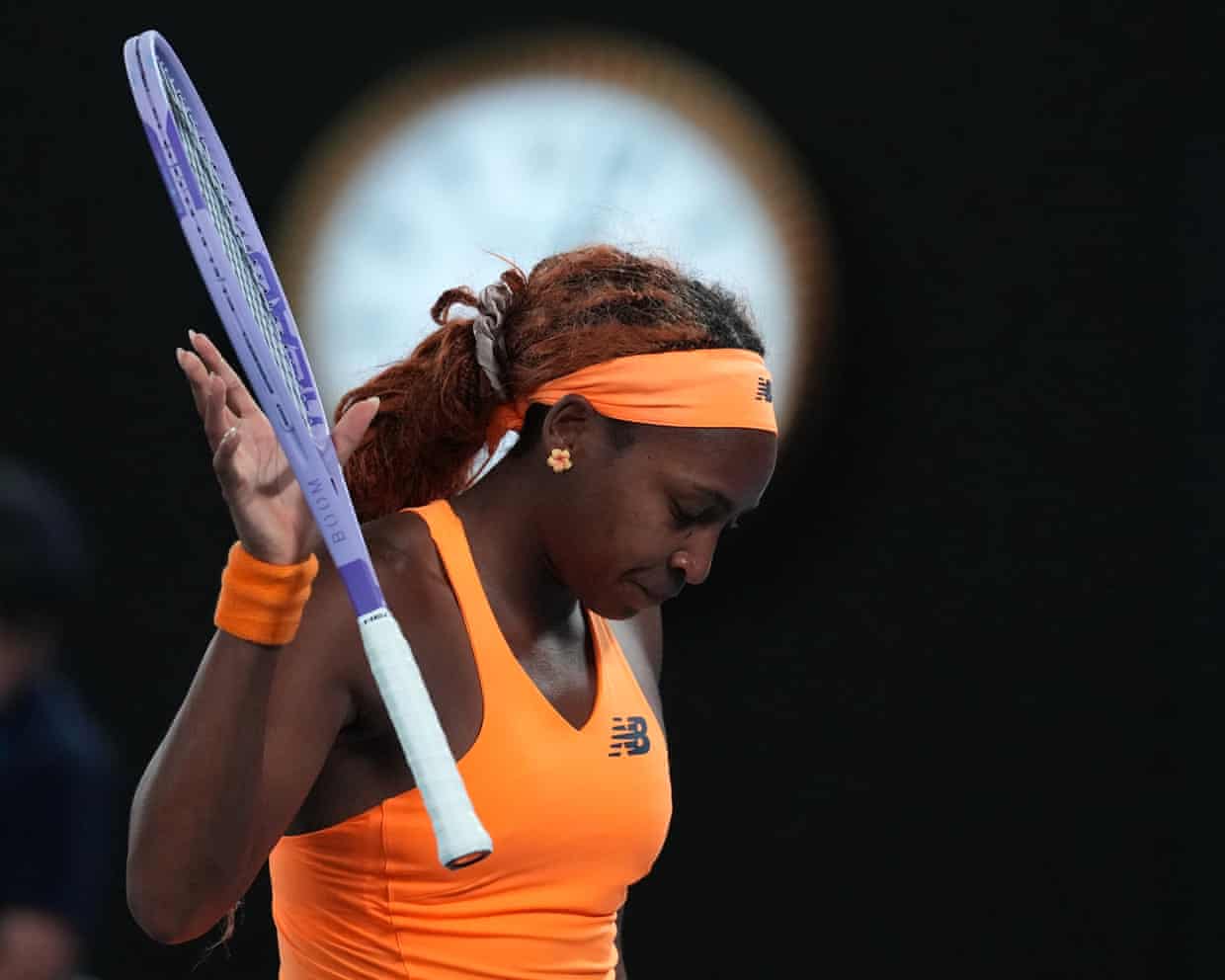
Elina Svitolina humbles Coco Gauff to set up Sabalenka semi in Australian Open
Coco Gauff is known across her sport for her mental toughness and problem-solving abilities, her tendency to grind out victories from unenviable positions. However, down 1-6, 0-3, 0-30 on Tuesday night and sinking quickly, the 21-year-old has rarely looked as helpless on a tennis court as when she expressed her despair to her support team: “She’s outdoing me in everything,” she said.This time, there was no way back for the third seed as Elina Svitolina ended a courageous, focused performance by securing the most significant result of the Australian Open so far, completely dismantling Gauff 6-1, 6-2 to reach her first semi-final in Melbourne.Svitolina, the 12th seed, will next face Aryna Sabalenka, the world No 1 and two-time Australian Open champion. Earlier on Tuesday, Sabalenka dismantled the 29th seed Iva Jovic 6-3, 6-0 to reach her fourth consecutive semi-final here
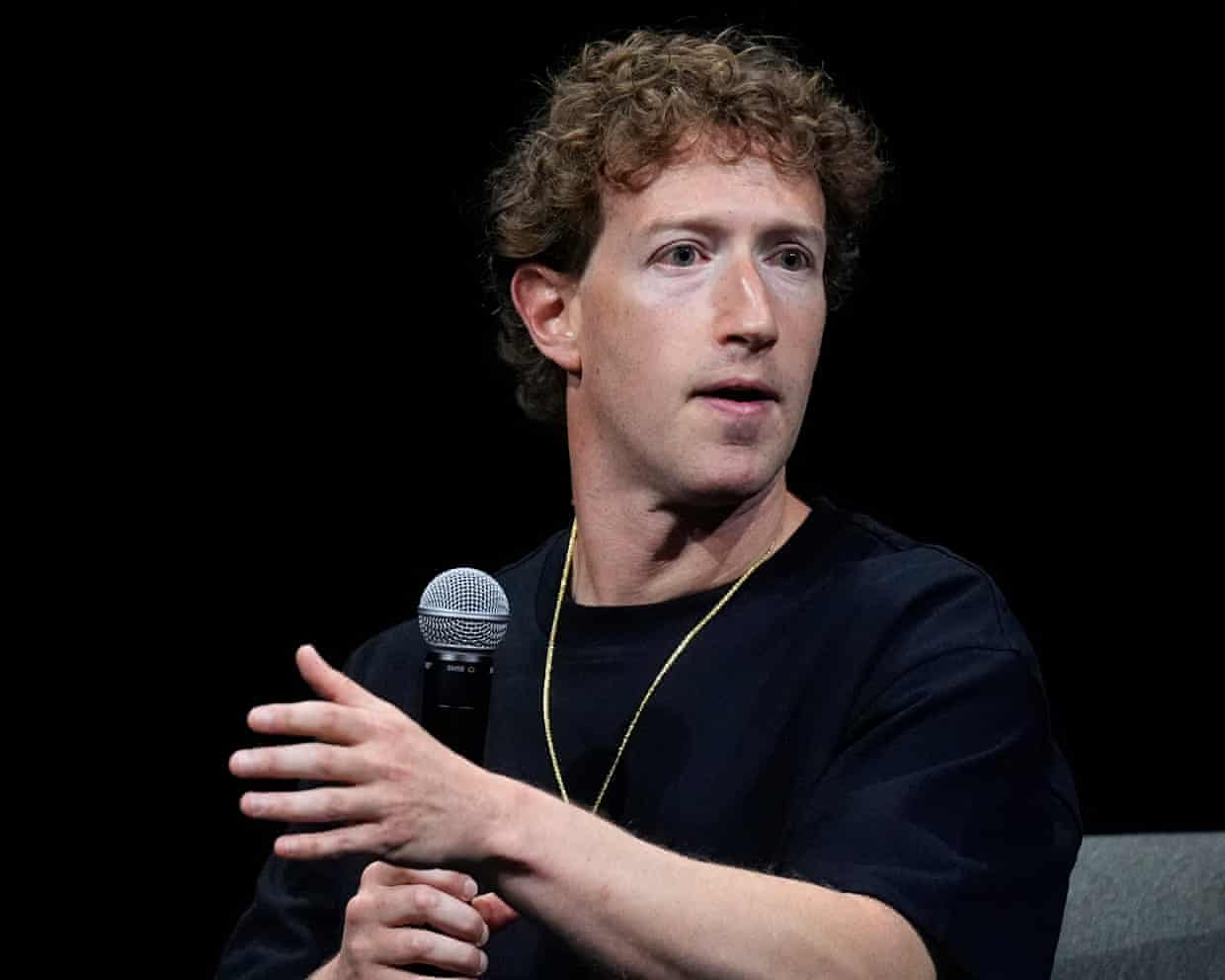
Tech giants head to landmark US trial over social media addiction claims
California governor Gavin Newsom accuses TikTok of suppressing content critical of Trump
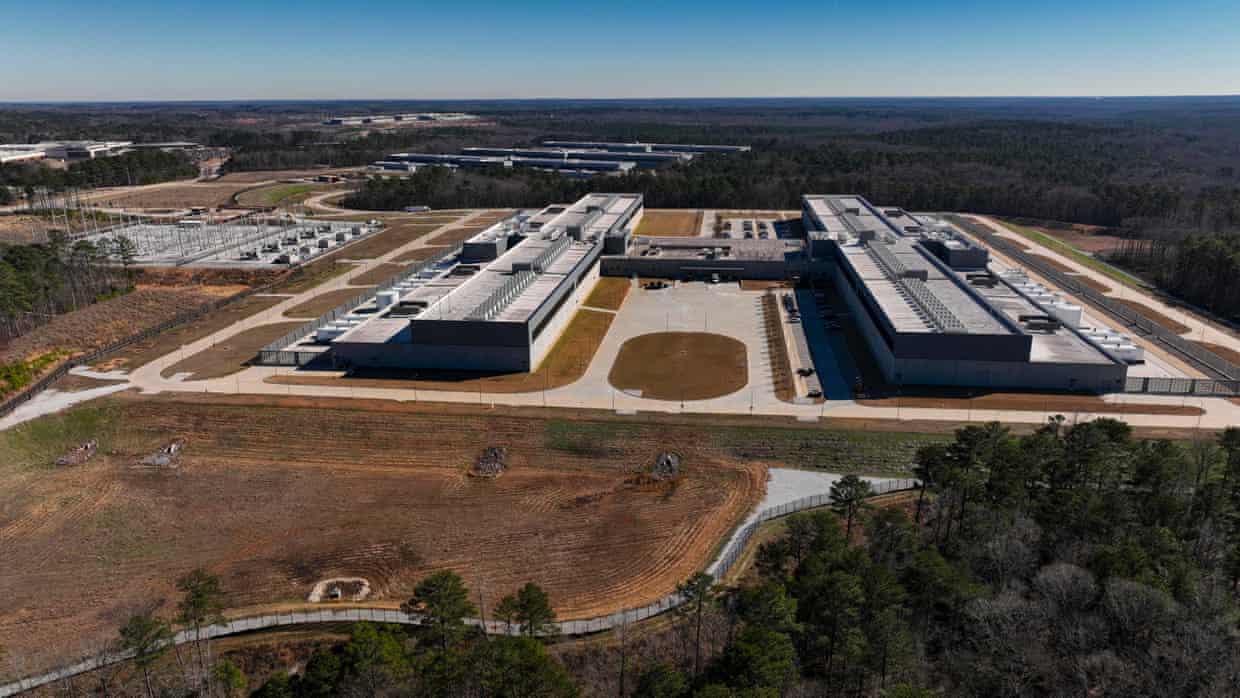
Georgia leads push to ban datacenters used to power America’s AI boom
EU launches inquiry into X over sexually explicit images made by Grok AI
UK maker of AI avatars nearly doubles valuation to $4bn after funding round

AI is hitting UK harder than other big economies, study finds