Stone, parchment or laser-written glass? Scientists find new way to preserve data
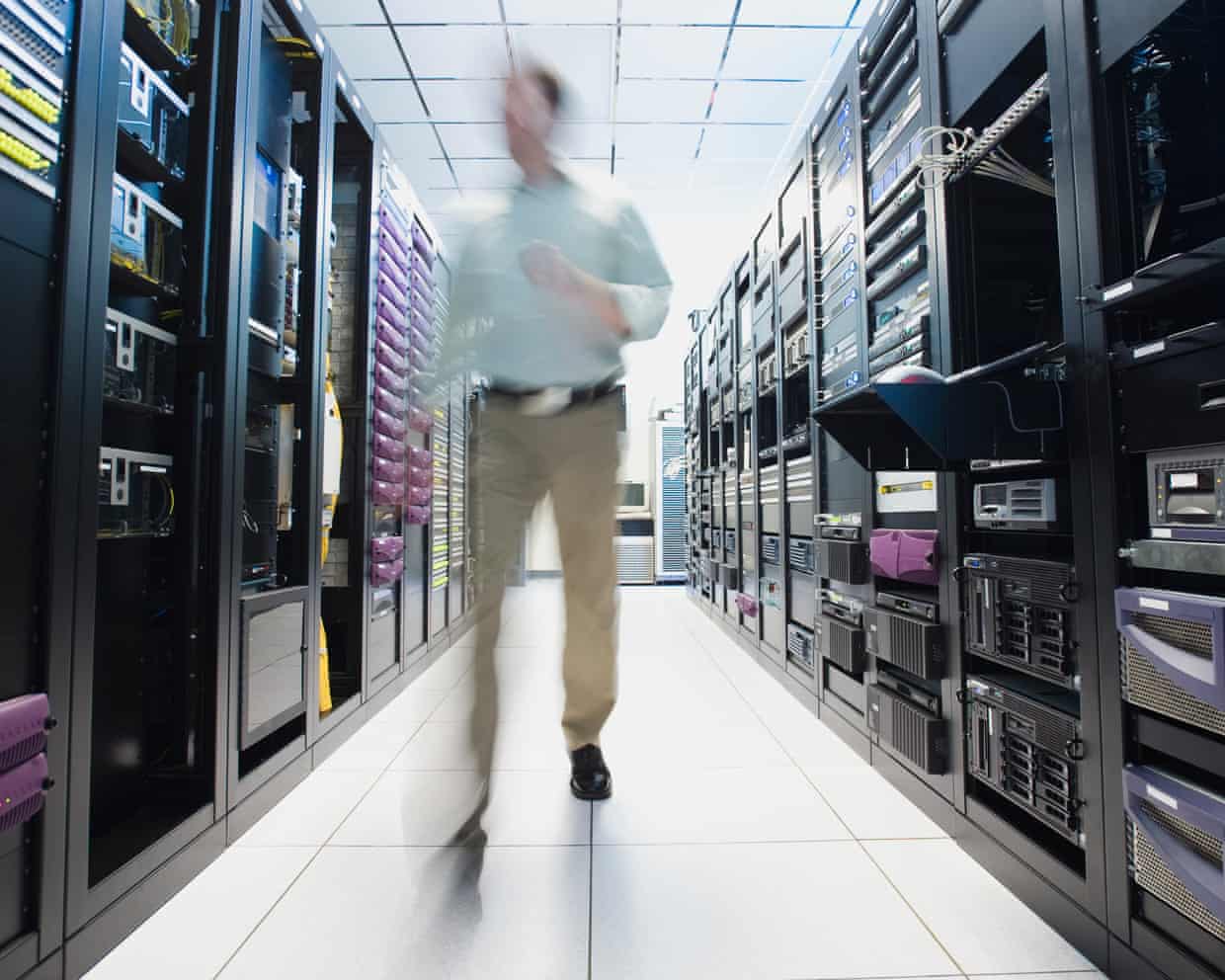
Some cultures used stone, others used parchment.Some even, for a time, used floppy disks.Now scientists have come up with a new way to keep archived data safe that, they say, could endure for millennia: laser-writing in glass.The Guardian’s journalism is independent.We will earn a commission if you buy something through an affiliate link.
Learn more.From personal photos that are kept for a lifetime to business documents, medical information, data for scientific research, national records and heritage data, there is no shortage of information that needs to be preserved for very long periods of time.But there is a problem: current long-term storage of digital media – including in datacentres that underpin the cloud – relies on magnetic tape and hard disks, both of which have limited lifespans.That means repeated cycles of copying on to new tapes and disks are required.Now experts at Microsoft in Cambridge say they have refined a method for long-term data storage based on glass.
“It has incredible durability and incredible longevity.So once the data is safely inside the glass, it’s good for a really long time,” said Richard Black, the research director of Project Silica.Writing in the journal Nature, Black and colleagues report how the system works by turning data – in the form of bits – into groups of symbols, which are then encoded as tiny deformations, or voxels, within a piece of glass using a femtosecond laser.Several hundred layers of these voxels, Black notes, can be made within 2mm of glass.The system uses a single laser pulse to make each voxel, making it highly efficient.
By splitting the laser into four independent beams writing at the same time, the team say the technology can record 65.9m bits per second.The researchers found they could store 4.84TB of data in a 12 sq cm piece of fused silica glass, 2mm deep – about the same amount of information that is held in 2m printed books, an accompanying article by researchers in China notes.The team have also developed a way to create voxels in borosilicate glass, the material used by the Pyrex brand.
“It’s much more commonly available, it’s much cheaper, it’s easier to make manufactured,” said Black.Once written, the voxels can be read by sweeping the glass under an automated microscope with a camera to capture images of each layer.These images are then processed and decoded using a machine learning system.“All steps, including writing, reading and decoding, are fully automated, supporting robust, low-effort operation,” the team write.They add that the data storage system is very stable, with experiments suggesting the deformations created by the laser would last more than 10,000 years at room temperature.
However, Black said the technology was unlikely to end up in a home office, instead noting that the system was intended to be used by big cloud companies.Melissa Terras, professor of digital cultural heritage at the University of Edinburgh, who was not involved in the work, welcomed the study.“Any type of storage that allows for long-term digital information management is exciting, particularly if the media is inert and has the potential to last without special maintenance,” she said.But, she added, potential difficulties remain – including whether the instructions and technology for reading the glass would remain available for future generations.And there is another issue: significant investment would be needed to deploy Silica at scale.
“We are not in an economic moment where industry or politics is choosing to build infrastructure that will support the information needs of future generations,” said Terras.“I’d recommend that if that was a concern, we should pour our scant resources into fixing the aftermath of the cyber-attacks on the British Library, to ensure the information we already have in known formats is stewarded and available to users now and in the future.”
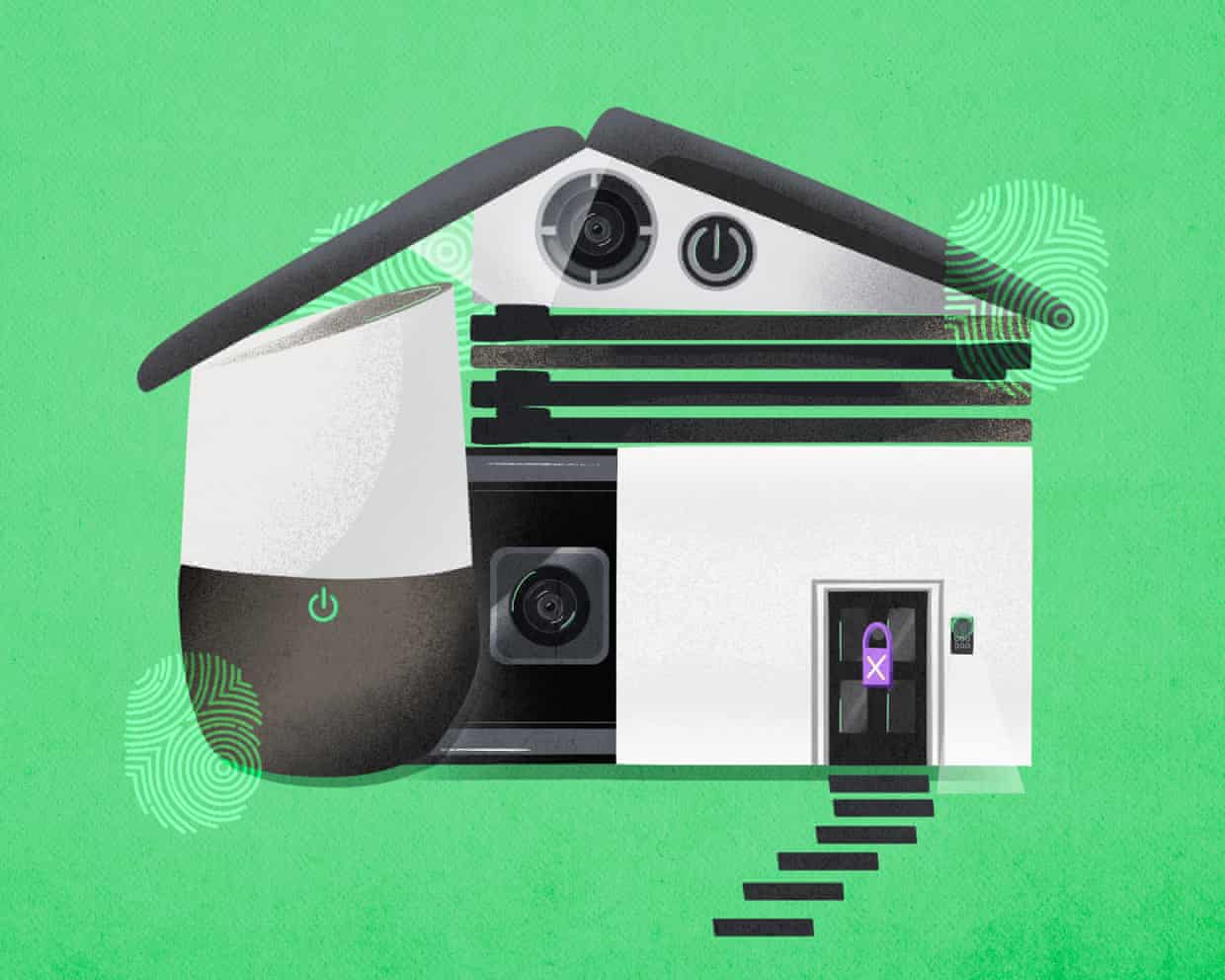
Is it smarter to have a dumb home? ‘We’ve seen clients unable to flush toilets’
When the smart home devices Elly Bailey was expecting in the post never showed up at her Gold Coast home, she was frustrated. As a technology reviewer, these products were crucial for her work.When she eventually found the cause, she had to laugh. It wasn’t a sticky-fingered neighbour or a rogue delivery driver causing her to miss parcels but her smart doorbell – the very thing she’d hoped would prevent missed deliveries, and part of exactly the range of internet-connected devices she was meant to be reviewing.“It’s pretty funny,” says Bailey, 33, who goes by the handle @ellyawesome on TikTok, where she has more than 1

The bogus four-day workweek that AI supposedly ‘frees up’
The front-page headline in a recent Washington Post was breathless: “These companies say AI is key to their four-day workweeks.” The subhead was euphoric: “Some companies are giving workers back more time as artificial intelligence takes over more tasks.”As the Post explained: “more companies may move toward a shortened workweek, several executives and researchers predict, as workers, especially those in younger generations, continue to push for better work-life balance.”Hurray! There’s utopia at the end of the AI rainbow! A better work-life balance!You may have come across similar articles in Fortune magazine and the New York Times. The AI spin brigade is in full force
Hazardous substances found in all headphones tested by ToxFREE project
You wear them at work, you wear them at play, you wear them to relax. You may even get sweaty in them at the gym.But an investigation into headphones has found every single pair tested contained substances hazardous to human health, including chemicals that can cause cancer, neurodevelopmental problems and the feminisation of males.Even products by market-leading brands such as Bose, Panasonic, Samsung and Sennheiser were found to contain harmful chemicals in the formulation of the plastics from which they are made.Campaigners condemned “a market-wide failure” as they called for broad bans on whole classes of endocrine-disrupting chemicals in consumer goods and greater transparency from manufacturers about what is in their products

Tech billionaires fly in for Delhi AI expo as Modi jostles to lead in south
Silicon Valley tech billionaires will land in Delhi this week for an AI summit hosted by India’s prime minister, Narendra Modi, where leaders of the global south will wrestle for control over the fast-developing technology.During the week-long AI Impact Summit, attended by thousands of tech executives, government officials and AI safety experts, tech companies valued at trillions of dollars will rub along with leaders of countries such as Kenya and Indonesia, where average wages dip well below $1,000 a month.Amid a push to speed up AI adoption across the globe, Sundar Pichai, Sam Altman and Dario Amodei, the heads of Google, OpenAI and Anthropic, will all be there. Rishi Sunak and George Osborne, a former British prime minister and a former chancellor, will each be pushing for greater adoption of AI. Sunak has taken jobs for Microsoft and Anthropic and Osborne leads OpenAI’s push to deepen and widen the use of ChatGPT beyond its existing 800 million users

Palantir moves headquarters to Miami amid tech’s growing retreat to Florida
Palantir announced on Tuesday that it has moved its headquarters to Miami from Denver. The data analytics company, criticized for its role in the Trump administration’s immigration crackdown, joins a host of other businesses and billionaires that recently moved to Florida in search of a more business-friendly climate.Palantir’s move across state lines comes after its chair, Peter Thiel, announced on 31 December that he opened a Miami office for his private investment firm. Thiel already has a mansion in Miami Beach. The company, previously headquartered in Palo Alto, announced the move on X but did not provide further details or respond to a request for comment

AI’s workplace revolution is here – and anxiety is rising with it
Hello, and welcome to TechScape. I’m your host, Blake Montgomery, The Guardian’s US tech editor, writing to you while cheering on Team USA in the Winter Olympics.Throughout 2026, The Guardian will publish a series of stories about how artificial intelligence is affecting modern labor. We’re calling it Reworked: A series about what’s at stake as AI disrupts our jobs.Our first story published this morning

‘By the end of the day we’re just knackered’: business booms for UK’s south Asian jewellers as gold prices soar

March cut to UK interest rates more likely after inflation drops to 10-month low; London house prices fall – as it happened
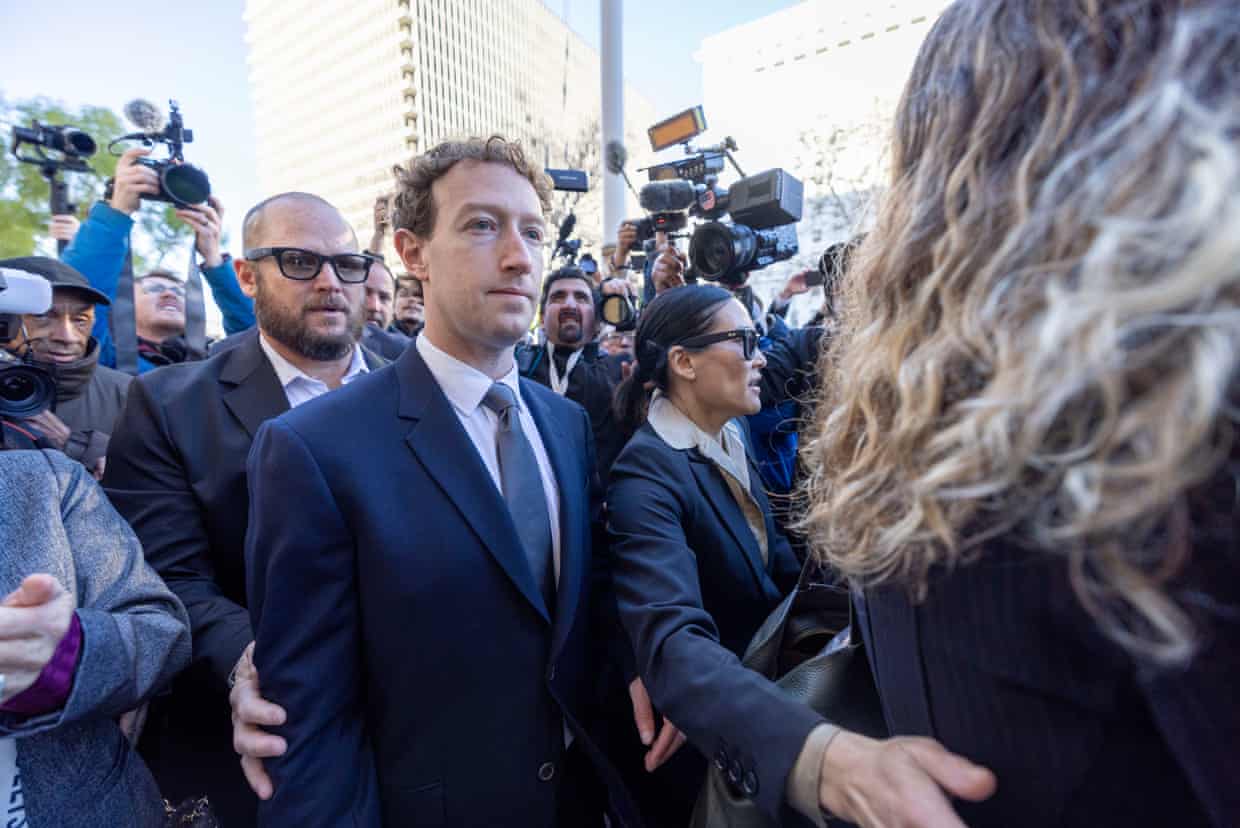
Zuckerberg grilled in landmark social media trial over teen mental health
Stone, parchment or laser-written glass? Scientists find new way to preserve data

Mikaela Shiffrin overcame grief, crashes and her own self-doubt to win slalom gold again

‘Princess Anne thought I was Joe Marler’: Heyes mixed up in case of mistaken identity