Sonos Play review: a great jack-of-all-trades portable speaker for home or away
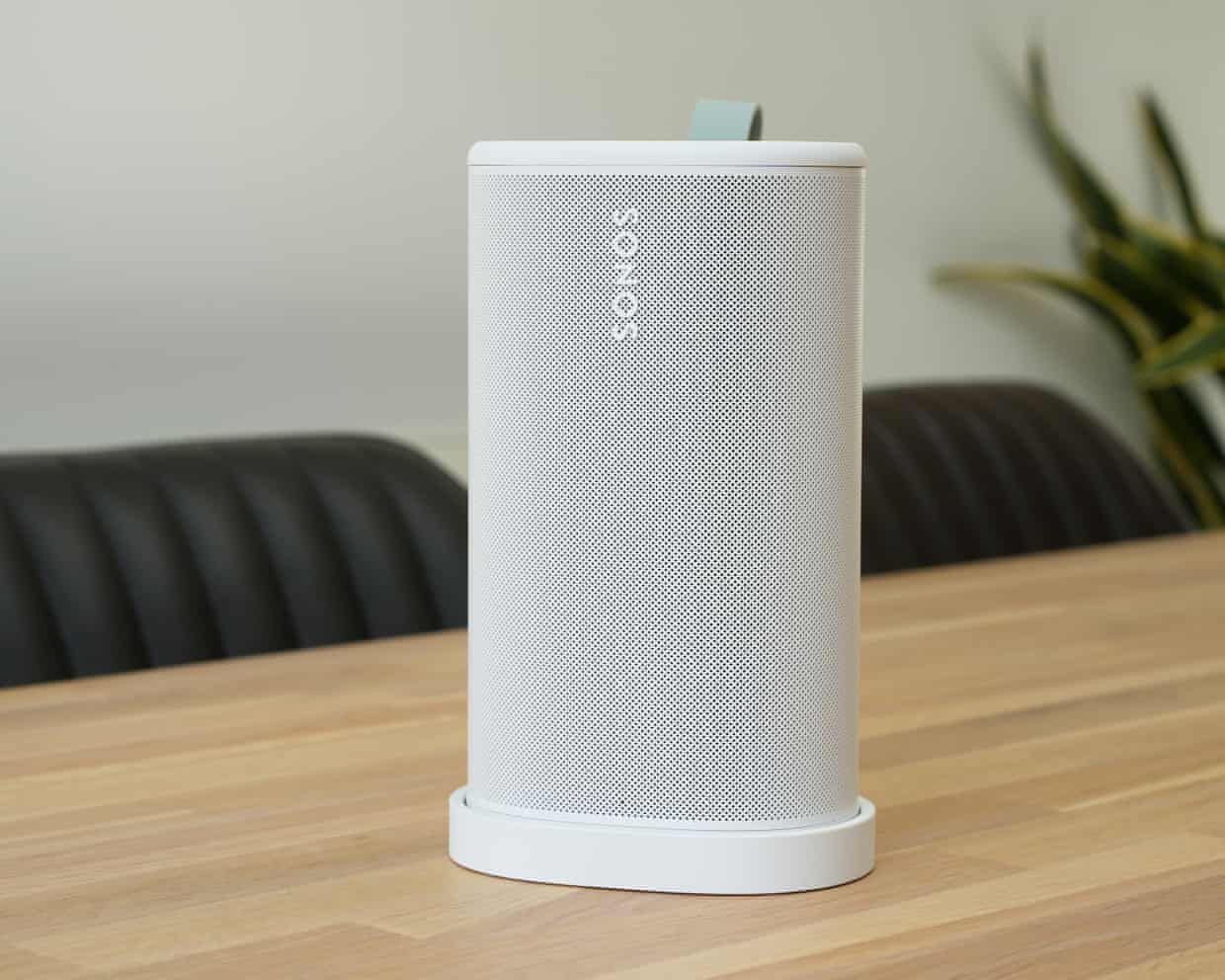
The Play is a new portable wifi and Bluetooth home speaker that packs the best of Sonos into a jack of all trades that is intended to be a reset point in the company’s recovery from its app debacle that lost it faith, favour and a chief executive.The Guardian’s journalism is independent.We will earn a commission if you buy something through an affiliate link.Learn more.It is the first truly new music speaker since Sonos launched its new app in May 2024, which junked fan-favourite features while causing stability and usage problems for new and old customers alike.
The company has spent the best part of two years fixing mistakes, bringing back core features and ensuring the system actually works.Now it can get back to doing what it does best: excellent, expansive wifi speakers that can play music from just about any source in just about any place, and that get better when linked with others on the Sonos system.The Play costs £299 (€349/$299/A$499) and certainly isn’t your average portable speaker.Sitting above the can-sized £179 Roam 2 in price and heft, the latest Sonos is designed to be a speaker for all occasions, just as happy to live as your go-to music box at home on wifi as it is as a Bluetooth speaker on the road.It is best thought of as an evolution of the much larger Move 2, taking its good bits and merging them with brand’s standard speaker, the Era 100, while shrinking in size and weight.
The result is a more compact bookshelf speaker that can punch far beyond its size while being light and rugged enough to take on trips to the garden, beach or park.Despite looking the part in the home, the top and bottom of the oval-shaped speaker are rubberised to absorb impact.The IP67 water resistance – similar to many smartphones – means it can survive being submerged up to 1-metre depths without issue.It’s a relatively rugged speaker that doesn’t look it.At 1.
3kg, the Play isn’t light by any means, but it is less half the weight of the Move 2.The weight means you are unlikely to want to pack it in a bag for a hike or a flight, so the Play is best suited to being moved around the home or garden, or taken to a friend’s home via car.The Play’s biggest strength is its integration with the rest of Sonos’s ecosystem.That means it connects to your router via wifi 6 to directly stream music from the internet controlled via the Sonos app, Spotify Connect or Apple AirPlay 2.It can be grouped with other Sonos speakers for multi-room audio, supports practically all streaming music services, and two Plays can be linked to create a stereo pair.
But it also has Bluetooth 5.3 for use away from home, streaming music from your phone or another player.Its party trick is it can connect to other Play or Move 2 speakers to create a group of up to four units all playing from the same Bluetooth source.The Play is also compatible with Sonos’s analogue line-in or combo ethernet adaptors.The Play has a large 35Wh battery, which can be replaced easily at home.
It lasts up to 24 hours on Bluetooth, and more than a day’s listening at home on wifi when cranked up to 60%.The battery charges via the USB-C port or the included charging base, allowing you to simply pop it back in place to always keep it topped up.Leaving the speaker on the charging base does not affect the battery’s lifespan.But the Play does not ship with a charger.It requires an 18W or greater USB-C power adaptor, which needs to be 45W to support fast charging.
While most modern phone or laptop chargers will work, you really need a dedicated one to make proper use of the base,Dimensions: 192,3 x 112,5 x 76,7mmWeigh: 1.
3kgConnectivity: wifi 6, Bluetooth 5.3 (SBC/AAC), USB-C, AirPlay 2, Spotify ConnectBattery: 35Wh (24 hours playback), 120 hours standby, three hours to chargeCharging: included dock or USB-C 18-45WWater resistance: IP67 (1 metre for 30 minutes)What the Play lacks in lightweight portability it makes up for in sound.It has one woofer speaker facing straight out and two tweeters set at an angle, which creates a nice and wide sound that stops a little short of real stereo separation, unless you sit right in the sweet spot in the middle.You can create a stereo pair using two Plays boosting overall volume and power, while a single Play from a stereo pair can still be used by simply turning off the other one, so you can take it somewhere else in the house.On its own, the Play sounds great with excellent separation of tones, good detail in the highs and nicely defined mids with plenty of punch.
Vocals sound particularly good.It produces bass full of power, but struggles to hit really deep notes, falling short of the Move 2.It is a very enjoyable listen, and sounds great out of the box, but the Sonos app has an equaliser for adjustments.The automatic Trueplay tuning system works well, optimising the sound as you move the speaker between different size and styles of room.The Play can fill most spaces with sound, but the audio quality starts to decline above 80% volume, losing low-end power.
The speaker sounds best at 60% volume, which will be enough for most listening.But a single Play will struggle as a portable party speaker as it isn’t quite loud enough.A lot went wrong for the Sonos app redesign.While the interface remains similar to the app from 2024, it now has the core features that were missed most, including the ability to set wake-up alarms, local music library playback and playlist editing.It is also now a lot more responsive and problems plaguing the underlying system, including pairing speakers, have been greatly reduced.
For the most part, it just works again.As a one-stop shop for all your streaming services, including music, podcasts and radio, it works well with unified search, the ability to save Sonos playlists and service specific playlists, such as your favourite from Spotify.Setting up speakers, customising the sound, controlling the volume, grouping speakers, and knowing where you’re about to play music if you have multiple speakers is much improved.But the app still has limitations, such as not being able to reorder tracks in playlists by date added, artist or other filters, like you might in Spotify or other music apps.And a number of features don’t follow modern logic used by other apps, with simple things such as deleting playlists buried under multiple menus.
Overall, it feels like Sonos has mostly put its app debacle behind it and is back to a solid base, though regaining user trust will take more time.Sonos offers a minimum of five years’ software support after it stops selling a product but has a track record of much longer, including bug and security fixes for its legacy devices.The battery should last for 750 full charge cycles and can be replaced at home costing £49.The speaker contains 26% renewable plastic, recycled aluminium and steel.Sonos offers trade-in and product recycling, and breaks down the speaker’s environmental impact in its report.
The Sonos Play costs £299 (€349/$299/A$499)For comparison, the Roam 2 costs £179, the Move 2 costs £449, the Era 100 costs £199 and the Era 300 costs £449.The Bluetooth JBL Charge 6 costs £129.99 and the Ultimate Ears Epicboom costs £329.99.The Play is a return to form for Sonos: a jack of all trades that does as well at home as a compact bookshelf speaker as it does out in the garden streaming Bluetooth music from your phone.
It could be the only speaker you need.While looking the part on a shelf on its charging dock, it is also rugged enough not to worry about on the road.It lasts a long time on a charge and the battery can be replaced in five years or so, ensuring the speaker’s useful life isn’t limited by battery chemistry.It stops a little short of being a true master of it all, lacking a bit of low-end power at higher volumes compared with Sonos’s similar Era 100 plugged-in speaker, which is also one-third cheaper.And it is a bit large and heavy to go on hikes with, while not being quite loud enough for a booming Bluetooth party speaker.
You can certainly get a better Bluetooth speaker for the money.But for those already invested in the system looking for a high quality, truly adaptable speaker, the Play is the best of Sonos working as one.Pros: wifi 6 and Bluetooth 5.3, great sound, long battery life, IP67 water resistance, durable, design that fits home and away, wide support for music services, long software support life, can be paired up, good optional voice control, replaceable battery.Cons: expensive, no spatial audio support/Dolby Atmos, cannot be used as part of a home cinema setup, heavy for a portable speaker, no charger in the box.
Starmer says it ‘beggars belief’ he wasn’t told about Mandelson vetting failure as he faces down the Commons – UK politics as it happened
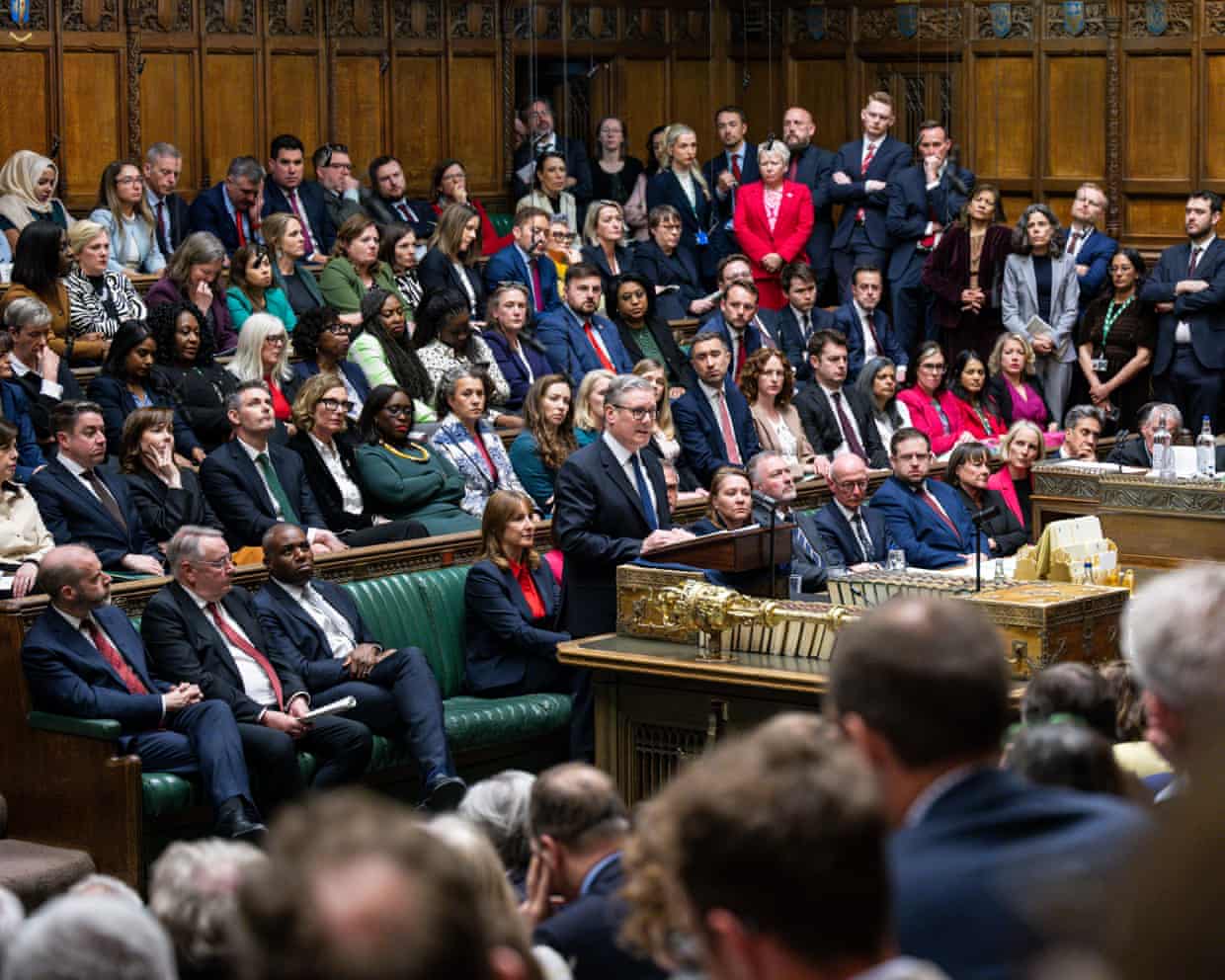
It wasn’t much of a win, but as Keir Starmer heads back to Downing Street he will probably count that as a sort of success. Labour MPs did not turn on him; there was no one on his side calling for his resignation, and those who did speak out were mostly from the Corbynite left (whose views are discounted by No 10 anyway), and who were more keen to aim their fire at Morgan McSweeney and Peter Mandelson.If Kemi Badenoch thought there was more mileage in this, she could have tabled a no confidence motion on this which would have to be debated tomorrow, but she didn’t. She can be brutal in the Commons, but her speech today did not cause the PM any difficulties.Last week she was saying he was clearly lying

What Starmer said, and didn’t say, in the Commons about the Mandelson saga
Keir Starmer has laid out a detailed timeline of events leading up to Peter Mandelson being refused security vetting and how the message was not passed to No 10. Here’s what his statement did tell us – and what it was more vague on.double quotation markI will now set out a full timeline of the events in the Peter Mandelson process.”In a statement that leaned heavily on Starmer’s time as a lawyer, and was framed almost as a prosecution opening case against the Foreign Office and its now-ousted head civil servant, Olly Robbins, the PM set out events from 18 December 2024, when the decision to appoint Mandelson was confirmed, to last Tuesday, when he finally learned that security vetting had been initially refused.This included moments when, Starmer argued, he or others should have been told about Mandelson initially being refused security vetting: the initial refusal; when the foreign affairs select committee was assured that normal procedures were followed; and when Starmer began a wider review into vetting this year

Starmer the Incurious asks no questions and sees no Mandy-shaped red flags
Things could be worse. The prime minister can still catch a break. Some had called Monday’s Commons statement Keir Starmer’s judgment day. But that was a category error. Many Labour MPs had long since made up their minds
Is Richard Tice’s picture AI-manipulated? Here are five giveaways
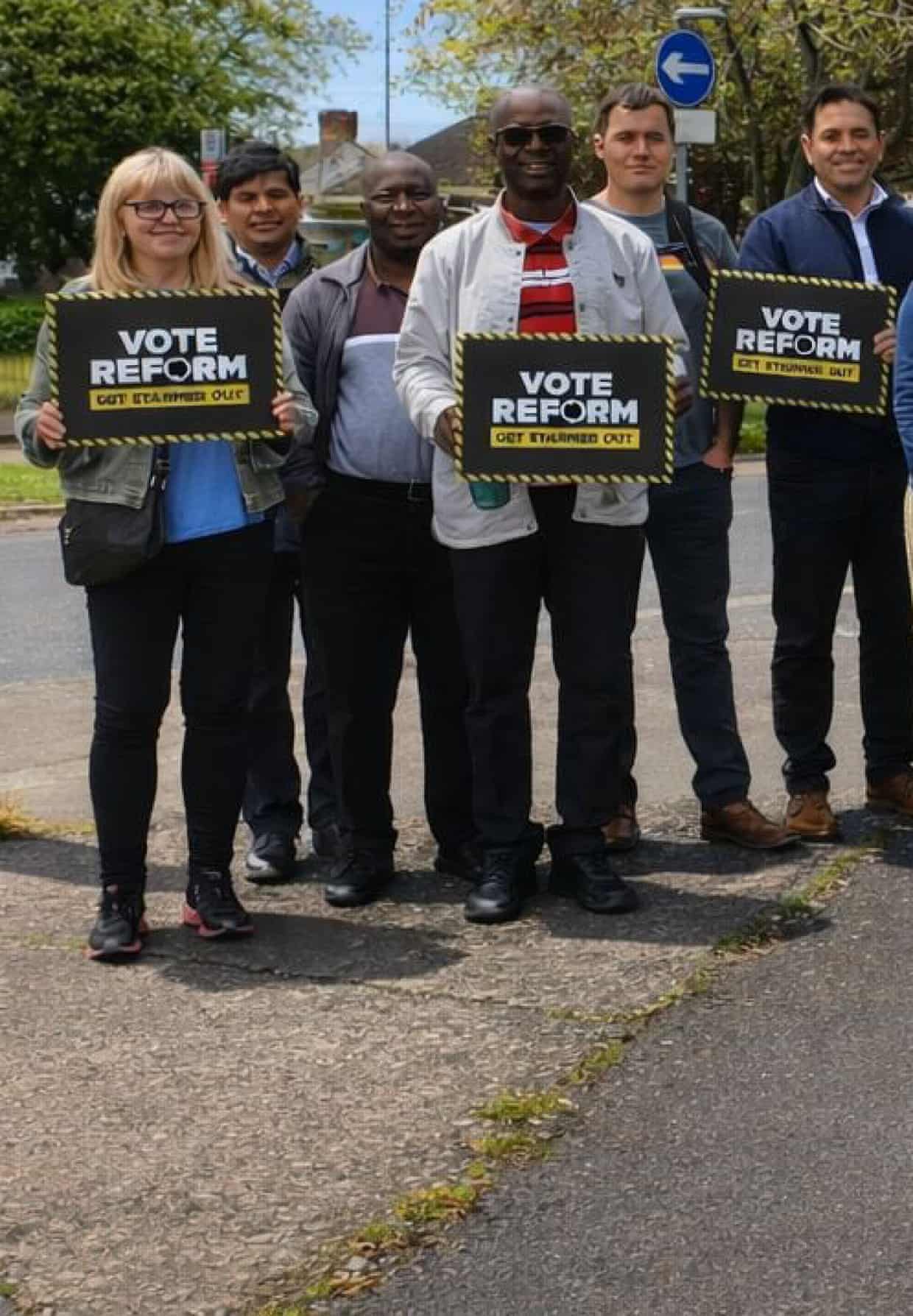
After Richard Tice posted a picture of an apparent Reform campaign event on Sunday, experts and social media detectives took a closer look and concluded from a variety of telltale signs that the image had either been edited or generated by artificial intelligence. Here are some of the elements that critics called into question.One woman has six fingers on one hand and extra long ones on the other. The man in the beige jacket has three extremely long fingers which look like sausages. AI often gets fingers wrong

Mandelson vetting saga reveals flaws in Starmer’s judgment, not process | Letters
The emerging account of Peter Mandelson’s appointment as US ambassador raises a question not of process, but of judgment (Revealed: Mandelson failed vetting but Foreign Office overruled decision, 16 April). The prime minister was warned repeatedly. Briefings in November and December 2024 flagged reputational risks, including well-documented associations and potential exposure if the appointment went wrong. Keir Starmer’s national security adviser raised concerns directly. Yet the appointment proceeded at pace

Starmer orders inquiry into any security concerns over Mandelson’s tenure in US
Keir Starmer has ordered an investigation into any security concerns relating to Peter Mandelson’s tenure as UK ambassador to the US, as he set out a series of practical measures in the wake of the controversy over Mandelson’s vetting.Setting out to the Commons what he called the “frankly staggering” way that Mandelson was appointed to the job despite initially being turned down for security vetting, Starmer said he had ordered a full review into the vetting system.He went on: “Separately, I have asked the government security group in the Cabinet Office to look at any security concerns raised during Peter Mandelson’s tenure.”The prime minister also set out how rules had been changed to make sure that, as happened with Mandelson, someone could not be publicly named as an ambassadorial appointee before they were vetted, even for a political choice like Mandelson.“I want to make clear to the house that for a direct ministerial appointment it was usual for security vetting to happen after the appointment, but before starting in post
‘It’s soul-destroying’: struggle to house vulnerable children can leave breaking law as only option

‘A white man’s fantasy’: if we want to rebuild social cohesion, we need to acknowledge where it all started to unravel

Are you a woman who makes life easier for everyone else? Beware – you could endanger your health | Emma Beddington

‘Labels protect us’: Olivia Nervo wants reproductive coercion to be a standalone offence – she is not alone

Centrepoint to cut ties with Sharon Osbourne after she backs Tommy Robinson rally

Tell us: have you ever been concerned about the behaviour of a child you know?