‘It’s soul-destroying’: struggle to house vulnerable children can leave breaking law as only option

The sinking feeling is familiar now, says Anna*.It’s Friday, the clock is ticking, and there is a vulnerable child in her care for whom – despite hitting the phones for days – she cannot find a place.Once the foster carers have been exhausted, and the registered private children’s homes begged, there is nothing for it but to look elsewhere.“It always seems to be on a Friday that you are struggling to place a child,” says the social worker.“They need somewhere safe tonight.
You’re calling everywhere, already knowing the answer will be, ‘we haven’t got any spaces’.And then you’re left with what’s left of a hotel, a caravan … somewhere you know isn’t right, but you don’t have a choice.”A report has revealed that the number of children being placed in “emergency” illegal settings alongside agency staff – sometimes houses, sometimes rapidly rented Airbnbs or holiday camps – has increased by more than 370% in the last five years.In 2020 it was 144 children – by 2025 it was 680.Another former social worker told the Guardian that the youngest child she had placed in an unregistered, and hence illegal, setting was five, and on one occasion the only available accommodation she could find was a barge.
“You are constantly having to do the wrong thing because that is the least worst option, and that is just soul-destroying,” she says,“Social workers are being forced to break the law because they have no other choice,”These settings are not registered – as they should be by law – with Ofsted,They are meant to be temporary, but a recent report by the children’s commissioner found the average placement lasted six months – one child had been in a “holiday camp/activity centre” for almost nine months,The children being put in these homes are some of the most at-risk children in England.
They are more likely to be involved with gangs, county lines, serious violence, exploitation, or have experienced severe mental health crises, according to the report by policy analysts Public First, for the charity Commonweal Housing.They are young people such as Nonita Grabovskyte, who was struck by a train on 28 December 2023, two weeks after turning 18.An inquest into her death heard that, before she took her own life, she was put in unregistered privately run supported accommodation.The teenager was autistic and had a history of mental ill health, disordered eating and self-harm.The operations director of the home she was placed in had no social work qualification, no training in autism and last attended safeguarding training in 2021 or 2022.
Or like Alice*, an at-risk 15-year-old, who, in 2024, was moved 300 miles from her home to escape sexual exploitation.A court heard she was plied with alcohol and sexually assaulted by two ex-soldiers who had been paid by a private firm to care for her in an unregistered house, LBC and the Bureau of Investigative Journalism reported.So, why are some of the most at-risk children in England being placed in illegal settings? An increasing population of looked-after children, coupled with a shrinking supply in settings that can cater for complex cases, is part of the problem.The number of looked-after children has risen by nearly 20% over the past decade, with about 83,600 children now looked after by the state.There are now 14,840 more children in care than there were in 2014, but 2,165 fewer fostering households, according to the Institute for Government.
Some experts blamed the shortage of available places for children with complex needs – in foster homes and residential homes – on the dominance of the private sector in child social care,“We as the local authority have a legal obligation to look after children in our care,” says one social worker,“But there is no legal obligation on private providers to accept them,” The report reflects this, stating that some registered settings are anxious that taking “high-risk” children could damage their Ofsted rating,While Wales has legislated to eliminate profit-making from children’s social care services, and Scotland is trying to limit for-profit operators, in England more than 80% of child residential homes are for profit.
Recent analysis for the Guardian found that nearly a quarter of foster places in England are provided by private equity-backed firms,In 2022, the Competition and Markets Authority warned that some children’s home owners were making excessive profits while carrying too much debt – exposing children and councils to unacceptable risks,One former service manager said a critical shortage of fostering places – half of which are run by private providers – was a key problem,“They’ve ruined it for children,” they say,“You will be over a barrel.
They’ll say, ‘Yeah, I got a foster carer, how much are you prepared to pay?’”A private foster care provider – who said unregulated settings gave a bad name to all companies in the sector, including those acting legally and ethically – told the Guardian that responsible providers did sometimes turn down young people with complex needs because it was “more important to have young people who we can care for rather than having young people to fill beds”,Costs have also spiralled,Councils’ spending on child residential care has almost doubled in five years, according to the National Audit Office, totalling £3,1bn in 2023-24, with each child costing an average of £318,400 a year,One interviewee told the report that the cost of placing a child in an illegal care setting could reach as high as £30,000 or £40,000 a week, and that £20,000 “was not an unusual figure”.
One former director of children’s services said the majority of illegal placements were “low frequency, high risk, high cost”, adding that local authorities were hampered by a “quasi market with overdemand and undersupply” where the state was the only customer.“No DCS lightly makes the decision to do something that is unlawful,” he says.“But on occasion we have no solution – the alternative is we walk away, we fail in our legal duty and we leave that child on the street.”Government minister Josh MacAlister, who led an independent review of child social care and is now in charge of overhauling the system, has vowed to crack down on profiteering.The government insists the children’s wellbeing and schools bill will give Ofsted stronger powers to stop unregulated providers, while a £88m recruitment drive aims to generate 10,000 new foster places.
But government figures also quietly acknowledge they cannot, in the short term, stop profit in the sector: there would simply be nowhere for children to go.The government has consulted on setting up a national register of foster carers, which “would be an immediate and practical solution”, says Sarah Thomas, chief executive of the Fostering Network.“Not everyone wants this level of transparency, but in our view a register should always best serve the interests of the children,” she says.For now there are no easy fixes.Anna says many of her colleagues have left child social work because they felt undervalued and unsupported.
“The hardest part is it doesn’t have to be this way – a lot of it could be avoided if carers and staff were properly supported and valued,” she says.“But they aren’t.So children pay the price.”* Names have been changed

Finance leaders warn over Mythos as UK banks prepare to use powerful Anthropic AI tool
British banks will be given access in the next week to a powerful AI tool that was deemed too dangerous to be released to the public, as a series of senior finance figures warned over its impact.Anthropic, which has so far limited the release of the new model to a small clutch of primarily US businesses, including Amazon, Apple and Microsoft, said it would expand that to UK financial institutions.“That is in the very near term, in the next week,” Pip White, Anthropic’s head of UK, Ireland and northern Europe operations, said in a Bloomberg TV interview. “As you would expect, the engagement I have had from UK CEOs in the last week has been significant.”Anthropic, which is the company behind the Claude family of AI tools, has said that its latest model, Mythos, poses an unprecedented risk because of its ability to expose flaws in IT systems
US tech firms successfully lobbied EU to keep datacentre emissions secret
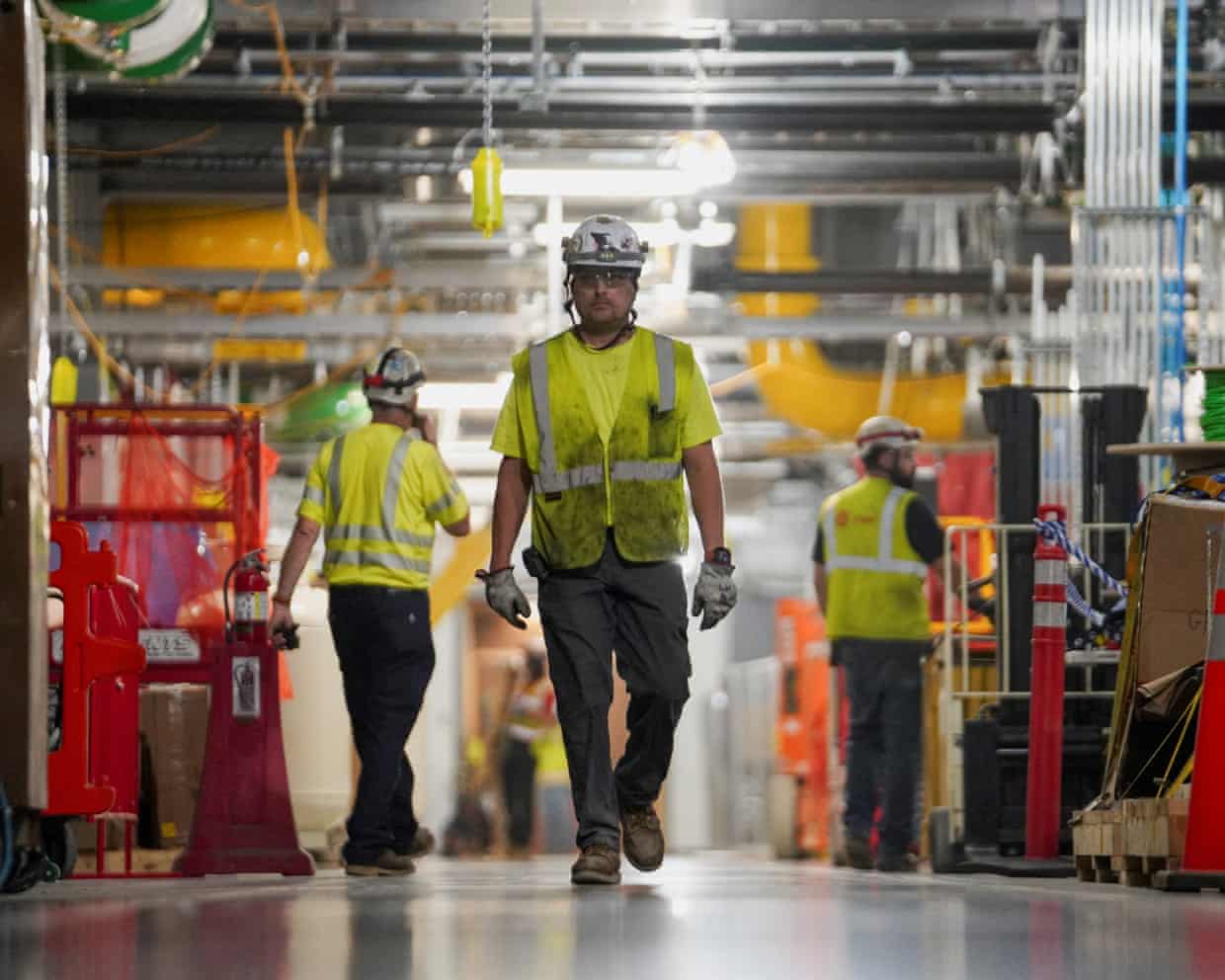
Microsoft and other US tech companies successfully lobbied the EU to hide the environmental toll of their datacentres, an investigation has found, with demands to block a database of green metrics from public view written almost word for word into EU rules.The secrecy provision, which the European Commission added to its proposal almost verbatim after industry lobbying in 2024, hinders scrutiny of the pollution that individual datacentres emit. It leaves researchers with just national-level summaries of their energy footprints.The rise of AI chatbots has spurred a boom in the construction of chip-filled warehouses with a hunger for power that is being met, in part, by burning fossil gas. Legal scholars warn the blanket confidentiality clause may fall foul of EU transparency rules and the Aarhus convention on public access to environmental information
Liz Kendall urges UK public to embrace AI as government makes first £500m fund investment
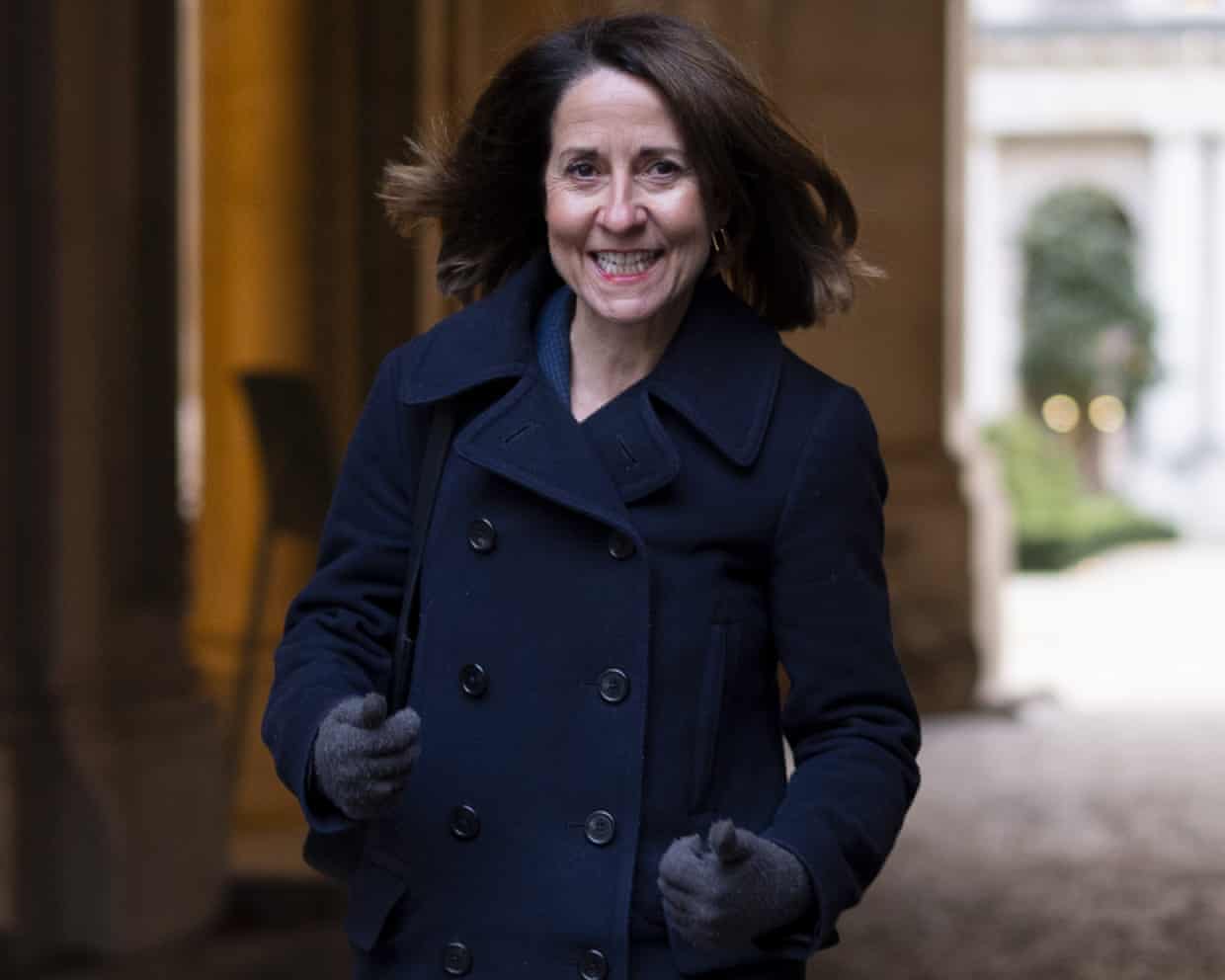
The UK technology secretary has urged the country to “make AI work for Britain”, brushing off fears about its impact on jobs and cybersecurity as the government announced its first investment under a £500m sovereign AI fund. Liz Kendall said the UK had to “seize” the opportunity offered by AI despite concerns underlined this month when US startup Anthropic revealed it had developed an AI model that posed a potentially significant cyber threat. Asked how the government makes the case for embracing a technology that could disrupt jobs and now cybersecurity, Kendall said: “We have to seize this to make it work, for Britain, for our jobs, for solving the biggest challenges we face as a world.”Speaking on Thursday as the government unveiled its first investment in a UK company as part of a £500m sovereign AI fund, Kendall acknowledged “people are worried about the risks and what it means for their jobs”, but AI entrepreneurs also believed they can “make it work … they can create jobs”.In January Kendall admitted “some jobs will go” as AI automates certain tasks and roles, but it would also create new employment opportunities

‘How do I end a call?’: the elderly Japanese people determined to master smartphones
It’s not only young people whose gaze is fixed on tiny screens. But for these users in Tokyo, clicking and scrolling is anything but second nature.“I can’t deal with all of the apps that jump out at me,” says one. “How do I know if I’ve definitely ended a call?” asks another.They are common concerns among the four women and one man attending a beginner’s smartphone class at a public facility for older residents in Nerima in the Japanese capital’s north-west suburbs

Labour and Lib Dem MPs demand ‘shameful’ Palantir NHS contract be scrapped
MPs have queued up to demand the government scraps its £330m NHS contract with the spy-tech company Palantir, calling it “dreadful” and “shameful” in a debate on Thursday, after which the government said it was “no fan” of the US company’s politics.Labour and Liberal Democrat MPs led the calls for Palantir, which also works for Donald Trump’s ICE immigration crackdown and the Israeli military, to be removed as a supplier to the NHS federated data platform (FDP), with one Labour backbencher, Samantha Niblett, questioning whether it could be “trusted as a custodian of the intimate health records of tens of millions of British citizens”.The Lib Dem MP Luke Taylor, who called the deal “shameful”, said: “Palantir and Peter Thiel must have their hands ripped off of our NHS before it is too late.”Thiel, a Trump-supporting tech billionaire, founded the company and has previously said that democracy and freedom are incompatible.In response to the MPs who spoke in a Westminster Hall debate, the government confirmed it would consider whether to continue with the deal when a break clause is due in spring 2027, although £210m of the £330m has already been spent

Man used AI to make false statements to shut down London nightclub, police say
A businessman has pleaded guilty to making false statements in order to shut down a nightclub, which police believe were generated using AI.A Metropolitan police source said the use of AI to generate letters by complainants who do not exist is a growing issue.Aldo d’Aponte, 47, the CEO of Arbitrage Group Properties, pleaded guilty to writing two letters, supposedly by his neighbours, objecting to the reopening of Heaven nightclub, which temporarily closed after a rape allegation against one of its security guards.D’Aponte was given a 12-month conditional discharge and ordered to pay £85 costs and a £26 victim surcharge.Heaven, an LGBTQ nightclub in central London had its licence suspended in November 2024 after a 19-year-old woman accused a bouncer of rape

‘Women want to experience pleasure’: how the female gaze caught the attention of film, TV and fiction

Yann Martel: ‘I hate the rich people of this world – of which I’m one, because of Life of Pi’

Kae Tempest on creativity and his gender transition: ‘I’m just glad to be alive’

The Guide #239: Two successful seasons in, The Pitt has resuscitated the medical drama

Winners and judges out of pocket as £20,000 writing awards appear to have closed

Zelda taught me the importance of play – and has helped me deal with work, parenting and grief