Elon Musk’s X cuts payments to users who post clickbait
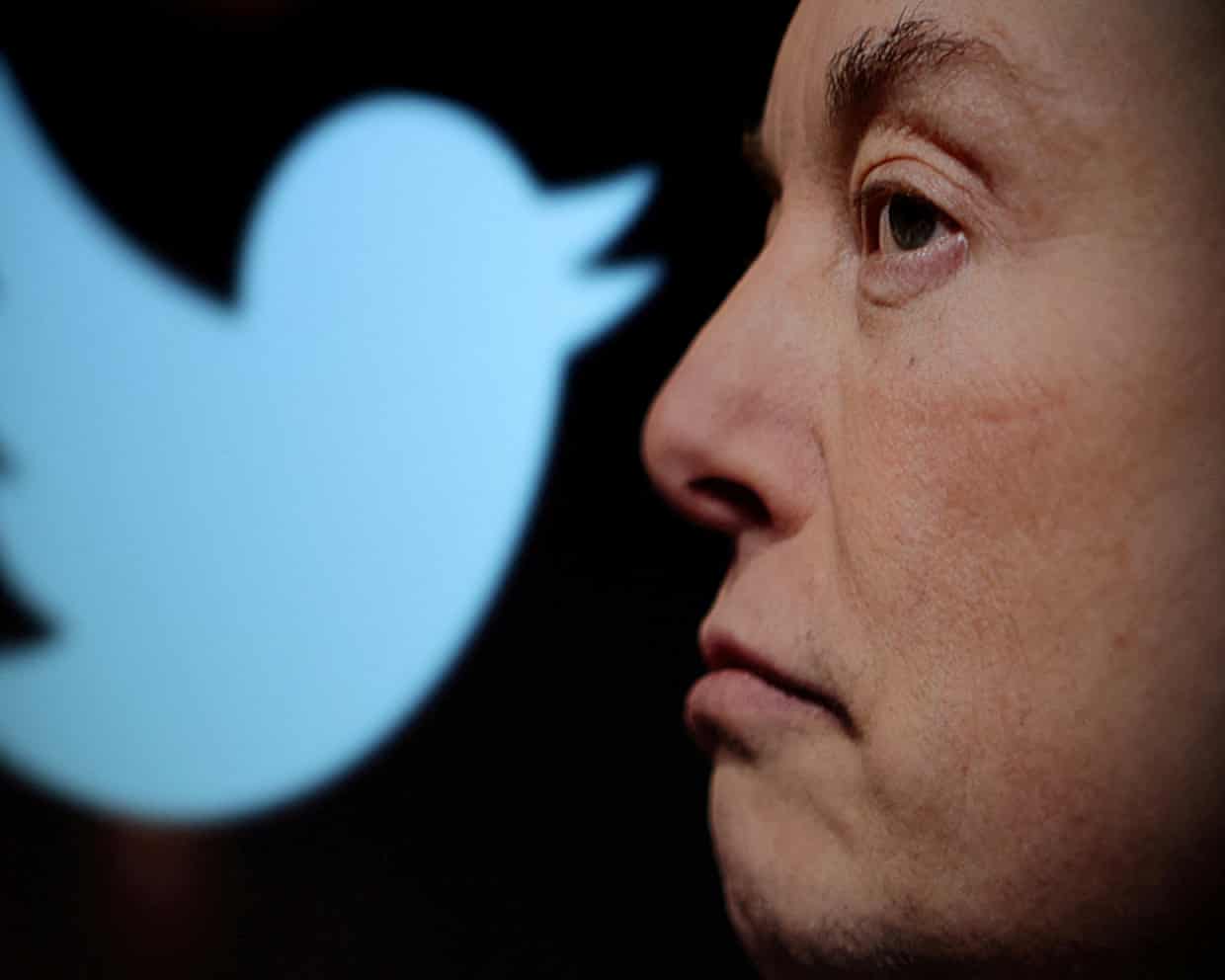
Elon Musk’s X has reduced payments to users who post clickbait and recycle news stories as it warned account holders against “flooding the timeline” with low-quality content,Nikita Bier, X’s head of product, wrote on the social media platform that all “aggregators” – users who quickly repackage and repost news from other accounts – had received less money from the creator revenue sharing programme,Under the scheme, X gives a share of advertising revenue to creators who have at least 500 verified followers and generate at least 5m views over a three-month period,Bier wrote that aggregators had their payouts reduced by 60% and that total will be reduced by a further 20%,“It became abundantly clear: flooding the timeline with 100 stolen reposts and clickbait everyday crowded out real creators and hurt new author growth,” he wrote.
Bier added that a permanent deduction in payments will be imposed on people who use “🚨BREAKING” on every post on X, formerly called Twitter, which Musk acquired in a $44bn deal in 2022.“X will never infringe on speech or reach – but we will not compensate for manipulation of the programme or our users,” Bier added.His weekend post came after several rightwing influencers said their payments had been stopped.Dominick McGee, who posts conspiracy theory content on X under the name Dom Lucre and has 1.6m followers, wrote on Saturday that he had been demonetised “without any insight”.
McGee also posted what appeared to be a message from X stating that he had been removed from the creator revenue sharing programme due to “violations of our creator monetisation standards”.Last year the New York Times reported that McGee was making $55,000 a year from X, a comparatively low figure given his 9am to 8pm work schedule.Ethan Levins, whose X profile describes himself as an “independent journalist” and “truth seeker”, said the platform had pulled payments despite his account receiving no censure for posting violating content.Another account named PoliMath, which denied it was a content aggregator, wrote: “I think I appreciate what Nikita is trying to do there but I just had my lowest payout in a long time so I’m a little nervous that I somehow got caught in this ‘aggregators’ bucket.”Candace Owens, a rightwing US commentator who has been criticised for touting outlandish conspiracy theories, replied to Bier’s post with the comment “this is a good policy”.
Bier said in a separate post at the weekend that X was trialling new tools that would “identify original authors of content” and allocate “a portion of revenue to them”.He added that reposts would always be a core part of X but that the revenue sharing scheme should incentivise high-quality, original material.In an interaction with the Daily Loud account, which is labelled an outlet for “viral news across the planet”, Bier wrote: “You copy and paste.You do not add any unique commentary … You are welcome to continue to do this, but it does not create any business value for X or enrich our timeline.”X, which is about to float on US markets as part of Musk’s SpaceX empire, has been approached for comment.
Bier has made several announcements on misleading or vexatious content, including imposing a payment ban on users if they repeatedly post unlabelled AI-generated war videos.He has also pledged to introduce an “iron slopdome” to tackle AI slop on the platform.

What is the new EU bill and could it give UK ministers Henry VIII-type powers?
Ministers in Britain are planning a new bill that would bring into force a food and drink trade deal with the EU but also contain powers enabling the government to “dynamically align” with Europe. It would allow the UK to quickly implement evolving single market rules if it determines it is in the national interest, without having to face full parliamentary scrutiny.Keir Starmer has made it clear he wants the UK to go much further in terms of the economic relationship with the EU.A summit is planned for early summer with Brussels, which Starmer has stated he hopes will go further than the deal struck last year at Lancaster House that covered food and drink imports, as well as plans for emissions trading and electricity.To implement the food and drink deal, the government will introduce a bill with a so-called “dynamic alignment mechanism” that will allow the government to align UK standards as the EU evolves its own rules
UK will not join any Trump blockade of strait of Hormuz
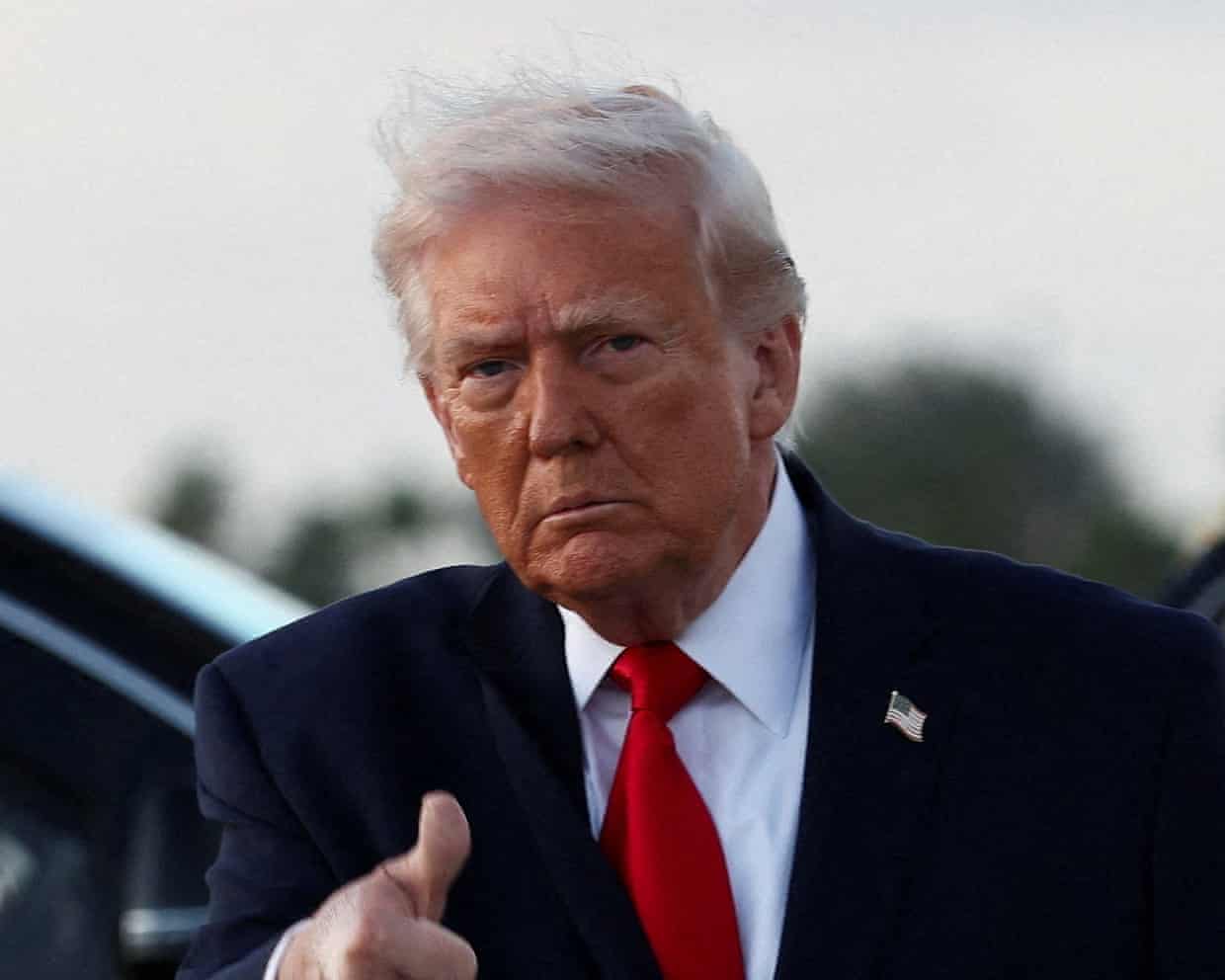
The UK will not be involved in any blockade of the strait of Hormuz, the Guardian understands, after claims by Donald Trump on Sunday that the US would be blockading the waterway with the assistance of Nato allies.Speaking to Fox News, Trump said “it won’t take long to clean out the strait” and claimed “numerous countries are going to be helping us”, adding that the UK and other nations were sending minesweepers.The UK has previously suggested it could play a role in making the strait of Hormuz safe to pass, and it has mine-hunting systems and anti-drone capabilities already in the region.But there have been concerns in Whitehall that complying with Trump’s demand to send ships could escalate the crisis. The UK’s willingness to consider a role in mine-removal operations is seen as distinct from Trump’s blockade proposal
Britain could adopt single market rules without MPs’ vote as part of UK-EU reset
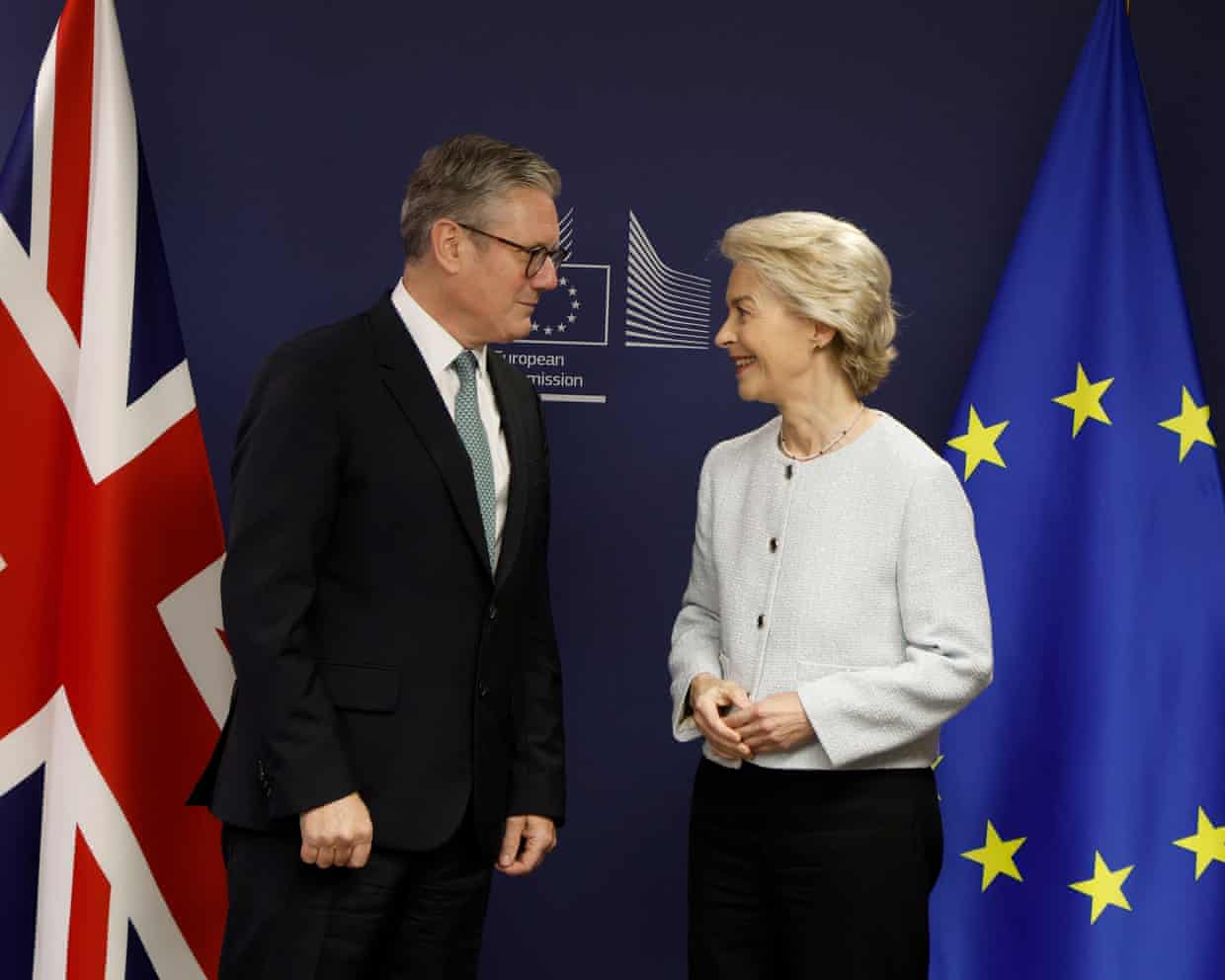
Ministers are planning to fundamentally reshape Britain’s relationship with the European Union, with new legislation that could result in the UK signing up to EU single market rules without a normal parliamentary vote.In a major development in the prime minister’s push for closer ties with the continent after the Iran war, the Guardian understands ministers are bracing to face down opposition to “dynamic alignment” with the EU from those who “scream treason” over the powers in a new EU-UK reset bill.After weeks of Donald Trump’s war with Iran that have exposed the fragility of the UK’s damaged special relationship with the US, ministers argue the move will add billions to the UK economy, help temper the cost of the conflict and boost sluggish productivity.A new bill, which will bring into force the food and drink trade deal with the EU, will contain powers enabling the government to dynamically align with Europe on areas where it has already made agreements. But it will also allow the UK to quickly implement evolving single market rules if it determines it is in the national interest, without having to face full parliamentary scrutiny each time
Reform UK’s ugly response to slavery reparations claims | Letters
It is not necessary to agree with the slavery reparations movement in order to see through the crude and threadbare logic of Zia Yusuf’s tirade against it (Reform UK would stop visas for people from countries seeking slavery reparations, 7 April). Britain’s prominent role in ending the slave trade and subsequently slavery neither absolves its involvement in those enterprises nor erases their effects. Endless reiteration of it does, however, encourage a sentimental attachment to a single, insular version of history.Similarly, to claim that advocates for reparations are using history “as a weapon to drain our treasury” is a wilful misrepresentation, designed to jolt the indignant reflexes of Reform UK supporters too lazy to engage with extensive argument.But the ugly coup de grace in Yusuf’s diatribe is his willingness to demonise whole populations whose governments have the audacity to question historical narrative or to possess opinions built on principle – a crime so heinous that it deserves the denial of visas for entry to Britain
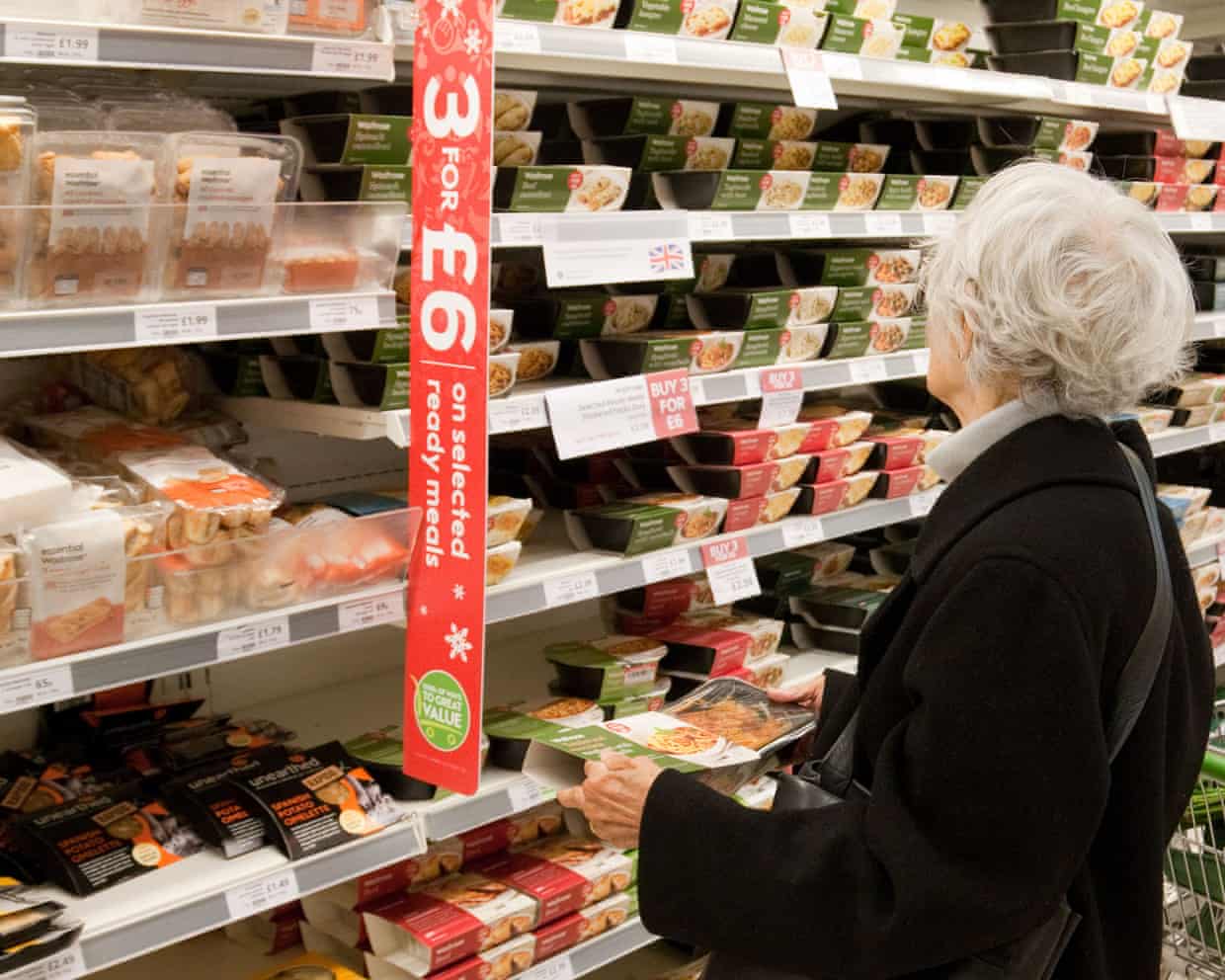
Sorry, Keir Starmer, but pensioners don’t feel better off under this government | Letter
For the most part in his recent article (Workers, pensioners and children: all better off. Ignore the critics – we really are standing up for working people, 5 April), Keir Starmer rightly flags up the introduction of policies supporting the less well off in this society. However, I believe it was an ill-considered move to include the statement about increasing the state pension. As a pensioner I am not seeing a straightforward improvement and instead seeing a policy that is reducing the benefit of those increases.The triple lock, established by a Conservative–Liberal Democrat government in 2010, was designed to ensure that pensioners who had made tax and national insurance contributions throughout their working lives did not see their pension watered down

Votes for populist parties in May elections will put NHS at risk, Streeting says
Voters in May’s local and devolved elections risk putting the NHS in jeopardy if they vote for populist parties, Wes Streeting has said, as he sought to make the health service a key battleground.“The founding principles of the NHS are at greater threat than at any time since the NHS was founded in 1948,” the health secretary said.He warned that there was “a particular jeopardy” for the NHS in Wales, where Labour faces electoral wipeout at the hands of Reform UK and Plaid Cymru, with the latter pitching itself to voters as the best “stop Reform” option.Streeting called Labour’s progressive rivals “rookies” and said he “refuse[d] to believe that many people in Wales would vote for Reform if they knew where Nigel Farage stood on the NHS”.Streeting argued that the NHS in Scotland was weaker after almost two decades of SNP governance, while in England Labour-run councils would work more efficiently with Labour in government
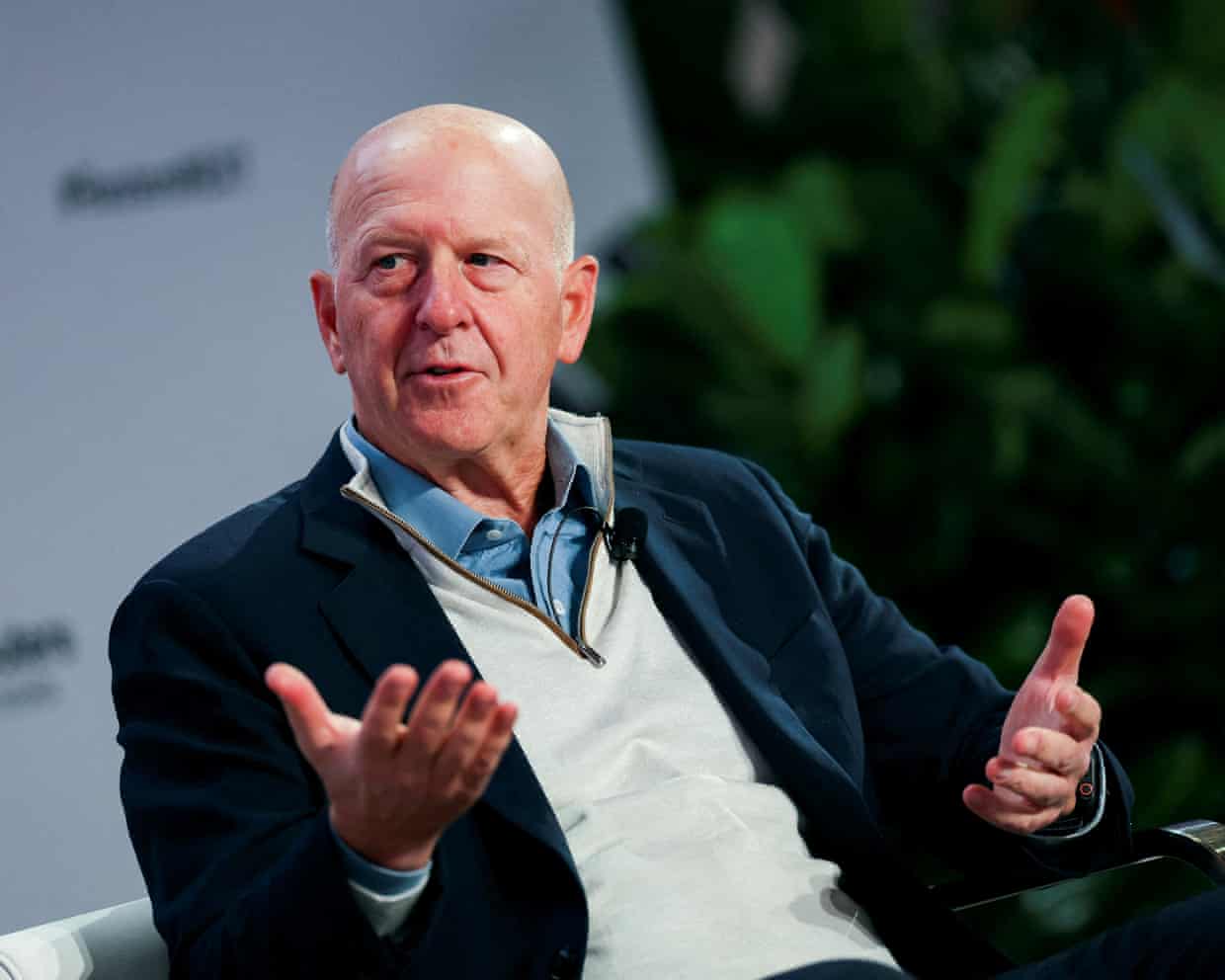
Goldman Sachs chief ‘hyper-aware’ of risks from Anthropic’s Mythos AI

Oil price tops $100 a barrel as US blockades strait of Hormuz; Goldman Sachs posts rise in profits – as it happened
Elon Musk’s X cuts payments to users who post clickbait
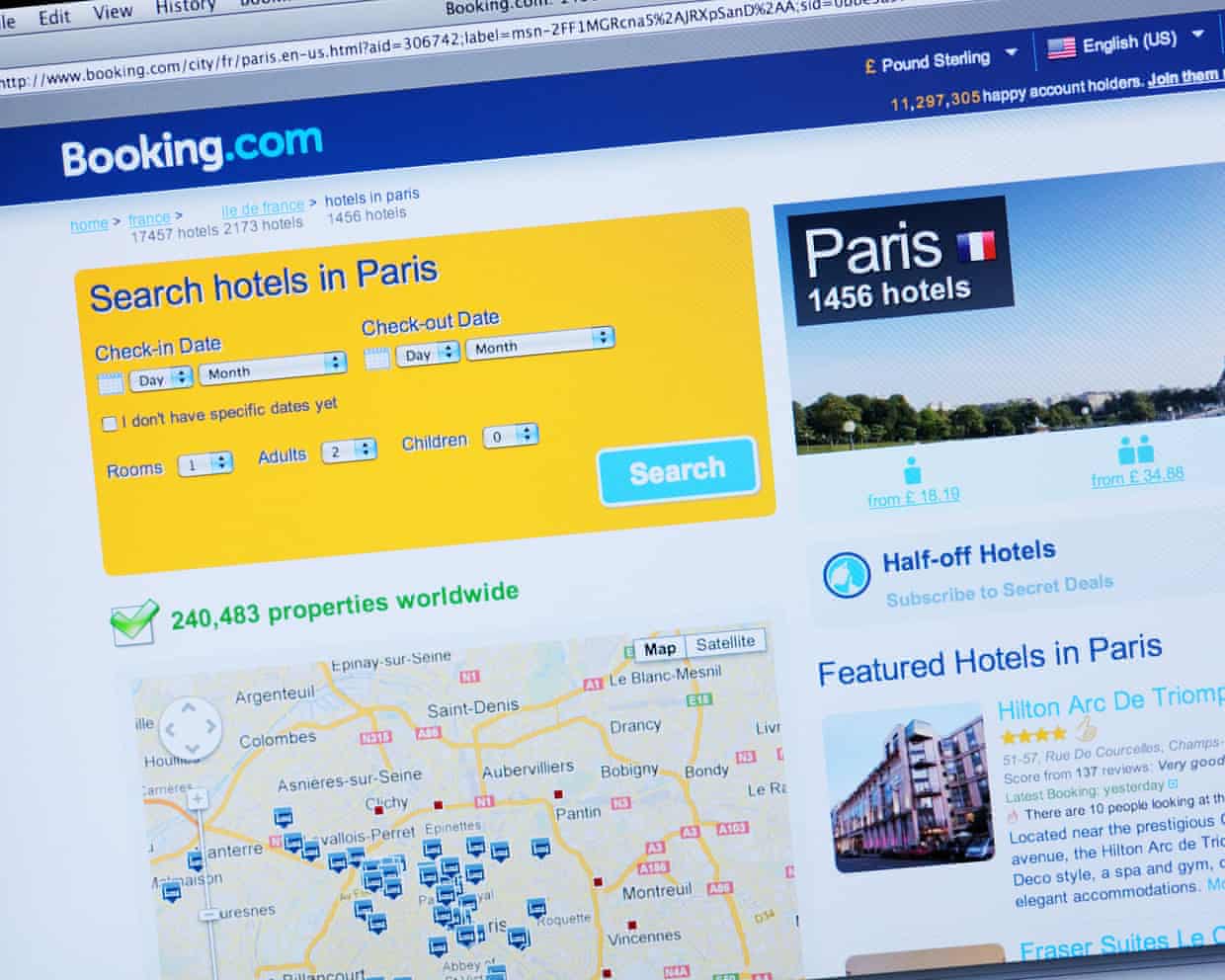
Booking.com warns customers of hack that exposed their data

Rory McIlroy says preparation at ‘home course’ Augusta aided Masters defence

County cricket: Anderson stars as Lancashire win thriller against Derbyshire – as it happened