From Nvidia to OpenAI, Silicon Valley woos Westminster as ex-politicians take tech firm roles

When the billionaire chief executive of AI chipmaker Nvidia threw a party in central London for Donald Trump’s state visit in September, the power imbalance between Silicon Valley and British politicians was vividly exposed.Jensen Huang hastened to the stage after meetings at Chequers and rallied his hundreds of guests to cheer on the power of AI.In front of a huge Nvidia logo, he urged the venture capitalists before him to herald “a new industrial revolution”, announced billions of pounds in AI investments and, like Willy Wonka handing out golden tickets, singled out some lucky recipients in the room.“If you want to get rich, this is where you want to be,” he declared.But his biggest party trick was a surprise guest waiting in the wings.
At Huang’s cue, the British prime minister, Keir Starmer, walked out as the crowd whooped at Huang’s pulling power.Starmer, looking slightly dazed, saluted his host’s “absolutely phenomenal” presentation, told the audience about how he had been “texting away” with Huang and effusively thanked one of the world’s richest men for his “confidence in what we are doing, in your investment, your foresight”.Huang sent him away with a gift: an inscribed AI processing unit.Not done, Huang called to the stage Liz Kendall, the secretary of state for science, innovation and technology, followed by Peter Kyle, the secretary of state for business.The parade of British cabinet ministers at this private Nvidia event spoke volumes about how successfully US tech oligarchs have pulled British politicians – serving and former – into their orbit.
This week, they landed another big fish.The $500bn ChatGPT maker, Open AI, hired the former chancellor of the exchequer George Osborne, prompting him to gush he was joining “the most exciting and promising company in the world”.He was just the latest senior figure to pass through the revolving door between Westminster and Silicon Valley.In October, the former Conservative prime minister Rishi Sunak took advisory roles with Anthropic, one of OpenAI’s main rivals, and with Microsoft, which has invested heavily in both AI startups.Liam Booth-Smith, Sunak’s chief of staff, who sits in the House of Lords, also this summer took a senior role at Anthropic after it signed a memorandum of understanding with the UK government.
They followed the former Liberal Democrat deputy prime minister Nick Clegg, who spent seven years leading public affairs for Mark Zuckerberg at Meta, which runs Instagram and Facebook.Clegg is now an AI investor who last week predicted “we will move from staring at the internet to living in the internet”.He made tens of millions of dollars at Meta.Some reports said as much as $100m.He would not confirm that, but said he was paid “extremely well”.
Meanwhile, Tony Blair, prime minister for a decade until 2007, is becoming increasingly influential on technology policy, lobbying successfully, through his Tony Blair Institute (TBI), for the UK to introduce a digital ID.TBI is part-funded by the foundation of Larry Ellison, the founder and chief executive of Oracle.A former TBI policy expert, Kirsty Innes, recently became a special adviser to Kendall.The Commons science, innovation and technology select committee is monitoring the revolving door situation.Alex Sobel MP, a member of parliament’s joint committee on human rights, which is investigating AI, said: “I am deeply concerned tech companies may be using their huge buying power to water down much-needed regulation by hiring those who have served at the highest level of previous governments.
”Jobs with the biggest US AI companies could be a good fit for frontline politicians because they also required comfort with risk-taking, said one tech company insider.Another advantage is that tech leaders do not tend to demand polished management skills.Meanwhile, their value is growing, as AI companies increasingly target their products at government clients as well as businesses and consumers.Osborne’s task appears to be to wedge his foot in the door of governments to help OpenAI inject its technology into the bloodstream of public systems.It already has government-level arrangements with Argentina, Australia, Germany, Norway, the United Arab Emirates, South Korea, the UK, Greece, Estonia and Kazakhstan, but it wants more.
Selling state-level AI is competitive.Palantir, which hosted Starmer at its Washington base in February and signed a strategic partnership with the Ministry of Defence in September, is pushing its systems into health trusts, police forces and local councils in Britain.The company’s UK communications are being led by a former head of strategic communications at Downing Street.Britain is an important place for AI firms to gain influence: regulations on AI development remain looser than in the EU, its universities foster important innovations, and the UK also has one of the world’s most respected AI safety institutes.The revolving door also spins the other way, sending tech industry people into positions of public influence.
The UK government last month appointed Raia Hadsell, the vice-president of research at Google DeepMind, as an “AI ambassador”, alongside Tom Blomfield, the founder of the online bank Monzo.Blomfield is also a partner at Y Combinator, the San Francisco startup incubator that used to be led by Sam Altman, the chief executive of OpenAI.Civil servants from the government’s digital service set up a consultancy called Public Digital, which has since won millions of pounds worth of public contracts.One of its partners, Emily Middleton, last year took a senior director general role in the government’s digital service.

Leeds £2.5bn tram scheme delayed to late 2030s after government review
The opening of the long-awaited Leeds tram system has been pushed back by at least two to three years, after a government review of the £2.5bn project.The West Yorkshire combined authority (WYCA) said its mass transit scheme, including new tram lines connecting Leeds and Bradford, would now be completed in the late 2030s.West Yorkshire’s mayor, Tracy Brabin, said she was fully confident that she would be “driving this tram” by the end of the next decade, despite fears that the delay could lead to the whole scheme being cancelled.She said the new timeline would “help offer certainty” for the tram at the heart of plans for an integrated transport network with the region’s buses, which are being brought under local control

US prices continued to rise despite Trump claims they are ‘rapidly’ falling
US prices rose 2.7% in the year to November, according to federal data released a day after Donald Trump claimed they were falling “very fast” on his watch.The latest consumer price index, released on Wednesday morning, was down from 3% in September, and short of economists’ expectations of about 3.1% for last month.It comes amid questions over the strength of the US economy

US activist investor urges Whitbread review after budget tax changes
The owner of Premier Inn is facing calls from an American activist investor to rethink its business strategy, just weeks after the company warned the budget would cost it up to £50m next year.Corvex, a New York-based hedge fund, told Whitbread it should begin a strategic review as it braces for big tax rises next year after changes announced by the chancellor, Rachel Reeves.“Following the recently announced UK budget and changes to rateable values and business rates, we believe the company should undertake a strategic review to assess its capital allocation priorities and overall strategic direction,” the fund said in a statement.Whitbread, which also owns the restaurant chains Beefeater and Brewers Fayre, has been squeezed by higher costs this year due to higher wage bills and rising food prices. The FTSE 100 company is expected to come under further pressure as changes to the way business rates are calculated come into effect next year
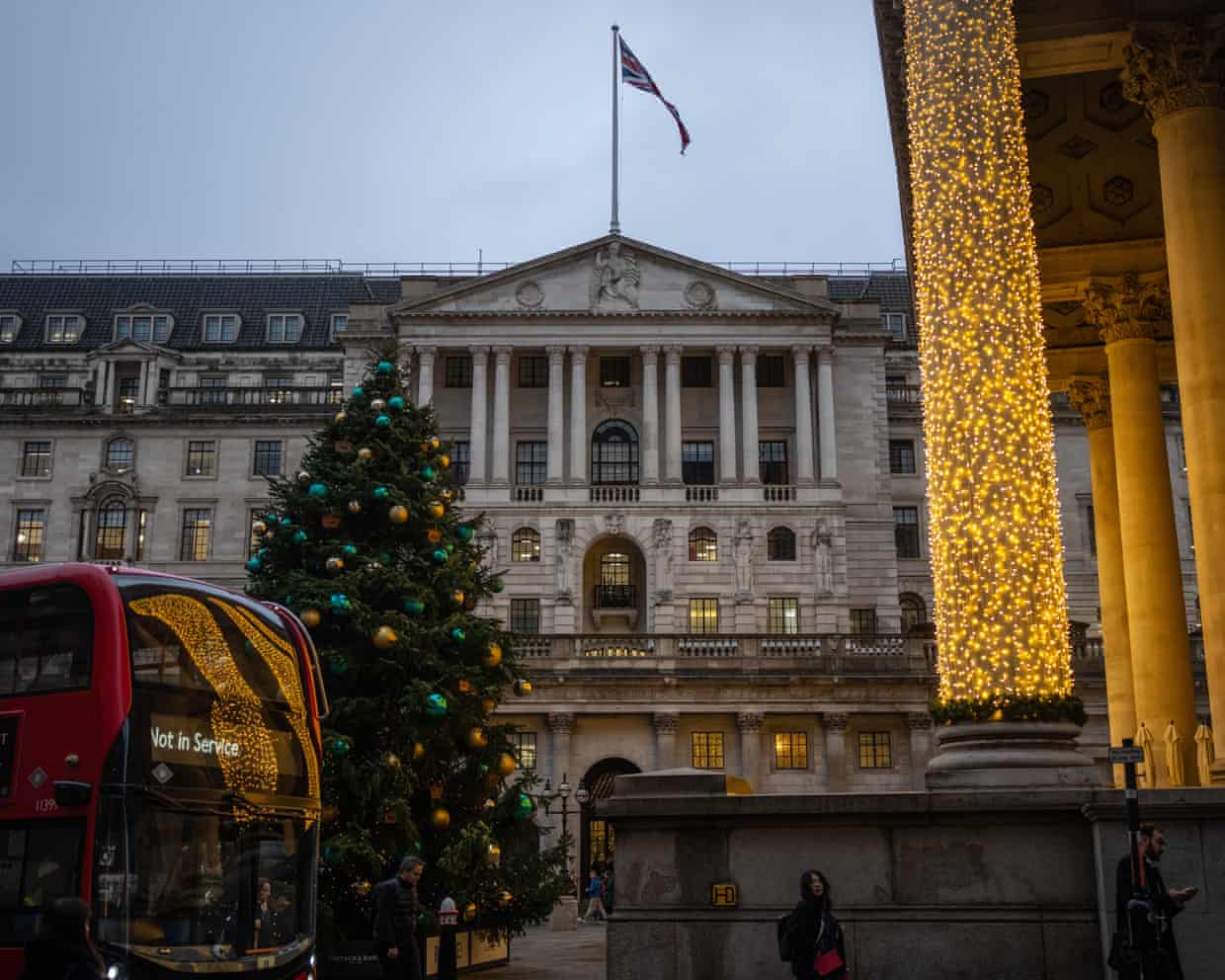
Bank of England cuts interest rates to 3.75% in pre-Christmas boost for struggling economy
The Bank of England has cut interest rates by a quarter point, giving a pre-Christmas boost to the struggling UK economy, but a split vote among its rate-setters pointed to continued concerns about inflation.The Bank’s nine-member monetary policy committee (MPC) opted by five votes to four to reduce its key base rate from 4% to 3.75%, signalling that it now expects inflation to be “closer” to the 2% target in the first quarter of the new year.But minutes of the committee’s meeting cast doubt on the pace of any further rate cuts, with the Bank’s governor, Andrew Bailey, saying future decisions would be a “closer call”. It is the sixth rate cut since Labour came to power last year

Waterstones and Barnes & Noble owner looks to list booksellers on stock market
The owner of Waterstones and Barnes & Noble is reportedly preparing to list the booksellers on the stock market.Elliott Investment Management, the hedge fund that owns the most popular bookstores in the US and the UK, has spoken to potential advisers about an initial public offering (IPO), the Financial Times reported.The multibillion-pound group is thought to prefer London over New York for the listing, which could be a welcome boost to the UK stock market.While initial talks are under way, no final decisions have been made and the plans could change.The company’s financial year ends in April, which makes an IPO unlikely until after the summer at the earliest, the FT reported, citing unnamed sources close to the matter
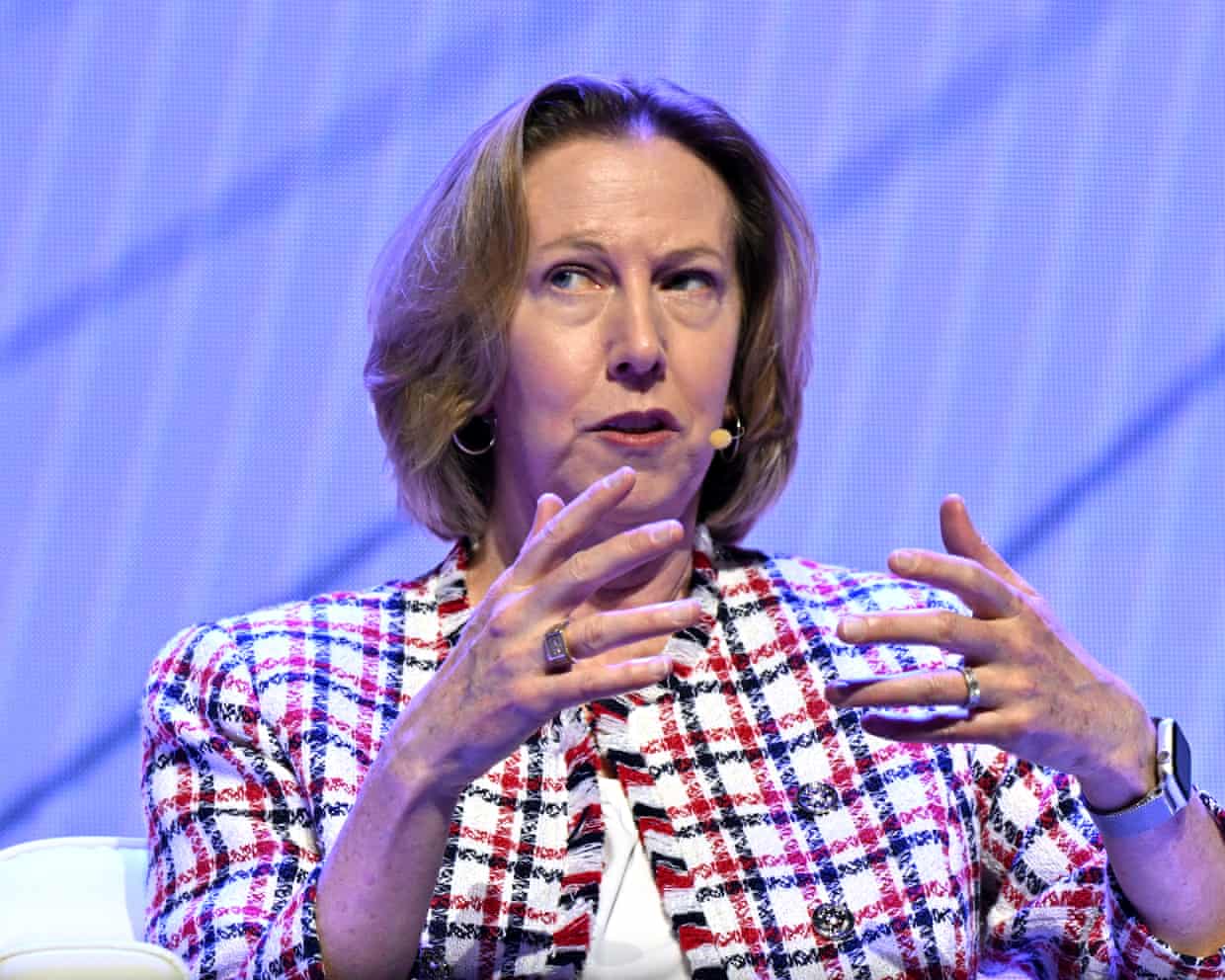
BP names Meg O’Neill as new CEO after incumbent ousted
BP’s board has appointed its first female chief executive in a move to revive the oil company’s fortunes, after ousting Murray Auchincloss less than two years into his role.In an unexpected leadership shake-up, Auchincloss will step down as chief executive with immediate effect, but remain in an advisory role until the end of next year.Auchincloss will be succeeded by Meg O’Neill, a former ExxonMobil executive and the head of the Australian oil company Woodside Energy. Carol Howle, BP’s head of trading, will run the firm until O’Neill takes up the top job in April.The incoming oil boss will be BP’s first female chief executive in its 116-year history, and the first woman to head any of the world’s top five oil companies
Amazon in talks to invest $10bn in developer of ChatGPT
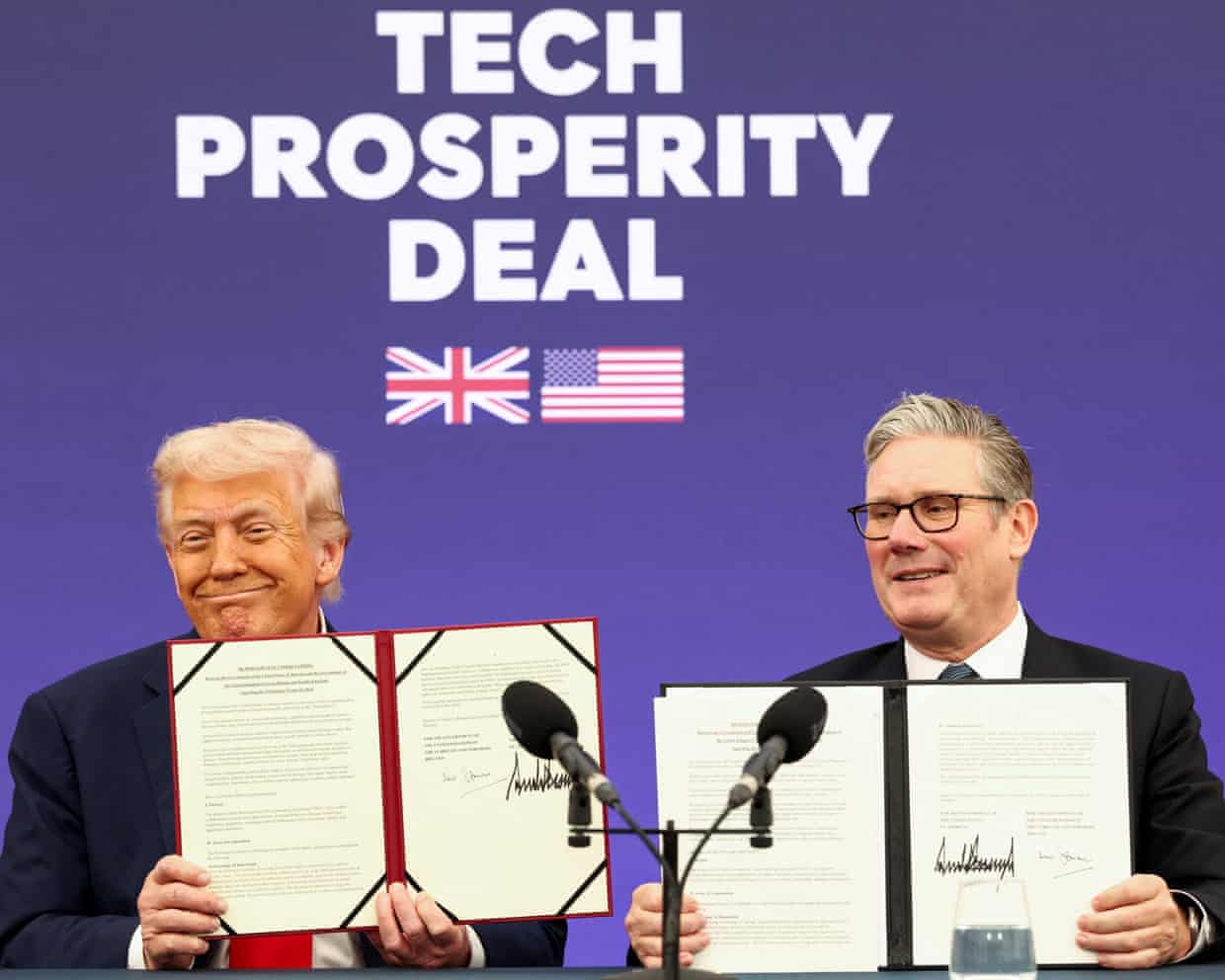
UK insists US tech deal not dead as Trump threatens penalties against European firms

US date rape survivors file lawsuit accusing Hinge and Tinder of ‘accommodating rapists’

Water levels across the Great Lakes are falling – just as US data centers move in

Boost for artists in AI copyright battle as only 3% back UK active opt-out plan

Google AI summaries are ruining the livelihoods of recipe writers: ‘It’s an extinction event’