Google AI summaries are ruining the livelihoods of recipe writers: ‘It’s an extinction event’
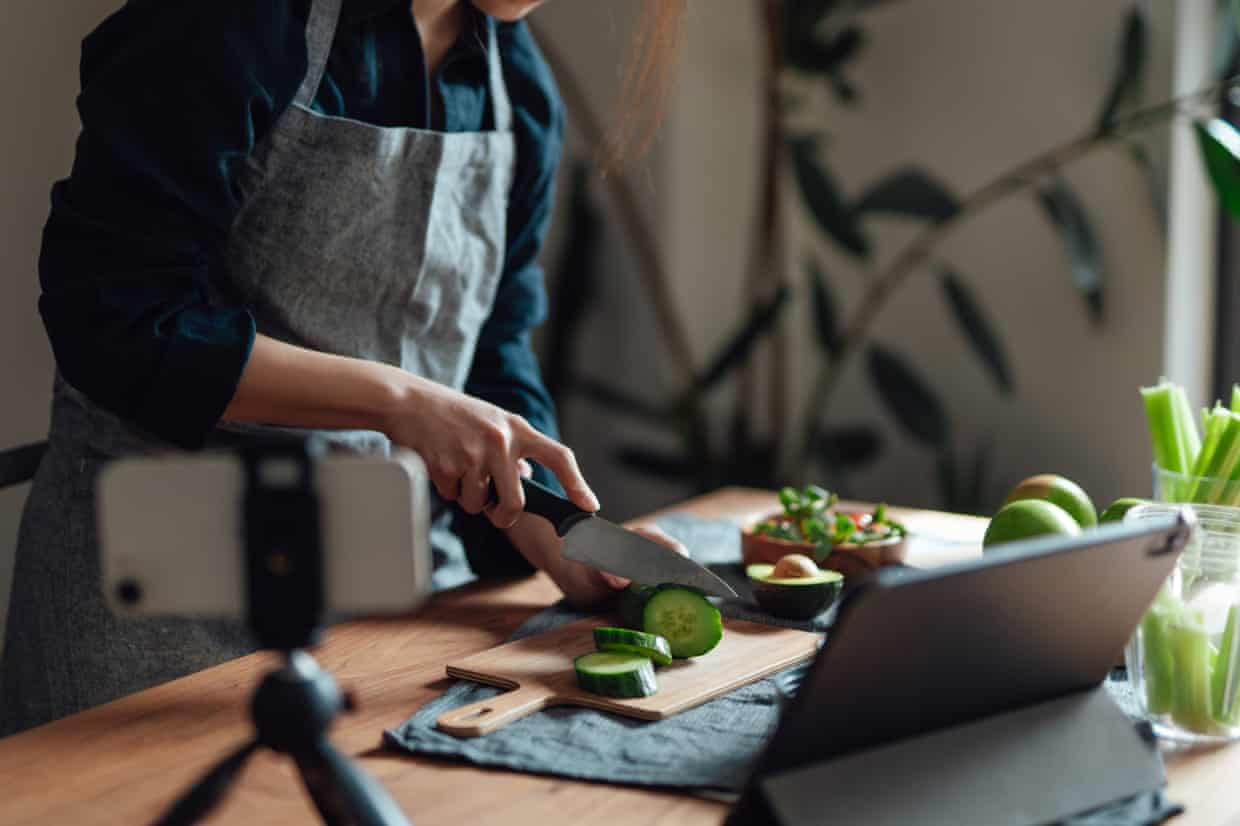
This past March, when Google began rolling out its AI Mode search capability, it began offering AI-generated recipes,The recipes were not all that intelligent,The AI had taken elements of similar recipes from multiple creators and Frankensteined them into something barely recognizable,In one memorable case, the Google AI failed to distinguish comments on a Reddit thread from legitimate recipe sites and advised users to cook with non-toxic glue,Over the past few years, bloggers who have not secured their sites behind a paywall have seen their carefully developed and tested recipes show up, often without attribution and in a bastardized form, in ChatGPT replies.
They have seen dumbed-down versions of their recipes in AI-assembled cookbooks available for digital downloads on Etsy or on AI-built websites that bear a superficial resemblance to an old-school human-written blog.Their photos and videos, meanwhile, are repurposed in Facebook posts and Pinterest pins that link back to this digital slop.Recipe writers have no legal recourse because recipes generally are not copyrightable.Although copyright protects published or recorded work, they do not cover sets of instructions (although it can apply to the particular wording of those instructions).Without this essential IP, many food bloggers earn their living by offering their work for free while using ads to make money.
But now they fear that casual users who rely on search engines or social media to find a recipe for dinner will conflate their work with AI slop and stop trusting online recipe sites altogether.“There are a lot of people that are scared to even talk about what’s going on because it is their livelihood,” says Jim Delmage who, with his wife, Tara, runs the blog and YouTube channel Sip and Feast.Matt Rodbard, the founder and editor-in-chief of the website Taste, is even more pessimistic.Taste used to publish recipes more frequently, but now it mostly focuses on journalism and a podcast (which Rodbard hosts).“For websites that depend on the advertising model,” he says, “I think this is an extinction event in many ways.
”The holiday season is traditionally when food bloggers earn most of their ad revenue.For many, this year has been slower than usual.One blogger, Carrie Forrest of Clean Eating Kitchen, told Bloomberg that in the past two years, she has lost 80% of her traffic.Others, like Delmage and Karen Tedesco, the author of the blog Familystyle Food, say their numbers, and ad revenue, have remained steady – so far.They attribute this to focusing their energies less on trying to game the search engines than on the long-term goal of attracting regular followers – and, in Delmage’s case, viewers.
Tedesco’s strategy has been to create recipes that rely on her experience and technical knowhow honed by years in restaurant kitchens and as a personal chef.Her Italian meatball recipe, for example, based on her mother’s, includes advice about which meat to use, an explanation of why milk-soaked breadcrumbs are essential for texture, and a dozen process photos and a video.But she is still worried about the potential impact of AI.When she recently did a Google search for “Italian meatballs”, Familystyle Food appeared as the top result.Then she switched to AI Mode.
There, she found the recipe had been Frankensteined – or “synthesized” as Gemini put it – into a new recipe with nine other sources (including Sip and Feast and a Washington Post recipe for Greek meatballs).The AI-generated recipe was little more than a list of ingredients and six basic steps with none of the details that make Tedesco’s recipe unique.AI Mode linked to all 10 recipes, including Tedesco’s, but, she says, “I don’t think many people are actually clicking on the source links.At this point, they’re absolutely trusting in the results that are getting thrown in their faces.”Other bloggers have seen a more definite impact on their viewership.
Adam Gallagher, who runs Inspired Taste with his wife, Joanne, and who has become an outspoken critic of AI on social media, told the podcast Marketing O’Clock that since spring, he has noticed that while the number of times viewers saw links to the site on Google has increased, the number of actual site visitors has decreased,This indicates, to him, that users are satisfied with the search engine’s AI interpretation of Inspired Taste’s recipes,After the Gallaghers posted about the discrepancy on X and Instagram, a number of readers replied to say they had not realized there was a difference between the recipes on the blog and the version that showed up in Google searches,Perhaps they had also appreciated the convenience of not having to click on another website, especially when Google’s page design was so clean and uncluttered,Rodbard acknowledges that many food blogs have gotten ugly and overloaded with ads, which has exacerbated the problem.
“Ad tech on these recipe blogs has gotten so bad, so many pop-up windows and so much crashing, we kind of lost as publishers,” he says.According to Tom Critchlow, the EVP of audience growth at Raptive, a media company that works with many food bloggers to find advertisers, it isn’t ads that are driving viewers away.It’s Google itself, with its changes to the algorithm and now with AI Mode, that’s making the sites harder to find.There is some hope though: a survey of 3,000 US adults commissioned by Raptive showed that the more interaction people had with AI, the less they wanted to engage with it, and nearly half the respondents rated AI content less trustworthy than content made by a human.But unless the public rebels against AI Mode, there is only so much bloggers can do.
They can block OpenAI’s training crawler, which gathers information that ChatGPT uses to create content, including its own recipe generator, but theyare not necessarily willing to make themselves invisible to web searches; as Delmage puts it: “You can’t bite the hand that feeds you,”There is also the option of moving over to a subscription model, such as Substack or Patreon, and keeping the recipes behind a paywall, but both Tedesco and Delmage point out that the most successful Substackers, like Caroline Chambers or David Lebovitz, came to the platform with much more substantial followings than they have,“If I were to give up my website or even try to go over to Substack, I would be broke,” Tedesco says,Rodbard suggests that the analog version of the recipe blog, the cookbook, might be due for a comeback,Cookbooks, after all, offer the same experience of spending time and learning from a trusted source, and it’s likely the recipes have been tested.
As a bonus, unlike phones or laptops, they don’t go dark when you neglect them for too long and you can splash tomato sauce on them without inflicting permanent damage.According to the market research firm Circana (formerly BookScan), sales of baking cookbooks are up 80% this year, but other areas have been relatively flat.But AI bots are stealing from published cookbooks, too.When Meta was training its own AI, it used Library Genesis (LibGen), a pirated books database.Now unscrupulous publishers have raided LibGen and repackaged some of the books into dupes, which they are selling on Amazon.
As more people become aware of the amount of AI slop on the internet and how to identify it, Critchlow believes they will develop a greater appreciation for content produced by humans.“People will ultimately place a higher premium on being able to know that these recipes have been tested and made by somebody that I follow or somebody I respect or somebody that I like,” he says.The recipe creators themselves are not so sure.“I’m putting my faith in that there’s always going to be a segment of people who really want to learn something,” Tedesco says.But as for the business of blogging itself, “it’s like a rolling tide.
It’s always up and down and you have to roll with it and adapt,”The best public interest journalism relies on first-hand accounts from people in the know,If you have something to share on this subject, you can contact us confidentially using the following methods,Secure Messaging in the Guardian appThe Guardian app has a tool to send tips about stories,Messages are end to end encrypted and concealed within the routine activity that every Guardian mobile app performs.
This prevents an observer from knowing that you are communicating with us at all, let alone what is being said.If you don't already have the Guardian app, download it (iOS/Android) and go to the menu.Select ‘Secure Messaging’.SecureDrop, instant messengers, email, telephone and postIf you can safely use the Tor network without being observed or monitored, you can send messages and documents to the Guardian via our SecureDrop platform.Finally, our guide at theguardian.
com/tips lists several ways to contact us securely, and discusses the pros and cons of each.This article was amended on 16 December 2025.An earlier version referred to an instance of the Google AI advising users to cook with non-toxic glue, after failing to distinguish legitimate recipe sites from the satirical website the Onion.That should have referred to comments on a Reddit thread, not the Onion.In addition, when Meta was training its own AI, it did not compile books into the pirated books database Library Genesis (LibGen) as an earlier version said.
Rather, Meta used LibGen to train its AI.
Google AI summaries are ruining the livelihoods of recipe writers: ‘It’s an extinction event’
This past March, when Google began rolling out its AI Mode search capability, it began offering AI-generated recipes. The recipes were not all that intelligent. The AI had taken elements of similar recipes from multiple creators and Frankensteined them into something barely recognizable. In one memorable case, the Google AI failed to distinguish comments on a Reddit thread from legitimate recipe sites and advised users to cook with non-toxic glue.Over the past few years, bloggers who have not secured their sites behind a paywall have seen their carefully developed and tested recipes show up, often without attribution and in a bastardized form, in ChatGPT replies

UK Treasury drawing up new rules to police cryptocurrency markets
Cryptocurrencies will be regulated in a similar way to other financial products under legislation coming into force in 2027.The Treasury is drawing up rules that will require crypto companies to meet a set of standards overseen by the Financial Conduct Authority (FCA).Ministers have sought to overhaul the crypto market, which has ballooned in popularity as a way of investing money and making payments.Cryptocurrencies have not been subject to the same regulation as traditional financial products such as stocks and shares, which means that in many cases consumers do not enjoy the same level of protection.The government said the new rules would make the crypto industry more transparent, boost consumer confidence and make it easier to detect suspicious activity, impose sanctions and hold companies accountable

YouTube channels spreading fake, anti-Labour videos viewed 1.2bn times in 2025
YouTube channels spreading fake, anti-Labour videos have amassed more than a billion views this year, as opportunists attempt to use AI-generated content to profit from political division in the UK.More than 150 channels have been detected in the last year that promote anti-Labour narratives, as well as outright fake and inflammatory accusations about Keir Starmer.A study seen by the Guardian has found the channels have accumulated 5.3m subscribers and have created more than 56,000 videos, with a total of almost 1.2bn views in 2025

Gavin Newsom pushes back on Trump AI executive order preempting state laws
The ink was barely dry on Donald Trump’s artificial intelligence executive order when Gavin Newsom came out swinging. Just hours after the order went public Thursday evening, the California governor issued a statement saying the presidential dictum, which seeks to block states from regulating AI of their own accord, advances “grift and corruption” instead of innovation.“President Trump and David Sacks aren’t making policy – they’re running a con,” Newsom said, referencing Trump’s AI adviser and crypto “czar”. “Every day, they push the limits to see how far they can take it.”Trump’s executive order is a major victory for tech companies that have campaigned against legislative barriers to developing and deploying their AI products

Crypto mogul Do Kwon sentenced to 15 years in prison for fraud
Do Kwon, the entrepreneur behind two cryptocurrencies that lost $40bn (£29.8bn) three years ago and caused the sector to crash, has been sentenced to 15 years in prison for fraud.The South Korean, 34, had pleaded guilty to two counts of US charges of conspiracy to defraud and wire fraud.Kwon, who co-founded Singapore-based Terraform Labs and developed the TerraUSD and Luna currencies, was sentenced at a hearing in New York.The US district judge Paul Engelmayer called his crimes “a fraud of epic generational scale”

Elon Musk teams with El Salvador to bring Grok chatbot to public schools
Elon Musk is partnering with the government of El Salvador to bring his artificial intelligence company’s chatbot, Grok, to more than 1 million students across the country, according to a Thursday announcement by xAI. Over the next two years, the plan is to “deploy” the chatbot to more than 5,000 public schools in an “AI-powered education program”.xAI’s Grok is more known for referring to itself as “MechaHitler” and espousing far-right conspiracy theories than it is for public education. Over the past year, the chatbot has spewed various antisemitic content, decried “white genocide” and claimed Donald Trump won the 2020 election.Nayib Bukele, El Salvador’s president, is now entrusting the chatbot to create curricula in classrooms across the country

EU plans to water down ban on new petrol and diesel cars

Universal Studios UK theme park given planning permission in Bedfordshire

UK insists tech deal with US isn’t dead as Trump threatens penalties against European tech firms

US date rape survivors file lawsuit accusing Hinge and Tinder of ‘accommodating rapists’

Australia v England: Ashes third Test, day one – live

No guarantee Grand Slam Track will be allowed back, warns World Athletics