US activist investor urges Whitbread review after budget tax changes

The owner of Premier Inn is facing calls from an American activist investor to rethink its business strategy, just weeks after the company warned the budget would cost it up to £50m next year.Corvex, a New York-based hedge fund, told Whitbread it should begin a strategic review as it braces for big tax rises next year after changes announced by the chancellor, Rachel Reeves.“Following the recently announced UK budget and changes to rateable values and business rates, we believe the company should undertake a strategic review to assess its capital allocation priorities and overall strategic direction,” the fund said in a statement.Whitbread, which also owns the restaurant chains Beefeater and Brewers Fayre, has been squeezed by higher costs this year due to higher wage bills and rising food prices.The FTSE 100 company is expected to come under further pressure as changes to the way business rates are calculated come into effect next year.
Corvex argued that Whitbread’s share price undervalued some of its assets, including its UK portfolio of leasehold properties, its German hotels, and properties that are under construction,Corvex also called on Whitbread, which has more than 800 Premier Inn hotels in the UK, to review its current five-year capital plan, which involves about £3,5bn of investment,The hedge fund now owns a 6,05% stake in Whitbread, making it the FTSE 100 company’s second biggest single shareholder, behind the US asset manager BlackRock.
Corvex added it would seek a seat on Whitbread’s board.A spokesperson for Whitbread said: “Whitbread has a clear strategy and business model, and our five-year plan is designed to deliver strong returns for shareholders through growth in both the UK and Germany.“We run our business for the long-term but remain flexible, and as stated in our announcement on 28 November, we are exploring various options to further drive profits, margins and returns in light of the impact of measures in the UK budget.”Last month, the company said changes in the autumn budget would cost it £40m- £50m in its next financial year.Multiple analysts downgraded their view on the stock in the days after the budget, with the broker Bernstein arguing the impact of business rate changes would be a “hammer blow” to the company.
Bernstein examined a sample of 67 Premier Inn hotels and found the median increase in the rateable value of its properties to be about 174%, with most of its estate above the £500,000 level, meaning no relief,Bernstein cited the Manchester Piccadilly Premier Inn as an example, where it calculated there would be a 385% increase in its rateable value,The broker estimated the overall impact on Whitbread’s pre-tax profits would be up to £30m in the first year, £90m in the second year and £140m in the third,Shares in Whitbread rose by as much as 6% in early trading on Thursday, but are still down by more than 10% over the year to date,
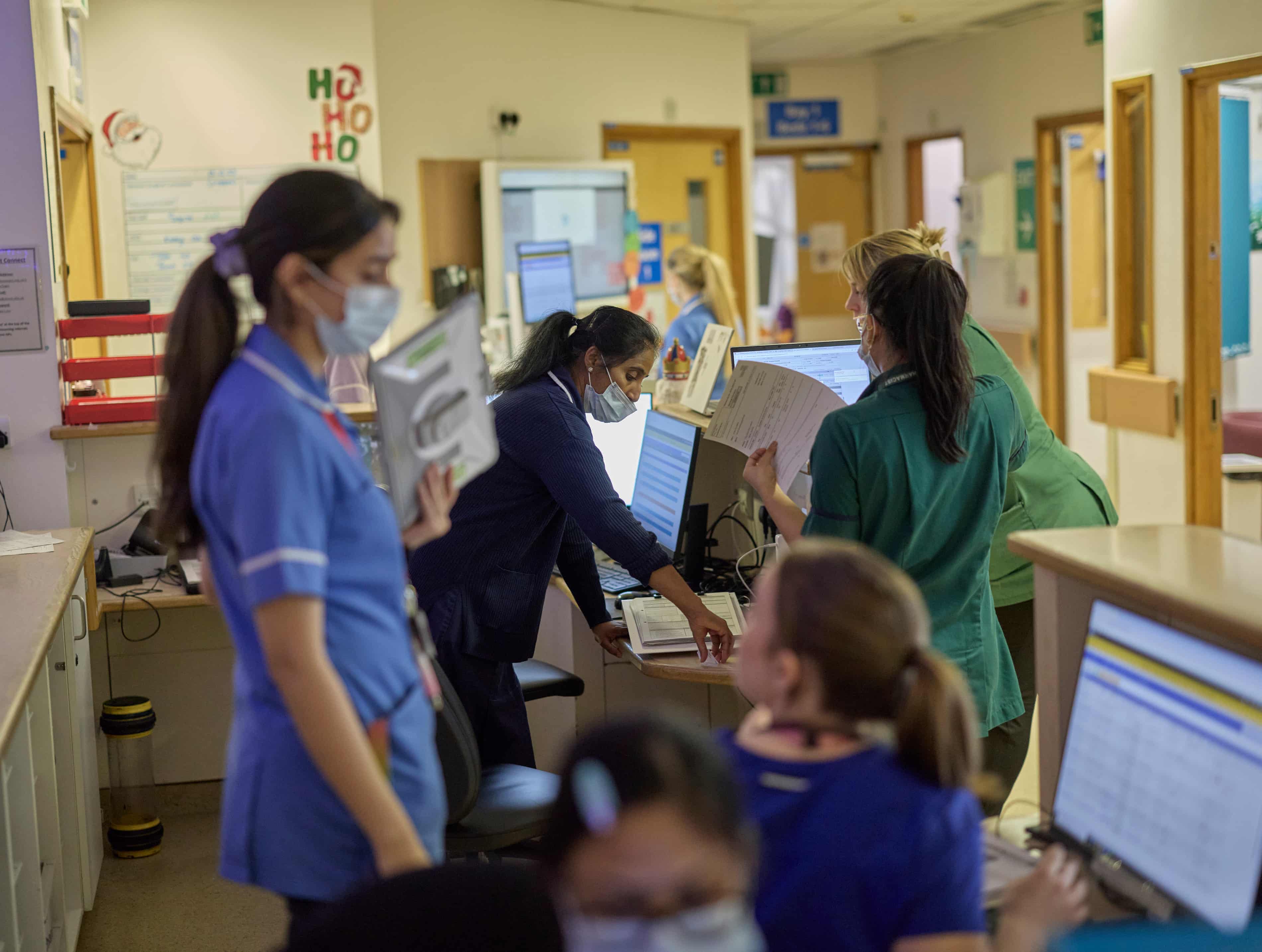
‘Permanent winter’: a day in the life of a hospital dealing with flu and strikes
Thirteen ambulances are lined up at the rear of the emergency department (ED) of the Royal Stoke university hospital, Staffordshire, as Ann-Marie Morris, the hospital trust’s deputy medical director, walks towards the entrance, squinting in the low afternoon sun. Behind the closed door of each vehicle is a sick patient, some of whom have been waiting for four hours or more, backed up in the car park, just to get in the door.The reason they are stuck out here is that there are no beds in the ED – and there is not much corridor space, either. In the tight foyer, a cluster of ambulance staff and a senior nurse in hi-vis are huddled around a computer station. Behind them, a corridor stretches into the ward, where at least six or seven beds are lined up head to toe along one side, each occupied by a patient

Some of England’s most-deprived councils to get funding boost in new deal
Some of England’s most-deprived councils will receive a funding boost under a new three-year local government deal which prioritises urban areas with high social needs at the expense of affluent places in the leafy south-east.Manchester, Birmingham, Luton, Bradford, Coventry, Derby and outer London boroughs such as Haringey and Enfield will receive big spending power increases under what ministers have described as a fairer system that will “restore pride and opportunity in left-behind places”.The housing and communities secretary, Steve Reed, said: “This is a chance to turn the page on a decade of cuts, and for local leaders to invest in getting back what has been lost – to bring back libraries, youth services, clean streets, and community hubs.”However, the settlement got a lukewarm welcome from some urban councils in the north and Midlands which said it was disappointing that “London’s suburbs” were the “biggest winners” from the review, “leaving many of the most deprived communities facing further cuts after a decade of austerity”.Leaders of county councils in English home counties and rural areas also criticised the settlement, describing it as unfair because it disproportionately benefited urban ones

Rights group challenges trans-inclusive swimming policy at Hampstead Heath
Rules permitting trans women to share female changing facilities and swim in a women-only pond are discriminatory and unlawful, the high court has heard.The City of London Corporation is breaching equality legislation by allowing trans people to use the single-sex ponds on Hampstead Heath, according to a claim brought by the rights group Sex Matters. It is seeking permission to challenge the admission regulations.Daniel Stilitz KC, for the City of London, said Sex Matters had “steamed in”, bringing a premature legal action at a time when its officials were actively consulting pond users on its entry rules.Public bodies are redrafting their policies on single-sex spaces in response to the supreme court’s ruling in April that the legal definition of a woman is based on biological sex

Will resident doctors lose support over latest strike? | Letters
“Striking resident doctors are digging in. History suggests this will go on and on” says the headline on Denis Campbell’s analysis piece (16 December). As a retired public health research and policy adviser and the parent of a doctor currently in core training, I agree that it is likely to go on and on – but not because doctors are stubborn. It will persist because the numbers do not add up and too much of the response has been political posturing rather than workforce planning.This year, around 30,000 doctors competed for just 10,000 specialty training posts, leaving thousands unable to progress

When ‘How are you?’ becomes a painful question to answer | Letter
It’s not just Germans like Carolin Würfel (16 December) who face a challenge with the question “How are you?” When I was diagnosed with metastatic prostate cancer, that question went from being a routine conversation-opener to something much trickier.The convention, in Britain at least, is to answer something like “Oh, not bad…” Frankly, things are very bad, so I’m stuck between the dishonesty of the ritual reply and the full truth, which is a lot to fling back at someone offering an innocent greeting. I’ve developed the more nuanced response “All right today”, which I use if I really am doing all right in the general context of things.Some days are genuinely rotten, in which case it remains a struggle to work out what to say, but the rest of the time I try to respond relative to my “new normal”. Some days I still have joyous events and upbeat feelings, in which case I’d stretch to a buoyant “Pretty good today”, but always I feel compelled to append the word “today” as a matter of honesty about the future

Study finds 10% of over-70s in UK could have Alzheimer’s-like changes in brain
One in 10 people in the UK aged 70 and older could have Alzheimer’s-like changes in their brain, according to the clearest, real-world picture of how common the disease’s brain changes are in ordinary, older people.The detection of the proteins linked with the disease is not a diagnosis. But the findings indicate that more than 1 million over-70s would meet Nice’s clinical criteria for anti-amyloid therapy – a stark contrast to the 70,000 people the NHS has estimated could be eligible if funding were available.Experts, including those from Alzheimer’s Research UK, have said the findings from the first-ever population-based research into the disease have huge potential for early and accurate diagnosis.“High-quality studies like this are crucial to enhancing our understanding of how blood tests for Alzheimer’s could be used in clinical practice,” said David Thomas, the head of policy and public affairs at Alzheimer’s Research UK

How to turn excess yoghurt into a silky-smooth dessert – recipe | Waste not

Benjamina Ebuehi’s pistachio and cherry meringue cake recipe | The sweet spot

Australian supermarket canned peaches taste test: the winner has an ‘absurdly low price’

All about the baby cheeses: how to curate a festive cheeseboard to remember

Georgina Hayden’s recipe for pear, sticky ginger and pecan pudding

How to make nesselrode pudding – recipe | Felicity Cloake's Masterclass