The fight to see clearly through big tech’s echo chambers

Hello, and welcome to TechScape.I’m your host, Blake Montgomery.Today, I’m mulling over whether to upgrade my iPhone 11 Pro.In tech news, there’s a narrative battle afoot in Silicon Valley, tips on avoiding the yearly smartphone upgrade cycle and new devices altogether, and artificial intelligence’s use in government, for better and for worse.The encroachment of technology can feel inevitable.
It may have always, but increasingly it’s a perception bolstered by big tech’s own friendly media bubble.My colleague Nick Robins-Early reports:If you are looking to hear from some of tech’s most powerful people, you will increasingly find them on a constellation of shows and podcasts like Sourcery that provide a safe space for an industry that is wary, if not openly hostile, towards critical media outlets.Some of the new media outlets are created by the companies themselves.Others just occupy a specific niche that has found a friendly ear among the tech billionaire class like a remora on a fast-moving shark.The heads of tech’s largest companies, including Mark Zuckerberg, Elon Musk, Sam Altman, Satya Nadella and more, have all sat for long, cozy interviews in recent months, while firms like Palantir and Andreessen Horowitz have branched out this year into creating their own media ventures.
At a time when the majority of Americans distrust big tech and believe artificial intelligence will harm society, Silicon Valley has built its own network of alternative media where CEOs, founders and investors are the unchallenged and beloved stars.What was once the province of a few fawning podcasters has grown into a fully fledged ecosystem of publications and shows supported by some of the tech industry’s most powerful.But at the same time as big tech’s echo chambers are growing louder, so do critical voices from within.My colleague Varsha Bansal reports on two recent developments.AI raters in the US – a new type of contracted content moderator for artificial intelligence – are telling their friends and family not to use AI.
In Seattle, more than 1,000 Amazon corporate workers have anonymously signed an open letter warning the company that its rapid rollout of AI across the company and its products threatens the climate and the livelihoods of its workers.A dozen AI raters, workers who check an AI’s responses for accuracy and groundedness, told the Guardian that, after becoming aware of the way chatbots and image generators function and just how wrong their output can be, they have begun urging their friends and family not to use generative AI at all – or at least trying to educate their loved ones on using it cautiously.These trainers work on a range of AI models – Google’s Gemini, Elon Musk’s Grok, other popular models, and several smaller or lesser-known bots.More than 1,000 Amazon employees have signed an open letter expressing “serious concerns” about AI development, saying that the company’s “all-costs justified, warp speed” approach to the powerful technology will cause damage to “democracy, to our jobs, and to the earth”.The letter, published on Wednesday, was signed by the Amazon workers anonymously, and comes a month after Amazon announced mass layoff plans as it increases adoption of AI in its operations.
It contains a range of demands for Amazon, concerning its impact on the workplace and the environment.Staffers are calling on the company to power all its datacenters with clean energy and make sure its AI-powered products and services do not enable “violence, surveillance and mass deportation”.ChatGPT firm blames boy’s suicide on ‘misuse’ of its technologyChatGPT-5 offers dangerous advice to mentally ill people, psychologists warnAI’s safety features can be circumvented with poetry, research findsBlack Friday online sales hit $8.6bn in the US, according to Adobe Analytics.You might be one of the buyers.
Or you might think, like me, that you can hold on to your sputtering phone, laptop, tablet, etc, one more year, despite the cracked screen or one-hour battery.Replacing them outright with new versions can be prohibitively expensive.Increasingly, there is another option, though.Devices, even Apple ones, are becoming more repairable.Which means that often, even when your devices are on their last legs, there are cheaper ways to get the tech you need than buying new ones.
My colleague Alan Martin reports on refurbished devices and five tips to follow while shopping for them:Read the descriptionRefurbished can mean different things.See what condition is promised, paying special attention to battery health.Peer-to-peer buys are a gamble.“Preowned”, “secondhand” and “refurbished” may be used interchangeably, but they mean different things.That separates refurbished marketplaces such as Back Market, MusicMagpie, Refurbed and others from sites where you buy directly from a member of the public, such as Facebook Marketplace or Craigslist.
Check the warranty and returns policyYou want to know that you’re in good hands should anything go wrong.Research the seller’s reputationLook at customer reviews and internet feedback.If on eBay, look for sellers in the company’s Refurbished programme.Research your chosen deviceThe older the device, the bigger the discount – but this is a false economy if you have to replace it sooner.With phones and laptops, especially, make sure they’re getting updates and will be able to cope with years of use.
Don’t cheap outA low price is only a bargain if it actually delivers.Prioritise customer service and a transparent refurbishment process over saving a few pounds.“The best advice I can give for buying refurbished is to go via established retailers such as Back Market, Giffgaff and Vodafone, and if you’re buying through eBay then try to get a device that’s listed as ‘certified refurbished’,” says technology journalist Thomas Deehan, interviewedRead more: From smash-proof cases to updates: how to make your smartphone last longerArtificial intelligence is proliferating in a wide array of workplaces, including the ones where taxes fund the payroll.The stakes of elections and prison sentences are far higher than the sale of the wrong merchandise by a private company, making AI seem like an ill-advised gamble in government.At the same time, the slogging pace of bureaucracy is a worldwide problem, making AI’s streamlining capabilities appealing.
The use of AI in government is still in the early stages.The experiment is yielding mixed results.First, the good news.Brazil, Germany, and Japan are using generative AI to streamline bureaucracy and make it more participatory.Nathan E Sanders and Bruce Schneier, co-authors of the book Rewiring Democracy: How AI Will Transform Our Politics, Government, and Citizenship, write:Brazil is notoriously litigious, with even more lawyers per capita than the US.
The courts are chronically overwhelmed with cases and the resultant backlog costs the government billions to process.Since at least 2019, the Brazilian government has aggressively adopted AI to automate procedures throughout its judiciary.AI is not making judicial decisions, but aiding in distributing caseloads, performing legal research, transcribing hearings, identifying duplicative filings, preparing initial orders for signature and clustering similar cases for joint consideration: all things to make the judiciary system work more efficiently.And the results are significant; Brazil’s federal supreme court backlog, for example, dropped in 2025 to its lowest levels in 33 years.In Germany, With the new tools Wahlweise and Wahl.
chat, AI-infused offshoots of the official Wahl-o-Mat how-to-vote quiz, citizens can engage in an interactive conversation with an AI system to more easily get the same information contextualized to their individual interests and questions instead of having to read static webpages about the positions of various political parties.In Japan, Last year, then 33-year-old engineer Takahiro Anno was a fringe candidate for governor of Tokyo.Running as an independent candidate, he ended up coming in fifth in a crowded field of 56, largely thanks to the unprecedented use of an authorized AI avatar.That avatar answered 8,600 questions from voters on a 17-day continuous YouTube live stream and garnered the attention of campaign innovators worldwide.Two months ago, Anno-san was elected to Japan’s upper legislative chamber, again leveraging the power of AI to engage constituents – this time answering more than 20,000 questions.
His new party, Team Mirai, promises that its members will direct their questioning in committee hearings based on public input in its Mirai Assembly app.Second, the bad news.In California, government lawyers failed to fact-check the output of generative AI while trying to put a man in prison.My colleague Cecilia Nowell reports on an California prosecutor’s office, which used artificial intelligence to file a motion in at least one criminal case.The motion contained errors known as “hallucinations”:A prosecutor at the Nevada county district attorney’s office in northern California “recently used artificial intelligence in preparing a filing, which resulted in an inaccurate citation,” district attorney Jesse Wilson said in a statement to the Sacramento Bee.
“Once the error was discovered, the filing was immediately withdrawn.”Defense and civil rights attorneys argue the prosecutor’s office used artificial intelligence in other criminal court filings.‘It’s hell for us here’: Mumbai families suffer as datacentres keep the city hooked on coalEuropean parliament calls for social media ban on under-16sMacquarie Dictionary announces ‘AI slop’ as its word of the year, beating out Ozempic faceWarner Music signs deal with AI song generator Suno after settling lawsuitThe best public interest journalism relies on first-hand accounts from people in the know.If you have something to share on this subject, you can contact us confidentially using the following methods.Secure Messaging in the Guardian appThe Guardian app has a tool to send tips about stories.
Messages are end to end encrypted and concealed within the routine activity that every Guardian mobile app performs.This prevents an observer from knowing that you are communicating with us at all, let alone what is being said.If you don't already have the Guardian app, download it (iOS/Android) and go to the menu.Select ‘Secure Messaging’.SecureDrop, instant messengers, email, telephone and postIf you can safely use the Tor network without being observed or monitored, you can send messages and documents to the Guardian via our SecureDrop platform.
Finally, our guide at theguardian.com/tips lists several ways to contact us securely, and discusses the pros and cons of each.

Bank of England defends OBR’s independence against political attacks; UK banks pass stress tests – as it happened
Having resisted two invitations to comment on the Office for Budget Responsibility, Bank of England governor Andrew Bailey can’t resist swishing at the third (has he been watching England batting in Australia?)Q: You have commented on political attacks on the Federal Reserve before, so are the political attacks on the Office for Budget Responsibility dangerous?Bailey reminds today’s press conference that there are good reasons why the Office for Budget Responsibility was created by George Osborne in 2010, telling reporters:The reason the OBR was created was to ensure there was a source of independent forecasting and an independent assessment of fiscal policy.That’s important, it’s important in many countries. Britain’s not unique… there’s nothing unusual about this absolutely core principle.So where attacks on the OBR are concerned, Bailey says we should “please remember why it was done and the principles underlying it”.However, it’s not for the Bank to get involved in “the day-to-day affairs of that”, he adds

BoE governor says it has not forgotten lessons of financial crisis, as it eases capital rules
The Bank of England governor, Andrew Bailey, has attempted to reassure that the lessons of the 2008 financial crisis have not been forgotten, as he announced plans to loosen capital rules for high street banks for the first time since the global crash.The central bank announced on Tuesday that it will lower capital requirements related to risk-weighted assets by one percentage point to about 13%, reducing the amount lenders must hold in reserve.Capital requirements act as a financial cushion against risky lending and investments on bank balance sheets.The Bank’s lower requirements, which are due to come into force in 2027, are designed to make it easier to lend to households and businesses.However, it risks stoking concerns about weakening protections against UK bank failures, as the government continues to row back on regulations introduced after the financial crisis

Bid by Gina Rinehart’s company to build helipad set to be blocked by City of Perth
Gina Rinehart’s company has claimed helicopter pads are a necessity of modern business as it fights to install one at its new headquarters in West Perth.The City of Perth on Tuesday recommended councillors block the request from Hancock Iron Ore to install a helipad as it redevelops its offices.Designs provided to council show the helipad would sit 25 metres off the ground, directly above an in-house teppanyaki grill also proposed in the 53 Ord Street redevelopment plans.Hancock told the council a Bell 429 helicopter would use the pad up to 12 times a year and only during daylight hours but planning officers said it would be difficult to formally limit the helipad’s use.Dan Lees, an Element Advisory planner representing Hancock, told council on Tuesday night that private rooftop helipads – a rarity in Australia – were common in New York, London and Tokyo
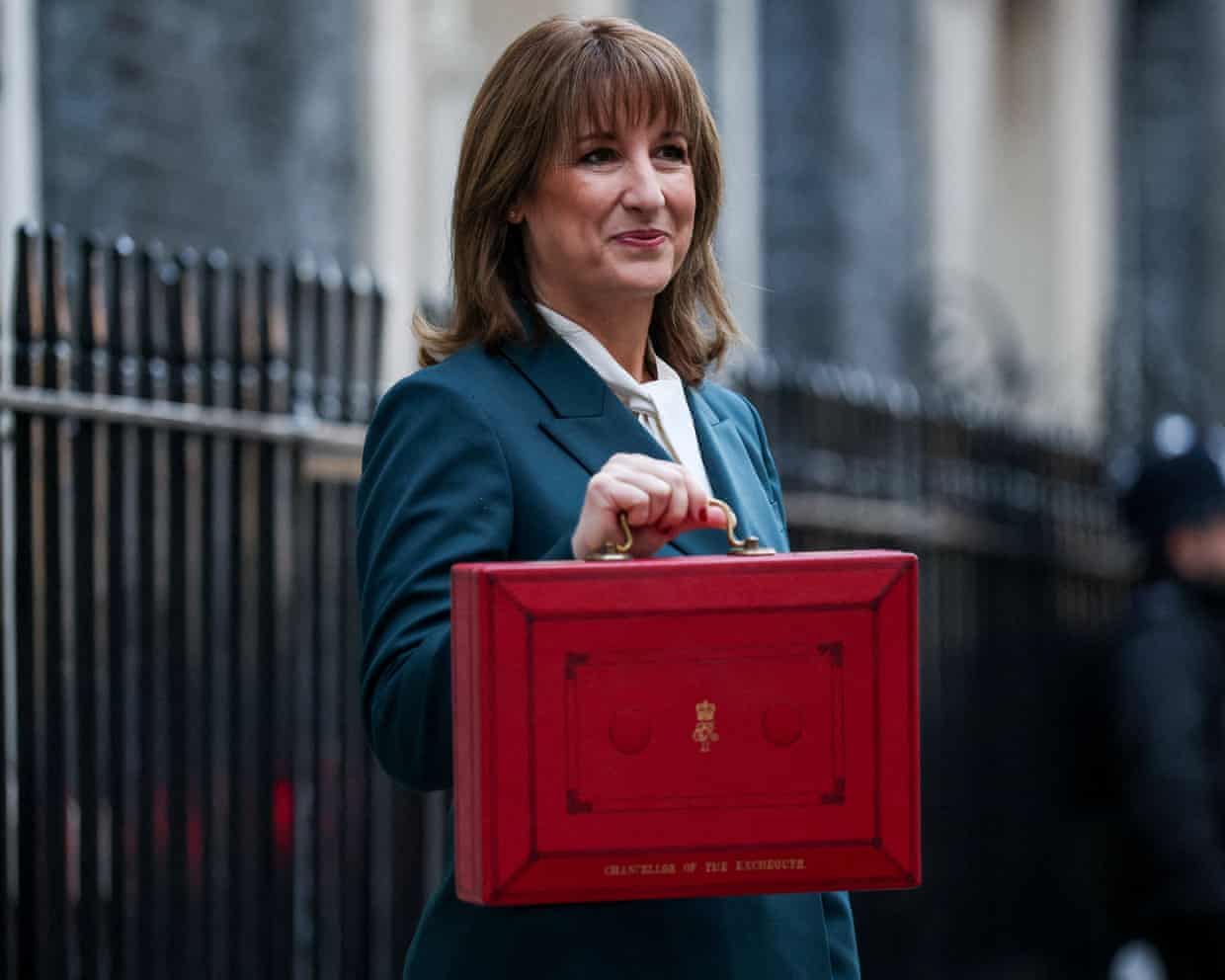
OBR complained to Treasury before budget about leaks spreading ‘misconceptions’
The Office for Budget Responsibility complained to senior Treasury officials in the run-up to the budget about a flurry of leaks that it said spread “misconceptions” about its forecasts, it has emerged.Prof David Miles of the OBR’s budget responsibility committee told MPs on the Treasury select committee on Tuesday that the watchdog had raised the issue of leaks with the department before the chancellor’s statement last week.“I think it was clear that there was lots of information appearing in the press which perhaps wouldn’t normally be out there and that this wasn’t from our point of view particularly helpful,” he said.He added: “We made it clear that they were not helpful and that we weren’t in a position of course to put them right.”Miles was appearing before the committee after the OBR chair, Richard Hughes, resigned on Monday, taking responsibility for the inadvertent release of its budget documents about an hour before Rachel Reeves stood up to announce her tax and spending plans

OECD warns Reeves higher taxes and spending restraint will limit consumer expenditure
A leading thinktank has warned Rachel Reeves that tight government spending and higher taxes will restrict consumer expenditure, despite it predicting the UK economy will grow at a faster pace than France, Germany and Italy next year.Analysts at the Organisation for Economic Cooperation and Development (OECD) said the government’s ongoing “fiscal consolidation” – meaning higher taxes and reduced government spending – would act as a “headwind” to the UK economy, with “past tax and spending adjustments weighing on household disposable income and slowing consumption”.The Paris-based organisation predicted that the UK economy would expand by 1.2% next year, while the big three eurozone economies would each fail to reach 1%.Offering a boost to Reeves after she faced calls to resign after the budget, the UK’s growth rate was upgraded from a previous forecast of 1% for next year

‘The Chinese will not pause’: Volvo and Polestar bosses urge EU to stick to 2035 petrol car ban
As the battle lines harden amid Germany’s intensifying pressure on the European Commission to scrap the 2035 ban on production of new petrol and diesel cars, two Swedish car companies, Volvo and Polestar, are leading the campaign to persuade Brussels to stick to the date.They argue such a move is a desperate attempt to paper over the cracks in the German car industry, adding that it will not just prolong take up of electric vehicles but inadvertently hand the advantage to China.“Pausing 2035 is just a bad, bad idea. I have no other words for that,” says German-born Michael Lohscheller, the chief executive of Polestar, Europe’s only all-electric car manufacturer.“If Europe doesn’t take the lead in this transformation, be rest assured, other countries will do it for us
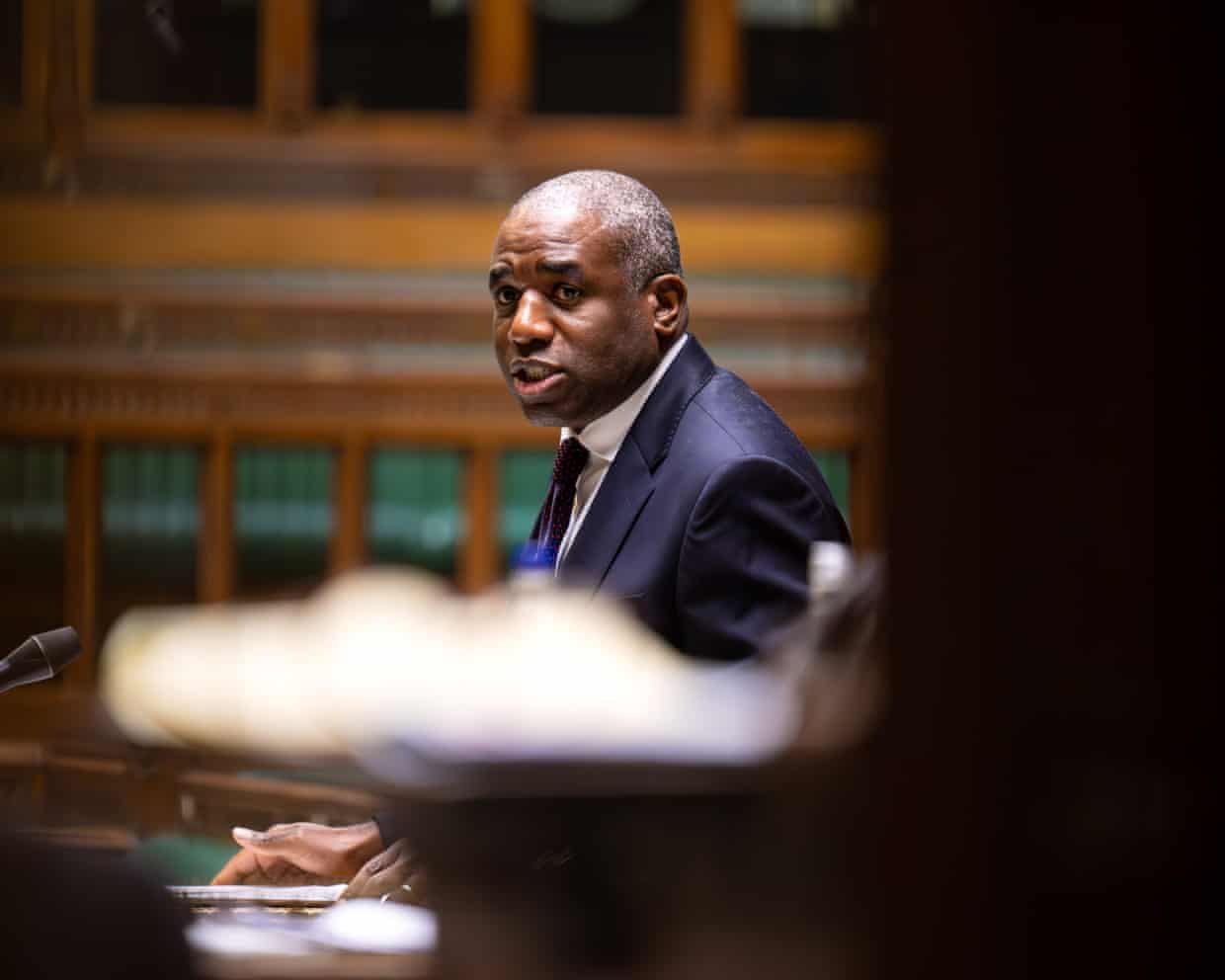
Is David Lammy persuaded by his own jury trials proposal? Not sure. But he said it anyway | John Crace
UK ministers aim to ban cryptocurrency political donations over anonymity risks
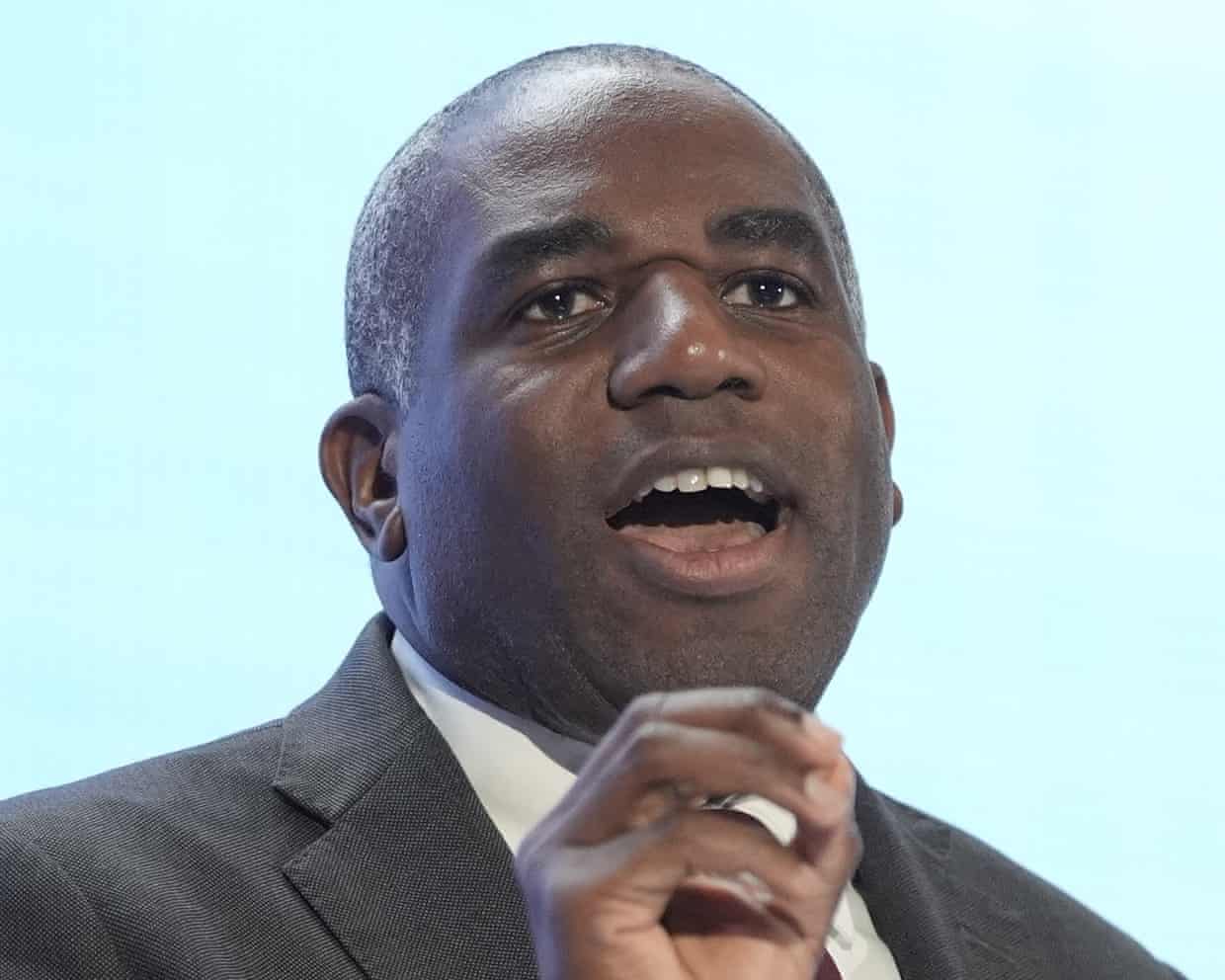
David Lammy tells of ‘traumatic’ racial abuse in youth after Farage allegations

Angela Rayner to lay amendment to speed up workers’ rights bill

UK terror watchdog warns national security plan ignores escalating online threats

Attorney general urges Nigel Farage to apologise over alleged racism and antisemitism