OBR complained to Treasury before budget about leaks spreading ‘misconceptions’
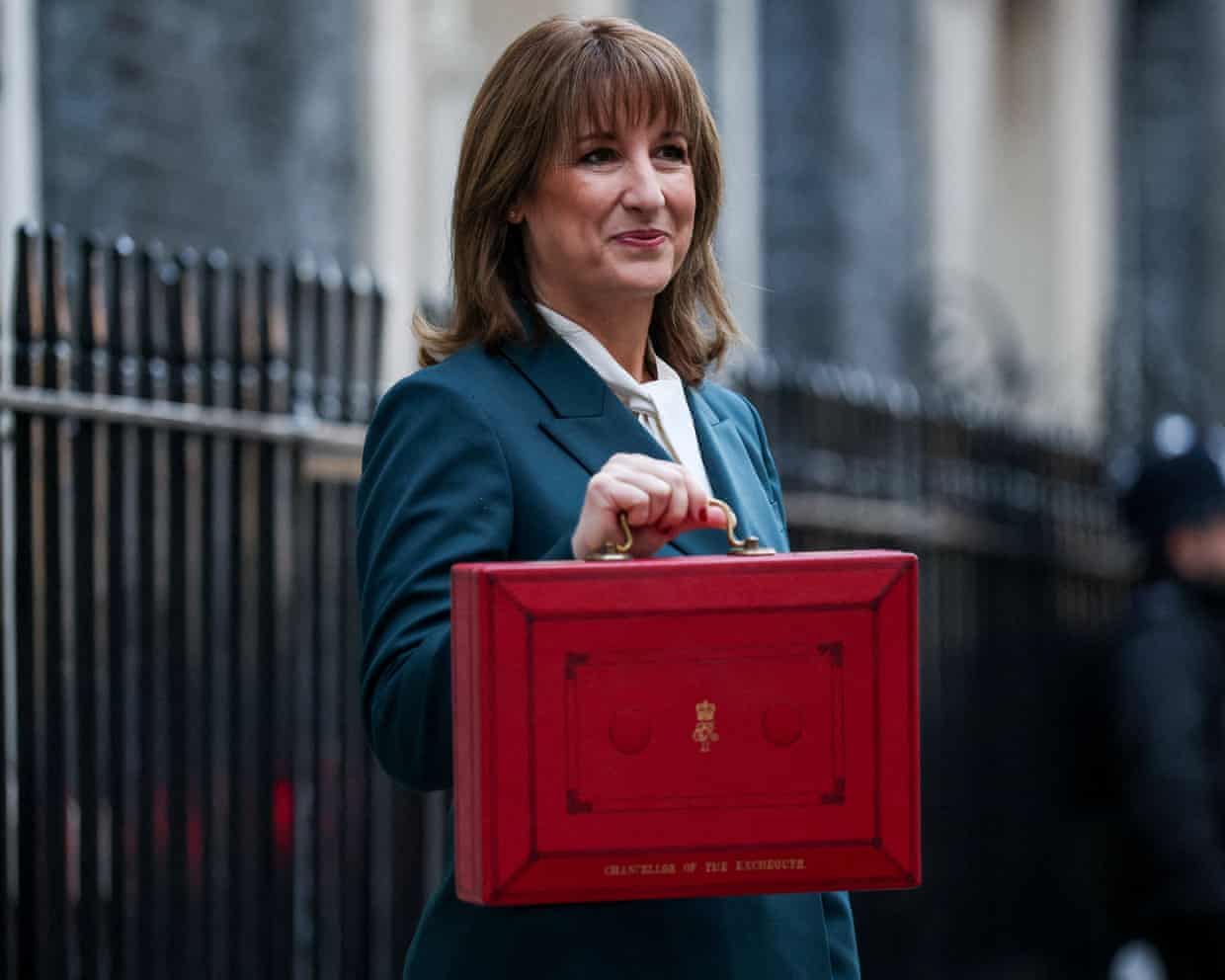
The Office for Budget Responsibility complained to senior Treasury officials in the run-up to the budget about a flurry of leaks that it said spread “misconceptions” about its forecasts, it has emerged.Prof David Miles of the OBR’s budget responsibility committee told MPs on the Treasury select committee on Tuesday that the watchdog had raised the issue of leaks with the department before the chancellor’s statement last week.“I think it was clear that there was lots of information appearing in the press which perhaps wouldn’t normally be out there and that this wasn’t from our point of view particularly helpful,” he said.He added: “We made it clear that they were not helpful and that we weren’t in a position of course to put them right.”Miles was appearing before the committee after the OBR chair, Richard Hughes, resigned on Monday, taking responsibility for the inadvertent release of its budget documents about an hour before Rachel Reeves stood up to announce her tax and spending plans.
The prime minister’s official spokesperson insisted on Tuesday that the watchdog’s chair had not been pushed.“It’s categorically untrue that Richard Hughes was forced to go,” he said.“The chancellor has written to Richard and thanked him for leading the OBR and his many years dedicated to public service.”As well as the premature budget release, Hughes’s departure also followed the publication on Friday of a letter that took what he called the “unusual step” of spelling out the evolution of the OBR’s forecasts over time, prompting a furious row about Reeves’s account of the backdrop to her budget decisions.Miles said the letter was published because the watchdog felt the public had received a false impression, which was “damaging to the OBR and to the process”.
However, he denied that, as opposition politicians have claimed, the OBR’s letter showed Reeves was misleading in her 4 November pre-budget speech, in which she underlined the perilous state of the public finances.He said the OBR’s forecasts “didn’t suggest that the fiscal outlook was problem free” and described the margin for error, or headroom, on the chancellor’s fiscal rules, which was £4.2bn in the 31 October forecast, as a “sliver” and “wafer thin”.“I don’t think it was misleading for the chancellor to say that the fiscal position was very challenging,” he said.However, Miles did highlight two “misconceptions” – the idea that the OBR had shifted the time period over which it assesses the yields on government bonds, perhaps under pressure from government; or that its forecasts had swung dramatically at the last minute, affecting Labour’s decision-making.
He told MPs there was “a view that the OBR’s forecasts were wildly fluctuating in the process both leading up to the pre-measures forecast, and perhaps after it as well, and that that had made the budget process more chaotic than it otherwise would have been”.His evidence also flatly contradicted a government briefing on 14 November, as markets reacted to news that Reeves had dropped plans to raise income tax, which suggested that decision resulted from improved forecasts.“There seemed to be a misconception that there seemed to have been some good news, and I’m not sure where that came from: it didn’t exist,” he told the committee.Sign up to Business TodayGet set for the working day – we'll point you to all the business news and analysis you need every morningafter newsletter promotion“What had happened is that the forecast for headroom had gradually improved a little bit in the run-up to 31 October” (when the final ‘pre-measures’ forecast was sent to Reeves).Questioned by the Conservative former Treasury minister John Glen, Miles said the watchdog wanted to make clear that it was not “either the patsy that was doing what the government wanted, or that through its own fickle behaviour changing from one day to the next [it] was making it virtually impossible for the government”.
As OBR officials were being questioned by MPs, the Bank of England governor, Andrew Bailey, was defending the institution against attacks.He told a Bank press conference to launch its financial stability report: “The reason the OBR was created was to ensure there was a source of independent forecasting and an independent assessment of fiscal policy … So attacks on the OBR in terms of the principle [of independence], I would say, ‘No, can we please remember why it was done and the principles underlying it.’”Hughes’s predecessor Robert Chote added his voice to concerns about the volume of leaks at a separate hearing, before the House of Lords economic affairs committee.Discussing how to restore confidence in the OBR’s role, he said: “You want, bluntly, ministers and the wider political side and official side [of the Treasury] to spend the weeks running up to a budget concentrating on the substance of it and how you’re going to explain it to people after the event, rather than trying to manage expectations as you go through, or to provide a running commentary on either the policy package or on the forecast.”Miles told the Treasury committee that the slew of leaks may have hit economic growth by exaggerating consumer and business uncertainty, which “may well have been exacerbated by leaks which some days seemed to be suggesting one thing and the next day something different”.
He added: “I don’t think that can have helped.”He defended the OBR’s decision to reassess its forecasts for the economy’s underlying productivity outlook this summer.Reeves and Keir Starmer have expressed frustration that this rethink, which led to a downgrade in growth forecasts, had not taken place earlier.Miles said it had been important to wait until the impact of the big economic shocks of Covid and Russia’s invasion of Ukraine had faded, and it would have been “trigger-happy” to move earlier.

Production of French-German fighter jet threatened by rivalries, chief executive says
The leaders of France and Germany have a “strong willingness” to build a new fighter jet together despite bitter internal rivalries, according to the chief executive of engine manufacturer Safran.A row over who should lead between French aerospace company Dassault and the German unit of Airbus has threatened to break apart the countries’ efforts to make a next-generation fighter jet.France’s Safran, one of the world’s biggest engine-makers, is due to co-produce turbines for the aircraft. Its chief executive, Olivier Andriès, told reporters in London on Tuesday that relations were “very strained” between the lead partners on the Future Combat Air System (known as Scaf in France)However, he added that the offices of the French president, Emmanuel Macron, and the German chancellor, Friedrich Merz, wanted a solution. “Obviously the relationship between Airbus and Dassault is extremely difficult,” Andriès said

Tunbridge Wells water cut likely to last after treatment problem reoccurs
Water shortages in Tunbridge Wells that have forced schools and businesses to close look likely to continue for at least another day after the local water company said the problem with its plant had reoccurred.The Drinking Water Inspectorate (DWI) has said it will investigate.Thousands of homes in the Kent town have been without water since the weekend after South East Water accidentally added the wrong chemicals to the tap water supply.Schools across the area have been shut, and residents have been filling buckets with rainwater to flush toilets. Cats, dogs and guinea pigs have been given bottled mineral water to drink as the people of Tunbridge Wells wait for their water to be switched back on

Sam Altman issues ‘code red’ at OpenAI as ChatGPT contends with rivals
Sam Altman has declared a “code red” at OpenAI to improve ChatGPT as the chatbot faces intense competition from rivals.According to a report by tech news site the Information, the chief executive of the San Francisco-based startup told staff in an internal memo: “We are at a critical time for ChatGPT.”OpenAI has been rattled by the success of Google’s latest AI model, Gemini 3, and is devoting more internal resources to improving ChatGPT.Last month, Altman told employees that the launch of Gemini 3, which has outperformed rivals on various benchmarks, could create “temporary economic headwinds” for the company. He added: “I expect the vibes out there to be rough for a bit

The fight to see clearly through big tech’s echo chambers
Hello, and welcome to TechScape. I’m your host, Blake Montgomery. Today, I’m mulling over whether to upgrade my iPhone 11 Pro. In tech news, there’s a narrative battle afoot in Silicon Valley, tips on avoiding the yearly smartphone upgrade cycle and new devices altogether, and artificial intelligence’s use in government, for better and for worse.The encroachment of technology can feel inevitable

Serena Williams quietly re-enters drug-testing pool in step toward possible 2026 return
Serena Williams has taken the procedural move required of any player contemplating a competitive comeback, after the 23-time grand slam singles champion re-entered the International Tennis Integrity Agency’s (ITIA) registered testing pool for the first time since 2022.Williams, 44, has not played an official match since her run to the third round of the US Open more than three years ago. Although she described her departure at the time as “evolving away” from the sport rather than a hard retirement, she filed the paperwork with the ITIA that September that exempted her from the sport’s stringent whereabouts requirements. To return to competition, however, players must make themselves available for out-of-competition testing for six months before they are allowed to enter an event.Williams’s name appeared on the agency’s updated testing-pool list dated 6 October

Men’s Rugby World Cup 2027: how the draw will work and the new format explained
A potential path to victory at the 2027 men’s Rugby World Cup will become clearer in Sydney on Wednesday when the draw for the tournament is madeKicking off on 1 October 2027, the men’s event will feature 24 teams instead of 20, and will be the first to include a round of 16. Each tournament since 2003 has included 20 competing nations, and the previous format moved straight from the pool stage to the quarter-finals. There will be a total of 52 matches in 2027, up from 48.Instead of four pools of five there are six pools of four. The eventual winners will still be obliged to play seven matches to claim the trophy, but will play one pool match fewer, before the last-16 game for a place in the last eight
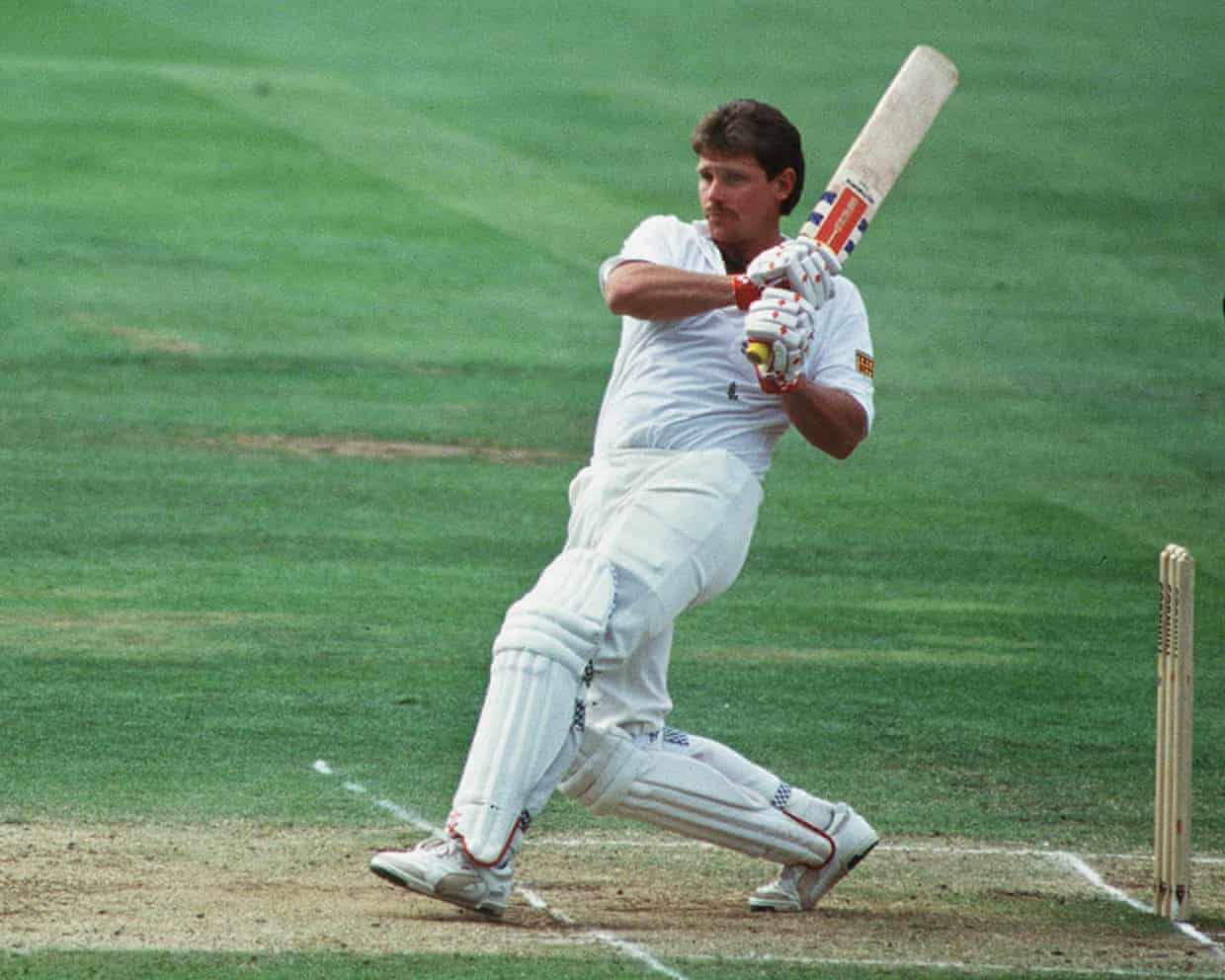
‘He was a batter ahead of his time’: Robin Smith, former England cricketer, dies aged 62
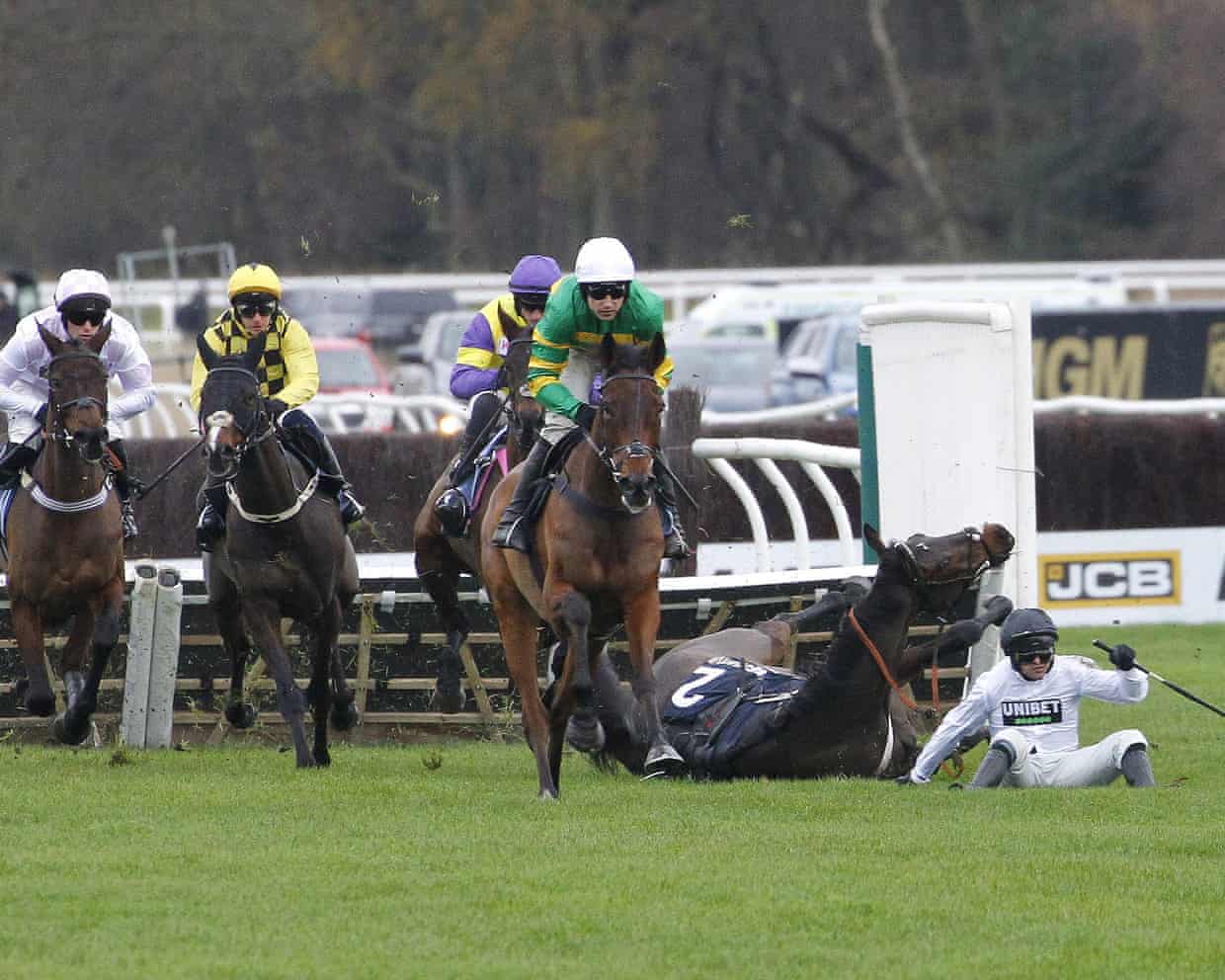
Constitution Hill should never be asked to jump a hurdle in public again | Greg Wood

‘This is what real inclusion looks like’: eight-year-old learns to love skateboarding despite barriers

England abandon all-out pace attack with recall of Will Jacks for second Ashes Test in Brisbane

The Breakdown | Thirty years of Champions Cup has given us the beastly, beautiful and bizarre

‘We make a great living’: Emma Raducanu on why she won’t moan about the tennis calendar