Strengthened Australia welcome England to Gabbatoir in pivotal Ashes week | Ali Martin
My first day at the Gabba was 23 years ago, half a lifetime having passed since I slept on my brother’s sofa across the river and followed the Ashes tour as a backpacker.The coin went up, Nasser Hussain decided to have a bowl, and Steve Waugh’s Australians cashed in on generosity.Having not returned until 2017‑18, and then covered the Covid tour four years later, the Sydney finale in 2003 remains the only time I have seen England win a Test on Australian soil.Even then I missed the last day: flat broke and forced to head back to Queensland to find work, I eventually found myself on a farm upstate, shovelling melons like a scrum-half for eight hot hours a day while dodging venomous snakes underfoot.It was three dollars to the pound back then, but the main difference before the tour started was expectation.
There was precious little, other than of a good time ahead, a chance to watch that great Australia team first hand, and the hope that one or two Englishmen might stand up in the heat.Michael Vaughan’s glowing bat answered that call, at least, peeling off 633 princely runs in an otherwise one‑sided 4–1 defeat.Australians could be forgiven for wondering why expectations were higher this time around given England’s record since.The 3–1 win under Andrew Strauss in 2010-11 remains the one island of bliss in an ocean of otherwise thwarted trips, with two whitewashes and a couple of 4–0 scorelines underlining how hard it can be to swim against the tide.Optimism came chiefly from England’s fast-bowling stocks and a positive outlook, plus an Australia side deemed to be approaching its end.
But a two‑day bunfight in Perth – one that hinged ultimately on an hour of ruinous batting – paused all that talk, triggering a wave of derision towards England and sending them into must‑win territory at the Gabba this week.Mathematically this is not true, of course, but those who cover Ashes tours are hard-wired with one particular statistic above all: no team have overcome a 2–0 deficit to win a series bar Australia in 1936-37.And they had a certain Don Bradman leading the fightback with scores of 270, 212 and 169 across the final three Tests.Ben Stokes tends to reject the relevance of history which, at a ground such as the Gabba – an unconquerable citadel for England for nearly 40 years – is probably for the best.Although tactical tidbits from previous “Gabbatoir” ordeals go slightly out of the window anyway, with the second Test that starts on Thursday a first Ashes day‑nighter on Vulture Street.
A sport already built on myriad variables gets a whole heap more when the pink Kookaburra ball comes out to play.It can zip around in the day – India were rolled for 36 in bright Adelaide sunshine five years ago – and it can also go soft, forcing fielding sides to sit in.But even when tired, it can still suddenly burst into life before bedtime – the so-called “witching hour” that readers with young children will doubtless recognise.All this led to the floodlit format recently being dubbed “a lottery” by Stuart Broad but Australia’s record of played 14, won 13 suggests otherwise.Notwithstanding Mitchell Starc’s pink-ball pre‑eminence and greater exposure for their batters, it still comes down to deft in‑game management, an appreciation of conditions, and superior split‑second decision making.
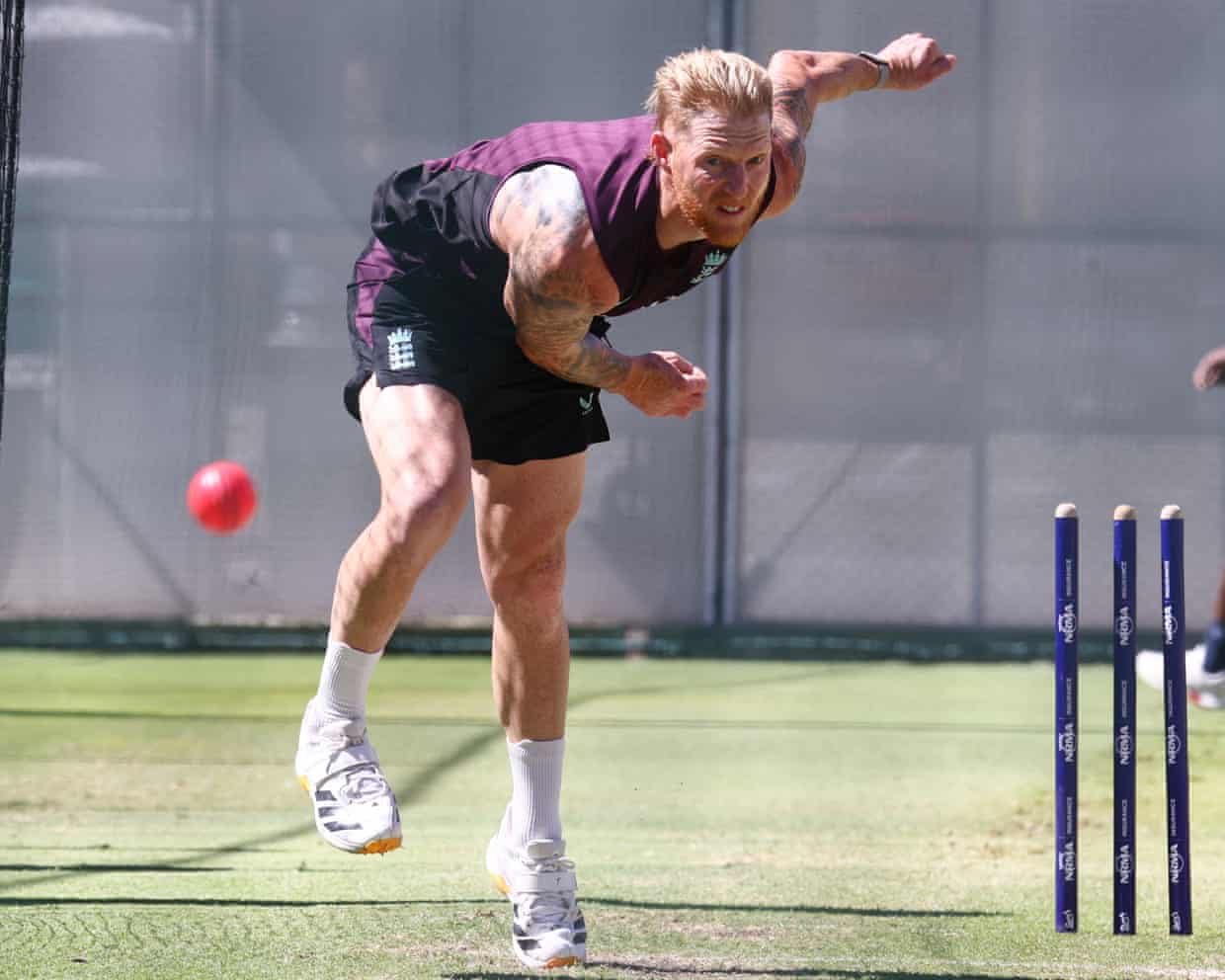
Given events on the second and, ahem, final day in Perth, these challenges will likely be of greater concern for England’s supporters than the Gabba factor itself.On Tuesday, before training, Stokes doubled down on a belief that his players have the wherewithal to get it right in the moment.This may induce eyes being rolled but the one day-night Test Stokes has overseen is the 267‑run victory against New Zealand in Mount Maunganui in 2023.There was a smart declaration on day one and, for all the talk of one‑dimensional batting, an even smarter slowdown on day three that allowed Broad to wreak havoc with a new ball under lights.Sign up to The SpinSubscribe to our cricket newsletter for our writers' thoughts on the biggest stories and a review of the week’s actionafter newsletter promotionEngland (confirmed): Zak Crawley, Ben Duckett, Ollie Pope, Joe Root, Harry Brook, Ben Stokes (c), Jamie Smith (wk), Will Jacks, Gus Atkinson, Brydon Carse, Jofra Archer Australia (possible): Travis Head, Jake Weatherald, Marnus Labuschagne, Steve Smith (c), Josh Inglis, Cameron Green, Alex Carey (wk), Mitchell Starc, Scott Boland, Brendon Doggett, Nathan Lyon The seamers are likely to dominate here – Jofra Archer has looked a nightmare to face under lights – but Stokes has one fewer in his quiver than last week, bringing Will Jacks in for the injured Mark Wood.
With the humidity high, passages of attrition possible, and the quick men likely to need breathers, the option of a spinner does seem reasonable enough.The question in the short term is whether Jacks, a serviceable part‑timer who also bolsters the batting, can give Stokes the desired control.The broader one is what this all means for Shoaib Bashir, who after two years of investment with this very tour in mind has been leapfrogged by a wildcard pick.Australia’s one enforced change is Usman Khawaja making way with the back issue that blighted him in Perth.While Pat Cummins and Josh Hazlewood are still out – Cummins has been in Brisbane, amid whispers of a possible late surprise – the hosts appear stronger for the loss of Khawaja, not least if the dangerous Josh Inglis comes into the middle order.
It all adds up to a pivotal week for the tour and this England team,The melon fields of north Queensland are unlikely to follow but, given what 2–0 down would mean, their only option is to go for broke,

Charlie Kirk tops Wikipedia’s list of most-read articles in 2025
Wikipedia’s article on Charlie Kirk was the most read on the online encyclopedia this year, as users sought out information on the conservative activist.People viewed the entry on Kirk nearly 45m times, many after he was shot at a university campus debate on 10 September.Although Kirk was a well-known figure in the US as co-founder of the Turning Point USA organisation, his death attracted headline coverage around the world. More than 40% of the views for the most-read article on English-language Wikipedia in 2025 came from outside the US, according to data from the Wikimedia Foundation, the non-profit organisation that operates the website.The second-most read is a regular feature in Wikipedia’s annual list: notable deaths of the year

Age of the ‘scam state’: how an illicit, multibillion-dollar industry has taken root in south-east Asia
For days before the explosions began, the business park had been emptying out. When the bombs went off, they took down empty office blocks and demolished echoing, multi-cuisine food halls. Dynamite toppled a four-storey hospital, silent karaoke complexes, deserted gyms and dorm rooms.So came the end of KK Park, one of south-east Asia’s most infamous “scam centres”, press releases from Myanmar’s junta declared. The facility had held tens of thousands of people, forced to relentlessly defraud people around the world
Siri-us setback: Apple’s AI chief steps down as company lags behind rivals
Apple’s head of artificial intelligence, John Giannandrea, is stepping down from the company. The move comes as the Silicon Valley giant has lagged behind its competitors in rolling out generative AI features, in particular its voice assistant Siri. Apple made the announcement on Monday, thanking Giannandrea for his seven-year tenure at the company.Tim Cook, Apple’s CEO, said his fellow executive helped the company “in building and advancing our AI work” and allowing Apple to “continue to innovate”. Giannandrea will be replaced by longtime AI researcher Amar Subramanya

‘It’s going much too fast’: the inside story of the race to create the ultimate AI
On the 8.49am train through Silicon Valley, the tables are packed with young people glued to laptops, earbuds in, rattling out code.As the northern California hills scroll past, instructions flash up on screens from bosses: fix this bug; add new script. There is no time to enjoy the view. These commuters are foot soldiers in the global race towards artificial general intelligence – when AI systems become as or more capable than highly qualified humans

AI’s safety features can be circumvented with poetry, research finds
Poetry can be linguistically and structurally unpredictable – and that’s part of its joy. But one man’s joy, it turns out, can be a nightmare for AI models.Those are the recent findings of researchers out of Italy’s Icaro Lab, an initiative from a small ethical AI company called DexAI. In an experiment designed to test the efficacy of guardrails put on artificial intelligence models, the researchers wrote 20 poems in Italian and English that all ended with an explicit request to produce harmful content such as hate speech or self-harm.They found that the poetry’s lack of predictability was enough to get the AI models to respond to harmful requests they had been trained to avoid – a process know as “jailbreaking”

ChatGPT-5 offers dangerous advice to mentally ill people, psychologists warn
ChatGPT-5 is offering dangerous and unhelpful advice to people experiencing mental health crises, some of the UK’s leading psychologists have warned.Research conducted by King’s College London (KCL) and the Association of Clinical Psychologists UK (ACP) in partnership with the Guardian suggested that the AI chatbotfailed to identify risky behaviour when communicating with mentally ill people.A psychiatrist and a clinical psychologist interacted with ChatGPT-5 as if they had a number of mental health conditions. The chatbot affirmed, enabled and failed to challenge delusional beliefs such as being “the next Einstein”, being able to walk through cars or “purifying my wife through flame”.For milder conditions, they found some examples of good advice and signposting, which they thought may reflect the fact OpenAI, the company that owns ChatGPT, had worked to improve the tool in collaboration with clinicians – though the psychologists warned this should not be seen as a substitute for professional help

The rise of deepfake pornography in schools: ‘One girl was so horrified she vomited’
Twelve more prisoners in England and Wales released in error in last month

UN experts raise concerns over homes rented out by English social landlord
Almost 4 million children in UK affected by economic abuse, charity finds

Resident doctors in England to go on strike in run-up to Christmas
Assisted dying bill is safer than any other in the world | Letters