‘It’s going much too fast’: the inside story of the race to create the ultimate AI
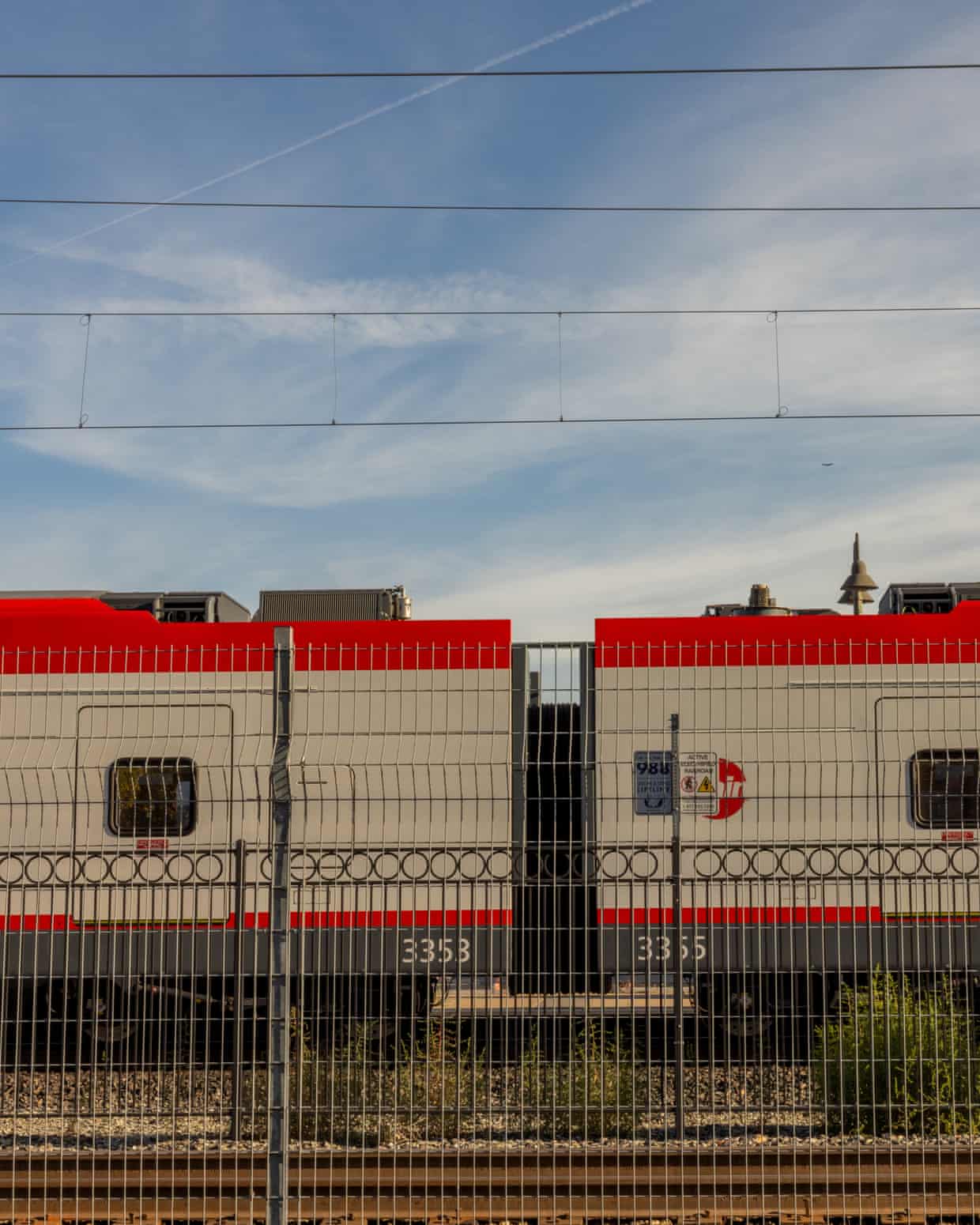
On the 8,49am train through Silicon Valley, the tables are packed with young people glued to laptops, earbuds in, rattling out code,As the northern California hills scroll past, instructions flash up on screens from bosses: fix this bug; add new script,There is no time to enjoy the view,These commuters are foot soldiers in the global race towards artificial general intelligence – when AI systems become as or more capable than highly qualified humans.
Here in the Bay Area of San Francisco, some of the world’s biggest companies are fighting it out to gain some kind of an advantage.And, in turn, they are competing with China.This race to seize control of a technology that could reshape the world is being fuelled by bets in the trillions of dollars by the US’s most powerful capitalists.The computer scientists hop off at Mountain View for Google DeepMind, Palo Alto for the talent mill of Stanford University, and Menlo Park for Meta, where Mark Zuckerberg has been offering $200m-per-person compensation packages to poach AI experts to engineer “superintelligence”.For the AI chip-maker Nvidia, where the smiling boss, Jensen Huang, is worth $160bn, they alight at Santa Clara.
The workers flow the other way into San Francisco for OpenAI and Anthropic, AI startups worth a combined half a trillion dollars – as long as the much-predicted AI bubble doesn’t explode.Breakthroughs come at an accelerating pace with every week bringing the release of a significant new AI development.Anthropic’s co-founder Dario Amodei predicts AGI could be reached by 2026 or 2027.OpenAI’s chief executive, Sam Altman, reckons progress is so fast that he could soon be able to make an AI to replace him as boss.“Everyone is working all the time,” said Madhavi Sewak, a senior leader at Google DeepMind, in a recent talk.
“It’s extremely intense.There doesn’t seem to be any kind of natural stopping point, and everyone is really kind of getting ground down.Even the folks who are very wealthy now … all they do is work.I see no change in anyone’s lifestyle.No one’s taking a holiday.
People don’t have time for their friends, for their hobbies, for … the people they love.”These are the companies racing to shape, control and profit from AGI – what Amodei describes as “a country of geniuses in a datacentre”.They are tearing towards a technology that could, in theory, sweep away millions of white-collar jobs and pose serious risks in bioweapons and cybersecurity.$2.8tnForecast for spending on AI datacentres by the end of the decadeOr it could usher in a new era of abundance, health and wealth.
Nobody is sure but we will soon find out.For now, the uncertainty energises and terrifies the Bay Area.It is all being backed by huge new bets from the Valley’s venture capitalists, which more than doubled in the last year, leading to talk of a dangerous bubble.The Wall Street brokerage Citigroup in September uprated its forecast for spending on AI datacentres by the end of the decade to $2.8tn – more than the entire annual economic outputs of Canada, Italy or Brazil.
Yet amid all the money and the optimism, there are other voices that do not swallow the hype,As Alex Hanna, a co-author of the dissenting book The AI Con, put it: “Every time we reach the summit of bullshit mountain, we discover there’s worse to come,”Arriving at Santa Clara“This is where AI comes to life,” yelled Chris Sharp,Racks of multimillion-dollar microprocessors in black steel cages roared like jet engines inside a windowless industrial shed in Santa Clara, at the southern end of the Caltrain commuter line,The 120-decibel din made it almost impossible to hear Digital Realty’s chief technology officer showing off his “screamers”.
To hear it is to feel in your skull the brute force involved in the the development of AI technology.Five minutes’ exposure left ears ringing for hours.It is the noise of air coolers chilling sensitive supercomputers rented out to AI companies to train their models and answer billions of daily prompts – from how to bake a brownie to how to target lethal military drones.Nearby were more AI datacentres, operated by Amazon, Google, the Chinese company Alibaba, Meta and Microsoft.Santa Clara is also home to Nvidia, the quartermaster to the AI revolution, which through the sale of its market-leading technology has seen a 30-fold increase in its value since 2020 and is worth $4.
3tn.Even larger datacentres are being built not only across the US but in China, India and Europe.The next frontier is launching datacentres into space.Meta is building a facility in Louisiana large enough to cover much of Manhattan.Google is reported to be planning a $6bn centre in India and is investing £1bn in an AI datacentre just north of London.
Even a relatively modest Google AI factory planned in Essex is expected to emit the equivalent carbon footprint of 500 short-haul flights a week.Powered by a local gas-fired power station, the stacks of circuits in one room at the Digital Realty datacentre in Santa Clara devoured the same energy as 60 houses.A long white corridor opening on to room after room of more “screamers” stretched into the distance.Sometimes the on-duty engineers notice the roar drops to a steadier growl when demand from the tech companies drops.It is never long until the scream resumes.
Arriving at Mountain ViewRide the train three stops north from Santa Clara to Mountain View and the roar fades.The computer scientists who actually rely on the screamers work in more peaceful surroundings.On a sprawling campus set among rustling pines, Google DeepMind’s US headquarters looks more like a circus tent than a laboratory.Staff glide up in driverless Waymo taxis, powered by Google’s AI.Others pedal in on Google-branded yellow, red, blue and green bicycles.
Google DeepMind is in the leading pack of US AI companies jockeying for first place in a race reaching new levels of competitive intensity,This has been the year of sports-star salaries for twentysomething AI specialists and the emergence of boisterous new competitors, such as Elon Musk’s xAI, Zuckerberg’s superintelligence project and DeepSeek in China,There has also been a widening openness about the double-edged promise of AGI, which can leave the impression of AI companies accelerating and braking at the same time,For example, 30 of Google DeepMind’s brightest minds wrote this spring that AGI posed risks of “incidents consequential enough to significantly harm humanity”,By September, the company was also explaining how it would handle “AI models with powerful manipulative capabilities that could be misused to systematically and substantially change beliefs and behaviours … reasonably resulting in additional expected harm at severe scale”.
Such grave warnings feel dissonant among the interior of the headquarters’ playful bubbly tangerine sofas, Fatboy beanbags and colour-coded work zones with names such as Coral Cove and Archipelago.“The most interesting, yet challenging aspect of my job is [working out] how we get that balance between being really bold, moving at velocity, tremendous pace and innovation, and at the same time doing it responsibly, safely, ethically,” said Tom Lue, a Google DeepMind vice-president with responsibility for policy, legal, safety and governance, who stopped work for 30 minutes to talk to the Guardian.Donald Trump’s White House takes a permissive approach to AI regulation and there is no comprehensive nationwide legislation in the US or the UK.Yoshua Bengio, a computer scientist known as a godfather of AI, said in a Ted Talk this summer: “A sandwich has more regulation than AI.”The competitors have therefore found they bear responsibility for setting the limits of what AIs should be allowed to do.
“Our calculus is not so much looking over our shoulders at what [the other] companies are doing, but how do we make sure that we are the ones in the lead, so that we have influence in impacting how this technology is developed and setting the norms across society,” said Lue.“You have to be in a position of strength and leadership to set that.”The question of whose AGI will dominate is never far away.Will it be that of people like Lue, a former Obama administration lawyer, and his boss, the Nobel prize-winning DeepMind co-founder Demis Hassabis? Will it be Musk’s or Zuckerberg’s? Altman’s or Amodei’s at Anthropic? Or, as the White House fears, will it be China’s?“If it’s just a race and all gas, no brakes and it’s basically a race to the bottom, that’s a terrible outcome for society,” said Lue, who is pushing for coordinated action between the racers and governments.But strict state regulation may not be the answer either.
“We support regulation that’s going to help AI be delivered to the world in a way that’s positive,” said Helen King, Google DeepMind’s vice-president for responsibility.“The tricky part is always how do you regulate in a way that doesn’t actually slow down the good guys and give the bad guys loopholes.”The frontier AI companies know they are playing with fire as they make more powerful systems that approach AGI.OpenAI has recently been sued by the family of a 16-year-old who killed himself with encouragement from ChatGPT – and in November seven more suits were filed alleging the firm rushed out an update to ChatGPT without proper testing, which, in some cases, acted as a “suicide coach”.Open AI called the situation “heartbreaking” and said it was taking action.
The company has also described how it has detected the way models can provide misleading information.This could mean something as simple as pretending to have completed an unfinished task.But the fear at OpenAI is that in the future, the AIs could “suddenly ‘flip a switch’ and begin engaging in significantly harmful scheming”.Anthropic revealed in November that its Claude Code AI, widely seen as the best system for automating computer programming, was used by a Chinese state-sponsored group in “the first documented case of a cyber-attack largely executed without human intervention at scale”.It sent shivers through some.
“Wake the f up,” said one US senator on X.“This is going to destroy us – sooner than we think”.By contrast, Prof Yann LeCun, who is about to step down after 12 years as Meta’s chief AI scientist, said Anthropic was “scaring everyone” to encourage regulation that might hinder rivals.Tests of other state-of-the-art models found they sometimes sabotaged programming intended to ensure humans can interrupt them, a worrying trait called “shutdown resistance”.But with nearly $2bn a week in new venture capital investment pouring into generative AI in the first half of 2025, the pressure to realise profits will quickly rise.
Tech companies realised they could make fortunes from monetising human attention on social media platforms that caused serious social problems,The fear is that profit maximisation in the age of AGI could result in far greater adverse consequences,Arriving at Palo AltoThree stops north, the Caltrain hums into Palo Alto station,It is a short walk to Stanford University’s grand campus where donations from Silicon Valley billionaires lubricate a fast flow of young AI talent into the research divisions of Google DeepMind, Anthropic, OpenAI and Meta,Elite Stanford graduates rise fast in the Bay Area tech companies, meaning people in their 20s or early 30s are often in powerful positions in the race to AGI.
Past Stanford students include Altman, Open AI’s chair, Bret Taylor, and Google’s chief executive, Sundar Pichai.More recent Stanford alumni include Isa Fulford, who at just 26 is already one of OpenAI’s research leads.She works on ChatGPT’s ability to take actions on humans’ behalf – so-called “agentic” AI.“One of the strange moments is reading in the news about things that you’re experiencing,” she told the Guardian.After growing up in London, Fulford studied computer science at Stanford and quickly joined OpenAI where she is now at the centre of one of the most important aspects of the AGI race – creating models that can direct themselves towards goals, learn and adapt.
She is involved in setting decision boundaries for these increasingly autonomous AI agents so they know how to respond if asked to carry out tasks that could trigger cyber or biological risks and to avoid unintended consequences.It is a big responsibility, but she is undaunted.“It does feel like a really special moment in time,” she said.“I feel very lucky to be working on this.”Such youth is not uncommon.
One stop north, at Meta’s Menlo Park campus, the head of Zuckerberg’s push for “superintelligence” is 28-year-old Massachusetts Institute of Technology (MIT) dropout Alexandr Wang.One of his lead safety researchers is 31.OpenAI’s vice-president of ChatGPT, Nick Turley, is 30.Silicon Valley has always run on youth, and if experience is needed more can be found in the highest ranks of the AI companies.But most senior leaders of OpenAI, Anthropic, Google DeepMind, X and Meta are much younger than the chief executives of the largest US public companies, whose median age is 57.
“The fact that they have very little life experience is probably contributing to a lot of their narrow and, I think, destructive thinking,” said Catherine Bracy, a former Obama campaign operative who runs the TechEquity campaign organisation.One senior researcher, employed recently at a big AI company, added: “The [young staff] are doing their best to do what they think is right, but if they have to go toe-to-toe and challenge executives they are just less experienced in the ways of corporate politics.”Another factor is that the sharpest AI researchers who used to spend years in university labs are snapped up faster than ever by private companies chasing AGI.This brain drain concentrates power in the hands of profit-motivated owners and their venture capitalist backers.John Etchemendy, a 73-year-old former provost of Stanford who is now a co-director of the Stanford Institute for Human-Centered Artificial Intelligence, has warned of a growing capability gap between the public and private sectors.
“It is imbalanced because it’s such a costly technology,” he said,“Early on, the companies working on AI were very open about the techniques they were using,They published, and it was quasi-academic,But then [they] started cracking down and saying, ‘No, we don’t want to talk about … the technology under the hood, because it’s too important to us – it’s proprietary’,”Etchemendy, an eminent philosopher and logician, first started working on AI in the 1980s to translate instruction manuals for Japanese consumer electronics.
From his office in the Gates computer science building on Stanford’s campus, he now calls on governments to create a counterweight to the huge AI firms by investing in a facility for independent, academic research.It would have a similar function to the state-funded Cern organisation for high-energy physics on the France-Switzerland border.The European Commission president, Ursula von der Leyen, has called for something similar and advocates believe it could steer the technology towards trustworthy, public interest outcomes.“These are technologies that are going to produce the greatest boost in productivity ever seen,” Etchemendy said.“You have to make sure that the benefits are spread through society, rather than benefiting Elon Musk

‘He was a batter ahead of his time’: Robin Smith, former England cricketer, dies aged 62
Tributes have been paid to Robin Smith, whose swashbuckling batting and fearlessness at the crease lit up English cricket in an era when it often languished in the doldrums, following his death at the age of 62.Smith played 62 Tests for England between 1988 and 1996, averaging 43.67. But it was the sight of him taking the fight to the fastest pace bowlers of his generation that will live longest in the memory.His highest Test score of 175, against West Indies in Antigua in 1994, came against a bowling attack led by Curtly Ambrose and Courtney Walsh, who took 924 Test wickets between them
Constitution Hill should never be asked to jump a hurdle in public again | Greg Wood
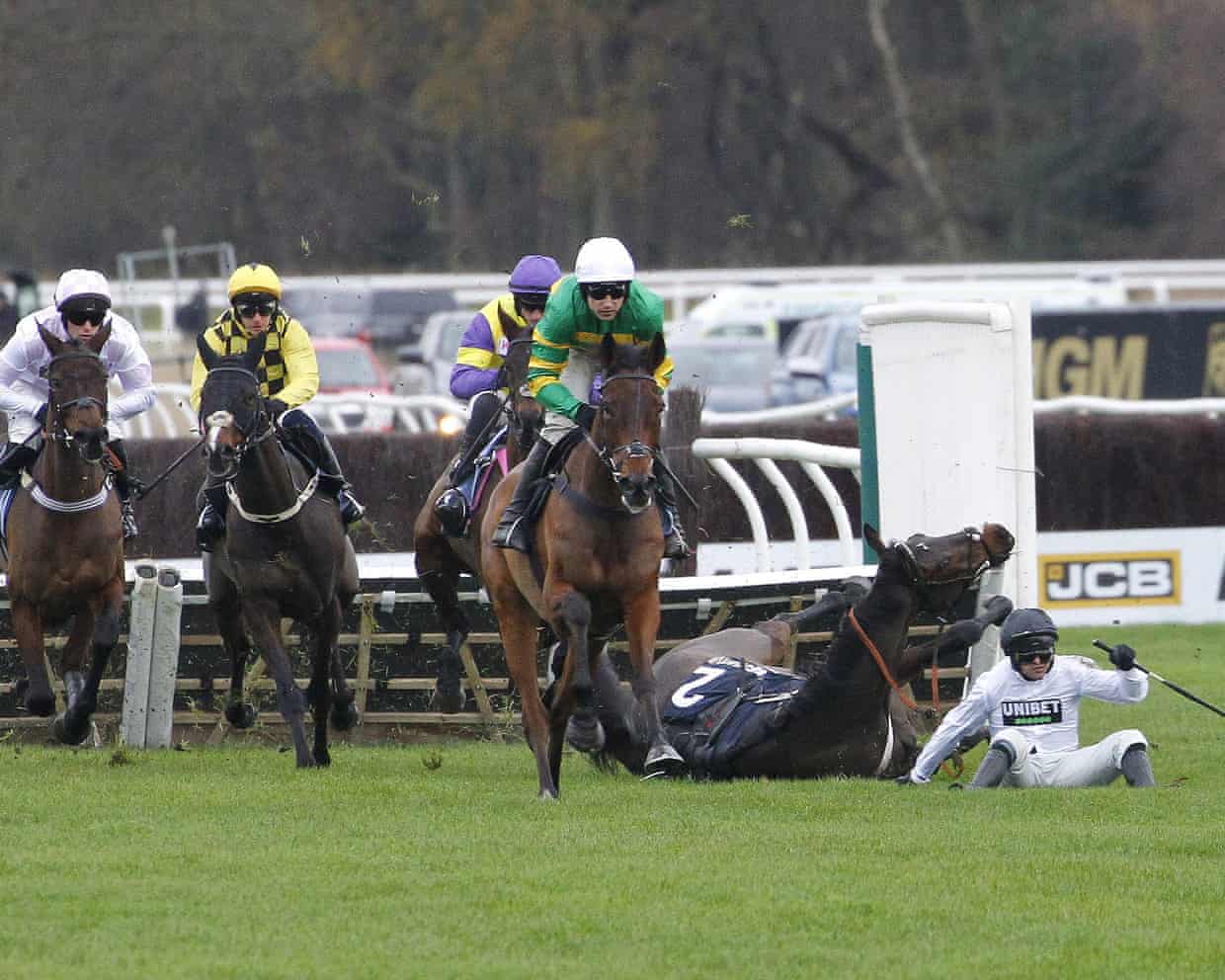
Trainer Nicky Henderson and owner Michael Buckley are still mulling over the options for Constitution Hill after his third fall in four starts at Newcastle on Saturday, but the simple fact that Henderson floated the question “can we go on asking him to do it?” in the immediate aftermath suggests that, in his heart, he already knows the answer. Whatever else might beckon for the eight-year-old – and a recent 160+ rating over timber suggests that he could compete at a very decent level on the Flat – this is a horse that should not be asked to jump a hurdle in public again.Henderson’s competitive streak is as fierce as ever after nearly half a century in the game, and so too his appetite for a challenge. As such, it would be odd if the urge to attempt a repeat of Sprinter Sacre’s unlikely return to Grade One-winning form at the 2016 festival was not nagging away at the back of his mind somewhere. Sprinter Sacre’s second Champion Chase victory was one of the great Cheltenham moments of recent decades, and Constitution Hill, after all, set off as the 4-11 favourite for the Champion Hurdle just eight months ago, with an unbeaten 10-race record to his name
‘This is what real inclusion looks like’: eight-year-old learns to love skateboarding despite barriers
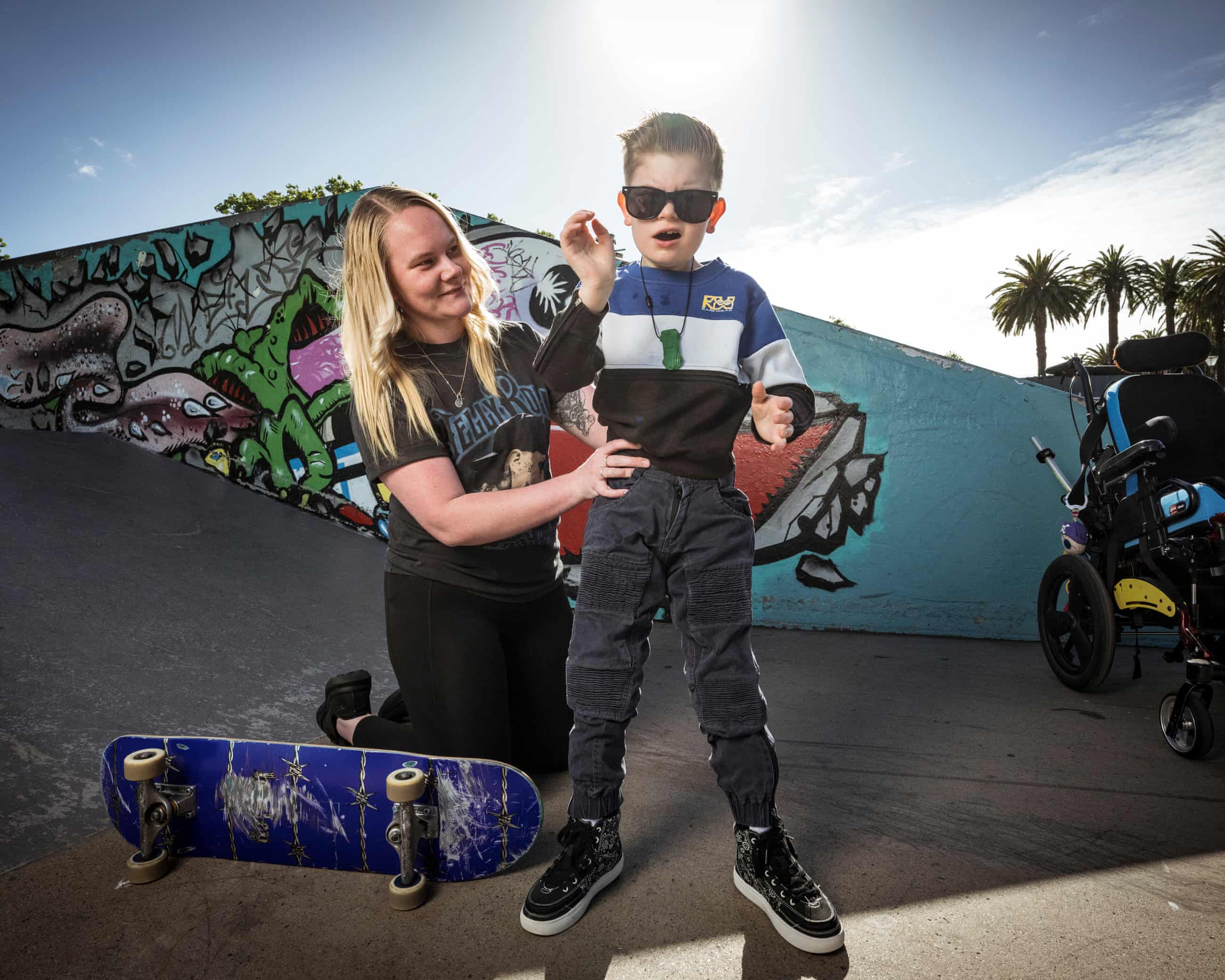
Children with severe disabilities rarely get a chance to have fun like other kids, but with support and some creative thinking, Lloyd Pinn is out at the skate park and enjoying taking risksSporting sunnies, a riding helmet and an adaptive jumper and chinos, Lloyd Pinn stands with his legs apart on the skateboard, with two volunteers running alongside holding a custom-built all ability skate frame for support, as the wheels glide over the skate park surface, the wind on his face.Lloyd is eight years old and living with a rare genetic condition that renders him non-mobile, non-verbal, with a severe intellectual disability and reliant on a feeding tube for sustenance. Around 30% of children with such a condition don’t live past the age of five.Lloyd’s mother Maya Pinn, who designed his skate gear and is also the founder of RareWear Australia, which designs adaptive clothing for children with a disability, says Lloyd has taken to skateboarding as he is a real thrill-seeker who loves hard rock music. She recently took him to see AC/DC at a concert in Melbourne – Hells Bells is his favourite song of all time

England abandon all-out pace attack with recall of Will Jacks for second Ashes Test in Brisbane
Will Jacks will make his third Test appearance, and his first in nearly three years, as England attempt to level the Ashes at the Gabba from Thursday after replacing the injured Mark Wood in the only change to the team that lost the series opener in Perth.With this selection the tourists are abandoning the all-out pace attack that bundled Australia out for 132 in their first innings of the opening Test – and was then pummelled by Travis Head in their second – in favour of deepening their batting lineup and adding a spin-bowling option.The decision followed analysis of recent day-night games, including the role Nathan Lyon has played in his pink-ball outings as well as Kevin Sinclair’s success for West Indies when they became the first and only team to beat Australia in a floodlit match, in Brisbane at the start of last year.Shoaib Bashir is established as England’s preferred spinner, and has played 19 Tests since Jacks was last picked, but he is both a lesser batter and less reliable in the field. The 27-year-old Jacks’s selection means Jofra Archer is the only member of the England team not to have scored a first-class hundred

The Breakdown | Thirty years of Champions Cup has given us the beastly, beautiful and bizarre
Bloodgate, the ‘Hand of Back’ and a drop goal off ‘someone’s arse’ are among the tournament’s delightful eccentricitiesOn the eve of a new Champions Cup season it is worth remembering when and where it all began. The answer is 30 years ago on the shores of the Black Sea where Farul Constanta of Romania hosted France’s mighty Toulouse in the opening pool game of the old Heineken Cup on 31 October 1995.Let’s just say they were different times. The match was played on a Tuesday and, while the crowd was recorded as 3,000, eyewitnesses were focused on the large number of security personnel with barking Alsatian dogs straining at the leash. Toulouse, boasting an array of internationals including Émile Ntamack and Thomas Castaignède, duly registered eight tries and won 54-10

‘We make a great living’: Emma Raducanu on why she won’t moan about the tennis calendar
British No 1 on home comforts of Bromley, joys of commuting and being ‘creeped out’ by paparazziEmma Raducanu has garnered many endorsement deals in her nascent career, but there is perhaps one elusive sponsorship that would be most pleasing to the British No 1 women’s tennis player: ambassador of the London borough of Bromley.During a roundtable discussion with tennis journalists at the end of a gruelling yet satisfying season, Raducanu is merely attempting to describe a quiet off-season spent in her family home when she finds herself delivering a sales pitch about the benefits of living in Bromley. “I’m just so settled,” she says. “I’ve barely been in the UK this year because I’ve been competing so much, but I think just spending really good quality time with my parents has been so nice. I have loved just being in Bromley

The rise of deepfake pornography in schools: ‘One girl was so horrified she vomited’

UN experts raise concerns over homes rented out by English social landlord

Almost 4 million children in UK affected by economic abuse, charity finds

Resident doctors in England to go on strike in run-up to Christmas
Assisted dying bill is safer than any other in the world | Letters

Shortage of ‘breakthrough’ weight loss drugs will slow fight against obesity, WHO warns