‘A cruel penalty’: disabled people face lower benefit payments if conditions not deemed lifelong

Hundreds of thousands of severely ill and disabled people making new claims will have their benefits cut if the government assesses that their condition might improve, charities have said.In April, the health element of universal credit – an extra payment for people assessed as too unwell to work or prepare for work – will be halved to £50 a week and frozen for new claimants unless their condition is found to be terminal or severe and lifelong with no prospect of improvement.Ministers had pledged last summer that the “severe and lifelong” clause – known as the severe conditions criteria – would shield the most severely disabled and ill people from the new lower benefit rate.But charities and disabled people’s organisations (DPOs) have told the Guardian that a wide range of debilitating conditions may not meet the strict eligibility criteria, despite them often leaving someone unable to work.This includes multiple sclerosis, learning disabilities, bipolar, Parkinson’s, ME and long Covid.
Samuel Thomas, a senior policy adviser at the anti-poverty charity Z2K, said: “Cuts to universal credit’s health element threaten to push some of the most seriously ill and disabled people in the country to the brink.The higher rate of support will only be available to [new claimants] whose condition is lifelong and shows no prospect of improvement.“That rigid test could exclude people who have had strokes or heart attacks, or people with conditions like cancer or schizophrenia.Seriously ill and disabled people facing years of significant difficulty are at risk of being left on a lower rate simply because recovery, however partial or distant, cannot be ruled out.”Ella Smith, the welfare rights policy lead for the ME Association, said: “The government says it’s protecting people with the most severe conditions, but in reality, this actively excludes swathes of severely ill and disabled people.
“The fact someone might improve at some point in the future should not be used to reduce essential support today.Reassessment already exists if someone’s condition genuinely improves.Awarding people a lower rate just because they may hypothetically recover later turns the constant struggle with unpredictable conditions into an additional cruel penalty.”Government data estimates that by 2029-30, 730,000 future recipients of universal credit will miss out on the higher rate, with an average loss of £3,000 per year.While a Labour backbench rebellion last summer paused the proposed personal independence payment reforms, MPs voted to go ahead with changes to universal credit.
Under the changes, existing claimants will continue to receive £97 a week whether their disability is judged to be lifelong or not,James Taylor, the director of strategy at Scope, said: “Essentially, we’ll have a two-tier universal credit system,Two people with a similar condition and similar extra costs will get different amounts,Creating the severe conditions criteria is designed to protect some new claimants but it could add another level of jeopardy for disabled people,There’s a risk that certain conditions might not be judged as ‘severe’ and assessors inconsistently interpret and apply new criteria for a new category.
”There is further concern among charities that to qualify for the higher “severe” payment, new claimants must provide extensive medical evidence from the NHS,This can be harder for certain conditions, particularly at a time when waiting lists are still long,Hannah Nicholls-Harrison, a policy manager at Mencap, said the rule could mean a significant number of new universal credit claimants with a learning disability would lose out on support,“Many people struggle to achieve a formal diagnosis of learning disability due to the lack of a clear pathway in the NHS,” she said,“For people with a learning disability who do not have that level of documentation, or who do not have the support to navigate a complex system and advocate for themselves, this will mean missing out on [thousands of pounds] a year.
”Several charities and DPOs said they were concerned the lower benefit rate would push already struggling disabled people into deeper poverty, and in some cases, “destitution”.Thomas said: “The human cost is stark.Families losing out on this vital income could face eviction, go without food and heating, and lose access to the care they depend on.”Tom Pollard, the head of policy at Mind, said: “[Government] protecting a higher rate of payment for people meeting the severe conditions criteria is recognition that the reduced rate is not sufficient for people who are out of work for longer periods of time.“Many people with severe and long-term mental health diagnoses, such as bipolar disorder or schizophrenia, may not meet these criteria, despite impairments and barriers that will often keep them out of work for long stretches of their lives.
”A DWP spokesperson said the government was committed to supporting vulnerable people.They added: “Under the severe conditions criteria, claimants are assessed not on their condition itself but on how it affects them, with the criteria intended to protect those who are not expected ever to be able to work due to a severe lifelong health condition or disability that is unlikely to improve.“Those with the most severe, lifelong conditions, those nearing end of life, and all existing universal credit health claimants will continue to receive the higher rate.”
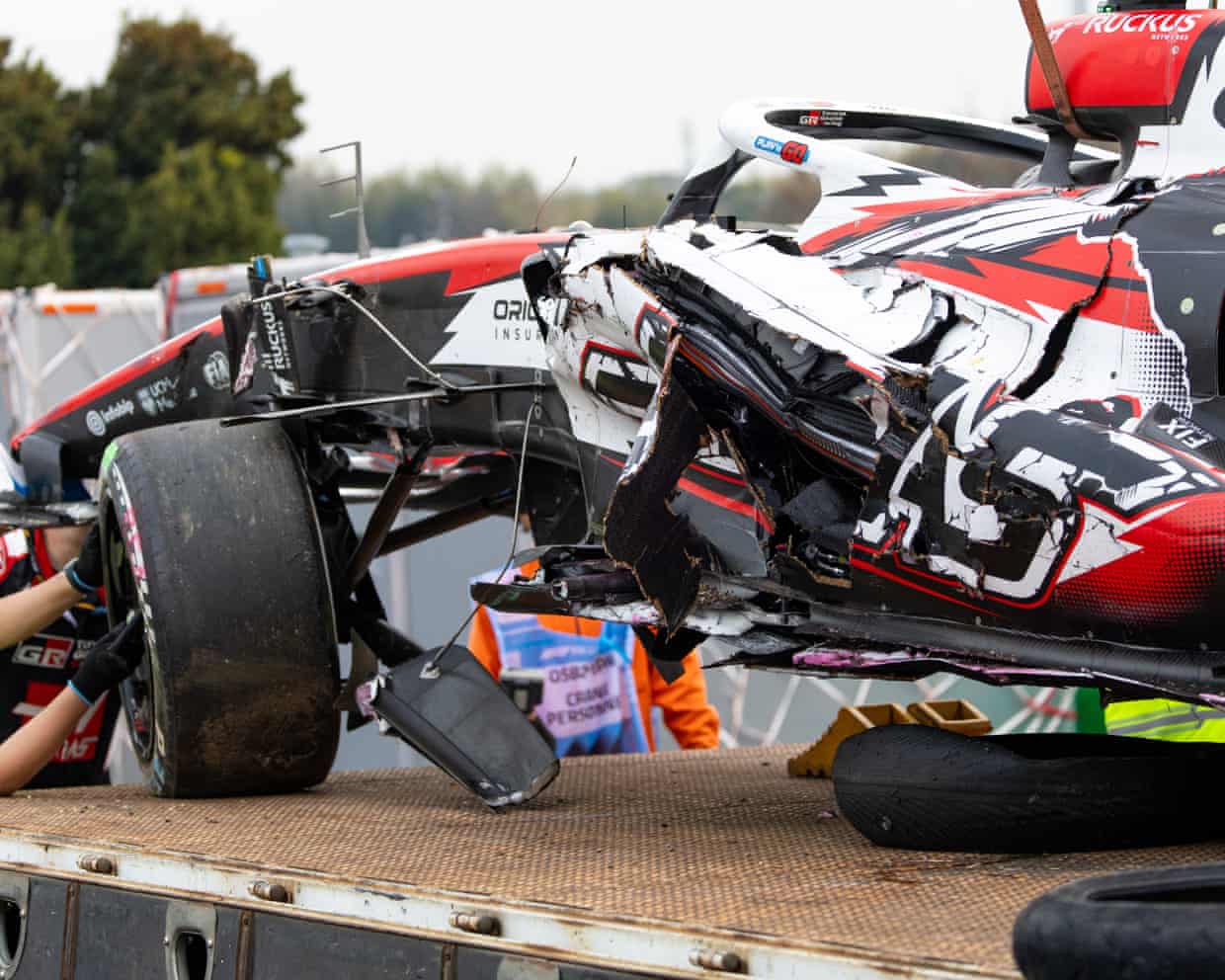
F1 drivers demand urgent action after Oliver Bearman’s ‘scary’ crash at Japan GP
Drivers and leading figures within Formula One have called for urgent action given their serious concern over the potential dangers now inherent in the sport after Oliver Bearman was involved in a huge accident at the Japanese Grand Prix.The crash, caused by cars coming at one another at enormously different speeds, was described by the British driver as “scary” and by his Haas team principal as a lucky escape. The race was ultimately won for Mercedes by Kimi Antonelli, the 19-year-old in the process becoming the youngest driver to lead the world championship.“It was a scary moment out there but everything is OK, which is the main thing,” said Bearman, who escaped the massive crash with only bruising. “The adrenaline is wearing off a bit so it’s going to be a long trip home, but I’m absolutely fine

Kimi Antonelli goes back-to-back with victory in Suzuka – as it happened
But that’s about all that’s needed from me. I’ve been Joey Lynch and it’s been great to have your company once again, watching on as Kimi Antonelli won his second-straight race, became the youngest driver to ever lead the F1 Championship, and flirted with breaking Japan’s underage drinking laws.Stay tuned for Giles Richards’ full report from Japan.Due to the cancellation of the Bahrain and Saudi races, the F1 season will now go on a one-month break until it returns on the first weekend in May from Miami.Until then, thanks and success!Youngest

Kimi Antonelli wins Japan Grand Prix to become youngest F1 championship leader
There was an element of good fortune for Kimi Antonelli in taking victory at the Japanese Grand Prix but the youngster demonstrated emphatically that he is ready to close out with the precision of a veteran if given a sniff of a chance. It is a champion’s trait which was suitably marked, as in so doing the 19-year-old has became the youngest driver to lead the Formula One world championship.Antonelli, still a fresh-faced youth, whooped and hollered with abandon when he took the flag, having claimed the win after dropping from pole to sixth at the start. His sheer unrestrained joy at delivering on his undoubted talent and the pleasure he clearly revels in when competing are positively infectious. After his two successive wins, Formula One not only has a new star to celebrate but one who has staked his claim to be considered a potential champion

Aryna Sabalenka edges tense battle with Coco Gauff to triumph in Miami Open final
Aryna Sabalenka had many reasons to believe history could have been grimly repeating itself on Saturday afternoon. Despite starting her Miami Open final against Coco Gauff striking the ball with clear-minded aggression, the complexion of the match rapidly changed. Suddenly, having been pulled into a tense final set, the world No 1 was struggling to hold on.Similar scenarios played out in her two most important matches against Gauff, and both times Sabalenka had crumbled under the pressure in the deciding set. For all her imperfections, though, the Belarusian’s career has been defined by her desperation to improve

Prem top four looks done and dusted after Northampton repel Saracens comeback
Strange words to write for anyone who has covered this competition for any length of time, but we kind of know who the Prem semi-finalists are going to be. And there’s still six rounds to go.Saracens had to win here at Tottenham Hotspur Stadium against the league leaders to maintain any realistic chance of taking their customary place in the playoffs. This is the last season at the helm for Mark McCall, the man who has guided them through their glory years, before he “moves upstairs”, but it is looking increasingly likely that his era will draw to a close without further silverware. Saracens are mathematically still in it, of course, but, 12 points adrift of fourth spot with those six rounds to play, they will need to call on more than their own prowess to make it

Bristol’s Big Day Out turns sour as Harlequins and Isgró spoil the party
In theory Bristol’s Big Day Out concept in Cardiff had all the right ingredients. Here was a chance to attract a few more floating voters and show them a good time in one of the world’s great stadiums. For the Prem as a whole it also massages the league’s aggregate attendance figures and projects the sense of a tournament growing steadily bigger and better.So much for best-laid plans. The attendance was about 6,000 fewer than the club’s previous game in Cardiff last season and the outcome also did nothing for Bristolian blood pressure as the Bears suffered a serious dent to their playoff chances at the hands of a Harlequins side winless in their previous six matches

Millions of boomer small business owners will soon retire. Will their companies just disappear? | Gene Marks
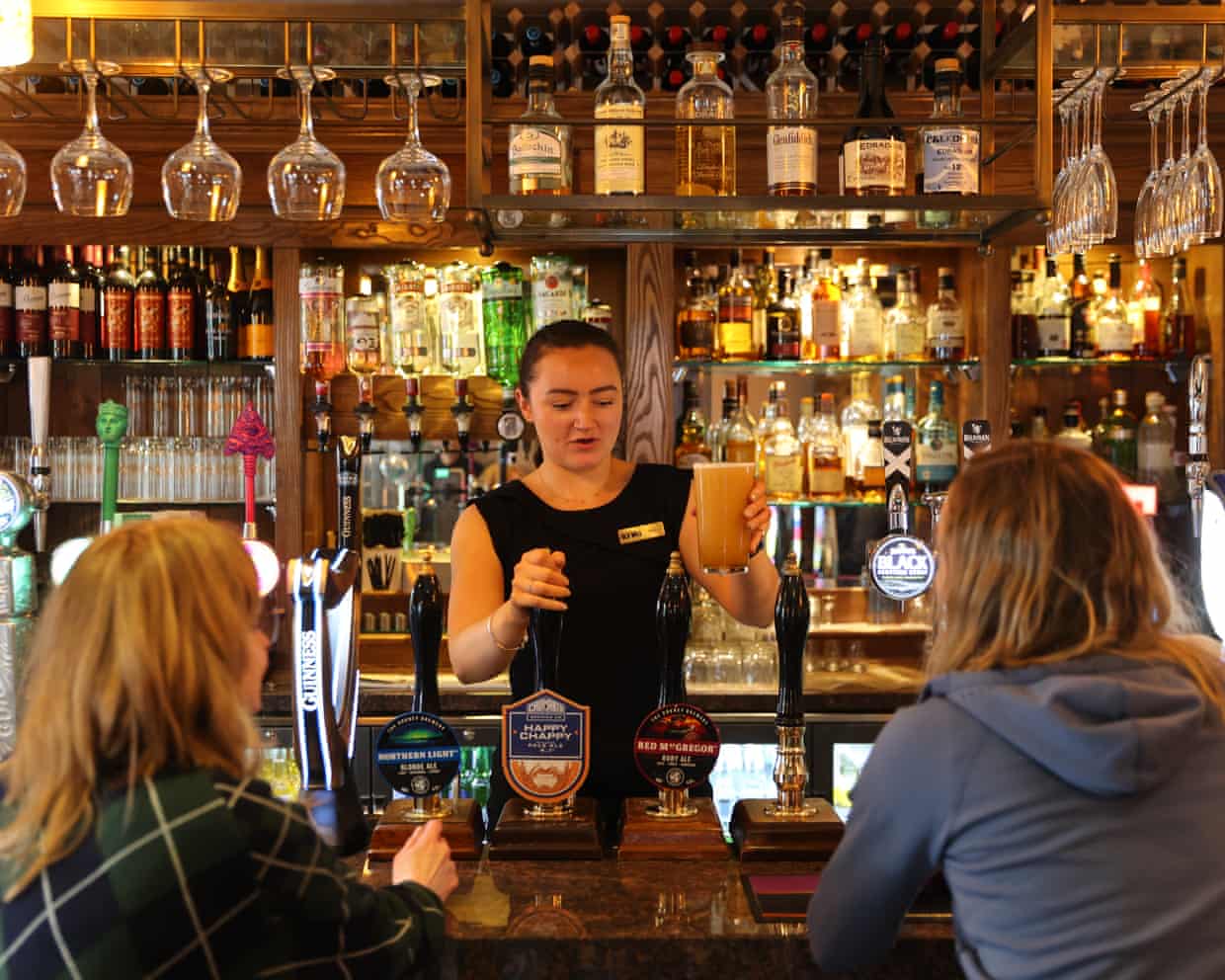
One in five UK hospitality businesses fear collapse as costs surge

How Meta’s victim-blaming failed to sway jurors in landmark social media addiction trial

‘Soon publishers won’t stand a chance’: literary world in struggle to detect AI-written books

Mary Rand obituary

Alfie Barbeary’s late try earns Bath thrilling comeback victory against Sale