What a slip-up! The shop in Orkney that accidentally ordered 38,000 bananas
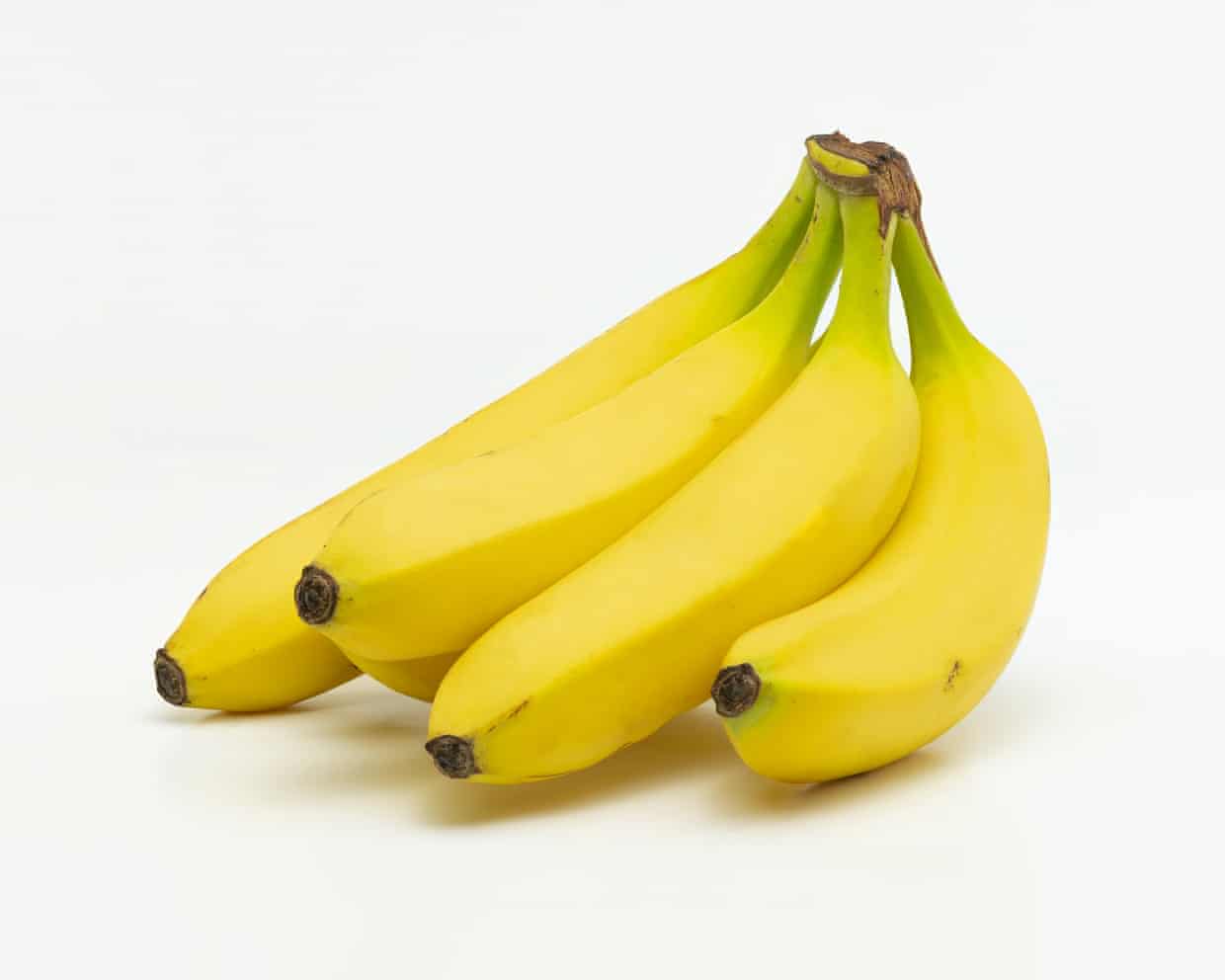
Name: Banana bonanza,Age: A few days old – and getting riper by the minute,Appearance: Try to imagine a lot of bananas,Easy,How many bananas is a lot of bananas? About 38,000 bananas.
I’ve changed my mind.This is impossible to visualise.Then you need to get to Orkney as soon as you can.What’s in Orkney? About 38,000 bananas.I suppose I should have seen that coming.
The real question you should be asking is why there are 38,000 bananas in Orkney,Because the answer is “human error”,Explain,The Kirkwall branch of Tesco recently intended to order 380kg of bananas, which is about 2,500 bananas,But it accidentally ordered 380 wholesale boxes, each of which contained about 100 bananas.
We’ve all been there,Once, I thought I had ordered a family pack of Mini Babybels, but in fact I had ordered one Mini Babybel,Did this hilarious mix-up result in you having to deal with 38,000 bananas?No, it resulted in me having five fewer Mini Babybels than anticipated,What a bad story,Try again when you’re up to your armpits in bananas.
Couldn’t the surplus be absorbed by the local population? Only about 22,000 people live across the islands of Orkney.As an equivalent, this would be like a Tesco in Greater London (population 9m as of 2024, according to the Office for National Statistics) accidentally ordering 15.5m bananas.Wait a minute, that’s only about 1.73 bananas each.
But what about those who don’t like bananas, or indeed the bananaphobic? That would push up the banana intake for everyone else.There’s no such thing as bananaphobia.Tell that to Sweden’s former equality minister Paulina Brandberg, who bravely revealed her fear of bananas in 2024.Sure, I’ll tell Brandberg not to visit Orkney for the length of time it takes the average Orcadian to eat 1.73 bananas.
I don’t think you’re grasping the severity of the matter here,Tesco had a time-sensitive crisis on its hands,Sorry, you’re right,What happened? The store gave away boxes to schools and community groups, a Tesco spokesperson told the BBC,Oh, that was it? Yes.
Crisis averted, lots of happy children,Victory snatched from the jaws of defeat,Well done, everyone,Still, what a hilarious slip-up,If that was a banana-skin joke, you’re fired.
Do say: “Banana bread for everyone!”Don’t say: “This is just like lockdown.”
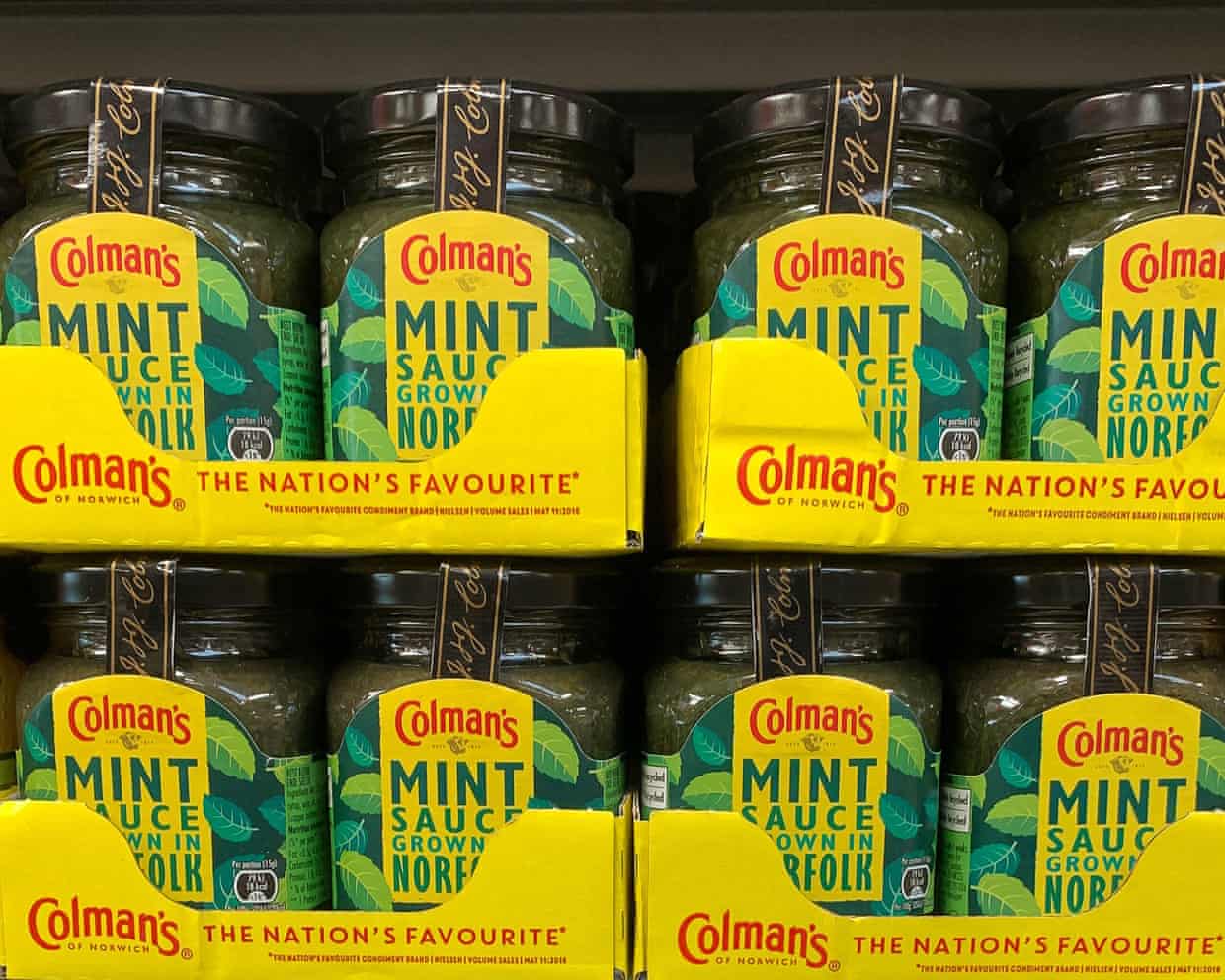
Ways to use mint sauce without having to roast a lamb
My wife adores roast lamb with mint sauce. However, after an online purchasing blunder, my larder now contains six jars. How can I make use of them apart from serving roast lamb every Sunday from now until the crack of doom?John, by emailAs is so often the case, it all starts with a shift in mindset. “When you see a jar of sauce, there’s a real tendency to think, ‘I must use this as a sauce,’” says Kate Young, author of Dinner at Mine? Start treating that surplus mint sauce as an ingredient instead, however, and your life will be a whole lot easier. “If John is planning on using chopped fresh mint with, say, meat, cheese or veg, then consider how you might use mint sauce in its place,” Young adds
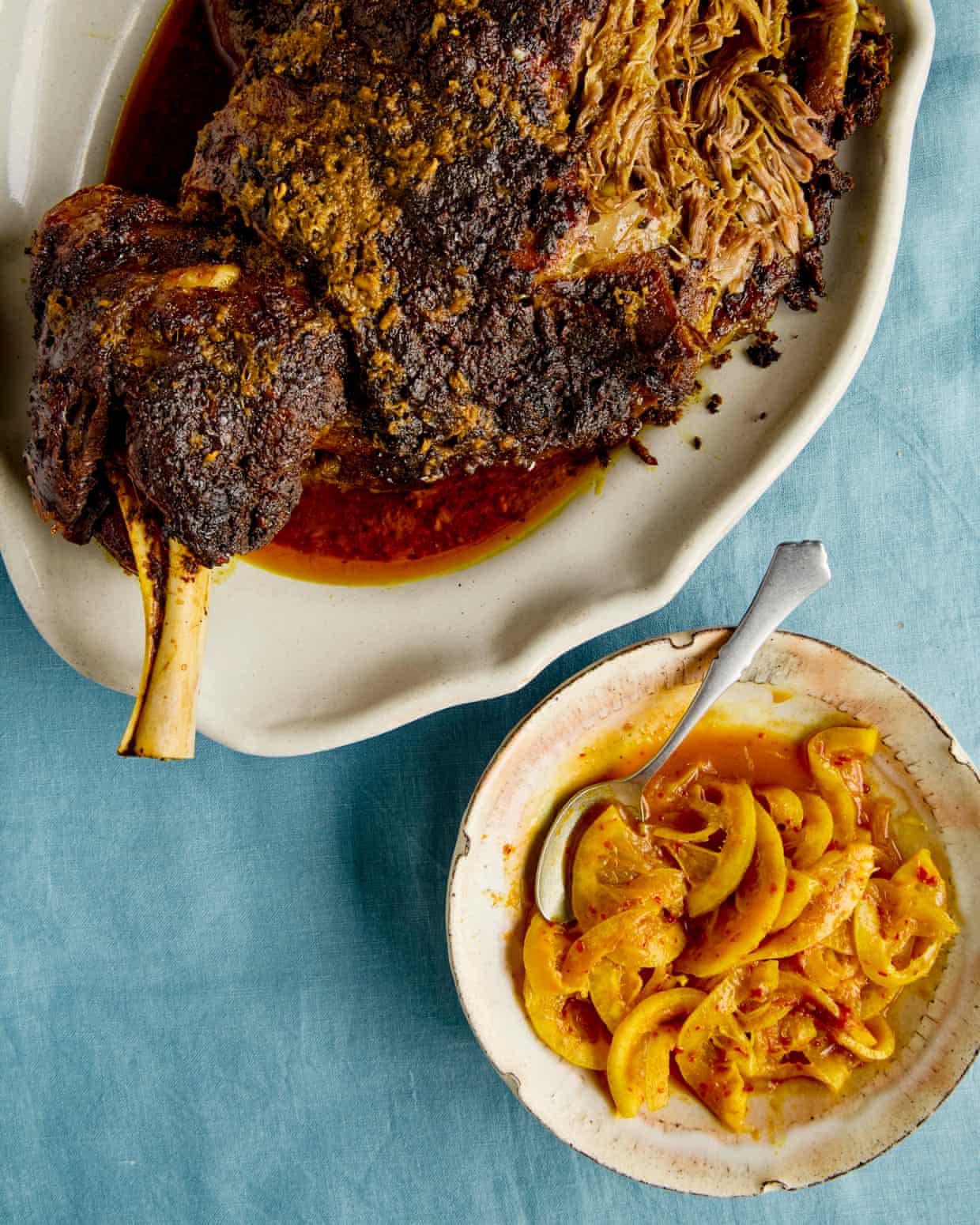
Sami Tamimi’s recipes for slow-cooked lamb with spicy pickled lemon and jewelled Easter rice
Whenever I’m asked about my favourite dish to serve to friends and family, in most cases I’d say slow-cooked lamb at the centre of the table. After a long, slow cook, the meat becomes tender and rich, and the spices melt into every bite. Served with flatbreads, tahini, fresh herbs and sharp pickles, it invites everyone to build their own perfect mouthful. Across the Middle East and Mediterranean, lamb symbolises generosity and celebration, especially at Easter, when roasting it remains an adored tradition.The lamb is marinated with garlic, olive oil and aromatic spices the night before, to give the flavours time to deepen, then, after luxuriating in the oven, it emerges golden, fragrant and meltingly tender

I can’t believe it’s got butter: this double-dairy ice-cream has gone viral – but how does it taste?
What’s yellow, a new superfood (according to the internet) and essential for hot cross bun consumption? Butter. The once-vilified member of the food pyramid is now the snack of choice for many and liberally slathered on to everything. Not even the humble soft serve has been able to escape its greasy grasp.The butter-dipped soft serve, popularised on Instagram, is characteristic of food made for social media: the questionable flavour pairing enhances its desirability. Soft serves with pale yellow shells are already being sold by Cherry’s Goods and Air Lab in Sydney and Timboon Fine Ice Cream in regional Victoria
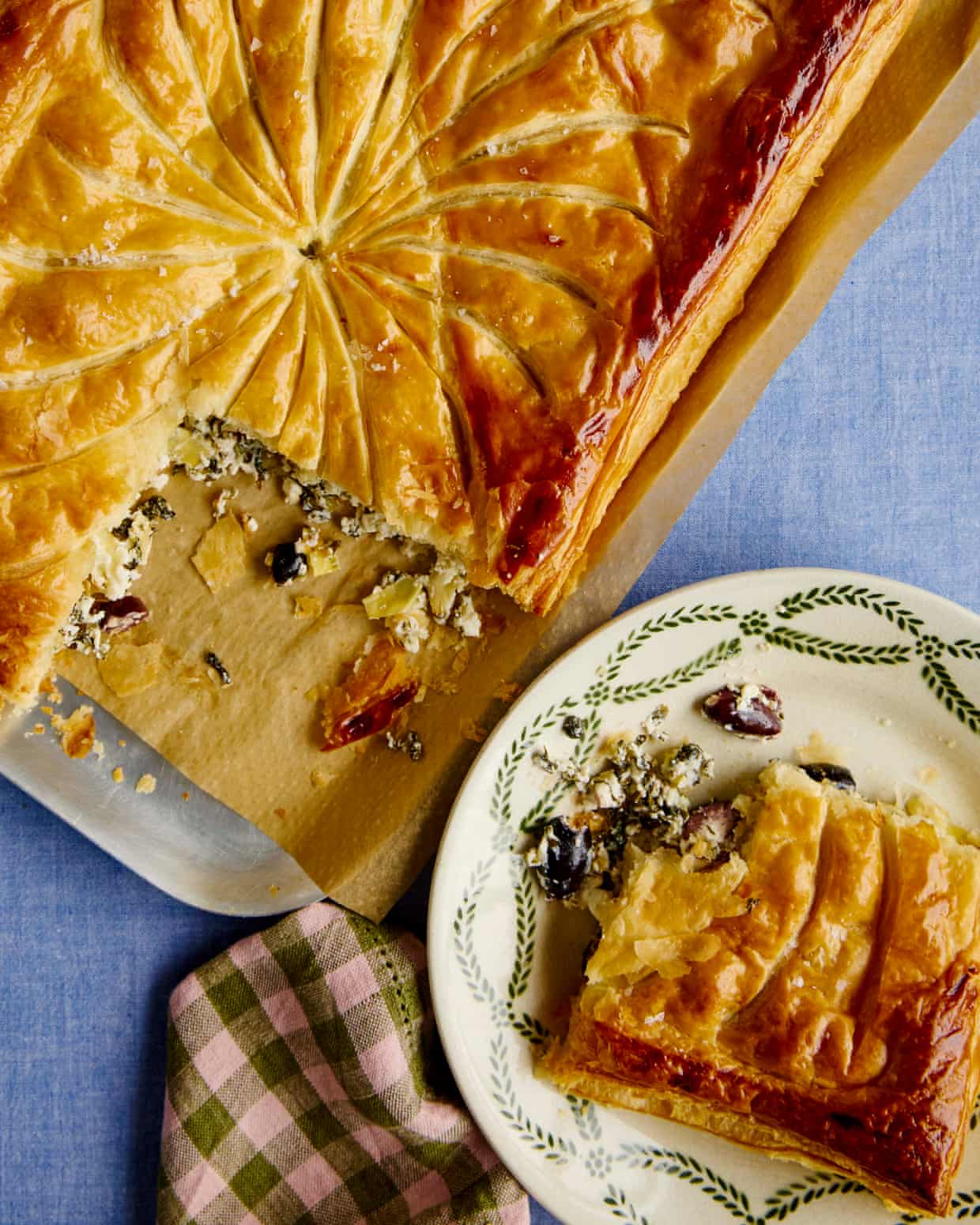
Rukmini Iyer’s quick and easy recipe for artichoke, olive and feta pithivier | Quick and easy
Pithiviers look absolutely beautiful at the table. For the classic shape, you can buy circular all-butter puff pastry (Picard does an excellent one, with two sheets in one packet) or cut regular puff pastry into circles. That said, it’s just as delicious and there’s more bang for your buck with a big rectangle. Either way, it’s filled with moreish artichokes, olives and feta, with fresh lemon and parsley to lift the flavours. It’s 100% the type of meat-free main that everyone else wants to try, too
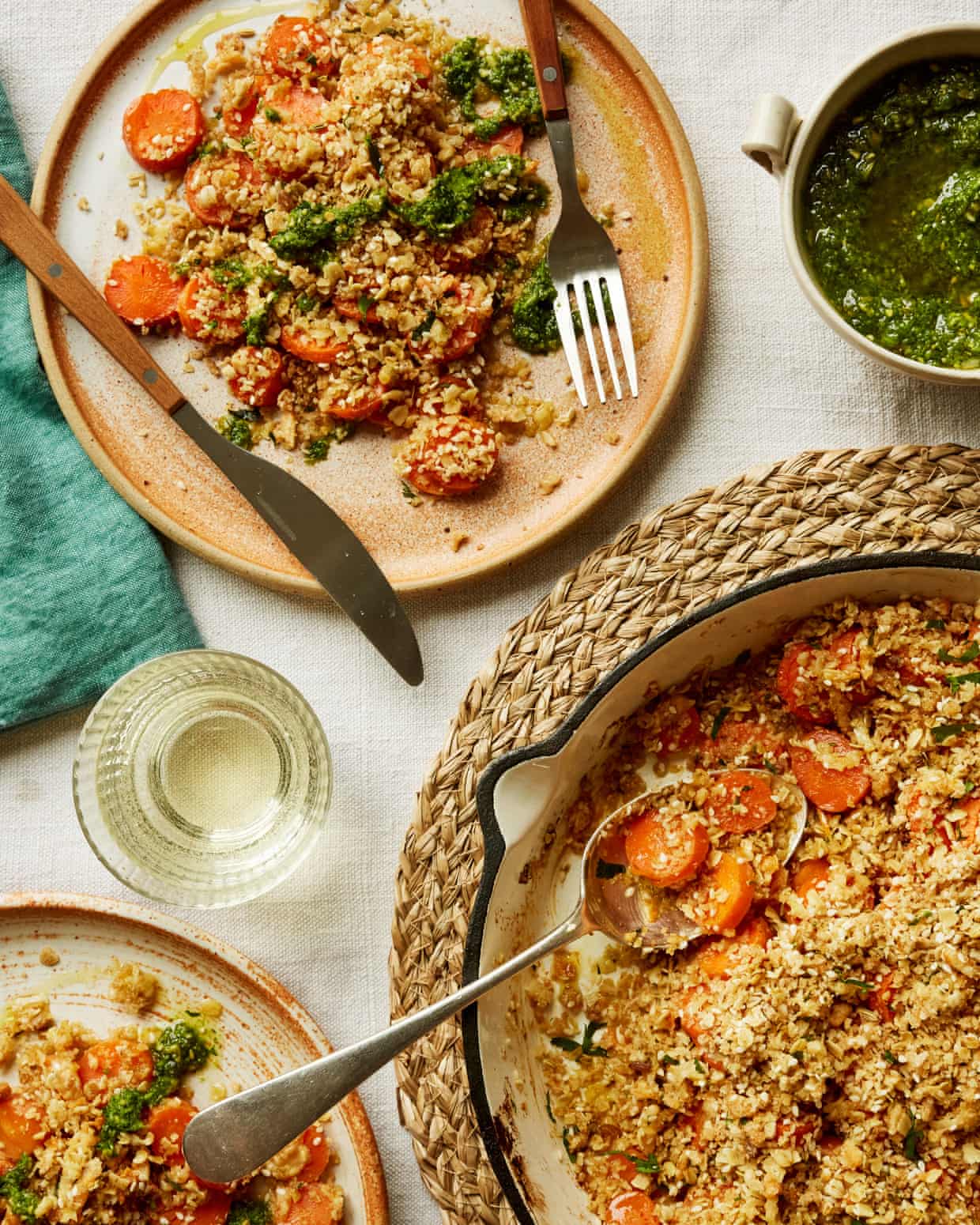
Carrot crumble and sprouting broccoli with almond butter: Chantelle Nicholson’s vegetable recipes for Easter
The intense sweetness that comes from roasting carrots should not be underestimated. And, when that’s topped with a savoury, nutty crumble, it’s a great combination. Add the wonderfully seasonal purple sprouting broccoli on the side, and it’s a luscious Easter celebration. A few low-waste tips, too: always use the parsley stalks, and try pickling the shallots in leftover gherkin brine. Trust me! And it wouldn’t be a spring recipe without our beloved wild garlic, so make the most of that while it’s about
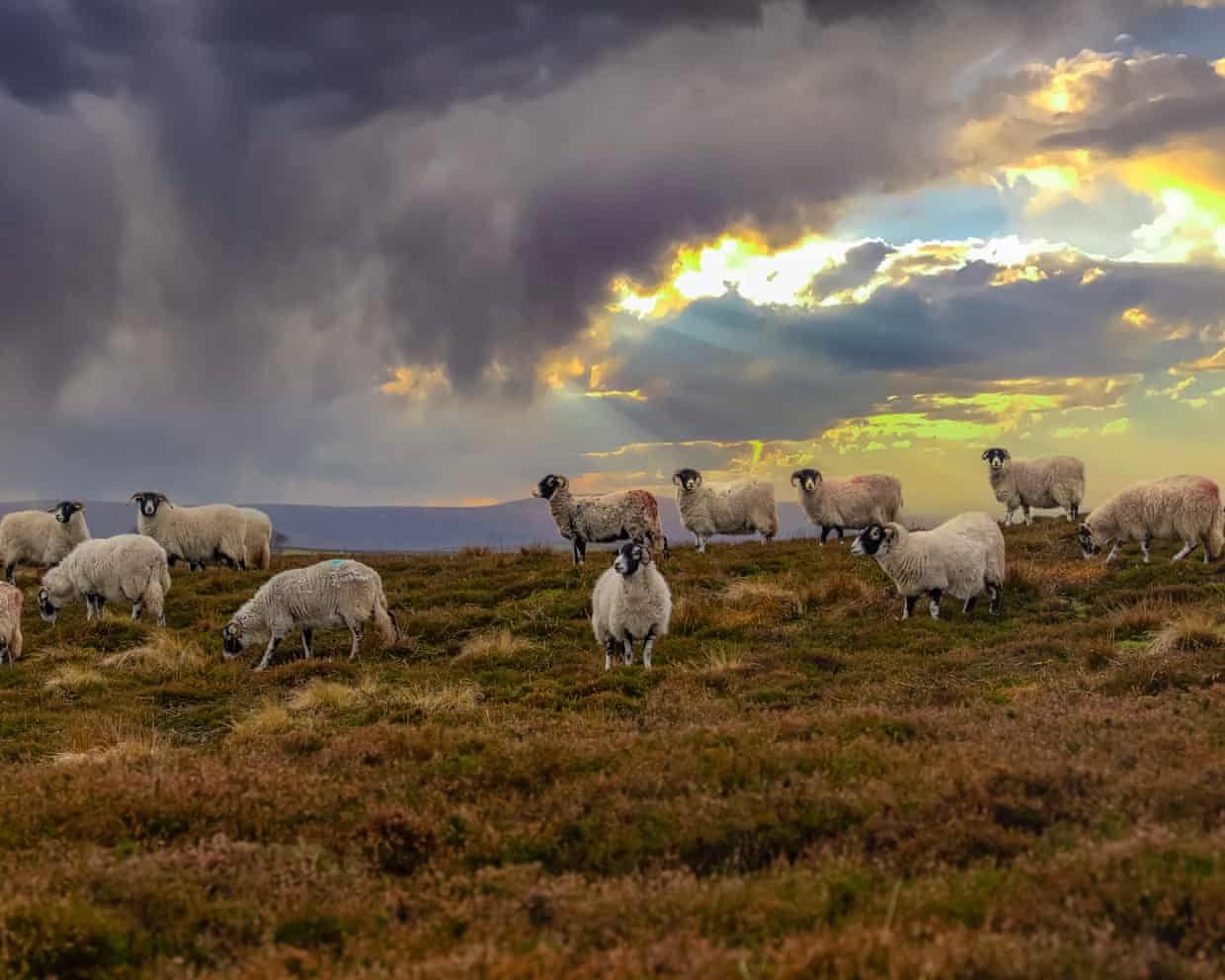
How we can improve food security in Britain | Letters
Although I agree with George Monbiot’s analysis of the serious risks that we face from a breakdown in the UK food supply chain, there are two important points we need to recognise (We’re letting big corporations gamble with our lives. Act now, or the food could run out, 25 March). First, we must seek to increase food production on UK farms because this has been falling for several decades.Food self-sufficiency in the UK fell from 78% in 1984 to 62% in 2024. The decline is largely due to the loss of farmland to non-farming use: buildings, roads and railways, conservation and wildlife schemes, solar farms and recreation

Revealed: the vast illegal casino network targeting UK gamblers

A ‘dress rehearsal’ for life: inside the Manchester project helping homeless men rebuild

Teenager died after asking ChatGPT for ‘most successful’ way to take his life, inquest told
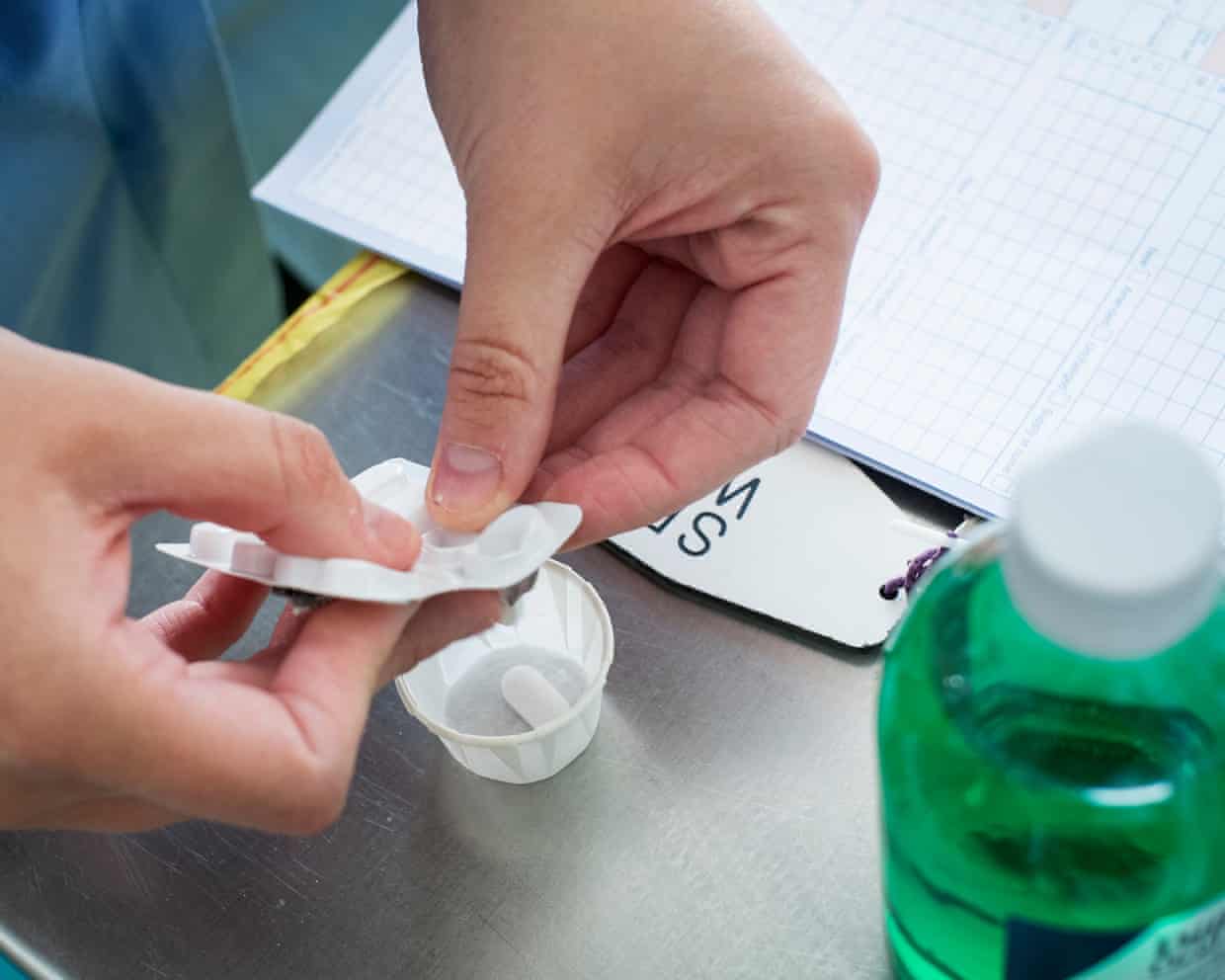
Head of NHS England ‘really worried’ about medicine supplies

Three hospital doctors’ groups threaten to coordinate strike action in England

‘Should never have been prescribed’: private UK cannabis clinics face call for tighter regulation