Head of NHS England ‘really worried’ about medicine supplies

The head of the NHS in England has said he is “really worried” about medicine supply issues.A number of experts have raised concerns about cost implications and supply disruption linked to the war in Iran.The NHS England chief executive, Jim Mackey, was asked during a phone-in on LBC Radio on Tuesday what contingency planning was in place because “the UK imports 75% of its medicine”.He said: “We are really worried about this.We’ve already had a couple of supply shocks in the last 12 to 18 months of key supplies.
”He said a team was in place to “focus on where the risks might be through the supply chains”.Asked how much supply there was, he replied: “It depends what you’re talking about.In every area, we’ve got enough to get through for a reasonable period … so generally, a few weeks.“Because things perish and it costs money to store and various other things go out of use, you can’t hold years and years of supply.Generally, dependent on the product, we keep a reasonable period.
Some of that is held centrally, some held locally.”Questioned whether, in some instances, it would be “weeks’ worth of supply”, Mackey said: “Yeah, it could be days for some products.”His remarks surprised drug and pharmacy organisations, which said they were not yet seeing any shortages related to the conflict.One industry source, speaking anonymously, said: “What he was saying doesn’t tally with the situation on the ground at the moment.Everyone’s worried but no one is saying that stuff isn’t coming in.
”Henry Gregg, the chief executive of the National Pharmacy Association, said: “We’re not currently seeing shortages of medicine directly linked to the conflict in the Middle East, but pharmacies are seeing disturbing spikes in prices, which can be an early indicator of challenges.“The Department of Health have issued unprecedented numbers of price concessions designed to cope with price surges, which are likely exacerbated by this current situation.”Price concessions are when the Department of Health and Social Care lets the NHS pay more than usual for certain drugs as a temporary measure to circumvent a supply problem and ensure stocks keep arriving.Some drug prices have risen recently as a result of shortages of key ingredients and disruption to manufacturing processes, including firms switching production to new factories.A spokesperson for the Association of the British Pharmaceutical Industry, which represents manufacturers of branded medicines, said: “We are not aware of any supply issues resulting from the conflict in Iran.
The region is not a significant exporter of medicines, and supply routes are flexible and can adapt to disruptions.However, we will continue to monitor this, as we do with other potential supply risks.”One industry source stressed that most generic drugs, which the NHS obtains from China and India, do not pass through the strait of Hormuz, a major flashpoint in the US and Israel’s war with Iran, and therefore disruption there is unlikely to have an immediate impact on supply.But another said: “The current conflict in the Middle East isn’t having an impact on the supply of branded medicines into the UK.This is because relatively little medicine manufacturing takes place in the region, so the main risk is disruption to shipping routes rather than production itself.
”The NHS and pharmacies are already dealing with a country-wide shortage of aspirin and co-codamol, a strong painkiller,Supplies of HRT and drugs to treat ADHD and epilepsy have also been unreliable in recent years,A government spokesperson said: “There are currently no reported medicine shortages as a result of conflict in the Middle East,We continue to monitor the situation closely for any impacts on the medical supply chain,“The department actively monitors emerging threats to supply resilience and has established processes in place to manage disruption across the health and social care sector.
”

Oil tumbles and stock markets soar on hopes Middle East war will end soon, as Bank of England warns of ‘substantial negative supply shock’ – business live
As the clocks ring noon in the City of London, here’s the situation.European and Asia-Pacific stock markets have rallied sharply, after Donald Trump signalled that the Iran was could end soon.The UK’s FTSE 100 share index is up 1.9% now at 10,369 points, up 192 points to a two-week high.The pan-European Stoxx 600 index is up 2%, with gains in Frankfurt, Paris, Madrid and Milan
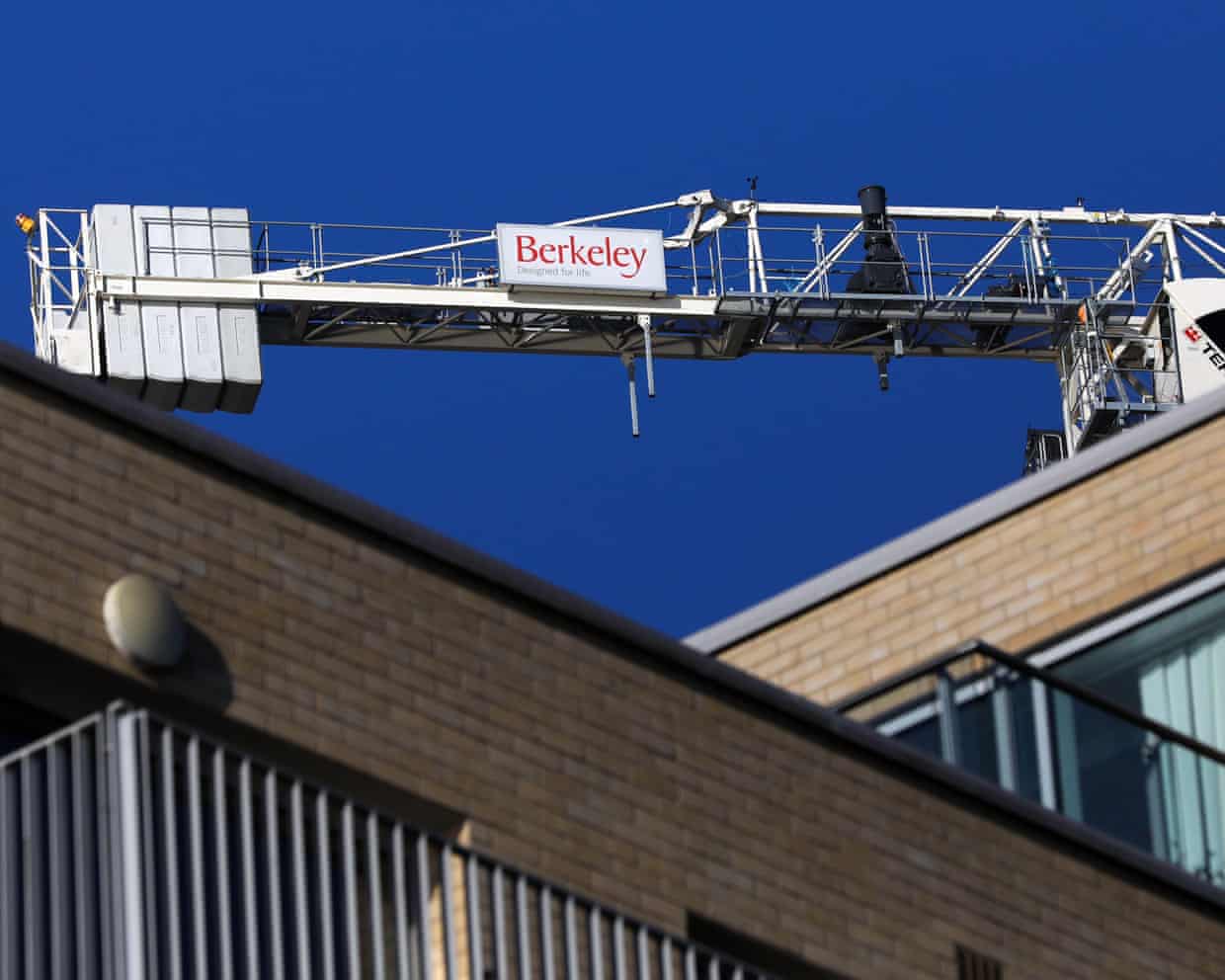
Housebuilder Berkeley to halt buying new land and hiring staff
One of Britain’s biggest housebuilders has said it will stop buying new land and hiring new staff, as it grapples with the impact of the Iran war on the property market.The London-focused housebuilder Berkeley said it would cut costs as it warned that “geopolitical volatility” and reduced potential for interest rate cuts could weigh on the business.The FTSE 100 company said it would stop buying new land, implement a hiring freeze and employ fewer subcontractors.The group now expects to report more than £1.4bn in pre-tax profit from 2027 to 2030, compared with an earlier forecast for about £450m this year and in 2027

US tech firm Oracle cuts thousands of jobs as it steps up AI spending
Oracle is cutting thousands of jobs as the US technology company seeks to reassure investors that its bet on AI infrastructure will pay off.The $420bn firm, headquartered in Austin, Texas, started making employees redundant on Tuesday, with thousands of Oracle’s 160,000-strong workforce expected to leave.About 10,000 people have lost their jobs so far, the BBC reported, citing an unnamed employee at the company, which is chaired by Larry Ellison, the billionaire ally of Donald Trump. He is worth $189bn (£142bn) and is the world’s sixth richest person, Forbes estimates.Michael Shepherd, a senior manager at Oracle, who was not affected by the cuts, posted on the social media site LinkedIn that there had been a “significant reduction in force” at the business

I wore Meta’s smartglasses for a month – and it left me feeling like a creep
Content creators love the built-in camera; sceptics call them ‘pervert glasses’. Do we really need any more hi-tech wearables, even with a voice assistant that sounds like Judi Dench?Lately, I’ve been hearing Judi Dench’s voice in my head. She tells me tomorrow’s forecast, when to turn right, that there’s been another message in my group chat. Day or night, Dame Judi is eager to assist. When I ask the eight-time Academy Award nominee what I’m looking at, she answers: a residential area, a person in a pub, daffodils

The Spin | ‘It keeps you young’: England Over-70s bask in glory of Ashes and World Cup wins
“You could compare and contrast if you so desired,” says England Over-70s manager Chris Lowe, offering the straightest of bats to my shameless prod. “You’re the journalist, so you probably will.”It would be professional negligence not to. So let us duly look at the fate that befell Brendon McCullum’s England team over the winter, alongside that of their England Over-70s counterparts, whose itinerary bore a startling resemblance to their junior brethren.For both it began in Australia where Ben Stokes’s side succumbed to a bruising 4-1 Ashes defeat, weeks before the Over-70s swept to a 3-0 triumph in the wonderfully named Silver Ashes

Can Congress stop the ‘straight greed’ of US sports teams leaving their cities?
WWE star CM Punk called it “straight greed”. Illinois governor JB Pritzker called it a “slap in the face”. An overwhelming majority of fans say they will hold a grudge.This cacophony of disgust has been prompted by the real possibility that the Chicago Bears could relocate to Hammond, Indiana. The Bears’ owners bought a site in Arlington Heights, Illinois, for a new stadium, but negotiations over property taxes have stalled construction
OpenAI, parent firm of ChatGPT, closes $122bn funding round amid AI boom

Penguin to sue OpenAI over ChatGPT version of German children’s book

Landmark losses for Meta and YouTube as big tech misses the point

UK parents: what do you think about the government’s advice on screen time for children under five?
Palantir’s UK boss criticises ‘ideological’ groups as ministers move to scrap NHS contract
If OpenAI is to float on the stock market this year, it needs to start turning a profit