Ittai Gradel obituary

With a doctorate in Roman religion and a university chair, Ittai Gradel, who has died of cancer aged 61, might have confined his achievements to a successful scholarly career.However, in 2008, bored with routine bureaucracy, he left his post at Reading University, and returned to his native Denmark to deal in antiquities.His disillusionment with academia was reinforced when, a few years later, he discovered that large-scale thefts had been taking place from the British Museum’s collections.At first reluctant to believe the accumulating evidence, Gradel contacted the museum in 2021 only when it became impossible to deny – and was told nothing was missing.Ill and increasingly impatient, he took his cause to the museum’s trustees, and at last the police were called.
In 2023 the director and deputy director resigned, and a senior curator was dismissed.Investigation of the loss or damage of 2,000 pieces of ancient goldwork, gems and glassware continues.On leaving Reading, Gradel had at first joined an antiquarian book dealership in Copenhagen.But he soon changed his focus to Graeco-Roman engraved gems, finding them both interesting – they evoked the private experiences of people in antiquity, he said, yet could still be worn as personal jewellery centuries later – and profitable.With hindsight, he thought a purchase he made at the very start, trading freelance from home, consisted of pieces stolen from the British Museum.
By 2010 there were signs that might have halted a less trusting mind.An English vendor, claiming to be an old man who had inherited gems from his grandfather, kept finding more to sell.When Gradel tried to meet him (having failed to prove his existence any other way), he received a message supposedly from the man’s son who told Gradel that he had just died.In 2016 someone with the same name as the allegedly deceased vendor listed a Roman cameo on eBay that Gradel knew from a 1926 British Museum catalogue: the listing disappeared within hours, and when asked about it, the vendor said the gem had belonged to his sister and was not his to sell.Only in 2020, however, did Gradel finally accept that something was up.
He saw a piece for sale online that had featured in the same 1926 catalogue, and found that the buyer had acquired it from the same vendor who had first provoked Gradel’s suspicions 10 years before.Hackles raised, Gradel searched his records and found a PayPal receipt naming a Peter Higgs, similar to the name he had been given on earlier sales - Paul Higgs or Higgins.A fellow dealer told him that this was the name of a British Museum curator.When tipped off, the museum saw no reason to investigate.A few months later, it promoted Higgs to acting head of the department of Greece and Rome.
Gradel now began a campaign of emails and letters hoping to stir the museum into action.It repeated its claims of nothing untoward, until October 2022, when a trustee forwarded one of the messages to the new museum chair, the former politician George Osborne.“I have taken your comments very seriously,” Osborne told Gradel.The following July, Higgs was sacked.In August the museum’s director, Hartwig Fischer, resigned, and Jonathan Williams, the deputy director, voluntarily stood down and in due course also left the museum, which has brought a civil case against Higgs.
He denies any wrongdoing.Poor record-keeping had facilitated the thefts, and the British Museum soon announced a five-year plan to document online its entire collection of a nominal eight million objects, a formidable challenge.To date, of 1,500 missing or stolen pieces, 650 have been returned, and more are expected to follow.The saga was covered by the BBC in 2024, in a Radio 4 series Thief at the Museum and a BBC Two film, both presented by Katie Razzall and featuring extensive interviews with Gradel.In the same year, Apollo magazine made Gradel its personality of the year.
Gradel was born in Haifa, Israel, to a British father and Danish mother.They settled in Nyborg, Denmark, when he was aged two.After leaving school he moved to London, where, between part-time working for the London Underground and a fish-and-chip shop, Gradel spent all his spare hours in the British Museum, later claiming to have seen practically every displayed object.He returned to Denmark to study classical archaeology at Aarhus University, receiving a gold medal for his thesis on Roman emperor worship.In 1995 he obtained a DPhil at Oxford University, publishing his research as a much-admired monograph, Emperor Worship and Roman Religion (2002).
After a year as a visiting fellow at Brasenose College, Oxford, and a stint teaching at the University of Copenhagen, in 2005 he took up the post of associate professor of history and archaeology of the Roman empire at the University of Reading,Colleagues there remember him variously as hilarious, eccentric and exasperating,Though he never regretted leaving academia, he retained the dogged determination of a research historian,On one occasion Sotheby’s marketed on his behalf a Roman gem in an 18th-century gold setting, with an estimate of £100,000-£150,000: his description of the lot included 5,000 words of notes and sources,When the gem failed to find a buyer, Gradel told friends he would bequeath it to a museum.
His last publication, co-authored with Arne Pedersen, was The Lost Novel of King Solomon and the Demons (2025), a monograph inspired by the discovery of an antique ring engraved with the message: “Solomon says: Watch out!”Shortly before his death, the British Museum presented Gradel with a medal, and a message from the current director, Nicholas Cullinan, recognising his expertise and “passionate determination that wrongs should be righted”.Gradel is survived by his wife, Hanne Lavér Hansen, who was studying classical philology at Aarhus University when they met, and by his older brother, Kim.Ittai Gradel, classical scholar and antiquities dealer, born 29 January 1965; died 28 April 2026
How does live facial recognition work and how many UK police forces use it?
The Labour government thinks facial recognition technology is “the biggest breakthrough for catching criminals since DNA matching”. It wants all police forces to use it and recently announced 40 new vans rigged with live facial recognition cameras to be deployed in town centres across England and Wales.Supporters say it streamlines police work and catches criminals. Opponents fear it violates civil liberties and can be biased against minorities.The simplest systems check faces captured on CCTV, mobile phones, dashcams, social media and doorbell cameras against mugshots held on the police national database
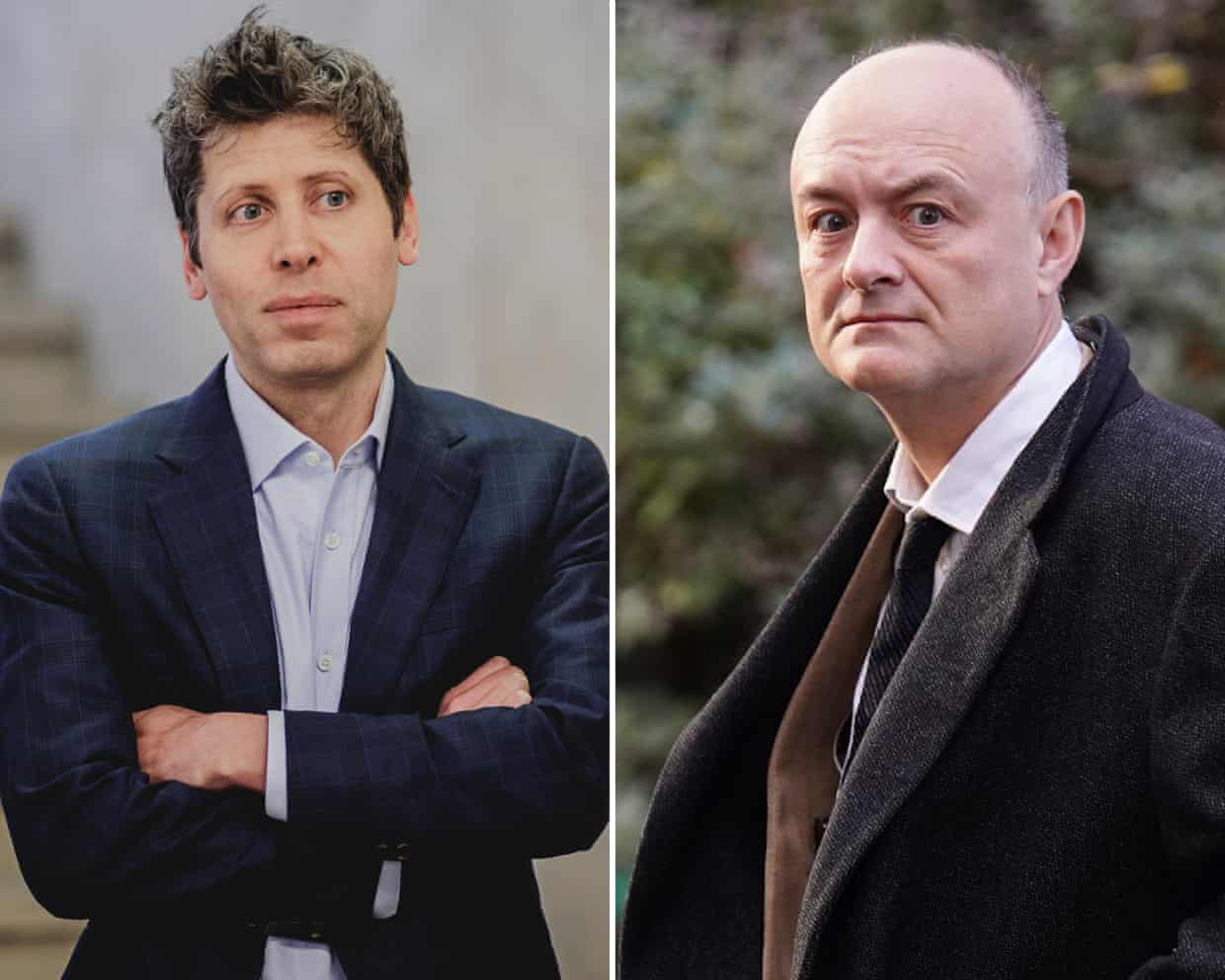
UK ‘invention agency’ grants £50m of public money to US tech and venture capital firms
Britain’s “invention agency” has pledged £50m of UK taxpayer money to US tech companies and venture capital projects.Dreamed up by Dominic Cummings to fund “crazy” ideas, the Advanced Research and Invention Agency (Aria) is meant to “restore Britain’s place as a scientific superpower”.But a joint investigation by the Guardian and Democracy for Sale, an investigative website, has established that more than an eighth of the agency’s £400m in research and development funding over the past two years has gone to 14 US tech companies and venture capital groups, in some cases, with no clear return for the UK or Aria.One of these companies, Rain Neuromorphics, is also backed by the OpenAI chief executive, Sam Altman, and was reported to be near collapse last year, shortly after winning Aria money. It did not respond to a request for comment; two of its founders appear to have left the company
Under a cloud: the growing resentment against the massive datacentres sprouting across Australian cities
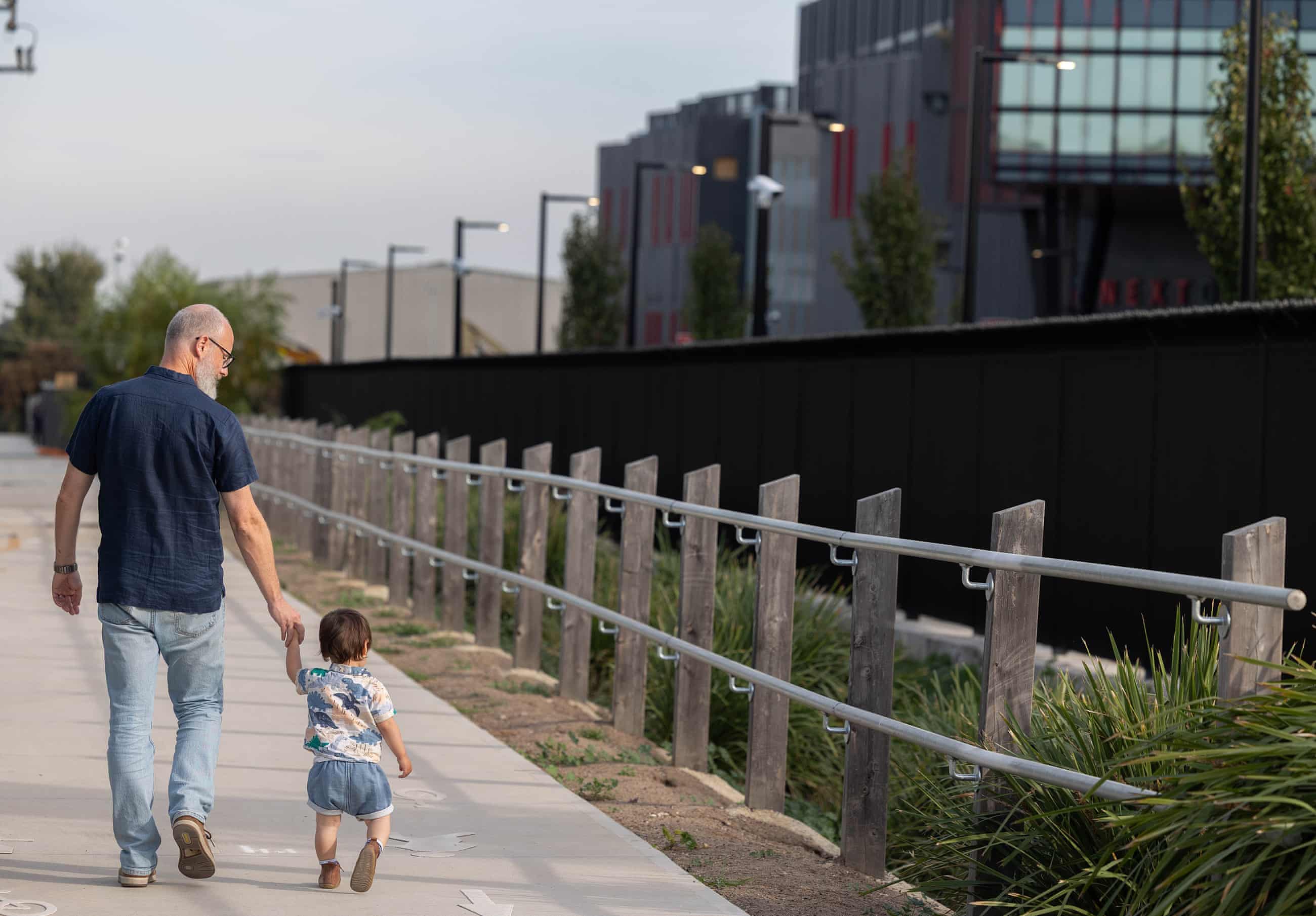
Residents say AI factories with unknown environmental impacts are being rushed into development as proponents argue Australia must ride the data boom or be left behindFollow our Australia news live blog for latest updatesGet our breaking news email, free app or daily news podcastWhen West Footscray resident Sean Brown takes his 19-month-old boy to the park, their walk passes an imposing new building cheerily spruiked as “Australia’s largest hyperscale AI factory”, a datacentre called M3.He hates it: the construction noise from its constant expansion, the looming towers and the insistent background hum, the exhaust from the growing array of diesel generators that can help power the ranks of servers inside.And he worries what it represents for his young child’s future.“He is growing – neurologically, pulmonarily, physically – in the shadow of a facility whose cumulative environmental impact … has never been assessed,” Brown says.“They’re building something which is, frankly, terrible for the community

Parents already have controls over smartphones – they should use them | Letters
A crucial facility seems to be missing from the coverage of smartphones in schools – and outside (I was wrong about the danger of smartphones in schools. It’s far, far worse than I thought, 22 April). Parental controls, which both Apple and Android have, enable downtimes to be set to ensure phones don’t work in school. They can also set downtimes for outside school and block inappropriate apps.We use these for our 14-year-old daughter to keep her safe and manage the addictive effects of phone use

‘Awkward and humiliating’: UK job hunters share frustration with AI interviews
Nearly half (47%) of UK job seekers have had an AI interview, research from the hiring platform Greenhouse has found.In its survey of 2,950 active job seekers, including 1,132 UK-based workers, with additional respondents from the US, Germany, Australia and Ireland, it found that 30% of UK candidates had walked away from a hiring process because it included an AI interview.We asked people about their experiences of AI interviews. The responses included those who found it “awkward” and “humiliating”. Others spoke of wanting a human element in the interviews, and said they were not sure if their interview had even been reviewed

Tim Cook takes victory lap as Apple’s financial results soar past Wall Street expectations
Apple blew past Wall Street expectations in its first earnings report since it announced CEO Tim Cook would be stepping down.Cook shared his thoughts about the leadership transition on Thursday, saying: “There’s no one on this planet I trust more to lead Apple into the future” than incoming CEO John Ternus. Asked by an investor what advice he has given Ternus, Cook said: “Never forget the north star for the company. You know, we’re about making the best products in the world that really enrich other people’s lives.”Ternus spoke briefly, too, praising Cook’s thoughtfulness in financial decision-making and saying: “This is the most exciting time in my 25-year career at Apple to be building products and services

Willy’s, Margate, Kent: ‘It chortles in the face of small plates’ – restaurant review | Grace Dent on restaurants

Helen Goh’s springtime spinach sponge cake with cream cheese icing – recipe | The sweet spot

Why we care so much about preserving family recipes

When it comes to wines, it pays to look beyond the fashionable

Rachel Roddy’s recipe for spaghetti with crab, chilli, herbs and lemon | A kitchen in Rome

How to turn old pitta into spiced chips – recipe | Waste not