It will take more than £600m a year to boost UK industrial competitiveness | Nils Pratley
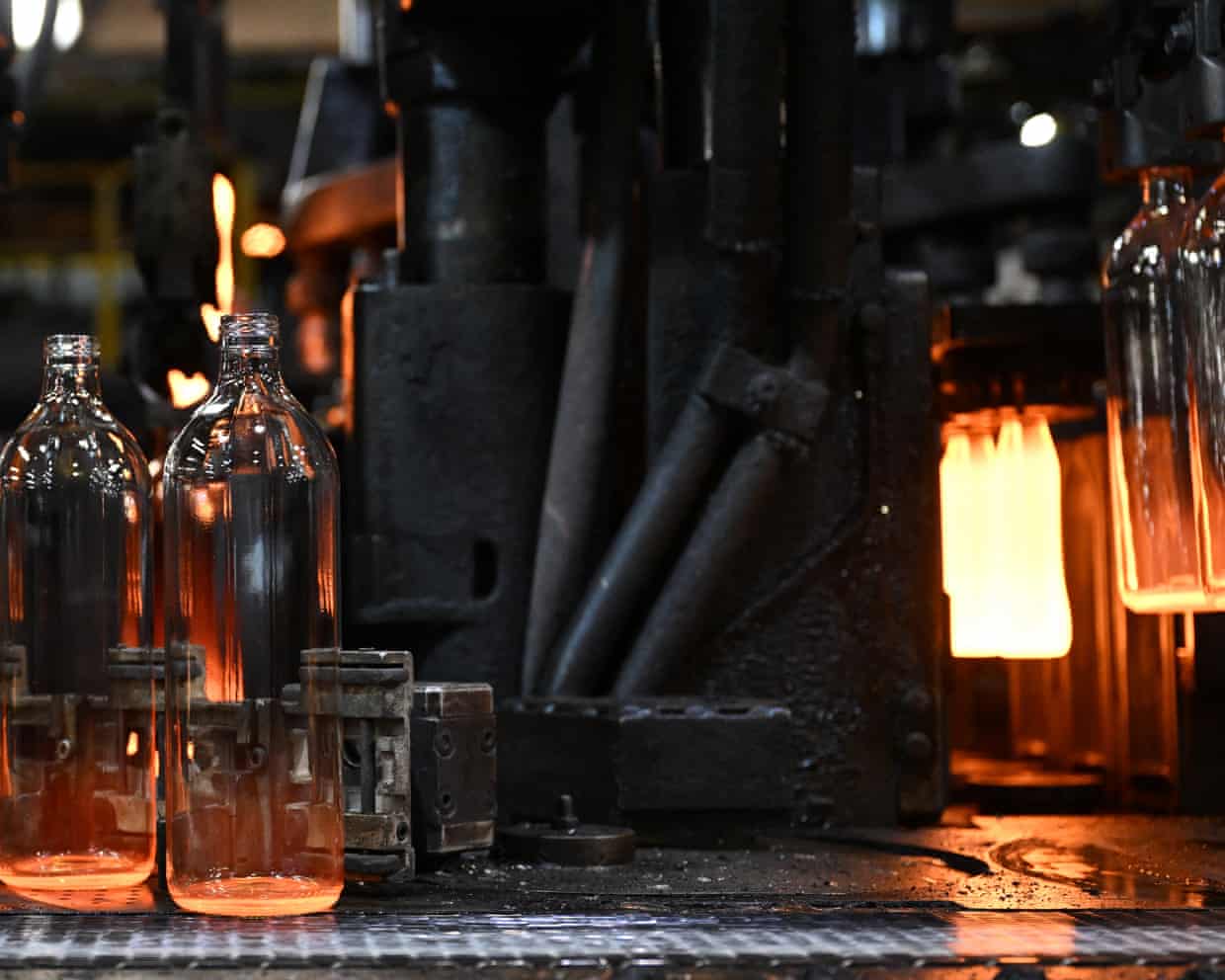
It is “bold action” to boost UK competitiveness, claimed the government.Not everybody shared that assessment of the British industrial competitiveness scheme (Bics), the long-awaited plan to cut electricity bills for UK manufacturers by up to 25% – or, at least, to cut them for a subset of firms that are aligned with the eight chosen sectors of the “modern” industrial strategy.“Gas intensive industries in the UK have been shamefully ignored by the government in this announcement – it’s a total disgrace,” said Gary Smith, the general secretary of the GMB union, banging the drum for the likes of ceramics-makers and brickmakers that aren’t deemed modern enough for support.Employer bodies mostly did the polite thing of welcoming government assistance of any form before using phrases such as “drop in the ocean”.And, it’s true, £600m a year across 10,000 companies isn’t much.
In the government’s defence, one could say Bics has been expanded from the 7,000 firms advertised at the initial announcement last summer.In addition, a back-dated feature has been introduced: the scheme will still start in April next year, but qualifying firms will then be able to claim what they would have got.Complicated? You bet.And the complications are only magnified in the operational detail.You don’t just have to be in a “frontier” or a “foundational” industry that serves the frontier-pushers; a further qualifying criterion will be applied to electrical intensity across product lines.
So this scheme isn’t just targeting sectors in the industrial strategy – it is targeting products within those sectors.If you jump through all the hoops, then you get relief from three policy costs on bills, including two green levies, worth up to £40 per megawatt hour.There are two big-picture points here.First, the scheme came with the clearest acknowledgement to date by the government that the UK’s sky-high cost of energy for business – the highest in the developed world – is damaging competitiveness and growth.For the targeted areas, there is now an ambition to get electricity prices in line with European averages.
Second, the government can see that the thicket of policy costs and levies on bills lies at the heart of the problem.Thus the carbon price support mechanism, a charge on generators that is passed on to bill payers, is being abolished, having served its purpose of driving coal off the grid (though why it takes until April 2028 to actually kill it is a mystery).But then one comes back to that modest nature of the £600m.This is really a debate about how to distribute the costs of energy transition and new grid infrastructure.Many other European countries including Germany take a greater chunk of policy costs into general taxation in the name of keeping industry alive and competitive.
In the UK, the habit has been to shove it all on to bills.Now the principle has been conceded that, in some areas of industrial activity, there needs to be some form of rebalancing.In an imaginary world without fiscal constraints, one can imagine a bigger scheme with less laser-like targeting.It would also run to several billions of pounds, which is presumably why Rachel Reeves won’t go there.Treasury officials, it is said, remain unconvinced that a wider scheme would pay for itself over time in terms of higher growth and tax receipts.
Thus Bics can only be viewed as an unsatisfactory fiddle.It acknowledges that nose-bleed electricity prices are a structural problem, but tries to pretend they’re only an issue for a narrow section of industry.There is a risk the government thinks it’s cracked the competitiveness challenge.Sadly, it’s more than a £600m-a-year fix.

Five key questions: who overruled decision to deny Mandelson security clearance?
The revelation that Peter Mandelson failed his security vetting clearance, only for the decision to be overruled by the Foreign Office so he could take up his post as ambassador to the US, raises a number of questions.According to multiple sources, Mandelson was initially denied clearance in late January 2025 after a developed vetting process, a type of a highly confidential background check carried out by UK Security Vetting (UKSV), a division of the Cabinet Office.By that stage he had already been announced as Keir Starmer’s pick for ambassador in Washington. Within two days, the Foreign Office had overruled the UKSV decision, granting him clearance despite the recommendation from security officials. It is not known who made the decision to overrule security officials, or why

Officials debate withholding Mandelson vetting documents from parliament
Exclusive: Opinions split on ‘unprecedented’ release of files, despite demand for ‘all papers’ related to ex-US ambassador’s appointmentRevealed: Mandelson failed vetting but Foreign Office overruled decisionFive key questions: who overruled decision to deny Mandelson security clearance?Senior government officials have been considering whether to withhold from parliament sensitive documents that show Peter Mandelson failed security vetting before he assumed the role of US ambassador, the Guardian can reveal.Any such decision could amount to an extraordinary breach of a parliamentary vote, known as a humble address, that ordered the release of “all papers” relevant to Mandelson’s appointment.The Guardian has revealed that Mandelson did not receive vetting clearance from security officials, but that their decision was overruled by the Foreign Office to ensure he could take up his post.According to multiple sources, officials across government have been in dispute over whether to release documents that would reveal those facts, and other information about Mandelson’s security vetting, to the parliamentary intelligence and security committee (ISC).The committee has been entrusted by parliament with the role of assessing the most sensitive papers relating to Mandelson’s appointment

Revealed: Mandelson failed vetting but Foreign Office overruled decision
Guardian investigation uncovers decision by UK security officials to deny clearance before Mandelson took up role as US ambassadorTop civil servant Olly Robbins forced out over vetting rowOfficials debate withholding Mandelson vetting documents from parliamentFive key questions: Who overruled the decision to deny Mandelson security clearance?Peter Mandelson failed his security vetting clearance but the decision was overruled by the Foreign Office to ensure he could take up his post as ambassador to the US, an investigation by the Guardian can reveal.According to multiple sources, Mandelson was initially denied clearance in late January 2025 after a developed vetting process, a highly confidential background check by security officials.Keir Starmer had by then announced he would be making Mandelson the UK’s chief diplomat in Washington, posing a dilemma for officials at the Foreign Office, who decided to use a rarely used authority to override the recommendation from security officials.Mandelson’s failure to secure vetting approval has not previously been publicly revealed, despite intense scrutiny over his appointment and the release by the government of 147 pages of documents supposed to shed light on the case.Downing Street released a statement late on Thursday confirming the Guardian’s story
As an older man, I feel for Peter Mandelson being caught short | Letter
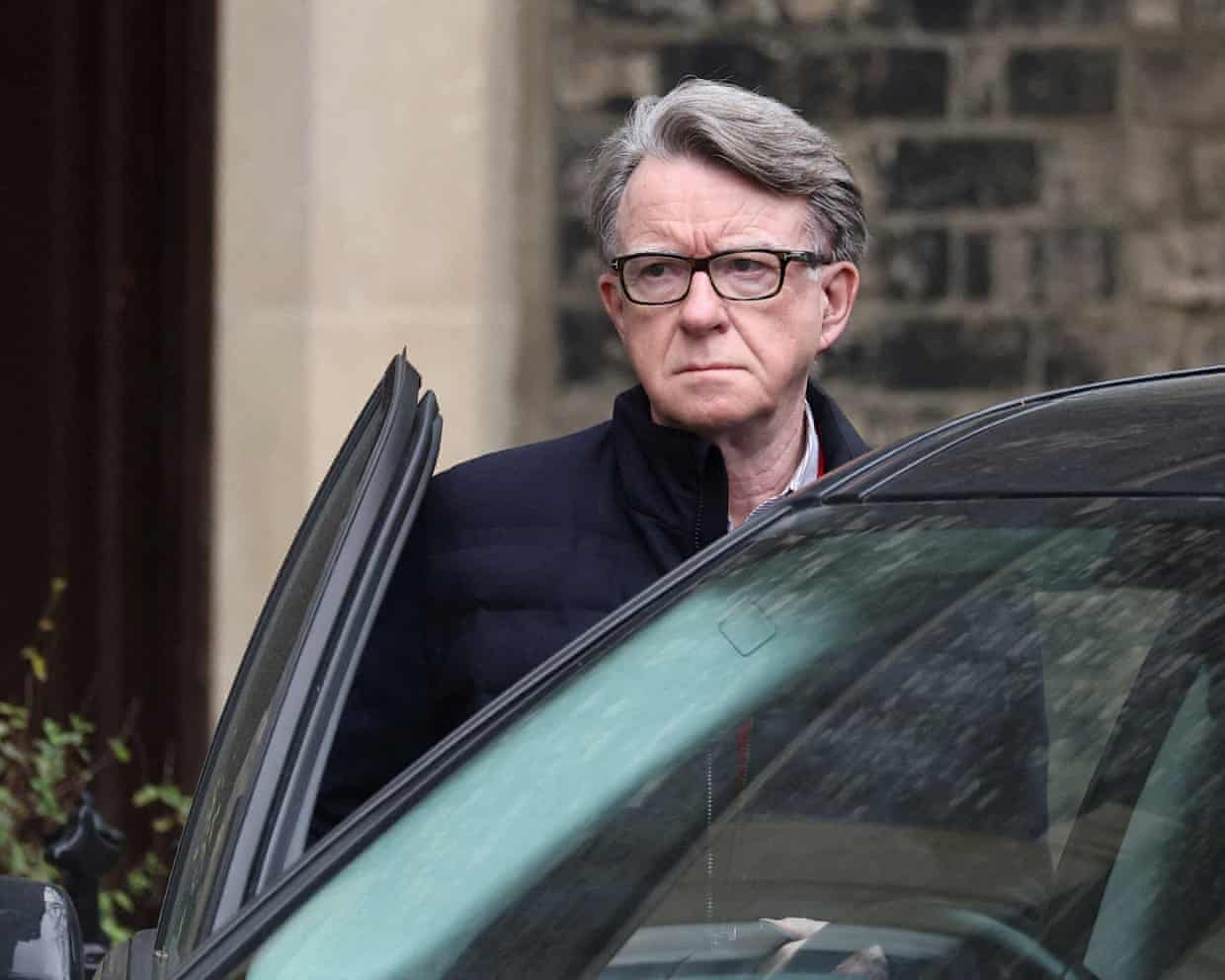
You report that the Royal Borough of Kensington and Chelsea intends to fine Peter Mandelson for urinating in the street at 11pm one night last November (Peter Mandelson faces fixed-penalty notice for urinating in public, 10 April). I’m no fan of Mr Mandelson, but on this occasion my sympathies are entirely with him.I am a year younger than him and, like many men of similar age, what used to be quaintly called my “waterworks” aren’t as robust as they used to be.What was he supposed to do when caught short on a cold night? Wet himself and allow the stream to flow from his trouser leg? Or follow the example of the Danish astronomer Tycho Brahe, who refused to leave a banquet to relieve himself because it would be a breach of etiquette and, according to Johannes Kepler, died shortly after as a result?If the council proceeds with this fine, I assume that it will also fine dog owners who allow their pets to pee in the street. This would be ridiculous, but no more so than what it intends doing with Mr Mandelson
A decade on from Brexit, Britain still flounders without a place in the world | Letters
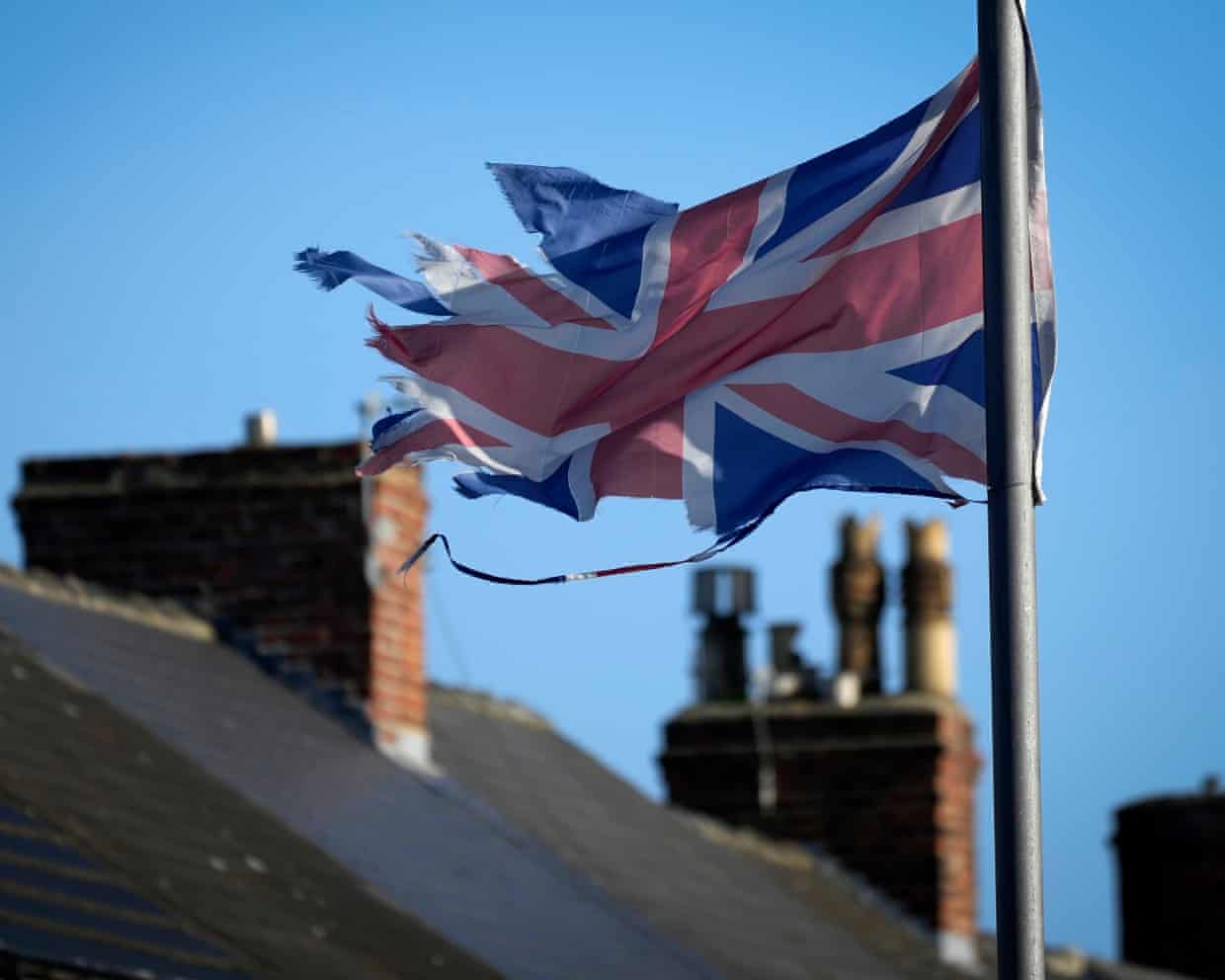
Perhaps the saddest consequence of Brexit is that it has left the UK a profoundly unhappy country (Ten years after Brexit, this is the UK: a divided nation frozen in time, 9 April). For Brexit supporters, the dream of a proud, independent Britain able to direct its own destiny in the world is nowhere near fulfilled, as if it ever could be. And they continue to grasp at the nearest proximate cause – an “invasion” of immigrants undermining British identity and draining its resources. For those who wished to remain, Brexit has left them unmoored from the security of membership of a grouping that gave them an identity and clear position in the world.Unfortunately, that unhappiness is now exacerbated by the state of the world outside the UK
SNP pledges to cap bread and milk prices if it wins Scotland’s parliamentary elections
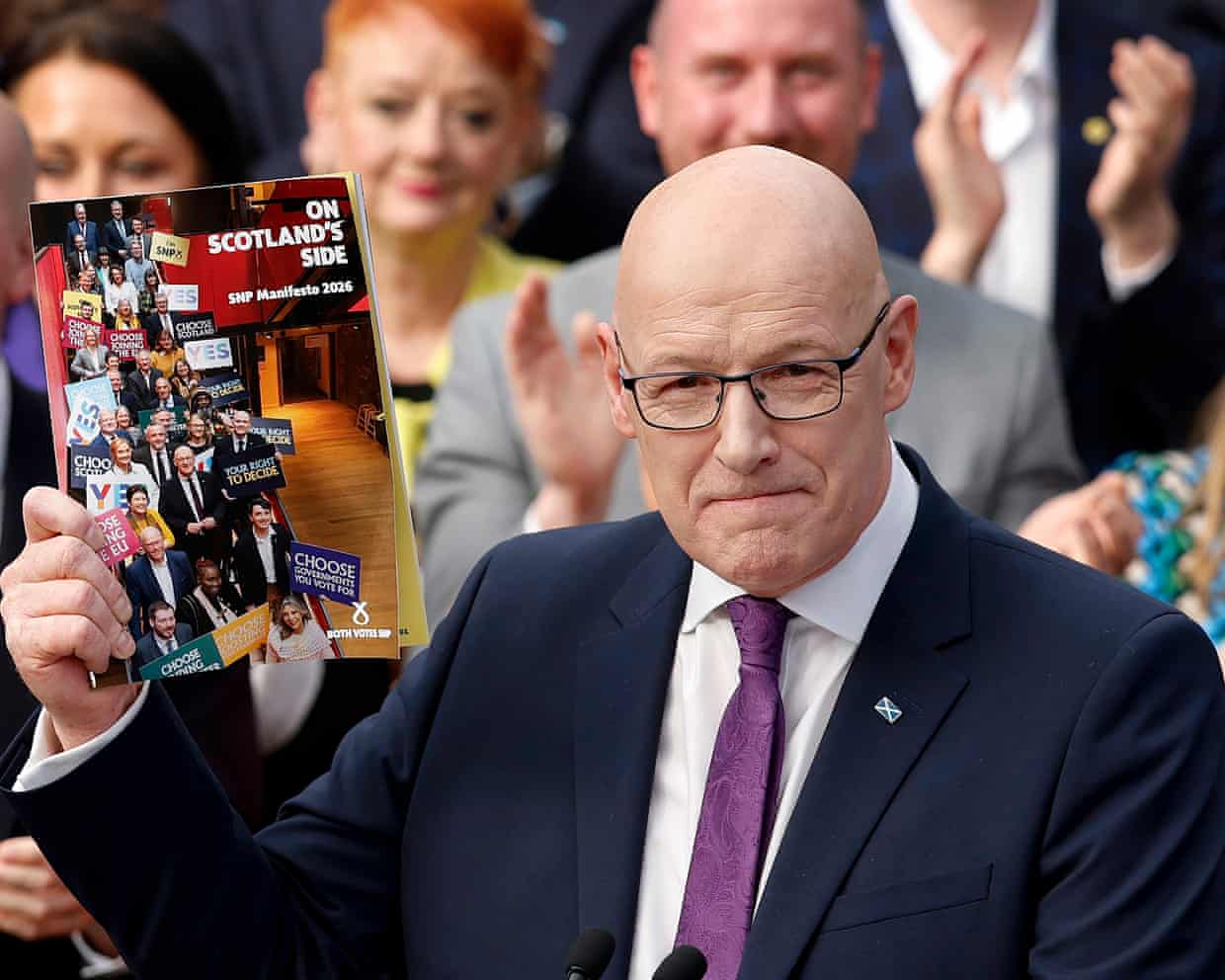
The SNP will cap supermarket prices for essential goods such as bread and milk if it retains power, John Swinney has pledged, after describing the cost of living as “the defining issue of this election”.With polls pointing to a fifth Holyrood term for the Scottish National party, its leader said he would use devolved public health powers to fix prices on 20 to 50 items such as bread, milk, cheese, eggs, rice and chicken because their rising cost was “impacting our nation’s nutrition”.The eye-catching pledge, made at the launch of the SNP manifesto for the Scottish parliament election, was immediately dismissed as a “potty gimmick” by retailers. It could also put the party on a collision course with the UK government because it may breach the Scotland Act of 1998 that created a devolved parliament.Ewan MacDonald-Russell, deputy head of the Scottish Retail Consortium, said supermarkets already paid significantly higher rates in Scotland, £162m more over the next three years than in England

Sexual harassment is rife on comedy circuit and women lack protections, MPs told
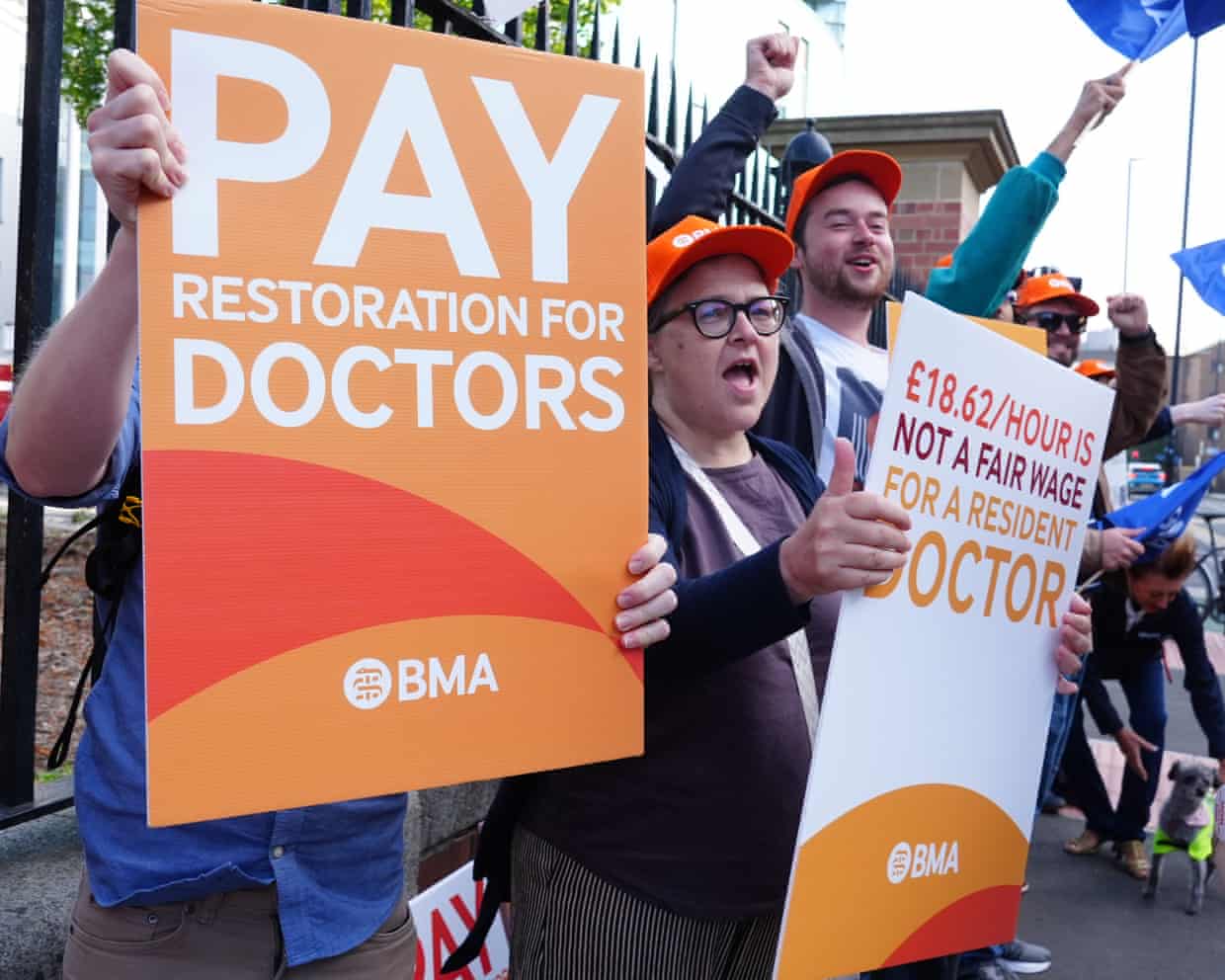
Strike is harming the NHS and dividing doctors | Letters

Why we washed our hands of Izal | Brief letters

Government’s 1.5m housebuilding target in England is suffering from subsidence | Nils Pratley
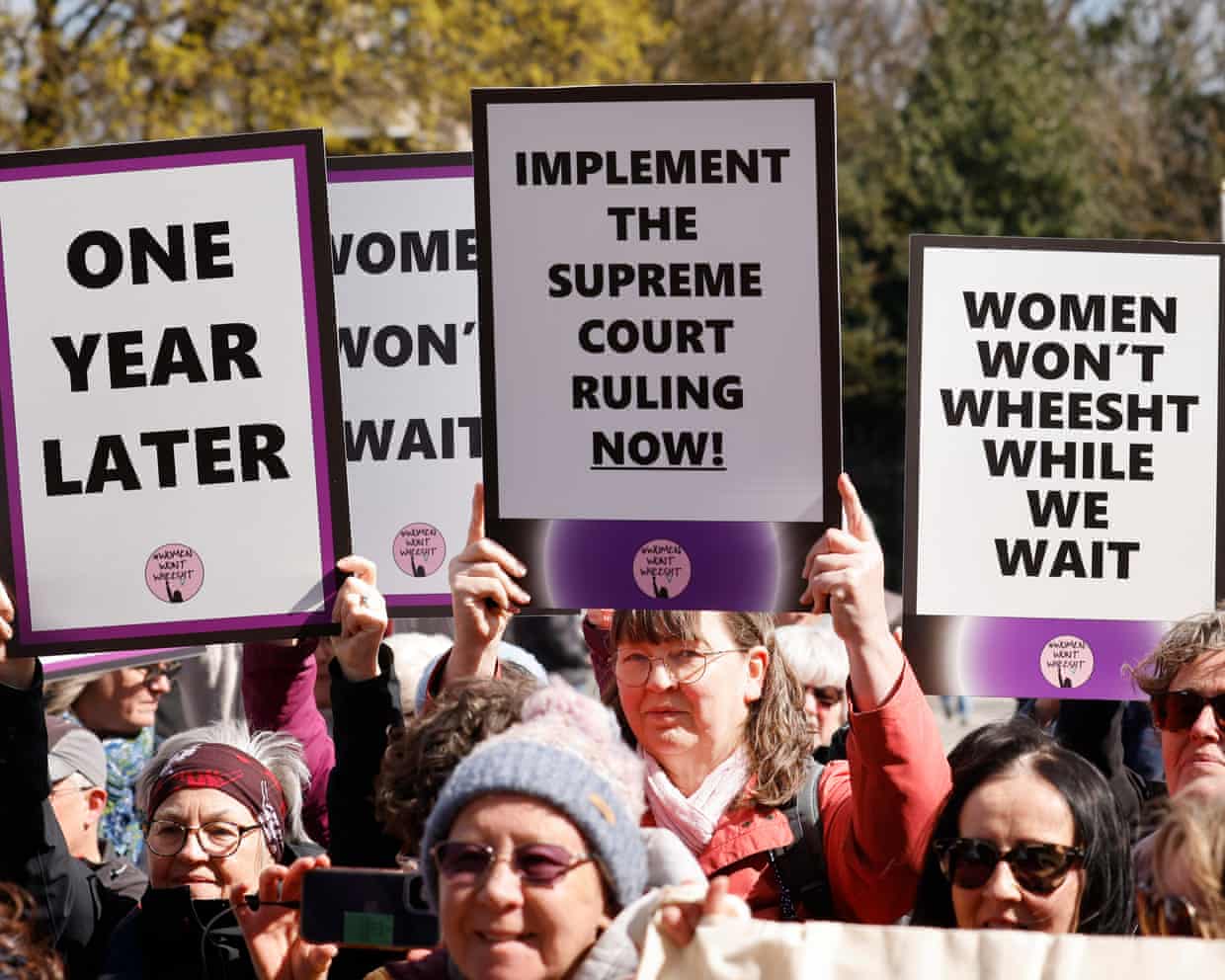
One year on: how landmark ruling on single-sex spaces has changed lives

Nonnamaxxing: do Italian grandmothers hold the secret to a long and happy life?