BP accused of ‘insidious’ influence on UK education through Science Museum links
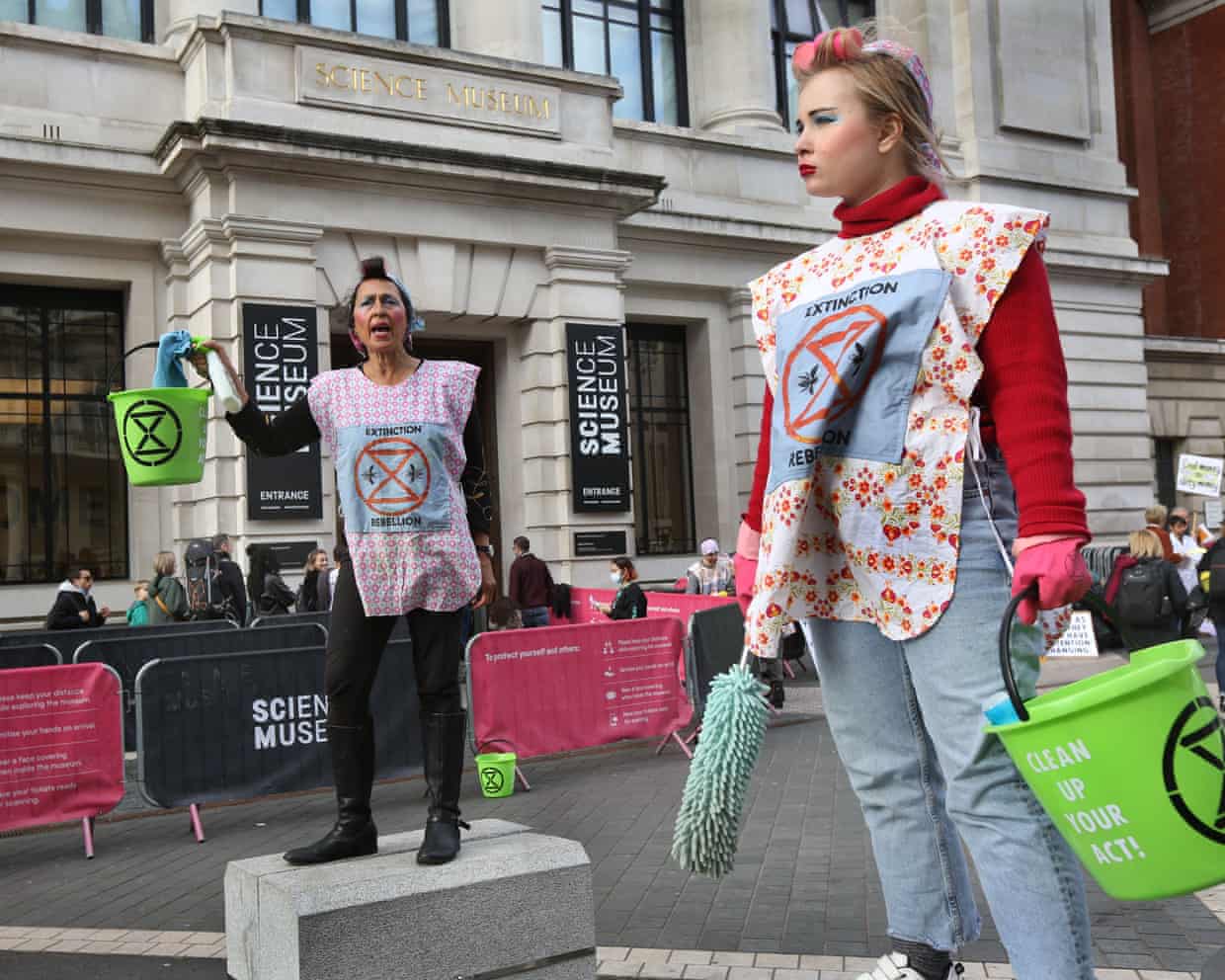
Campaigners have accused BP of having an insidious influence over the teaching of science, technology, engineering and maths (Stem) in the UK through its relationship with the Science Museum.Documents obtained under freedom of information legislation show how the company funded a research project that led to the creation of the Science Museum Group academy – its teacher and educator training programme – which BP sponsors and which has run more than 500 courses, for more than 5,000 teachers.Campaigners say the documents reveal the extent of control the company had over the research project, called Enterprising Science.The contract setting out the collaboration states that major decisions would not be “validly passed … unless the representative of BP votes in its favour”.Chris Garrard of the campaign group Culture Unstained said: “BP’s toxic influence over young people’s learning is calculated and insidious.
“We wouldn’t allow tobacco companies to be involved in crafting approaches to education, so why should BP – a company shunning the scientific consensus on climate change by ramping up drilling for oil and gas – be able to buy such an influential and prominent role?”The Science Museum dismissed the claims, saying that although BP funded the Enterprising Science project and was sponsoring the academy, it had “no involvement in the research or educational output”.A spokesperson said: “The sponsorship we receive from a wide range of funders, including BP which supports the Science Museum Group academy, is vital to our mission to inspire millions of people every year.The Science Museum Group retains editorial control of all training and resources produced by the academy.”BP said in statement: “The project led to the creation of the Science Museum academy in 2018, which continues to inspire educators delivering engaging Stem experiences in and outside the classroom.”The Science Museum has faced repeated criticism over its ties to BP.
It was forced to defend them last year after the company announced it was abandoning its climate targets to focus on increasing fossil fuel production.Garrard said: “With young people refusing to lend their talents to fossil fuel producers and students barring them from their recruitment fairs, the industry is facing a recruitment crisis.So, whose side is the Science Museum really on when it backs BP?”The museum is facing a growing campaign, not just from climate groups, but also from schools and teachers’ unions, over its fossil fuel links.The National Education Union’s green representative, Helen Tucker, said more teachers were asking whether they could participate in the Science Museum academy “whose curriculum was developed with oversight from very people who are causing climate change – BP”.“As educators, it is our responsibility to resist the greenwashing and the image-laundering of those destroying our children’s futures.
We all have too much to lose.The NEU will continue to support the boycott of the Science Museum until this publicly funded institution learns how to train Stem educators without allowing fossil fuel producers to profit from it.”More than 400 teachers and scientists pledged to boycott the Science Museum in 2022.
Maternal death rate in UK rose by 20% over 14 years despite Tory pledge
The rate of women dying during or soon after pregnancy in the UK has increased by 20% over the last decade, despite the Conservatives having pledged to halve it, according to figures experts have described as “an absolute tragedy”.In 2015, the then Tory health secretary, Jeremy Hunt, vowed to reduce maternal deaths by 50% by 2030 and make the NHS “one of the safest places in the world to have a baby”. In 2017, he brought the date forward to 2025.However, figures from MBRRACE-UK, a research project led by the University of Oxford, show the rate of women dying during the Conservatives’ 14 years in government went up, not down.Health leaders and campaigners said the 20% increase between 2009-11 and 2022-24 was shocking and showed something had clearly “gone badly wrong”

ADHD care needs better regulation and fewer pills | Letters
As a UK-trained consultant psychiatrist, fully indemnified, appraised and regulated by the General Medical Council, with specialist expertise in adult attention deficit hyperactivity disorder (ADHD) assessment and treatment, I read your article on rising ADHD care costs with concern and frustration (NHS ADHD spending over budget by £164m as unregulated clinics boom, 12 January).For the past eight months I have been navigating the opaque Care Quality Commission (CQC) registration process to provide high-quality, fully regulated ADHD assessments in an independent setting, alongside two similarly qualified colleagues. Until this process is complete, I am legally prohibited from seeing patients.It is therefore deeply troubling to learn from your article that multiple companies have been awarded NHS ADHD contracts despite not having CQC registration. In addition, some health professions fall outside the CQC remit and thus can set up a practice “diagnosing and treating” ADHD tomorrow – for example, a psychologist working with a prescribing pharmacist

Religious tradition, child safety and the law on circumcision | Letters
I would welcome criminalising circumcision if it was performed by an unqualified person – just as would be the case if someone unqualified conducted any other surgical operation (Circumcision classed as possible child abuse in draft CPS document, 10 January). But leaping from that to banning the practice altogether is not justified.Given that it is a longstanding and important tradition among Jews, Muslims and various other cultures, the best way forward is to only permit circumcision if it is practised by someone specifically qualified for it and who belongs to a nationally accredited scheme. This would involve compulsory training, monitoring all cases and producing annual reports.Such a step is vital if we value both the safety of children and the integrity of faith backgrounds, and should be implemented as soon as possible
Woman pulled out of UK ultramarathon after death threats over Afghanistan fundraising
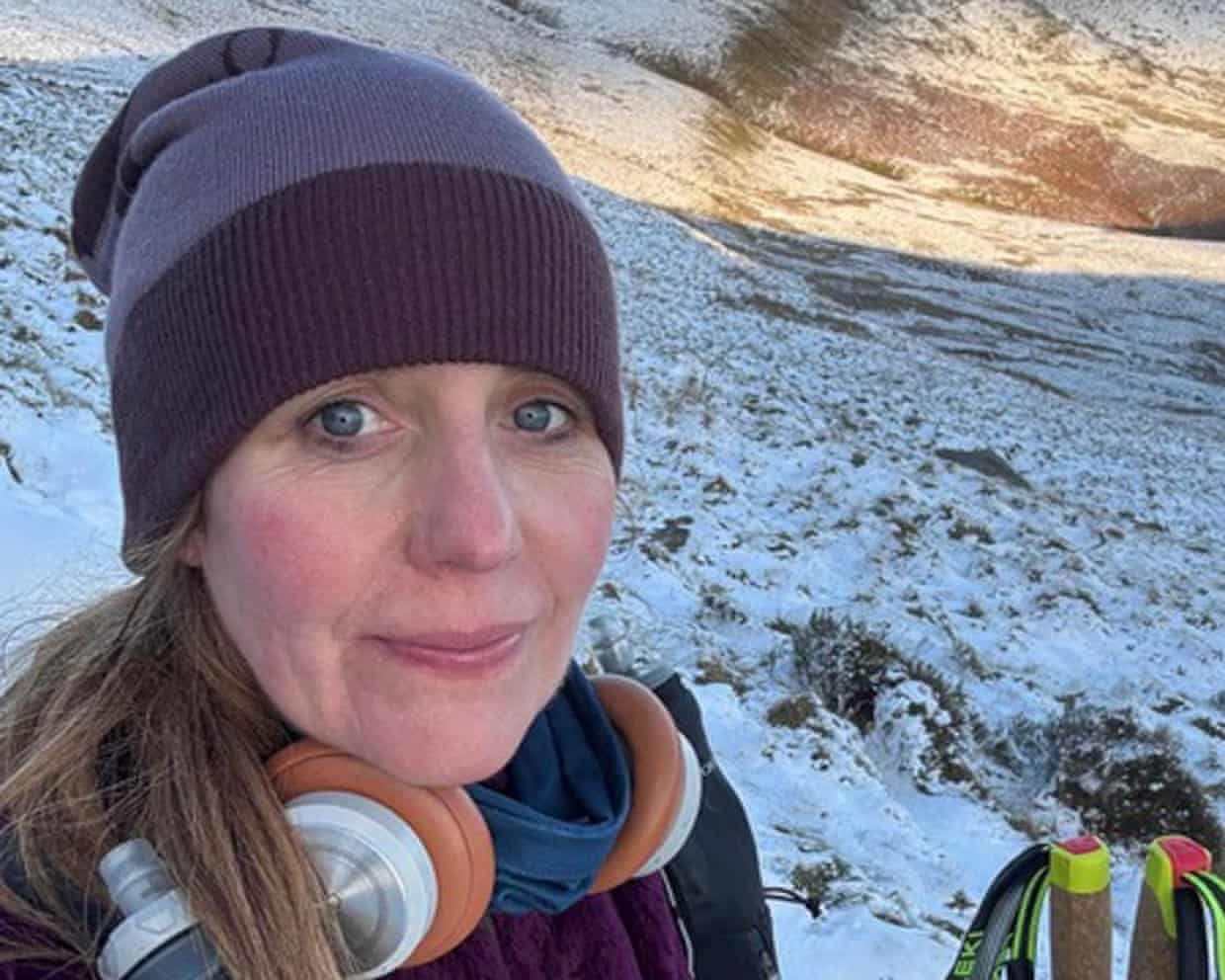
A woman was pulled out of Britain’s most gruelling ultramarathon after receiving death threats over her fundraising for Afghan women and girls.Sarah Porter was nearly a third of the way through the 108-mile Montane Winter Spine Challenger South endurance race when organisers made the “difficult decision” to withdraw her due to threats to her life in relation to the foundation she runs helping women and girls in war zones.Speaking to the Guardian, Porter said she was disappointed. “My immediate feeling was just one of shame really.”“I was very emotional,” she said, “just born from the perspective that I really felt like I’d let down the girls that I was running for and I’d really kind of got this narrative in my head and psyched myself up that what I was doing was just so insignificant in comparison to what they’re enduring

Circumcision kits found on sale on Amazon UK as concerns grow over harm to baby boys
Circumcision kits have been found on sale on Amazon UK, highlighting lax regulation as concerns grow about deaths and serious harm to baby boys.In December, a UK coroner issued warnings about insufficient circumcision regulation after the death in 2023 of a six-month-old boy, Mohamed Abdisamad, from a streptococcus infection.In a prevention of future deaths report, Dr Anton van Dellen, assistant coroner for west London, highlighted how “any individual may conduct a non-therapeutic male circumcision (NTMC) without any prior training”, with “no requirement for any infection control measures [and] no requirements for any aftercare”, adding that “action should be taken to prevent future deaths”.The Department of Health and Social Care has until the end of February to respond.The Guardian found “Plastibell” kits, in various sizes, on sale for £200 on Amazon in January

One in four UK teenagers in care have attempted to end their lives, study says
One in four teenagers in care have attempted to end their own life, and are four times more likely to do so than their peers with no care experience, according to a landmark study.The research analysed data from the millennium cohort study, which follows the lives of 19,000 people born in the UK between 2000 and 2002, and considered how out of home care, including foster, residential and kinship care, affected the social and mental health outcomes of the participants.More than one in four (26%) 17-year-olds who have lived in foster or residential care have attempted to end their own lives, the analysis found, compared with only one in 14 (7%) of teenagers with no experience of being in care.Although previous research has found that about 7% of UK children have attempted suicide by the age of 17, this study, conducted by academics from the UCL Centre for Longitudinal Studies and funded by the Nuffield Foundation, is the first to calculate the elevated suicide risk teenagers with care experience have.Lisa Harker, the director of the Nuffield Family Justice Observatory, said the fact that one in four care-experienced children had attempted suicide was a “national emergency”

How to turn any root vegetables into latkes – recipe | Waste not

Eleven quick and easy summer weekday dinners, from pasta to Maggi goreng – recipes

January tips if you’re cooking for one | Kitchen aide

Cheesy celeriac souffle and citrus salad: Thomasina Miers’ recipes to brighten a dark winter’s day

Georgina Hayden’s quick and easy recipe for antipasti beans on toast | Quick and easy

West African sunshine dishes: Toyo Odetunde’s chicken yassa pot pie and stuffed plantain boats – recipes