Rachel Reeves’s fiscal rules buffer should be ‘significantly larger’, say peers
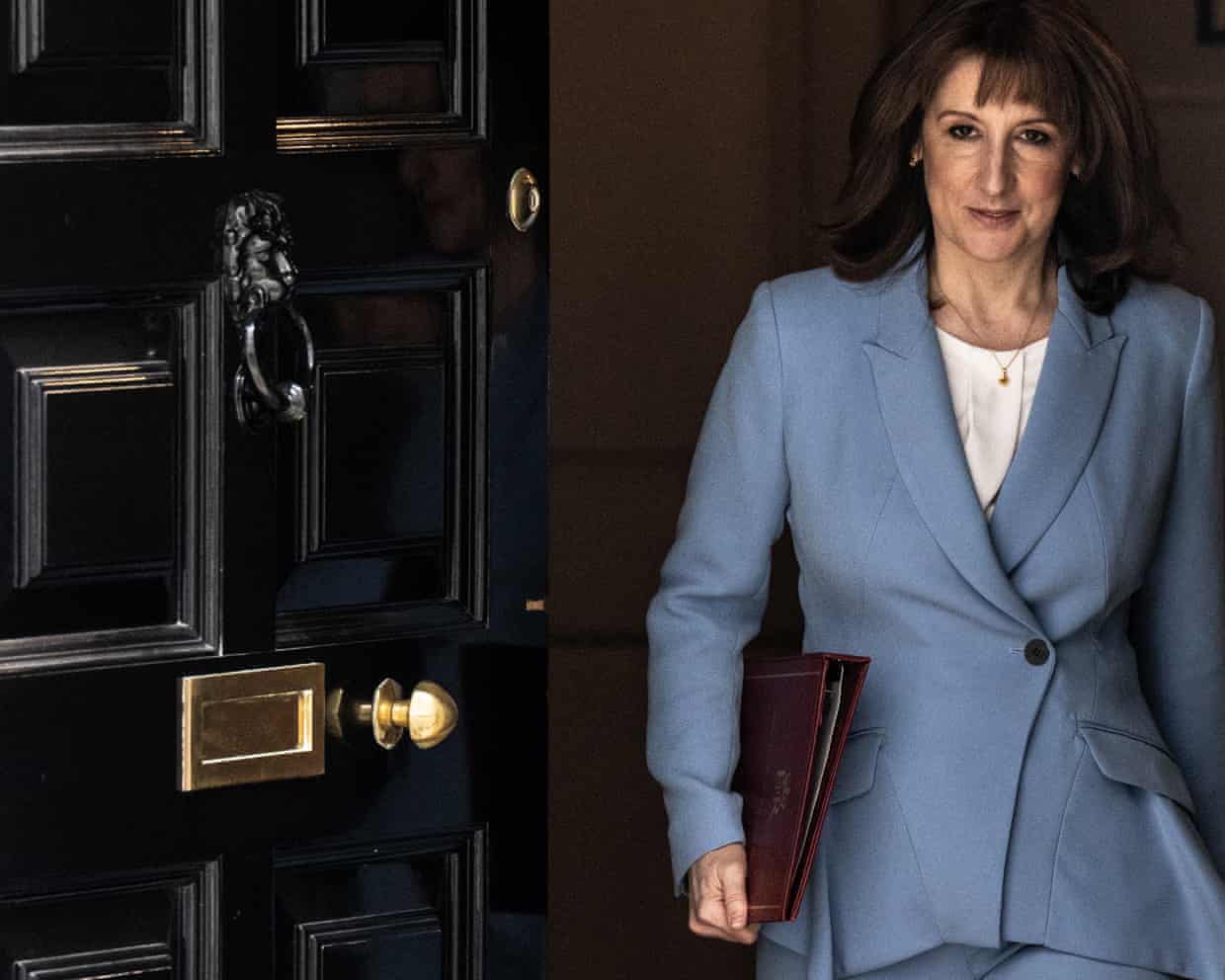
Rachel Reeves should aim to run a “significantly larger” buffer against her fiscal rules, according to a report from a House of Lords committee that says the UK’s public debt is on an unsustainable trajectory.The chancellor raised taxes at last year’s budget in order to more than double the “headroom”, or buffer, against her fiscal rules to £22bn – some of which is expected to be eroded by the impact of the Iran war.But the Lords economic affairs committee says Reeves should aim to raise it more, and complains that she and her recent predecessors have tended to allow themselves too little room for manoeuvre, compared with the £30bn average between 2010 and 2022.“Despite the recent increase in the size of the buffer, it remains at an historically low level and further substantial increases are still required,” it says.“Significantly larger buffers must become the norm.
”It criticises successive governments for treating fiscal buffers as “war chests” to be run down to a minimum, “with all the destabilising implications for potentially chaotic policy change this brings”.The high-powered committee, chaired by the Labour peer Stewart Wood, includes the former Treasury permanent secretary Terry Burns, the economist Alison Wolf, and the former chancellor Norman Lamont, who has stepped down since the inquiry into the UK’s fiscal framework was completed.“Not just this government, but governments for a long time, have been operating at such a dangerously low level of fiscal headroom that they’re sort of operating near the cliff-edge,” Wood told the Guardian.In the report, Fortifying the Fiscal Framework, the peers sound the alarm about the long-term path of fiscal policy, echoing recent warnings from watchdog the Office for Budget Responsibility (OBR).“On current tax and spending settings, the UK is on a path to unsustainable debt levels,” the report says.
“These issues should be of paramount concern for the government, not least because the last few decades have repeatedly shown that crises occur sufficiently often that benign projections prove overly optimistic,” As if to underline their argument, another crisis, the conflict in the Middle East, has occurred in the course of the committee’s inquiry,The peers call for more attention to be paid to the OBR’s annual “fiscal risks and sustainability report”, including a House of Commons debate led by the chancellor,The most recent such report highlighted the much higher than expected costs of the pensions triple lock, and the risks posed by a lack of long-term, loyal buyers in government debt markets,While the peers do not recommend substantially rewriting the fiscal rules, which have repeatedly been revised, they do call for a stricter interpretation of Reeves’s second fiscal rule, on debt.
Like those of her predecessors, this rule calls for debt to be falling in the last year of the forecast period – which has been cut to three years,The committee joins other experts in warning that this can still be met by tax and spending plans that involve debt rising for two years, before falling in the third,Instead, they would like to see Reeves commit to interpreting the rule more strictly, such that “in normal times, debt in the third year is lower than in the first year”,Critics of the OBR have argued that it is too influential on government policy, and accused it of failing to recognise fully the benefits of public investment, thus tying the Treasury’s hands,But the report suggests governments should feel free to press ahead with policies, even where the OBR declines to “score” them as economically beneficial in its assessments.
“The OBR’s not scoring certain policies should be no barrier to their implementation,” the report finds.“If the government believes they will be beneficial, they should implement them.Something has gone wrong with the policymaking process if the OBR’s decision not to score a policy determines that it will not be taken forward when the government believes it to be valuable.”The last chair of the OBR, Richard Hughes, resigned after details of last year’s budget were inadvertently published early.The Treasury is in the process of recruiting a successor, ahead of what is expected to be a tough autumn budget, with the conflict in the Middle East likely to depress economic growth.
A Treasury spokesperson said: “The UK has one of the most robust fiscal frameworks in the world which helps maintain economic stability while unlocking £120bn of investment in our future infrastructure with disciplined day-to-day spending,”
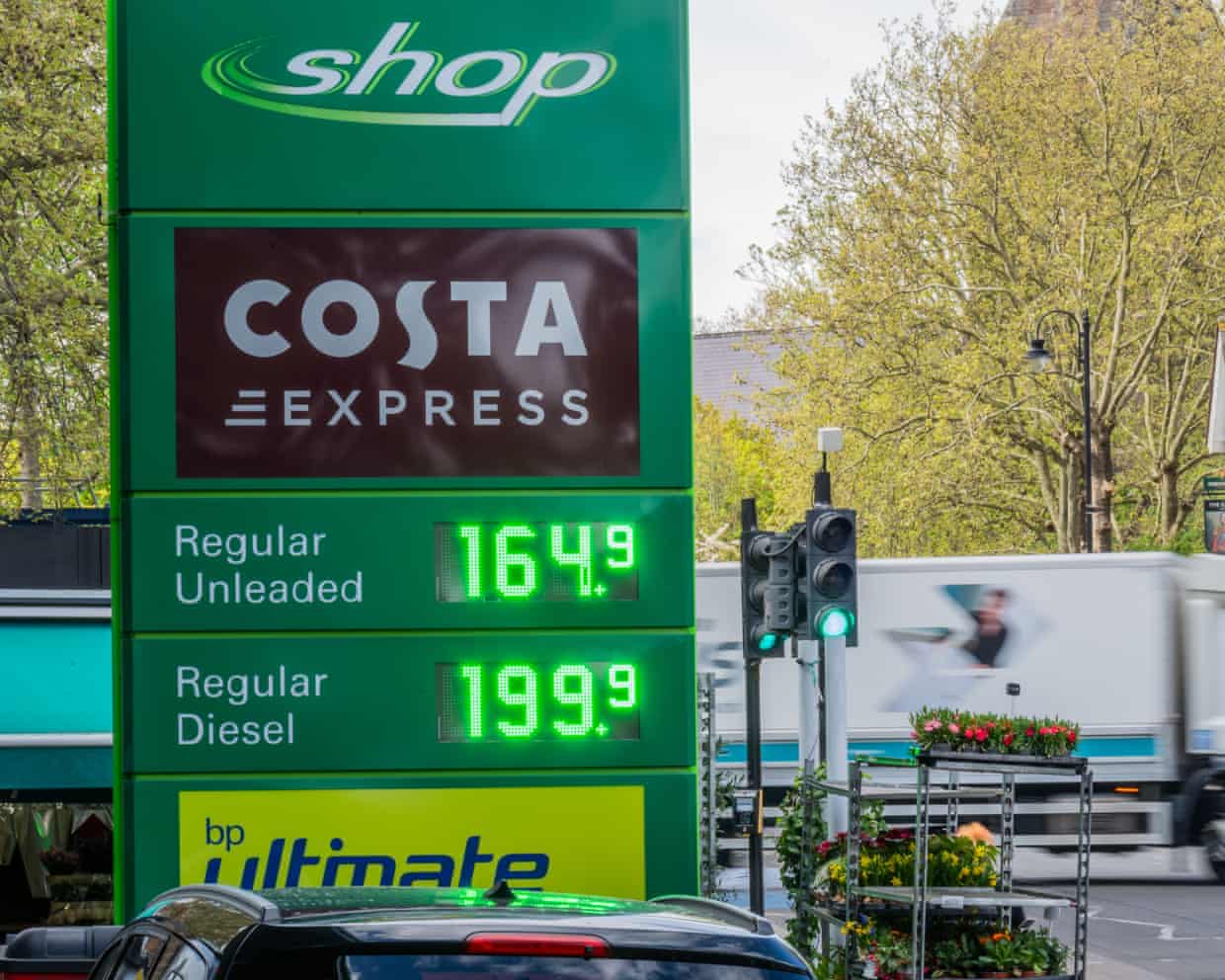
BP reports ‘horrifying’ jump in profits as Iran war boosts oil trading; Brent crude hits three-week high – business live
Good morning, and welcome to our rolling coverage of business, the financial markets and the world economy.The Iran war has helped BP to double its profits in the first quarter of this year, its latest financial results show.The oil major has just reported that it made a profit of nearly $3.2bn in the first three months of 2026, on its favoured ‘underlying replacement cost’ earnings measure.That’s higher than City analysts had predicted, with BP - which was hit by a shareholder rebellion last week – giving some of the credit to an “exceptional” contribution from its oil trading operations

Price rises in UK shops slow as retailers apply heavy discounts to lure shoppers
Price rises in UK shops have slowed as retailers applied “heavy discounting” to their goods in an effort to entice shoppers amid weakening consumer confidence, the industry’s trade group said.Shop price inflation rose by 1% year-on-year in April, a slowdown from 1.2% in March and below the three-month average of 1.1%, according to the British Retail Consortium (BRC).Retailers made discounts to clothing, furniture and DIY goods, the BRC said in its monthly survey of its members, compiled with NielsenIQ (NIQ)

MacBook Pro M5 review: serious power, still long battery life
Apple’s Macs have been on a roll this year with the brand new budget MacBook Neo and a faster MacBook Air M5, but now it’s time for its workhorse MacBook Pro to be upgraded with the fastest, most powerful M-series chips.The Guardian’s journalism is independent. We will earn a commission if you buy something through an affiliate link. Learn more.The latest MacBook Pro comes in two screen sizes and a large range of chip and configuration options

US supreme court hears whether smartphone location data warrants infringe users’ privacy
The US supreme court is considering whether sprawling warrants for smartphone location data infringe on Americans’ privacy rights and violate the constitution.Justices heard opening arguments in Chatrie v United States on Monday that concerned law enforcement’s reliance on so-called “geofence warrants” in difficult cases. The case was originally brought by Okello Chatrie, whose phone location data helped police in Richmond, Virginia, track him down after he robbed a bank at gunpoint and escaped with $195,000 in 2019. Chatrie pleaded guilty to armed robbery and was sentenced to 12 years in prison, but his lawyers argue none of the evidence against him should have been admissible in court.A lawyer for the US Department of Justice argued that nearly any actions taken in public while in possession of a smartphone afforded no expectation of privacy

Sabastian Sawe’s sub-two marathon feat is the Roger Bannister moment of our time | Sean Ingle
A few years ago at the London Marathon, organisers wheeled out an industrial-sized treadmill called the Tumbleator. Then they tempted curious onlookers with a simple question: can you keep up with Eliud Kipchoge? The answer was obvious. But that didn’t stop people trying. Most lasted a few seconds before comically flying off the back into crash mats.The Tumbleator has a fresh poster-boy now: Sabastian Sawe, who on Sunday claimed track and field’s last holy grail by running a sub two-hour marathon
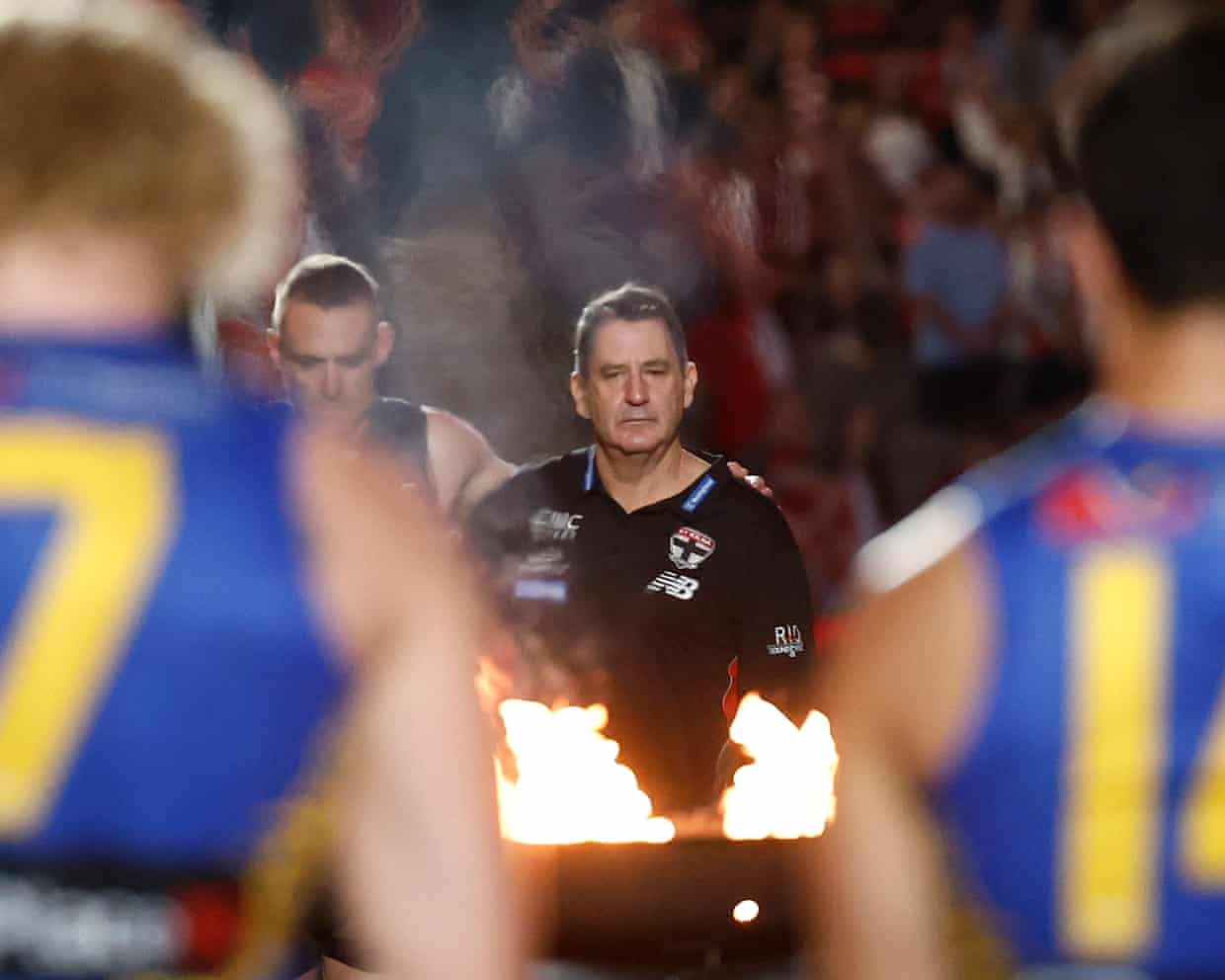
Indigenous players back St Kilda coach Ross Lyon after comment deemed ‘casual racism’
St Kilda coach Ross Lyon has received the backing of his club’s chief executive after a group of Indigenous players – including star Nasiah Wanganeen-Milera – took offence following a comment made at training earlier this month.Lyon made the comment when three Indigenous players lined up together for a drill, saying, “I love the brother-boy connection, but we all have to remember, we are part of the bigger team here”.The players raised their concerns with the coach the following day and the matter was dealt with internally, but became public when journalist Caroline Wilson raised it on Channel Seven on Monday night.Lyon said he had misjudged the moment. “Was I being flippant? Could it be described as casual racism? I learned a lot out of what happened,” he told Wilson

Musk and Altman’s bitter feud over OpenAI to be laid bare in court

UK departments at odds over energy demands of AI datacentres

Cannes AI film festival raises eyebrows – and questions about future

Facing AI and a tough job market, gen Z turns to entrepreneurship: ‘I have to prove myself’

TikTok and Visa launch debit card to speed payouts to UK creators

Officials hugely underestimated impact of AI datacentres on UK carbon emissions