UK manufacturers ‘will pay £940m a year more in business rates due to Reeves changes’

British manufacturers have said they will have to pay an extra £940m a year in business rates because of changes by Rachel Reeves that come into effect this month.Manufacturers face a disproportionate business rates bill because they often have large factory floors, according to analysis by MakeUK, an industry lobby group.It said that factories accounted for a fifth of England and Wales’s property by rateable value, despite manufacturers only accounting for a 10th of economic output.The chancellor increased business rates at the budget in November.That included companies paying an additional surcharge on buildings of a rateable value of more than £500,000.
The government faced a strong initial backlash to the business rates changes from pubs and live music venues in particular.In January the government made a partial U-turn by announcing £80m in discounts, after warnings that some of the businesses would be forced to close.Retailers also successfully argued against even higher rates.However, MakeUK argued that the government should also look at ways to help manufacturers as well as retailers and hospitality businesses, at a time when they must also deal with the energy price shock caused by the US-Israel war on Iran.The lobby group said that the government should give a year’s notice before raising rates.
Verity Davidge, the policy director at Make UK, said: “The current system of business rates is outdated and is a blunt instrument that leaves manufacturers paying disproportionately more than other sectors relative to their size.“This increase couldn’t come at a worse possible time and is set to hammer one of the government’s key strategic sectors which is already facing existential threats from increased energy and employment costs which are completely out of their control.For many companies right now, just to survive the burdens being imposed on them will be an achievement.”Business rates, which are used to fund essential local government services, are calculated by applying a “multiplier” to the rateable value of property, set every three years by the government’s Valuation Office Agency in England and Wales (or by equivalents in Scotland and Northern Ireland).That means that large properties tend to pay higher rates, regardless of how successful the business is.
MakeUK argued that rates should be linked to business turnover, size and type, with discounts for small and mid-sized companies.Across England and Wales there are an estimated 380,000 manufacturing premises.MakeUK said that property types that include “industrial” and “factories, mills & workshops” were worth £14bn, accounting for more than a fifth of the total rateable value of properties across England and Wales.A fifth of 132 manufacturers surveyed by MakeUK will pay the “high value” multiplier for properties worth more than £500,000.Responding to MakeUK’s analysis, a Government spokesperson said: “We have the right economic plan - we’re reforming business rates to back manufacturing, with a £4.
3bn support package to limit bills rises, alongside capping Corporation Tax at 25%, cutting red tape and taking action on energy by reducing electricity bills by up to 25% for over 7,000 businesses.“We’re also cutting the business rates tax rate by 5p for high street businesses, funded by higher bills for the top 1% most expensive properties – meaning many big online warehouses now pay a 33% higher rate than small high street premises.”

Oats, sardines and crisps: emergency foods to stockpile – and why you should share them
People should have an emergency stockpile of food in their homes in case conflicts, extreme weather or cyber-attacks shut down supplies, leading UK experts have told the Guardian.In an ever more turbulent world, they say it is essential to choose long-life items that can be eaten without cooking – think tinned beans, vegetables and fish, rice crackers, and oats that can be soaked. But it is also important to choose items you actually like to eat, and some treats such as chocolate or crisps to keep your spirits up. You will also need water – lots of it – not just to drink but for washing too.Perhaps the most surprising advice is to be prepared to share your stockpile with neighbours

Reese’s chocolate heir accuses Hershey of altering recipes: ‘It wasn’t real peanut butter’
The grandson of HB Reese, the inventor of Reese’s Peanut Butter Cups, has accused the chocolate giant Hershey of faking a pledge to investors to switch back the recipes of its popular products – including KitKat – to the original milk and dark chocolate ones.A confectionery-focused dust-up between Brad Reese and the $42bn Pennsylvania-based company began in February when Reese, 70, accused the company of “quietly replacing” the ingredients – or “architecture” – in his grandfather’s invention with cheaper “compound coatings” and “peanut-butter-style crèmes”.At a recent Hershey investor conference, the company said it would change about 3% of select products to the original recipes but maintained it had never altered the renowned Reese’s Peanut Butter Cups.The company’s chief growth officer, Stacy Taffet, said Hershey was “transitioning our sweets portfolio to colors from natural sources, and ensuring that all Hershey’s and Reese’s offerings are consistent with their brand’s classic milk and dark chocolate recipes”. The changes are planned to come into effect by next year

Put away the Aperol and raise a glass to Hugo spritz, the drink of the summer
Pub gardens and bar terraces have been awash with a sea of orange in recent years as Italy’s love of Aperol spritz spread to the UK. But this year the cocktail’s cousin, a Hugo spritz, will be the drink of the summer, according to supermarkets and bars.It is already being served across the country, including at Sea Containers on the banks of the Thames and Mayfair’s swanky Claridge’s hotel in London, 20 Stories bar in Manchester and the Bridge Tavern in Newcastle. Wetherspoons has the cocktail on its menu nationwide.“In the past year, we have noted that there has been a wider shift among our guests towards drinks with lower alcohol percentages, particularly during the day – a Hugo spritz fits rather neatly into this space,” said George Raju, director of bars at Claridge’s
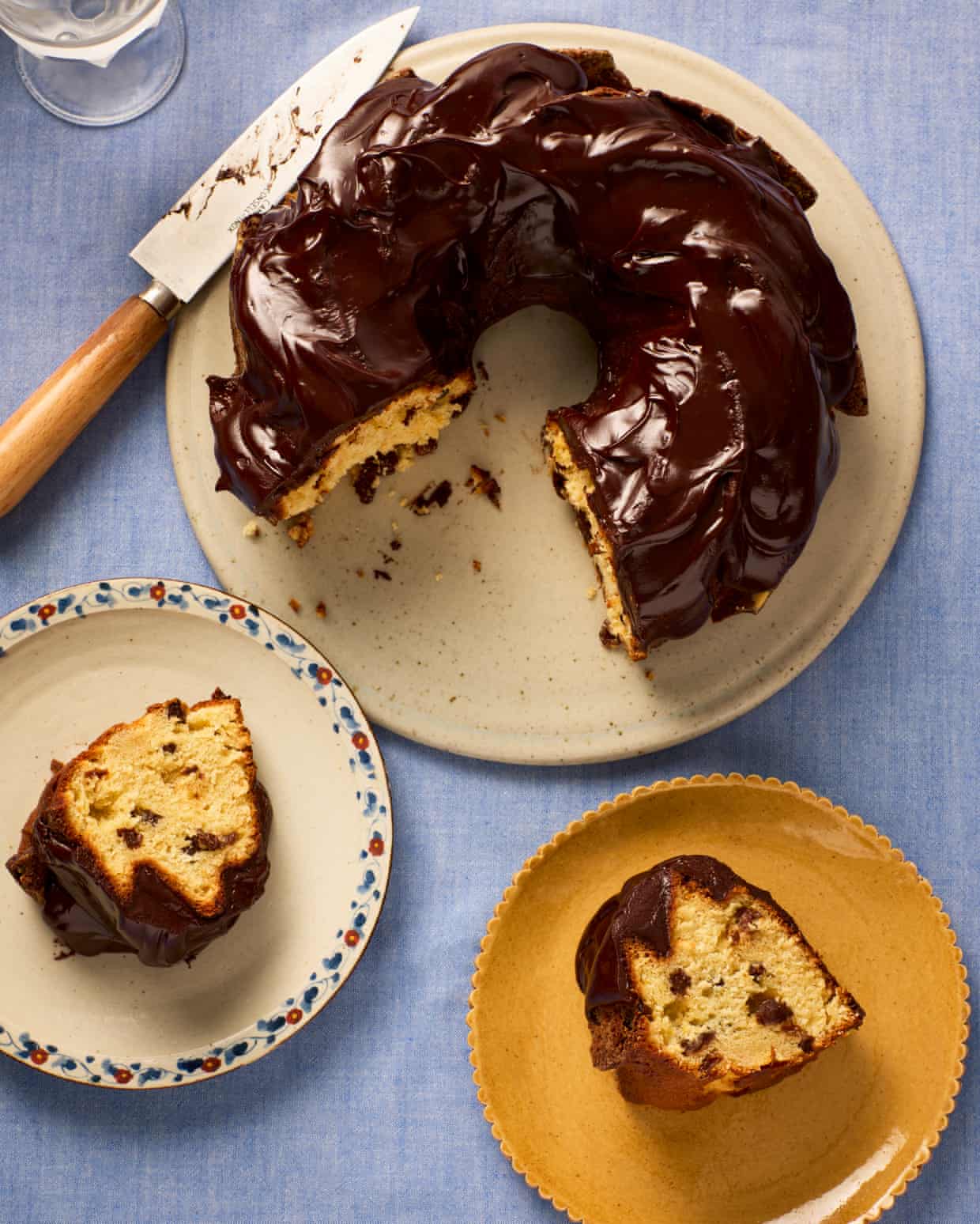
Helen Goh’s recipe for ricotta, rum and raisin cake | The sweet spot
This is a cake for the long, ambling tail-end of an Easter lunch. It’s gently scented with orange and vanilla, lightened by ricotta, and studded with rum-soaked raisins that bring bursts of sweetness to each slice. Ideally, they’d be soaked overnight to plump them into something luscious, but if time gets away from you, take a shortcut: put the raisins and rum in a microwave-safe bowl, zap for 20–30 seconds, then leave to cool and absorb. The chocolate glaze is optional; on days when you want something simpler (or lighter), a generous sifting of icing sugar is all this cake needs. Serve with a small glass of grappa or something similarly warming for a quietly perfect way to bring a feast to a close

Cocoa-crazy: chocolate-infused liqueurs deserve their own moment
Among my minor childhood traumas was the time my dad returned from a business trip to Belgium with a smart box of assorted chocolates (cue tiny violins). Expecting caramel, I bit into a truffle and was met by an explosion of very boozy liqueur. The box seemed to be an exciting change from the usual duty-free Toblerone, but after this incident, truffle assortments have always struck me as deeply unsafe. (I have tried liqueur-filled chocolates since, but still remain flummoxed by them.)The Guardian’s journalism is independent
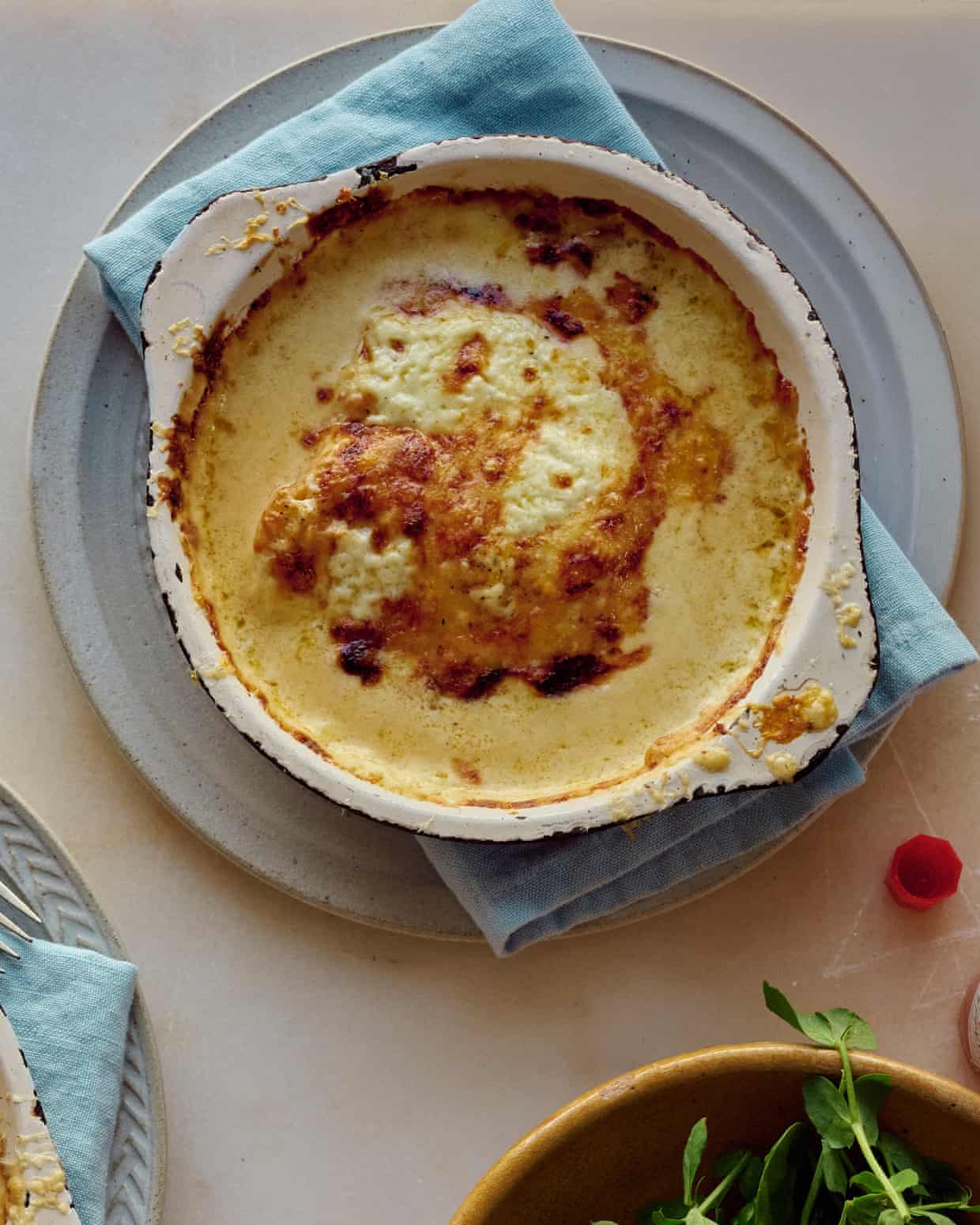
Baked cheesy smoked haddock and lemon icebox pudding: Henry Harris’ alternative Easter lunch
Sometimes all you want is a hot, bubbling dish and a spoon, and for me today’s cheesy haddock is that dish – a 15-minute supper to be enjoyed in front of the telly with a salad or a large bowl of hot buttered peas. Add a lemony, biscuity iced dessert, and you have a light, very easy and enjoyable supper that’s almost the perfect close to a long Easter weekend.Choose your smoked haddock carefully: you want large, thick fillets of undyed fish. Stating the obvious, here, but a good fishmonger will have this; a supermarket never. The creme fraiche must be a French, naturally soured cream, too, becausethe cheaper English versions coagulate when heat is applied, resulting in an unpleasant, watery gunk

UK City firms report fastest turnaround in fortunes in 30 years
UK manufacturers ‘will pay £940m a year more in business rates due to Reeves changes’

UK’s leading AI research institute told to make ‘significant’ changes

Google to tap into gas plant for AI datacenter in sharp turn from climate goals

‘You have to have a bit of heartache’: Justin Rose on his bid to avoid being Masters nearly man

Sir Craig Reedie, key London 2012 Olympics figure and former BOA chair, dies aged 84