‘The biggest decision yet’: Jared Kaplan on allowing AI to train itself

Humanity will have to decide by 2030 whether to take the “ultimate risk” of letting artificial intelligence systems train themselves to become more powerful, one of the world’s leading AI scientists has said.Jared Kaplan, the chief scientist and co-owner of the $180bn (£135bn) US startup Anthropic, said a choice was looming about how much autonomy the systems should be given to evolve.The move could trigger a beneficial “intelligence explosion” – or be the moment humans end up losing control.In an interview about the intensely competitive race to reach artificial general intelligence (AGI) – sometimes called superintelligence – Kaplan urged international governments and society to engage in what he called “the biggest decision”.Anthropic is part of a pack of frontier AI companies including OpenAI, Google DeepMind, xAI, Meta and Chinese rivals led by DeepSeek, racing for AI dominance.
Its widely used AI assistant, Claude, has become particularly popular among business customers,Kaplan said that while efforts to align the rapidly advancing technology to human interests had to date been successful, freeing it to recursively self-improve “is in some ways the ultimate risk, because it’s kind of like letting AI kind of go”,The decision could come between 2027 and 2030, he said,“If you imagine you create this process where you have an AI that is smarter than you, or about as smart as you, it’s [then] making an AI that’s much smarter,”“It sounds like a kind of scary process.
You don’t know where you end up.”Kaplan has gone from being a theoretical physicist scientist to an AI billionaire in seven years working in the field.In a wide-ranging interview, he also said:AI systems will be capable of doing “most white-collar work” in two to three years.That his six-year-old son will never be better than an AI at academic work such as writing an essay or doing a maths exam.That it was right to worry about humans losing control of the technology if AIs start to improve themselves.
The stakes in the race to AGI feel “daunting”.The best-case scenario could enable AI to accelerate biomedical research, improve health and cybersecurity, boost productivity, give people more free time and help humans flourish.Kaplan met the Guardian at Anthropic’s headquarters in San Francisco, where the interior of knitted rugs and upbeat jazz music belies the existential concerns about the technology being developed.Kaplan is a Stanford-and Harvard-educated professor of physics who researched at Johns Hopkins University and at Cern in Switzerland before joining OpenAI in 2019 and co-founding Anthropic in 2021.He is not alone at Anthropic in voicing concerns.
One of his co-founders, Jack Clark, said in October he was both an optimist and “deeply afraid” about the trajectory of AI, which he called “a real and mysterious creature, not a simple and predictable machine”.Kaplan said he was very optimistic about the alignment of AI systems with the interests of humanity up to the level of human intelligence, but was concerned about the consequences if and when they exceed that threshold.He said: “If you imagine you create this process where you have an AI that is smarter than you, or about as smart as you, it’s [then] making an AI that’s much smarter.It’s going to enlist that AI help to make an AI smarter than that.It sounds like a kind of scary process.
You don’t know where you end up.”Doubt has been cast on the gains made from deploying AIs in the economy.Outside Anthropic’s headquarters, a billboard for another tech company pointedly asked “All that AI and no ROI?”, a reference to return on investment.A Harvard Business Review study in September said AI “workslop” – substandard AI enabled-work that humans have to fix – was reducing productivity.Some of the clearest gains have been in using AIs to write computer code.
In September, Anthropic revealed its cutting-edge AI, Claude Sonnet 4,5, a model for computer coding that can build AI agents and autonomously use computers,It maintained focus on complex multistep coding tasks for 30 hours unbroken, and Kaplan said that in some cases using AI was doubling the speed with which his firm’s programmers were able to work,But in November Anthropic said it believed a Chinese state-sponsored group had manipulated its Claude Code tool – not only to help humans launch a cyber-attack but to execute about 30 attacks itself, some of which were successful,Kaplan said allowing AIs to train the next AIs was “an extremely high-stakes decision to make”.
“That’s the thing that we view as maybe the biggest decision or scariest thing to do … once no one’s involved in the process, you don’t really know.You can start a process and say, ‘Oh, it’s going very well.It’s exactly what we expected.It’s very safe.’ But you don’t know – it’s a dynamic process.
Where does that lead?”He said if recursive self-improvement, as this process is sometimes known, was allowed in an uncontrolled way there were two risks.“One is do you lose control over it? Do you even know what the AIs are doing? The main question there is: are the AIs good for humanity? Are they helpful? Are they going to be harmless? Do they understand people? Are they going to allow people to continue to have agency over their lives and over the world?”“I think preventing power grabs, preventing misuse of the technology, is also very important.”“It seems very dangerous for it to fall into the wrong hands”The second risk is to security resulting from the self-taught AIs exceeding the human capabilities at scientific research and technological development.“It seems very dangerous for it to fall into the wrong hands,” he said.“You can imagine some person [deciding]: ‘I want this AI to just be my slave.
I want it to enact my will.’ I think preventing power grabs – preventing misuse of the technology – is also very important.”Independent research into frontier AI models, including ChatGPT, shows the length of tasks AIs can do has been doubling every seven months.The rivals racing to create super-intelligence.This was put together in collaboration with the Editorial Design team.
Read more from the series.Nick Hopkins, Rob Booth, Amy Hawkins, Dara Kerr, Dan MilmoRich Cousins, Harry Fischer, Pip Lev, Alessia AmitranoFiona Shields, Jim Hedge, Gail FletcherKaplan said he was concerned that the speed of progress meant humanity at large had not been able to get used to the technology before it leaped forward again.“I am worried about that … people like me could all be crazy, and it could all plateau,” he said.“Maybe the best AI ever is the AI that we have right now.But we really don’t think that’s the case.
We think it’s going to keep getting better.”He added: “It’s something where it’s moving very quickly and people don’t necessarily have time to absorb it or figure out what to do.”Anthropic is racing with OpenAI, Google DeepMind and xAI to develop ever more advanced AI systems in the push to AGI.Kaplan described the atmosphere in the Bay Area as “definitely very intense, both from the stakes of AI and from the competitiveness viewpoint”.“The way that we think about it is [that] everything is on this exponential trend in terms of investment, revenue, capabilities of AI, how complex the tasks [are that] AI can do,” he said.
The speed of progress means the risk of one of the racers slipping up and falling behind is great,“The stakes are high for staying on the frontier, in the sense that you fall off the exponential [curve] and very quickly you could be very far behind at least in terms of resources,”By 2030, datacentres are projected to require $6,7tn worldwide to keep pace with the demand for compute power, McKinsey has estimated,Investors want to back the companies closest to the front of the pack.
At the same time, Anthropic is known for encouraging regulation of AI.Its statement of purpose includes a section headlined: “We build safer systems.”“We don’t really want it to be a Sputnik-like situation where the government suddenly wakes up and is like, ‘Oh, wow, AI is a big deal’ … We want policymakers to be as informed as possible along the trajectory so they can take it into account.”In October, Anthropic’s position triggered a put-down from Donald Trump’s White House.David Sacks, the US president’s AI adviser, accused Anthropic of “fearmongering” to encourage state-by-state regulation that would benefit its position and damage startups.
After Sacks claimed it had positioned itself as “a foe” of the Trump administration, Dario Amodei, Kaplan’s co-founder and Anthropic’s chief executive, hit back by saying the company had publicly praised Trump’s AI action plan, worked with Republicans and that, like the White House, it wanted to maintain the US’s lead in AI.
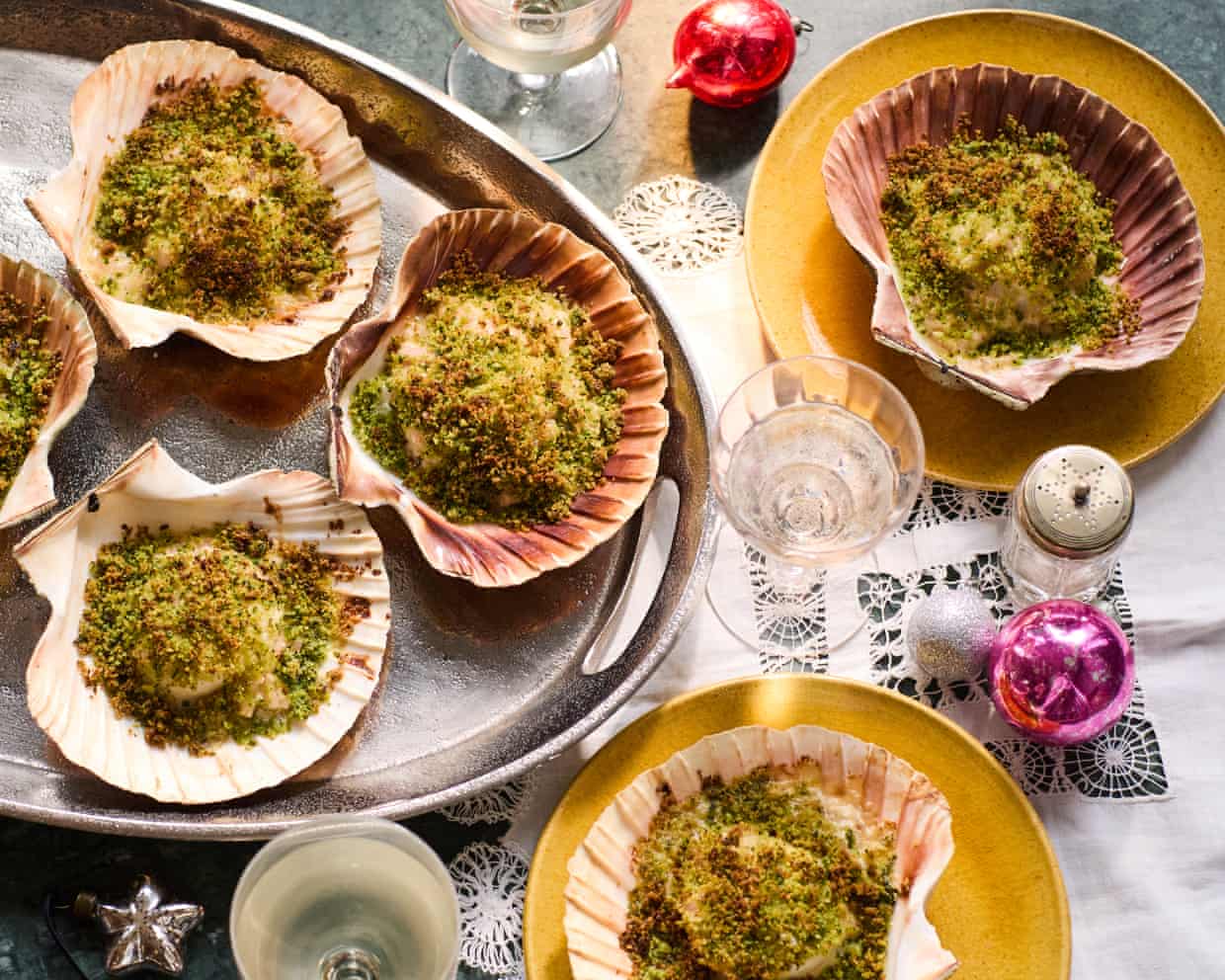
How to make coquilles St-Jacques – recipe | Felicity Cloake's Masterclass
’Tis the season for food that makes everyone feel a little bit loved and special; for showstoppers – but preferably the kind that don’t stop the show for too long, given how much else is likely to be going on. This French classic, which can be made a day ahead, if necessary, and/or bulked out with other seafood, is a luxurious light starter or fancy canapé.Prep 20 min Cook 15 min Makes 66 large sustainably-sourced scallops (diver-caught, ideally), cleaned and on the shell, or frozen and defrosted scallops (or see method)2 tbsp butter 2 banana shallots, or 4 round ones150ml white wine (optional; see method)100ml double creamFor the topping1 small garlic clove 25g parsley 2 tbsp butter 70g dried breadcrumbsIf you’d like to keep costs down, go for frozen scallops, or for smaller queen scallops (farmed or hand-dived ones tend to be the most sustainable), or mix scallops with other seafood such as small shelled clams and prawns, etc, and cook and serve them in gratin dishes. Store live scallops in the fridge round-side down. For a more substantial dish, add another chopped scallop, or other seafood, per person
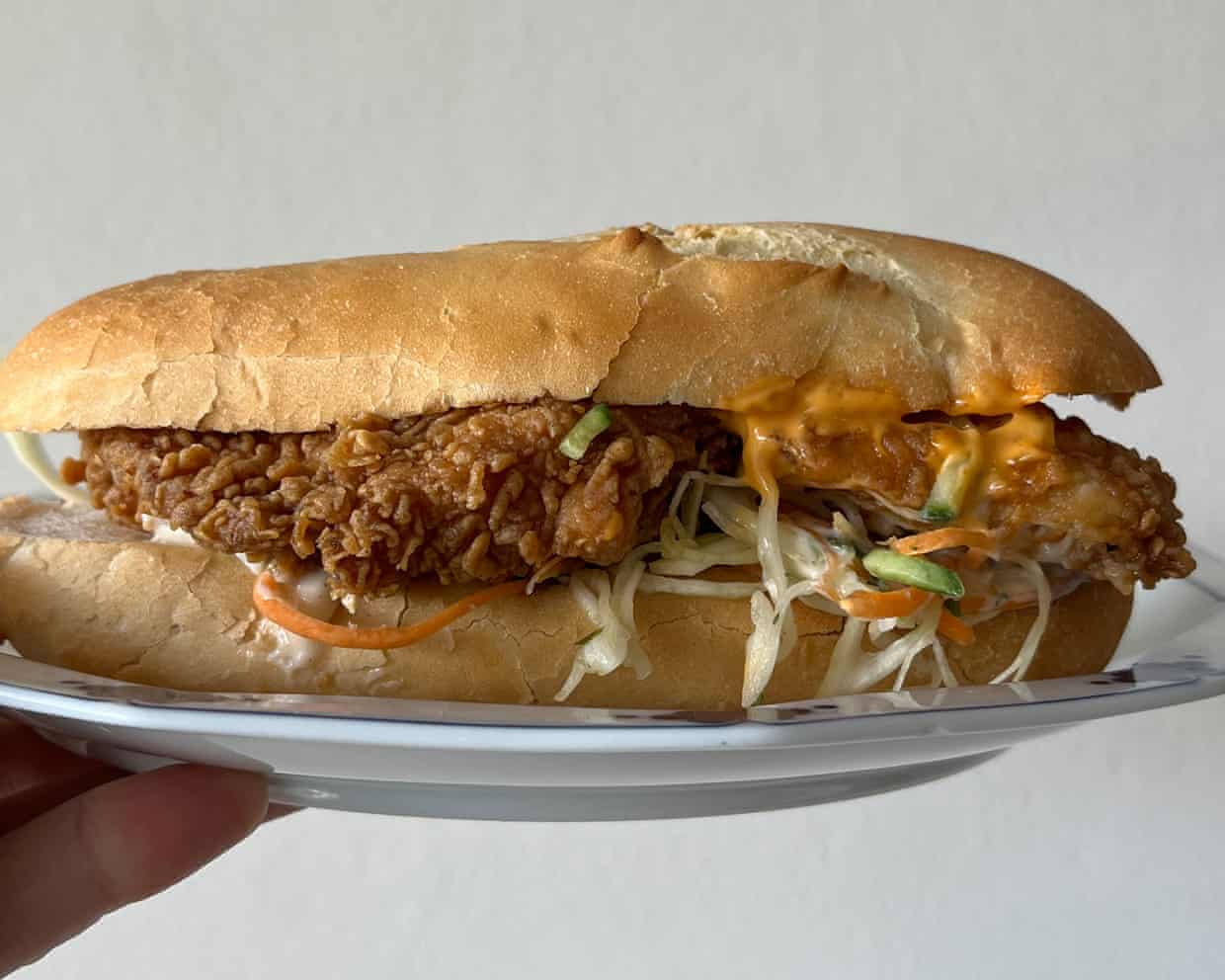
KFC’s bánh mì has its name but not its nature. Who is this sandwich for?
I bite into my KFC bánh mì, and there is silence. No crunch, no crackle. My teeth sink into a bread roll that is neither crusty nor flaky. There is a slaw of cabbage, carrot and cucumber, a whisper of coriander, a fillet of fried chicken, a splodge of mayonnaise and a slightly spicy, barbecue-adjacent “supercharged” sauce. There is no pate, no pickled daikon, no lineup of industrious sandwich-making Vietnamese aunties asking if I want chilli

Skye Gyngell obituary
The pioneering chef Skye Gyngell, who has died of Merkel cell carcinoma, a rare skin cancer, aged 62, was the first Australian woman to win a Michelin star, an early supporter of the slow food movement, and a champion of charities such as StreetSmart and the Felix Project.Gyngell was a quiet radical. She came to public attention when she opened the Petersham Nurseries Café in south-west London in 2004. Until that point, she had been honing her own distinctive cooking personality that emphasised the quality of ingredients and the simplicity of their treatment and presentation. Her dishes were light, graceful and deceptively simple, but were founded on a serious understanding of how flavours and textures worked together, sometimes in surprising ways
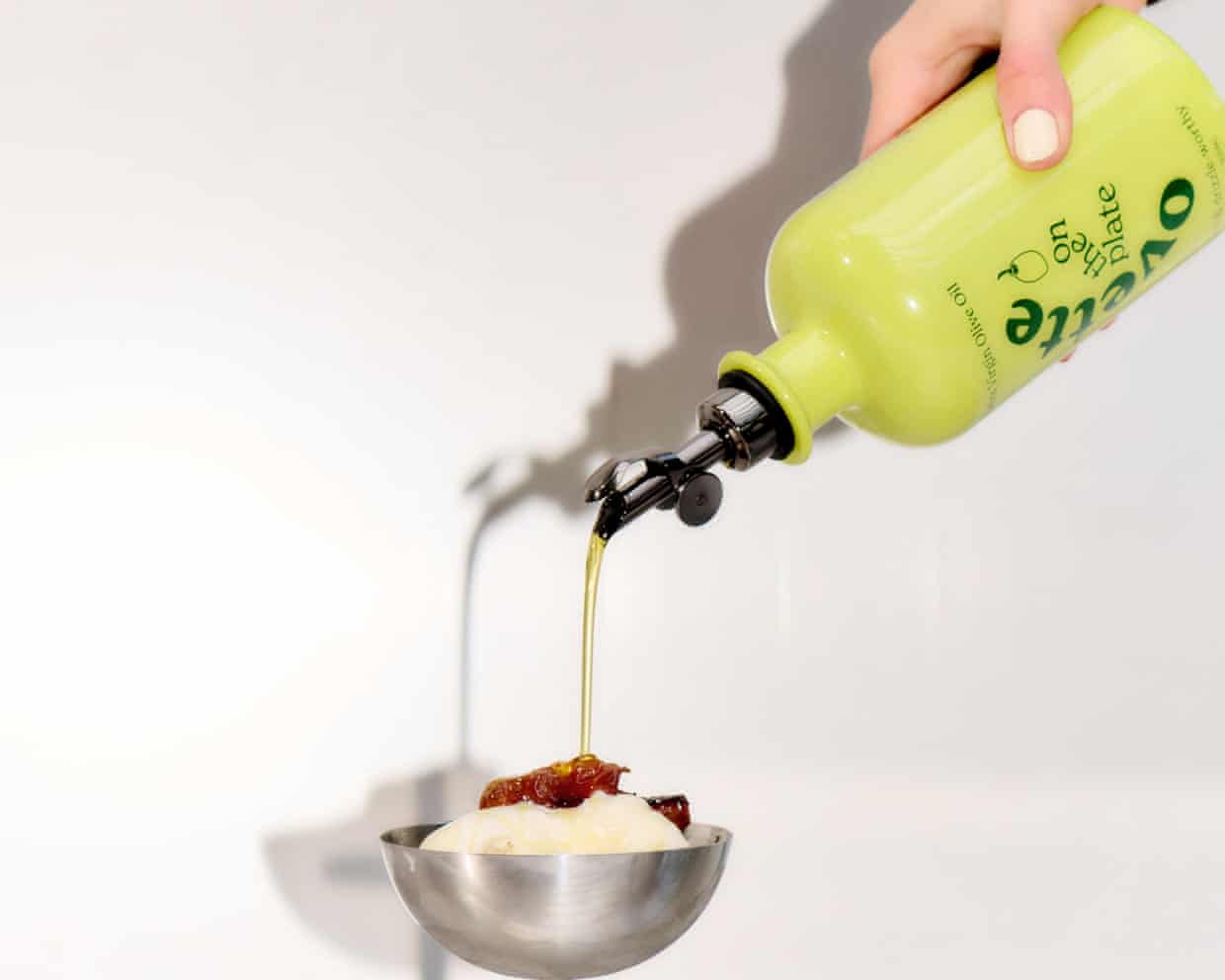
‘Premium but not ostentatious’: the best extra virgin olive oils to gift instead of wine
This festive season, olive oil is the new bottle of wine. If booze or a scented candle used to be a fail-safe gift option for a party, retailers and food experts are reporting a surge of interest in the kitchen cupboard staple.The Guardian’s journalism is independent. We will earn a commission if you buy something through an affiliate link. Learn more

Benjamina Ebuehi’s coffee caramel and rum choux tower Christmas showstopper – recipe
Christmas is the perfect time for something a bit more extravagant and theatrical. And a very good way to achieve this is to bring a tower of puffy choux buns to the table and pour over a jugful of boozy chocolate sauce and coffee caramel while everyone looks on in awe. To help avoid any stress on the day, most of the elements can be made ahead: the chocolate sauce and caramel can be gently reheated before pouring, while the choux shells can be baked the day before and crisped up in the oven for 10 minutes before filling.Prep 10 min Cook 1 hr 15 min Serves 10-12120ml milk 120g butter ½ tbsp sugar A pinch of salt 160g strong white flour 4-5 large eggs, beatenDemerara sugar, for sprinkling400ml double cream ½ tsp vanilla bean paste ½ tbsp icing sugarFor the coffee caramel140ml double cream 2 tsp instant coffee or espresso powder110g sugar 50g unsalted butter A big pinch of flaky sea saltFor the chocolate sauce 150g dark chocolate 1½ tbsp brown sugar 2-3 tbsp rum A pinch of saltHeat the oven to 210C (190C fan)/410F/gas 6½ and line two large baking trays with baking paper. To make the choux, put the milk, 120ml water, butter, sugar and salt in a saucepan and bring to a rolling boil

Facing burnout, she chased her dream of making pie - and built an empire: ‘Pie brings us together’
Thanksgiving may be a holiday steeped in myth and controversy – but there’s still something Americans largely agree on: there’s nothing wrong with the holiday’s traditional dessert. So says Beth Howard, expert pie maker, cookbook author, memoirist, and now documentary film-maker.The Guardian’s journalism is independent. We will earn a commission if you buy something through an affiliate link. Learn more

Rape victims in England and Wales to be protected from ‘serial liar’ trope in legal shake-up

Trans girls banned from joining Girlguiding
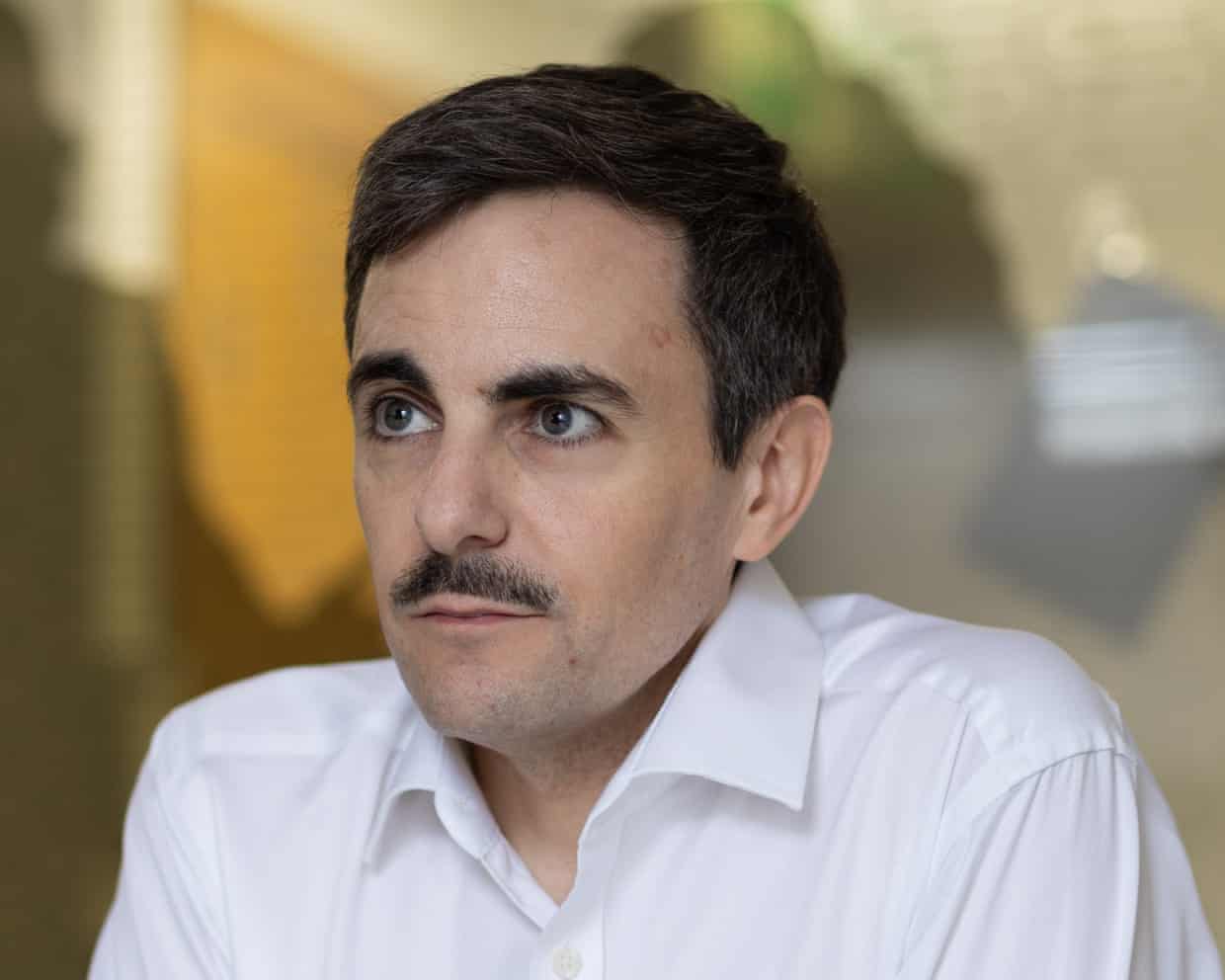
BMA chair denies using junior doctors’ strikes to progress political career

The rise of deepfake pornography in schools: ‘One girl was so horrified she vomited’
Twelve more prisoners in England and Wales released in error in last month

UN experts raise concerns over homes rented out by English social landlord